
Managing Soil Fatigue When Tomatoes Stay in One Greenhouse
Greenhouse growing guide
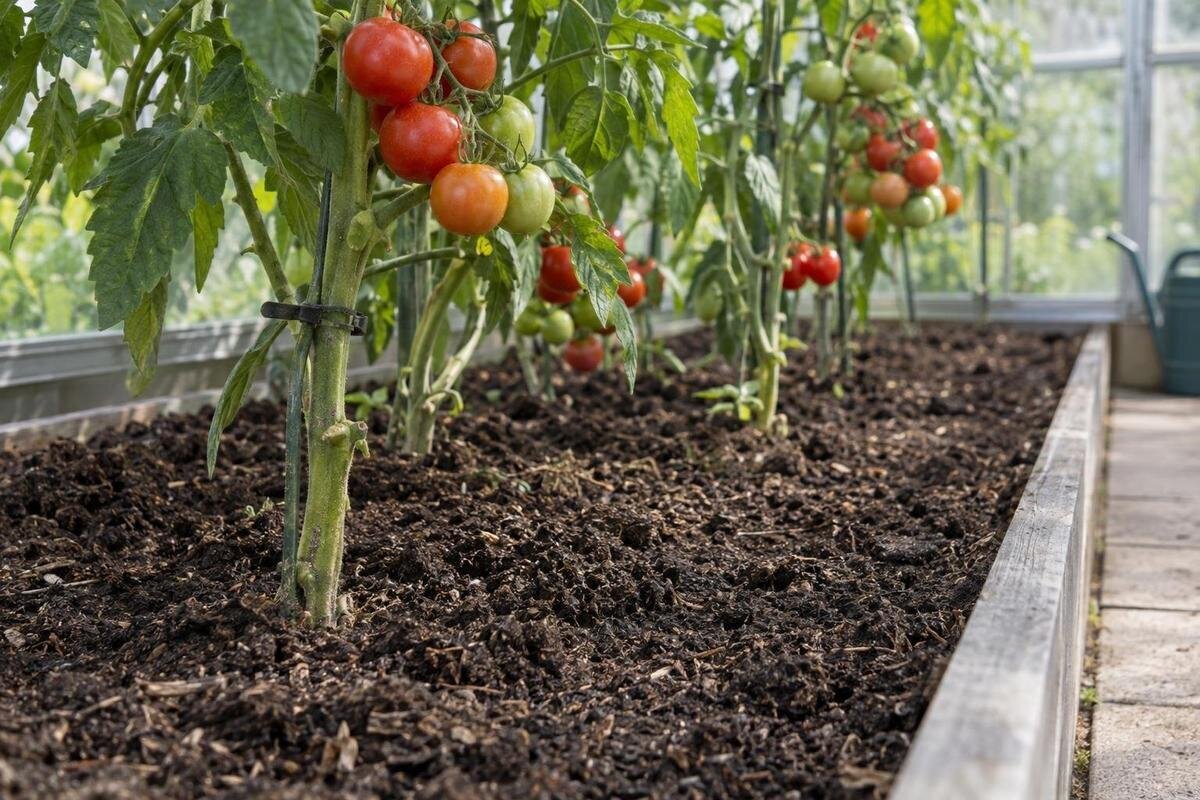
Tomatoes may stay in the same greenhouse bed because there is nowhere else to grow them, but weaker plants do not prove that the soil has simply “worn out”. Nutrient imbalance, salts, poor drainage, compaction and soil-borne pests or diseases can produce overlapping symptoms; irrigation, temperature and light can affect plants in the same bed too. Treat soil fatigue as a description of a recurring problem, not a diagnosis. A clear record, a suitable soil test and a look at the roots can help you decide between adjusting inputs, renewing part of the bed, using separate growing media or finding a realistic break from tomatoes.

What soil fatigue means for repeated tomato crops
“Soil fatigue” is a useful shorthand for declining crop performance after repeated planting, but it does not name one cause. Tomatoes take up nutrients as they grow; repeated feeding can also leave an imbalance or allow soluble salts to build up. Organic matter may fall if little is returned, while foot traffic can compact the bed. These are different problems and call for different responses. Replacing soil or applying a large general feed before identifying the issue may leave the original cause untouched or make another one worse. A single bed can have several problems at once, so one symptom should not determine treatment.
Repeated planting can also maintain a host for soil-borne pests or pathogens that affect tomatoes. Some can persist after a crop is removed, so recurring trouble in the same bed deserves attention. This remains only a possibility: weak growth alone cannot tell you whether a pathogen is present. Keep the history of the root zone separate from the history of the greenhouse. Tomatoes grown in fresh container medium are not reusing the same soil simply because the structure stays in place, although contaminated tools, containers or plant material may still introduce problems. That distinction helps you decide whether to investigate the bed, the growing medium or conditions affecting the whole greenhouse.
Map symptoms across the tomato bed
Before changing the bed, note what has changed: slower growth, yellowing, wilting, poor flowering or fruit set, and whether all plants are affected. None of these signs is specific to tired soil. A problem confined to one end of a row may follow a blocked dripper, local drainage or a difference in exposure; a whole-bed pattern can still have several causes. Mark plant positions on a simple sketch and record when symptoms began and at what growth stage. Include varieties and planting dates if they differ. This gives a diagnostic service more useful information than a general impression that the crop looks poor.
When lifting a plant, inspect a few affected roots and, where practical, compare them with roots from a healthier area. Note whether roots are sparse, discoloured, soft, unusually dry or swollen, and check moisture below the surface rather than judging by a dry crust. These are observations, not a diagnosis. Photograph the pattern and ask a horticultural diagnostic service how to submit a sample if disease is suspected, before disposing of plants. Keep a record of where each sample came from so its result can be matched to the bed map. If considering a replacement greenhouse, use that map to identify the access you need for inspecting plants and removing them without disturbing neighbouring roots. The T-Shaped Orangery Greenhouse listing can be considered alongside these requirements, with its internal layout confirmed before drawing proposed beds.
Test the soil before adding feed or replacing it
Take a representative soil sample before feeding, liming or replacing a bed. Follow the chosen testing service’s instructions: sample the same root-zone depth, use clean tools and do not combine visibly different areas if one performs poorly. A handful from the surface or beside one dripper cannot stand for the whole bed. Test separate greenhouse beds separately, and tell the laboratory which crop was grown and what symptoms you saw. If you repeat a test later, use a comparable sampling method so that the results can be meaningfully compared.
Ask what the test includes. A basic soil test may report pH and selected nutrients; if repeated feeding or white deposits raise concern about salinity, ask whether soluble salts or electrical conductivity can be assessed. A chemistry report will not identify every soil-borne disease, and a nutrient reading cannot explain root damage by itself. Supply your feeding history and ask whether the results need interpreting specifically for greenhouse tomatoes. Keep the report with your bed map rather than averaging results from healthy and poor areas. If an additional growing area becomes part of the response, compare the Pyramid-type greenhouse with the space available on your site. Allow for access around the structure as well as the proposed beds inside; an extra greenhouse only creates a useful alternate root zone if its soil or growing medium is managed separately.
Check water, drainage and soluble salts
Water management can make a bed look nutrient-deficient or tired. A greenhouse roof keeps much of the direct rainfall off the soil, so soluble salts from irrigation and fertiliser may be less readily washed through than in an exposed bed. That makes accumulation possible, not certain: soil texture, feeding history, water source and drainage all influence the result. Pale leaves or a crust do not confirm salinity. Write down what has been applied, including homemade feeds, and avoid responding to weak growth with another dose until you have checked the likely cause.
Compare moisture at several points after watering, inspect drippers or hand-watering coverage, and look for persistent wet patches, crusting or water that drains slowly. Repeat the observations rather than relying on a single reading immediately after irrigation. Compaction and a blocked outlet need different treatment from a dry root zone. Do not flush suspected salts until you know water can leave the bed; otherwise you may worsen waterlogging or carry salts elsewhere. A revised layout should let you reach irrigation fittings and see where drainage goes without dismantling the crop. When considering the aluminium greenhouse with built-in storage, check the confirmed position and extent of the storage area against those routes. Keeping feeding equipment accessible is useful, but storage should not be assumed to provide drainage or separate growing areas.

Make crop rotation workable in one greenhouse
Rotation remains useful even if the greenhouse itself stays where it is. If there is a second bed, move tomatoes into it and use the first for a crop from a different plant family, chosen to fit the season and the problem being managed. Potatoes, peppers and aubergines are in the same family as tomatoes, Solanaceae, so they are not a reliable break when a soil problem can affect those crops too. Moving tomatoes a short distance within one continuous bed is unlikely to provide a meaningful break for organisms living in the soil.
A rotation break is not a guaranteed cure: some soil-borne organisms persist without tomatoes, while others can use a wider range of hosts. The general crop-rotation principle is to change the crop family, but a diagnosed problem may require more specific host choices and a longer break. Avoid treating one crop-free season as a universal reset. If the only bed is occupied every year, consider whether tomatoes could move into containers while the bed carries a suitable different crop. This preserves growing space without pretending that a short move within the bed provides rotation. For a new layout, compare the Bloomcabin Prestige Greenhouse with a plan showing both growing areas at their mature size. Check that the alternate crop remains accessible once tomato foliage and supports are in place, not just when the greenhouse is empty.
Reduce carry-over between tomato crops
At the end of the crop, remove tomato foliage, fallen fruit, weeds and as much root material as practical. Residues can hold pests or pathogens, but clearing them does not sterilise the bed or prove a disease has been removed. Brush soil and plant debris from reusable tools, pots and supports, then clean them using a method suitable for the material. Avoid moving soil from a suspect patch into a clean bed. If a serious soil-borne disease is possible, ask a horticultural diagnostic service how to handle plant material and samples before adding them to a compost heap.
Clean habits can limit carry-over, but they cannot correct salinity, compaction or a pathogen already established in soil. If using fresh medium alongside a suspect bed, organise work so clean containers are filled away from removed roots and loose soil. Keep tools used in the affected area separate until cleaned, and avoid setting fresh bags of medium on spilled soil. Plan a route for taking old plants out without dragging them across the new growing area. When assessing the Spacious Greenhouse, compare confirmed door positions and internal space with that route and your working area. A larger floor area can offer layout choices, but distance alone should not be treated as protection against transferring contaminated material.
Renew the bed only when the evidence supports it
Where tests identify a correctable pH or nutrient issue, follow the test recommendation and apply only what is needed. Consider the existing soil and any compost already added. Compost can improve the structure of some soils, but its nutrient content varies and repeated heavy additions may raise nutrient or salt levels. Compare any available analysis or supplier guidance with the test results. Avoid unmeasured lime, manure, fertiliser or fresh topsoil: each can move the bed further from its intended condition rather than reset it.
If a persistent physical problem, contamination concern or diagnosed soil-borne disease cannot be managed in place, partial or complete replacement may be worth considering. Establish what replacement is intended to achieve before ordering material: adding a shallow fresh layer does not remove problems deeper in the root zone. Nor does replacing soil guarantee that a disease will not return from remaining roots or contaminated equipment. Choose new material with a specified composition suited to the intended bed. Measure the bed’s length, width and proposed replacement depth in consistent units; multiplying these gives the volume to discuss with the supplier. Arrange suitable handling or disposal of removed material, especially if disease or contamination is suspected. If the work includes a new structure, consider the Classic aluminium greenhouse alongside the practical requirements for bringing material in and removing it later. Check door access and bed boundaries rather than relying on overall floor area alone.
Use a separate growing medium when rotation is impossible
Tomatoes in pots, grow bags or troughs filled with fresh, suitable growing medium can reduce contact with a problematic greenhouse bed. That benefit depends on preventing roots from reaching the underlying soil and keeping suspect soil or drainage water out of the new medium. Simply placing a pot on an affected bed does not automatically isolate it. Use clean containers and medium intended for the crop, and plan a clean standing area that still allows proper drainage. Do not block drainage holes to achieve separation. If avoiding the old bed is the reason for changing methods, do not mix its soil or compost containing suspect residues into the fresh medium.
Growing in containers changes how you manage water and nutrients: the root zone is limited to the container, so conditions can shift differently from those in a bed. Check whether the medium contains an initial feed and follow its guidance rather than immediately applying your former bed-feeding routine. Observe moisture within the medium, not only at the surface, and keep drainage outlets accessible for inspection. Choose containers intended for the growing system, with room for roots and stable support for the mature plants. When considering the Lean-To Greenhouse, plot the proposed containers, support positions and watering access against confirmed internal measurements. Account for the adjoining wall and the reach needed to tend the rear plants. A row that fits on paper may still be impractical if you must move heavy containers to inspect it.

Plan distinct growing zones in the greenhouse
A crop plan works better when each bed or growing zone has a stable label. Record which plant family occupied it, when amendments were added and where symptoms appeared. Keep distinct areas from becoming mixed through moved soil, shared containers or poorly cleaned tools. A boundary between beds can help with organisation, but it does not automatically isolate soil or stop roots and water from passing between them. If physical separation is important, check how the beds are constructed and ask a suitable professional about the boundary.
Measure usable floor space, beds and paths rather than planning from the greenhouse’s outside footprint alone. Check access with mature plants in mind: you need to carry watering equipment, reach fruit and remove a failed plant without stepping into the bed. Also allow somewhere to put harvested produce or a container temporarily while working. Mark permanent beds differently from movable pots on the plan so that future changes remain realistic. For a new or replacement structure, compare these requirements with the limited-edition aluminium greenhouse product information and request any missing internal measurements. Check the proposed paths at their narrowest points, including beside supports and open doors. These details determine whether separate growing zones can be tended consistently, rather than becoming mixed because one area is difficult to reach.
Keep records to guide the next season
A brief record makes it easier to judge whether a change helped. Note the bed or container, crop family, planting dates, soil-test results, amendments and watering pattern. Add a simple map or photograph when symptoms appear, and make a rough note of how the crop performed. Keep the same labels from season to season. Where practical, change one factor at a time; changing feed, irrigation and growing medium together makes it difficult to tell which adjustment mattered.
Use the evidence to choose the next response. A test result can guide a targeted amendment; uneven moisture points towards checking irrigation or drainage; recurring root damage may justify a diagnosis before replanting. Give each change a clear purpose and record what you will compare, such as whether wilting returns in the same positions or roots develop more evenly. Compare plants at similar growth stages and note major differences in weather or variety, which can otherwise make one season look better or worse for unrelated reasons. If tomato rotation is impossible, a separate root zone may be more realistic than replacing the whole bed. Keep watching after a change rather than assuming one good crop proves the underlying issue has gone.
Frequently asked questions
Can I grow tomatoes in the same greenhouse bed every year?
Yes, but repeated tomato crops can contribute to nutrient imbalances and maintain a host for soil-borne pests or diseases that affect tomatoes. Check the bed rather than assuming it is exhausted. Rotation, targeted renewal or a genuinely separate growing medium may help, depending on what is causing the decline.
How can I tell soil fatigue from a nutrient deficiency?
You cannot reliably tell from leaf colour or wilting alone. Those symptoms can also relate to pH, salts, water, temperature, root damage or disease. Compare affected areas, inspect roots and use a suitable soil test; seek diagnostic help if problems recur.
Should I replace all the soil in my greenhouse?
Not as a first response. Test the soil and check its structure, drainage and crop history before deciding. Targeted correction may be enough; replacement is more appropriate to consider when a persistent physical problem or diagnosed soil issue cannot be managed in place.
Will adding compost fix a tired greenhouse bed?
Not necessarily. Compost composition varies, and repeated additions can change nutrient and salt levels. Use material suited to the bed and follow test results or reliable supplier guidance. Compost may improve some soils, but it does not reliably remove soil-borne pests or disease.
Will pots or grow bags solve the problem?
They can reduce contact with a problem bed if they contain fresh, suitable growing medium and remain genuinely separate from the soil. They do not repair the bed, and they bring different watering and feeding needs. Keep suspect soil out of the new medium.
The goal is not to force a perfect rotation where the greenhouse cannot provide it. It is to identify whether the recurring problem is chemical, physical or biological, then choose the smallest change that addresses it: a measured amendment, better water management, careful hygiene, a different crop zone or fresh growing medium. A mapped bed and season-by-season records make it possible to keep tomatoes in the same greenhouse without treating every poor crop as proof that the whole bed must be replaced.
