
How Much Time Does a Greenhouse Take Each Week?
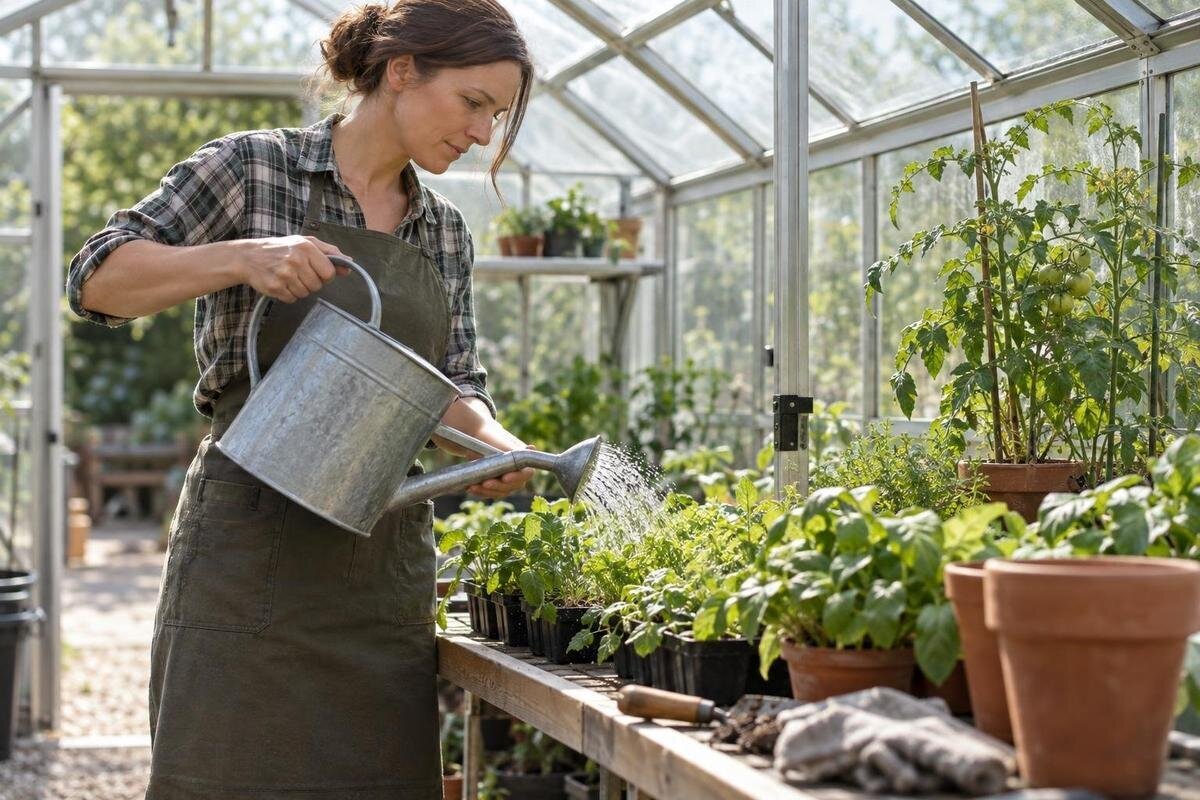
Greenhouse workload guide
A greenhouse has no fixed weekly time cost. A few established plants in an unheated space may be a light routine, while seed raising, container growing and fruiting crops bring repeated watering, training, picking and cleaning. A useful estimate starts with what you intend to grow, how much space will actually be planted and the season. The example here separates active work from quick checks and seasonal jobs, so you can plan around a real crop list rather than a vague promise that a greenhouse is low maintenance.

Separate active care from unattended time
Count hands-on minutes, not simply the number of times you open the door. A quick look at leaves may take a minute; watering pots, refilling a can, tying stems and clearing spent growth take longer. Separate short checks from jobs that can be grouped, and note work that must happen promptly. An irrigation timer may run unattended, for example, but checking its supply and confirming it worked are still tasks. Include fetching tools or carrying water from the house if that is part of your routine. This distinction stops a greenhouse sounding easier or harder just because one person counts a visit as an hour and another records only watering.
Attach every estimate to an area and crop list. The Classic aluminium greenhouse range is listed in several sizes, but the chosen footprint does not itself set weekly hours: planted pots, bed length and harvest volume do. Sketch where crops and paths will go, then count plants, seed trays and containers. A partly unused greenhouse can be light to maintain; filling every bench can add watering and inspection. Keep occasional work, such as a full seasonal clean or repair, separate from routine care. Use a product page to compare the structure, not as evidence of a fixed care schedule.
Choose crops before estimating the workload
Every crop adds its own recurring jobs. Seed trays and small pots need checks for moisture and growth; pricking out or potting on creates short handling sessions. Trained crops such as tomatoes and cucumbers can need regular tying, and some growing methods involve pruning, followed by repeated picking. Herbs and cut-and-come-again leaves can mean small, frequent harvests. These are examples, not universal rankings: plant number, container size, sowing cadence and whether crops ripen together all affect the work. A single accessible row may be quicker to check than the same number of scattered pots, but do not infer effort from the crop name alone.
Before buying, write down crop groups, approximate plant or tray counts, and whether you will raise them from seed. If a lean-to greenhouse is on your shortlist, map the route to water and the space needed to reach plants before estimating minutes. Its form alone does not reduce the care a crop needs, and containers placed behind one another may add moving and reaching. Include those access jobs in the estimate; repeated awkward trips can turn a quick watering round into a longer visit. If your crop plan is uncertain, make one estimate for a small first-season planting and another for the fuller plan you might grow later.
A worked summer-week estimate
Here is a planning illustration, not a measured national average: a small, unheated greenhouse with six established tomato plants, four salad trays and several herb pots, watered by hand, with no heated seed raising or major harvest. Allow six rounds of 8–12 minutes to inspect plants, water where needed and pick ripe produce: 48–72 minutes. Add a separate 20–30 minutes for tying and pruning, then 10–15 minutes to clear dead leaves and tidy the work area. The total is about 78–117 minutes, or roughly 1¼–2 hours of active care. The same crop list may take a different time in another layout or week.
Treat six rounds as an assumption, not a prescription. If plants need more frequent attention, include it; if a cooler week means a check but no watering, record the work actually done rather than charging a full watering session. Keep a log with the date, crop stage, task and active minutes, and note weather or a large sowing that changed the day. After several ordinary weeks, your own record will be a better guide than this example. Keep one-off work, such as setting up beds or doing a thorough seasonal clean, in a separate column so it does not distort your weekly allowance. Include time spent refilling cans too, if that is regular.
Spring adds propagation and planting jobs
Spring work often arrives in batches rather than as a smooth weekly routine. Before planting, clear leftover growth and clean reusable pots and trays; then sow, label, water, prick out and pot on as seedlings develop. Each job may take only a few minutes, but starting batches on different dates creates repeated checks and handling. Moving plants to their final positions and gradually acclimatising them adds trips as well. If you raise most plants from seed, count propagation separately from planting out; it can make the early-season budget much higher than the later routine. The busiest spring weeks will not represent the whole year.
If the limited-edition greenhouse range is on your shortlist, sketch how many trays you will use and where they can sit without blocking a working path. Compare your sketch with the selected configuration, including any benches you intend to add. Allow room to put down a tray while working: having to move other plants before each potting session adds handling time. Buying ready-grown plants can reduce sowing and potting-on time, but it shifts work to planting, watering and later training. Decide which seed batches you genuinely intend to manage, and note when each will need moving on, so several batches do not create an unexpected peak.

Summer watering and growth drive repeat visits
Summer growth often makes watering the main repeating job. Pots and grow bags can dry at a different rate from a bed, while plant size, weather, exposure and crop stage all affect demand. A fixed calendar cannot account for every change; checking the growing medium and plants helps you decide what a round actually needs. Allow for fetching and carrying water as well as applying it, and note whether you can water several plants in one pass. Where crop groups have different needs, one round may not suit them all. Fruit crops may also need tying or pruning, and ripe produce needs picking before it becomes an extra clearing job.
Route design matters because watering and harvesting repeat. When considering a T-shaped orangery greenhouse, use the selected plan to trace the route between the entrance, water source and planted areas; the name or footprint alone is not a time estimate. If you must weave around pots, move a watering can repeatedly or reach across crowded plants, include that handling. Put crops needing frequent attention within easy reach where the layout allows, and leave space to collect harvests and remove leaves. A clear route is useful only if it matches the way you plan to work and the kit you use.
Autumn and winter change the task mix
Autumn changes the task mix rather than switching care off. Harvest remaining crops, remove plants that have finished, clear fallen leaves, clean reusable trays and decide what will stay in the greenhouse. If you keep potted plants or continue salad production, check them for moisture, pests and growth instead of assuming the space is dormant. Watering may still be necessary when little is being harvested, while a full changeover can take longer than several routine visits. Record the one-off seasonal clear-up separately from an ordinary week's allowance, and include any continuing sowing or crop rotation work you intend to do.
If you are considering a pyramid-type greenhouse, include off-season access and cleaning in your workload comparison. Check the selected drawings for the areas you would need to reach, and ask about appropriate cleaning methods and access for the glazing. Keep any work requiring specialist help separate from your own gardening hours. For winter growing, list the plants that will remain and any equipment you intend to operate, including its checks and upkeep. A quiet, unheated space and an actively managed winter crop have different workloads. Record time spent tending plants separately from cleaning and equipment care, so you can see which activities continue after the main harvest.
Short inspections catch changes between jobs
Short inspection rounds are worthwhile even when they add little watering time. Look across plants for drooping, damaged or discoloured leaves, check for signs of pests, and notice whether pots, trays or floor areas are unusually wet or dry. Use the same route each time and jot down changes instead of relying on memory; that can help you notice gradual changes before they become a larger task. Check that doors or vents are not obstructed if these are part of your routine, and notice visible leaks before the next watering. An inspection is not a substitute for identifying a problem correctly, so allow a few minutes for deliberate observation, not just watering.
Keep ordinary kit where it can be found without blocking work areas. If built-in storage matters to your layout, assess the greenhouse with built-in storage as a specific configuration and verify what the listing includes and where it sits. Storage may reduce time spent searching for ties, labels or tools only if it is organised and accessible; it will not reduce the time plants need for watering or inspection. Include tool cleaning, clearing debris and putting supplies away in the weekly log, since these small jobs otherwise disappear from the estimate. Keep frequently used tools near the tasks they support while leaving paths clear.
Automation reduces repetition, not responsibility
Automation is most useful when it takes over a defined, repetitive action. A timer-controlled watering arrangement may reduce the time spent delivering water; automatic ventilation can reduce repeated manual adjustment where the system is suitable. Neither decides whether a particular plant is dry, whether an outlet is blocked or whether a vent needs attention. One watering schedule may not suit every crop, so separate growing areas can still need observation. Sensors can make conditions easier to monitor, but a reading still needs interpretation. Compare the minutes saved with the new jobs introduced: setup, routine checks, cleaning and refilling or adjustment.
Before counting a saving, establish exactly which controls are included, what power or water they need, whether they fit the chosen structure and what you would do if they fail. When comparing the Prestige greenhouse with a metallic base, ask for the selected configuration's equipment details and distinguish included items from additions you would need to arrange. For mains-powered equipment, have a suitably qualified professional assess the installation. Keep a manual fallback and maintain equipment according to its instructions. In your log, record both the manual watering time saved and the time spent checking or maintaining the system; the difference is the useful saving, rather than the timer's unattended running time.

Growing area and layout affect the time per task
Footprint influences capacity, but not in a straight line from floor area to hours. A large greenhouse with a few pots still has relatively few plants to water; a compact space filled with seedlings and containers can create many separate jobs. More planted area generally means more watering, harvesting, pruning and cleaning, while congestion can make each task slower. Sketch beds, benches and pots, then count the plants and the route needed to reach them. Leave access to inspect and work without moving containers each time. Add routine checks for any equipment you choose to use, because the building and its planted workload are separate parts of the estimate.
The Spacious Greenhouse listing gives a range of 506–753 sq ft, which describes listed floor area, not weekly care. For a larger option, allow separately for seasonal cleaning, clearing finished crops and moving compost or containers. These jobs may involve more surfaces or longer carrying routes even when only part of the space is planted. If two people will share the work, record their combined active minutes: a half-hour job done together uses an hour of labour, although it occupies only half an hour in the calendar. That distinction helps you compare the total workload with both the time and the help you actually have available.
Build a routine you can sustain
Turn the estimate into a weekly schedule by dividing tasks into time-sensitive checks, flexible jobs and seasonal work. Put crop checks on days when you can genuinely do them, group tying and harvesting where practical, and set aside one short tidy rather than letting debris accumulate. Mark jobs that cannot be postponed separately from those that can move by a day; that makes the routine more realistic than a list of ideal tasks. A reminder can prompt you to inspect, but it should not dictate the same watering amount or duration regardless of current conditions. Leave spare time for a warm spell or a larger harvest.
Review your log after a month of active growth and again when the season changes. If actual care repeatedly exceeds the time available, reduce the number of containers, simplify the crop mix, cut back on staggered sowings or buy plants instead of raising every one from seed. If the routine feels comfortable, add crops gradually and measure again. Keep the peak-week figure as well as an ordinary-week figure, so a manageable average does not hide days when several jobs coincide. If your available time is fixed, plan the crop count around it rather than trying to use every part of the greenhouse.
Frequently asked questions
How many hours a week does a small greenhouse need?
There is no dependable figure without a crop list. In the worked example here—a small, unheated greenhouse with six tomato plants, four salad trays and several herb pots, watered by hand—the allowance is about 1¼–2 hours of active care in a summer week. Weather, layout and the amount you harvest can all change that.
Does a greenhouse take more time in summer?
Often, because growing plants may need more frequent water checks, training and picking. Spring can be just as busy if you raise many seedlings, while autumn brings clearing and winter care depends on what remains. Compare weeks by crop stage rather than applying one annual average.
Can automation make greenhouse care hands-off?
No. Timed watering or automated ventilation can reduce a repeated manual task, but someone still needs to check plants, confirm that equipment works, clean or refill it and respond to changes. Keep a manual fallback, and use a suitably qualified professional for mains-powered installations.
Which plants take the least time in a greenhouse?
The number and arrangement of plants matter at least as much as the crop name. A small plan of established plants, without frequent sowing, tiny pots or intensive training, is easier to budget for than many trays and containers. Check the needs of the varieties you choose and count their recurring jobs.
Does a larger greenhouse take longer to maintain?
Not automatically. Empty floor area has no crops to water, but using more space increases the number of plants and possible jobs. Estimate the area you will plant, not just the footprint, and consider whether the layout makes watering, harvesting and inspection quicker or slower.
The useful answer is a crop plan and an honest time log, not one figure for every greenhouse. In the worked example, a modest unheated planting takes about 1¼–2 hours of active summer care; other crop lists and seasons will differ. Seed raising, watering demand, access, harvesting and automation all change the mix of jobs, but observation and upkeep remain. Choose a planting plan you can manage at its busiest point, then adjust it using the time you actually record. That gives a more realistic weekly commitment than judging by floor area alone.
