
Buying a Domestic Sauna for a Glamping Site: Questions to Ask
Sauna buying guide
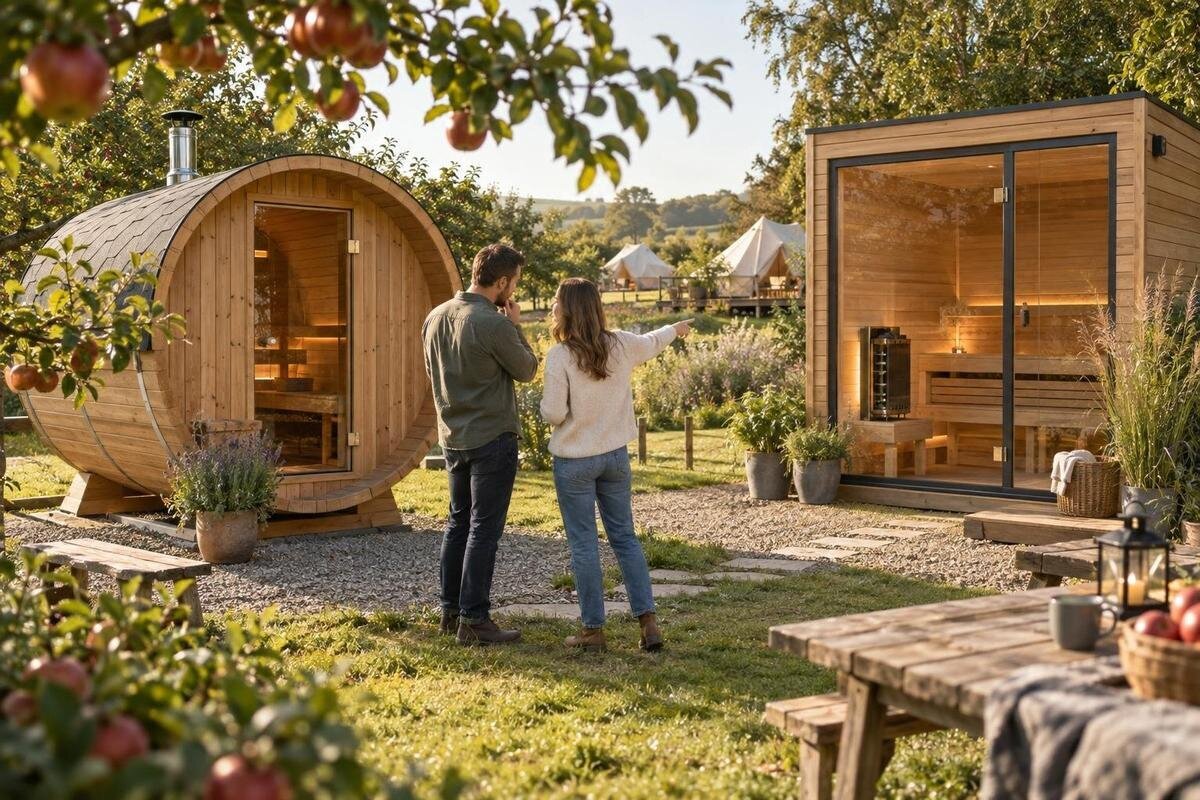
Buying a domestic sauna for a glamping site is a business decision as well as a choice about the guest experience. A model that appears to fit beside a pod or tent still has to suit paid guest use, the site layout, available services and the way bookings will be managed. The word domestic needs particular attention: it does not, on its own, confirm that repeated use by visitors is supported. Start by clarifying intended use, then compare capacity, siting, operating needs and the full project cost against your actual plans.
01
Does a domestic sauna suit a glamping business?
“Domestic” may describe a product intended for private use, but the label alone does not establish whether the manufacturer supports a business that hosts paying visitors. It does not tell you how often the sauna may be used or what limitations apply. Glamping sites vary: one unit might have a sauna used occasionally by a single party, while a shared facility may serve several bookings in a day. Those patterns put different demands on the equipment and the site. Do not treat them as equivalent simply because the sauna is compact or marketed for home use; its name and appearance are not evidence of suitability for a business.
Before comparing models, explain your operation to the manufacturer or retailer: that you provide paid guest accommodation, expected booking levels, likely use per day or week, the season you plan to operate, and whether visitors will use the controls without staff present. Be specific about whether the sauna will be exclusive to one booking or shared across the site. Ask whether the particular model is intended for this pattern, what operating limits or maintenance intervals apply, and whether any warranty or service conditions change when guests use it. Request the answer in writing and keep it with the product documents. If the reply is vague, treat suitability as unresolved rather than assuming domestic use covers hospitality.
How many guests will use the sauna at once?
Capacity should reflect how the sauna will actually be booked, not the largest group you can imagine arriving once a year. Look at expected party sizes and peak occupancy: will couples use it, will families want to attend together, or will guests from separate units share it? A private amenity attached to one glamping unit has a different demand pattern from a single facility serving the whole site. Decide whether use will be exclusive, timed or shared, and how much time each booking leaves between groups. A theoretical maximum may not match the experience you intend to offer, so set a practical target for your likely guests.
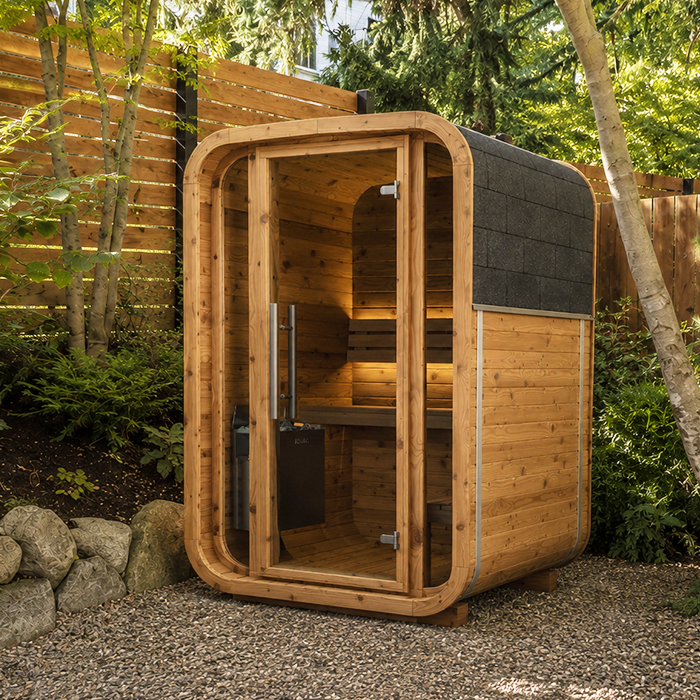
Compare the supplier’s stated occupancy with internal dimensions and bench layout; check whether those details are documented for each candidate. The outside footprint does not show how much usable seating is inside, and a person count is difficult to assess without knowing how the space is arranged. If it is on your shortlist, use the Thermowood Barrel Sauna S 140 product page to check its published information against your target, rather than infer capacity from the model name. Where step-free access, transfer space or another mobility arrangement matters, confirm the entrance and interior layout with the supplier and an appropriate access professional before ordering.
02
Where should the sauna sit on the site?
On a glamping site, the position affects privacy, wayfinding and whether guests can reach the sauna comfortably in poor weather. Mark the route from each accommodation unit and from shared facilities; consider distance, lighting, the surface underfoot, changes in level and whether guests have to pass through another party’s area. A secluded corner can feel private but may be less convenient for staff support. A position close to pods or tents may simplify the route but introduce noise or privacy concerns. Check the route after dark and in wet conditions, not only during a daytime site walk.
Decide what belongs nearby, such as a changing place, towel storage or a washroom if those are part of your offer. Make sure guests can understand where to go without crossing a private area, and work out how they will know when the sauna is free if use is shared. Include a place to wait without blocking the path if sessions are timed, and keep access for routine inspection in your plan. A candidate such as the HC150 Thermowood Barrel Sauna listing is a product reference, not a site plan: compare its documented dimensions with the space and route you can provide. A photograph will not show how it affects the layout of your particular site.
Is the proposed outdoor position suitable?
If the sauna will be outside, assess the exact position rather than treating it as a generic garden feature. Record the available ground area, level changes, surface condition, drainage and exposure to wind and rain; consider whether shade, leaf fall or runoff could affect access or upkeep. Ask the supplier what base or support, clearances and exterior protection the particular model requires, and what access is needed for servicing. Product pages and photographs may not answer every site question. If preparation depends on ground conditions, ask a qualified site professional to assess them instead of copying the arrangement used for another building.
Check the relationship to trees, boundaries, accommodation and shared spaces, including views and noise. Confirm whether the proposed location raises planning, environmental or fire-safety questions for your particular site with the relevant local authority or a qualified professional. The Thermowood Barrel Sauna HC 225 page can identify a candidate for further checking, but its listing alone does not confirm suitability for your location or ground. Outdoor placement should not be taken as evidence that a model is rated for a roof or elevated deck; if that is your proposed position, seek explicit manufacturer guidance and an assessment from a qualified professional.
03
What services and heater requirements must you check?
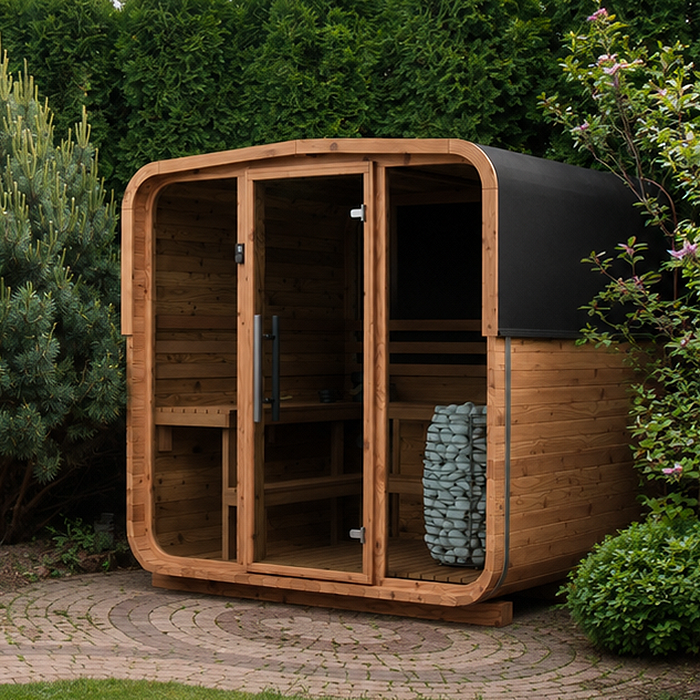
Find out what heating system is specified and which components are included before deciding whether the sauna can work at the proposed location. A product description may mention a heater, but the selected model’s documents should establish whether it is supplied, what controls are included and what must be bought separately. Compare the stated requirements with services available where the sauna will sit, including electrical supply or fuel arrangements where relevant. Do not assume that because utilities reach an accommodation unit, a suitable connection is available at the chosen position. Record each requirement and any additional work it could involve.
For an electric option, ask a qualified electrician to assess the available supply against the manufacturer’s requirements and identify any work needed. For a wood-fired option, ask the supplier or a competent installer to confirm the flue, siting, clearance and fuel-storage requirements for that model and site; do not use a generic diagram as an installation plan. The Thermowood Barrel Sauna N 210 listing is a candidate page, not evidence of heater type or utility needs. Also ask whether water, drainage, lighting or ventilation requirements are specified, and who is responsible for confirming them. Include any resulting work in your project estimate before comparing models.
How will the sauna work for your guests?
Decide how the sauna fits the experience you sell. Is it a private extra for one accommodation unit, a shared site amenity, or something guests reserve in advance? Each arrangement affects privacy, scheduling, access and staff workload. Self-service may suit the style of stay, but visitors still need to understand how to operate the chosen system and where to get help. Think about your team’s availability during evenings or outside reception hours; a control arrangement that needs frequent explanation can be a poor fit even when the footprint works. Be clear about who will open, prepare and close the facility.
Ask to see the proposed operating instructions before purchase and consider whether a first-time visitor can follow them without verbal coaching. Check the manufacturer’s guidance on supervision, user restrictions, cleaning between parties and tasks staff must complete. Then align booking information and on-site signage with that guidance, rather than promising unrestricted use. Decide how access will be allocated if the sauna is shared, and how guests can contact a responsible host when it is away from reception. Add the Thermowood Barrel Sauna N 250 product page to your comparison only after checking whether its documented operation fits the support you can reliably provide.
04
What care and maintenance will the model require?
Ask for precise information on construction materials, finish, care and replacement parts for every candidate. A model name or photograph cannot confirm the material, treatment, cleaning method or suitability for the exposure at your site. Request the care instructions and ask which cleaning products and methods are permitted, how exterior surfaces should be maintained, and what components may need attention over time. This matters on a glamping site because upkeep has to fit staff capacity and booking turnover, not just an owner’s preferred routine. If the stated care schedule assumes seasonal work, check that it fits your opening calendar.
Compare the ongoing work as well as the purchase: who will inspect the unit, clean the benches and surfaces guests touch, keep the surrounding area tidy, and arrange repairs? Ask how replacement parts are identified and sourced, whether routine service is recommended, and which tasks require a qualified person. Estimate staff time during peak periods and decide how to suspend bookings if cleaning or repair cannot be completed before the next guests arrive. Ask what support is available if a part is needed. Use the Thermowood Barrel Sauna LC 260 listing as a prompt to request the same care and service details; do not infer a particular finish or maintenance burden from its name.
Does the sauna fit your season and booking pattern?
Match the model to your operating calendar. A sauna included in a high-season package may have a different booking pattern from one offered all year, and quiet winter weeks can leave a large fixed investment underused. Review expected occupancy, length of stay, turnover between groups, demand for private versus shared sessions and periods when the site route may be difficult to use. Estimate likely demand from bookings or guest feedback where available, rather than assuming every visitor will pay for or use the facility. Consider whether maintenance downtime could fall during a busy period.
Ask the supplier for operating information relevant to your intended schedule, including stated warm-up time, energy or fuel use, and any operating limitations under conditions like those at your site. Use that information with your own tariffs or fuel costs to estimate running expenses; do not copy figures from another sauna or assume a particular session pattern. Allow time between bookings for any cleaning or checks required by the supplier’s instructions. Decide whether access is included in the stay, offered as an extra or booked as a shared amenity, and how that choice affects staff time. A candidate such as the Thermowood Barrel Sauna HCF 300 page needs the same evidence-based assessment as any other model.
05
What should the purchase quote include?
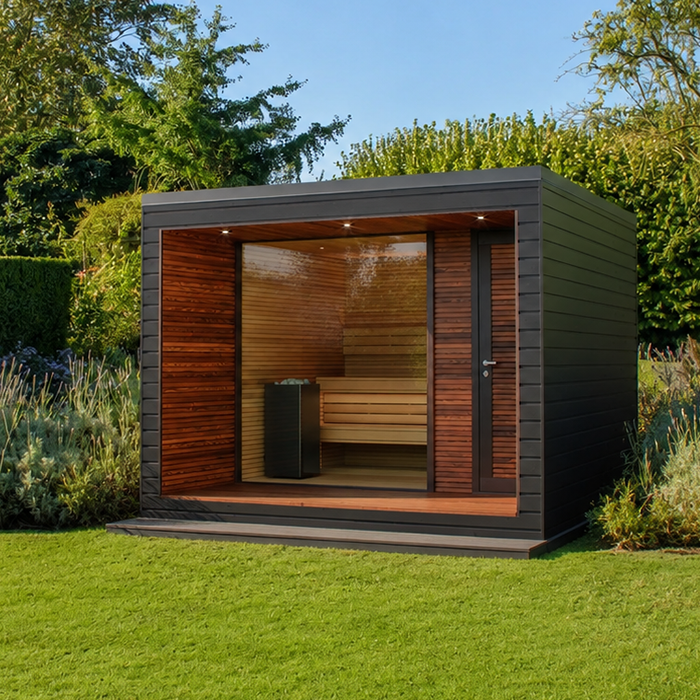
Compare the whole project rather than a headline figure for the sauna. Make an itemised checklist of what the quote includes and excludes: whether it includes a heater, controls, stones or other components, plus any base, surface treatment, assembly, commissioning, electrical or other service work, and site preparation. Treat these as items to verify, not standard inclusions, because configurations differ. Add any changing or washing facility, path, lighting, towel storage, signage and landscaping required by the experience you plan to offer. Ask for each candidate to be priced on the same scope so that an attractive product figure does not hide work that still has to be arranged separately.
Include recurring costs and responsibilities: energy or fuel, cleaning supplies, maintenance, replacement parts, staff time and any recommended servicing. Clarify who handles installation or commissioning, what must be ready before installation and what documentation will be provided. Read the terms for business use, including any limitations or conditions, rather than relying on a general product description. Use the Thermowood Barrel Sauna LCF 300 product page to identify another candidate for the same written quote checklist; do not infer its configuration or cost from the model name. Separate essential requirements from optional extras so you can compare like with like.
How can you compare shortlisted models fairly?
Put every model into a like-for-like table with the same columns: written confirmation of suitability for paying guest use; stated occupancy and internal layout; dimensions and access; siting and service requirements; operating information; cleaning and maintenance; parts and support; and the full purchase, installation and running-cost picture. Mark each entry as confirmed, awaiting an answer or not suitable. This makes gaps visible and stops an attractive price or appearance from outweighing a requirement the site cannot meet. Keep the source for each answer, and ask the people responsible for cleaning and upkeep to review the table; they may spot practical needs a brochure does not address.
Set minimum requirements before comparing preferences. A candidate should fit the real booking pattern, suit the proposed position, have its service requirements assessed by appropriate qualified people, and be manageable by your team. If a key fact is missing, ask for it before ordering rather than treating a photograph or model shorthand as evidence. If no domestic option can meet the site’s use, access or service needs, reconsider the layout or explore a different category of equipment. Choose the option whose fit you can justify from confirmed facts and whose day-to-day role matches the experience you have promised guests.
Frequently asked questions
Does “domestic” automatically mean a sauna is suitable for paying guests?
No. The term does not confirm that the manufacturer supports the model for paid accommodation or repeated guest use. Ask about your expected pattern of use, servicing and any warranty conditions for the specific model, and keep the answer in writing before you buy.
How should I choose the sauna’s capacity?
Base it on the busiest realistic booking pattern and whether use will be private or shared. Compare the manufacturer’s stated capacity with the internal dimensions and bench layout; do not estimate usable space from the outside footprint or model name.
Is it better to offer a private or shared sauna?
That depends on your site layout, guest expectations and how you plan to allocate bookings. Private use can suit one accommodation unit, while a shared facility needs a clear way to manage availability, privacy and demand across the site.
Which site services should I confirm before ordering?
Ask for the chosen model’s exact heating system, included components and stated service requirements. Check electrical or fuel needs as relevant, and ask whether water, drainage, lighting or ventilation is specified. Have qualified professionals assess any work needed at the proposed location.
Can product photographs show whether a sauna will fit?
No. A photograph and model name cannot establish usable internal space, access needs, service requirements or suitability for your site. Use the model’s documentation and confirmed dimensions, then compare them with your site plan.
Treat a sauna as part of the glamping operation, not simply an attractive extra. Confirm that a specific model is supported for your guest-use pattern, then test its capacity, position, services, upkeep and total cost against the actual site and booking calendar. Keeping unknowns separate from confirmed requirements makes the decision clearer: if a model cannot meet the site’s needs on the evidence available, it is better to recognise that before ordering than to build the guest offer around an assumption.
