
Buying a Family Sauna: Choosing Seating Capacity
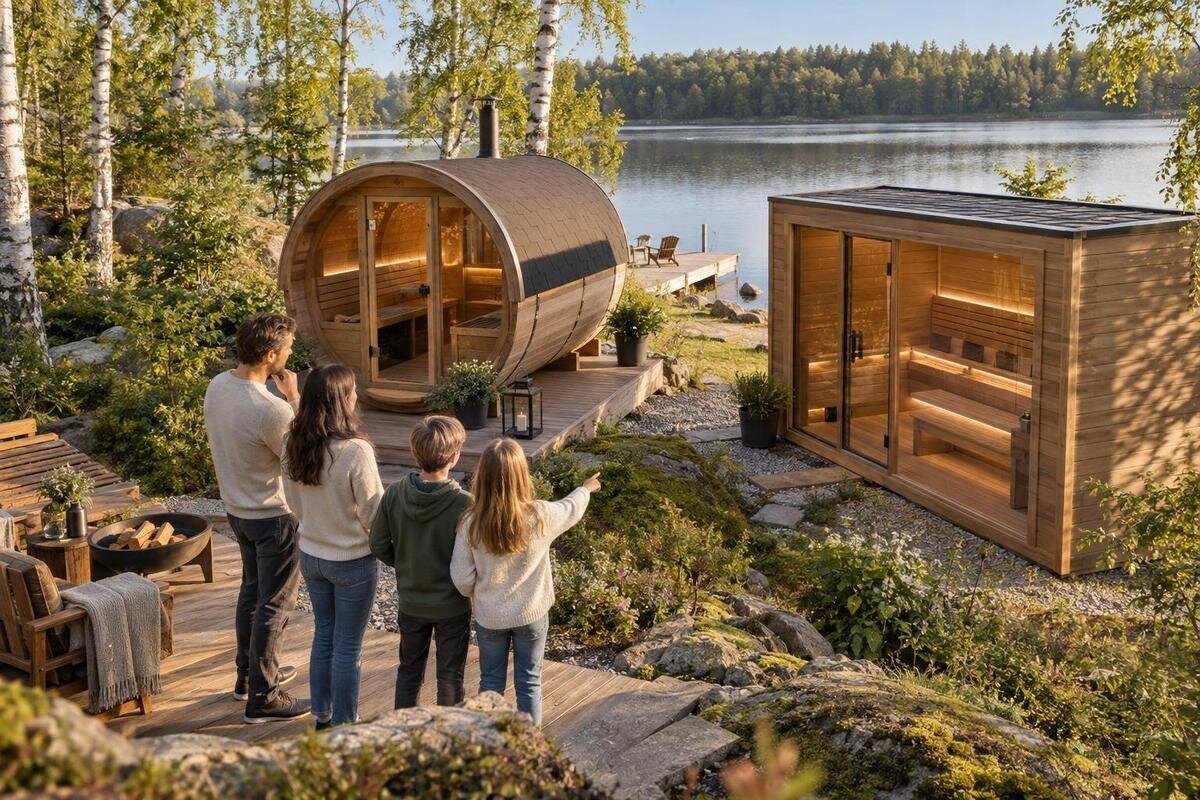
Sauna buying guide
Buying a family sauna is less about matching the household headcount to a number on a product page than about deciding who is likely to use it at once, how often, and with how much room to settle comfortably. A sauna that accommodates everyone for an occasional gathering may not be the best everyday choice if the seating feels cramped; a larger option may use more of your available space and bring additional site requirements. Compare the busiest session you realistically expect with normal use, then check the stated capacity against the usable interior and your home before choosing a model.
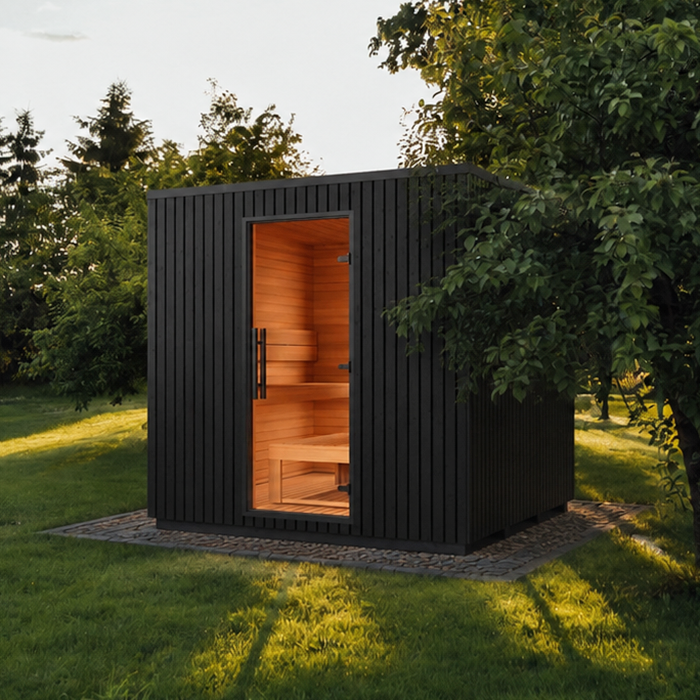
01
Count the people who will use it at the same time
Begin by separating the number of people in your household from the number who will use the sauna at the same time. Ask what a normal session looks like: do all household members want to go in together, or do they tend to use it in pairs and take turns? Consider a weekday evening as well as a weekend, and distinguish a planned family session from a visit when friends or relatives might join. A larger household does not automatically need a sauna for everyone at once; a smaller household may regularly use one as a social space. Capacity should match a pattern you value, not the largest group you can imagine filling it.
Write down three realistic situations: an ordinary session, the busiest group you expect to host regularly, and an occasional gathering you would genuinely plan for. Name who would be there instead of starting with an arbitrary seat count. The everyday case shows what should feel convenient; the busiest regular case reveals whether taking turns would be acceptable. Treat occasional guests as a preference, not an automatic requirement. When browsing, use a product page to identify the listing, not to infer its capacity from the title: the Thermowood Barrel Sauna S 140 should be assessed against its published details, like any other model.
Check what the stated capacity actually means
Once you have a target group, establish what the stated seating capacity means. Look for an explicit figure for simultaneous users and any explanation of how it was reached. A number alone does not tell you whether everyone sits on one bench, whether the layout has more than one seating area, or how much room people have to settle in. Check whether the product information connects the figure to a layout or interior measurements. If it gives a maximum without an explanation, ask the retailer to clarify before treating that number as a like-for-like comparison with another sauna. Treat the figure as a starting point, not a measure of personal space.
Listings may present a person count, a diagram or a general description, and those are not automatically interchangeable. Do not treat a model name, photograph or outside measurement as proof of how many people can sit comfortably inside. For the HC150 Thermowood Barrel Sauna listing, use the same questions as for every candidate: what maximum is stated, what seating arrangement supports it, and what interior information is available? If an answer is missing, record that point as unconfirmed and ask for it; do not fill the gap by estimating from a picture or comparing one model code with another.
02
Allow room to sit comfortably
Seat count is a starting point, not a comfort rating. People need room to sit without pressing against one another, adjust their posture and get into or out of the seating area. A layout that holds the advertised maximum may still feel busy if everyone wants to sit facing the same way or has little room to move. Think about the range of body sizes in your family and how each person prefers to sit. One household may value close conversation; another may want more personal space. The difference matters most in the group you plan to accommodate together, not in a one-off test of the maximum.
Ask for the bench layout, usable bench length and depth, interior measurements, and any restrictions on how the seating is arranged. Check how much clear space remains for access; do not assume a bench can be used in more than one way unless the seller’s information says so. If a diagram is available, compare it with the group you expect to sit together and consider whether everyone can settle in without blocking another person’s place. For the Thermowood Barrel Sauna HC 225 listing, use the published details rather than the model name to judge whether the arrangement could suit your household.
Match capacity to your household’s usual routine
How often everyone uses the sauna together matters as much as the busiest possible group. If family members prefer separate times, a smaller seating capacity may serve daily routines well. If the sauna is part of a shared evening or a regular gathering, taking turns could undermine the reason you are buying it. Talk through who is likely to use it, at what times, and whether anyone would mind waiting. This is a practical household conversation, not a calculation based only on the number of people who live at the address.
Consider whether everyone needs to be present at once or whether staggered use would feel normal in your home. A smaller capacity is not automatically unsuitable if people usually use the sauna in separate groups; equally, a larger maximum may be worth considering if shared use is a regular part of your plans. For the Thermowood Barrel Sauna N 210, check whether the listing provides seating and interior details that can be compared with your routine. Let those details, rather than the model name, inform whether its layout merits further consideration.
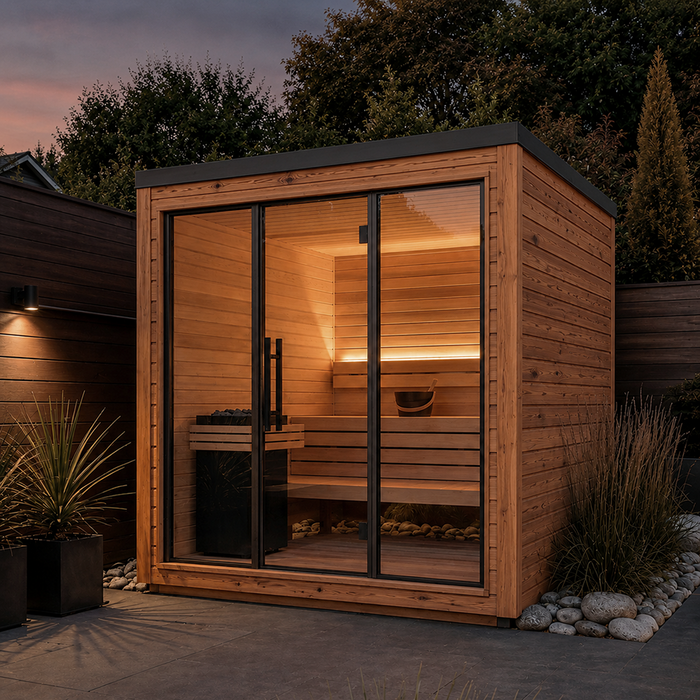
03
Compare usable interior space, not just the footprint
Outside dimensions help you judge whether a sauna could fit in the place you have, but they do not tell you how much room there is for seating. Walls, the entry area and other features can affect the usable interior, so the overall footprint cannot be converted directly into sitting space. For a family capacity decision, ask for the internal measurements and a plan showing where the benches sit. A larger exterior does not automatically promise a more useful arrangement, and a compact footprint cannot be assessed from a photograph alone.
Compare details on the same basis: usable bench length, bench depth, the route to the seating and the interior space where people will sit. A long bench may not help if access or the layout does not suit your group. With the Thermowood Barrel Sauna N 250 page, look for a dimension drawing or ask the seller for one if it is not available. Check what each measurement refers to, and do not infer a larger usable interior from the model code. Clear, comparable measurements make it easier to assess whether the proposed capacity is practical.
Consider different preferences and future changes
Families rarely have identical comfort needs. A child, a taller adult and someone who prefers extra room may experience the same bench differently. Discuss whether your household is happy sitting close together, and whether every intended user can get into the sauna, sit down and stand up comfortably. If a family member has particular mobility or balance needs, assess the actual route and seating with them and seek advice from an appropriately qualified professional where relevant. A headline seat count cannot answer whether a specific layout feels manageable for each person.
Think beyond the household as it is today, but avoid choosing a much larger sauna solely for an uncertain future. Children grow, living arrangements change and guests may visit occasionally; none of those possibilities means every future visitor needs to count as a regular seat. Distinguish people who are likely to use the sauna often from those who might join now and then. If you want flexibility, compare layouts and consider whether the extra capacity is comfortable, practical to house and worth the space for your plans. For the Thermowood Barrel Sauna LC 260, verify the stated arrangement and dimensions rather than drawing conclusions from its name.
04
Balance extra seating with space and installation needs
Capacity has practical consequences outside the sauna too: a roomier interior needs to be considered alongside space around the unit, the route into its final position and site-specific installation requirements. Keep those questions separate. First check the model’s overall dimensions against the proposed location; then ask the supplier or installer what access and clearances are needed. A sauna that seats the group you want still has to reach the site and be assembled or installed there. Dimensions on a product page help with an initial check, but may not answer every question about your particular home.
Before choosing extra capacity, confirm the requirements for that model and location with the supplier and a qualified installer. Ask who is responsible for checking access, any base or support requirements, ventilation and electrical arrangements, and what details they need from you. Do not infer these requirements from another sauna’s listing. Include the Thermowood Barrel Sauna HCF 300 in your comparison only after reviewing its own published information. Its name does not establish its seating capacity or suitability for your site, so treat those as questions to verify before ordering.
Compare listings using the same questions
A simple comparison sheet prevents a headline capacity from deciding the purchase on its own. For each listing, record the declared number of simultaneous users, whether the seller explains that figure, the interior and exterior dimensions, the bench layout and the entry arrangement. Note any other details that affect how people settle in, and keep confirmed information separate from questions. If a page provides only a name and photograph, mark its capacity and usable space as unknown. Do not fill in missing measurements by looking at a similar sauna; appearance alone cannot show whether two interiors offer the same arrangement.
Use that sheet to compare the Thermowood Barrel Sauna LCF 300 listing with any other candidate, but do not assume the code describes its size, seat count or configuration. Note where information came from and when you received it, particularly if a conversation with the seller clarifies something not shown online. Ask for a drawing if layout is central to your choice, and get important capacity or dimension details in writing before relying on them. If two products cannot be compared on the same facts, resolve the gaps first rather than choosing the one with the more convincing-looking photograph.
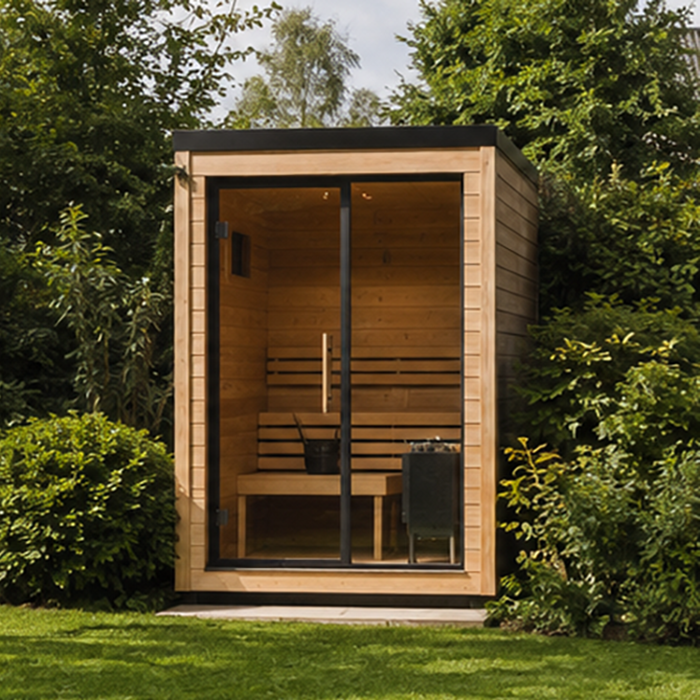
05
Choose a realistic everyday capacity
Once the information is comparable, choose the group your sauna needs to serve comfortably in ordinary use, then decide how much weight to give the busiest regular session. If the full household will use it together each week, accommodating that group may matter more than saving space. If this happens only rarely, choosing for the day-to-day pair or smaller group and taking turns for occasional visits may be more proportionate. Neither approach is automatically right. Ask whether the extra seating is likely to be used often enough to justify its space and other practical consequences for your home.
Make the trade-off explicit: write down the minimum capacity you can accept, the capacity you would prefer and the maximum space you can allocate. If no option meets all three, decide which constraint can move and what compromise your family would notice least. Do not choose a nominal maximum that leaves people uncomfortable simply to say everyone fits, and do not devote space to seats no one is likely to use. This exercise keeps comfort, convenience and the available location in view without pretending one number can make the decision for you.
Confirm the details that affect ordering
Before ordering, review the exact product page and information supplied for that version. Confirm the maximum simultaneous seating figure, interior dimensions, layout and overall dimensions, and ask about wording you do not understand. Do not assume that accessories or fittings shown in an image are included; check what forms part of the order. Clarify which assembly and installation tasks are included and which are your responsibility, along with delivery access and any site checks. These matters are separate from seat count, but they can determine whether the capacity you chose is practical to bring into use.
Keep the answers that influence your decision with the notes from your household discussion. If the seller cannot confirm capacity, usable interior measurements or relevant installation requirements, treat the item as not yet assessed for your needs. That is a reason to ask a focused question, not to guess from the model name. Once the details are clear, decide whether the arrangement suits your usual group and whether the space it needs is proportionate to how you intend to use it. A well-chosen family sauna fits both the people and the home.
Frequently asked questions
How many people should a family sauna seat?
Use the largest group you genuinely expect to sit inside together on a regular basis. Note occasional guests separately: you may want to allow for them, but they need not dictate the everyday capacity. Then compare that group with the stated seating layout and interior measurements.
Does a sauna’s listed capacity guarantee comfortable seating?
No. A maximum gives a useful person count only if the seller explains what it means, and it does not show how much room each person has. Check the bench arrangement, usable dimensions and access, and ask how the figure is intended to be used.
Should I choose a larger sauna for occasional guests?
That depends on how important it is for guests to use the sauna at the same time as your household. Compare that occasional need with your usual routine and the space required. Taking turns for rare visits may be preferable to choosing extra capacity that is seldom used.
Which measurements matter when comparing sauna capacity?
Look for the interior dimensions, usable bench length and depth, seating layout and space to access the benches. Overall dimensions help you judge the unit’s footprint, but they do not tell you how much usable seating room there is inside.
What should I confirm before ordering a family sauna?
Ask the seller to clarify the stated capacity, seating arrangement, interior and overall dimensions, and any installation requirements that remain unclear. Confirm delivery access and which assembly or installation tasks are included, rather than assuming these details from a photograph or model name.
The useful capacity for a family sauna is the one that lets the people who regularly use it together sit comfortably without giving over space to a rarely used maximum. Count the busiest regular group, decide whether occasional guests matter, and test that number against the stated seating layout and interior measurements. If a listing does not explain those details, treat that as an unanswered question rather than a reason to guess. Once the capacity, available space and installation requirements make sense for your home, you can choose with a clear idea of what you need the sauna to do for your family.
