
Buying a Sauna for a Coastal Garden: What to Consider
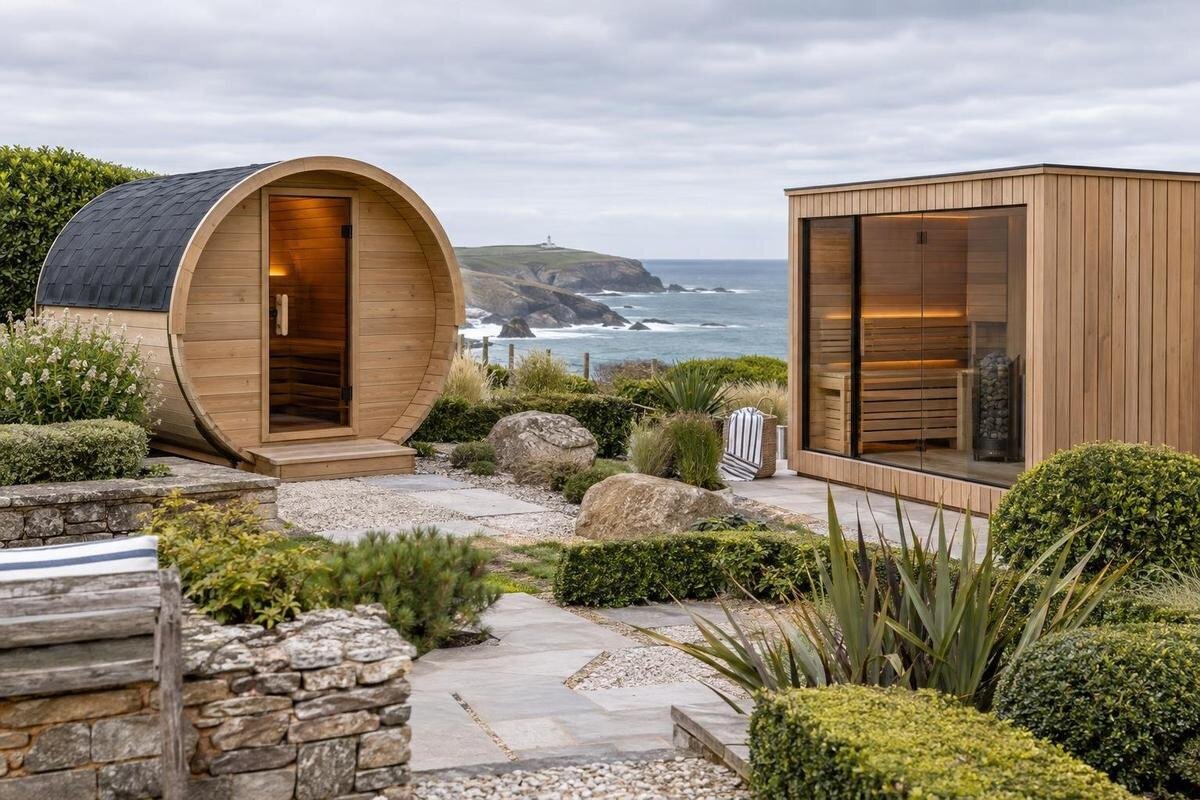
Sauna buying guide
Buying a sauna for a coastal garden involves more than finding a cabin that fits an attractive corner. Salt carried on the breeze, gusting wind, driving rain, the ground beneath the site and access for delivery can all affect which option is practical and what ongoing care it needs. Conditions vary from one garden to another, so a product title or photograph cannot establish coastal suitability. Compare measured space, material and finish information, installation requirements and maintenance guidance against the exact place you have in mind. The aim is to choose a sauna you can install and look after, not simply one that looks right online.
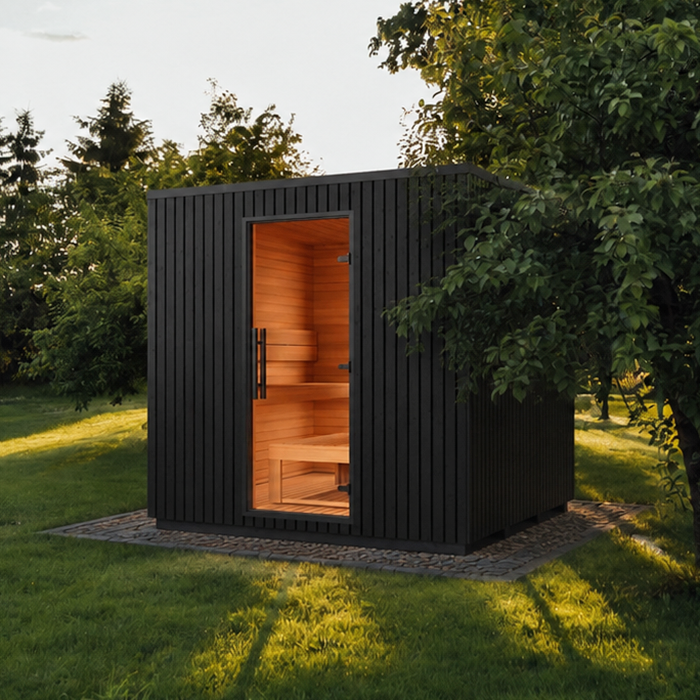
Salt air and coastal exposure
Coastal describes a range of conditions, not a single level of exposure. One garden may be screened from direct sea spray yet receive salt carried inland on the wind; another may face gusts and driving rain across open ground. Airborne salt can settle on outdoor surfaces and may be particularly hard on susceptible metal parts. How much reaches a sauna depends on its position, orientation and shelter. Describe the exact site rather than using distance from the shore or a coastal address as a substitute for exposure. Note whether the proposed position is open, sheltered by buildings or planting, and regularly reached by wind from one direction.
Ask the seller or manufacturer what outdoor use means for the chosen model and whether any components or finishes have stated limits or specific care requirements in salty conditions. A general outdoor label does not prove that every fitting, coating or timber component suits your plot. When looking at the Thermowood barrel sauna S 140, do not treat the model name as a complete specification. Request written construction details, siting requirements and maintenance instructions before weighing it against the exposure at your site. Direct spray and wind-carried salt are different conditions, so a lack of visible spray on a calm day is not enough to settle the question.
Observe wind and rain at the chosen spot
Visit the intended position in different weather if you can. A calm day may hide gusts that funnel between a house and a boundary, pass through a gap in a fence or hit one end of an open garden. Note which direction wind-driven rain reaches the site, where water runs after rainfall, and whether salt or spray is evident on nearby exposed surfaces. You are not trying to forecast every storm; you are building a realistic picture of what the sauna will face. A rough plan showing the house, fences, sheds, trees and proposed footprint gives a supplier or installer more useful context than a general description such as ‘windy garden’.
A wall, hedge or other screen can change how wind moves, but it is not a guaranteed shield: gaps and corners may create different conditions just beyond it. Mark the shelter already in place and any screening you are considering, then check whether it would affect the route to the sauna. Share what you observed when asking for model-specific siting guidance. For the HC150 Thermowood barrel sauna, compare the instructions for that exact model with your measured position; a product image cannot show how wind behaves in your garden.
Keep the sauna accessible as well as sheltered
The most sheltered corner is not automatically the easiest place to use. Leave enough room to reach the entrance comfortably, keep its opening area clear and move in and out without squeezing past a fence. Use the manufacturer’s drawing for required clearances rather than choosing a gap by eye. Consider the route from the house, too: a path that becomes muddy or awkward in wet weather may discourage use, while a straightforward approach can make the sauna more practical. If privacy matters, check sightlines from neighbouring windows and shared paths before settling on a position.
Think about what could grow or collect around the cabin over time. A hedge may provide screening but need trimming; branches can drop leaves or other debris, and a tight enclosure can make routine access difficult. Do not rely on a fence or planting as wind protection unless the installer confirms that the position meets the sauna’s requirements. Keep access for future cleaning, inspection and service work in mind, not just the space needed on installation day. Use the HC 225 barrel sauna as a model to investigate, then mark its confirmed footprint and required clearances on your garden plan.
Choose a size around the people using it
Separate the number of people you expect to use the sauna from any figure in a product title or headline. Think about typical use: one or two people, family sessions or several adults together, and whether everyone will sit or want room to stretch out. Compare the internal bench arrangement, usable width and depth, headroom and clear floor area on a dimensioned plan. A stated maximum occupancy may not tell you how comfortable the layout will feel for your group, so ask what that figure means and how the seating is arranged. If the listing is unclear, request measurements rather than judging scale from a garden photograph.
Keep internal and external dimensions separate. The external footprint determines how the cabin fits on the plot; internal measurements show how much space remains for benches and movement. Add the clearances required by the installation instructions, along with room for the approach and any maintenance the supplier specifies. Mark the entrance area, steps or threshold and nearby obstacles on the same sketch. For the N 210 sauna page, do not infer capacity or dimensions from the model code: use the confirmed plan and stated occupancy. This helps identify a sauna that fits on paper but leaves little usable garden or an awkward route past it.
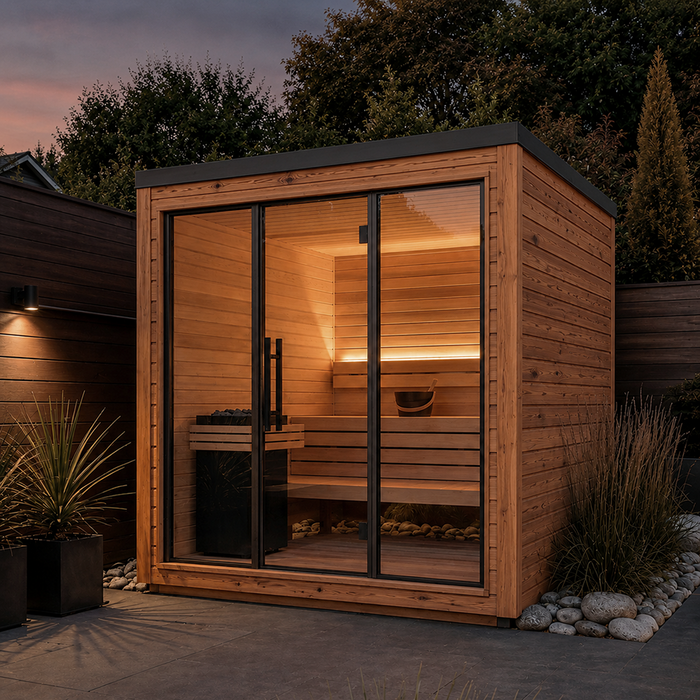
Measure the delivery route, not just the site
Measure the whole route from the point where a vehicle can stop to the final position, not only the width of the garden gate. Record the narrowest passage, tight turns, steps, slopes, overhead obstructions and any surface that could complicate moving a load. Check whether there is space to stage parts or equipment without blocking a shared access route. Do not assume a cabin arrives in small sections or can be carried around a corner because its final footprint fits. Ask the supplier for the exact package dimensions and weight, how it is delivered and what access the delivery or assembly team requires.
Before ordering, settle who handles unloading, movement from the vehicle, assembly and any site preparation, and whether those services are included in the quotation. If access is restricted, share measurements and photographs and get written confirmation that the proposed delivery plan is workable. Clarify where the delivery ends, what space the assembly team needs and what happens if the site is not ready or cannot be reached as planned. For the N 250 model page, compare confirmed delivery and assembly details with your access notes rather than guessing from the model name or an image.
Check timber, metal and finish specifications
Read material descriptions component by component. A term such as ‘thermowood’ in a model name does not, by itself, tell you which timber is used for the walls, roof, floor, benches or supports, or whether the same finish is applied throughout. Ask for the material or timber species, any treatment and exterior coating for each relevant part, and the care instructions that go with them. Clarify what is included and whether any finish or treatment is listed separately. The LC 260 Thermowood barrel sauna is a model name to compare, not a replacement for written materials details; use confirmed information when judging suitability and upkeep.
Pay particular attention to metal fittings because salt and moisture can affect susceptible metals and coatings. Ask what is used for fixings, hinges, handles, vents and any exposed heater parts, and whether the manufacturer considers the specified finish appropriate for the conditions you described. If the supplier uses a general term such as corrosion-resistant, ask which components it covers and what maintenance is still needed. Find out whether a finish needs renewal, which care products are compatible and how damage should be handled. These questions are more useful than guessing from a shiny surface or assuming that every fitting has the same protection.
Confirm drainage and base requirements
Wind-driven rain, splash from paving and water flowing from a roof or nearby downpipe can leave the sauna’s surroundings wetter than the rest of the garden. Look for low spots, persistent puddles and places where runoff crosses the proposed footprint. Ask which base or support arrangement the manufacturer specifies, whether it is included and what ground preparation is required. Do not assume that an existing surface will suit every model, or that one type of base works for every site. If the ground is uneven, soft or otherwise uncertain, have the installation requirements assessed by a qualified professional rather than improvising a support.
Consider how the chosen position affects water and access after installation. A tight fit against a wall can make it difficult to inspect the outside; placing the sauna beneath a drip line may add splash and debris. Ask who prepares the base, what surface and level conditions are required, and which tasks fall outside the product order. For the HCF 300 sauna listing, request the instructions for the exact model before settling on a spot; its title and photograph cannot establish base requirements. Confirm site-specific work with the installer, particularly if you intend to reuse existing paving or rely on uncertain ground conditions.
Settle the heater and power plan before ordering
Decide on the heater arrangement while comparing saunas, not after choosing a place. Confirm whether the heater is part of the offer, a separate option or something you must source, and check that the specified heater is compatible with the exact sauna. Ask for written installation and operating instructions, including the required clearances and ventilation provisions. These details affect the space around the cabin and what must be ready before delivery. Do not infer a heater type or included equipment from a model code, photograph or general category label. For the LCF 300 Thermowood barrel sauna, ask the supplier to confirm the proposed heater and what comes with the order before comparing it with other quotes.
If the chosen arrangement is electric, have a qualified electrician review the manufacturer’s requirements and whether the intended connection and controls are workable at the site. If you are considering a wood-fired heater, ask the supplier and a qualified installer about the applicable flue, clearance and fire-safety requirements for that particular installation. Do not rely on a generic diagram or adapt instructions for another model. Check where controls and service access would be located, and who is responsible for related work. Making these arrangements clear beforehand helps avoid buying a cabin that fits the garden but cannot be installed as planned.
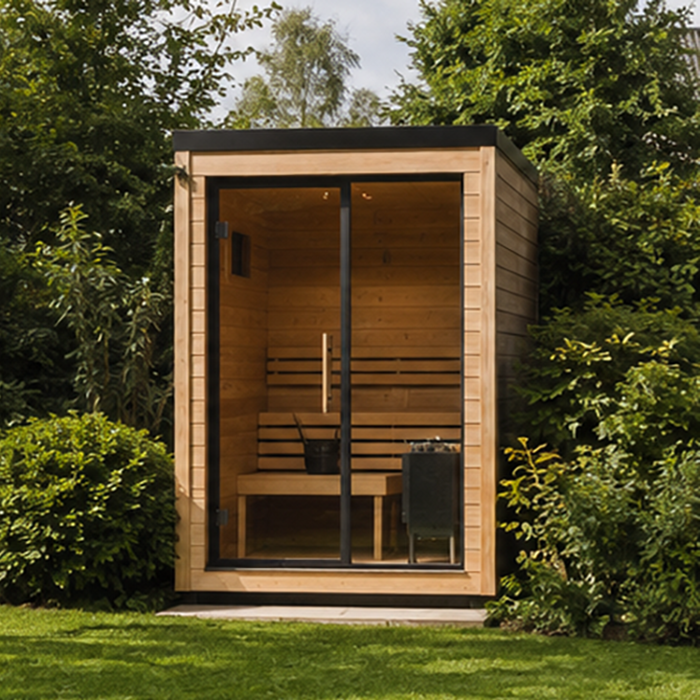
Make ongoing care realistic
Maintenance is part of the coastal buying decision. Ask for the care instructions for the outside timber and finish, roof covering, seals, glazing and metal components where fitted, rather than accepting one general instruction for the whole cabin. Find out how to remove salt deposits, which cleaning products are allowed, whether finishes need renewal and how to recognise damage that should be addressed. The right method and timing depend on the materials and the manufacturer’s guidance, so do not assume that an oil, detergent or treatment used elsewhere is suitable. A written routine lets you judge the ongoing effort before ordering.
Consider whether you can reach the areas identified for inspection without moving heavy items, damaging planting or dismantling a screen. Keep access clear enough to follow the supplier’s care guidance, and decide who will take responsibility if several people use the sauna. Exposure varies, so avoid relying on a fixed interval copied from another product or a sheltered garden; follow the instructions and revisit them if the site proves more exposed than expected. If advice is unclear about a coating or fitting, ask the manufacturer before applying a product. Ease of care is a practical feature, even if it rarely stands out in a product photograph.
Compare the full order before confirming it
Make a comparison sheet for each model you are seriously considering. Record confirmed external and internal dimensions, occupancy and layout, materials and finish by component, siting guidance, base requirements, heater arrangements, maintenance and delivery access. Put included items and separate work in different columns so you can compare like with like. Ask for written answers wherever information is missing, particularly about coastal exposure, materials and installation. A clear comparison shows which differences matter to your garden and which are mainly presentation or model naming. It also gives you a practical record to refer to when confirming the final position and ordering details.
Before confirming an order, read the written terms for delivery, assembly, site readiness, aftercare, warranty scope and how service or replacement-parts questions are handled; treat these as points to verify, not benefits to assume. Confirm who is responsible for ground work and any electrical or heater-related work, and what information the installer needs in advance. If permissions or other site approvals may be relevant, check with the appropriate local authority or a qualified professional rather than relying on a neighbour’s installation. Keep the measurements, model documentation and written answers together so everyone involved is working from the same plan.
Frequently asked questions
Is any outdoor sauna suitable for a coastal garden?
No. The outdoor label alone does not confirm that a sauna’s materials, fittings or finish are suited to salty, exposed conditions. Describe your site to the supplier and ask for the model’s siting requirements, component details and care instructions before deciding.
Does ‘thermowood’ mean the whole sauna is salt-resistant?
No. A term in a model name is not a full materials schedule or proof of suitability for salt exposure. Ask which materials and finishes are used for each relevant component, what maintenance they need and whether the manufacturer considers them appropriate for your site.
How far should I place a sauna from a fence or house?
There is no single distance that suits every model and garden. Check the exact installation instructions for clearances, access and service requirements, then ask a qualified installer to consider your site. Do not estimate the space from a photograph or copy another property’s layout.
What should I measure before arranging delivery?
Measure the route from the vehicle stopping point to the final position, including gates, narrow passages, turns, steps, slopes and overhead obstructions. Ask the supplier for the sauna’s package dimensions and weight, how it will arrive and what access the delivery and assembly team needs.
What should a sauna quotation clarify?
Ask for the confirmed dimensions, materials, heater arrangements, base requirements, delivery, unloading, assembly and any separate site work. Also check the written terms for aftercare, warranty scope and service support. Make sure included items and work you must arrange yourself are clearly separated.
A suitable choice depends on the conditions at the intended position and on what the supplier can confirm about the exact model. Once exposure, access, materials, installation and ongoing care are understood, you can compare options on practical grounds rather than appearance alone. The best fit is one whose requirements make sense for your garden and whose upkeep you are prepared to manage.
