
How to Buy a Sauna for a Property with Narrow Access
Sauna buying guide
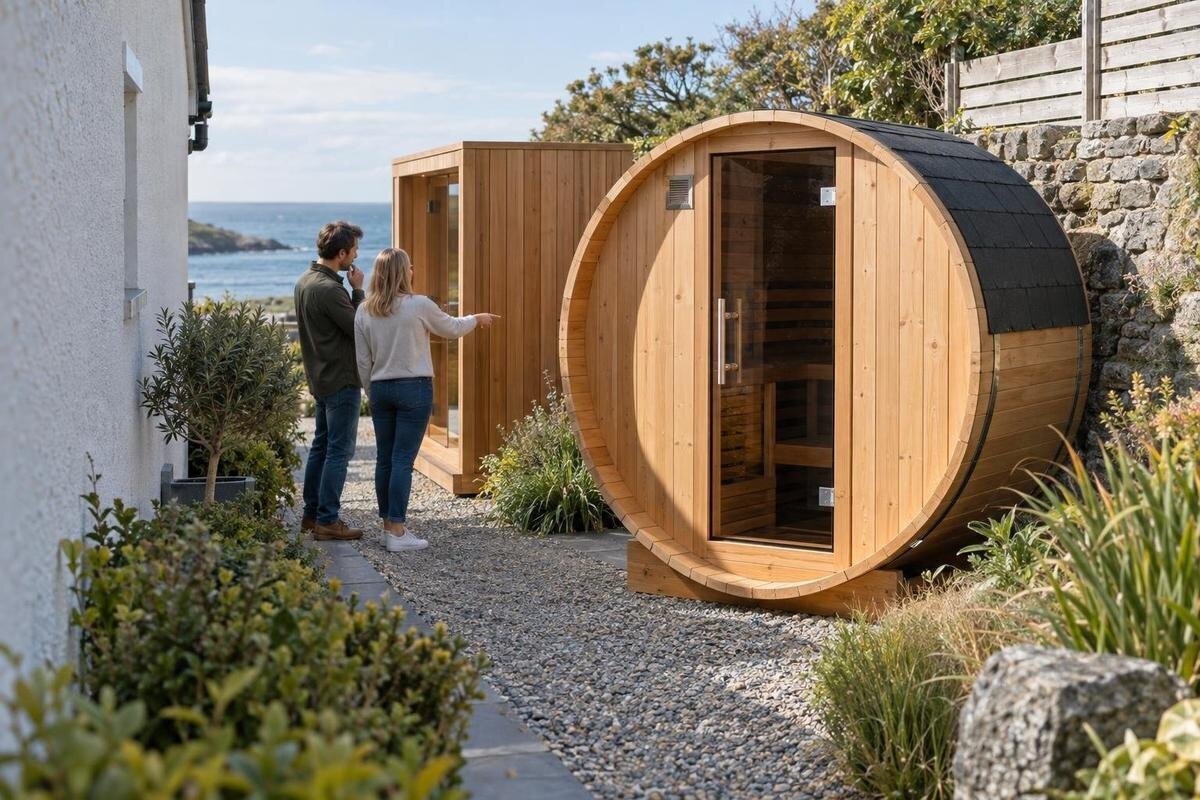
Buying a sauna for a property with narrow access means checking more than the space where it will stand. A gate or passage may be wide enough for a person but not for the largest delivered part, and a clear doorway does not guarantee that an item can turn beyond it. Measure the whole route, get dimensions for the exact delivery format and confirm unloading and assembly requirements before choosing a model.
Map the full route to the intended position
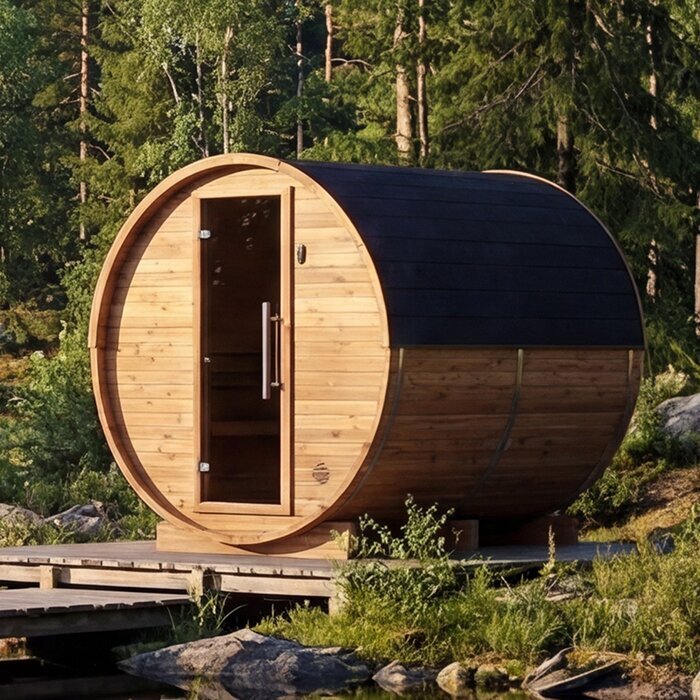
Begin at the point where a delivery vehicle can stop and trace the full route to the sauna’s intended position. Include the driveway or shared access, gate, side passage, external doors, hallways, steps, landings and every tight turn; do not stop at the garden boundary. Mark changes in direction and overhead restrictions as well as the narrowest point. A route can look generous on a plan yet have a low lintel, roof overhang or fixed pipe that limits a load’s height. Measure it in the condition it will be used: open gates fully and note anything that cannot be moved. If the route uses a second gate or shared path, include that too.
Draw a simple route plan and label each measurement with its location, so figures do not become detached from the obstacle they describe. Keep it beside the exact model you are considering. The page for Thermowood Barrel Sauna S 140, for example, identifies a product to check; the name alone is not a delivery specification. Record whether each figure refers to the finished sauna, an individual component or the outer package, and mark missing details as unconfirmed rather than estimating. Use the same model variant throughout your notes. This gives you a route-based shortlist rather than a choice based only on the available floor area.
Measure the clear opening, not the frame
Measure the clear opening, not the nominal size of a door or gate. With it held fully open, check the usable width between surfaces that remain in place, including posts, hinges, handles, latch plates and trim. Measure vertical clearance too, including the underside of a lintel or beam. A threshold, sloping path or change in floor level can reduce usable space for a tall load. If the opening narrows at the top, or the ground is uneven, take readings at more than one point instead of relying on a single tape measurement. Note whether the measurement is taken between fixed edges or an open door leaf.
Write down the smallest clear width and height at each obstruction, along with its exact location. A removable door leaf or gate panel counts as extra clearance only if you can arrange for it to be removed safely and reinstated before delivery; do not assume a carrier will do this. Compare your figures with the outer size of the item that must pass, including packaging, and ask how much handling clearance is needed rather than treating a just-fit measurement as practical. Include the highest point of a threshold where relevant. A page such as HC150 Thermowood Barrel Sauna identifies another model to check, not proof that its goods fit your opening.
Check whether each item can turn
Straight-line width is only one part of the problem. A long, tall or broad package may pass through a doorway when aligned with the passage but have no room to swing into the next one. At a corner, handlers need space for both the item and the change in direction; a narrow landing, wall return, low ceiling or nearby door can stop the turn even when each opening looks wide enough. Check the space on both sides of every bend and the distance between successive turns, not just the corridor width. Include stair turns and door swings in that review. A short route with several turns can be more restrictive than a longer, straight path.
Ask the seller or delivery provider for the dimensions of the largest item in the delivered set, its permitted orientation during handling and any clearance guidance they can provide. Do not assume it can be tilted, stood on end or carried diagonally; that depends on the item and its handling instructions. A taped outline or full-size card template can reveal obvious space conflicts, but a floor outline cannot reproduce height or prove a three-dimensional turn. Use it as an initial check, then confirm awkward bends with someone familiar with the delivery. For Thermowood Barrel Sauna HC 225, check the exact delivery configuration rather than guessing from the model name.
Ask how the sauna will be packed and supplied
The finished sauna’s dimensions and its delivery dimensions answer different questions. Before buying, find out whether the exact model is supplied as a complete assembled unit, a set of panels, a collection of components or in another configuration; do not infer this from a photograph or a general product label. Ask how many packages arrive and obtain each outer package size, including the pallet or protective packing where relevant. If published measurements exclude packing, request the actual packed size. Sauna dimensions for delivery should describe what reaches the property, not only what will stand there once assembled. Package height can matter just as much as width at a low doorway. Make sure the figures relate to the variant you plan to order.
Ask for the largest single package or component as well as the full package list. Several separate pieces do not help if one long or bulky item controls the route; equally, a finished product’s footprint alone does not tell you what must be carried through a gate. Clarify whether the goods need to stay in a particular orientation, whether any item is delivered on a pallet and whether packaging can be removed only after unloading. Ask for a drawing where written dimensions leave the shape unclear. Keep answers tied to the exact model and delivery format. Use Thermowood Barrel Sauna N 210 as a named item on your shortlist, then check its actual supply details rather than reading measurements into the name.
Confirm the delivery point and unloading arrangements
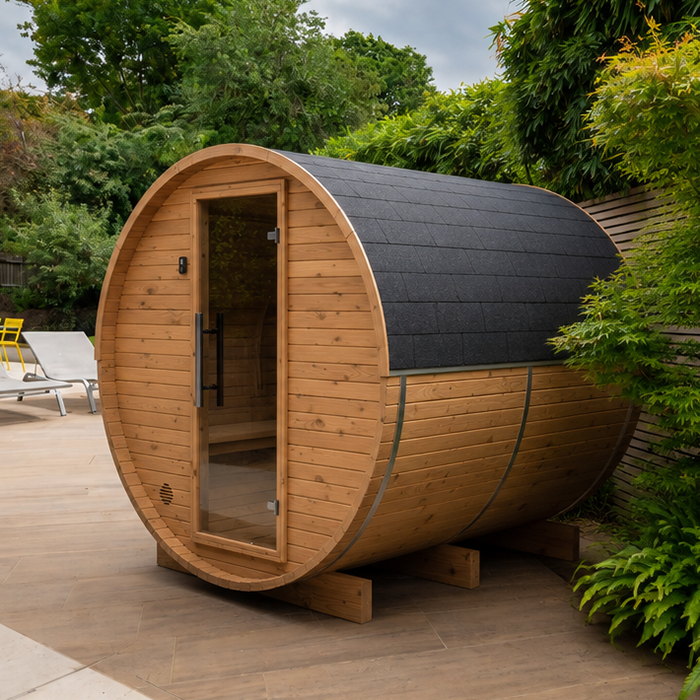
Delivery access to the address is different from access to the sauna site. Ask where the vehicle is expected to stop, whether it needs to reach the property entrance and where the goods will be unloaded. The delivery terms may define a drop-off point rather than movement through a house or along a garden path, so clarify the service boundary in plain terms. For a property with a narrow driveway, shared entrance, height barrier or limited turning space, describe that before ordering instead of assuming the vehicle can approach as shown on a map. Ask what vehicle access is required as well as what happens after it arrives.
Then agree who moves the packages from the unloading point to the intended position and what that task involves. Ask whether the provider offers help beyond unloading, whether steps or tight turns are within the service, and whether you need to arrange suitable handling separately. Do not assume a delivery crew will carry items through a side passage simply because the address is serviceable. When looking at Thermowood Barrel Sauna N 250, use the name to identify the option, then verify delivery terms with the relevant provider; requirements can vary by order and location. Confirm any access notes before delivery is scheduled, rather than leaving that conversation until the day.
Check what onsite assembly changes
Onsite assembly may change which pieces have to travel through a restricted route, but it does not remove the access question. First confirm that the exact model is supplied in a form intended for assembly at the property and identify the largest part that still has to reach the work area. Check whether components can pass in their supplied condition; do not assume they can be separated further or modified. The assembly location also needs room to receive and organise the delivered parts, not only enough space for the finished sauna. Consider how parts reach that area without blocking another tight section.
Read the product-specific assembly information before purchase, or ask the seller for the relevant document and clarification. If a professional will assemble the sauna, involve them while you are still comparing options; ask them to review access, staging space and the final position. The relevant sauna assembly requirements here are about the delivered configuration and route, not just how difficult a build looks on paper. The Thermowood Barrel Sauna LC 260 is an exact product identity to check against its own instructions, not a basis for assuming how it arrives. Confirm who is responsible for bringing parts from the drop-off point to the work area.
Include the outdoor approach and shared access
An outdoor route can be more complicated than a doorway measurement suggests. Check gate posts and latches, fence returns, steps, changes in paving, low branches, gutters and overhangs, plus any narrow point between the house and the final site. Record uneven or sloped sections because they affect how a load can be moved and what help may be needed; a clear width does not establish that the route is safe to handle. Note whether the passage is shared or contains items that must stay in place, rather than planning around an obstruction you cannot control. If the path narrows after a turn, measure that section separately.
Consider alternatives while comparing saunas: another access route, a different intended position or a delivery format that avoids a particular turn may address a genuine constraint. If a gate, fence or fixed fitting would have to come off, establish who can remove and restore it safely before treating that opening as available. Do not plan an improvised lift over a wall or down steps. For Thermowood Barrel Sauna HCF 300, as for any shortlisted model, the useful question is whether its confirmed delivered items and handling plan suit the route you actually have. Check access arrangements where the route crosses a shared area.
Give the seller measurements they can answer
Give the seller or delivery provider measurements they can answer rather than simply saying the access is tight. Identify the exact model and variant, the narrowest clear width and height, the locations of corners and steps, the length of constrained passages and the planned unloading point. Ask for the assembled dimensions, outer dimensions of every package, the largest individual component, the delivery configuration and any orientation or handling restrictions. Clarify which measurements include packaging or a pallet and which do not. Mention any gate or door that must remain in place. That gives the provider concrete details to compare with the delivery information.
Photographs or a short video can help explain a bend or low obstruction, but pair them with measurements and label where each image was taken. Ask whether the information supplied is sufficient to assess the route, what additional clearance is required for the intended handling method and who is responsible for moving goods beyond the stated drop-off point. Keep the response with your order notes and follow up if it describes only the finished sauna. When checking Thermowood Barrel Sauna LCF 300, verify the details for that exact product and delivery arrangement. If the answer is conditional, record what still needs to be arranged.
Compare shortlisted models using confirmed access data
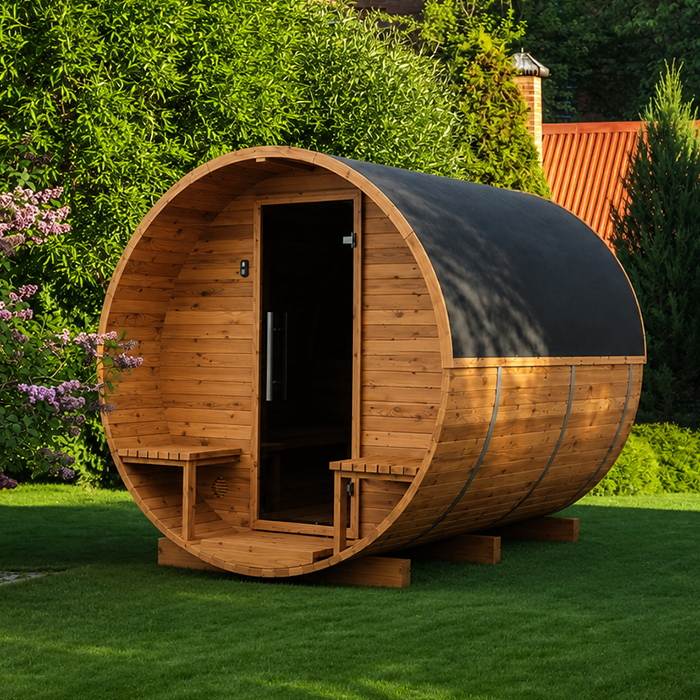
Put each candidate on one route-fit record rather than comparing product names or footprints from memory. For each exact variant, note the documented delivery format, largest package or component, packed width, height and length, whether measurements include packaging, the narrowest openings, turns and overhead restrictions, and where delivery ends. Mark each point as confirmed, still to be checked or not applicable. This makes it easier to spot a mismatch at one point instead of letting an attractive measurement hide it. Keep the comparison consistent: an assembled width should not be set against a package width. Note who confirmed the dimensions and when.
Screen out options that cannot pass or would require handling the provider has not approved, then compare the remaining choices on factors that matter to you, such as the finished dimensions and how the sauna will fit the site. A smaller footprint is not evidence of easier delivery; a finished cabin may arrive in several pieces, while a compact-looking model may still have a large package. Only confirmed dimensions for the actual delivery format can settle that question. If one response is missing, leave that candidate unresolved rather than treating silence as confirmation. For a sauna for a narrow-access property, access suitability is a threshold for the purchase, not an optional detail to revisit afterwards.
Resolve access gaps before placing the order
Before placing the order, make sure the product identity, delivery format and access assumptions all refer to the same version. Recheck the route if there have been building works, a replacement gate, stored materials or a change in the intended position; an earlier measurement may no longer describe the route. Tell the provider about unusual restrictions and confirm the agreed unloading point and onward handling plan in writing. If the product page or delivery terms change, do not carry old figures across without checking. Keep any drawings or confirmed dimensions with the order details, particularly if someone else will organise access on delivery day.
Treat missing package dimensions, an unexplained turning requirement or unclear responsibility for a narrow passage as an open buying issue, not a detail to resolve on the day. Pause to get the figures or involve a suitably qualified delivery or assembly professional where the route calls for specialist handling. If the confirmed arrangement still does not work, change the route, site or sauna choice before committing. A clear access plan is part of selecting a sauna, not merely a delivery-day convenience. Do not assume the delivery crew can improvise around a restriction.
Frequently asked questions
Is measuring the gate enough?
No. Measure the complete route from the unloading point to the intended sauna position, including clear widths and heights, overhead obstructions, steps and turns. The smallest doorway matters, but the place where an item needs to change direction can be just as restrictive.
Which sauna dimensions matter for delivery?
The dimensions of the goods that will actually arrive: ask for the outer sizes of the packages and the largest individual component, including packaging or a pallet where relevant. The finished sauna’s dimensions describe its size once assembled, not necessarily what needs to pass through your access route.
How can I check whether a sauna will turn a corner?
Record the width and height of the approach, the space available at the corner and the distance between turns. Ask the seller or delivery provider for the largest item’s dimensions, handling orientation and clearance guidance. A doorway measurement alone cannot confirm that an item can be turned safely.
What should I ask the delivery provider?
Confirm where the vehicle will stop, where the goods will be unloaded and whether the service includes moving them beyond that point. Describe any narrow gates, steps, low overheads or turns, and ask what handling arrangements are required for the route to the intended position.
Should I order before confirming access?
Resolve access questions before placing the order. Check the exact model’s delivery format, package dimensions, route clearances and unloading arrangements. If any information is missing or a turn is uncertain, ask for clarification or professional advice rather than relying on a guess or a delivery crew to improvise.
Narrow access does not automatically rule out a sauna, but it makes the delivery configuration part of the buying decision. Measure the complete route, compare it with confirmed dimensions for the items that will actually arrive, and agree how unloading and assembly will work for the model you choose. If any opening, turn or responsibility remains unclear, resolve it before ordering; the finished sauna’s footprint cannot answer whether it will reach its place.
