
Buying a Sauna for Cold Winters: Ask About Heat-Up Time and Heat Loss
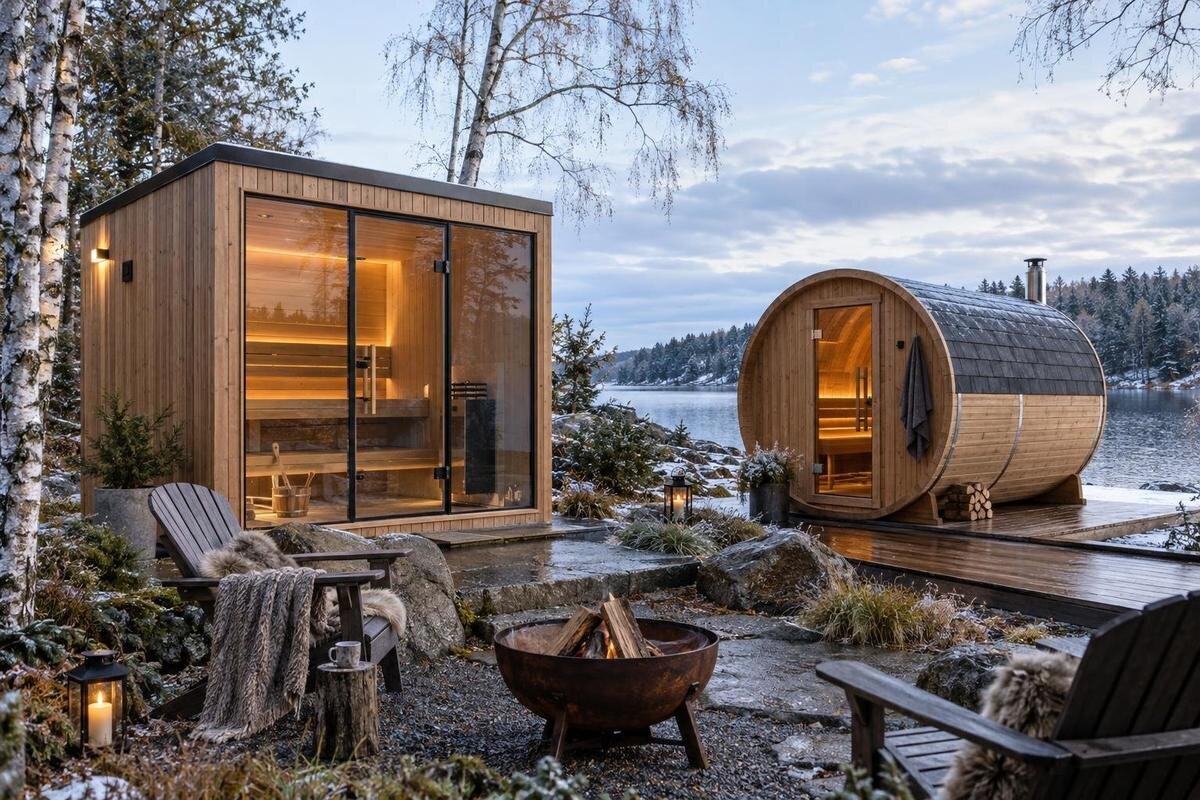
Sauna buying guide
Buying a sauna for cold winters takes more than comparing a heater rating or a headline heat-up time. A useful comparison explains how long the exact model takes to reach a stated temperature from a stated starting point, and what happens to energy use once it is warm. Construction, doors, glazing, ventilation, heater matching and exposure to wind all affect the result. Ask for evidence tied to the configuration you would order, then weigh start-up speed, heat retention and the practical requirements of your site together. If winter performance figures are unavailable, keep that uncertainty visible rather than filling it with assumptions.
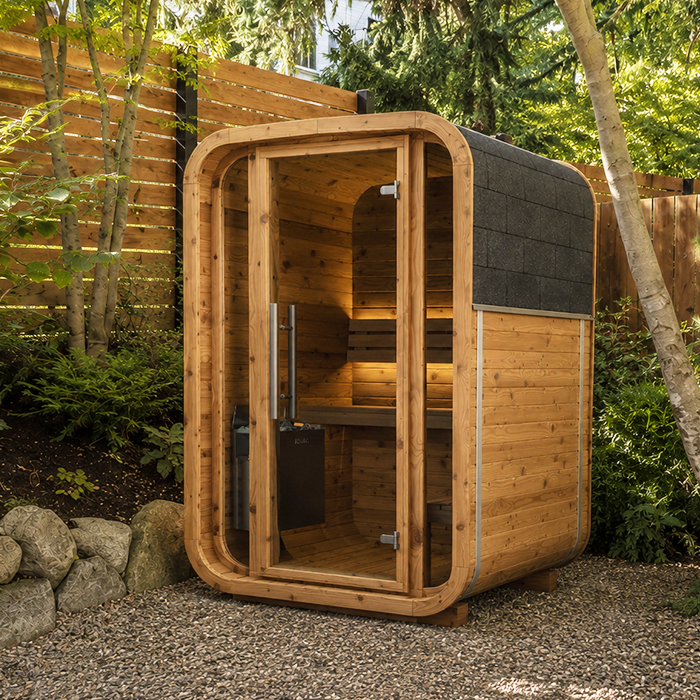
Why winter changes the buying comparison
In winter, a sauna may start from colder air and colder surrounding surfaces than it would in mild weather. The heater must raise the air temperature while also warming the interior surfaces; meanwhile, heat moves out through the walls, roof, floor and openings. A lower outdoor temperature increases the difference between inside and outside, and an exposed, windy position can increase heat loss. That can affect both the time before the room reaches its target and the energy needed to maintain it. A headline heat-up figure without its test conditions will not answer both questions.
Before comparing products, decide whether you expect to heat the room from cold for each visit or keep it warm during a longer period of use. Those patterns put different emphasis on start-up time and heat retention, so request information about both where available. Also record the intended number of users and the manufacturer's stated room capacity, rather than choosing a smaller enclosure solely for a quicker warm-up. If you are reviewing the Thermowood barrel sauna S 140 product page, treat the name as a starting point: it does not establish winter heat-up time, insulation or running cost.
What a stated heat-up time actually measures
Ask what the seller means by heat-up time. Is the clock measured from a fully cold sauna, from the heater being switched on, or after the room has already been warmed? What temperature is the starting point, what target is used, and where is the reading taken? A control sensor reaching its set point does not necessarily mean every bench and surface has warmed evenly. Find out whether the quoted time is for the exact sauna and heater combination you would buy, rather than a general estimate for a product range. Ask, too, whether the clock includes any preheating delay or control sequence.
Clarify the setup used for the figure: whether the sauna is empty, how doors are treated, which ventilation arrangement is in place and whether the test was indoors or outdoors. These details do not need to match your garden exactly to be useful, but they show what the number represents. Ask whether the reading comes from the sauna's installed sensor or another measurement point, because readings taken in different places are not directly interchangeable. When checking the HC150 Thermowood barrel sauna listing, look for an explicit, model-specific explanation; if the listing does not provide one, ask the seller instead of assuming a time from its name.
Ask for winter test conditions
Ask for a winter-relevant starting temperature, or at least the range of conditions behind the performance estimate. A result measured with the sauna and its surroundings already warm may not describe a cold start after a frosty night. Likewise, a sheltered test location may not represent an exposed garden. Ask whether the figure is measured or estimated, what the outdoor temperature was, and whether the sauna was protected from wind. Find out whether the sauna itself had cooled fully or whether only the surrounding air was cool; that distinction affects what the test tells you. A precise-looking number without these details can create false confidence.
Use comparisons only when the same assumptions apply. If one seller reports time from room temperature and another from a cold start, the shorter result is not necessarily the faster winter option. Request a range for colder conditions if the manufacturer has one, and note whether it is a test result or a projection. You can also ask how wind exposure, the surface under the sauna and the exact heater configuration were handled; do not assume these were included. The Thermowood barrel sauna HC 225 product page can be assessed using the same questions as any other listing; its name, shape or photographs do not provide a cold-weather performance figure.
Check insulation across the whole sauna
Heat retention depends on the complete envelope, not on a single material label. Ask how the walls, roof, floor and door are constructed, whether insulation is included, and which parts of the sauna receive it. Timber thickness or a product name does not by itself tell you the thermal performance of the assembled room. If the seller gives an insulation value, find out which component it describes, what test or calculation it represents, and whether it applies to the exact version and installation you are considering. A figure for one wall may not describe the roof or floor.
Joints and transitions matter as well as broad surfaces: gaps around a door, poorly aligned parts or an uninsulated roof section can undermine an otherwise strong wall specification. Ask for a construction diagram or a clear written description of the layers, and how the components are meant to meet when assembled. Check whether the listed insulation details apply to the whole room or only to optional parts. Do not compare an insulated cabin with a sauna of different construction using outside dimensions alone. For the Thermowood barrel sauna N 210 page, verify the construction details rather than reading them into the product title.
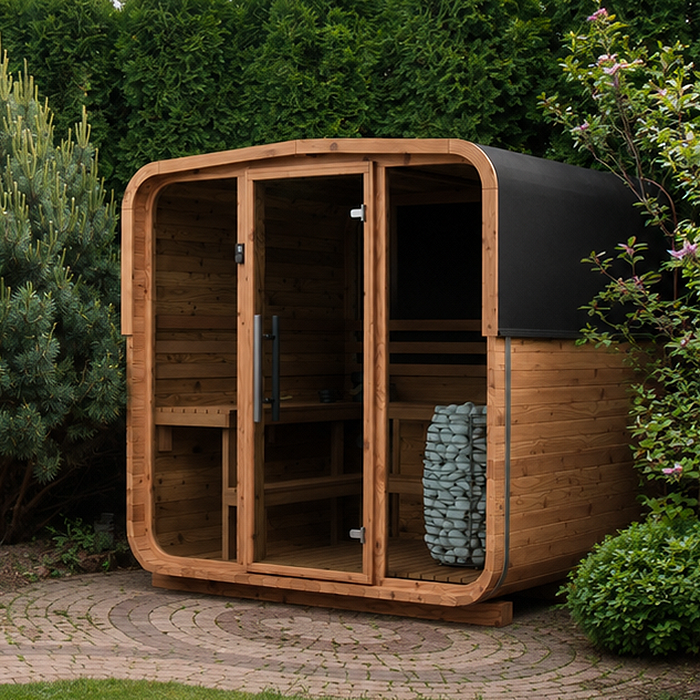
Doors, glazing and ventilation affect heat retention
Doors and windows deserve their own questions. Glass and timber sections can transfer heat differently, and glazed areas have a different construction from an insulated wall. Ask how many glazed sections are included in the quoted configuration, how they are built, and how door seals are described. The area of glazing and the seal around the door may matter to heat loss, but their impact cannot be judged from a photograph. Ask for details that apply to the configuration, not just a generic description of a product family, and check whether any optional window changes the quoted performance.
Ventilation is part of the sauna's designed operation, not simply a gap to close when the weather turns cold. Ask where air enters and leaves, whether those openings are adjustable, and what the manufacturer recommends for ordinary use. Do not block or alter designed vents to chase a quicker warm-up or lower heat loss; that can change how the sauna operates and limit a performance comparison. If a quoted test used a different ventilation arrangement from the one you would use, ask how much that affects the comparison. When reviewing the Thermowood barrel sauna N 250 listing, confirm vent and door details for the exact configuration rather than assuming all models are alike.
Confirm the heater matches the sauna
Warm-up depends on the heater as well as the room. Ask which heater is included, whether it is compatible with the sauna's stated volume and construction, and whether the manufacturer's recommendation changes when glazing or other features are present. A heater that is not matched to the specific enclosure can make a quoted warm-up time irrelevant. Request the volume range or configuration guidance from the seller or manufacturer; do not rely on a rough calculation from the outside dimensions of a product. Ask whether the heater recommendation accounts for the wall and glazing specification you would order.
Confirm the heater type and its input requirements before placing an order, especially if a heater is supplied separately or is an optional extra. Have a qualified electrician assess electrical requirements, and use an appropriately qualified professional for any combustion or flue-related work. These are checks, not installation instructions: they help establish whether the heater being quoted can be considered for the exact sauna and site. Ask whether controls or preheating features are included or additional, rather than assuming they come with the model; they can affect how convenient it is to start heating before a winter visit. The Thermowood barrel sauna LC 260 page is another listing to check against those questions.
Compare energy use as well as speed
Fast warming and low energy use are related but not interchangeable. A heater's rated input does not tell you the total energy needed for a winter visit: the result also depends on the starting temperature, time spent heating, how much heat escapes and whether the heater continues to maintain the set point. Ask for energy-use information for the warm-up phase and for maintaining temperature, with indoor and outdoor conditions stated. If the seller offers only an estimate, ask which assumptions it uses and whether they represent winter operation. Record the figure as an estimate in your notes.
Compare figures in the units that apply to the heating system, and use the same tariff or fuel-cost assumption when translating energy use into your own running-cost estimate. Do not compare one model's metered test with another's theoretical maximum input as though they were equivalent. If exact consumption data are unavailable, a fair comparison can still record what is known, what is estimated and what has not been supplied. For the Thermowood barrel sauna HCF 300 product listing, seek the same basis of measurement you request from every shortlisted seller; the product name alone is no guide to energy use.
Account for the winter site and installation
Heat-retention figures depend partly on where a sauna is installed. A sheltered position and an exposed, windy one can present different conditions, so describe the planned site when asking about winter use. Ask what external exposure and weather protection the particular model is designed for, and whether the manufacturer's siting instructions allow the location you have in mind. A screen or shelter does not prove that a model is suitable for every covered setting; check the specific product guidance. This keeps a site assumption from being mistaken for a performance feature.
Think through access and assembly before delivery too. Confirm that the proposed location meets the seller's stated base and clearance requirements, that components can reach it, and that assembly can follow the manufacturer's instructions. Do not guess at a foundation design or alter a structure to solve a fit problem; ask the supplier or a qualified installer. Check that the chosen site leaves access to the parts that need routine attention, without changing the specified installation. When inspecting the Thermowood barrel sauna LCF 300 page, use the product instructions to confirm site requirements before treating the listing as an order-ready option.
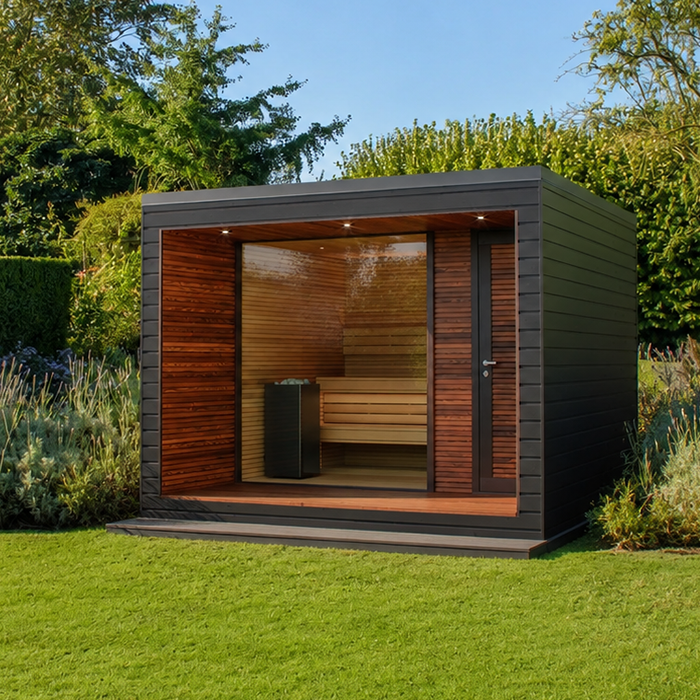
Get comparable answers in writing
Before ordering, get a written answer tied to the exact model and configuration on the quote. It should identify the heater, included controls, any glazing or other options, and the assumptions behind the stated heat-up time. Ask for the starting and target temperatures, measurement point, outdoor conditions and whether the result is measured or estimated. For heat retention, ask which wall, roof and floor construction has been included, what is known about seals and ventilation, and whether any figures refer to the assembled sauna rather than an isolated component. This gives you a like-for-like record if options are listed separately.
Ask the seller to distinguish published test data from a manufacturer's forecast and from a general answer based on a similar model. If a requested figure does not exist, having that limitation confirmed is more useful than receiving a number with no explanation. Save the product page and written reply with your quote, so you can check that the heater and options have not changed between comparison and checkout. This matters when a heater or glazing is selected separately: a strong answer for one configuration does not automatically describe another.
Weigh heat-up time against heat retention
Make the final choice by looking at heat-up, retention and fit together. A sauna with a short advertised warm-up time may have been tested in mild conditions; a well-insulated room still needs a suitable heater and a realistic cold-start expectation. Give more weight to figures that specify the exact model, heater, starting conditions and target, then compare how the construction manages heat loss during use. If two options lack equivalent evidence, treat the unknown as an unknown, not as proof that one performs better. Make a separate note of features confirmed in writing and those still unanswered.
Match that evidence to how your household will use the sauna in winter: a cold start before a planned session makes preheat time important, while longer use also makes heat retention and ongoing energy demand relevant. Keep capacity and site constraints in view rather than choosing a smaller room solely to reduce the volume of air to heat. The best basis for purchase is a configuration you can install safely and a performance claim you can interpret, even if no seller can promise one fixed warm-up time for every winter day. Where the data remain limited, choose with that uncertainty in mind.
Frequently asked questions
What is a good sauna heat-up time in winter?
There is no single time that applies to every sauna and winter site. A useful figure identifies the exact model and heater, how cold the sauna was at the start, the target temperature, where the reading was taken and the outdoor conditions. Compare like with like. If a seller gives a time without those details, ask what it measures before using it to choose.
Does thicker timber mean better insulation?
Not by itself. Timber thickness does not describe the whole assembled room or explain how the roof, floor, door and joints are built. Ask whether insulation is included, which parts it covers and whether any stated value applies to the exact model and configuration you would order.
Will a more powerful heater always cost less to run?
No. A heater's input rating alone does not tell you the energy needed for a winter start or to maintain warmth. The starting temperature, heat loss, time in use and heater configuration all matter. Ask for energy-use figures and the conditions behind them, then compare estimates on the same basis.
Can I close the ventilation to reduce heat loss?
Do not block or alter designed vents to try to improve heat-up time or heat retention. Ask the manufacturer what ventilation arrangement is intended for the sauna and whether any adjustments are permitted.
What should I confirm before ordering?
Get the exact model and configuration, heater details, heat-up test conditions, construction and insulation information, ventilation details, and any energy-use figures in writing. Also check the product's site and installation requirements with the seller and a qualified professional where needed.
Winter performance is clearest when heat-up and energy-use figures are tied to the same model, heater, target and starting conditions. Compare the whole sauna envelope and the planned site, not a material name or headline number. If a seller cannot provide comparable details, keep that uncertainty in view and base your decision on the evidence available for the configuration you intend to order.
