
Buying a Sauna for Occasional Weekend Use

Sauna buying guide
Buying a sauna for occasional weekend use is a balance between the experience you want and the time, space and money involved in each visit. Before choosing a model, decide who is likely to use it together, where it can go and what must be arranged for delivery and installation. Compare usable seating and complete ownership costs, not only the product name or a headline price. A sauna that suits a realistic weekend routine is a stronger choice than one sized around guests or features you may seldom use.
01
Match the sauna to a realistic weekend routine
Before opening product pages, map out a normal weekend. Who is likely to use the sauna at the same time: one person, a couple, family members or occasional visitors? Would one visit involve a single session, or several people taking turns? Do you want the sauna indoors or in the garden? These are practical assumptions for comparing capacity and layout, not forecasts you have to get exactly right. Note how many weekends you genuinely expect to use it; that estimate will help later when you compare running costs. If visits will be intermittent, a larger cabin may occupy space and add cost without improving your usual routine. If guests often join you, though, extra room may matter more than the smallest footprint.
Consider the effort around each session as well as the time spent inside. Think about the route from the house, where towels and outdoor clothes will go, and whether changing or washing facilities are conveniently close. A garden location should work for the weather in which you expect to use it; an indoor space must still serve its other household purposes. Consider privacy and whether people can reach the sauna without making an ordinary weekend awkward for others. These practicalities can rule a location in or out before you compare finishes. Treat them as a first filter only: the chosen model still has to meet its own installation, operating and safety instructions, rather than assumptions based on a similar-looking sauna.
Compare sauna types and intended locations
Sauna types differ in both where they sit and how they are heated, so compare those as separate decisions. An indoor cabin must fit a room and its access route; an outdoor sauna needs a suitable place outside. The heating method is a further choice: traditional saunas use a heater, while infrared models use infrared emitters. Ask what kind of experience each product is designed to provide, and compare its controls, installation requirements and care guidance. The distinction is not simply a matter of weekend frequency: your setting, preferred format and budget still decide which approach is worth considering. Check the manufacturer's description for the exact model; a category label does not answer every question about its operation.
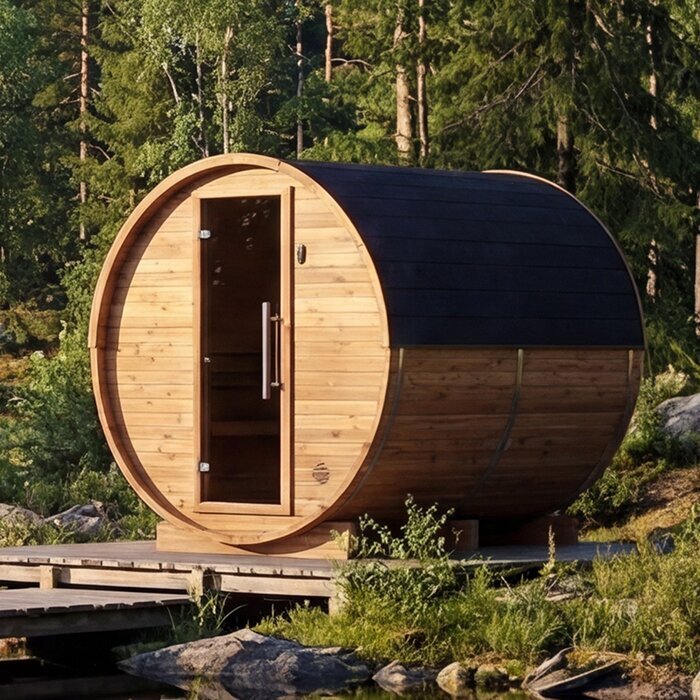
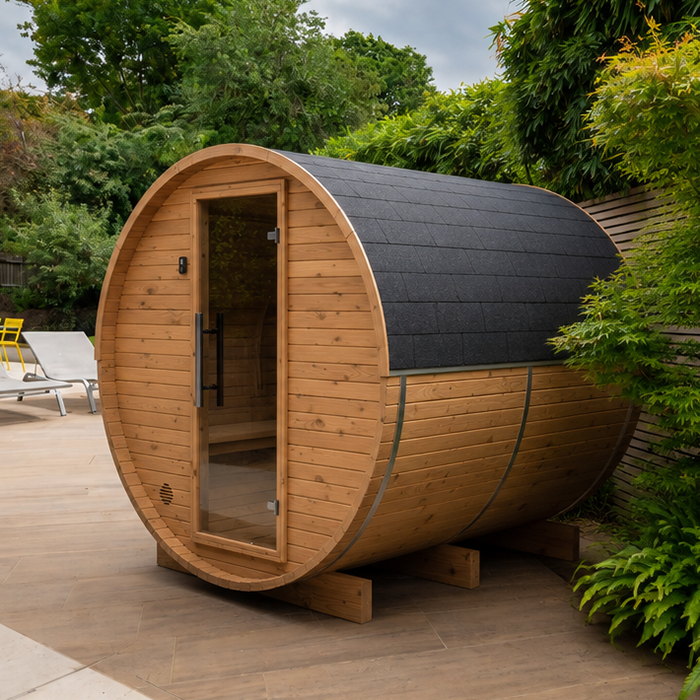
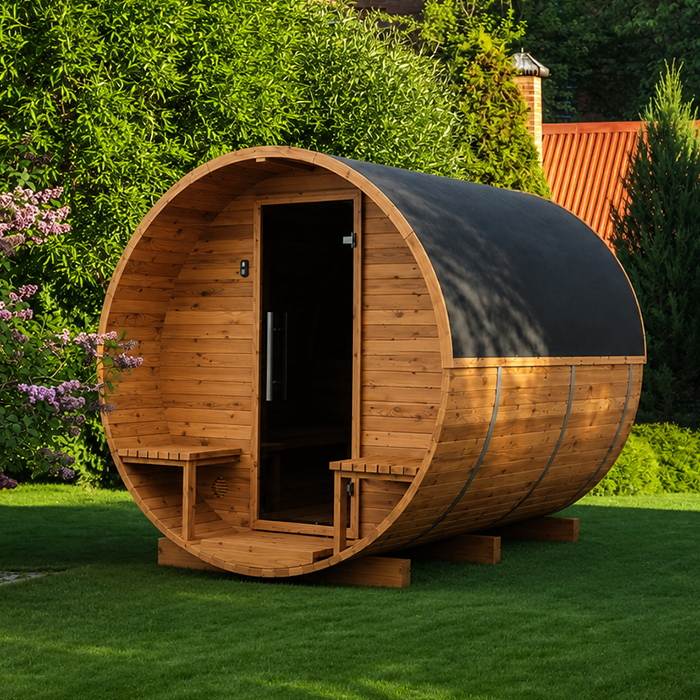
Also look beyond the outline shown in a photograph. A barrel-style design has a different shape from a rectangular cabin, but its silhouette cannot tell you the usable interior, seating arrangement, heating method or site requirements. For a catalogue example, see the Thermowood Barrel Sauna S 140 product page and look for a drawing, intended placement and list of included parts. Confirm the exact product's indoor or outdoor suitability in its documentation; do not assume it from the category or an image. If a detail is missing, leave it as an open question rather than treating the model name as a specification.
02
Choose capacity for the people who will use it
A capacity figure is useful only when you know what it means. Ask whether the stated number is a maximum and what the seating arrangement looks like at that occupancy. A cabin described for several people might offer close side-by-side seating, whereas the number alone says nothing about personal space, bench layout or how easily occupants can sit down and leave. For occasional use, base the choice on the group most likely to use it together, then decide whether accommodating visitors justifies more space. Avoid buying extra capacity for a rare event if it makes the sauna harder to place or more costly to install; equally, do not choose a cramped layout just to minimise the footprint.
Compare the internal dimensions, bench length and layout against that group rather than relying on an external measurement or a model code. Use the HC150 Thermowood Barrel Sauna listing as one product to assess from its stated information; the code itself does not confirm capacity or comfort. Look for a product drawing that shows where people sit and how the entrance is arranged, and ask how the listed maximum relates to a practical group size. If the sauna will be shared by people who prefer different amounts of room, factor that into the choice. Resolve questions about seating before ordering rather than after the cabin is installed.
Check internal dimensions and bench layout
An external footprint does not describe the space people can use inside. Check the cabin's inside width and length, bench length and depth, headroom, door position, and where the heater or other fittings sit. Those details affect whether occupants can sit as intended and whether the layout suits your routine. If you want the option of lying along a bench, verify the usable length from the drawing rather than assuming it from the product type. Also check whether the seating levels and access work for everyone who is likely to use it. Ask for dimensions of the version actually quoted, because photographs and category images may show another configuration.
Measure the proposed spot and the route to it separately. Record door openings, tight turns, steps, low ceilings or overhead obstacles, and the space needed to reach the entrance after installation. For an indoor sauna, compare room dimensions and ceiling height with the manufacturer's instructions; for a garden location, check the external footprint and access for routine maintenance. The Thermowood Barrel Sauna HC 225 product page is one listing to review, but its code and image are no substitute for written measurements. Compare the supplier's dimensions with your own notes, and account for the space needed to assemble the sauna as well as its final footprint.
03
Confirm site and electrical requirements
Installation requirements need to be understood before you order, especially when a cabin is being added to a room or garden that already serves another purpose. Ask what kind of base or floor support the manufacturer specifies and whether the proposed surface meets that requirement; do not assume a paved area, timber deck or existing floor is suitable. Check required clearances, ventilation arrangements and space around the entrance in the product instructions. For an indoor sauna, include ceiling height and room conditions in the check. For outdoors, verify how site preparation is handled and who is responsible for it. If you are unsure about a proposed location, get it assessed before committing to delivery.
Electrical provision is a separate part of the plan. Confirm the selected sauna's heater and control requirements from its documentation, including what is and is not included in the quoted configuration. Have a qualified electrician assess the proposed connection and carry out any electrical work; do not infer suitability from an existing socket or from a different model. The Thermowood Barrel Sauna N 210 page can be reviewed as one product listing, but answers about its intended base, clearances or connection need to come from the product information or seller. Resolve the site and electrical questions before delivery is arranged, so the work and total cost are not left as assumptions.
Compare the complete purchase cost
Treat the purchase price as one part of the budget, not the cost of having a usable sauna at home. Ask for an itemised quotation that identifies the sauna configuration and spells out whether the heater, controls, benches and other stated fittings are included. Then separate delivery, unloading, assembly, base or site preparation, electrical work and any optional accessories. Some costs may not apply to your chosen product, so compare what is actually included rather than using a generic allowance. A lower headline figure is not a fair comparison if its exclusions leave you with more work or separate purchases. Check who supplies each part of the project.
Compare like with like across a shortlist: the same heating type, similar capacity, and the same delivery and assembly scope, with a clear note of any work not priced. The Thermowood Barrel Sauna N 250 listing can be one line on that comparison, but do not infer its price, included equipment or total installation cost from its name. Ask for the final configuration and charges in writing, including any site-specific work that remains your responsibility. This gives you a usable total before weighing appearance or optional features, and helps prevent an attractive headline price from obscuring costs that will still be yours to arrange.
04
Estimate electricity costs per session
Running costs depend on the product and the way it is used, so avoid relying on a broad claim about what a sauna costs to run. Ask for an estimate of electricity used per typical session, with the assumptions behind it, including preparation time and how long the sauna is used. Compare that estimate with your current electricity tariff to get a cost per session. A heater's rated input on its own does not tell you the full cost of a visit, because it is not the same as a metered session total. If a seller cannot provide an estimate, keep the uncertainty visible rather than inventing a figure. Ask whether the estimate applies to your chosen configuration.
Translate a per-session estimate into a realistic annual range using the number of weekend visits you expect, allowing for occasions when you may not use the sauna. Compare each model on the same assumptions about session length, preparation and tariff; otherwise figures can look more comparable than they are. If a product has standby features or other ongoing requirements, ask whether they affect consumption and whether the cost is stated in the documentation. The Thermowood Barrel Sauna LC 260 product page is another listing to examine, not evidence of a particular energy bill. Record both the estimate and its basis beside the purchase price, and revisit the calculation if your tariff changes.
Plan delivery and assembly before ordering
Delivery planning affects whether the sauna can reach its intended location at all. Measure the whole route, not only the final space: gate and doorway widths, corridors, staircases, turns and any low or overhanging sections may matter. Ask the retailer for dimensions of delivered components or packages and the clearance needed for handling; do not estimate those from a gallery photograph. For an outdoor site, include the route from the delivery point to the prepared base, including any narrow access. A route that looks clear on a plan may still need a specific handling arrangement, so confirm it before booking a delivery.
Confirm the delivery and assembly scope in writing: where the goods will be left, who unloads and moves them, whether assembly is included, what preparation is expected, and who removes packaging. Do not assume delivery to the property includes carrying or building the sauna. Review the Thermowood Barrel Sauna HCF 300 listing as an item on your shortlist, then match the quote to the exact product and site. If a specialist contractor is needed, establish that before choosing a delivery date. Any contractor cost and coordination should be included in your comparison rather than guessed after the purchase.
05
Check cleaning, maintenance and aftercare
Maintenance deserves a place in the buying decision even if the sauna will run only occasionally. Ask for the manufacturer's cleaning and care instructions for the exact materials and finish, including any requirements after use and during longer periods when it is idle. Do not infer care needs from a word in a product name; materials and finishes can have different instructions. Check how the interior, benches and included fittings are meant to be cleaned, and whether any particular treatment is specified. A clear, realistic routine is more useful than a broad claim that a sauna is low maintenance.
Ask what parts may need attention over time, whether replacement components are identified, and where to find after-sales support and the applicable warranty terms. These are questions to verify, not benefits to assume from a model label. The Thermowood Barrel Sauna LCF 300 product page can be checked alongside the care information supplied for that model; compare it with other listings only when maintenance guidance is clear. If you are unlikely to be at home every week, ask whether the manufacturer specifies any steps for leaving the sauna unused. Include any stated routine or replacement costs in your ownership comparison.
Compare shortlisted saunas on the same basis
Once you have a shortlist, put the facts for each option in the same order: sauna type and intended location, stated capacity, usable internal dimensions, included equipment, site requirements, delivery and assembly scope, one-off costs and estimated cost per session. Separate must-haves from preferences, and mark unanswered questions rather than filling gaps with assumptions. A layout you like may be worth paying for, but decorative features are not a substitute for a bench plan or installation information. For occasional weekend use, give greater weight to convenience and total cost than to features you would rarely use. The comparison should make trade-offs visible, not hide uncertainty in a single score.
Before placing an order, check that the quotation, product listing and installation notes refer to the same model and configuration. Confirm any unanswered point that could change site work, total price or practical capacity, and keep the response with your order records. If dimensions, included heater or delivery terms differ across documents, pause until the supplier clarifies which version is being quoted. These final checks are more valuable than trying to decide from a catalogue photograph alone. They let you buy for weekends you are genuinely planning, without relying on assumptions about a code, image or feature you may not use.
Frequently asked questions
Is a sauna for weekend use worth buying?
It can make sense if the location, likely number of visits and total cost fit your household. Compare the cost per realistic session with the installation effort and space used, rather than assuming you will use it every weekend. If your routine is uncertain, keep your estimate conservative.
What size sauna do I need?
Use the stated capacity as a starting point. Compare internal measurements, bench length and layout, then consider how many people are likely to use it together. A maximum occupancy figure does not tell you how much room each person will have.
Are indoor and outdoor saunas installed in the same way?
No. They have different space, access and site-preparation needs, and exact requirements depend on the chosen model. Confirm intended placement, base, clearances, ventilation and connection details in the product documentation. Have site and electrical questions assessed by qualified professionals.
How can I estimate running costs?
Ask for estimated electricity use in kWh per typical session and the assumptions behind it, then compare that figure with your electricity tariff. Use the number of sessions you realistically expect for an annual estimate. Rated heater input alone is not a complete per-session cost.
What should I confirm before ordering?
Confirm the exact model and configuration, usable dimensions and capacity, what equipment is included, site and electrical requirements, delivery and assembly scope, complete charges, care instructions and applicable warranty terms. Get answers to anything that changes preparation or total cost in writing before ordering.
An occasional-use sauna does not need to be the largest or most elaborate option; it needs to fit the people, location and amount of preparation your weekends can support. Compare the usable layout and verified site requirements alongside the full purchase cost and a realistic energy estimate. If a product page leaves a key point unanswered, keep it marked as unknown until you have reliable details. That way, the decision reflects a sauna you can actually use and maintain, rather than a picture or a model code.
