
Buying a Sauna Without a Heater: What to Specify
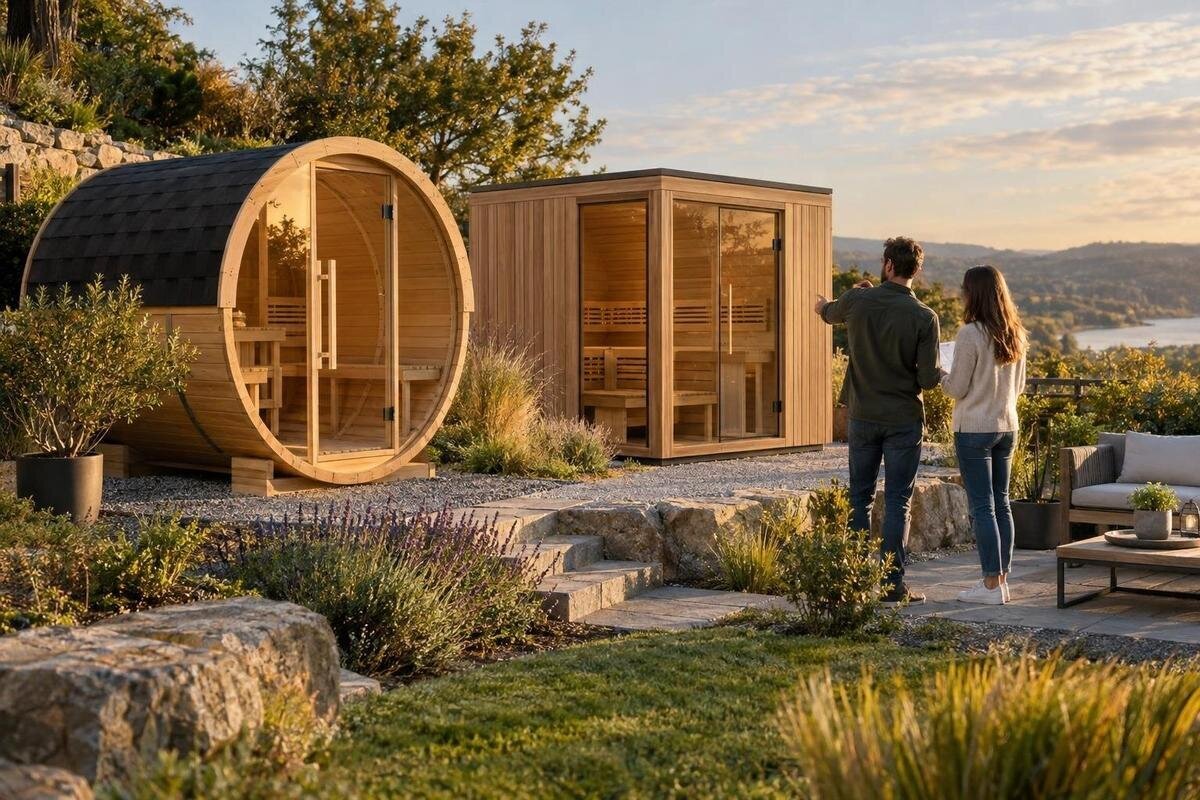
Sauna buying guide
Buying a sauna without a heater keeps the heater choice separate, but it also leaves a compatibility question to resolve before you commit to the order. Do not stop at “heater to follow”: identify the heating route, find out which sauna details the heater maker needs, and confirm that the proposed unit, controls and installation plan can be considered together. This guide focuses on purchase specifications, inclusions and the information to hand over. It is not an installation manual; a qualified professional should assess electrical connections, flue arrangements and site-specific work.

What a heater-free order includes
“Without a heater” describes one exclusion, but it does not tell you which other parts are included. Before comparing options, establish whether the sauna order covers the structure only and whether a controller, heater guard, stones, wiring-related parts, flue parts or other accessories are separate. Ask for an itemised list of inclusions and exclusions for the exact product and variant. Also ask whether the sauna is prepared in any particular way for a heater, and what that means in the supplied documentation. Vague wording can hide a difference between a bare sauna and a package with some heating components but not the heater itself. Compare package headings only after you have the itemised contents; a headline can be broader than the list below it.
Ask for the order description to state that the heater is not included and list anything you plan to source separately. The thermowood barrel sauna S 140 listing can identify the page you are checking, but its name does not establish whether a heater, controller or accessory is supplied; use the current written inclusion details for the exact order. If buying the heater elsewhere, send both suppliers the same sauna model and variant. A similar model name or older catalogue entry is not a substitute for matching item codes and the version shown on the order. A written answer also lets you check the delivered items against the order.
Heater type and sauna choice
Decide whether your plan is for electric or wood-burning heat, or whether the choice is still open. This is not merely a preference to fill in later: the type changes which product information and installation questions need answering, and some details may not carry across when you change routes. If you are considering a particular heater, identify its manufacturer, exact model and version rather than using a broad description such as “a small electric heater” or “a stove”. If you have not chosen one, ask the sauna supplier for the exact compatibility limits and documents a later choice must meet. Do not treat a product image or category label as confirmation of a heating method. If you are weighing both routes, ask for separate answers; one general compatibility statement may not cover both.
Keep the sauna choice and heater choice in separate columns when comparing options. For the HC150 thermowood barrel sauna listing, use the page to identify the sauna you are asking about; do not infer dimensions, heating method or suitability from “HC150”. Record the exact product variant and request its current manufacturer information. A comparison sheet can show heater type, exact heater identity if selected, the sauna maker’s compatibility answer, excluded controls or parts, and unresolved checks. This is useful where the heater comes from a different supplier: everyone can see which sauna the answer relates to, rather than treating a heater-free order as a matched package.
Manufacturer data for compatibility
The central technical question is whether the heater maker approves the exact sauna arrangement, and what inputs it needs to make that judgement. Request the sauna maker’s published internal dimensions or usable volume, plus any construction or glazing details the heater manufacturer specifically asks for. Different manufacturers may use different methods; do not enter guessed dimensions or transfer a calculation from another model. Ask for the stated heater range or named compatible units in writing, and have the sauna and heater suppliers resolve any different figures before you buy. A generic online rule or power calculator cannot confirm compatibility if it uses inputs that have not been verified for the sauna you are ordering. If the sizing method adjusts for glazing or another construction detail, ask for the exact value and its source.
Send information in the format requested by the heater manufacturer, and keep its reply with the sauna documentation. If the sauna maker provides an approved-heater list, verify that the exact model and version appear; if it does not, ask for an explicit assessment rather than assuming a similar rating is acceptable. The thermowood barrel sauna HC 225 listing identifies one sauna page, not its size or approved heater options. A useful answer should name the relevant variant, state the manufacturer documents and figures it relies on, and make clear whether approval is complete or conditional. It should also identify checks still needed from the installer, so product guidance is not mistaken for confirmation of the finished installation.
Physical fit, position and clearances
Compatibility is not only about heating capacity. Obtain the heater’s installation footprint, mounting conditions and manufacturer-stated clearances, then compare these against the sauna’s actual layout, door and bench positions. Confirm the permitted heater location for the specific sauna and whether any guard or other specified component changes the space required. Do not sketch a location from a product photograph: an image cannot provide dimensions or the clearances needed for your unit. If the documentation lacks a clear plan, request a dimensioned drawing or written placement guidance before ordering. That gives your installer a model-specific question to review instead of a vague request to “make it fit”.
Discuss the layout with the installer who will do the work, especially if the heater has conditions not covered by the sauna listing. Ask who is responsible for confirming the fit between heater, enclosure and protective components, and whether a change to the sauna arrangement would affect manufacturer approval. The thermowood barrel sauna N 210 listing can keep the product identity clear in that discussion; its name alone should not be used to infer the floor plan or a heater position. Keep the response attached to the exact sauna variant and proposed layout. If the installer proposes a different location, send the revised layout back for review before treating it as approved.
Electric heater supply and controls
If the intended unit is electric, record its exact model and obtain the manufacturer’s electrical supply requirements before finalising the sauna order. Give those requirements to a qualified electrician, who can assess the proposed supply and installation for your property; do not choose a heater on the assumption that an existing connection will suit it. Suitability cannot be worked out from a sauna name, an image or a general room measurement alone. Where the heater manufacturer lists different variants or optional configurations, identify the version on your quotation and ensure the requirements correspond to it. Ask the supplier to flag any information still needed by the electrician rather than filling gaps with estimates. Request the manufacturer’s manual or requirement sheet for that exact model, rather than relying on an estimate from a sales conversation.
Clarify the control arrangement at the same time. Ask whether controls are built into the heater or supplied separately, which control unit is compatible, what the manufacturer says about the control and sensor arrangement, and which parts each package includes. Confirm that the heater, controller and sauna are assessed as one combination rather than as separate catalogue products. The thermowood barrel sauna N 250 listing helps identify the sauna page in a supplier enquiry, but it does not state electrical requirements or control compatibility. Have the product makers provide the relevant information and ask the electrician to consider it before ordering separate components. Include any separately bought controller in the same review.
Wood-burning heaters and flue specifications
If you plan to use a wood-burning heater, name that route early and identify the intended stove rather than leaving the heater as an undefined later purchase. Ask the sauna supplier and stove manufacturer for compatibility information covering the exact sauna, stove and proposed flue system. Establish which flue components, heat shields, hearth or floor protection, if any, the manufacturers specify, and which are included or sourced separately. The answer depends on the exact products, so do not assume that a stove package covers every item for the sauna. Have a qualified installer review the actual arrangement and the manufacturers’ instructions before you commit to an installation plan. Ask who supplies any separately specified items if the sauna and stove are quoted separately.
Keep the flue question in the buying brief even if work is not ready to begin. Ask what route and clearances the manufacturer specifies, which parts must be selected as a compatible system, and what site information the installer needs to assess the proposal. Do not use a product image or this article to decide flue layout, distance or construction; these are model-specific installation matters. The thermowood barrel sauna LC 260 listing is useful only as the name to quote when asking about a sauna product; it does not establish that wood-burning heat or a particular flue is suitable. If the route has not been confirmed, mark it unresolved rather than treating the sauna order as a complete heating plan.
Controls, accessories and separate components
Create a parts schedule separating the sauna, heater, controls and each accessory or installation component. For every line, record the exact product name or model, supplier, whether it is included, and which document confirms compatibility. Ask specifically about items the heater manufacturer mentions, such as a controller or guard, and components your installer says must be considered; the list varies by product, so do not copy a generic kit from another sauna. A schedule makes gaps visible before delivery, helps compare the scope of different orders, and avoids assuming that the word “heater” covers related parts. If an item is optional, note whether it is optional for your chosen setup or simply an extra offered by the seller. Mark a component as unconfirmed if no supplier has named it; a blank line should not be mistaken for an included item.
Ask whether the sauna order includes any preparation for the chosen heater, and have the supplier define terms such as “heater-ready”, “pre-wired” or “complete” in writing. If a component comes from another manufacturer, record its exact model and request confirmation that the sauna and heater makers accept it in the proposed combination. The thermowood barrel sauna HCF 300 listing can identify the sauna page in that conversation, while its label alone says nothing about accessories. Save the supplier’s answer with the itemised order so the delivered scope is clear: what you buy now, what you must source separately, and what still requires approval. Do not treat a general description as a substitute for a named part and relevant documentation.
Site and installer information
Before ordering, pass the sauna and heater documentation to the person assessing the installation location. Ask the sauna supplier which site, base, access or assembly conditions apply to that exact model, and ask the heater maker what information is needed to assess the proposed unit. An online plan or photograph may not show access constraints, the intended base or existing services. Do not assume that an outdoor sauna is suitable for every exposed location, or infer weather or support requirements from a category label. Request the relevant manufacturer’s written requirements and have the responsible professional assess the actual site before ordering components that depend on it. If key site information is missing, ask the professional what needs measuring before the order, rather than guessing.
Consider delivery and assembly in the same conversation. Confirm how the sauna will reach its final position, whether access restrictions affect the configuration you intend to order, and when the heater installer needs to see the site or receive product documents. Ask the seller to state any preparation or assembly tasks excluded from the order, then agree with the installer who will handle them. The thermowood barrel sauna LCF 300 listing can identify the product page, but its name cannot tell you its footprint, access needs or assembly method. A handover note with model references, intended heater, open questions and installer contact keeps each party working from the same information. Delivery access does not establish heater compatibility.
Written confirmation for exact models
Request written compatibility confirmation naming the precise sauna variant and heater model, including any control or accessory that affects the arrangement. Ask which manufacturer documents were used, whether the proposed pair is approved or still awaiting assessment, and which further checks belong to the installer. A casual “that should fit” does not settle a purchase specification; ask what the statement covers and what remains outside it. Keep emails, drawings and manuals with the quotation so the confirmation can be matched to the items actually ordered, not just to a broad product family. If the supplier cannot confirm the combination, record that clearly rather than relying on an informal conversation.
Recheck the decision if anything changes. A substitute heater, controller, guard, sauna variant or revised site plan may need fresh review, even when the replacement appears similar. Before accepting a change, ask who will update the compatibility response and whether the original documents still apply. Record which supplier owns each product question and who will coordinate the combined setup, rather than assuming one company has assessed another company’s equipment. If an answer depends on unconfirmed details, mark the specification as provisional. Keep updated confirmation with the order, so an earlier email is not applied to changed products.
The pre-order specification
Before submitting the order, write a brief that names the exact sauna product and variant; states that the heater is excluded; records heater type and model if selected; and lists the manufacturer information used to assess compatibility. Add the agreed control and accessory items, the questions still open, and the person who will confirm site and connection requirements. Attach the relevant manuals or drawings and ask the sauna seller to confirm that the order description matches this brief. If you have not selected the heater, request a written compatibility range and the information needed to choose later, including any stage by which the selection must be finalised for this order. If possible, ask for the same model references and heater exclusion to appear on the order confirmation, not only in your own notes.
Then decide from the answers rather than a general promise that a heater can be added later. If the exact heater is accepted, related components are accounted for, and the installer has the manufacturer information needed for assessment, the order reflects a defined plan. If one piece is missing, request clarification or leave the heater choice open; do not pick a unit just to complete a form. For a sauna supplied without a heater, a sound specification records what is included, what the manufacturers say is compatible, which installation checks remain, and who will resolve them before work begins. Do not let a later substitution pass without the same model-specific review.
Frequently asked questions
Can I order the sauna before choosing a heater?
Possibly, but do not assume that the choice can be deferred without constraints. Get written confirmation of the heater types or models the sauna accepts, what preparation is included and what information you must supply later. Ask when the final heater selection is needed for your order.
What should I send to check heater compatibility?
Send the exact sauna model and variant, its manufacturer information, and the intended heater model if you have chosen one. Include the details the manufacturers request about the proposed arrangement, plus any control or accessory choices. Ask which points still need an installer’s review.
Can I choose a heater using the sauna’s dimensions alone?
Do not rely on dimensions alone or a generic calculator. Ask the heater manufacturer what information it uses to assess the exact sauna, and have the sauna supplier clarify any construction or volume details. A general rule cannot confirm compatibility for a specific combination.
Does a separately purchased heater automatically include its controls and accessories?
No. Check the itemised contents for the heater, controller, guard, stones and any other parts specified for your chosen setup. Confirm that separately purchased items are compatible with the exact heater and sauna, rather than assuming they are included or interchangeable.
Who should confirm the installation requirements?
The sauna and heater manufacturers should provide product-specific compatibility information. A qualified electrician should assess the electrical supply for an electric heater, and a qualified installer should review the proposed placement and any flue arrangement. Keep their checks distinct from a seller’s product description.
With a heater-free sauna, the key buying decision is whether a separate heater can be matched to the exact product, not whether a unit seems broadly suitable. Keep product identity, manufacturer information, the parts list and installer checks together. If the heater choice is deferred, have the acceptable options and remaining checks stated in writing. That leaves the order clear without pretending that a sauna model name, image or generic heater description can settle compatibility.
