
Choosing Timber for Sauna Benches and Backrests
SAUNA BUYING GUIDE
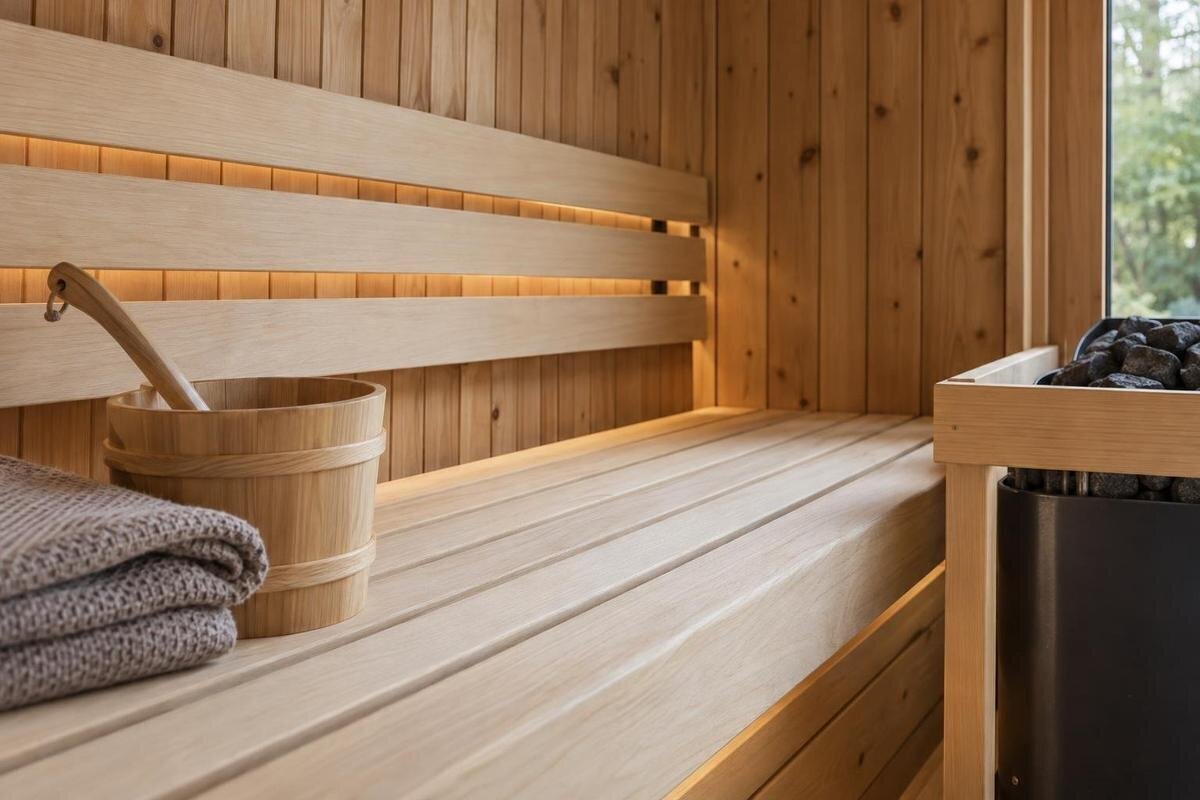
Benches and backrests are the sauna surfaces people use most directly, but their timber is easy to confuse with the material named for the outer structure. A product description can identify Thermowood or describe a timber interior without naming the boards used for sitting and leaning. Compare the actual contact surfaces, their finish and the care instructions for the exact model. This guide explains what evidence to request, how to assess the finished surface and which assumptions to avoid.
Buyer checklist 1
Identify the timber on each contact surface
Treat the bench top, backrest slats, bench supports and any other part likely to touch skin as separate items when reading a sauna specification. A phrase such as “timber interior” may refer to wall lining or framing rather than the boards used for sitting and leaning. Ask for the species or recognised trade name of each contact surface and whether the seat and backrest use different timber. Check whether the named material applies to every visible slat, edge and end piece, or only selected parts. If a supplier names only the outer structure, record the contact timber as unconfirmed.
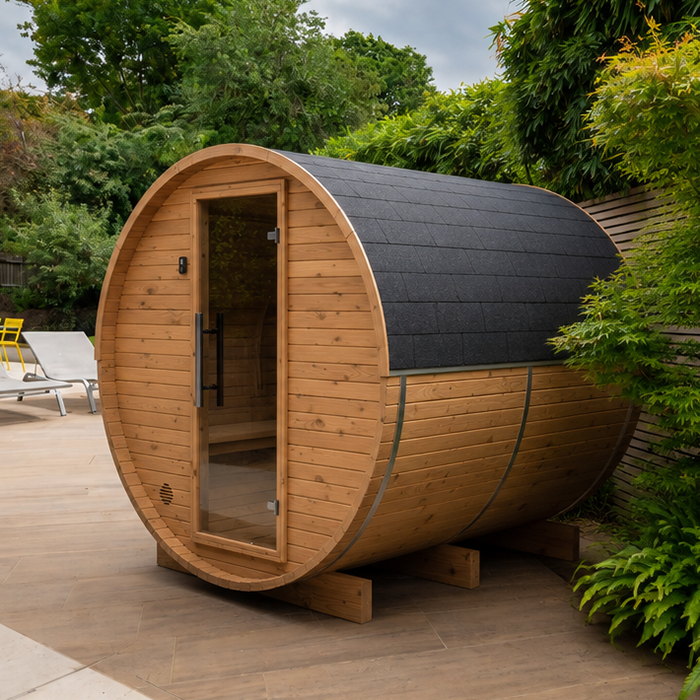
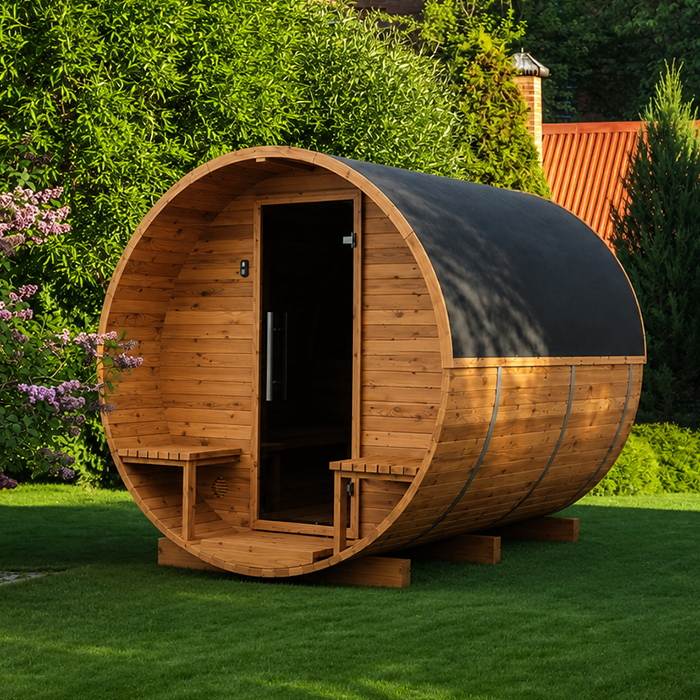
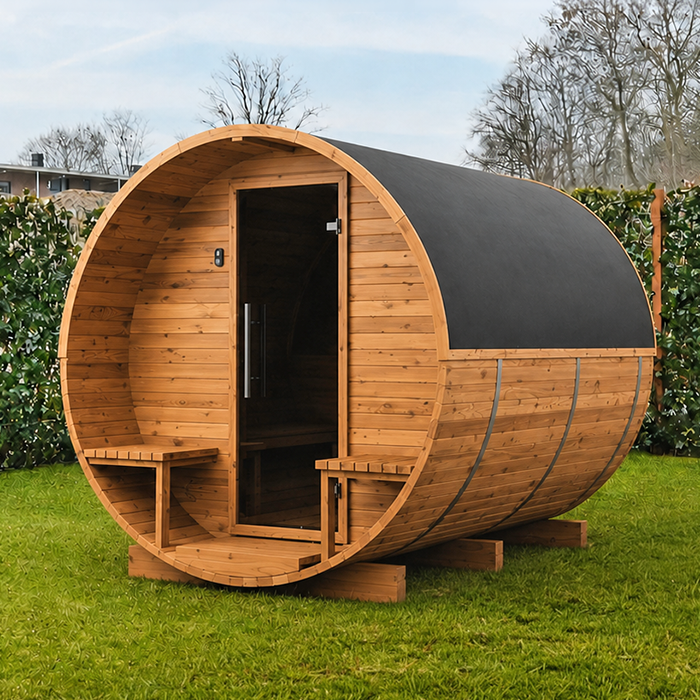
The distinction matters where Thermowood is specified for exterior or structural timber: it is a separate specification from the surfaces people sit or lean against. The LC-260 listing identifies a Thermowood Barrel Sauna, but the supplied product title does not state the bench or backrest timber, its grade or its finish. Look for a component schedule, manufacturer drawing or care manual tied to the exact configuration. A photograph can show the general arrangement, but cannot reliably confirm species or coating; similar-looking boards may differ in both. Record which document supplied each answer so a note about wall lining is not mistaken for a bench specification.
Check the bench and backrest separately
A bench and backrest do different jobs, so their details should not be collapsed into a single label. The bench is the sitting surface; the backrest meets the body at another angle and may be built from spaced slats or a broader board. Profile, spacing and edge shape affect where contact occurs and whether you can reach the surface to clean it. Ask whether the parts use the same timber, preparation and finish. “Timber benches included” does not describe the backrest, or tell you which face of either component is intended as the contact surface.
Review both parts in the manufacturer’s drawing or written description. For the seat, note the top surface, front edge and any joints close to where hands or legs rest. For the backrest, check the contact face, spacing and edges. Ask whether both parts are included in the configuration you are comparing rather than assuming a catalogue image shows every supplied component. These checks help with comfort and routine cleaning; they do not establish structural capacity, which should be taken only from the manufacturer’s stated information.
Buyer checklist 2
Read species names and grades carefully
A species name is a useful starting point, not a complete quality grade. Natural boards vary in grain, colour and visible knots, and suppliers may apply different selection standards. Check whether a name refers to a botanical species, a recognised trade name or a broad description such as “softwood”. If two listings use different terms, ask whether they describe different materials or simply use different naming conventions. When appearance matters, ask what variation is expected and whether the stated grade limits knots or colour differences; do not infer those details from a promotional adjective. Separate your preferences for appearance from questions about surface preparation. You might accept varied colour while wanting a clear description of how knots and edges are finished on the sitting surface. Ask what a grade means in the supplier’s own specification rather than assuming that similarly named grades are equivalent. This makes the comparison more useful than choosing the board with the most uniform colour in a photograph.
Ask whether the bench and backrest use solid boards or another stated construction, and whether the same selection criteria apply to both. A close-up sample can help you judge colour and grain, but it should match the specified timber and finish. The HCF-300 model page can anchor your notes to one sauna; use its accompanying specification, if available, to verify the interior components rather than treating a product title as a species name. A sample from another batch may still look different, so use it to understand the timber’s appearance rather than as a promise of an exact match.
Find out whether the timber is bare or finished
Surface preparation and an applied finish are different things. Planing and sanding describe how timber has been made smooth; oil, wax, stain or a film-forming coating describe something applied to it. A specification that says “smooth” does not tell you whether the surface is bare, and “treated” is too vague unless the product and application are named. Ask which parts are covered and whether the seat, backrest, edges and supports are finished alike. This avoids assuming that a note about interior cladding also applies to contact surfaces. Establish whether the description refers to the surface as supplied or to a treatment the buyer is expected to apply later. If preparation is required before first use, ask who is responsible and which instructions apply. Keep that initial work separate from routine cleaning and any later renewal of the finish. These are different commitments, and a clear description helps you compare how much care each option requires.
Do not assume that a general furniture oil, deck treatment or household varnish is suitable for a sauna contact surface. Compatibility and renewal instructions depend on the chosen product and the manufacturer’s guidance. If a finish is included, request its exact name, the components covered, the cleaning method and whether reapplication is expected. The LCF-300 sauna listing gives a model reference for that question; its name or image alone cannot confirm whether the bench boards are bare or finished. If appearance or touch is important, ask whether a sample represents the same finish.
Buyer checklist 3
Assess the surface shape and feel
Species is only one part of how a bench feels. The width and profile of the slats, rounded or square edges, sanding and any coating all affect the surfaces you notice when sitting or leaning. Use a drawing to understand the profile and, if a sample or display is available, check that it represents the same timber and finish as the model being offered. A small sample helps you judge colour and surface texture, but it cannot show the full bench layout or guarantee that every board will look identical. Be clear about what you are assessing: the broad face shows the contact texture, while an edge sample helps you understand the proposed profile. If the sample is only a flat offcut, ask which details it does not represent. When comparing two samples, note any differences in preparation or finish before attributing the whole difference in feel to the species. That distinction helps you describe your preferences accurately.
Look for a clear description of how the edges and corners are prepared, and ask what variation in grain, knots or joints is expected. If there is a display unit, note the bench and backrest dimensions and consider how your preferred sitting or reclining position fits. The S-140 product details can help you request the relevant drawing or ask which surfaces a sample represents. An image is useful for style, but it is not a reliable way to assess scale, surface preparation or the feel of a finished contact area.
Match the specification to the exact model
Match each material description to the exact model and configuration you are considering. A component list should distinguish the bench boards, backrest and supports, while the drawing should identify where those parts sit in the assembly. A general brochure may cover several versions, so check the model reference and any options named in the documents. Pay particular attention to a quotation that offers a different interior from the one shown in the catalogue. If a material choice is optional, establish which choice the quotation includes rather than recording every available option as part of the order. Where two descriptions appear to conflict, keep both in your notes and ask the supplier which applies to the offered configuration. Do not silently combine the timber from one version with the finish from another. Once the distinction is clear, record the answer beside the relevant component. This gives you a coherent specification to compare, rather than a collection of individually plausible details that may describe different saunas.
A product page helps identify a model, but may not provide a full interior material specification. When asking about HC-150 model information, refer to that exact sauna and ask the supplier to point to the line that names the seat and backrest timber. Distinguish confirmed statements from unanswered questions: “Thermowood exterior”, “timber interior” and “wooden benches” are not interchangeable evidence for the contact surfaces. Keep the documents with your notes so you can check that each answer refers to the same configuration.
Buyer checklist 4
Check the bench layout in a drawing
Comfort depends on the arrangement as well as the timber. Check the stated seat height and depth, backrest position and slat spacing in the drawing, then compare them with the way you expect to sit and the room available around the bench. There is no single dimension that suits everyone, so avoid relying on a generic “comfortable seating” claim. Ask whether the drawing shows the configuration on offer and whether the bench and backrest can be reached for cleaning. This keeps layout and material questions connected without mistaking one for the other.
Think through normal entry, sitting down, leaning back and standing up, and whether the shape gives you the support you expect. If measurements are absent, request them rather than estimating from photographs, which can distort scale. Use the HC-225 product page as the model reference when requesting its seating drawing; do not assume dimensions from a different sauna in the same product family. Note measurements separately from timber and finish, so a convenient arrangement is not confused with better-documented contact surfaces.
Follow care instructions for the stated finish
Care should follow the instructions for the actual timber and finish, not a general rule for all saunas. Ask what to do after use, which cleaning tools or products are permitted, whether the surface should be wiped and how the room should be allowed to dry. The maker’s guidance should cover benches and backrests rather than only the walls. A simple routine is easier to follow when its steps are written down and do not depend on guessing whether a board is bare, oiled or coated.
Avoid improvising with abrasive pads, strong cleaners or an unapproved oil, wax or varnish; these may not suit the specified finish. Do not assume that timber needs regular treatment simply because it is timber. Ask whether cleaning differs for the bench and backrest, how to deal with a mark and when to seek advice rather than sanding or recoating. For the N-210 product listing, request care instructions for the exact configuration; a manual for another model or finish may not answer the question.
Buyer checklist 5
Plan for inspection and replacement
Inspect the contact surfaces as part of ordinary upkeep, especially where hands, feet or the body repeatedly meet the boards. Look for changes in texture, splinters, loose components, peeling finish or marks that do not lift with the approved cleaning method. A visible change can have more than one cause, so do not assume that sanding or applying a coating is the right response. Record the affected part and ask the maker or supplier for the specified repair method, particularly if the component is part of the bench assembly.
Before purchase, ask whether bench and backrest parts can be replaced separately, how they are identified and whether replacement components can be supplied for that model. This is a question about serviceability, not a promise that parts will always be available. Clarify what “replacement part” means: an individual slat, a complete backrest or a larger bench assembly. Those options involve different amounts of work, so ask who should carry out the replacement and which instructions apply. Also ask whether a replacement would be supplied bare or with the specified finish, rather than assuming it would arrive ready to match the existing surface. Keep the model reference, material description, finish details and care manual together; they can help identify a matching component later and prevent an incompatible treatment being applied. If replacement or sanding is not covered in the instructions, get clarification before altering a surface that may have a factory finish. Allow for the stated variation in natural timber when discussing the appearance of a replacement.
Compare what is documented
Make a short comparison record with a separate entry for bench timber, backrest timber, grade or selection description, finish, care instructions and the drawing used to check the layout. For each item, mark whether it is documented, described verbally or still unknown. This prevents a familiar exterior material name from outweighing missing information about the surfaces that receive direct contact. It also gives you a fair basis for comparing a fully specified option with one whose listing uses only broad terms such as “wooden interior”. Add a brief note about why each difference matters to you. For example, distinguish a preference for a particular grain pattern from a need for clear cleaning instructions or separately replaceable components. Not every difference needs to rule out a model, but unanswered questions should remain visible. Before deciding, review the points that would change your choice rather than treating the option with the longest description as automatically better. The aim is a usable comparison, not simply more paperwork.
Ask the supplier to confirm the same points for the exact product and configuration you intend to buy, and check current local availability separately from the technical specification. A model link, such as the N-250 listing, helps keep that enquiry attached to the right product, but it does not replace component and care documents. There is no universal “best” bench timber: a sound choice is one whose contact surfaces, preparation and upkeep are clear enough for you to assess before purchase. If details remain unknown, keep them marked that way rather than treating catalogue wording as proof.
Frequently asked questions
Does “Thermowood” in a product name identify the bench timber?
Not on its own. A Thermowood reference may describe exterior or structural timber, but it does not identify the wood or finish on the bench and backrest unless the model-specific specification says so. Check the component list or care manual for those contact surfaces.
Should the bench and backrest use the same timber?
There is no need to assume they do. Ask for the material of each part separately, along with its surface preparation and finish. Similar-looking boards are not proof that the bench and backrest use the same timber.
Does a smooth surface mean the timber is coated?
No. Smoothness usually describes surface preparation, such as sanding or planing; a coating is an applied product such as oil or wax. Ask whether the timber is bare or finished, which parts are covered and what care the manufacturer recommends.
Is there one best species for sauna benches?
No single species is best for every buyer. Compare the documented timber and selection standard, then consider the finished profile, surface feel and care requirements. A species name alone does not tell you the exact finish or how the assembled bench will feel.
Can I oil or sand the benches myself?
Only if the manufacturer’s instructions allow it and specify the suitable product or method for that surface. An unapproved oil, wax, abrasive or sanding method may not suit the finish. Follow the model-specific cleaning guidance and ask for advice before altering a surface.
Timber selection is clearest when the bench and backrest are named separately, their finish is described plainly and the care instructions match that finish. Exterior or structural Thermowood information belongs in its own specification; it should not stand in for contact-surface details. With model-specific information in hand, you can compare how the surfaces are prepared, what variation to expect and how they are maintained instead of guessing from a label.
