
How to Compare Sauna Quotes When Inclusions Differ
SAUNA BUYING GUIDE
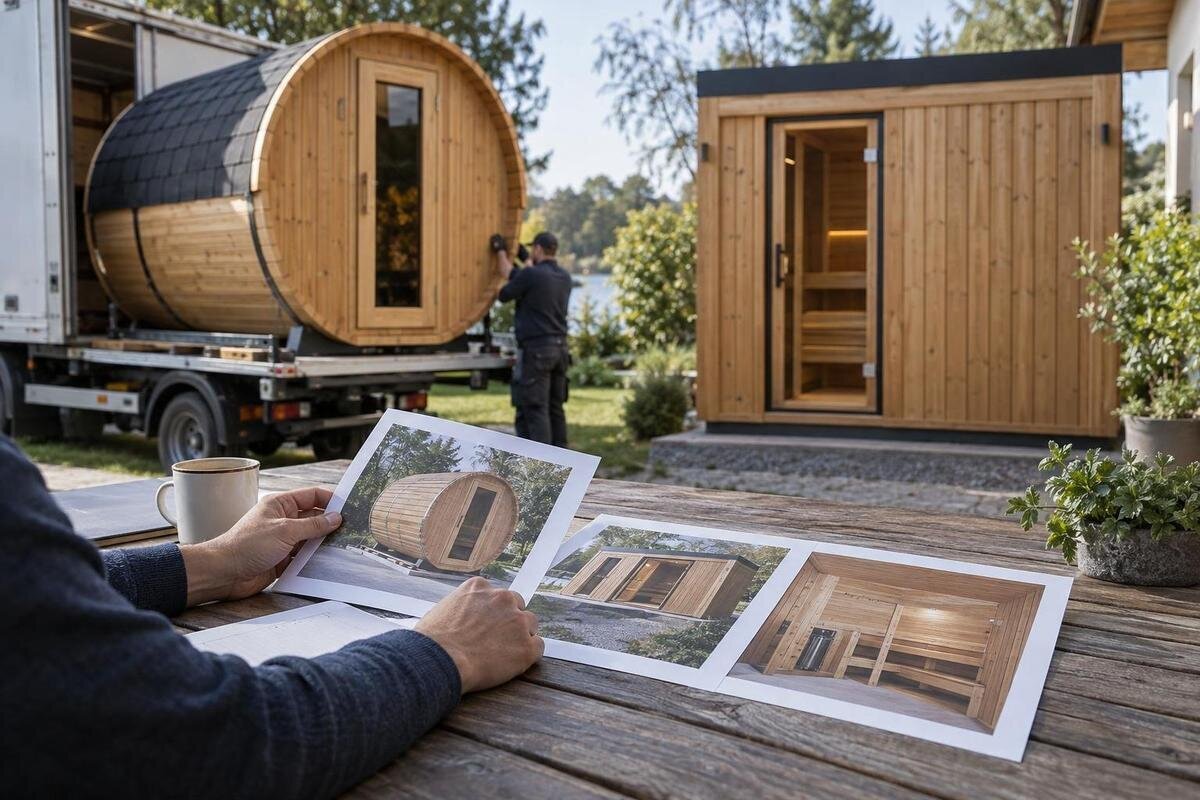
Two sauna quotes can show different totals because the products, supplied equipment and work covered are not the same. Comparing headline figures alone can make an omitted item look like a saving. Put every offer against one agreed specification and scope: record the model and configuration, what is supplied, how delivery and installation are defined, and which site tasks remain for you or another contractor. Then separate confirmed costs from options, provisional allowances and unanswered points. This gives you a fair comparison without assuming that either supplier has left something out by mistake.
Identify the exact sauna configuration
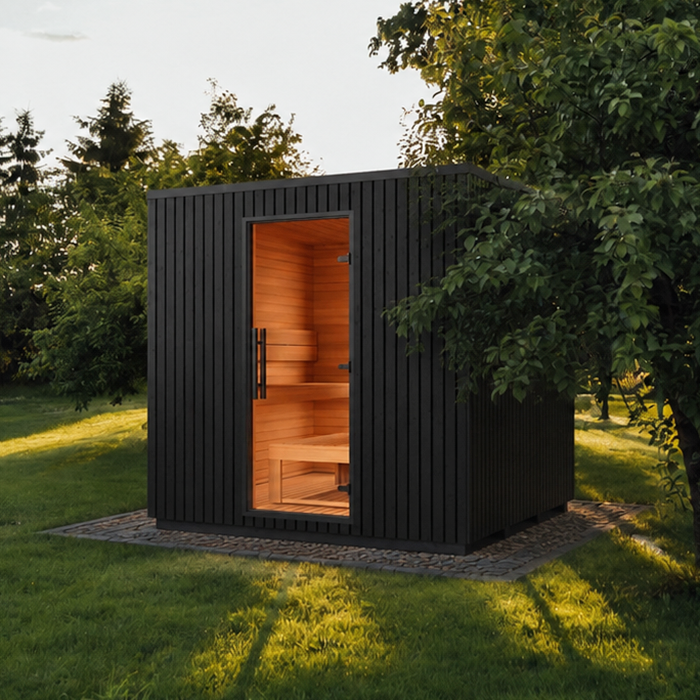
Begin by identifying exactly what each supplier has priced. Record the model name or code, configuration, layout, finish and options shown on the order or specification; “outdoor sauna” is too broad to serve as a comparison. Add the quotation date and revision, because a later drawing or changed selection can alter the scope. The store lists the Sauna S-140 as a Thermowood Barrel Sauna and gives 1.93 m², a useful product identifier. That name and area do not, by themselves, establish that a quote uses the same configuration or includes particular components. Ask the seller to link its description to the document behind the price, and keep selected options visible as separate lines.
Agree a baseline before looking at which total is lower. Write down choices that must stay the same, such as layout, entrance position, heating type and finish, where those are specified for the models being compared. Mark a different model or option as an alternative rather than silently treating it as equivalent. If a seller has used a generic product name, ask for the precise model and the drawing or specification revision. Keep any supplier substitution visible, including what changes and what is retained. If a drawing has been revised, make sure both prices refer to the same version; a model code alone may not record every selected option. This separates a genuine price difference for the same sauna from one caused by changing the product.
Compare area and dimensions on the same basis
Treat an area figure as one data point, not a complete description. The store lists the Sauna HC-150 at 2.97 m²; that alone does not tell you its external dimensions, clear floor area, bench arrangement or the occupancy a supplier has allowed for. Check what each quoted area represents and whether both figures use the same definition. Do not compare one seller’s internal area with another seller’s total footprint, or assume that similar numbers mean the same usable space. If neither quote defines the figure, mark it unconfirmed and ask for clarification before using area to rank the offers. A cost-per-square-metre calculation is meaningful only if both area measures and the compared packages are genuinely alike.
Request a drawing or dimensions that match the priced configuration, not a generic image or brochure. Compare the external footprint and interior layout separately, including door, window and bench positions where they matter to your planned site and use. Check the stated dimensions against the space available, and ask the supplier or installer to confirm any clearances or access requirements relevant to that model; a simple sketch may not show them. If the layout or model differs, keep the quotes as alternatives and compare the whole scope instead of turning them into a misleading unit price. For site-specific fit questions, seek confirmation from the relevant supplier or a qualified installer.
Match the supplied components
Ask each seller for an itemised supply schedule tied to its chosen model. Depending on the design, relevant lines may include the sauna structure, heater, controls, stones, benches, floor, door, lighting or other selected equipment; this is a list to verify, not a claim that every package should contain every item. For a quote on the Sauna HC-225, use the listed Thermowood Barrel Sauna model and 4.4 m² area to identify the product, then record the supplied components separately. Match each component to a named product, model or quantity where the supplier can provide one. Note anything shown only in an illustration so you can ask whether it forms part of the offer.
Use four statuses in the comparison: included in the stated price, optional at an additional quoted price, expressly excluded, or not yet confirmed. Keep an optional amount beside the option rather than in your base total until you have chosen it. Treat a blank line, catalogue image or phrase such as “standard package” as unconfirmed until the seller defines it in writing. If an item is included only under a condition, record that condition as well. This stops a missing detail being mistaken for a free component, and gives you a precise follow-up question instead of a vague request to explain the whole quote. Apply the same status terms to both offers.
Separate the heater from connection work
Give the heating system its own comparison row rather than folding it into “sauna included”. Record the selected heating type and any make, model, controls or accessories actually named in each offer; note whether the unit itself is supplied and whether its price is already in the total. If you are comparing a quote for the Sauna N-210, listed as a Thermowood Barrel Sauna with an area of 4.43 m², put the heating equipment details beside that model reference. A bare phrase such as “heater included” may still leave you unable to tell whether the two offers cover equivalent equipment. Ask for the missing description before comparing the prices.
Separate equipment supply from technical work. Ask who is responsible for connection, testing and any commissioning specified in the scope, and whether related electrical or flue work is included, excluded or assigned to another contractor, as relevant to the selected system. Do not assume an equipment price covers connection, or that an installation line includes every trade. Request the product documentation and installation requirements for the exact model and heating setup; have compatibility and site-specific work confirmed by the supplier and an appropriately qualified professional, such as an electrician where relevant. If the heater choice is not settled, ask both suppliers to price the same alternatives separately rather than comparing a selected system with a generic allowance.
Record finishes and options separately
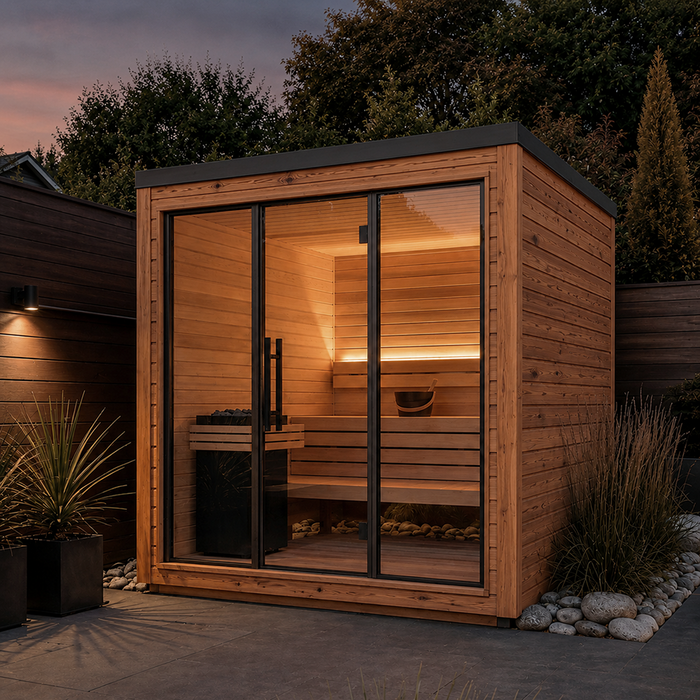
Finishes and selected features can change a package without changing its broad product label. Compare only choices that appear in the offers, such as a specified timber treatment, glazing, lighting, accessories or an interior upgrade. Ask whether each choice is included as standard, priced as an option, substituted for another item, or outside the offer. For the Sauna N-250, whose listing states an area of 5.27 m², record the quoted finish and selected features alongside the model name. If a quotation uses an option name without identifying the selected version, request the exact description, price and any matching specification. This lets you distinguish a change in the base package from a separately priced extra.
Keep the base configuration and optional extras in separate columns. You can then compare the same basic scope first and consider an extra only if you actually want it. If sellers propose different options, ask each to price the same selection or state the difference clearly; do not assign a notional value to an unchosen upgrade simply because it appears on one quote. Where appearance, cleaning or maintenance matters to you, request the relevant product information rather than assuming two similar descriptions mean the same finish. Record any option that replaces a standard item, so its price is not counted as an addition on top of a component it has displaced. Ask whether an option can be removed and have the revised total stated.
Define the delivery service
Read the delivery line as a defined service. One quote might cover transport only, while another may specify delivery to a particular drop point or include unloading; the word “delivered” does not tell you where the supplier’s responsibility ends. Ask which address or site point the price covers, what unloading or placement is included, and what access assumptions apply. Keep freight and any lifting or handling service separate when they are priced separately. For a delivery quote on the Sauna LC-260, listed as a Thermowood Barrel Sauna with an area of 5.12 m², make sure the transport description refers to that model and its quoted configuration. Record the agreed delivery destination beside the service description.
Check whether access-related conditions can change the charge, and ask what additional service you are expected to arrange. Note whether the offer puts specialist unloading, a different drop point or a separate visit outside its scope; rely on the written wording, not assumptions about what is usually included. Provide both suppliers with the same delivery destination and access description so that their assumptions are comparable. If an extra charge is conditional, ask when and how it will be confirmed and who must approve it. Record a written amount if available, or mark the line unresolved until a revised quote or suitable contractor estimate arrives. This exposes an unpriced gap without inserting an invented delivery allowance into the comparison.
Set out the installation tasks
Treat assembly and installation as separate scope items until the seller defines them. Ask whether the price covers unloading, assembly of the sauna, positioning, fixing or levelling where specified, and any handover, test or commissioning included in the proposal. Do not infer from “installation included” that every preparatory or connection task is covered. For the Sauna HCF-300, listed as a Thermowood Barrel Sauna with an area of 6.89 m², attach the labour description to the quoted configuration rather than a general installation label. Compare the tasks line by line, including where each contractor’s responsibility ends. Two similar installation prices are useful to compare only once you know what work each covers.
Ask who supplies labour and materials for work not listed, what must be ready before installation, and who arranges another trade if needed. Confirm whether travel, repeat visits, packaging removal or making good are included only where these are relevant; do not assume those tasks belong to the installer. If electrical connection or another specialist technical task is part of the project, obtain its scope and price from an appropriately qualified professional rather than treating a sauna seller’s general line as technical confirmation. Record the installer, excluded tasks and any stated site conditions beside the cost, so the offers can be compared on equal terms. Note who is responsible for coordinating any separate trades.
List site works and exclusions
Make a separate list of site works and services that are not clearly assigned. Depending on the chosen sauna and site, ask whether the price covers a suitable base or supporting surface, preparation, bringing required services to the unit, and making good afterwards; do not assume any of these is always needed or included. The store lists the Sauna LCF-300 at 6.89 m², the same stated area as HCF-300. Matching area figures do not prove that the models have identical site requirements. Keep the drawings and exclusions for each quoted configuration together, so you can identify which preparation tasks belong to which offer rather than applying one generic site-work estimate to both.
Ask each seller to state the boundary between its work and yours. A blank under site preparation is neither a confirmed inclusion nor a confirmed zero-cost item. Mark each responsibility as supplier, buyer, another named contractor or still unassigned, then request a separate written estimate for necessary work left out. If an offer uses an allowance or provisional figure, ask what it covers, what assumptions it rests on and when the final amount will be confirmed. Check whether it covers the whole task or only part of it. Keep it distinct from confirmed quote lines; otherwise a more complete proposal can appear more expensive only because the other quote leaves the work unpriced.
Reconcile totals and payment terms
Once the physical scope matches, compare prices on the same basis. Record the quoted currency, whether VAT is included or excluded, the date and validity stated, and whether delivery, installation and selected options are already in the total. Do not add an item twice because a package line and a separate line use different names; ask the seller to explain any overlap. Add only documented costs for work needed to reach your chosen baseline. If a necessary item has no price, show it as unknown or request a revised quotation instead of treating it as zero or making up a figure. Keep optional extras out unless you have selected them.
Calculate an adjusted total by adding the documented prices of necessary omitted items to the quoted amount. If that amount includes an option you do not want, subtract only the reduction confirmed by the seller, or use its revised quote. Record every adjustment and where the amount came from. Keep conditional charges and provisional allowances separately identified, and make clear whether they are already included in the total. Compare payment stages, deposit and balance terms, quote expiry, change charges and cancellation wording as stated in the documents. A higher figure may cover a more complete scope, while a lower one may be difficult to assess if key costs remain open. The aim is a transparent like-for-like total, not a guess at the final bill.
Resolve gaps before choosing
Send both suppliers the same clarification list: exact model and revision; selected configuration; included components and options; delivery boundary; installation tasks; site-work exclusions; VAT treatment; and prices for outstanding items. Ask for a revised, itemised offer or written response against each line, using the statuses included, optional, excluded and unconfirmed. Keep answers with the quote and date them, especially if a drawing or option changes. A phone explanation may help you understand the offer, but the comparison should rest on written confirmation that identifies the relevant scope. If a seller cannot confirm a cost yet, keep it visible as unresolved rather than silently ranking it as included.
Then judge each offer against the same completed scope and your own priorities. Check the adjusted total, how many assumptions remain, who coordinates each part, and whether the proposed configuration fits the space and use you planned. A quote is not automatically better because it includes more items: an unwanted option can raise the price without improving your project. Equally, a supply-only offer may suit you if you have deliberately priced and arranged the missing work. Save the comparison with the model, quote revision and open questions, and update it if either supplier changes the offer. You can then explain the difference between the totals and choose on more than the headline figure.
Frequently asked questions
Should I choose the lowest headline quote?
Not before you have matched the product and scope. A lower figure may cover a different configuration, leave delivery or installation out, or use unpriced allowances; it may also simply be a better price for the same work. Adjust both offers only using documented amounts, then compare remaining unknowns and responsibilities as well as the total.
What should an itemised sauna quote state?
A useful quote identifies the model, configuration, selected options and equipment included, then defines delivery, unloading where relevant, assembly or installation, connection work and exclusions. It should also state prices for options and provisional items, plus VAT treatment and quote terms. If an item does not apply, ask the supplier to mark it as not applicable rather than leave it ambiguous.
Is area enough to compare sauna models?
No. An area figure may not describe external dimensions, usable interior layout, bench space or quote contents, and suppliers may use different measurement definitions. Request drawings or specifications for the quoted configurations and compare the model alongside the area. A price-per-area calculation is useful only when the measurements and included scope are aligned.
Does a delivery price include setting up the sauna?
Not necessarily. Treat delivery, unloading, placement, assembly, installation and connections as separate lines unless the quote combines them and describes the boundary. Ask which tasks and destination are covered, what you must arrange, and who handles any work assigned to another trade. Written clarification prevents one broad phrase from standing in for a full installation scope.
What if a quote leaves a line blank?
Treat it as unconfirmed, not included or free. Ask the supplier to mark it as included, optional with a price, excluded or not applicable, and to describe any conditions. If the cost depends on a site visit or another trade, keep it open until you have a written amount or suitable estimate. Do not rank it as zero in the adjusted total.
When the scope is aligned, the difference between totals can be traced to a model change, selected extra, delivery service or a piece of work left outside the quote. A supply-only offer can still suit a project if its excluded work is deliberately arranged and priced; a broader package should be judged by the tasks it actually covers, not its label. Keep unresolved amounts and responsibilities visible until confirmed. The better comparison is the one that leaves you clear about what arrives, what happens on site and what you will still need to arrange.
