
Comparing Thermowood and Untreated Outdoor Sauna Timber
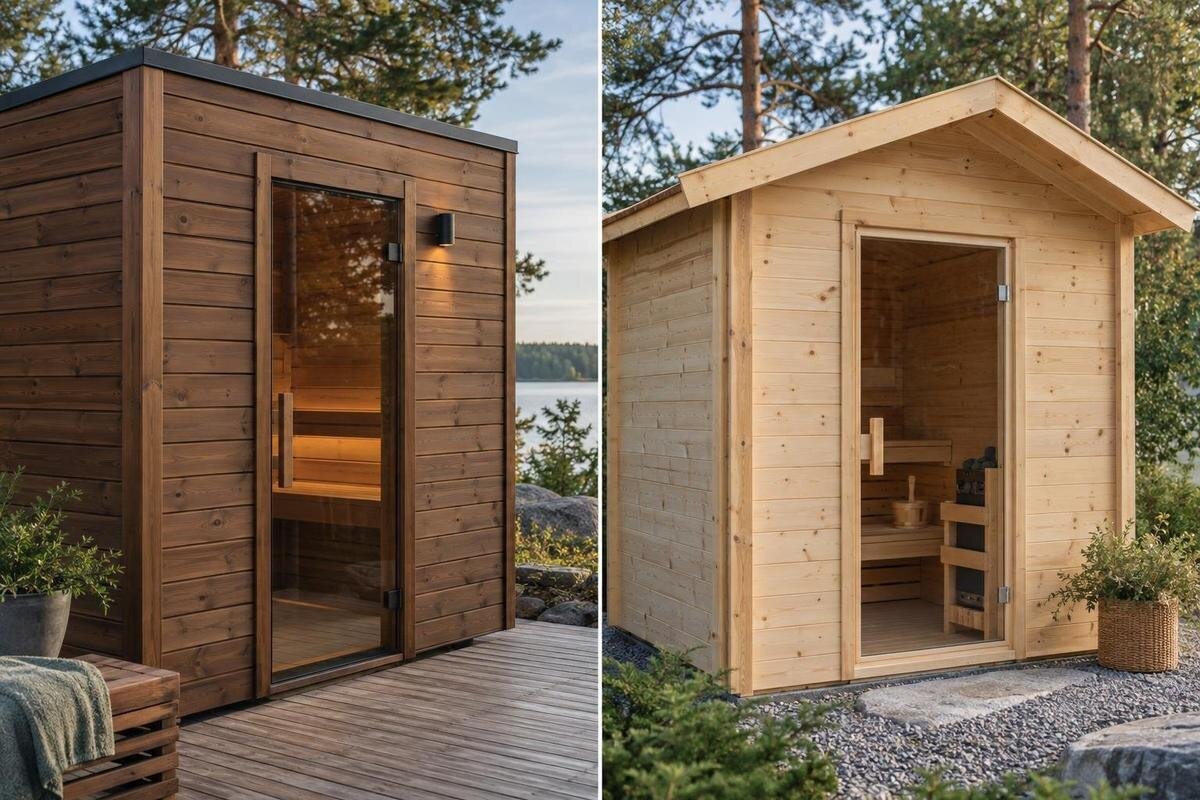
Outdoor sauna timber
The choice between Thermowood and untreated timber involves more than a treatment label. Thermowood describes a timber modification process, while “untreated” needs a precise definition from the seller. In Irish weather, how an outdoor sauna ages also depends on its timber species, finish, construction and exposure at your site. Compare the exterior materials and maintenance guidance for the models you are considering, rather than relying on unqualified phrases such as “low maintenance” or “suitable for outdoors”.
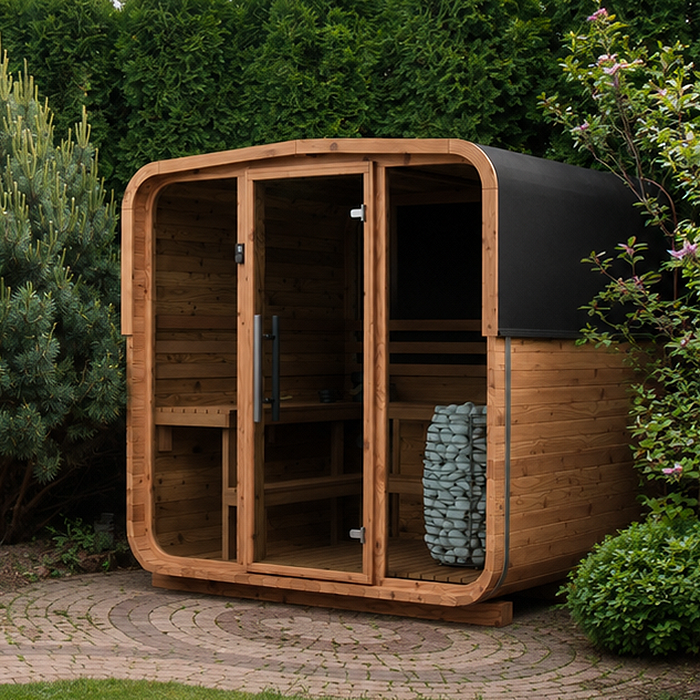
Buyer checklist 1
What the timber labels do and do not tell you
Thermowood and untreated describe different starting points, but neither is a complete outdoor specification. Begin by identifying which part of the sauna each description covers. A sauna can use different materials for its outer cladding, frame, roof components, internal lining and benches, so one visible surface does not describe the whole building. A headline may refer to the exterior boards without explaining the other timber parts. It may also leave the species and supplied finish unstated. Keep those details separate when reading a product description: the material, its treatment and any coating each answer a different question about what you are buying. This helps prevent a general description of the sauna from being mistaken for a specification of every component.
Compare the same component with the same component. A claim about exterior boards cannot automatically be applied to the frame, roof, doors or interior. Ask for a drawing or material schedule that identifies where each timber is used and which parts are included in the supplied configuration. The HC-150 Thermowood Barrel Sauna is identified by that product name in the catalogue; the name helps you locate a model, but it is not a full account of its species, finish or maintenance. Match any specification you receive to the exact model and configuration you are considering, and note if the seller’s answer covers only the visible cladding. Photographs may not show every material or junction.
What Thermowood means in a specification
Thermowood generally refers to timber modified through a heat-based process. To understand the specification, separate the process description from claims about its results. The treatment name identifies how the timber has been modified; statements about movement, durability or service life describe expected performance. Neither tells you, on its own, whether the delivered boards have a surface finish or what care that finish requires. The word also cannot confirm or rule out other treatments or coatings, so do not assume that it means either preservative-treated or free of other treatments. Read each claim in relation to the named timber and exterior component, rather than treating the label as a promise about the complete sauna.
Ask the manufacturer or seller to identify the species and explain the treatment used for the exterior boards. Where a description promises reduced movement, improved durability or longer service life, establish what is being compared and under which conditions. A statement about bare timber is not necessarily a statement about a coated surface, and a claim tied to specified upkeep does not describe an exterior left without that care. Note any conditions attached to the claim alongside the benefit, so neither is lost when comparing models. When considering the HC-225 model listing, use its model number to keep the enquiry specific. This gives you a clearer basis for comparison than a general description of the Thermowood range.
Buyer checklist 2
What “untreated” means for an outdoor sauna
“Untreated” should prompt a definition, not an automatic rejection. Sellers may use it to mean no preservative, no thermal modification or no applied finish; these are different statements. Ask in writing which meaning applies and whether any coating, primer or surface product is present on the delivered timber. Do not translate the word into a broad “chemical-free” claim: it may describe only one treatment category and says nothing about every component of the finished sauna. The stated status may apply to cladding only, not the frame, trim or internal timber. Clarify the species, finish and intended exterior use before comparing performance.
Untreated timber is not automatically unsuitable for an outdoor sauna; the manufacturer needs to specify it for the intended exposure and explain its construction and care. If the surface is left to weather, its colour and texture may change, but the rate and final appearance depend on the timber, site and any subsequent finish. A colour change alone does not tell you whether the material is performing as intended. If you compare an untreated option with the Thermowood Barrel Sauna N-210, obtain the exact exterior material and finish details for each. One label cannot fill gaps in the other specification, and differences in species or coating may matter as much as the treatment description.
Assess the sauna’s actual weather exposure
Exposure comes from the setting, not just the country. Note whether rain reaches the cladding directly or is driven against it, whether a nearby wall or trees provide shelter, how long shaded areas stay damp, and whether roof runoff or ground splash reaches lower boards. Check for leaves collecting around joints and for sides that face open sky rather than shelter. A garden that looks protected can still have one wet face or a persistently shaded base. Sunlight can also change appearance, so different sides may weather differently. These are observations about your site, not a universal climate rating for a timber.
Observe the proposed location after rain as well as in dry weather, then describe the conditions around each side separately. Record where shelter ends, where runoff reaches the ground and which areas remain shaded. This is more useful than labelling the whole garden simply wet or sheltered. For a shortlist that includes the N-250 product listing, compare those observations with the manufacturer’s siting restrictions and exterior care guidance. Allow for access to the sides that will need inspection, particularly where a wall or planting provides shelter. The purpose is to match the proposed position to the stated use conditions, not to assume that Thermowood and untreated timber always need different locations.
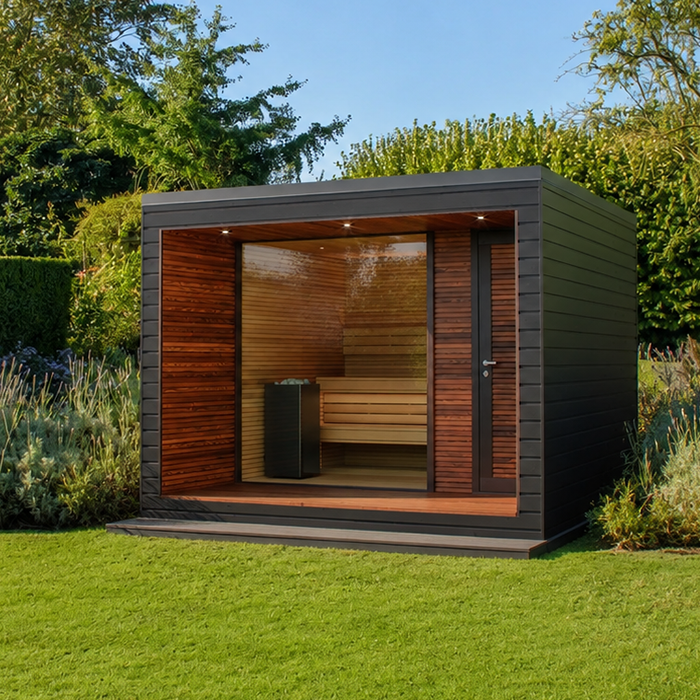
Buyer checklist 3
Check how the exterior is assembled
Wood selection cannot answer whether the assembly manages rain effectively. Use the maker’s drawing to review the outer cladding, joints, exposed edges, corners, openings and points where trim meets another material. Ask how water is expected to leave these surfaces and whether any area needs periodic clearing or inspection. Look for details about lower edges and roof runoff in the model documentation; do not guess from a photograph or from a barrel shape. The aim is to understand how the exterior shell is intended to shed water and dry, not to design or modify the structure yourself. Pay attention to whether the drawings identify the parts that will be exposed to weather.
Ask what clearances, base conditions and ventilation are specified, and whether the supplied drawing covers the configuration you will receive. Treatment and coating are not substitutes for suitable exterior detailing, while a drawing should not be treated as universal advice for every site. If you are investigating the LC-260 model, request the relevant assembly and siting documents and check whether they identify exposed timber parts. Where a detail is unclear, have the supplier or a suitably qualified installer explain it before you plan the location. Do not infer structural requirements from another sauna, even if its material description sounds similar.
Separate timber treatment from the surface finish
Timber modification and a surface finish are separate questions. Thermowood does not automatically mean that boards are coated, and “untreated” does not establish that they are unfinished. A paint, stain, oil or other coating may be included, optional or absent; product documents should identify what is supplied and where it is applied. Ask whether the stated purpose is decorative, protective or both, and avoid assuming that a decorative product is a preservative. A coating’s name alone does not tell you how it performs in the sauna’s conditions. Finish details should be considered alongside the cladding and assembly, not as a substitute for either.
Compare finish details for equivalent surfaces, including the colour, areas covered, edge treatment, cleaning method and expected inspection or renewal. If the timber is supplied uncoated, ask whether it should remain so or receive a specified finish, and whether the advice differs between exterior and interior surfaces. Find out what the maker says about appearance if the finish is not renewed. Avoid applying a generic outdoor product unless compatibility is confirmed. For the HCF-300 Thermowood Barrel Sauna, use the exact model documentation to establish what its finish specification says; the catalogue name alone cannot answer that.
Buyer checklist 4
Build a maintenance plan from the care instructions
Maintenance should come from the model’s care manual, not from a guessed interval based on the timber label. Ask for the routine inspection frequency, cleaning method, whether a coating is expected and any reapplication timing or condition that triggers it. If instructions use terms such as “periodically” or “as needed”, ask what signs the owner should look for. Weathering can alter colour without necessarily indicating a fault; peeling finish, persistent damp or an unexpected change should be discussed with the maker rather than diagnosed from a photograph. Write down the advice before buying so the work is part of your decision, not a surprise after installation.
Consider how you would carry out the stated routine once the sauna is in place. Can you reach the lower boards, corners and sheltered side without moving obstacles? Does the finish require care on every exterior face, and would any task need specialist help? Include the time involved and access to recommended products in your comparison; neither timber label removes those practical questions. For a specific model such as the LCF-300 listing, distinguish exterior care from instructions for the internal timber. Keep the relevant guidance with a record of cleaning, inspections and any finish applied. That gives future maintenance a clear starting point, rather than leaving you to reconstruct which surfaces were treated and when.
Documents that make the comparison fair
Bring the information together in one comparison file for each sauna. Include the model-specific timber specification, drawing or material schedule, treatment definition, supplied finish details and care manual. Check that they describe the same model and configuration: a drawing of one version and care instructions for another may leave important questions unanswered. Note the document date or version where stated, and keep written clarifications beside the relevant specification. Separate confirmed details from unanswered questions so a fuller description does not become confused with better performance. If one option has only a sales paragraph, record the missing information plainly. The purpose of the file is to make the two offers easier to compare, not to collect paperwork for its own sake.
For claims about service life, moisture response or weathering, ask what test, exposure and upkeep assumptions support them, and whether the result applies to this timber and use. Ask whether the supplied finish can change, what regular care is required and whether there are model-specific siting instructions. These questions do not imply that a certificate exists or is required; they distinguish documented facts from marketing language. Use the exact model number when requesting information about the S-140 model, and confirm that the material description matches the configuration currently offered. If an answer is general rather than model-specific, record that limitation rather than treating it as a confirmed detail.
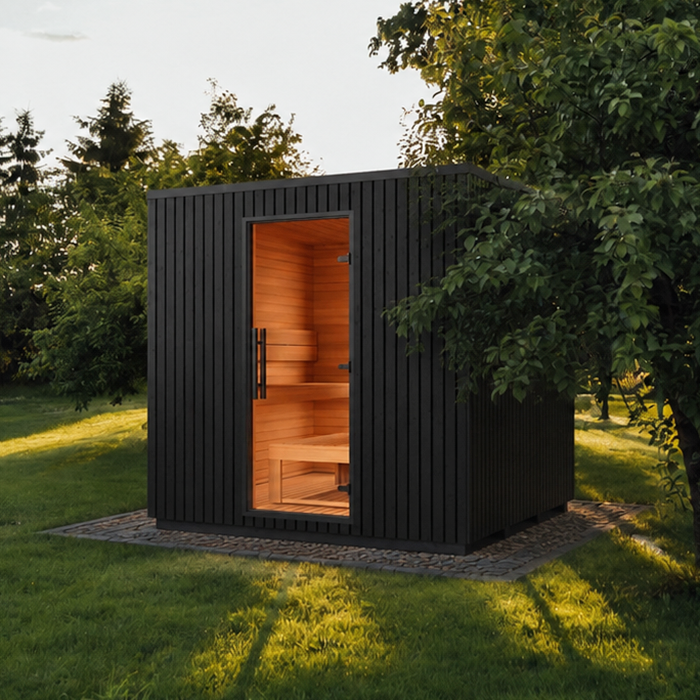
Buyer checklist 5
Compare whole models as well as the timber
Thermowood versus untreated is easiest to compare when the two options are similar in species, component, finish and construction. If one sauna uses one species with a coating and another uses a different species without a finish, any difference cannot be attributed to treatment alone. Compare outer boards with outer boards, and note roof or trim materials separately. Also separate what is included from what is an optional upgrade; an optional surface product can change both the appearance and the future care task. The goal is not a laboratory comparison, but a clear account of what you are buying and how it is meant to be maintained.
Organise the evidence by writing the two model names at the top of a page, then adding rows for timber species, treatment definition, exterior components, finish as supplied, intended exposure, care instructions and the source for each answer. Mark anything unanswered rather than filling it in from general knowledge. This makes unequal evidence visible: a detailed manual on one side and a sales label on the other are not an even basis for ranking. If the timber, finish or assembly differs too much, compare complete maintenance plans instead of claiming that one treatment is inherently superior.
Choosing timber for your site and maintenance needs
Thermowood may suit you if the exact model’s documents describe its exterior timber, use conditions and care clearly, and the stated routine fits your preferences. Untreated timber may also be a reasonable choice when the maker specifies it for the exposure, explains any finish and sets out the care needed. Neither should be selected on a promise of greater durability or lower upkeep unless the evidence covers the actual material, installation and site. Decide how much natural weathering you are comfortable with, whether a particular appearance matters to you and how much ongoing care you are prepared to carry out.
Use the comparison to identify which differences would affect ownership at your site. If retaining a particular colour matters to you, give the finish and its renewal requirements appropriate weight. If you are comfortable with natural weathering, focus on whether the maker’s care instructions allow that approach. Where access is awkward, consider how the required inspections and maintenance would actually be carried out, rather than assuming a timber treatment solves the problem. Keep unanswered material or finish details separate from these preferences. Before ordering, also confirm local availability and the configuration offered. The final choice should reflect the exterior you will receive and the care you are prepared to undertake, not simply the more reassuring label.
Frequently asked questions
Does Thermowood mean an outdoor sauna needs no maintenance?
No. The name describes a timber treatment, not a care schedule or a guarantee that the exterior needs no attention. Follow the instructions for the exact model, including any guidance on cleaning, inspection and finishes.
Is untreated timber unsuitable for an Irish garden?
Not automatically. Suitability depends on the specified timber, the sauna’s construction, its intended exposure and the maker’s care instructions. Ask for those details rather than deciding from the word “untreated” alone.
Does untreated mean chemical-free?
Not necessarily. The word may describe the timber’s treatment status, not every substance or finish used on the complete sauna. Ask what the seller means and request documentation for any broader claim.
Should I coat Thermowood before using the sauna?
Do not assume that a coating is needed or that any outdoor stain or oil is suitable. Check the model-specific instructions for the finish supplied, whether a further finish is recommended and which products are compatible.
Can I tell which timber lasts longer from a product name?
No. A name alone does not establish service life. Compare the exact timber, finish, construction, intended exposure and maintenance guidance, and ask what evidence supports any lifespan claim.
Thermowood and untreated timber are useful descriptions, but neither ranks an outdoor sauna on its own. Compare the exterior components and finish, then weigh the stated care requirements against rain, shade, splash and maintenance access at your site. The better choice for you is the one whose expected appearance and upkeep fit how you intend to look after the sauna.
