
Home Sauna or Spa Membership: Compare Your Costs
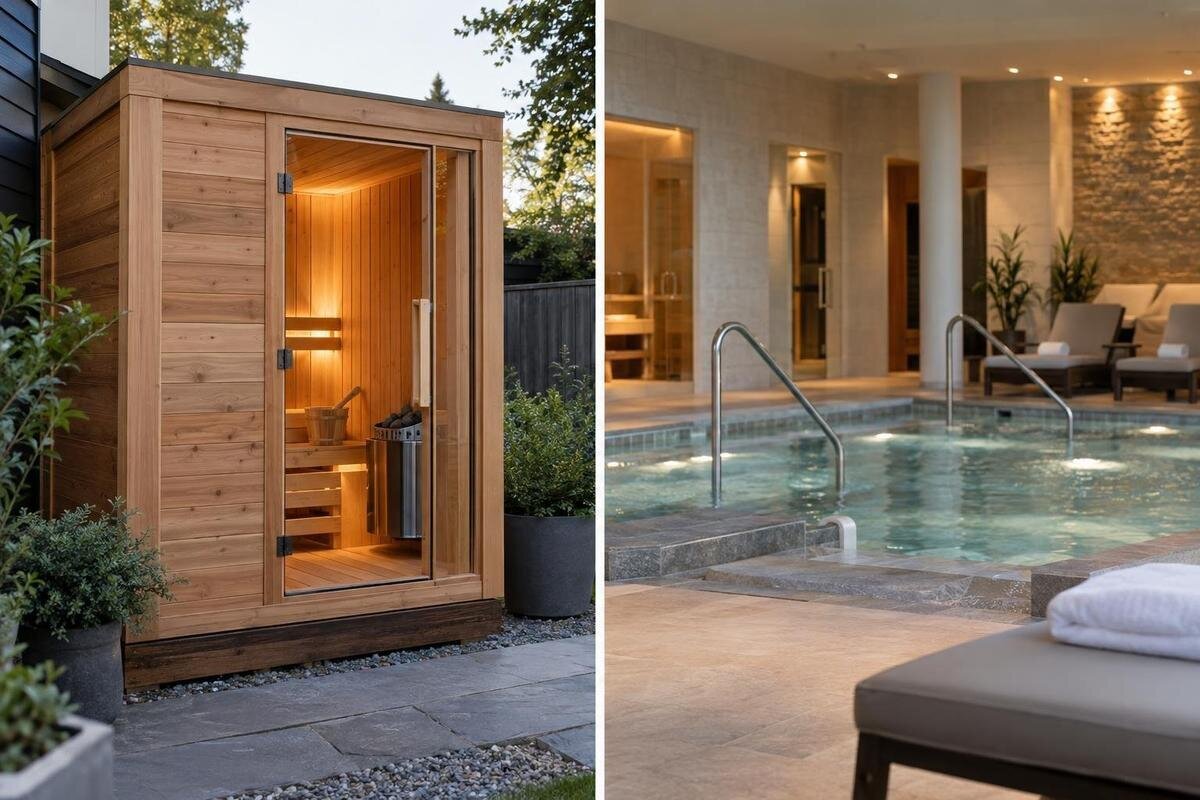
Sauna cost comparison
Choosing between a home sauna and a spa membership is not a simple comparison of a purchase price with a monthly fee. The answer depends on how often you will actually use each option, the access a membership includes, travel, and the full cost of getting a home sauna running. Set a common period, use your own quotes and attendance assumptions, and keep cash flow separate from cost per use. The method below uses no assumed prices and makes no promise of a payback period.
Choose a comparison period and how to count visits
Choose a period that matches the decision. A 12-month view makes recurring commitments easy to see; a longer view shows how a one-off home purchase sits alongside continued use. Use the same start and end dates for spa fees and home costs, and note when joining fees, renewals, deposits and installation payments fall due. If a payment falls just outside the dates but forms part of the commitment, show it separately rather than quietly dropping it. If you are unsure how long you would keep a sauna, calculate more than one period. A shorter view gives more prominence to the initial purchase, while a longer one includes more use and upkeep.
Keep cash outlay and cost per use separate. For the spa, total fees due in the period, travel and any visit charges; for home, show the money required up front and the ownership costs incurred during that period. You can then show a separate annual-equivalent figure by dividing a defined purchase and site-work amount across a stated horizon. Do not count the full purchase price every year, or add its full price and annualised share into one total. Identify the exact home option being quoted, such as Sauna LC-260, and distinguish the product price from the total installed cost.
Estimate the visits you are likely to make
Build at least three attendance cases rather than assuming every intended visit happens. For example, twice a month is 24 planned visits in a year, once a week is 52, and twice a week is 104, before missed sessions. These are arithmetic examples, not recommended schedules or predictions. Define what counts as one visit: one household session, one person’s attendance or total person-visits. Use that same unit on both sides. A spa membership may be charged per person or on another basis, while a home session may include several people; without this distinction, cost per use can make unlike offers look comparable.
Adjust the cases to your calendar: work patterns, family commitments, spa opening hours, booking availability, holidays and travel distance all affect whether plans become visits. If you have attendance records, use completed visits rather than intentions. Otherwise mark your middle case as an estimate and keep a lower-use case alongside it. Home access may remove the journey, but it does not guarantee use; count expected sessions, not every session technically possible. Keep equipment choice separate from attendance: if you cost more than one configuration, give each a separate column and identify it, for example Sauna HCF-300, while leaving the visit assumptions unchanged.
Check what the spa membership actually covers
Read the actual membership terms and quote, not just the headline monthly fee. List any joining fee, recurring payment, minimum term, billing schedule, cancellation notice or charge, and access limit that could affect your chosen period. Confirm specifically whether sauna use is included, whether it must be booked, and whether visit caps, peak-time restrictions, guest fees or add-ons apply. These details vary by offer, so enter a cost only after checking it against the provider’s current terms. Note any price change or introductory period only if the written offer states it; do not extend a temporary rate across a full year without checking what follows.
Calculate the package total for the visits you expect, then divide by attended visits to find its average cost per use. A fee that stays fixed when attendance falls will cost more per attended visit; an extra admission charge belongs in the per-visit line. If the membership includes other facilities, compare the full package as a whole or make a stated allocation for the sauna portion. Do not subtract an imagined value for benefits you do not use. If some months are likely to be quiet, include a pause only if the provider confirms it is allowed and what it costs; otherwise keep the regular payment in the calculation.
Add the return journey to the spa
Include a return journey for each spa visit. If driving, use your actual return distance, the vehicle’s usual fuel consumption and a current fuel price from your own records; add parking, tolls or other charges only where they apply. For public transport, use the fare for the route and times you expect to travel, including necessary transfers. If you already buy a travel pass, count the extra cost attributable to the spa rather than assigning the full pass automatically; if the visit would require buying a pass, show that separately. Use the same journey assumptions in each attendance case, and do not enter a one-way fare against a return journey.
Decide whether each journey is dedicated to sauna use or combined with work, errands or another activity. For a combined trip, state whether you count the whole journey or only the additional distance or fare created by visiting the spa; either approach can be useful if applied consistently. If two people travel together by car, record the household journey once, then divide it per person only if your unit is person-visits. Keep travel time, waiting and the convenience of not travelling in a separate note. You may place a personal value on time, but do not quietly mix it into the euro total.
Cost the complete home sauna project
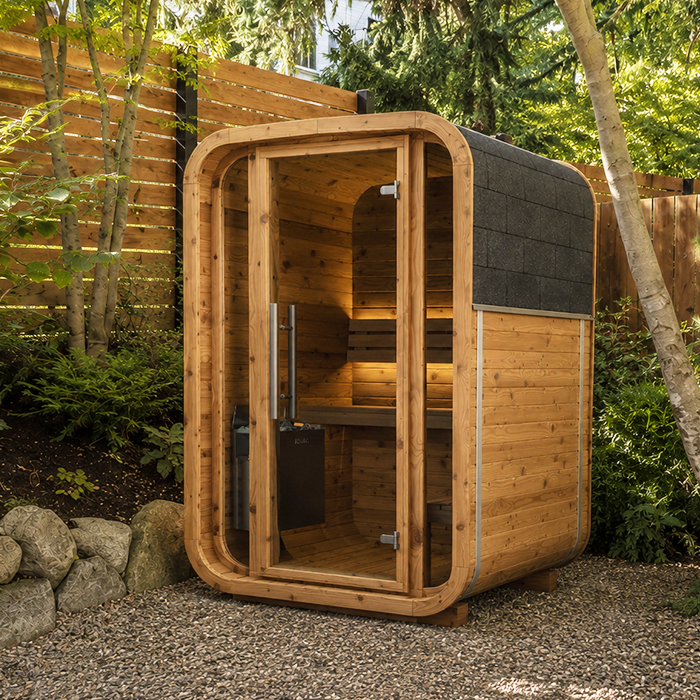
Home ownership begins with a complete project cost, not just the price shown against a product. Get a current quote for the exact sauna and configuration you are considering, then ask whether delivery to your property, unloading, assembly, a base or ground preparation, and any site or electrical work are included or separate. Do not infer from a model name whether a heater, controls, fittings or other options are part of the price. Site access and the work required depend on the property and selected equipment; have suitable tradespeople assess and price anything that needs professional input rather than estimating from a photograph or broad product category.
Build the project total from written line items: product, delivery, site preparation, professional work and any confirmed additions. Check whether applicable taxes are included and whether a delivery or assembly charge is still to come. When requesting a quote for Thermowood Barrel Sauna LCF-300, specify the configuration you want and ask the supplier to confirm availability and delivery scope. Keep firm quotes apart from allowances and unknowns, and note who supplied each figure. If a major line is uncertain, run a range instead of filling the gap with a made-up allowance.
Separate the purchase from ongoing ownership costs
Show the home purchase as a cash-flow item as well as a long-term cost. Record the deposit, balance and site payments when they are due; if you borrow, compare the total amount repayable, including any stated finance charges, with a cash purchase. A low monthly repayment can continue beyond the membership period you are comparing, so do not put one year of repayments beside a full year of spa fees and treat the totals as equivalent. Tie the quote to its exact product identity, for example Sauna S-140, and include confirmed project costs rather than assuming a standard package.
To calculate an annual-equivalent amount for budgeting, choose a planning horizon and divide the initial purchase and site work by the number of years in that horizon. State the assumption: it is not a statement of guaranteed useful life. Add recurring fixed costs once and per-session costs separately. Unless you have a reliable basis for a resale figure, show the result without resale proceeds; you can also test a shorter and longer horizon. That makes clear how much the comparison depends on keeping the sauna for a particular length of time, without presenting uncertain future value as money already recovered.
Estimate energy and upkeep for each year
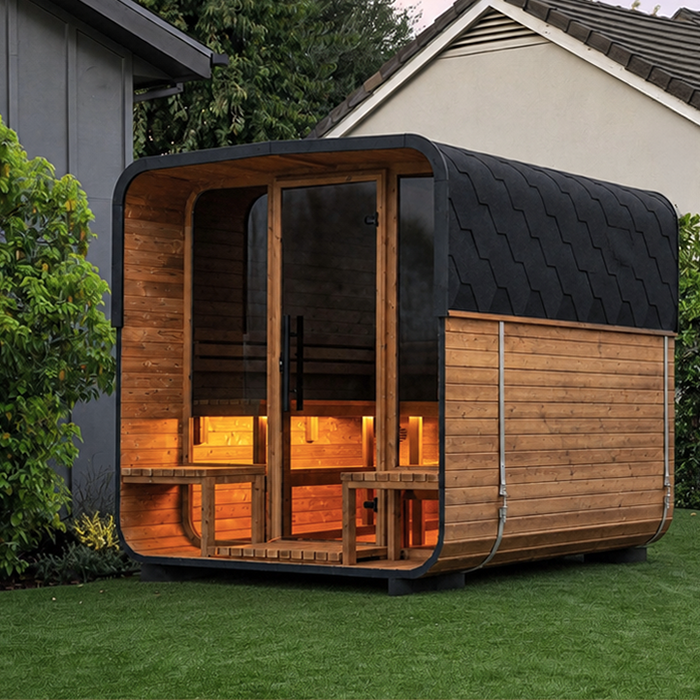
If the selected sauna is electrically heated, estimate energy use from data for that exact heater and configuration. Ask the manufacturer or supplier for a documented consumption estimate under stated conditions; a suitable professional measurement of a representative session may be more useful once available. Multiply kilowatt-hours per session by the variable electricity rate on your bill, then by the number of sessions in each attendance case. Do not treat a heater’s rated input as the exact electricity used throughout a session; actual use depends on operation and conditions. For a named option such as Sauna HC-150, request configuration-specific information rather than guessing from the model name. If another heat source is selected, use its actual fuel and related running costs instead.
Keep fixed annual costs and per-session costs on different lines. Add cleaning supplies, servicing, replaceable components, repairs or a service plan only when a schedule, manual or quote gives you a sound basis; if a cost is unknown, mark it as unknown or show a range. Include a higher household standing charge or insurance change only if the relevant provider confirms it is caused by the project, rather than allocating existing bills without reason. A qualified installer can help check the running-cost assumptions for the chosen setup. Keep these estimates separate from the initial installation charges so that neither is counted twice.
Compare access and convenience as well as price
Compare the access you would actually have under each option, not just the number of visits in the worksheet. Check whether the spa's available hours fit the times you intend to go and whether booking or access limits could prevent those visits. For shared use, establish whether each person needs a separate membership or pays a guest charge; do not assume that one membership covers the household. On the home side, use the configuration you have priced. If you are considering Sauna HC-225, check its seating layout and capacity information before assuming everyone can use it together. Sessions taken together and sessions taken separately need to be counted consistently.
Keep convenience and space visible without inventing a euro value for them. A spa visit may involve travel, timetable planning and access rules; a home sauna uses part of your property and still needs time for routine care. Think about who would use it, when, and whether other household members can share the sessions. Note preferences such as a fixed opening schedule versus having the equipment at home, but keep them separate from the monetary result unless you deliberately assign a value. This prevents a low average cost per session from being mistaken for the best fit in every other respect.
Calculate a usage threshold from your figures
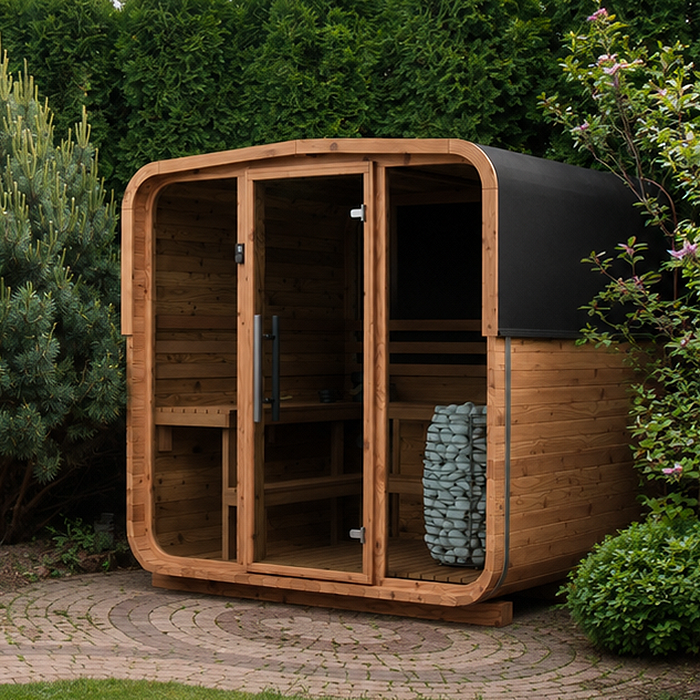
One way to see how attendance changes the result is to split each option into a fixed part and a per-session part. Let F_home be the share of the home purchase and site costs allocated to your comparison period, plus fixed ownership charges for that period. For a one-year comparison, use the annualised share calculated over your stated planning horizon. Let V_home be the home cost per session. Let F_spa be membership charges and other fixed fees for the same period, and V_spa be admission, travel and other per-visit charges. For S sessions, the totals are F_home + S × V_home and F_spa + S × V_spa. Use the same unit of attendance throughout and do not count a fee in both parts.
If F_home is higher but V_home is lower, the estimates meet at S = (F_home − F_spa) ÷ (V_spa − V_home), provided V_spa is greater than V_home. This is a threshold in your worksheet, not a forecast of when a purchase pays for itself; it moves when the membership, visit count, energy rate, travel or comparison horizon changes. If the per-session home cost is not lower, there is no higher-use crossover favouring home under these assumptions. Recalculate using a precisely identified option, such as Sauna N-210, and keep unknown inputs visible.
Test how sensitive the answer is to your assumptions
Run low, central and high attendance cases before relying on a single answer. Change one input at a time to see what matters: missed spa visits, travel fare or fuel, membership fees, the home energy estimate, upkeep and professional installation quote. Then combine the less favourable assumptions to test whether the choice still holds. Tie each home calculation to the exact item being priced, such as Sauna N-250, and each spa calculation to a current, written offer. Record the date and source of your own figures. Do not assume a future price, discount, resale value or tariff change; include one only as an explicit scenario.
Report three results: the cash needed up front, total cost over the common period, and average cost per attended session or person-visit. Keep travel time, use of home space and access preferences in separate notes. If the spa offers pay-as-you-go admission, add it as a third option only after checking the current price and access terms; a membership is not the only possible spa comparison. If the preferred option changes between your lower- and higher-use cases, the worksheet has identified a real uncertainty, not a calculation failure. Avoid reducing that range to one precise payback claim.
Frequently asked questions
How many visits make a home sauna cheaper than a spa membership?
There is no universal number. Compare the home option’s annual-equivalent fixed costs and cost per session with the membership’s fixed fees and per-visit costs, including travel. Use your own quotes and attendance estimates to find a possible crossover, then test lower and higher use. It is a scenario threshold, not a promised payback date.
Should I compare a monthly membership fee with a sauna’s purchase price?
No. Compare both options over the same period. Include the membership payments, travel and any charges that apply; for home ownership, include the purchase, delivery, site work, running costs and upkeep. Show the upfront cash required separately from any annual-equivalent figure.
Should I include travel time in the spa cost?
Include fares, fuel, parking and other applicable journey costs in the euro total. Keep time as a separate consideration unless you deliberately assign it a value and use the same method throughout. If you combine the visit with another trip, state whether you count the whole journey or only the additional travel.
How can I estimate the running cost of a home sauna?
Use information for the exact configuration and heat source. For an electrically heated sauna, get a documented energy estimate for a representative session and apply the variable rate on your bill. Include upkeep only when you have a reliable basis for it; a heater’s rated input is not the same as its exact energy use per session.
What if several people will use the home sauna?
Choose a consistent unit, such as household sessions or person-visits, and use it for both options. Check who a spa membership covers and how access is charged. Count a shared home session once for a household comparison. For a cost per person-visit, divide the total cost by the total number of individual attendances, not simply by the number of household members.
Once membership fees, travel, home setup and running costs are on one worksheet, the choice is no longer a contest between a monthly fee and a purchase price. It is a comparison between two cost patterns: recurring spa access with a journey, or a larger home outlay followed by costs linked to ownership and use. Which works out better depends on your actual attendance, verified terms and the time period that matters to you. Keep the assumptions visible so the answer remains useful if your routine changes.
