
Electric or Wood-Fired Sauna: Which Routine Suits You?
Sauna buying guide
Choosing between an electric and a wood-fired sauna is a choice about the jobs around each session as much as the heat source. An electric heater removes the work of building a fire, but the room still needs to warm and you need to understand the controls. A wood-fired stove adds fuel handling, lighting, attention while the fire burns and ash afterwards. That can suit someone who enjoys preparation, but it is a recurring task, not a one-off installation detail. Compare a normal week: when you would use the sauna, who would get it ready and how much time you can give the process. That is a better guide to everyday use than choosing on atmosphere alone.
The tasks involved in each heating method
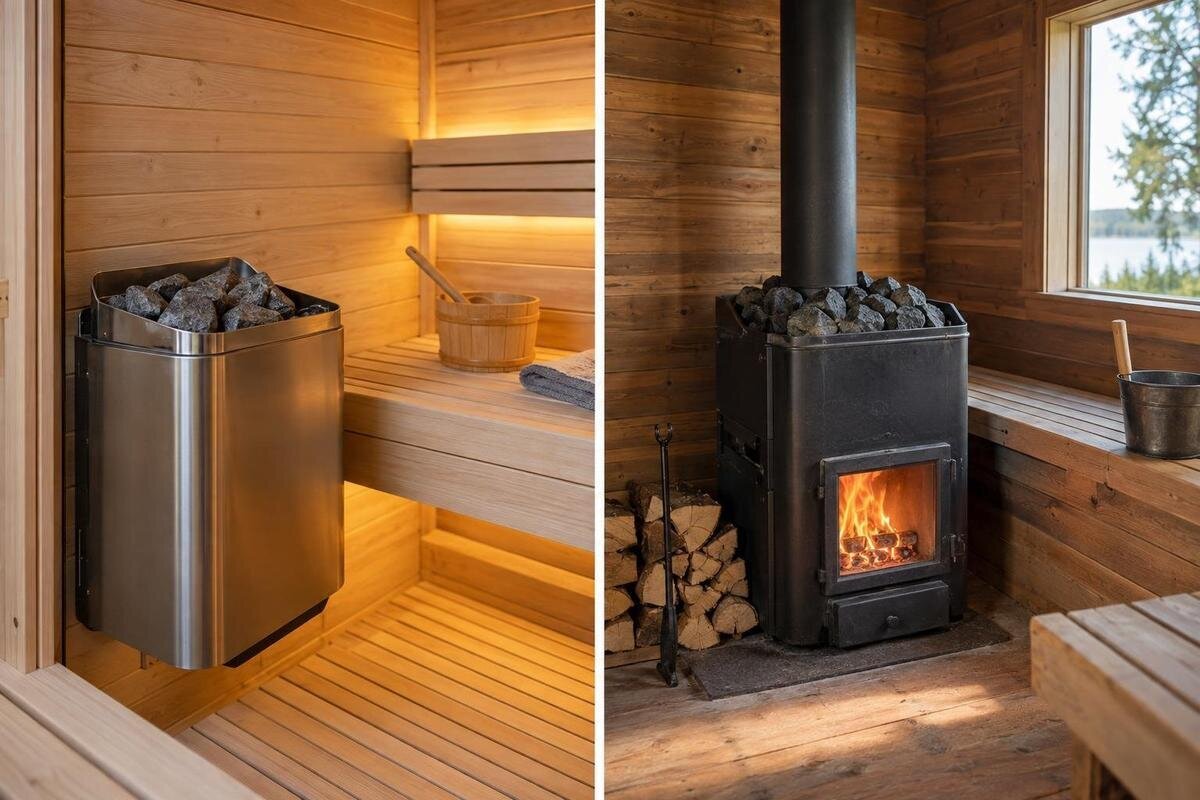
The main difference is the work involved in producing the heat. With an electric heater, the routine centres on preparing the room, operating the controls and allowing for warm-up time. With a wood-fired stove, it starts earlier: bring out suitable fuel, light the fire, attend to it and deal with ash afterwards. Those jobs affect who can get the sauna ready and how much notice they need. Electric heating generally involves fewer hands-on tasks at the start, while wood-fired heating can require further attention during warm-up and after use. Compare the whole process rather than just the moment you switch on a heater or light a stove. That distinction matters particularly when several people share the preparation and cleaning.
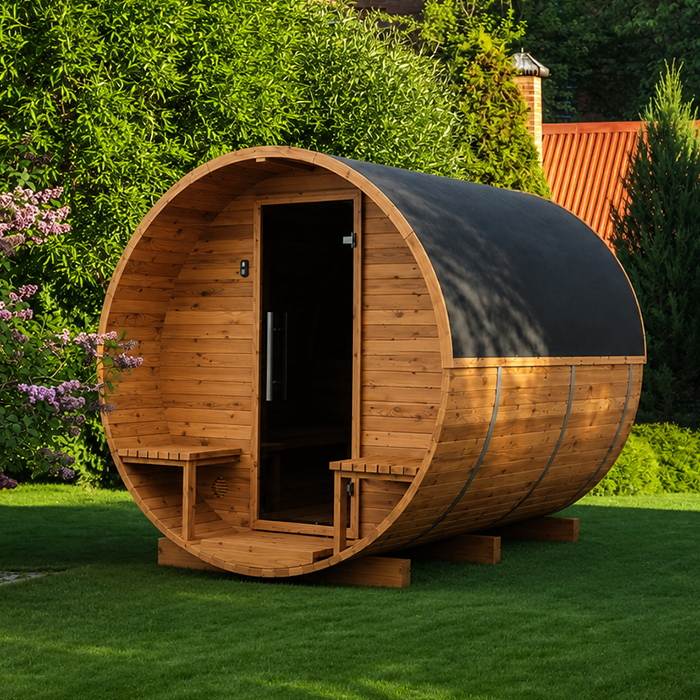
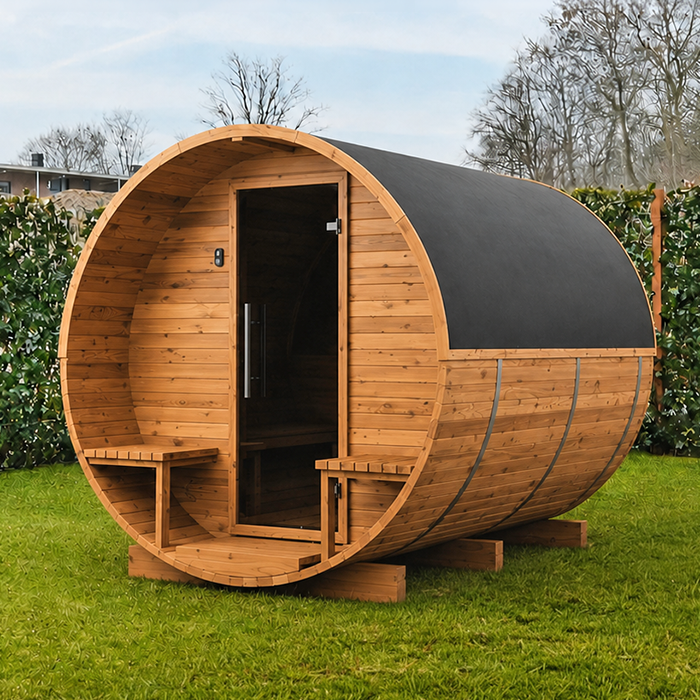
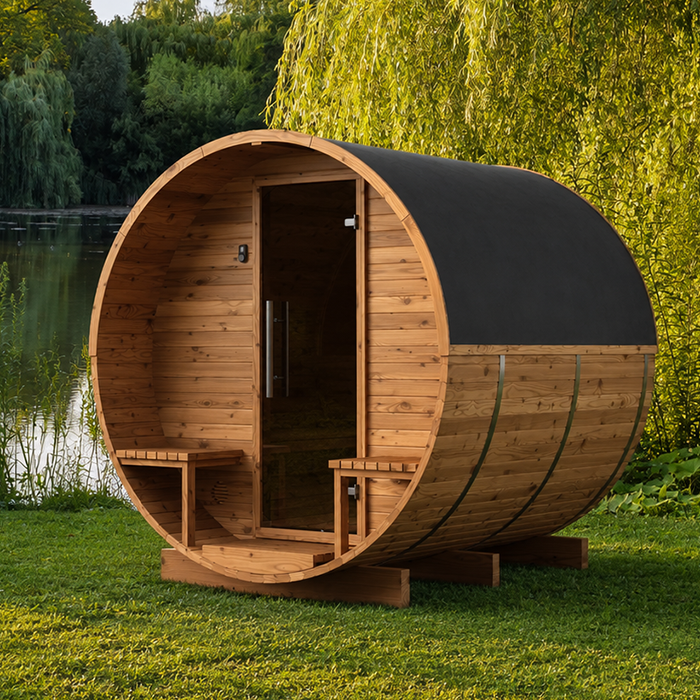
Think through an ordinary weekday as well as a free evening. Do you want fewer hands-on steps before you begin, or do you have time to make lighting a fire part of the occasion? The answer can change with frequency: tasks that feel manageable for occasional use may become a nuisance when repeated, while a simple start can matter more on busy days. Consider who will carry out each job, whether the same person will always be available and how another user would take over. The Thermowood Barrel Sauna HCF-300 listing identifies a model, but its name alone does not confirm the heater configuration. Check the exact option before deciding what its daily routine would involve.
An electric heater keeps the start simple
An electric routine usually begins with checking that the room is ready, operating the heater’s control and allowing time for the space to warm. There is no fire to build or wood to carry, so the starting sequence can be simpler. It is not instant: heating time depends on the selected unit, cabin, starting conditions and the result you want. Control arrangements differ, too. Do not assume that the word electric means a timer, app or automatic start is included; look at the actual equipment and instructions. Separate the time needed to operate the controls from the time needed to heat the room, and plan accordingly.
This can suit a household that wants to fit sauna use into a fairly predictable time slot and prefers not to keep fuel ready. It still calls for someone to remember to start the heater, understand the controls and follow the manufacturer’s directions. When considering the LCF-300 sauna, check which heater and controls are included in the configuration offered. The useful question is how that particular set-up would fit your evening: who starts it, how you know it is ready and who switches it off or completes its cycle as instructed. Make sure regular users know where the controls are and understand the same operating routine.
A wood-fired stove adds preparation and tending
With wood-fired heating, preparation starts before lighting. Bring the fuel and fire-starting materials specified for the stove to hand, then follow its instructions to light it and build heat. The required kind, size and condition of wood can vary by appliance, so a generic supply of logs is not a reliable basis for planning. If fuel needs to be moved, split or otherwise prepared, include those jobs in the lead-in rather than counting only the time at the stove. A delivery may reduce one task, but it does not remove the need for appropriate storage and handling. A ready sauna cabin does not mean its stove is ready to use.
The fire may need attention as it gets established; how much depends on the stove and its manual. This makes a wood-fired option less suited to a plan where the person lighting it must immediately leave or focus on something else. Decide who will be responsible for checking and tending it, and do not leave a new user to guess at the process. After use, follow the maker’s directions for allowing the appliance and ash to cool before handling the residue; ash can retain heat. If you are considering a wood-fired configuration for the S-140 sauna model, include both fire tending and ash handling in your comparison, rather than treating lighting as the only extra job.
Warm-up time depends on more than the heater
Neither heater gives a universal warm-up time. Electric heat avoids the fire-lighting stage, but the cabin still needs time to reach the conditions you want; a wood-fired stove adds preparation and a build-up phase. The result depends on the exact heater and sauna, conditions at the start, ventilation and how the system is operated. A general estimate may not match your site or routine, particularly if the cabin starts cold or its door is opened repeatedly. A model name or shape alone cannot settle the question. Use model-specific guidance and ask the supplier or installer about any detail that changes your usual start time.
Work backwards from when you hope to use the sauna, then include the tasks particular to the heater instead of relying on a generic estimate. If you often decide at short notice, fewer hands-on steps may matter more than the appeal of tending a fire; if you can set aside preparation time, the extra work may fit easily. Whether you can use the warm-up period for other jobs also affects how much of your evening it takes up. When assessing the HC-150 sauna, ask about warm-up for the exact heater and cabin combination. Distinguish time spent actively preparing it from time spent waiting, since those place different demands on your schedule.
Attention needed during warm-up
Once heating has begun, consider how much attention the appliance calls for. An electric heater may include controls that regulate its operation, but systems differ; a timer, remote control or automatic function is not guaranteed, and no feature should be used outside its instructions. Plan for the person responsible to understand the actual controls and any checks the manufacturer specifies. Do not equate a simple start button with permission to ignore operating guidance. If you expect to do other work during warm-up, confirm what the manual says about monitoring and shut-down before making that assumption.
A wood fire needs checking and tending as instructed, particularly while it is being established. Consider whether that fits alongside cooking, childcare, gardening or other evening tasks. Being at home is not necessarily the same as being available to attend to the stove. If another household member takes over, they need to understand its routine and know what has already been done. When comparing a possible wood-fired option for the HC-225 sauna model, consider who could take responsibility on a busy evening. If you cannot reliably give the fire the attention required, that is a practical mismatch even if you enjoy tending it when you have more time.
Cleaning and maintenance after use
Cleaning differs, but neither option makes the sauna maintenance-free. Both routines include caring for the room and its surfaces as the maker directs, removing used items and allowing the space to dry as instructed. An electric heater avoids ash from burning wood, which can simplify the area around it. It may still need attention to components such as stones if that heater uses them; check its instructions for what to inspect and when. Distinguish the quick tidy after a use from periodic appliance care, so you do not mistake one for the other. A repeatable closing routine helps the next session start cleanly.
With a wood-fired stove, ash and small debris add a task that an electric routine does not have. Allow the appliance and ash to cool as specified by the manufacturer, then follow its disposal instructions; ash can retain heat even after visible flames are gone. A flue and stove may also require cleaning or inspection beyond everyday sweeping, so ask what is expected and who will do it. When comparing heater options for the N-210 sauna, separate the jobs needed between sessions from periodic maintenance. This makes it easier to judge the recurring workload without confusing a quick tidy with less frequent servicing. The tools and schedule should come from the selected appliance’s care instructions.
Fuel storage becomes part of a wood-fired routine
Wood storage is a continuing part of the wood-fired option. Keep the fuel type and condition aligned with the stove manual, and have suitable fuel and kindling available before you want to start. Carrying logs on a wet evening, keeping them dry and tidy, and moving them from storage to the sauna are recurring chores; they do not disappear after installation. Work out the carrying route and how much convenient storage you can set aside. A supply that is awkward to reach or stored in a place that does not follow the stove maker’s safety guidance can make an otherwise appealing routine impractical.
Electric heating removes the firewood stack, but still depends on a suitable electrical supply and a working heater; it is not entirely task-free. If you prefer wood-fired heating, decide who replenishes the fuel and how the household will know when supplies are running low. Separate buying or receiving fuel from getting it ready for a session: someone still needs to move it from storage and have the appropriate materials to hand. If you are considering a wood-fired configuration for the N-250 sauna, establish its fuel requirements before planning your storage. This lets you assess the space and handling involved without buying a generic supply of logs and hoping it will suit.
Check installation and maintenance requirements
Before ordering, establish what installation demands for the heater you will actually use. An electric unit needs an appropriate supply and connection; a qualified electrical professional should check the requirements for the specific unit and site. A wood-fired stove needs a suitable flue arrangement and clearances, determined from its instructions and the sauna manufacturer’s drawings by competent people. These are different planning jobs, not do-it-yourself calculations. Consider access for the relevant professionals and any site constraints before comparing daily convenience. If your site cannot accommodate one route, that may settle the choice before you get to routine preferences.
Ask which components are included, which are optional and who is responsible for installation, commissioning and later servicing; photographs or a model name do not establish those details. For the LC-260 sauna, compare the confirmed configuration with the work needed at your site. Keep one clear list of what the supplier provides and what you need to arrange separately, so neither the heater connection nor any required flue work is overlooked. Clarify unanswered points before ordering, especially where the heater and cabin need to be assessed together. Once installed, keep the operating and maintenance instructions accessible to the people who will use the sauna, rather than leaving them with the purchase paperwork.
Match the routine to everyone who will use the sauna
In a shared household, the best routine is one that more than one person can understand and carry out. With electric heating, make sure regular users know how to operate the actual controls and where the instructions are kept. With a wood-fired stove, agree who handles fuel, starts and tends the fire, and takes care of ash. If those jobs fall to one person every time, consider whether that arrangement will still work during busy periods, holidays or a change in the household schedule. A backup person is useful only if they know the equipment-specific process, not just where the switch or stove is.
Think about practical access as well as enthusiasm. Someone who enjoys the sauna may not want to carry logs or wait through the fire-starting phase; another person may enjoy that preparation and accept the extra clean-up. Avoid assuming everyone can manage the same steps or will prefer the same degree of involvement. If several people will use it, keep the maker’s operating instructions available and agree on a simple handover. The next user should know whether the appliance has been started, what checks remain and who is responsible for the close-down, rather than trying to infer its status.
Comparing the routines on an ordinary day
A useful comparison is to write out one typical session from the moment you decide to use the sauna through to the finished clean-up. Note how much lead-in you can give it, who must be present to get it ready, whether ongoing attention is needed, what has to be cleaned and where supplies are kept. Add the site and installation checks separately: they are commitments that can limit the choice even if the daily routine sounds appealing. This comparison is more informative than asking which heat source is universally better, because households differ in available time and willingness to repeat those jobs. It also highlights which tasks you might otherwise overlook.
Then test the choice against a less convenient day: arriving home late, having only a limited window or asking someone else to prepare the sauna. If the electric start-and-wait routine still works and its installation is suitable, it may be the better fit. If time for fuel and tending is available and those tasks feel worthwhile rather than burdensome, wood-fired may suit you. This is an everyday-use comparison, not a universal running-cost calculation; keep the decision grounded in the work you are prepared to repeat. If neither routine fits the way your household actually operates, treat that as a reason to reconsider the set-up rather than dismissing the inconvenience.
Frequently asked questions
Does an electric sauna heat up immediately?
No. Operating the controls may be quick, but the heater and cabin still need time to warm. The time varies with the exact equipment, sauna and starting conditions. Use guidance for the specific model rather than a general estimate, and do not assume it has a timer or remote-start feature.
Does a wood-fired sauna need attention while it heats?
Usually, the fire needs to be lit and attended to according to the stove’s instructions. How much tending is involved varies by appliance and stage of heating. Allow time for someone to handle the fire; do not build a routine that depends on leaving it to a person unfamiliar with the stove.
Which type is easier to clean?
An electric heater avoids wood ash, so the immediate clean-up may be simpler. Room cleaning and heater maintenance still remain. A wood-fired stove adds ash handling and may have stove or flue maintenance requirements. The tasks and intervals depend on the appliance, so follow its care instructions.
Is electric the better option for frequent use?
Frequency alone does not settle the choice. Electric may suit a repeatable routine with less fuel handling; wood-fired may suit frequent use if the repeated preparation, tending, fuel storage and ash tasks are acceptable. Consider who is available to do the work and whether the installation requirements suit the site.
Can I tell the heater type from a sauna model name?
No. A model name identifies the sauna, but does not by itself confirm which heater is included in a particular configuration. Check the exact option, inclusions and relevant heater instructions before comparing daily tasks or assuming a control feature is available.
Choose electric when a straightforward start and no firewood or ash work are priorities, provided the required installation suits your site. Choose wood-fired when you can allow time for fuel, lighting, tending and clean-up, and want those jobs to be part of the routine. The better fit is the heater whose repeated tasks you can reliably manage on an ordinary day, not only the one that sounds appealing when you have plenty of time.
