
Does a Garden Sauna Need a Water Supply or Drain?
Garden sauna planning
Water questions are easier to answer when the cabin, sauna routine, an optional shower and wastewater are considered separately. A garden sauna may not need a permanent supply or drain, but its exact design and intended use decide what to confirm. This guide explains what to check before choosing a model, positioning services or asking a plumber to plan connections.
Before you buy 1
Separate the cabin’s water needs from an optional shower
An outdoor sauna does not require a permanent water connection or drain simply because it is a sauna. A cabin used without a shower may have no reason for a fixed supply, but a particular design can include fittings or specify requirements for use and cleaning. The answer depends on the chosen configuration, heater and routine. Treat the cabin, any shower and the handling of used water as separate parts of the plan. Start by listing what you plan to do inside and beside the cabin before arranging any pipework. Also distinguish carrying water from supplying it through a permanent connection: one may be manageable without the other.
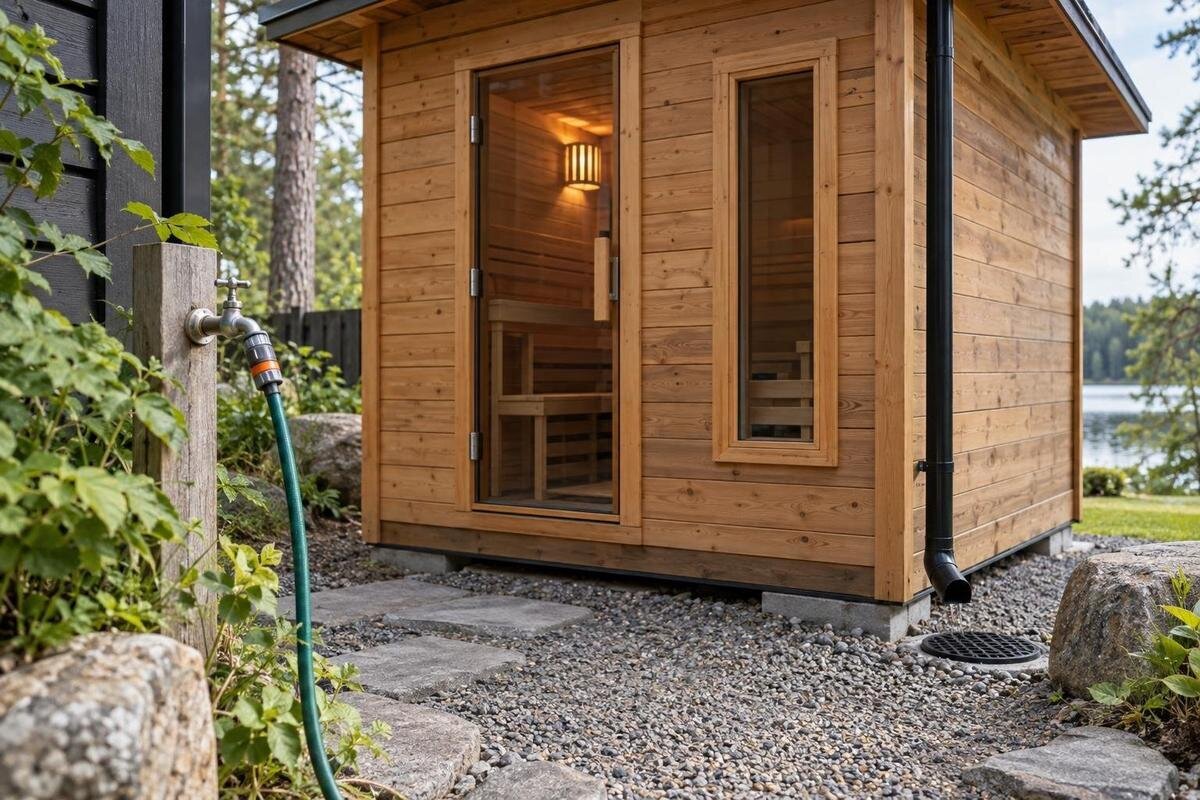
At the outset, note each point where water might be used: it may be carried in for a permitted sauna routine, supplied through a fixed tap, used for washing or delivered to a separate shower. Those uses do not all call for the same pipes or drainage. A bucket brought from an outdoor tap is not the same as plumbing a shower; nor does occasional spot-cleaning automatically justify a floor drain. Use the exact model name when requesting the matching drawing: the Sauna S-140 listing identifies a product, while its water and wastewater arrangements still need to be confirmed for the configuration you intend to buy. This distinction is especially useful when a later shower is only a possibility, not part of the first installation.
When does the cabin need a fixed water connection?
A fixed water connection is relevant when the chosen design includes a tap, basin, shower or other fixture that needs a feed, or when its instructions specify one for your intended use. Ask for a current list of what is included and a drawing that marks every connection point. Check whether a fitting is inside the sauna, in an adjacent changing area or part of an optional package. A product photograph may show a layout or accessories that are not part of your order, so obtain confirmation for the exact version rather than treating an image as a specification. Ask which connections are part of the delivered product and which, if any, must be arranged on site. Also ask whether a connection point needs to remain accessible after assembly.
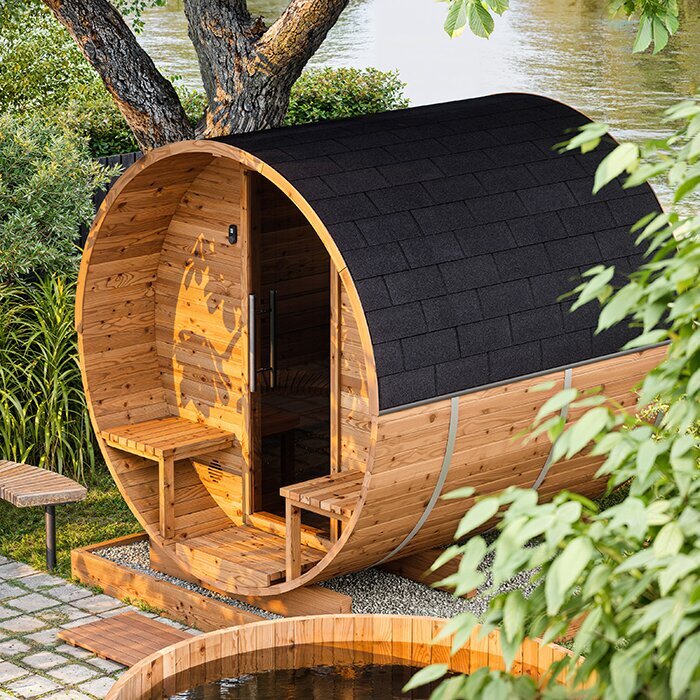
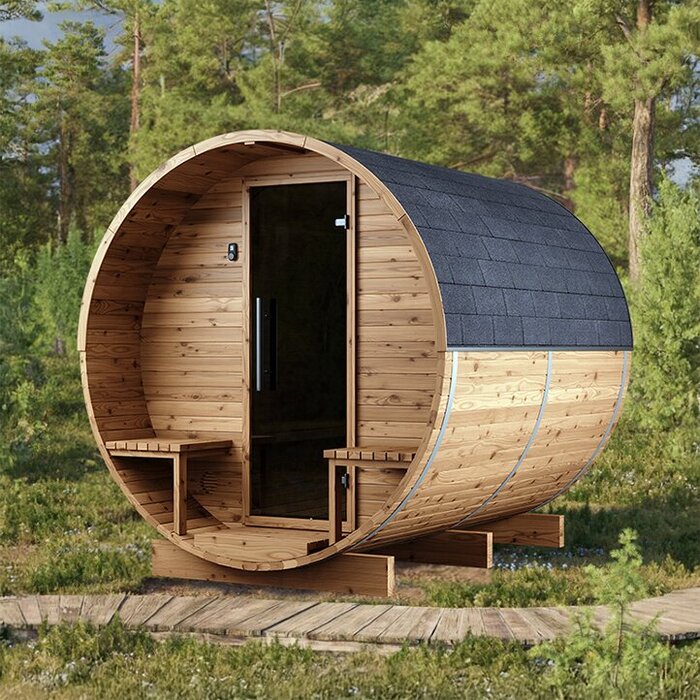
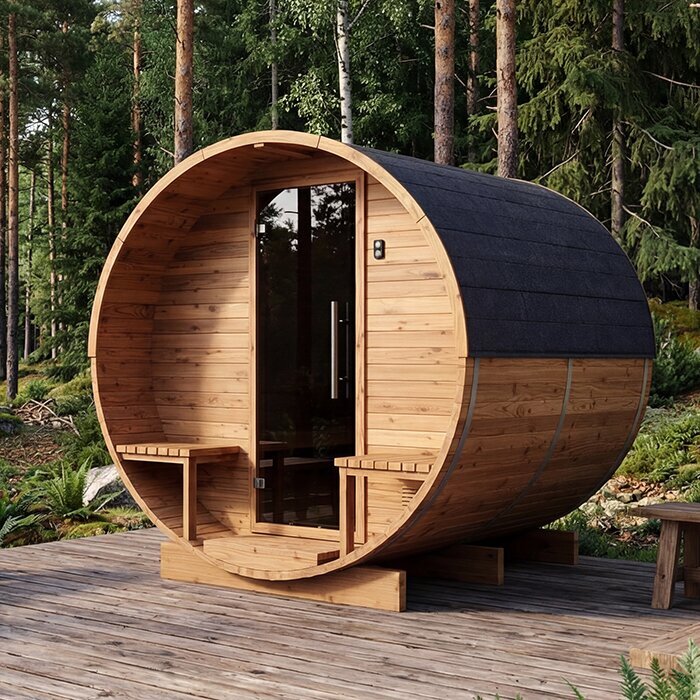
If there is no plumbed fixture, and the manufacturer permits your intended routine without one, you may be able to bring in water by hand rather than run a permanent line. That can keep the project simpler, but it means thinking about where you fill and store a bucket, how far you carry it and how you keep the route clear. The HC-150 model page can help identify the product in an enquiry; ask the supplier for its matching installation information, not just a yes-or-no answer about “saunas”. If carrying water would suit one person but not everyone using the cabin, note that before settling on the plan.
Before you buy 2
Water use with the heater depends on its manual
If your sauna routine involves putting water on heater stones, confirm that practice with the manual for the particular heater. A cabin listing does not establish which heater is included or compatible, and permission to use water should not be assumed from a photograph or a general description of sauna use. Ask whether water is allowed, what the manufacturer says about its use and how to deal with any splashes. This is a heater-use question; it does not by itself mean that a permanent supply or a cabin floor drain is needed. The appliance-specific manual is a better basis than advice about another sauna. Note the make and model of the heater when seeking guidance, so the answer relates to the right appliance.
When asking about the Sauna HC-225 listing, give the exact cabin model and heater arrangement you are considering, then request the corresponding manual and installation drawing. That lets the supplier answer for the combination rather than a generic category. Water used by hand, a piped feed to a fixture and wastewater from a shower are three different plans. If an electrical or combustion appliance is involved, have the relevant qualified installer confirm its requirements from the manufacturer’s documents; do not set out connections or clearances from a general guide. Do this before deciding where a tap or drain should go.
An optional shower adds its own water and drainage needs
A shower is a separate wet-area decision, whether it is beside the sauna or part of a specific cabin design. It needs a source of water and a suitable route for the water after use. If you want warm water, identify how it will be provided; a cold rinse still needs a planned feed and drainage arrangement. Decide where the user will stand, whether the shower is sheltered or exposed, and how splashes will be kept away from the sauna entrance and any dry storage. Do not assume that a sauna interior is designed to function as a shower room. Decide whether the shower is for year-round or occasional use before specifying a permanent setup.
Before choosing the location, ask for a drawing showing the cabin, door, shower and any proposed wet area together. Use the N-210 model page as the model reference when asking the supplier whether the exact configuration has any shower provision and what would be needed for an external shower. Discuss the water source and discharge route with a plumber before committing to a layout; the service route may affect where the shower can sensibly go. Also check what space or fittings, if any, are provided for changing or drying beside it.
Before you buy 3
Routine cleaning does not automatically call for a floor drain
Light routine cleaning may involve only a small amount of water, but follow the cleaning and care instructions for the actual cabin. Ask whether the interior should be wiped, what products are permitted and whether water may be used on the floor. Do not assume that an outdoor sauna can be hosed down: a cabin designed for occasional wiping has different water-handling needs from a wash-down area. The instructions should also explain how to leave the cabin after cleaning so moisture does not remain where it should not. Tell the plumber which cleaning method you intend to use, as wiping surfaces and washing down a floor raise different drainage questions.
When enquiring about the Sauna N-250 listing, request the care instructions and a floor or interior drawing for the precise configuration. If cleaning water is expected to run across the floor, establish in advance where it will go and whether that is permitted. If you can clean with a damp cloth and collect water for disposal elsewhere, a permanent drain may serve no purpose. Compare the cleaning method allowed by the manufacturer with the routine you actually expect to follow. This will help establish whether a floor drain is relevant before you choose its location.
Decide where wastewater will go before adding a drain
A drain is useful only if there is a clear, suitable destination for wastewater. A shower creates wastewater whenever it is used, while occasional cleaning can create a much smaller and less frequent amount; they should not be treated as identical. Ask a qualified plumber to assess whether the water should connect to an existing wastewater system or needs another site-appropriate solution. Do not assume that water can be sent to a garden, a surface-water drain or a rainwater outlet just because the sauna is outdoors. Local requirements and site conditions need to be confirmed before selecting a route. Bring a site plan to that conversation; the nearest visible gully may not be the right outlet.
Ask whether the selected cabin’s drawings show a drain, specify its position or rule out water discharge through the floor. When enquiring about the LC-260 product page, request those details for the exact model and configuration. Tell the plumber whether the outlet would serve a shower, floor cleaning or both, and what cleaning products the manufacturer permits. The drain location, pipe route and destination all need to work together; choosing a grille alone leaves the main wastewater question unanswered. If a separate treatment arrangement is proposed, ask what upkeep it needs and who is responsible for it.
Before you buy 4
Plan the route from the water source to the sauna
Trace the water route from its source to the sauna before deciding where the cabin sits. It could be a connection from the house, an existing outdoor tap or a separate storage arrangement, but each option brings different questions about distance, access and reliability. Mark whether people will carry water or whether pipework is expected, and avoid placing a route where it will be in the way of normal garden use. If water comes from a tank or rain collection, check its quality and treatment for the intended use with a competent professional; do not assume it is suitable for a shower or heater routine. Tell the plumber if another garden fixture will share the source and how often the shower is likely to be used.
Give the supplier and plumber the intended sauna position, proposed water source and exact model, rather than just an approximate point on a garden sketch. Use the HCF-300 listing to identify the chosen model when discussing the service route against the manufacturer’s drawings and the actual site. Ask how any exposed pipework should be designed for weather and periods when the sauna is not used, and how it will remain accessible for maintenance. Have the professional assess any existing service you hope to use. The shortest route is not necessarily the most practical if it makes future inspection difficult.
Coordinate drainage, the base and the cabin position
Water management also affects the ground around the cabin. Consider where shower splash, cleaning water and rainwater will go, and avoid a plan that leaves water collecting beside the base or entrance. The supporting base, cabin floor and any drain must be considered as one layout: a route that crosses the support area or discharges close to it may need redesign. Use the manufacturer’s base and floor drawings, then ask a competent groundworks or plumbing professional to check them against the actual site. Do not assume garden soil will absorb all water safely or consistently. Ask how the proposed arrangement avoids water travelling across the entrance or onto a neighbouring surface.
When enquiring about the LCF-300 model page, ask which base and floor drawings apply to that version. If you hope to use a nearby tap or drain, have a qualified person check that it can serve the new arrangement and that the proposed route is compatible with the base. Settle this before groundworks begin: changing the cabin position or adding an outlet later may mean redoing completed work. Agree where any visible drainage components will sit and how they can be reached for maintenance without moving the cabin or obstructing the entrance.
Before you buy 5
Confirm who supplies and connects each fixture
Water and drainage equipment may sit outside the sauna seller’s supply, so confirm the boundary of the order. Ask whether a tap, shower, hot-water unit, pipework, drain fittings, heater and installation are included, excluded or optional. Request the current specification, itemised scope and drawings for the chosen configuration, and ask who is responsible for bringing each service to the cabin. Do not read equipment into an image, a model title or another buyer’s layout. Clear responsibility matters because a cabin can be selected before a plumber or installer has confirmed what the site can support. Ask for named components rather than broad assurances, and record anything to be arranged separately.
Keep the same model and revision on the supplier’s documents and the tradesperson’s plan. Ask the supplier which manual applies, then have the appropriate qualified installer review any specialist appliance connection, plumbing and wastewater route. These are distinct jobs: a water supply does not establish a drainage solution, and an appliance’s requirements are not answered by a plumbing drawing. If a separate shower or hot-water source is planned, include it at the first review rather than treating it as a minor later addition. That gives each professional a complete brief. Have the relevant people review the same version before groundworks start.
Compare water and drainage needs with and without a shower
A no-shower plan can be straightforward: confirm the cabin’s instructions, check whether the chosen heater permits the intended water routine, decide how water for cleaning is handled and whether it will be carried in. Then ask if the manufacturer specifies any fixed services. A shower plan adds more decisions: source, hot-water arrangement if wanted, shower location, wastewater destination and the route between them. Keeping these two plans separate makes it easier to spot which connections are genuinely necessary instead of plumbing for a feature you may never use. If the only water use is a permitted manual routine and wipe-down cleaning, say that clearly when asking about services.
Record the decisions for the exact cabin configuration: model, heater, included fittings, cleaning method, shower choice, water source, drainage destination, service route and who will confirm each item. If a future shower is possible but not certain, ask whether the site layout can accommodate one later before work begins. Adding it may be more complicated once the base, pipes or finished surfaces are in place. Specify what any proposed connection would serve rather than relying on a broad description such as “plumbed sauna”. This record gives everyone involved the same brief and helps distinguish work needed now from provision for a possible future addition.
Frequently asked questions
Can I use an outdoor tap instead of plumbing water into the sauna?
You may be able to, if the cabin and heater instructions permit your intended use. An outdoor tap can provide water that you carry to the cabin, avoiding a fixed pipe into the sauna. It does not, however, provide a shower connection or a way to dispose of wash water. Think about where water will be filled and stored, and whether carrying it will suit the people using the sauna.
Does a garden sauna need a floor drain?
There is no automatic answer for every design. A cabin without a shower may not need one, but the floor details and manufacturer’s cleaning instructions matter. Ask whether the chosen configuration has a drain, whether water may be used on the floor and where any discharge should go before adding an outlet.
Can I use rainwater or water from a storage tank?
Only if it is appropriate for the intended use and the relevant instructions allow it. Stored or collected water should not automatically be treated as suitable for a shower or for a routine involving the heater. Ask a competent professional about water quality and any treatment needed, and confirm how the supply will be maintained.
Can I add a shower after buying the sauna?
Possibly, but do not assume it will be a simple addition. Confirm that the cabin layout can accommodate wet use, identify a water source and wastewater route, and check the base, floor and access against the exact drawings. If you may add a shower later, plan its space and service route before groundworks or finishing work begins.
Where should shower or cleaning water drain?
That depends on the site and its wastewater arrangements. Ask a qualified plumber and, where appropriate, the relevant local authority or water and wastewater provider whether a proposed connection or separate system is suitable. Do not send shower or cleaning water to soil, a rainwater outlet or a surface drain without checking first.
Decide first whether you are buying a sauna cabin only or also planning a shower and regular wet cleaning. Then confirm the instructions and drawings for the exact configuration, identify a water source if needed and agree where used water will go with a qualified professional. If any answer is unclear, resolve it before fixing the sauna position or starting service work. That gives you a plan shaped around actual use, without installing connections simply because the structure is outdoors.
