
Greenhouse Cucumbers in Ireland: Planting, Spacing, Watering & Harvesting | Bloomcabin
Why a greenhouse suits cucumber vines
Protected growing lengthens the cropping period and gives you greater control over cucumber development.
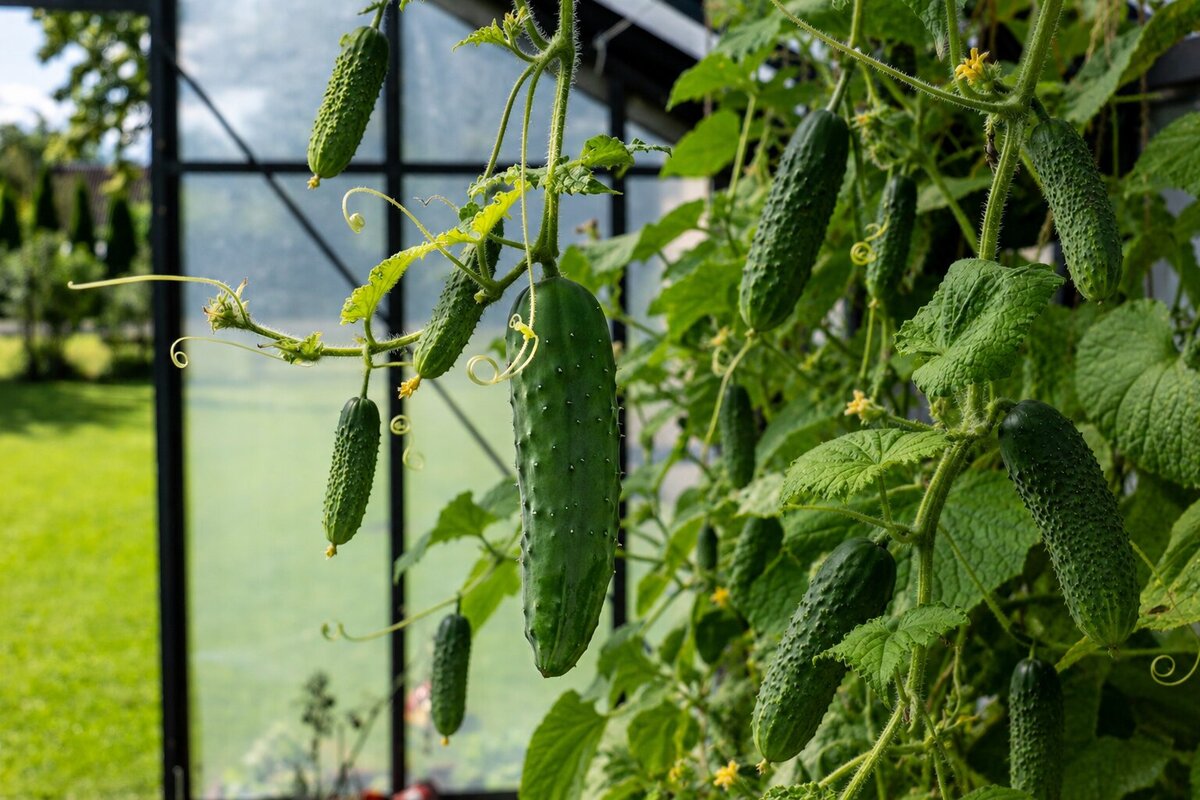
Cucumbers thrive in warmth and make little outdoor progress until both the soil and the nights are mild enough. A greenhouse gives you more control over that early stage. It shelters plants from cold winds and lengthy rain, provides steadier root conditions and offers height for trained stems. Rather than sprawling across the ground, the crop becomes an orderly wall that is simple to inspect and pick.
Those advantages bring extra work. Rain no longer waters the bed, sunshine can send temperatures climbing within minutes, and a dense canopy releases considerable humidity. Sealing everything up is therefore the wrong approach. Successful management combines regular watering with early ventilation, firm trellising and enough space for air to pass around the plants.
This balance matters in Ireland because conditions during spring and early summer often shift abruptly. Mild daytime weather can give way to a cold night, while clear July sunshine may leave the interior excessively hot. Treating temperature, irrigation and circulation as one connected system generally produces steadier plants and a longer picking period.
Conditions cucumbers prefer
Start warm, grow steadily and prevent damaging heat peaks.
Young cucumbers are readily checked by cold soil. Do not move them into an unheated greenhouse merely because one afternoon feels sunny. The full rooting zone should have warmed consistently, with overnight conditions suitable for the cultivar. Later planting into a warm bed often produces stronger growth sooner than an early transplant that stops developing after cold exposure.
In high summer, the priority reverses. Incoming sunshine is readily trapped as heat beneath glass or polycarbonate. Open rooflights, the doorway and any additional vents early, rather than waiting for visible stress. Bright enclosed gardens or heat-retaining urban plots may benefit from temporary shading, while cooler and more exposed locations can continue to make use of stored warmth.
Read the plants as well as the weather. Briefly drooping foliage at midday may signal heat or urgent thirst, while persistent limpness warrants checking the roots. Morning droplets show that moist air remained inside overnight. Such clues are more useful than treating one temperature as a universal target.
Chilly conditions – slower roots and shoots
Steady warmth – vigorous, fruitful growth
Excess heat – thirst and flowering difficulties
01 / Cultivar choice
Cultivar choice also determines the correct pollination strategy under cover.
Parthenocarpic cultivars are convenient for enclosed growing because fruit can form without fertilisation. The harvest is therefore not reliant on bees finding their way indoors. Many long slicing and newer mini cucumbers intended for protected crops belong here. Check the seed information closely, since vigour, lateral shoots and eventual fruit size vary considerably.
Many traditional outdoor cultivars carry separate staminate and pistillate blooms and depend on pollen transfer. Visiting insects can complete the task where a greenhouse stands widely open. A more enclosed crop might require pollination by hand. With certain parthenocarpic types, accidental fertilisation may instead produce misshapen fruit or noticeable seeds.
Think about the intended harvest as well. Long slicing cucumbers call for strong upright training and regular cutting. Snack types yield plenty of smaller fruit suited to a family garden, whereas pickling cultivars are gathered on a different schedule. For a smaller Bloomcabin greenhouse, compact growth that responds well to training is often preferable to maximum vigour.
02 / Sowing and planting
Plant young, disturb roots minimally and prepare climbing support before growth accelerates.
Either sow cucumbers directly or establish them from young plants. Raising seedlings separately in individual pots is useful where an Irish greenhouse takes time to warm during spring. Their roots resent rough transplanting, so avoid leaving them confined in small containers. Set each plant out while its compact roots hold together and its top remains sturdy.
If sowing in place, be patient until the soil is genuinely warm. A wet, chilly seed zone slows emergence and makes rotting more likely around seed and new roots. Prepare loose, organic-rich ground that drains freely. Well-rotted compost can be mixed in beforehand, whereas fresh manure should not sit against tender roots.
Set out the route of cords, mesh or trellis before anything is planted. Once established, cucumber shoots lengthen rapidly. Trying to fit a support through broad foliage later is awkward and can bruise soft stems. With the framework planned first, every vine can be directed correctly from its earliest growth.
01Warm bed; install climbing support
02Plant young cucumbers or sow into warm soil
03Train the leading shoot towards the roof
04Manage laterals by cultivar
05Maintain even moisture and nutrition once fruit forms
06Gather cucumbers often and examine every plant regularly
03 / Spacing and support
Aim for a leafy row that still admits daylight and moving air.
Filling every spare patch of greenhouse soil is a familiar mistake. Cucumbers soon produce overlapping foliage, leaving the lowest leaves poorly aired, concealing early pest activity and holding dampness after irrigation. Decide the interval between plants from their mature habit and the training method you intend to use.
Train the leading stem upwards on suspended cord or sturdy mesh. Paths stay open, fruit hangs clear of the soil and leaves occupy the available height. Taller Bloomcabin models let vines use the upper volume without spreading across the growing floor.
Training methods vary with the greenhouse cultivar. Some plants are restricted to one carefully managed leader, whereas others retain fruitful side shoots. Follow the directions for that particular seed rather than imposing a single pruning system. Remove foliage that is yellow, injured or clearly infected, but keep healthy leaves to supply energy to the developing fruit.
Include access for harvesting when arranging the supports. Keep sufficient space between trained rows to walk through without pushing leaves aside continually. A straightforward route from the entrance makes irrigation, inspection and picking easier. This is especially valuable with long-fruited types, as cucumbers overlooked behind wide leaves soon grow beyond their ideal stage.
04 / Managing moisture
Supply cucumbers generously, while keeping soil moisture reliably even.
A covered bed receives no direct rain, leaving every plant dependent on irrigation. A mature vine carrying several fruit can consume much more on a hot day than a small May transplant. Rather than using the same weekly routine throughout the season, inspect moisture regularly at the depth occupied by active feeder roots.
Wet the soil deeply but let surplus moisture escape instead of maintaining saturation. Air must remain available between its particles. Heavy ground becomes troublesome if repeated shallow applications always land in the same spot. A friable bed enriched with well-decomposed organic material absorbs water, retains an accessible reserve for roots and still drains the excess.
A drip line or deliberate irrigation beside the stem avoids soaking the foliage, an important benefit once leaves overlap. Morning is often a suitable time: roots are replenished ahead of the brightest hours, and any rise in indoor humidity can be cleared by daytime airing.
Alternating sharply between parched and waterlogged soil places cucumbers under strain. Plants may stop growing, and the fruit can become misshapen or develop poor flavour. Mulching reduces evaporation, although it is best delayed until the soil is thoroughly warm and additional insulation against warming would no longer hinder the crop.
05 / Nutrition
Healthy foliage is essential, but cucumbers—not an oversized canopy—remain the goal.
Cucumbers are demanding feeders, making fertile, humus-rich ground a sound starting point. Incorporating mature compost ahead of planting improves texture and creates a steadier nutrient reserve. Where the same bed is cropped repeatedly, base each year’s feeding on its present condition and the way plants are developing, rather than fertilising automatically.
Too much nitrogen produces soft, excessive leaf growth. The resulting canopy blocks its own light and becomes increasingly difficult to ventilate. Once cucumbers begin forming, continue with an even, balanced supply. Choose fertiliser suitable for edible crops and follow the manufacturer’s application instructions instead of increasing its strength by estimation.
Pot-grown cucumbers need particularly careful feeding since their roots occupy a restricted space. A generously sized container with free drainage evens out fluctuations in water and nutrients better than a small pot. Modest applications given regularly will generally perform better than infrequent, highly concentrated feeds.
06 / Ventilation and humidity
Cucumbers appreciate warmth, not a stagnant, moisture-laden atmosphere.
Large cucumber leaves release substantial water vapour. Humidity consequently rises quickly in a close canopy if doors and windows stay shut. On cooler nights, that moisture can condense over the glazing and foliage. Air the greenhouse promptly in the morning whenever outdoor conditions allow ventilation without placing the crop under avoidable stress.
Because heated air rises, openings near the roof provide an effective exit; the doorway or a lower vent then supports replacement airflow. Automatic openers can assist but cannot replace direct observation. Humidity behaves very differently once vigorous cucumber vines occupy the house than it does immediately after young plants have been set out.
In a hot spell, anticipation works better than recovery. A structure that has already absorbed considerable heat takes longer to cool. Shade material may offer added protection in an intensely sunny position. The intention is to soften the peak, not darken the crop or deprive it of productive light.
Plant arrangement is the foundation of effective ventilation. Even wide-open windows cannot refresh a canopy that has merged into one dense mass. Training stems vertically, clearing worn leaves from the lower growth and maintaining open paths creates channels that allow air to travel among the vines.
07 / Pollination
Identify the cultivar before deciding whether insects should enter.
Conventional cucumbers rely on transfer of pollen between their two flower types. The female bloom is identified by the tiny developing cucumber directly behind it. If insects are absent, setting may fail or fruit may develop unevenly. Providing access for visitors or carrying out the transfer by hand can resolve the problem.
By contrast, parthenocarpic greenhouse types form cucumbers without being fertilised. Some react poorly when their flowers receive outside pollen. It is therefore unwise to encourage every possible insect visitor into every cucumber house. Let the cultivar information supplied with the seed determine how pollination should be handled.
Make that decision before installing insect-exclusion mesh. The barrier may block unwanted insects, but beneficial flower visitors cannot pass through it either. Exclusion is easier to organise for parthenocarpic plants; cultivars dependent on pollen transfer need deliberate access while flowering.
08 / Pests and diseases
Inspect accessible greenhouse plants before a problem has time to spread.
Inspect the crop before discolouration spreads across entire leaves. Look beneath the foliage and around tender tips, flowers and the base of each stem. Pests such as whitefly, aphids and spider mites can build up rapidly in protected conditions. Discovering the first few insects makes a proportionate response much easier.
Disease is favoured when foliage remains damp and surrounding air scarcely circulates. Irrigating beside the roots, leaving sensible clearance and airing the structure consistently are valuable preventive steps. Carry seriously affected material outside rather than abandoning it beneath the climbing vines.
Maintain good hygiene along paths and across containers and benches. Discarded foliage can shelter pests or preserve disease between crops. At the end of the season, clear every cucumber plant away and ready the bed for its next use. An accessible aluminium greenhouse makes each stage of cleaning considerably simpler.
If treatment becomes necessary, consult Ireland’s register for an amateur-use product whose label covers cucumbers and the intended purpose. Apply it exactly as directed, taking particular care around water and pollinating insects. Sound hygiene, good circulation and prompt detection should still provide the first line of protection.
09 / Harvest
Harvest regularly while cucumbers are still at their proper stage.
Take each variety when it reaches the size expected for that type. Slicing cucumbers, small snack varieties and those intended for pickling all have distinct optimum stages. Consequently, the cultivar information offers better guidance than applying the same centimetre measurement to every type.
At the busiest stage of cropping, search beneath the broad leaves several times each week. Fruit is easily missed there. Cucumbers left too long become coarse, produce bigger seeds and continue consuming the plant’s resources. Removing them at suitable intervals encourages the vine to keep producing.
Use a clean cut or a gentle twist to detach each cucumber, taking care not to pull the trained leader away from its cord. Limit handling while foliage is wet. Once picked, move the fruit out of greenhouse heat without delay and place it somewhere cooler and shaded.
Ireland through the seasons
Coastal exposure and sheltered inland plots demand different daily choices.
Greenhouse conditions differ across Ireland. The maritime effect is particularly strong around the coast, often bringing greater exposure to wind, while protected urban corners and walls can retain daytime heat. Inland locations may still experience spring frost. Even through a broadly mild summer, respond to the immediate site, forecast and greenhouse readings.
Set each day’s routine from root-level warmth, overnight chill, incoming sun and humidity under cover, rather than dates on a calendar. This ability to respond is one of the chief advantages offered by greenhouse cultivation.
Exposed coasts An open greenhouse may cool rapidly in strong wind. Provide ventilation while shielding tender plants from a continuing cold draught.
Warm inland pockets Heat can accumulate fast during sheltered conditions. Increase ventilation through high and low openings ahead of powerful sunshine.
Bright urban plots Reliable summer irrigation and deployable shading can matter more here than retaining further warmth indoors.
Upland sites Vent by day to release heat, then avoid unnecessary cooling towards evening.
Masonry-backed beds Masonry can store useful spring warmth but may intensify afternoon heat later in summer.
Wet spells Glazing excludes direct rain, but indoor humidity can rise; monitor airflow and canopy density.
Common mistakes
Most cucumber problems begin well before the first harvest.
01. Setting out before the bed has warmed Pleasant air at noon says little about the warmth available to roots after dark.
02. Adding support too late Install cords or mesh before foliage closes the bed.
03. Crowding plants Crowding restricts airflow, traps humidity and complicates care.
04. Wetting leaves routinely Direct routine watering to roots, not over the whole plant.
05. Ignoring pollination type Traditional and parthenocarpic cultivars need different pollination strategies.
06. Ventilating only in severe heat Begin ventilation soon enough to stop a damaging store of heat developing indoors.
07. Leaving overripe fruit Prompt harvesting directs the vine’s resources towards further fruit.
08. Forgetting the lowest leaves Inspect beneath leaves and around lower stems and ageing growth for the earliest signs of trouble.
Bloomcabin Ireland / Structures suited to trained crops
Choose a greenhouse that combines trellising, clear paths and adjustable ventilation.
Each link opens its corresponding Bloomcabin Ireland product record. Assess the available height, how easily ventilation can be adjusted, the width of access routes and the room provided for upright cucumber training.
Traditional layout for cucumbers Classic Aluminium Greenhouse →
More growing volume Bloomcabin Orangery →
Metal base and clear geometry Bloomcabin Prestige →
Separate areas in a T layout T-Model Orangery →
For a sheltered wall position T-Model, Wall-Mounted Version →
Extra headroom Wall Greenhouse in Aluminium →
Bed above a masonry plinth Oasis Pyramid Greenhouse →
Growing area plus storage Pyramid Greenhouse for Masonry Plinths →
Hexagonal garden space Classic Including Storage →
Alternative six-sided model Greenhouse, Hexagon Model →
FAQ
Questions about cucumbers grown under cover
What cucumber is simplest to manage under cover?
A parthenocarpic cultivar is often easiest because fruit develops without any pollen transfer.
What spacing is suitable for cucumber plants?
Follow the cultivar and training system, leaving mature plants enough light, air and access.
Does a greenhouse cucumber require pollination?
Usually for conventional cultivars, but not parthenocarpic ones; check the seed description.
Should cucumbers be trained upwards?
Yes. Vertical training uses height and saves floor space.
How do I decide when to water?
Inspect moisture where the roots are working, then adapt the quantity to the weather, plant maturity and soil conditions.
What makes cucumbers curved or uneven?
Possible causes include poor or unwanted pollination, water stress and extreme heat.
Can tomatoes share protected space with cucumbers?
Yes, if both have enough space and watering and ventilation are well organised.
When should cucumbers be harvested?
Harvest at the usual size for the cultivar, while texture remains tender and before the fruit matures excessively.
Use the available height
Warm roots, even moisture, free airflow and a clear climbing line underpin a good harvest.
A Bloomcabin greenhouse offers sheltered roots, high training space and adjustable ventilation above the crop.
View greenhouses Open ClassicIrish home-growing guidance: sowing dates, cultivar behaviour, pest pressure and climate control differ with season and location. Use the seed supplier’s instructions and labels approved for Ireland, consulting a local horticultural adviser or plant-health specialist when necessary.
