
Insulated vs Uninsulated Outdoor Sauna: What to Assess
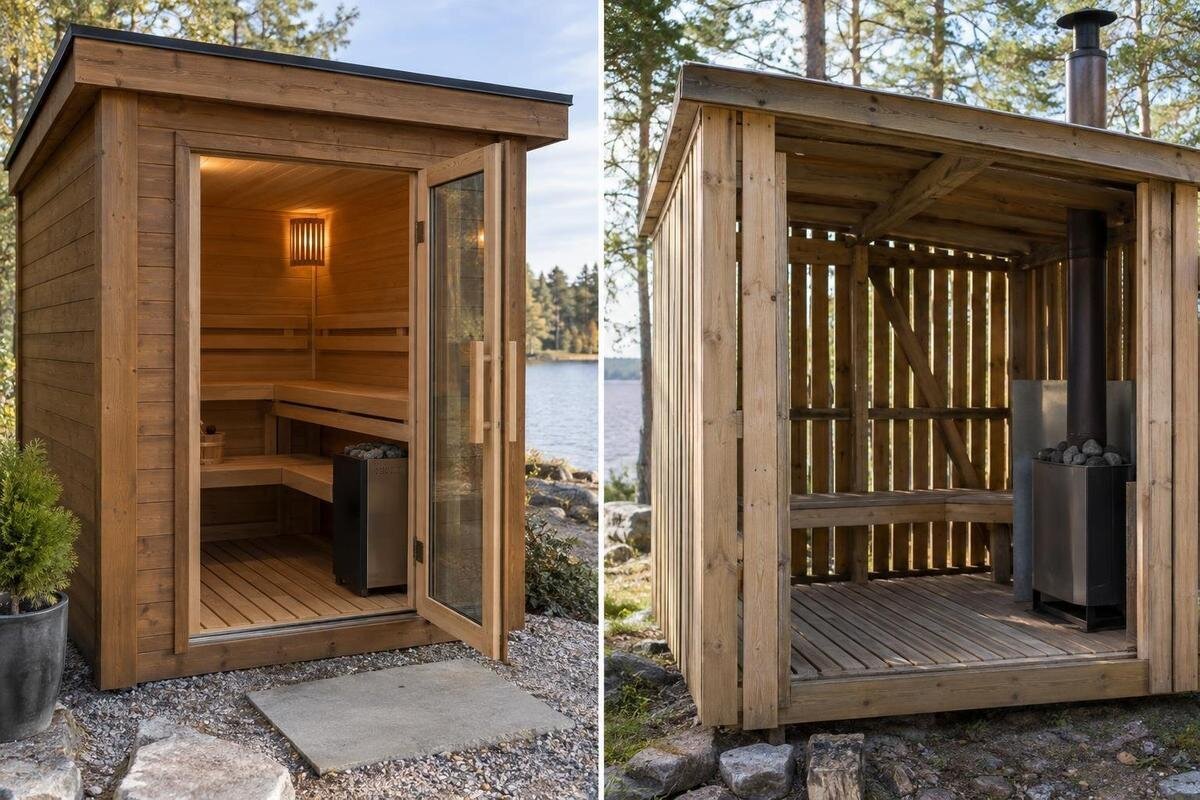
OUTDOOR SAUNA GUIDE
Choosing between an insulated and uninsulated outdoor sauna is a question about the whole cabin and the way you will use it, not a verdict on one material. Insulation can slow heat escaping through an enclosed structure, but it cannot by itself promise a quick warm-up, lower bills or a comfortable session. An uninsulated cabin still has a physical envelope; the term usually means that no dedicated insulation layer is specified. Compare construction, intended routine, heater compatibility and site exposure together, then look for written details for the exact model and configuration.
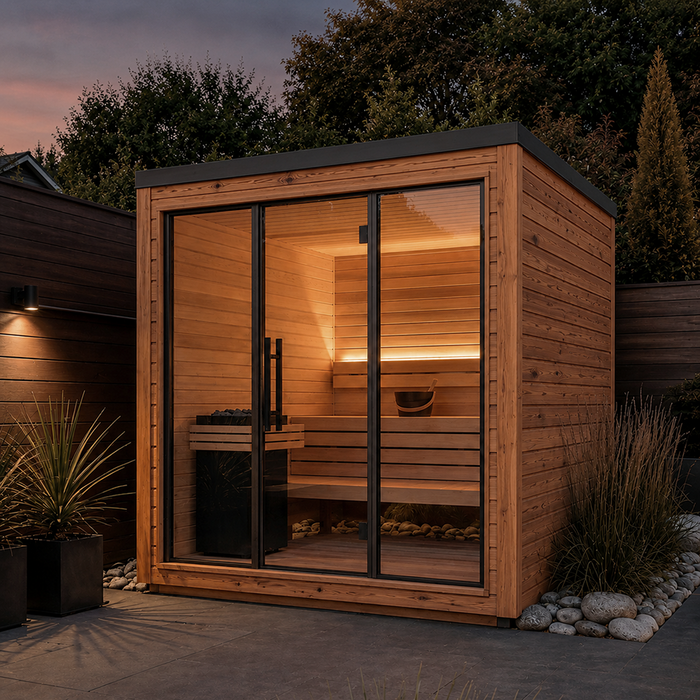
01
What insulation changes during use
Insulation slows heat passing through the parts of a sauna where it is fitted. In a comparable cabin, it can reduce heat moving through those surfaces while the heater is operating and help the room retain warmth during use. An uninsulated sauna still has thermal resistance: its timber and other layers slow heat movement, though not in the same way as a dedicated insulation layer. The practical difference depends on the complete envelope, including the roof and floor as well as walls, doors, glazing and joints. A wall-only claim is not the same as an insulated building, and an outside photograph cannot show what is inside.
Warm-up time is not a simple measure of energy use. Cabin volume, the amount of material to heat, heater output, ventilation and starting conditions all play a part; use frequency also affects how much heat retention matters to you. For a fair comparison, look for the same cabin size, heater, use schedule and outside conditions behind any energy claim. The catalogue gives the HC-225 Thermowood Barrel Sauna an area of 4.4 m². That identifies the model and its stated area, but does not describe its wall, roof or floor build-up. Ask what the maker means by insulated and what evidence supports any performance claim.
Read the wall, roof and floor build-up
A seller's use of insulated may refer to one part of a sauna or to a complete envelope, so establish exactly what is included. Ask for a manufacturer drawing or cross-section that identifies the interior lining, any cavity and insulation, the exterior layers, roof and floor. It should make clear where the insulation stops at corners, roof-to-wall joints, door openings and windows. A material name and thickness are useful details, but continuity and the full assembly matter too. If insulation is listed for the walls but not the roof or floor, treat that as a different specification from a cabin with all three described.
Find out what comes with the specific version you are considering and what, if anything, is an optional extra. For a model such as the N-210 model, match any drawing or manual to the exact model code and configuration being offered. Ask for the assembly instructions and any stated operating limitations as well. In your comparison notes, record the wall, roof and floor construction separately, with a clear distinction between standard components and optional additions. Leave an unanswered item marked as unknown rather than treating it as either insulated or uninsulated. This keeps the comparison tied to what you would actually receive, instead of combining details from different versions into a specification that no single offer includes.
02
What an uninsulated sauna means
In a buying description, uninsulated should mean that no dedicated insulation layer is specified; confirm the seller's meaning rather than relying on the label. It does not mean that the cabin has no walls or that heat passes through timber without resistance. Nor does the word tell you how the exterior is built or protected from the weather. An uninsulated sauna can still be a complete product, but its construction and intended use need to be clear. Do not assume that all solid-timber cabins are uninsulated, or that every product in a named range has the same wall and roof details.
A design without a dedicated insulation layer may be worth considering if you plan to use it intermittently and are content with the warm-up and heat-retention behaviour described by its maker. That is a trade-off to check, not a guaranteed outcome: heater choice, cabin size, ventilation and the site all affect the experience. Ask what conditions the sauna is designed for and whether the proposed heater matches. The catalogue's Thermowood Barrel Sauna N-250 model name, for example, does not by itself classify its construction as insulated or uninsulated. Use the exact specification to make that distinction.
Match the construction to your use pattern
Think about how often you expect to use the sauna, how long it will sit unused between sessions and whether you will usually start from a cold cabin. For occasional use, you may place more importance on the initial warm-up time than on maintaining warmth over a longer period of use. With regular use, repeated heating and the time spent maintaining warmth may matter more. Describe a typical week rather than simply calling your plans frequent or occasional: note when you would use the sauna, whether several people would use it in succession and how much preparation time fits your routine. Also distinguish your usual plans from occasional gatherings, so the comparison does not focus entirely on an exceptional day. These are personal priorities rather than a universal rule about which construction is best. Give the manufacturer that outline and ask how the specified cabin and heater fit it, keeping any warm-up estimate separate from an estimate of energy consumption.
Separate thermal performance from usable space. How many people will use the sauna together, how the benches are arranged and how easy it is to move inside all affect whether the room suits your household. A stated area is not an occupancy figure or a substitute for a dimensioned plan. The catalogue lists the LC-260 at 5.12 m²; use that as a model comparison point, then check the drawing and the manufacturer's guidance on capacity and heater choice. A larger or smaller cabin does not, by itself, tell you whether its envelope is insulated.
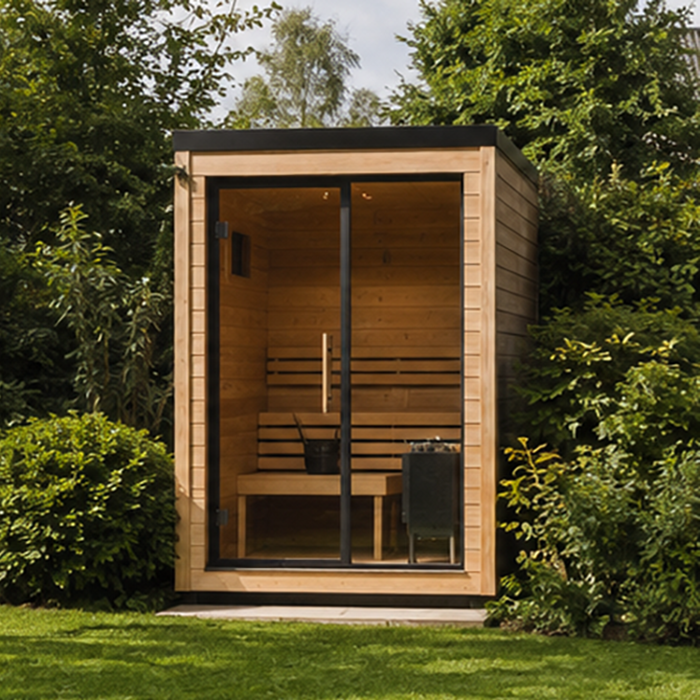
03
Doors, glazing and construction joints
Doors, glazing and the joints between sections deserve attention alongside the main wall panels. A well-described wall system does not explain how a door seals, how a window is constructed or how adjoining parts of the cabin meet. Ask whether the insulation is continuous where walls meet the roof and floor, and how the manufacturer describes the door and window assemblies. Read these details against the layout you are considering, so a drawing for a different arrangement is not mistaken for your selected version. Establish whether the openings and their associated components are supplied as standard or depend on an option. When comparing two offers, note these differences separately from the wall insulation: otherwise, a broad insulated label can obscure a different door, glazing arrangement or construction detail that also contributes to the performance of the assembled cabin.
If a supplier gives a performance figure, ask what it describes: one material, one wall or the full cabin. Figures are not directly comparable when they use different boundaries or assumptions. Record the description beside the figure rather than copying the number alone into your comparison. The catalogue gives the HCF-300 Thermowood Barrel Sauna an area of 6.89 m², which identifies its stated size but says nothing about the layers in its envelope. Keep area, construction details and any performance estimate in separate columns; they answer different questions and should not stand in for one another. Where a drawing leaves the finish around a joint or opening unclear, ask specifically about that point. A useful clarification explains the relevant part of the assembly, rather than merely repeating that the sauna is insulated.
Ventilation and moisture need separate attention
Insulation does not remove the need to manage moisture. Sauna use introduces heat and moisture into the room, and the layers of an insulated assembly need to work together so moisture is dealt with as the manufacturer intends. Ask how the interior lining, any moisture-management layers and ventilation are designed to work as a system. A poorly understood assembly can create problems that are not visible in a product photograph. Follow the maker's guidance for use and care, and ask for help from a qualified sauna builder if the construction details are unclear.
Ventilation openings have a purpose, so do not assume they should be blocked to keep heat in. Ask where the specified air inlets and outlets are and how they relate to the cabin layout, then follow the model's instructions. Timber treatment and insulation are different specifications: a description of the wood does not tell you whether a dedicated insulating layer is fitted. The LCF-300 listing identifies a Thermowood Barrel Sauna model, but that product-family wording is not evidence about its wall, roof or floor build-up. Check both the timber details and the insulation details independently.
04
Assess the garden site as well as the cabin
Exposure changes the conditions in which a sauna operates. Wind can increase heat loss from the outside surfaces, while rain and persistently damp surroundings make exterior weather detailing and site drainage important. Insulation does not make a cabin immune to poor siting or inadequate protection from the elements. Consider how exposed the proposed position is, whether nearby trees affect access or shade, and whether water can drain away from the base. The right response depends on the product design and the actual garden; do not assume that one type of construction suits every plot.
Check the manufacturer's requirements for the base and the space needed around the cabin for access and maintenance. Plan the route for delivery and assembly, and make sure doors and ventilation openings will not be obstructed by walls, fences or stored items. The catalogue lists the S-140 sauna at 1.93 m²; that stated area is not a site plan and does not show the working or access space required around it. Use the product's drawings and ask the supplier or installer about site preparation where anything is uncertain.
Confirm heater compatibility and supply
The heater must be suitable for the actual cabin and its construction. Selection can depend on the room's dimensions, the envelope, glazing and the ventilation arrangement, so do not choose a heater from an insulation label alone. Ask which heater is recommended for the exact model and configuration, whether it is included or sold separately, and what the manufacturer's instructions require. A change from an uninsulated to an insulated version, or the other way round, may affect the basis for that recommendation. Confirm the complete specification before treating two cabins as like-for-like comparisons.
Check the heater type, controls, fuel or power requirements and any installation conditions in the relevant instructions. Do not improvise electrical, flue or clearance work; use a qualified professional to confirm and carry out work that requires specialist knowledge. The catalogue gives the HC-150 model an area of 2.97 m², but that figure does not establish which heater is included or suitable, or what supply it needs. The model's current documentation and the heater manufacturer's guidance should answer those questions for the configuration you intend to buy.
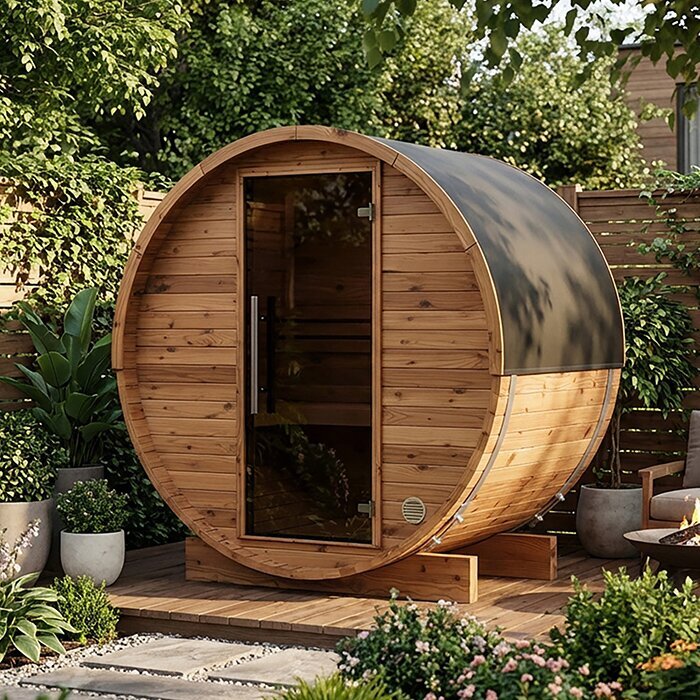
05
Compare purchase and running costs fairly
Compare quotes for the same scope of work. One offer may cover only the cabin, while another may include a selected heater, controls, delivery, a base or installation. Ask what insulation is included in each quoted configuration and whether any associated components are optional. Keep one-off project costs, such as site preparation and installation, separate from recurring energy costs. No price or package should be assumed from the insulated or uninsulated label alone. A written breakdown makes it easier to see whether the apparent difference is the construction itself or a different list of inclusions.
Any estimate of running costs depends on the heater, the time spent heating, how often you use the sauna, the cabin's build and the conditions at the site. Ask for the assumptions behind a supplier's estimate and compare estimates that use the same routine and configuration. Keep estimated energy consumption separate from its monetary cost, so you can see whether a difference comes from the expected energy use or the rate applied to it. Use your own current energy rates when considering regular use. If an estimate describes a single session, do not compare it directly with a weekly or monthly total. Equally, a figure based on a particular heater or use schedule may not apply to another setup. Treat projected consumption as an estimate rather than a guarantee, and make clear which assumptions reflect your household's plans and which are only examples supplied for comparison.
Balancing insulation, layout and intended use
Once the construction details are clear, weigh them against the features you will use. A cabin may have the insulation specification you prefer but a layout that does not suit your household; another may offer the space you want but leave you less comfortable with its described warm-up or heat-retention behaviour. Keep those trade-offs explicit rather than trying to rank every feature under a single better or worse label. Identify which requirements are essential, such as a suitable heater and usable bench arrangement, and which are preferences you could reconsider. Frequent use or an exposed position may make thermal performance a higher priority, while occasional use may lead you to weigh the same information differently. Neither approach removes the need to understand the exact construction, but it helps you decide which documented differences matter most to you.
For each shortlisted option, write a short explanation of why it fits your routine and where you would accept a compromise. Keep confirmed details separate from estimates and unanswered questions. An unknown insulation specification is not the same as a deliberate choice of an uninsulated design, just as an estimated warm-up time is not a promise. If a missing detail could change your preference, resolve it before making the final comparison. If it would not affect your choice, avoid letting it distract from the requirements that do matter. This gives you a reasoned choice between actual configurations, rather than a decision based on the appeal of the insulated or uninsulated label.
Frequently asked questions
Does insulation always mean lower running costs?
No. Insulation can reduce heat passing through the parts of the cabin where it is fitted, but actual energy use also depends on cabin size, air leakage, ventilation, heater, weather and how often you use the sauna. Ask how any consumption estimate was calculated and whether it matches your intended use.
Does a barrel sauna's shape tell me whether it is insulated?
No. The shape or product name does not confirm whether a dedicated insulation layer is included, or where it is fitted. Check the exact model's construction details, including the roof and floor as well as the walls.
Is Thermowood the same as insulation?
No. A timber description or treatment relates to the wood; insulation is part of the building envelope and slows heat transfer through the parts where it is installed. One specification does not prove the other.
Can I add insulation to an uninsulated sauna later?
Do not assume that a retrofit will suit the existing construction. Altering layers can affect moisture management and ventilation, and work around a heater needs particular care. Ask the original manufacturer or a qualified sauna builder before making changes.
What should I ask the manufacturer before choosing?
Request a drawing or written specification for the exact model and configuration, showing the wall, roof and floor build-up. Ask what is included, how ventilation is intended to work, which heater is compatible and what the maker says about the sauna's operating conditions.
Insulation is one part of an outdoor sauna's construction, not a complete measure of how well it will suit you. Its value in your comparison depends on where it is fitted, how the rest of the cabin is built and how you intend to use the space. The best-fitting option is the one whose construction, heater and layout meet your priorities, with warm-up and heat-retention trade-offs you understand and accept.
