
How Long Can an Outdoor Sauna Last? Construction and Care Factors
Outdoor sauna durability
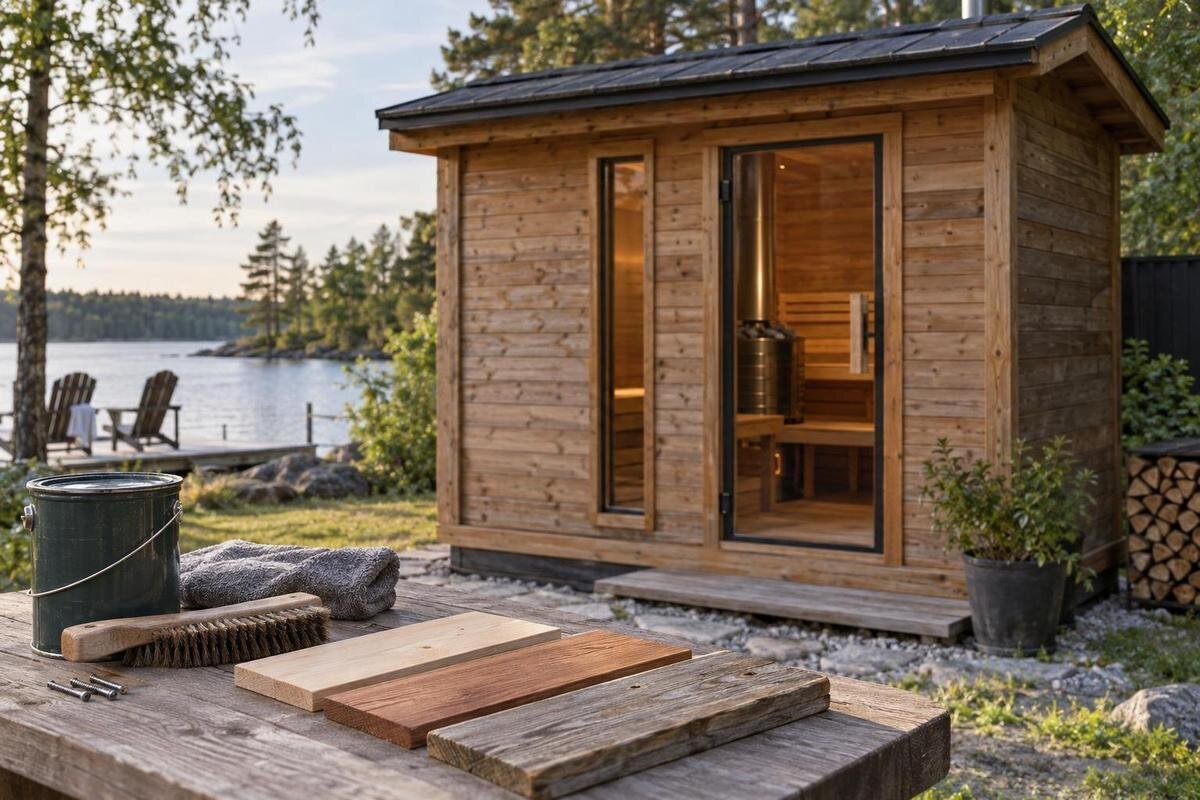
An outdoor sauna can remain serviceable for very different lengths of time, so a single lifespan figure is rarely a sound way to compare models. The timber shell, weather-facing finish, roof details, fittings and heater do not necessarily age at the same rate. Their condition also depends on assembly, drainage, exposure, frequency of use and whether care follows the maker’s instructions. The more useful questions are which parts are likely to need attention first, whether those parts can be repaired, and what evidence supports the maker’s guidance. When comparing garden saunas, separate expected durability from the written warranty. Ask for documents for the exact model and configuration, then compare materials, moisture management, access for maintenance and repair options with the place where the cabin will stand. This helps you assess claims without treating a product name, an attractive finish or a warranty term as a service-life estimate.
What does an outdoor sauna’s useful life mean?
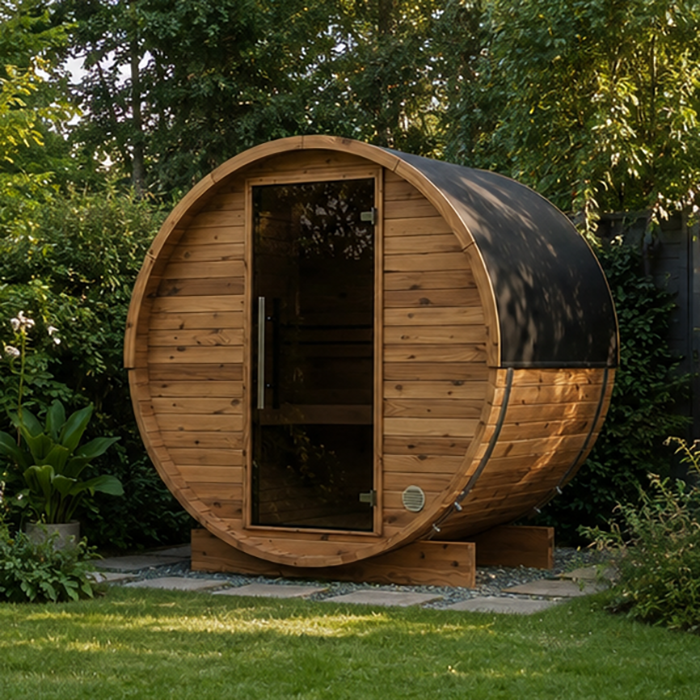
Useful life is not the same as looking new. A cabin may remain serviceable after its exterior has weathered or a replaceable fitting has needed attention; conversely, an attractive finish does not prove that hidden joints, supports or equipment remain in good condition. Separate the timber structure, exterior coverings, doors and hardware, interior surfaces, heater and controls when discussing durability. They do different jobs and may need repair or replacement on different timetables. Also clarify what you mean by the sauna’s end of life: losing a particular appearance, needing a major repair or being unable to use it as intended are not equivalent thresholds. This distinction matters when reading estimates, which may refer to one component rather than the whole cabin.
A lifespan estimate is useful only if its scope and assumptions are clear and relevant to your installation. When considering the HCF-300 Thermowood Barrel Sauna, ask whether the manufacturer states a service-life estimate, which components it covers, and whether it assumes particular exposure, use or maintenance. The model name alone does not establish longevity. If no substantiated figure is available, compare the construction and repair information instead of assigning the sauna a fixed number of years yourself. An estimate for the timber or finish should not be treated as an estimate for the whole cabin; the other components need to be considered separately.
Timber, treatments and finishes
Timber is a starting point, not a complete durability answer. Request the species or product designation, grade or quality information, and details of any drying, thermal modification or preservative treatment the manufacturer specifies for the exact model. Ask which parts receive that material: an exposed outer board, a protected frame and an interior surface face different conditions. The same questions apply to coatings. Identify where they are used, what they are intended to protect against, and whether they are supplied with the product or need separate maintenance. A broad label without this detail is difficult to compare, and timber names alone do not explain how joints and vulnerable edges are protected.
Check the care instructions against the material description. A finish may have its own renewal requirements, while some surfaces may be intended to remain untreated; do not assume that adding a stain or preservative is beneficial. Ask which cleaners and coatings are compatible, whether a product is suitable for heat-exposed interior surfaces, and how repairs should be handled if a board is damaged. When comparing the LCF-300 barrel sauna with other models, look for a material specification that distinguishes interior from exterior wood and identifies any coatings or treatments. This gives you a clearer basis for comparison than assumptions drawn from similar-looking cabins.
Keeping water moving away from the cabin
Moisture management has a direct bearing on an outdoor timber structure because repeated wetting and slow drying can leave parts damp for longer than intended. Rain is only one source: splash from hard surfaces, runoff, damp ground and moisture from sauna use may all matter. Pay attention to lower edges, end grain, joints and places where two surfaces meet; these details can retain water if design or assembly is poor. Consider how the whole installation sheds water and dries, rather than relying on a general description of the timber or a coating. A surface finish is not a substitute for checking whether water can drain away.
Ask for the model’s assembly and care instructions on ventilation, drainage and clearance from the base or ground. Follow those details as designed; plugging a gap, adding sealant or blocking an air route can change how the cabin is intended to dry. Where the product needs a particular base or drainage arrangement, confirm it before preparing the site rather than improvising after assembly. If you are considering the S-140 sauna, check which surfaces need to remain open to the air and how its specified clearances will work at your site. If water repeatedly collects under or beside a cabin, ask the supplier or an appropriately qualified installer to identify the cause before changing the design.
Sun, shade and exposure at the site
Exposure can change how often the exterior gets wet, how quickly it dries and how fast a surface finish weathers. A wind-exposed position may receive more driven rain; deep shade can slow drying, while direct sun can age exterior finishes. These effects can pull in different directions, so there is no universal rule that the most sheltered corner is always best. Consider the actual position through ordinary weather: nearby walls, trees and fences, roof overhangs, prevailing exposure, reflected splash and any route for water to run towards the base. Look at seasonal patterns too, as the amount of shade at the site can change through the year.
Plan access as well as protection. If the back or one side is hard to reach, inspection and future coating or repair may become more awkward; tight planting can trap debris or keep surfaces damp. Compare the HC-150 sauna’s siting requirements with the space available in your garden, including the maker’s stated clearances, service access and exposure limitations. A realistic assessment includes drainage and access after installation, not just how the location looks on a dry day. Consider whether maintenance tasks will remain practical once fences and planting are in place, particularly along sides that you would otherwise rarely visit.
A suitable base and careful assembly
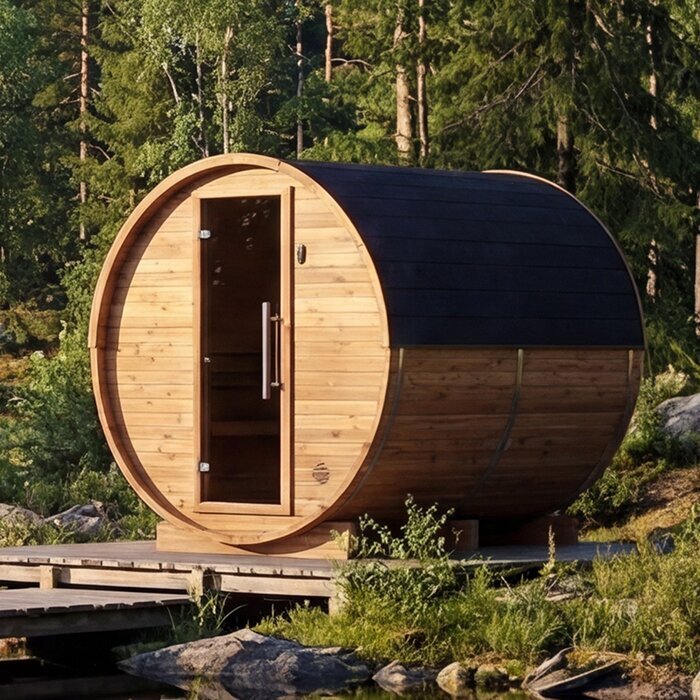
A durable cabin still depends on the way it is supported and assembled. Follow the manufacturer’s requirements for the base type, levelness and support points; they may differ by design, and a patio, deck or compacted surface should not be assumed suitable without checking. Uneven support or movement can affect alignment and put strain on joints, doors or other connections. Keep drainage in mind too: the area beneath and around the sauna should not become a place where water is trapped. If the proposed surface, dimensions or ground conditions raise a structural question, ask the supplier or a qualified installer to assess the site rather than trying to calculate a solution from a product photograph. Confirm who is responsible for checking the base before delivery.
Assembly quality is equally important. Components need to be installed in the specified order and orientation, with the intended fixings and seals; gaps, forced joints or missing details can expose the interior to weather and complicate later repairs. Before work starts, check what is included, what tools or additional parts are required, and whether the manual covers the supplied configuration. For the HC-225 Thermowood Barrel Sauna, use the assembly drawing and installation instructions to clarify these requirements. Keep the final documents and installation notes so future maintenance can be matched to the parts actually supplied. If someone else assembles the sauna, agree what handover notes they will provide.
Roof and weather-facing joints
The roof and upper joints deserve attention because they sit directly in the path of rain, but their construction must be assessed from the specific product documents. Confirm what roof covering and edge details are included, how water is directed away from seams and walls, and whether any finish or covering needs routine attention. Do not infer waterproofness from a photograph, roof shape or an unqualified phrase such as weather-resistant. Ask what inspection is recommended and whether the covering is intended to be repaired or replaced separately from the cabin. A roof that looks intact from ground level may conceal details that are difficult to inspect, so find out how the maker recommends checking them.
Ask about the whole water route, not just the surface material: where water leaves the roof, whether it can run onto exposed end grain, and whether junctions remain accessible for inspection. When assessing the N-210 barrel sauna, use the relevant roof drawing and maintenance guidance to understand those details and judge their suitability for your site. Do not climb onto an unfamiliar structure to inspect it. If access is difficult or damage is suspected, arrange an assessment by someone qualified to do so. Find out how repairs can be carried out safely and which roof components can be replaced separately, without assuming every design uses the same system.
Frequency of use and sauna equipment
Use affects several parts of an outdoor sauna, though not in one simple way. More frequent sessions mean more heating and cooling cycles, more door use and more cleaning; these patterns can increase the attention needed by fittings, interior surfaces and the heater. The relevant question is whether the model is intended for the pattern of use you have in mind, not whether one generic residential-use claim sounds reassuring. If several people will use it regularly, or if use is part of a guest or business setting, get explicit confirmation of suitability and operating limits from the manufacturer. Do not assume that a garden model is approved for commercial duty. Ask how the stated maintenance routine changes, if at all, with frequent use.
Separate the cabin’s condition from that of its electrical equipment. The heater, controls and associated components can have their own servicing and replacement needs, and the manual may set different requirements for them than for the timber shell. Keep the correct equipment documentation with the cabin and use a qualified professional for electrical work or assessment where appropriate; do not modify components based on assumptions about the structure. If the N-250 Thermowood Barrel Sauna is on your shortlist, establish which equipment is included in the configuration you are considering, what servicing it requires, and whether replacement parts or service support are available. Assess those needs separately from the care of the cabin.
Maintenance and early signs of wear
Regular care is less about applying a product on a fixed calendar and more about following the maker’s instructions for the exact materials. Cleaning methods, drying time and any coating schedule can differ; a treatment suitable for an exterior may not be suitable for an interior surface exposed to heat. Avoid using an off-the-shelf sealant, stain or cleaning chemical unless its use is approved for that part of the sauna. If the documents say that a surface needs no treatment, do not add one automatically. Keep the maintenance instructions, note when work is completed, and record which products were used. That record makes it easier to follow the specified routine and explain previous work if a fault appears.
During normal care, look for changes rather than trying to diagnose them: water that no longer drains as expected, a finish that is lifting, a joint that has opened, hardware that has loosened, or a door that no longer aligns can justify a closer check. Pay attention to areas that are difficult to see during everyday use, but do not inspect from unsafe positions or dismantle parts without permission. For a model such as the LC-260 outdoor sauna, ask which signs require prompt attention and which repairs are suitable for an owner. Keep brief notes or photographs so changes can be compared over time and described clearly when seeking advice.
A warranty is not a lifespan estimate
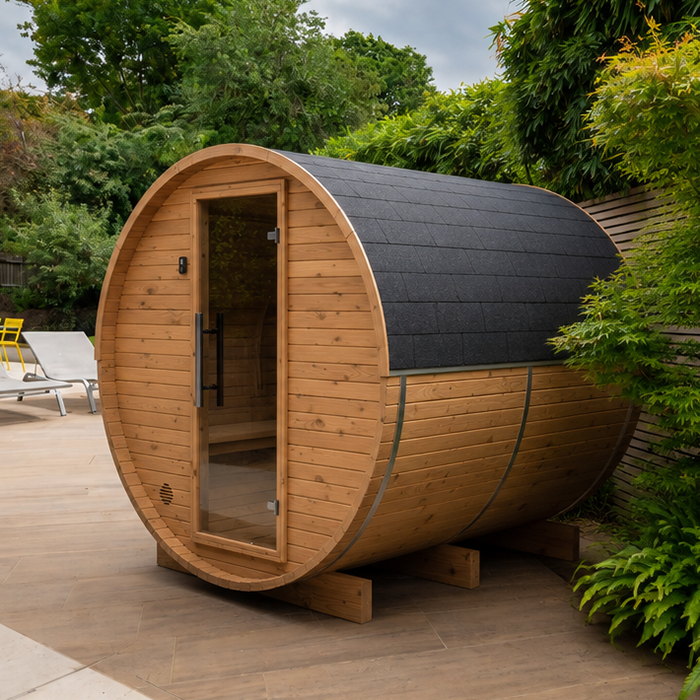
A warranty period tells you how long a stated promise applies under its written terms; it does not, by itself, predict how long the sauna will remain usable. A product may continue to function after a warranty has ended, and a component may need attention while other parts remain serviceable. Equally, a long warranty does not establish that every part will last for that period or that every cause of damage is covered. The written document defines the actual scope, so avoid comparing headline durations without reading what they apply to. This distinction matters whether the document is called a warranty, guarantee or another form of product commitment.
Compare coverage by component and by cause: check whether the cabin structure, exterior finish, roof covering, heater, controls and fittings are addressed separately, and note any exclusions, maintenance conditions, claim steps or required records. Ask when the warranty begins and who handles a claim; do not infer these details from a sales summary. Keep the warranty and operating and maintenance manuals together. When you compare durability, consider access to replacement parts, repairability and the maintenance burden as well as the written period. They answer different questions: one concerns the remedy described in the document; the others concern how the sauna may be kept in service.
How to compare outdoor sauna designs
Make the comparison model-specific. For each option, gather the material description, assembly drawing, siting requirements, maintenance manual, roof information, heater documents and written warranty. Note what is included and what needs separate preparation or servicing, then put the maker’s care requirements beside the conditions at your site and the way you expect to use the sauna. If a key detail is missing, ask a direct question and keep the answer with the relevant model documents. A clear response about materials or the repair process is more useful than a broad promise of long life that cannot be checked against a specification. Check that the documents identify the same model and version as the page you are considering.
Finally, consider the effort needed to keep the sauna serviceable over time. Can you reach the exterior for inspection? Are the surfaces straightforward to maintain under the specified routine? Can a damaged part be identified and replaced, and is support available for the heater independently of the shell? These are practical durability questions, not a guarantee of a particular outcome. Choose a design whose documented materials, installation requirements and maintenance routine match your site and the time you are willing to spend caring for it. That is a more dependable basis for comparison than an unsupported lifespan figure or a warranty duration read on its own.
Frequently asked questions
Can an outdoor sauna last for a set number of years?
There is no dependable figure that applies to every model and site. Ask the manufacturer whether it publishes a service-life estimate, which components it covers, and what assumptions it makes about exposure, use and maintenance. If the estimate is not supported by model-specific information, compare construction, care requirements and repairability instead.
Does a ‘Thermowood’ product name prove how durable a cabin is?
No. A product name does not establish the exact timber species, grade, treatment, parts covered, assembly details or finish-care requirements. Check the material specification and maintenance manual for the model and configuration you intend to buy. Site exposure and moisture management also affect durability.
Is the warranty period the expected service life?
No. A warranty describes a promise under stated terms for a defined period; useful life concerns how long components can remain serviceable. Check which parts and causes are covered, any maintenance conditions and the claims process. Neither a long nor a short warranty is, by itself, a reliable lifespan estimate.
What should I look for when checking a sauna for wear?
Look for changes such as standing water, a lifting finish, opened joints, loose fittings or a door that no longer aligns. Compare them with the maker’s maintenance instructions and ask what action is appropriate; these signs are not a diagnosis. Avoid unsafe access or dismantling, and use a qualified professional where needed.
Can extra paint or sealant extend a sauna’s life?
Not automatically. An unapproved coating or sealant may be unsuitable for the surface or alter how the assembly is meant to dry. Follow the model-specific instructions and ask the supplier before adding a finish, chemical or roof covering. Use only products and repairs the manufacturer identifies as compatible.
Useful life depends on the exact cabin and the conditions around it, not on a model name or a warranty headline. Focus your comparison on what can be verified in the model documents and how realistically you can maintain the sauna at your site. When those details are clear, you can assess durability without pretending to know an exact service life.
