
What Maintenance Should You Expect from an Outdoor Sauna?
Outdoor sauna care
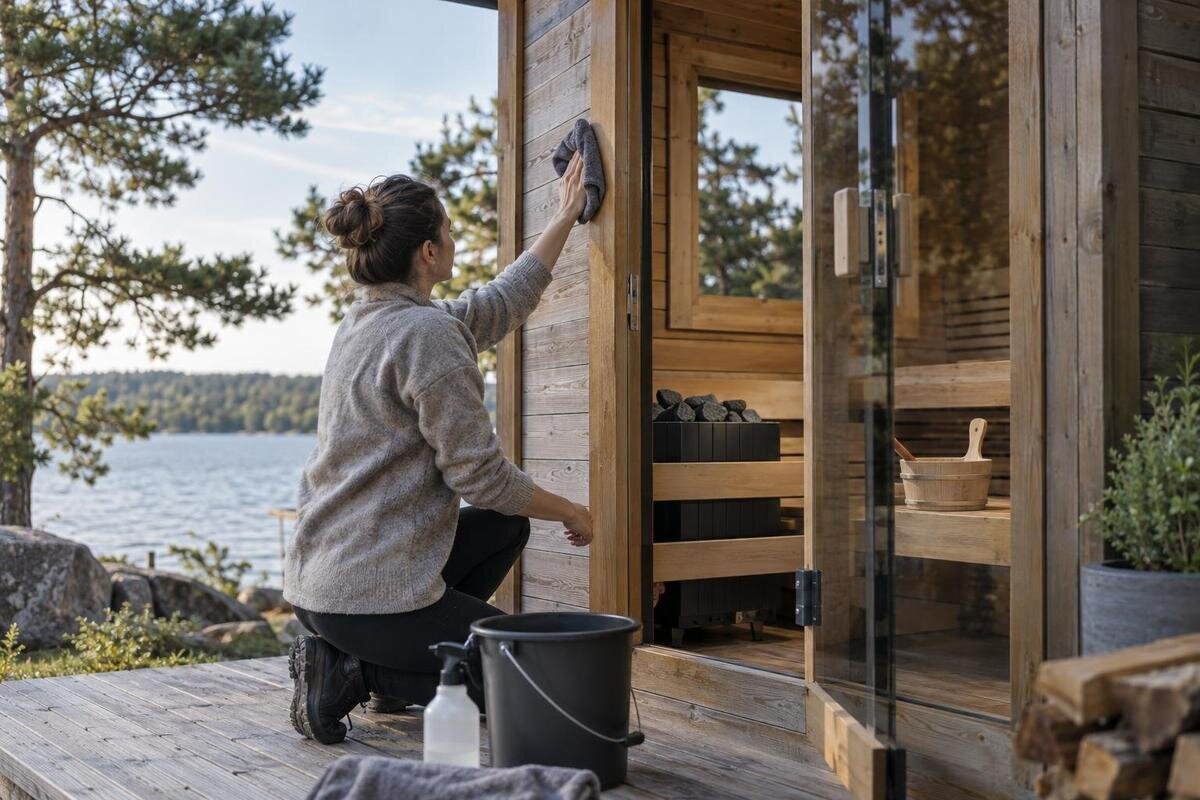
Outdoor sauna care is usually a mix of ordinary cleaning, attention to weather-exposed parts and instructions for the exact timber finish, roof and heater. That does not translate into one reliable number of minutes a week or a universal annual treatment. A sheltered site, light use and one type of finish can call for different attention from a frequently used sauna exposed to wind-driven rain, tree debris or strong sun. The practical approach is to separate what you do after use from periodic checks and work that needs specialist attention. Before buying, find out which materials and equipment are in the chosen configuration and request the guidance that applies to them.
What determines the amount of care?
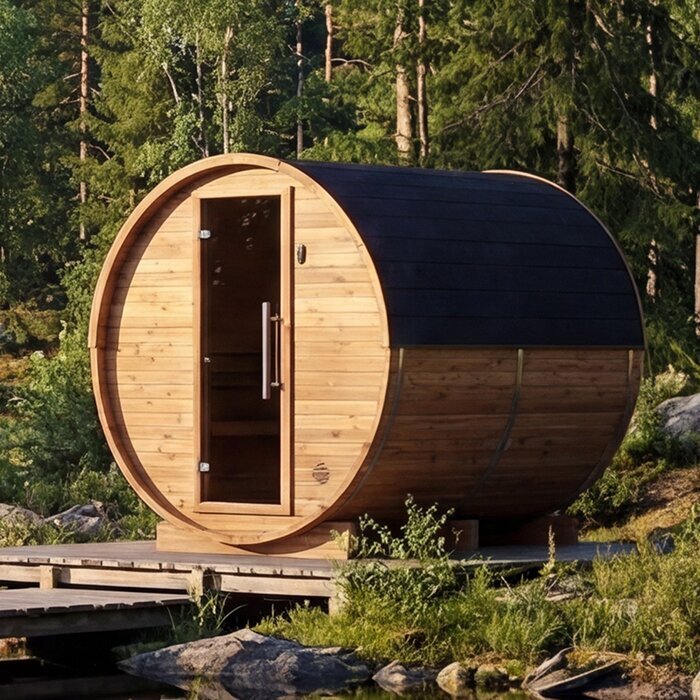
An outdoor sauna is not one material with one care routine. The amount of attention depends on the interior surfaces, exterior timber and finish, roof covering, door hardware and heater configuration, as well as how often it is used. Site conditions matter too: wind-driven rain, strong sun, shade, nearby trees and poor water run-off can change which parts need watching. A sauna used frequently by several people will generally need more interior cleaning than one used occasionally, while exposure can affect exterior checks even when use is light. Two similar-looking cabins may also have different finishes or equipment. Those differences make a fixed universal service interval misleading.
Separate the work into three categories: quick after-use care, cleaning and checks guided by the manufacturer’s schedule, and repairs or treatment that require approved products or a qualified person. A product page helps identify the item, not its care routine: the Thermowood Barrel Sauna S-140 listing gives a model reference, but it is not a maintenance manual. Ask for instructions covering the exact model and configuration, including which components are included and which are optional. That is a more reliable basis for estimating effort than a broad label such as easy-care, and it helps prevent advice for a different heater or finish being applied by mistake.
Everyday care inside the sauna
After use, the practical aim is to leave the interior tidy and able to dry in the way the maker intended. Remove loose dirt or leaves, take out wet towels and other personal items, and deal with visible moisture using only the method the manual allows. If the instructions call for ventilation after use, follow them and leave vents unobstructed; do not assume a door, window or vent should be left in a particular position when the design says otherwise. This short reset limits the time that debris or moisture remains on seating and floors without imposing a universal washing routine.
A light routine can include checking benches and floor edges for debris, then wiping a mark only if the permitted method is clear. Avoid soaking timber or pouring water into places not intended for it; standing water, detergent residue or a blocked vent can create problems rather than improve cleanliness. For a product-specific question, use a listing such as Sauna HC-150 to identify the model, then ask which after-use steps and ventilation settings its maker recommends. Keep outdoor soil and leaves from being carried inside where practicable, and do not leave damp items on seats between sessions.
Deeper cleaning and interior finishes
Periodic deeper cleaning is different from the quick reset. Dirt can settle between bench slats, at floor edges or around removable items, and access varies by construction. Use only the tools and approach authorised for the actual interior; do not pull apart fixed components just to reach behind them. The manual may specify whether a part can be lifted or removed and how it should be cleaned. If a stain returns, the surface changes, or an odour persists after ordinary airing, look for the maker’s advice rather than trying several household products in succession.
Do not assume a domestic bathroom cleaner, disinfectant, abrasive pad, pressure washer, bleach, oil or timber varnish is suitable inside a heated cabin. Products can mark wood, leave residue or be unsuitable for the surface; an interior and an exterior may have entirely different treatments. Check whether the maker permits a particular cleaner or sanding method, and whether any finish is allowed on seats or other contact surfaces. When asking about the Thermowood Barrel Sauna HC-225, name the model and ask for its permitted interior-cleaning instructions, rather than relying on a general recommendation for timber. If growth or persistent discolouration appears, ask how to assess and address it before sanding or sealing.
Exterior timber and surface treatments
Exterior wood is exposed to weather even when the sauna is not used, but the right response depends on the specified timber and its finish. Some surfaces may be left untreated; others may have a coating. The name of a timber process does not by itself tell you whether or when to recoat. Look at the manufacturer’s guidance for permitted treatments and inspect visually for changes such as peeling, water staining, splits or persistent growth. These are reasons to check, not proof of a particular fault: weathering and moisture issues can need different responses, and a colour change alone may not identify the cause.
Before applying stain, oil, paint, sealant or a cleaning product, confirm that it is approved for that component, how the surface should be prepared and whether the maker gives conditions for application. A coating can conceal a developing issue or conflict with an existing finish if chosen by guesswork. If you are considering the Sauna N-210 Thermowood Barrel Sauna, ask which exterior finish is supplied and what care it requires; the name alone does not establish the finish or re-treatment schedule. Keep a record of any approved treatment, including the product used, so future care can follow the same guidance.
Roof checks and rainwater
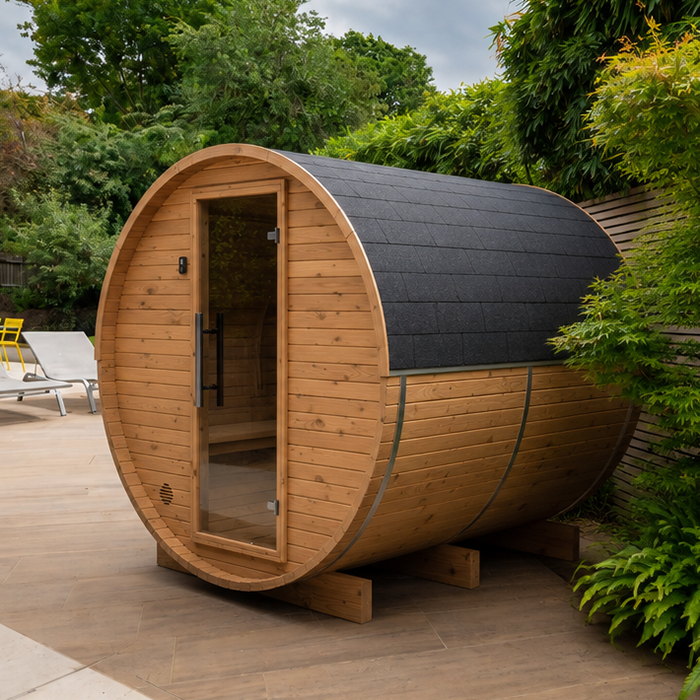
Roof covering and joints are exposed differently from the timber walls, so treat them as separate checks. The sauna’s manual should identify the roof components and any owner-visible signs to monitor. From a safe position, look for damage, movement, lifted material, persistent damp marks or signs that water is getting inside. Do not climb onto a roof or dismantle a covering on the basis of a general care article; access and repair methods depend on the structure and covering. If a leak appears, note where it is visible and report it promptly rather than sealing over the first gap you see.
Where a water channel or gutter is fitted, keep it clear in the way the manufacturer describes; remove leaves only when that can be done safely. Make sure run-off is not left to collect against the sauna or its base, while avoiding changes to the support arrangement or drainage design without proper advice. When discussing the Sauna N-250, ask what roof covering and check procedures apply to the configuration you are considering. If the work involves height, damaged components or repair, it may need a competent tradesperson rather than a routine owner check.
The ground and access around the sauna
Upkeep includes the area around the structure. Keep vegetation, leaves and stored items from obscuring the visible base, vents, doors or access panels, and watch for water collecting nearby after rain. Installation instructions should set out the required base arrangement and clearances; do not infer those from a product photograph or a stated floor-area figure. If the ground settles, drainage changes or the sauna appears to move, do not correct the supports by eye. The right response depends on the original installation, so seek advice from the installer or an appropriate professional before altering it.
Leave enough room to inspect the exterior, clean around the structure and reach components the manual expects an owner to access. A wall, hedge or fixed enclosure can make observation and cleaning harder, but adding a shelter or cover is not automatically a solution and may affect airflow or weathering. For example, use the Sauna LC-260 listing to identify the model, then consult the manufacturer’s drawings for its footprint, access and clearances when planning the site. Keep vents and service access unobstructed if landscaping or storage arrangements change.
Doors, fixings and visible wear
Look over accessible doors, hinges, handles, latches and visible fasteners for damage or a change in operation. A door that begins to bind, no longer closes as intended or needs force deserves attention; do not plane, wedge or force it as a first response. Timber and hardware interact with outdoor conditions, but that does not make every change harmless or identify its cause. Record what has changed and compare it with the owner’s manual. Inspect only visible areas, and avoid removing panels or loading a door to test its strength.
Some designs use bands, bolts, seals or other fittings that should be adjusted only by the specified method. Tightening a fastener by feel, changing a seal or swapping a part can affect the fit, so ask the maker which checks owners may perform and when a service person is needed. A reference to Sauna HCF-300 makes the model clear when you request guidance or a replacement component; do not assume parts are interchangeable just because two listings share a product family. If a fitting is loose, cracked or corroded, document it and follow the model-specific advice rather than improvising a repair.
Heater, controls and ventilation
The heater has its own care instructions and may be electric, wood-fired or another specified configuration; the correct tasks cannot be inferred from the sauna’s exterior. Follow the heater and control manuals for owner checks, cleaning, components and service. Keep required ventilation and clear space as specified, and do not move guards, stones, wiring or flue parts unless the instructions identify that as an owner task. Avoid opening electrical equipment or attempting a repair. If a heater, control, cable or flue appears damaged or behaves abnormally, stop using the affected equipment and contact the appropriate installer or service professional.
Ask what heater and controls are included in the exact configuration, what maintenance each requires, which tasks are routine and which need professional service, and where to get the matching manuals. The Sauna LCF-300 listing is a useful model reference for that question, not evidence of a particular heater or service interval. If the configuration is wood-fired, confirm the appliance maker’s instructions for ash and flue care; if it is electric, leave internal electrical inspection to a qualified professional. Check any applicable local requirements against current authoritative guidance rather than guessing.

A realistic maintenance workload
To estimate the workload, identify the tasks involved rather than relying on a promised number of hours. Regular use generally means more interior cleaning; greater exposure can mean closer attention to exterior surfaces and rainwater routes. Manufacturer intervals take priority where they are provided, but they do not remove the need to respond to a new leak, impact or visible damage. A sauna in a sheltered position can still need checks, and a frequently used one does not necessarily need every component serviced at the same interval. Be cautious about comparing products using an unsupported claim such as “maintenance-free” or a single estimate of annual maintenance time.
Create a brief record using the owner’s manual: note when cleaning or approved treatment was carried out, what product was used and when an issue first appeared. A simple record helps distinguish a new change from an old stain and gives a technician useful context. Follow manufacturer-set intervals for calendar tasks; where appropriate, add a visual check after severe weather, a leak or a period of unusually heavy use. This is a flexible way to notice changes, not a replacement for the maker’s schedule or a fixed maintenance calendar.
What to confirm before buying or repairing
Before committing, ask for maintenance information tied to the exact model and configuration: timber and finish details, interior cleaning method, any exterior treatment, roof material, heater manual and owner-service limits. Ask which materials or cleaners should be avoided, what care products are supplied, if any, and whether relevant replacement parts are available. Request the installation drawing and instructions as well, so you can judge whether the site will allow access for cleaning and inspection. These answers give you concrete tasks to plan for; a broad claim that an outdoor sauna is easy to maintain does not.
Once in use, ask for help if you find persistent water ingress, significant damage, a changing joint, a door that will not operate correctly or a heater fault. Some marks are cosmetic, while others may point to moisture or component problems; guessing from appearance can lead to the wrong treatment. Photograph the area, note recent weather or maintenance and contact the manufacturer, installer or an appropriately qualified service person. Have elevated roof work and repairs to electrical or combustion equipment assessed by someone competent for that system. The aim is not to outsource every wipe-down, but to keep uncertain repairs within the right expertise.
Frequently asked questions
How often should I clean an outdoor sauna?
Light cleaning after use usually involves removing loose debris, taking out damp personal items and following the manual’s directions for drying or ventilation. A deeper clean depends on how often the sauna is used and on the approved method for its surfaces. The maker’s instructions take priority over a weekly or monthly schedule suggested without reference to the model.
Does a Thermowood sauna need exterior treatment?
The name alone does not establish whether a surface has a coating, needs treatment or should be left as supplied. Check the care instructions for the exact model and finish. Even if a particular exterior surface needs little attention, the interior, roof, site, fittings and heater may still have separate cleaning or condition checks.
Can I use a household cleaner or wood oil?
Only use a cleaner, oil, stain or other treatment if the manufacturer approves it for that specific surface. Interior and exterior timber may need different care, and a product suitable for one part may not be suitable for another. If the instructions are unclear, ask before applying anything rather than testing it on a visible area.
Who should maintain the heater and roof?
Follow the relevant manuals for owner checks and routine care. Work involving electrical equipment, a flue, damaged heater components or difficult roof access may need a suitably qualified professional. The right service and inspection arrangements depend on the equipment and covering supplied, so confirm them for your configuration instead of assuming one schedule applies to every sauna.
Can I leave an outdoor sauna uncovered?
Do not assume that a cover is needed or that it is harmless to add one. Check the maker’s guidance for the exact roof, materials, exposure and ventilation requirements. A shelter or cover can change airflow and how water reaches the structure, so get advice before adding one or changing the site around the sauna.
An outdoor sauna’s upkeep involves routine cleaning and component-specific checks, rather than a universal timetable. Keep the interior clean and dry as its manual directs; watch the exposed timber, roof, water run-off, fittings and site; and let the heater instructions determine equipment care. The finish, exposure and installation determine which tasks matter and when. Once you know what the maker expects—and which jobs need a professional—you can judge the real workload without relying on maintenance-free promises or applying treatments by guesswork.
