
Choosing a Ready-Made Sauna or Building from Scratch
Sauna buying guide
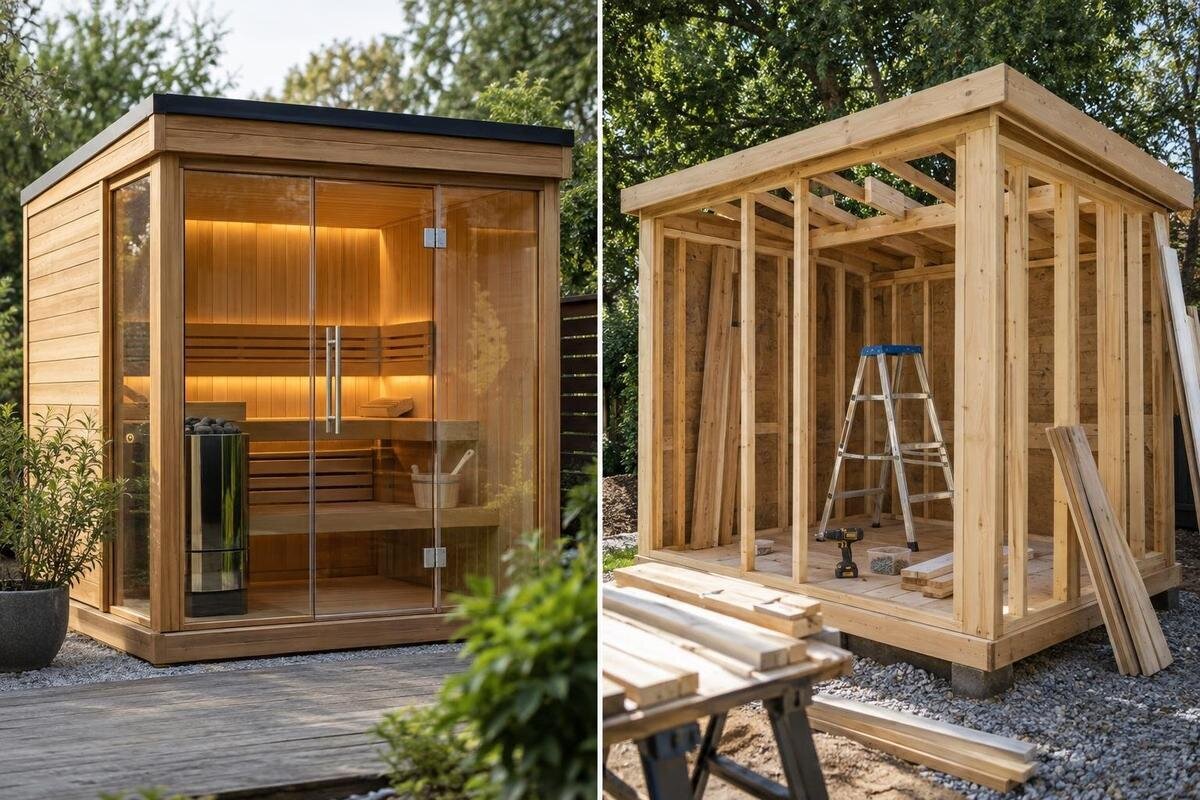
Choosing between a ready-made sauna and building one from scratch is a choice about design control, sourcing and responsibility as much as about the structure itself. A defined model can narrow the design decisions, but it does not automatically include everything needed at your site. A scratch build offers more scope to tailor the layout, while putting specification, material compatibility, sequencing and coordination in your hands. A supplied kit is a third route: its design and component set may already be defined, even when you do the assembly. Compare the routes by what is settled before purchase, what remains for you to arrange and who resolves problems if parts of the plan do not fit.
What ready-made means in this comparison
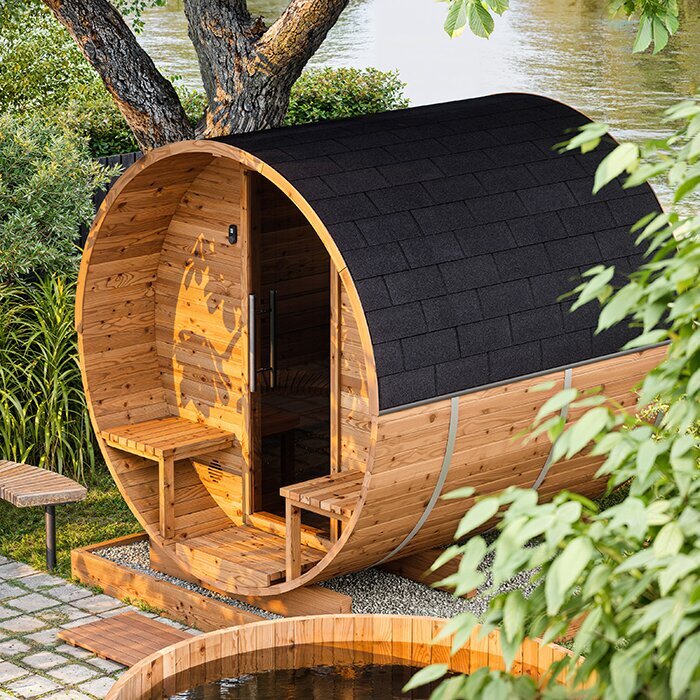
Here, a ready-made sauna means a defined design or product model that you select instead of specifying the whole build component by component. The model may establish its form and configuration, but the label does not tell you whether it arrives assembled, which components are included, how much site work is required or who installs it. Those details depend on the product and supply arrangement. Do not assume a finished sauna will arrive connected and ready to use. Consult the current drawing, manual and written inclusion list for the exact option, rather than relying on a short product description.
A scratch build starts with a brief rather than a selected model. You choose or commission the design, source materials and coordinate construction; it need not mean milling timber or making every fitting by hand. The key difference is that you own the decisions that make separate parts work as one project. A kit occupies a middle ground: the design and component set may already be defined, while you take on assembly. It is more hands-on than selecting a product with a clearly specified supply scope, but less open-ended than independent design and sourcing. If your main interest is assembling supplied parts, compare the kit route separately; it can involve real labour without making you responsible for every design choice. Keeping these terms separate prevents an unfair comparison between a product, a kit and a bespoke build.
Define the supply scope before comparing
Write down what you expect a complete sauna purchase to cover before comparing products. Check whether the stated supply covers the sauna structure, heater and controls, benches, door, glazing, ventilation components, insulation, internal lining, fixings, instructions and any accessories you expect. These are questions, not items to assume are bundled: listings and configurations differ. Separate the sauna itself from site preparation, the base, delivery and handling, assembly, electrical work and other trades. The current specification or a written quote should clarify those boundaries. Record the configuration and date of the information, because optional extras may alter what is being compared. Use the same scope sheet for a scratch project so the two totals and task lists mean the same thing.
With an independent build, a plan may specify components without supplying them, while a timber order may exclude fixings, tools or cutting. For a ready-made option, use the parts list and drawings to identify what you must arrange separately. The Sauna LCF-300 product listing gives an area of 6.89 m², but that figure does not describe the package or installation scope. Record the selected configuration alongside your project list. Where a seller offers several variants or options, compare the exact quoted version rather than assuming the product photograph shows everything included.
Design freedom and layout choices
For a ready-made sauna, choice often means selecting among established models and options, then checking whether the form suits your intended use. Think through the number of regular users, how people enter and move, where seating and the heater are expected to go, whether you need changing or storage nearby, and how the sauna relates to doors, paths and views. Do not infer occupant capacity or usable internal dimensions from an exterior photograph or a single area figure. Ask for a dimensioned drawing for the configuration being offered. Consider both the main room and the space needed to approach the entrance comfortably; a model can be a poor fit even when its general shape appeals to you. This choice is about practical fit, not simply a larger or smaller number.
A scratch design can accommodate unusual proportions or features unavailable in standard options. Each alteration can affect component sizes, joins, door position, bench arrangement and heater clearances, so have the plan reviewed as a whole before buying materials. The Sauna S-140 listing gives an area of 1.93 m², not a floorplan or occupant capacity. Compare drawings showing the internal layout, entrance and surrounding space. If flexibility is your main reason for building from scratch, identify the dimensions and features that are non-negotiable. Check whether an established model meets them before paying for bespoke design work.
Sourcing materials for a scratch build
An independent build involves more than finding wood that looks right. The specification has to identify the intended use and environment, dimensions, structural parts, interior finish, insulation and any moisture-control layers, ventilation approach, door and glazing, fixings and equipment. These elements interact: a change to one may make another component unsuitable or alter the order of work. Ask suppliers for documentation for the actual material grade and intended use; a generic product description cannot settle performance or compatibility for your design. Keep part numbers, quantities, suppliers and any approved substitutions in a schedule, and make sure replacements match the specification. Consistent records reduce guesswork when materials arrive at different times or a component needs to be reordered.
Using several suppliers creates coordination work. Confirm that sizes, profiles and fixing details match, quantities are available, and cutting waste and delivery arrangements are covered. Allow time to replace missing or unsuitable components rather than assuming everything will arrive together. A pre-designed product may reduce material choices, though its specification and selected options still matter. The Sauna HC-150 product page lists 2.97 m²; this does not describe timber grades, wall construction or fittings. Have a qualified professional confirm design and installation requirements for components linked to heat, electricity or fire safety rather than improvising from a shopping list.
Time and project sequencing
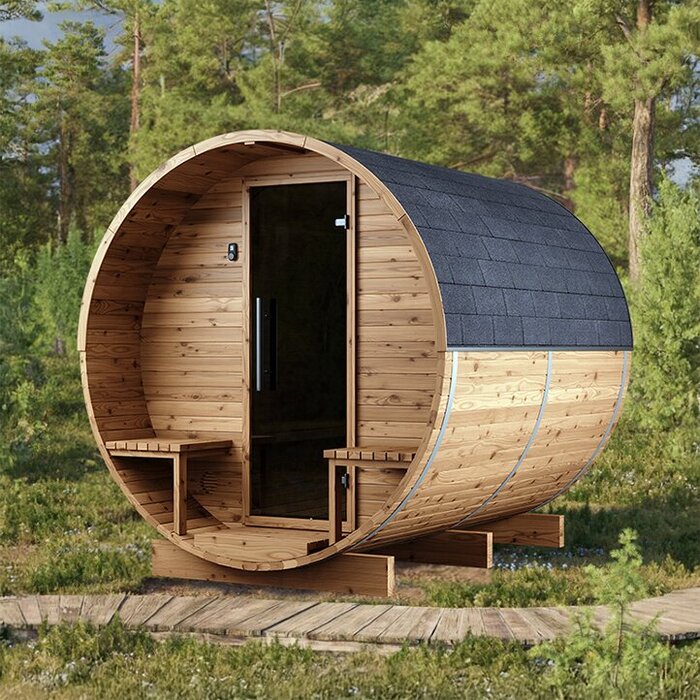
Time comparisons should cover the whole project, not just the visible construction. A ready-made route can reduce time spent creating a design and collecting materials if its specification fits, but it still involves checking documents, confirming options, arranging a suitable site, delivery, assembly and any required trade work. None of those tasks has a universal duration; availability, access, site conditions and the people involved matter. Set out milestones for order and document confirmation, site preparation, delivery, assembly, professional work and final checks. Ask which tasks can run in parallel and which must wait for an earlier one. This gives you a useful schedule without relying on optimistic single dates.
With a scratch build, planning and purchasing can become a longer chain: establish the brief, settle drawings, confirm materials, place several orders, prepare components, build, inspect and resolve mismatches. Even when one person handles several stages, each still needs time and tools. When asking about availability, refer to the exact model on the Sauna HC-225 listing; a model name alone is not a confirmed delivery date. For a self-managed build, avoid ordering materials before key design decisions are settled, unless the plan explicitly allows for them. Make room for weather, learning and rework in your schedule rather than treating every task as a guaranteed weekend job.
Who is responsible for technical decisions?
Buying a defined model does not transfer every decision. You still need to choose the right configuration, check the drawings against the site, confirm what is supplied and arrange any separate work. Read the manual that applies to the exact model, rather than relying on a general guide for something similar. Ask who answers product questions, who handles assembly and who is responsible for specialist work; get the division in writing. If the heater or electrical connection is part of the plan, a qualified professional should verify the relevant equipment and installation requirements before you commit. A product description or online image is not a substitute for technical documentation.
In a scratch build, you or your appointed designer must coordinate the parts and trades into one compatible plan. Agree who checks drawings, confirms material substitutions, manages changes and reviews the work. A builder may offer valuable experience, but do not assume design, supply and installation all fall within their remit. Use the Sauna N-210 product page to identify the model when requesting its drawings and manual, not as installation guidance. For an independent project, keep dated drawings and decisions so everyone works to the same version, and refer safety-critical questions to appropriately qualified people.
Compare the full project cost
Compare total project costs at matching specifications, not the price of a sauna alone against the cost of a finished build. For a ready-made option, list the product price separately from delivery, handling, site base, assembly, heater and controls if not included, qualified trade work and any required extras. Confirm whether quoted options are already in the price and whether it applies to the configuration you have chosen; do not assume an image shows everything. For a scratch build, include design fees, timber and other materials, fixings, finishes, tools, equipment hire, waste, delivery from several suppliers and professional review. Include your own labour in the comparison too: even if you do the work yourself, those hours have value.
Allow for changes: a bespoke project may reveal an overlooked item or an order that needs replacing, while additions and site work can also affect a ready-made purchase. Mark anything not yet priced instead of entering zero. Keep the exact model reference, such as the Sauna N-250 listing, alongside your estimate; its listed area of 5.27 m² does not confirm the purchase inclusions. Compare itemised prices, quote dates, validity periods and exclusions. The lowest initial figure is meaningful only when the remaining costs are clear.
Site access and preparation
Site conditions affect both routes and should be checked before a model is ordered or materials are bought. Confirm the intended location, a suitable base or support arrangement, access for delivery and workers, space to assemble or build, drainage around the site and access to services where needed. A sauna can fit the intended space on paper and still be difficult to bring through a gate or position in a restricted area. Compare the manufacturer's dimensions and installation instructions with measurements of the actual route, including turns, low points and temporary obstacles. Do not judge from a photograph. If ground conditions, support or service connections are uncertain, ask a competent site or trade professional to assess them.
For a scratch project, measure the working area as well as the finished location. Storage, cutting, lifting and safe movement need room, and weather can affect the work. A builder may adapt the design to awkward access, but components must still be delivered and handled safely. The Sauna LC-260 product page lists 5.12 m², which does not establish the full dimensions, space needed for delivery or required clearances. Compare the drawing for your chosen configuration with both the access route and the available working area before deciding which route is practical.
Documentation, support and future changes
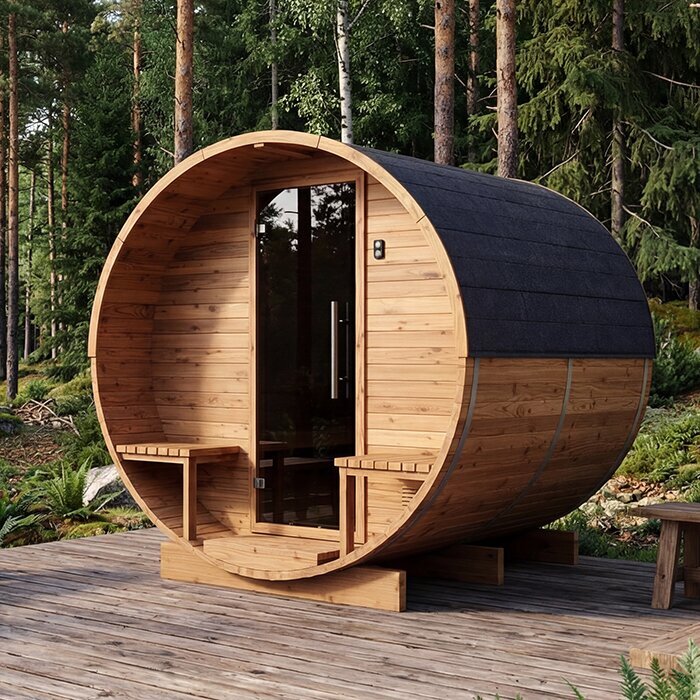
A ready-made route can make it easier to ask focused questions because you can refer to a named model and its documents. Before purchase, find out which instructions, drawings, parts list and maintenance information are supplied, whether the selected configuration changes those documents, and whom to contact if something is missing or needs replacing. Ask directly what after-sales support and warranty terms are available; do not assume a particular service or coverage from the word ready-made. For a scratch build, preserve the same records by creating a materials schedule, keeping receipts and supplier details, and recording installation notes and as-built drawings. Those records make later repairs and replacements easier to discuss without relying on memory.
Consider future alterations too. A bespoke feature may be difficult to reproduce if its materials or dimensions are not recorded. For a product model, ask whether modifications affect instructions, maintenance guidance or support terms. The Sauna HCF-300 product page lists 6.89 m², but its area and model name are not enough to plan a repair. Consult the documents for the exact configuration and discuss proposed alterations with the supplier. For either route, record what was installed, who completed specialist work and any follow-up required.
Which route fits your project?
A ready-made sauna may suit you if you want to select from established designs, review a defined model and limit bespoke design and sourcing. That does not guarantee less total effort: the right choice still depends on a fit between the model, site, supply scope and trade work. A scratch build may suit an unusual layout or a strong preference for control over dimensions and materials, provided you can manage drawings, procurement, coordination and quality checks. If those responsibilities would be unfamiliar or difficult to fit around other commitments, include a designer or experienced builder in the plan instead of assuming the project will be cheaper or quicker.
Compare two project plans: the ready-made option's specification, drawings, inclusions, exclusions and written cost against the scratch build's design, materials list, supplier availability, schedule and named responsibilities. Record the work that remains yours in each case. If you want to build the sauna yourself without designing it, consider a supplied kit separately: it can reduce design and sourcing decisions while leaving assembly to you. The comparison should reveal who makes each decision and resolves problems, rather than which option looks more complete in a photograph.
Frequently asked questions
Does a ready-made sauna arrive fully assembled?
Not necessarily. Ready-made describes a defined product or design, not a particular delivery format. Check the current product information and written supply details for what arrives assembled, what still needs to be done and what site work or trade work is separate.
Is assembling a sauna kit the same as building one from scratch?
No. A kit may provide a predetermined design and a set of components, leaving you to assemble them. A scratch build puts more of the design, material selection and coordination in your hands. Kit contents and instructions vary, so confirm the scope for the kit you are considering.
Which option is usually faster?
There is no reliable timeline that applies to every project. A defined product may reduce design and sourcing tasks, but checking the specification, preparing the site and arranging assembly or trade work still take time. A scratch build adds decisions and coordination; skills, availability and site conditions also affect the schedule.
Can building a sauna from scratch save money?
It can’t be assumed either way without comparing the full scope. Include materials, design, tools, waste, delivery, your time, professional work and site preparation in a scratch-build estimate. Compare those with the product price and every separate cost for a ready-made option, using the same inclusions.
What should I check before choosing a route?
For a product, check the current specification, drawings, inclusions, exclusions and site requirements. For a scratch build, check the design, material schedule, supplier availability, task plan and who is responsible for each decision. Ask a qualified professional about specialist installation or safety questions.
Neither route removes planning; each places it in a different part of the project. A ready-made model is useful when its defined design and documented scope fit your needs. A scratch build offers flexibility, but you must take responsibility for coordinating design, materials, trades and site work. Keep kit assembly distinct: it is a hands-on way to follow a prepared design, not the same commitment as creating one. Comparing scope, time and responsibility on the same basis makes the choice clearer before you commit money or begin work.
