
Planning Remote Sauna Heating: Compatibility and Safety Checks
Sauna heating guide
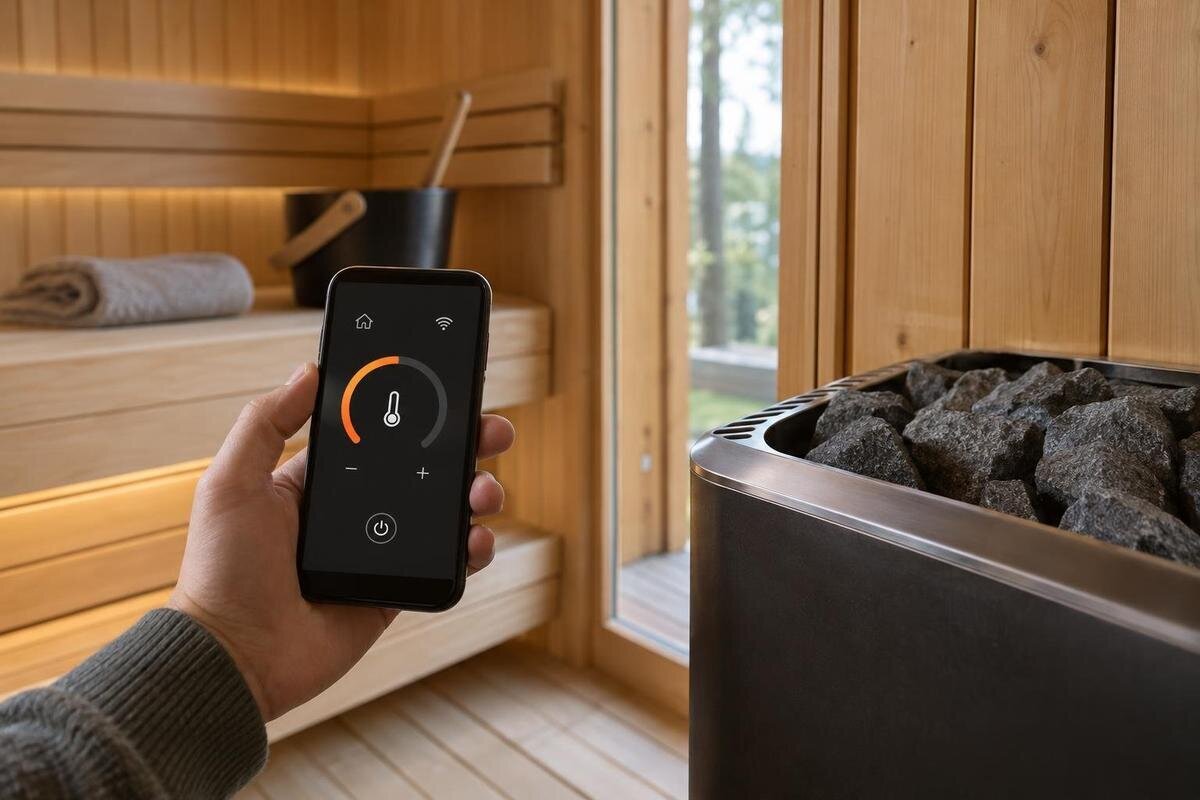
Remote sauna heating sounds simple, but “remote control” can describe very different functions. An app might display a reading or adjust a setting while a person still has to enable the heater on site; another arrangement may permit scheduled or remote starting under strict conditions. Compatibility depends on the exact sauna, heater, control unit, sensors and installation—not merely on Wi-Fi or an app. Before choosing equipment, compare the current documentation for the complete setup, find out which certification or conformity evidence applies, and record the operating restrictions. The checks below help distinguish a supported function from an unsupported retrofit.

01
Remote control can mean monitoring or starting
Separate remote monitoring from commands that change heating. A display may report temperature, an app may adjust a set point, a timer may run after a local action, or a system may permit a start when nobody is at the property. These functions have different safety implications and may be described separately in product information. Do not read words such as app control, smart control or remote access as proof of unattended starting. Ask the supplier to name every function available for the exact heater and control unit, including whether it can start from fully off, schedule a start, or operate only after a person has enabled it locally.
Write down the use you actually want before comparing systems. If you want to check status while away, remote monitoring may be enough; if you expect to initiate a heat cycle remotely, require explicit manufacturer instructions for that exact use. Note whether the system needs a person at the sauna, a key switch or another local action, whether a scheduled command can be cancelled, and what would make a remote start unavailable. If documents are silent, inconsistent or describe only monitoring, treat remote start as unsupported rather than trying a plug, relay or generic home-automation routine. Keep a distinction between a command accepted by the app and confirmation that the heater reached the requested state.
Compatibility across the sauna, heater and controls
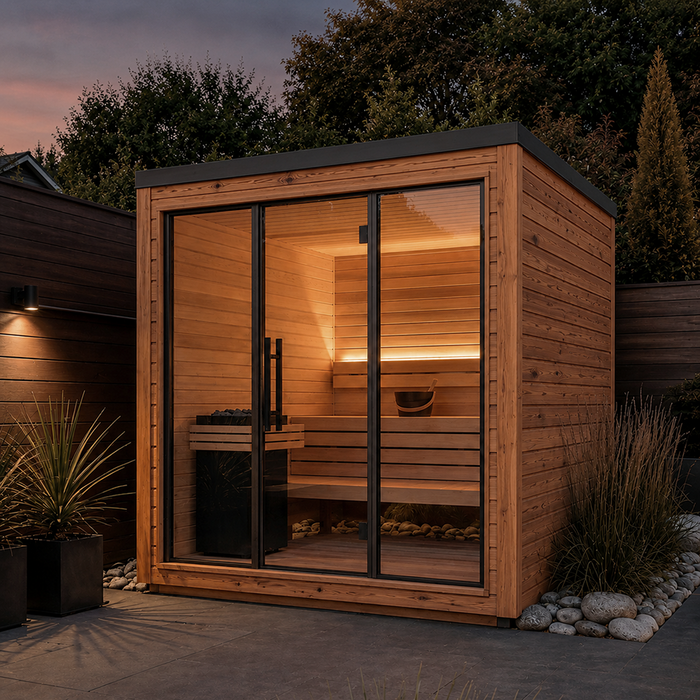
Compatibility depends on specific components, not just a brand name. Record the sauna model and variant, heater model, controller part number, any gateway or interface, and all separately supplied sensors or switches. Check what is included in the proposed package and what must be ordered separately: the sauna, heater and controls may be sold as separate items. The Sauna N-210 product details, for example, state a 4.43 m² floor area. Keep that cabin information separate from the heater and control specifications so that you can identify gaps in the quotation. If no heater is listed as included, treat that choice as still open rather than assuming the pictured equipment is supplied.
Use model labels and manuals, rather than a photograph, a short catalogue title or a salesperson’s shorthand. Confirm that the heater manufacturer names the proposed controller and any remote accessory as approved for the exact heater version; then check whether that pairing is allowed in the particular sauna configuration. Ask for the applicable manual or compatibility statement, including accessory part numbers and any regional or version limits that apply. If two documents describe different controllers, sensors or heater revisions, pause until the supplier or manufacturer resolves the mismatch. Similar appearance and a shared brand do not substitute for a documented combination. Ask how revisions are identified, since a family name may cover more than one controller generation.
02
Heater sizing and sauna requirements
Check the heater’s selection instructions against the sauna’s documented dimensions and construction. Floor area is not the same as heated room volume and cannot, by itself, establish which heater is suitable. The N-250 sauna dimensions include a 5.27 m² floor-area figure; do not use it as a substitute for the interior measurements required by the heater manufacturer. Consult the sauna and heater manuals for the measurements and construction details they require, including any features they say affect selection. When comparing sizing guidance, note its stated conditions so that you are not comparing figures based on different assumptions. Once the heater is selected, check the remote-control arrangement specified for that exact model.
Treat any change to the sauna, heater or surrounding installation as a reason to recheck the documented configuration. A control approved for one heater does not automatically become suitable after a replacement, and a previous commissioning record may not cover revised sensors or a different control unit. If the sauna has details that the heater manual says affect selection, have them assessed by the supplier or a qualified sauna professional. Do not calculate heater size or alter the setup from an area figure alone. Compatibility depends on the manufacturer’s stated conditions for the assembled system, not a model name that appears close enough. A compatible app cannot correct a heater chosen outside its documented requirements.
Control unit, app and network compatibility
Establish whether controls are built into the heater or supplied as a separate wall unit, and whether the proposed app needs an approved gateway or interface. Each part must be specified for the heater and the remote function you want. When considering the LC-260 sauna model, record its listed 5.12 m² floor area under cabin details, then add the heater, controller and gateway part numbers separately. This keeps the sauna specification distinct from the electronic equipment being proposed. Do not assume two devices communicate because they use Wi-Fi, Bluetooth or the same app brand. If more than one controller is offered, confirm which one is included in the quotation before matching it to an app.
Trace the connection end to end. Find out whether commands travel between the phone and a cloud service, a local network or a separate hub, and which elements must remain powered or connected for the heater to respond. Check required software or firmware versions, supported network arrangements and what happens when the internet, gateway or phone connection is interrupted. Confirm whether the sauna can still be operated locally if the remote service is unavailable. If one part of the proposed chain is not named in the manual, ask the manufacturer whether it is supported. A network can carry a command; it cannot make an incompatible heater safe or give a monitoring-only device permission to start it. Ask how updates or account changes affect the approved control path.
03
Remote-start permission and operating limits
Ask explicitly whether remote starting is permitted for the selected heater-controller combination, rather than accepting a general description of app control. The manual should distinguish scheduled, delayed and remote starts and identify any local enable action, door condition or other prerequisite. For a quotation involving the HCF-300 sauna configuration, keep the listed 6.89 m² cabin details alongside the proposed heater and controller models. The supplier’s answer about remote starting should refer to those components, not simply to the sauna name. If the required confirmation can only be made on site, establish who will carry it out; do not assume an app command can replace it.
Read operating limits as conditions, not optional tips. Look for the permitted run period, timer behaviour, start delay, reset requirements, fault lockouts and any restriction after power loss or interruption, using only values stated for the exact equipment. Ask whether a remote command can be sent when a safety condition is unresolved, and what the system does if a sensor reading is unavailable or outside the allowed range. Do not invent a workaround for a limit, extend a run from a second device or bypass a local control. If the manufacturer says a person must be present to enable heating, remote access does not remove that requirement. Do not set an arbitrary timer value based on another heater’s instructions.
Manufacturer-required safety devices
Make a written list of the safety measures the manufacturer requires for remote operation. Depending on the system, the manual may specify a door sensor, an approved safety switch, a particular sensor position, an interlock or another measure that prevents a start in a disallowed condition. These are examples, not a universal checklist. Verify which items the actual heater and controller require, whether they are compatible and whether they are included. If you are comparing the LCF-300 sauna details with HCF-300, both listings state a 6.89 m² floor area, but that shared figure does not establish an identical heater or safety-device arrangement. Compare the proposed equipment packages separately, including any devices supplied as extras.
Ask who is responsible for confirming that each required device is present and functioning after installation. Sensor placement and testing can be installation-specific, so leave connections and commissioning to the qualified professional assessing the equipment; do not move a sensor, bridge a switch or silence a fault yourself. Find the manual’s response to an open door, a damaged or disconnected sensor, a failed interlock or another reported fault. If a required safety device is missing or a fault is shown, keep remote starting disabled until the manufacturer-approved remedy has been made and the system checked. Never treat an alert as a substitute for the device it reports, and make sure users know whom to contact if it activates.
04
Faults, interruptions and equipment changes
Check how the system behaves when normal operation is interrupted, rather than relying only on an app demonstration. Ask what it does after a power cut, lost network, control-unit fault, sensor alert, delayed status update or repeated command; confirm whether it stops, stays off or requires a documented reset. The manual should say whether a heater can restart automatically and what conditions block that restart. If a feature is not described, ask the manufacturer or installer for a clear answer instead of testing the fault by deliberately disconnecting equipment. A remote control should never be assumed to return to a safe state in a particular way without model-specific documentation. Also check who receives alerts; an alert arriving does not itself prove heating stopped.
Equipment changes also warrant a review of saved schedules and remote settings. If you move to the S-140 sauna model, listed with 1.93 m² of floor area, do not carry a previous heater-control pairing across on the strength of the same app account. Keep the assessed configuration on record and have the professional review replacement components, sensors and operating limits before use. Identify which phone profiles or schedules still refer to the old equipment, and record any settings that need to change under the new instructions. A saved profile is not a system assessment. Leave old remote settings inactive until the replacement configuration and its permitted functions have been confirmed.
Installation and electrical checks
Electrical and physical installation details must match the heater and controller instructions; remote access does not relax them. Have a qualified electrician or sauna installer review the exact equipment, required supply, control connections, sensor positions, clearances and manufacturer’s drawings. When discussing the HC-150 sauna specification, distinguish its listed 2.97 m² floor area from the electrical and installation requirements of the selected heater. The professional will need the relevant equipment instructions, not just the cabin listing. Do not infer cable sizing, protective devices, wiring routes or clearance measurements from another model, a photograph or general advice online. Ask which drawings and instructions the installation assessment relies on.
Before the system is handed over, ask for the professional’s record of the installed component models, approved pairings, required safety devices and the checks completed under the relevant instructions. The record should also identify the exact remote functions enabled, any operating limits and what to do if the system reports a fault. If the sauna and heater manuals conflict, or the installation differs from the documented configuration, have the manufacturer or installer resolve that point before enabling remote start. A qualified professional should assess electrical and installation questions; this article is not a wiring or commissioning procedure. A successful app test alone does not prove every safety device was assessed.
05
Account access and user handover
Remote operation depends on more than the hardware: decide who can use the app and what access each person needs. Keep the login under the control of a responsible owner, avoid sharing credentials casually, and use any account-security measures the service offers. Tell users whether the app reports live status or only the last connection; a notification or a green icon is not a substitute for a confirmed safety condition. Record what happens when the network is unavailable and which local controls remain available, following the manufacturer’s instructions rather than relying on phone access as the only way to operate or stop the system. Limit start permissions to people who understand the conditions, and review access when regular users change.
Organise the handover file so users can distinguish the cabin, heater and controls. For the HC-225 sauna product details, the listed 4.4 m² floor area belongs in the cabin record; add separate entries for the heater and controller model numbers, manuals and required sensors. Include the remote-start restrictions, who may enable the feature, how to disable access and where the instructions are kept. Everyone using the controls should understand the approved process and the circumstances in which heating must not be started. Where guests or household members cannot reliably follow those conditions, restrict their remote access rather than assuming that the account holder will always be present to supervise.
Questions to settle before buying
Before placing an order, request answers tied to the parts you are actually considering: which heater and controller models work together; whether remote starting, rather than monitoring, is explicitly supported; which certification or conformity documents cover the exact system and function; and what safety devices or accessories are needed. Also ask for the applicable manual, permitted operating conditions and the response to faults or a lost connection. The answer should name model numbers and configuration, not promise that the equipment is generally “smart” or “remote ready”. Retain the documents so the installer and future users can refer to the same version. Check that the documents identify the remote-start feature and controller version, not just a wider product family.
Use those answers to decide whether the proposed package meets your needs. A system that requires local enabling may suit someone who wants to check status or adjust permitted settings afterwards, but it does not meet an expectation of unrestricted starting while away. If remote start is unsupported or the proposed pairing remains unclear, leave that function disabled rather than adding an unapproved plug or relay. Keep unresolved questions attached to the quotation so that the supplier and installer can address the same configuration. Ask a qualified professional about the installation evidence and applicable local requirements where relevant. The useful buying comparison is between the functions each complete package permits, not between broad claims that a sauna is “smart”.
Frequently asked questions
Can any sauna heater be started from a phone?
No. The exact heater and controller must be documented for the function you want, and any required sensors, local enabling steps and installation conditions must be in place. If the manuals describe monitoring or local control only, do not infer that unattended starting is approved from an app icon or an add-on.
Does Wi-Fi compatibility prove remote-start compatibility?
No. A network connection describes how a command may travel, not whether the heater can accept it or whether remote starting is permitted. The manual may allow status checks or setting changes while requiring local activation. Confirm the exact controller, gateway and function in the manufacturer’s documentation.
Which safety features should I look for?
There is no single universal list. Use the instructions for the exact heater and controller to identify required sensors, interlocks, local enable controls, timer limits and fault responses. Check that the items are included, compatible and assessed as part of the installation. Never bridge, reposition or bypass a required device.
Is a certificate for the heater enough?
Not necessarily. Check which model and function the document covers and whether it identifies the proposed controller, accessories and configuration. A document for one component does not, on its own, establish that a different combination or remote-start use is approved. Ask the manufacturer or a qualified professional about the applicable evidence.
Can I use a smart plug or third-party relay to add remote start?
No. A plug or relay does not prove compatibility and may operate outside the heater’s approved controls and safeguards. Use remote functions only through the system the manufacturer specifies for that heater, and have the installation assessed by a qualified professional. Do not bypass a local enable step or sensor.
Remote sauna heating is a system function, not simply an app feature. The decision rests on documented compatibility across the sauna, heater, controller and required sensors; explicit permission for the remote function; and clear limits for normal operation, faults and connection loss. Where the documentation does not support unattended starting or leaves the safety arrangement unclear, keep remote start disabled. A precise component record and professional assessment give everyone using the system the same boundaries.
