
Compact Premium vs Larger Basic Sauna: Setting Priorities
Sauna buying guide
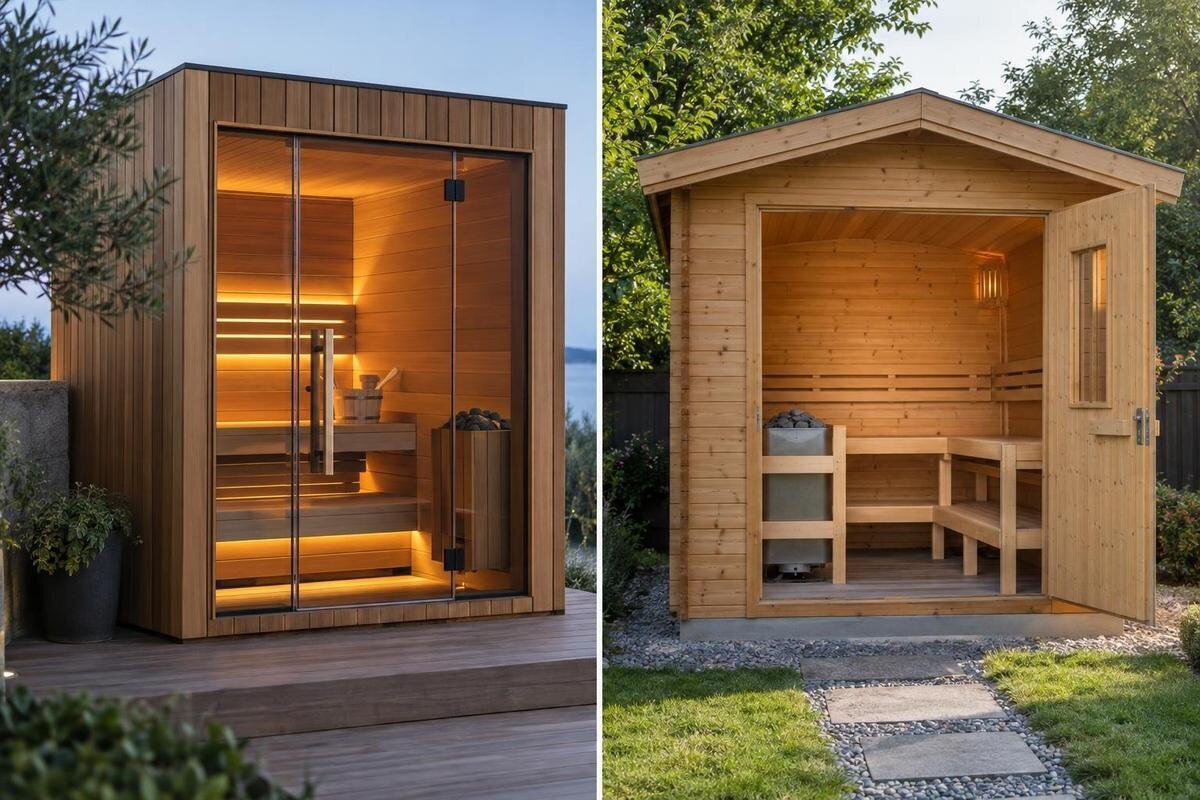
With a fixed sauna budget, choosing between a compact option described as premium and a larger one described as basic is not a simple contest between quality and space. Those labels can conceal different specifications, inclusions and priorities. Decide first what the sauna must do, how many people need to use it at once, and which construction and comfort details matter to you. Then compare dimensioned drawings, written specifications and quotes on the same basis. The aim is to protect the budget without paying for space or features that do not serve your routine.
What ‘premium’ and ‘basic’ mean
‘Premium’ and ‘basic’ are useful shorthand for a comparison, but they are not a shared technical grading system. One seller may use premium to describe finishes or equipment; another may emphasise timber construction, fittings or design. A basic model may still include the details you require, while a model described as premium can omit something you expected. The labels alone tell you little about the materials, layout, fit-out or what is supplied. Translate each claim into a specific feature and ask whether it changes the experience, upkeep or total outlay. The useful distinction is what each option offers you, rather than how the seller names its range.
Ask for the exact model and configuration behind each quote, then compare the same points: what the cabin includes, what is an upgrade, which construction details are documented, and what would need separate purchase or work. Look for manufacturer drawings, product-specific manuals and a written inclusions list rather than relying on a showroom description. If a benefit is described only as ‘better’, ‘luxury’ or ‘entry-level’, ask what it means in concrete terms. You are not trying to award a universal grade; you are identifying which documented differences justify spending more for your own use, and which are attractive but irrelevant extras.
Set a ceiling for the complete project
Set a ceiling for the complete project rather than treating the cabin price as the whole budget. Reserve money for items the chosen configuration actually requires, which may include a base or other site preparation, delivery, assembly, a heater, electrical work and separately quoted accessories. Do not assume every item is included or required: use the written quote and supplier guidance to establish the scope. Where a job depends on the site or configuration, obtain a quote from the relevant professional before a cabin upgrade makes the overall plan look affordable on paper. Keep each item visible, marking it as included, quoted separately, estimated or excluded; a low headline cabin price is not comparable with a package that covers work omitted elsewhere.
Keep one-off purchase costs distinct from ongoing use costs. For this decision, do not justify a higher purchase price with an unverified promise about efficiency or running expenses; those depend on the exact heater, use and tariff and need evidence of their own. Mark each option as cabin-only or a more complete package, and compare prices only when the inclusions match. Record firm quotations separately from provisional allowances. If the fixed ceiling cannot cover the required configuration and necessary work, revisit the size or specification rather than assuming those items can be added later at no cost.
Define how much room you will actually use
Define usable room from the people and routine, not from a model name or a capacity claim. Note how many people will normally use the sauna together and whether they need to sit upright, stretch their legs, change position or share the bench without feeling crowded. Think about ordinary use rather than the rare maximum; a solo user, a couple and a group may value different layouts. Write down the minimum seating arrangement that would feel acceptable. If potential users disagree about how much space feels comfortable, settle that point before comparing models: a published capacity claim will not resolve a layout preference.
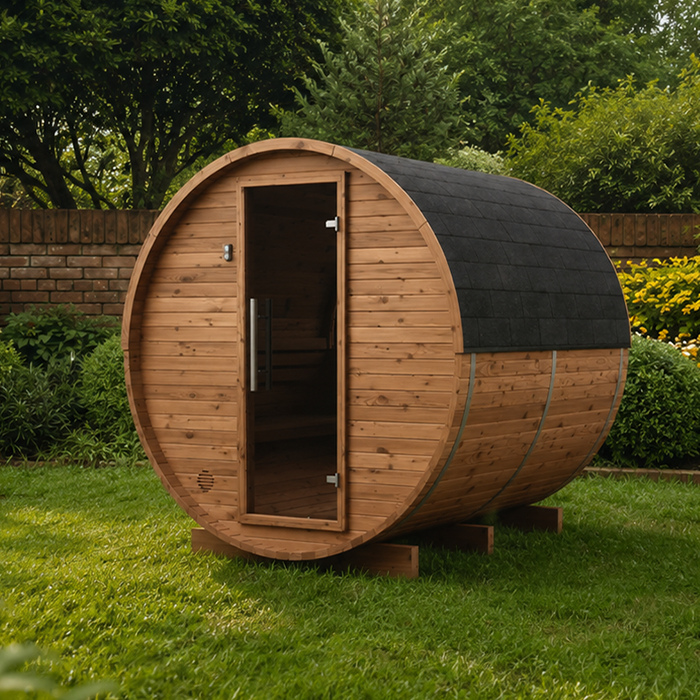
Use a dimensioned manufacturer drawing to check interior length, width, height and bench layout separately from the outside footprint. Look for bench length and depth, access between the entry and seating, and how much clear floor remains. The Sauna S-140 product page lists 1.93 m²; that figure does not, by itself, state usable floor area or how many people can sit comfortably. Compare the drawing and written capacity, if the manufacturer provides one, for the exact configuration. Ask for missing measurements rather than estimating them from a photograph, which cannot reliably show seat dimensions or clear space.
Read listed area figures with care
Read every area figure on its own terms. A listing in square metres is useful for comparison only if you know whether it describes internal floor area, the external footprint or another measure, and whether other models use the same basis. A larger displayed figure does not automatically mean a longer bench or more usable seating. Ask the seller to identify what is measured and use the manufacturer’s plan to compare the same dimensions. Keep outside measurements for site fit separate from interior dimensions for the time you spend inside. If a drawing is not clearly labelled, request the measurements in writing instead of interpreting a scaled picture.
The Sauna HC-150 listing shows 2.97 m². Record that figure alongside its stated measurement basis before comparing it with another model. Then use the drawings to see how the space is arranged: check the benches, the route from the entry to the seating, and the clearances specified for the selected heater. Have the supplier or installer confirm details that depend on the exact set-up. Similar area figures do not establish similar seating capacity or comfort. Keeping the listed area, internal measurements and bench dimensions in separate rows on your comparison sheet makes it easier to see what each figure actually tells you.
When a compact cabin is the better fit
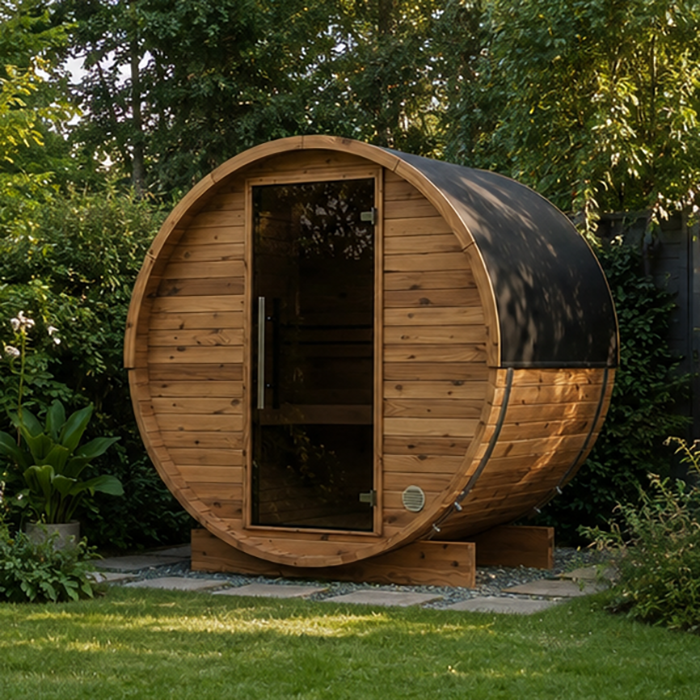
A compact option can suit a site with limited room or a household whose normal use does not need extra seating, leaving more of the budget for construction details or comfort features that matter. That is a sound choice only if it still passes the essentials: the cabin fits the planned location, its internal layout works for the usual users, and the heater and other required components are part of a feasible quote. Be clear about the constraint: outside length, width and access are different from bench space inside. A product may fit the available footprint yet feel too tight for its intended use. Consider door opening and delivery access as well as the area the cabin would occupy.
The HC-225 product page lists 4.4 m², but the figure alone cannot say whether it is compact for your site, how the cabin is arranged inside or what the quoted configuration includes. Put its dimensioned plan beside your site measurements and confirm delivery access with the supplier. Compact is a relative description, not a quality grade or a promise of comfort. Separate a genuine site constraint from a preference for a smaller cabin: the former may rule out an option, while the latter is something to weigh against seating. If reducing the footprint means losing an essential seating arrangement, that compromise does not meet your brief.
Look for evidence of build quality
If quality is the reason to favour the smaller option, put the extra spend against documented details rather than adjectives. Compare the specified timber, any stated treatment or grade, component dimensions where supplied, floor, wall and roof construction, joinery and fasteners, door and window details, and exterior finish. Ask which information applies to the exact model, not just the product family. These details can inform maintenance questions and future repair, but they do not all carry equal weight for every site or buyer. Decide which matter to you and note what evidence supports each claimed advantage. A material or treatment name alone does not describe the whole cabin.
Check the manufacturer’s care instructions and written terms for aftercare, replacement parts and warranty before using them in the comparison; do not assume that an item is available or included. The Sauna N-210 listing gives an area of 4.43 m², but that figure is not evidence of construction quality. Use the relevant drawings, manual and inclusions list to connect a claimed advantage with a specific detail. Record unanswered questions separately from confirmed differences. Clearer documentation can make an option easier to assess, but distinguish that from evidence of a better build. Your comparison should explain what the extra spend buys and why that matters to you.
Spend on comfort you will notice
Comfort is individual, so choose features by how they will be used rather than by the number of options on a product page. Compare the position and layout of benches, ease of getting in and settling, legroom, reach to the controls, lighting and ventilation, where those are offered. Think about which details make a noticeable difference during an ordinary visit and which are cosmetic or rarely used. A feature may be standard, optional or unavailable in a particular configuration; a broad description may need a model-specific explanation. Where a comparable layout can be viewed, treat it as an impression, not proof of the chosen model’s specification.
The LC-260 product details list 5.12 m², but do not establish the bench arrangement, control location or included comfort features from that figure. Use the plan, specification sheet and quote together to confirm the fit-out. For each optional feature, record its name, quoted cost and the practical need it addresses. Rank features you would use often above ones that merely look impressive. If the budget can cover either a finish improvement or a more usable bench layout, compare their value for your normal use. Keep essential comfort requirements separate from preferences you would willingly drop to stay within the budget.
Check the heater and installation requirements
Price the heater as part of the exact configuration, not as an assumed inclusion. Confirm its model, whether controls and related components are included, and which items are extra; the product page or quote should make the scope clear. A cabin and heater must be considered together, but area alone does not establish suitability. Ask the sauna supplier to confirm compatibility against the manufacturer’s documentation. If the choice affects electrical supply, installation or other site work, have a qualified electrician or installer assess the specific proposal rather than relying on a generic sales description. Include the cost of that professional work if the quote excludes it.
The Sauna N-250 listing shows 5.27 m²; that catalogue figure is not enough to select a heater or cost an electrical job. Compare the precise cabin plan and heater instructions for the configuration being offered, then identify which work has a firm quote and which remains provisional. Differences in included equipment or installation scope can change the amount left for space or build quality. Keep those costs attached to the relevant option rather than treating them as a shared allowance. If you change the proposed cabin or heater during the comparison, ask whether the associated quote still applies before carrying its total into your budget.
Compare quotes on the same basis
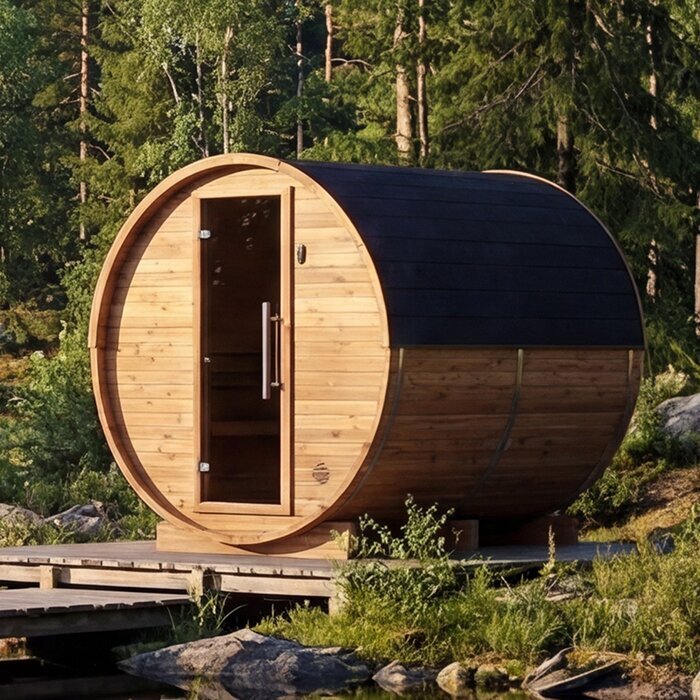
A like-for-like comparison sheet makes the trade-off visible. Give each candidate its own column and record the exact model and configuration, the basis of the area figure, interior dimensions, seating plan, documented construction details, comfort items, heater and what the quote includes or excludes. Put delivery, assembly and required site or electrical work in the same view, using actual quotes where possible. Mark a blank as ‘not confirmed’ rather than filling it with an assumption. Two packages that use the same tier label, or have similar headlines, can still contain different items. Note which criteria are essentials and which are preferences so a minor extra does not outweigh a requirement by accident.
The HCF-300 product page lists 6.89 m². Read that figure alongside its drawing and inclusions list rather than treating it as a measure of value. Once the quote scopes match, identify what any price difference buys: additional internal room, a documented construction feature, a comfort item or a more complete package. Where several differences are bundled together, distinguish the ones you need from those you would not choose separately. That helps you judge the package without assigning equal value to every extra. If a claim matters to your decision but is missing from the paperwork, get it confirmed in writing or leave it out of the comparison.
Choose the compromise that suits your use
Use a two-stage decision. First rule out options that fail a non-negotiable: they do not fit the site, the internal layout does not meet your minimum, the package cannot be completed within the ceiling, or important construction information remains unresolved. Then rank the remaining candidates by the points that matter most to you. This avoids trading away essential space for a finish upgrade, or spending on extra room when the build information you need is still missing. Write down your thresholds before comparing marketing claims; the order of your preferences is personal, but the constraints should be clear.
The Sauna LCF-300 listing also gives 6.89 m², the same displayed area as the HCF-300 listing, but equal area figures do not prove identical plans, construction or inclusions. Compare the exact drawings and quote rather than reading a model name or number as a specification. Consider future guests or changes in use only if extra capacity is worth the budget and site space now; do not pay for a hypothetical requirement without deciding its value. Where both options pass your essentials, choose the documented advantages and compromises you would be content to live with, not the label that sounds more appealing.
Frequently asked questions
Is a larger sauna always better value?
No. More room is worthwhile when the internal layout provides seating or movement you actually need. If a compact option meets your fit and build requirements, size alone is not a reason to spend more. Compare the quoted package as well as the space.
Does ‘premium’ mean better build quality?
No. ‘Premium’ is a description, not a shared construction grade. Ask for documentation for the exact model, including timber and construction details, inclusions and care instructions. Compare written warranty terms too, without assuming that any particular cover is included.
Can I use the listed area to work out how many people fit?
No. A listed area may not describe the clear internal floor space, and it does not show bench length, access or layout. Use a dimensioned drawing and model-specific capacity information if the manufacturer provides it; ask the supplier what the area figure measures.
Should I prioritise build quality over extra room?
There is no universal order. First rule out any cabin that fails your minimum space or documented-build requirements. If both options meet them, weigh the cost of extra room against the construction details you value and the way you plan to use the sauna.
What should I check before comparing two quotes?
Get the exact model and configuration, dimensioned plans, the meaning of the listed area, construction details, inclusions and exclusions, and heater documentation. Identify work that is not included and obtain a quote for it. Confirm site- or electrical-specific requirements with a qualified professional.
Treat the choice as a comparison between documented packages, not a verdict on two labels. Protect the budget for a cabin that fits its intended users, has construction details you can assess, and includes the components needed for your plan. Once both options meet those requirements, choose the space and comfort trade-offs you will value in ordinary use.
