
Sauna Kit or Fully Assembled Sauna: Which to Order?
Sauna buying guide
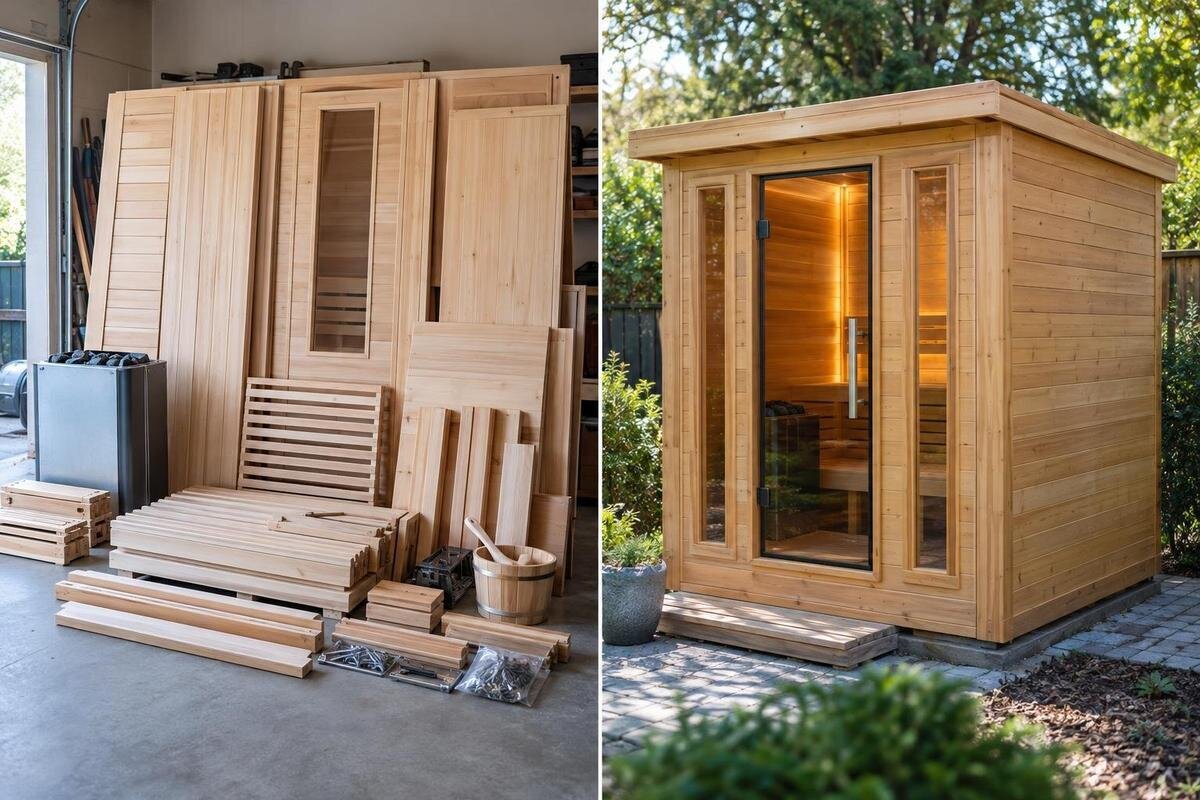
Choosing between a sauna kit and a fully assembled sauna starts with a practical question: what will arrive, and who is responsible for the work that remains? A kit is generally assembled after delivery; “fully assembled” describes the state of some or all of the structure before dispatch, but sellers may define it differently. Neither label tells you whether the sauna can reach its intended position, how it will be unloaded or which equipment and services are included. Confirm the format available for the exact model and delivery address, then compare access, site preparation, assembly and handling with the work you are prepared to arrange.
01
What “kit” and “fully assembled” mean
In ordinary buying language, a sauna kit is supplied as components for assembly at the destination. A fully assembled sauna has been put together before dispatch, but that phrase can mean the main structure rather than every accessory or service being complete. There may also be intermediate formats, such as a structure assembled in sections. Sellers do not always use these descriptions identically, so ask what will arrive for the exact model and whether the label refers to the whole sauna, the outer structure or only certain sections. Get a clear account of its condition on arrival and the tasks that remain.
Keep the delivery format separate from the installation scope. A kit does not automatically include tools, an assembly crew or a straightforward do-it-yourself build. Likewise, “fully assembled” does not guarantee that the carrier will bring it to the final base, that it can be moved through your garden or that any equipment is connected. Unloading, moving, placing, assembly, finishing and service connections may be assigned to different people. Listing those jobs separately prevents the word “assembled” from carrying more meaning than the order actually promises.
Delivery formats available for the chosen model
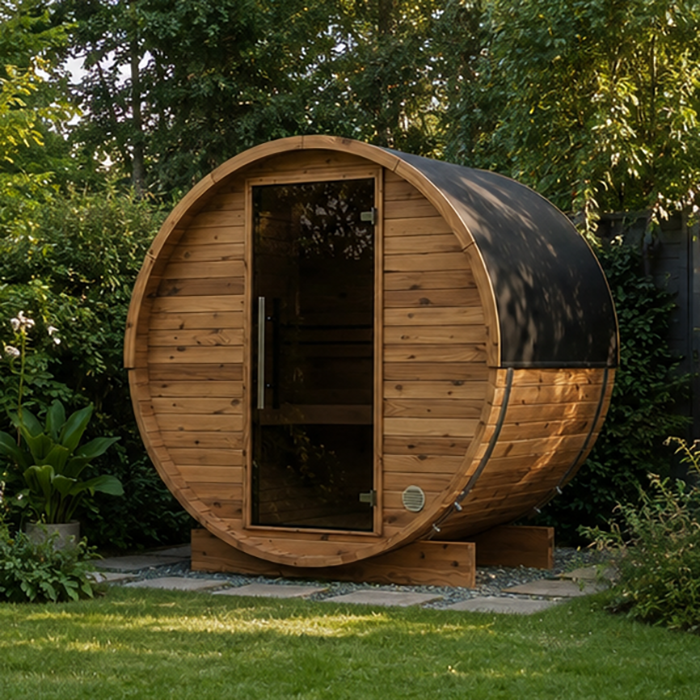
Do not assume that a retailer offers both formats across its sauna range. The choice may depend on the exact model, configuration or delivery arrangement, and a catalogue page may not explain what can be sent to your address. A listing such as Sauna LC-260 Thermowood Barrel Sauna gives you a specific model to ask about; its name does not confirm whether a kit, pre-assembled unit or both are available. Ask the seller to check the chosen model and delivery address before comparing options.
Make the enquiry specific: is the item supplied in parts, in partly assembled sections or as a complete structure; what work, if any, is completed on site; and can the format reach the intended position, not just the street address? Explain any gates, steps, slopes or long path from the stopping point. Ask whether the answer applies to the exact configuration. If assembly is optional, find out whether it covers building, placement or both, and whether it is available for your address. Save the response with the quote so the product description and order agree.
02
Assembly work for a sauna kit
Use the instructions for the exact model to check the assembly sequence, tools, fixings and any preparatory work; do not infer those details from a photograph or a similar-looking structure. Request the current assembly instructions and parts list, then have the seller identify what is included and what needs to be supplied separately. For a product listing such as Sauna S-140 Thermowood Barrel Sauna, ask for documentation matched to the exact model and configuration rather than a generic guide. Ask whether any work falls outside a normal assembly scope and needs a separate trade.
Then decide who will do the work. If you plan to assemble it yourself, make sure you can follow the supplied instructions, provide the specified tools and set aside suitable working space and enough help for the handling described by the supplier. Do not assume parts are light, that one person can manage them or that tools and fixings are all in the box. A hired installer may be a better fit if the build is unfamiliar, but confirm availability, price, scope and responsibility for receiving or checking the parts. If delivery and build are on different days, ask how the packages should be stored and checked. Get a realistic time estimate for this package from the installer or seller rather than relying on a general figure.
Measure the route for an assembled sauna
An assembled sauna must be moved as a complete structure rather than as individual kit parts, so plan from the transport dimensions for the delivery format on offer—not from a product-area figure or image. Measure the whole route to the base: the narrowest gate or passage, overhead clearance, corners, steps, slopes and room needed to turn. Include fences, walls, low branches, outdoor furniture and any doorway if it is going indoors. For the HCF-300 barrel sauna, request the dimensions and handling information for the actual format offered; the model name alone is not an access measurement.
Ask the seller or carrier to identify the largest assembled section, the clearance needed for turns and who will assess the route. A path that is wide enough along a straight stretch may still be unsuitable at a corner, gate or change in level; vehicle access and the final move are separate questions. Clarify where the vehicle can stop and what happens if the route proves unsuitable on arrival, including any rebooking or extra handling charges. Do not assume the structure can be dismantled again at the site unless the manufacturer permits it; that would alter the assembly and handling plan.
03
Unloading and final placement are separate jobs
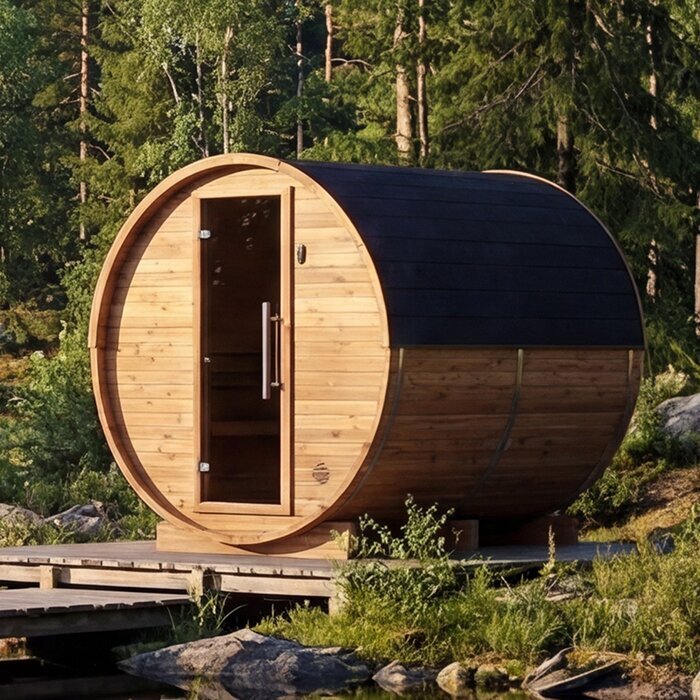
Delivery to your address, unloading from the vehicle and moving the sauna to its final position are three separate tasks. Confirm the quoted delivery point and exactly what the service covers: vehicle access, unloading equipment, people to handle the load and movement across the property. For a kit, ask for the dimensions and weight of each package, especially the largest or heaviest; several boxes do not automatically make the load easy to carry. If you are considering the HC-150 Thermowood barrel sauna in a pre-assembled format, first confirm that this option is available, then ask how it would be unloaded and whether placement on the prepared base is included. Find out where packages can be set down without blocking the route or later assembly.
Consider the surface between the stopping point and the base as well as the distance: steps, loose ground, a narrow or sloping path, soft lawn, sharp turns and overhead obstacles can affect the handling plan. If lifting equipment is proposed, ask the supplier or carrier to specify the equipment, reach, site access and who arranges it; do not book a crane, forklift or other machinery by guesswork. The provider responsible for the lift should assess the site and plan it safely. Confirm whether the quote covers unloading only, carrying the sauna across the property or setting it in its final position, as these are not interchangeable descriptions.
Base and work-area requirements
Prepare the base from model-specific guidance, not from the delivery label. A kit and a pre-assembled sauna both need a suitable place for the finished structure; format alone does not tell you the required dimensions, support, levelness, clearances or any water-management requirements. Request the manufacturer’s site-preparation information and exact external dimensions for the chosen configuration before building or altering a base. The Sauna LCF-300 Thermowood Barrel Sauna listing can help identify the model, but a product image or area figure cannot replace a drawing or base specification. If the requirements are unclear, have a suitable building professional review the site.
Allow usable space around the final position for the delivery route and, if the sauna arrives as a kit, the work area required by its instructions. Assembly may need more room than the finished footprint, so ask what clearance and access the installer needs before laying out the site. Plan any service connections from the equipment actually selected; if a heater or other component requires a connection, have the seller confirm the relevant requirements and arrange a qualified professional for that work. Do not treat an assembled delivery as proof that the site needs no preparation, and confirm when the base must be ready before booking the delivery or build date.
04
Labour, timing and responsibility
Compare the full scope rather than assuming one format costs less. A kit can leave assembly labour and coordination to you, while a pre-assembled delivery can still leave site preparation, lifting, movement, placement and connections to arrange. Neither description establishes which tasks are charged separately. Request a breakdown for the exact model: product and delivery, any assembly service, unloading or lifting, final placement, optional equipment and required trades. For Sauna HC-225 Thermowood Barrel Sauna, as for any listing, the useful comparison is the written scope attached to that order, not the word “assembled” on its own.
Agree who is responsible at each handover. Who receives a kit and checks the package count? Who reports missing or damaged items, and who protects the parts if assembly takes place later? Who confirms that the base is ready and tells the installer the work can proceed? If delivery and assembly are handled by different companies, identify who coordinates dates and deals with a delay. Request the delivery lead time and an assembly-duration estimate for the exact order, taking account of the access arrangements. Check these against the supplier’s current schedule before booking other trades. Agree whether a change to the delivery appointment affects the installer booking. The order should state what you must do and what the seller or installer has agreed to do.
Components and services to confirm in the order
Neither delivery label tells you which components or services come with the order. Ask for an itemised list for the chosen configuration: structure, fixings, doors, benches, floor or roof pieces where applicable, heater and controls if selected, and any tools, coverings or accessories. The list should distinguish physical items from assembly labour, delivery and optional extras; it should also identify selected options rather than list them as possibilities. A product photograph may show items that are not included. When checking Sauna N-210 Thermowood Barrel Sauna, confirm the current package contents instead of assuming that a pictured or named component is included.
Pay particular attention to what “fully assembled” covers. It may describe the main structure while separate equipment, fittings or site work remain; only the order specification settles that. For a kit, check whether every component for the selected configuration is supplied or whether anything must be ordered separately, and whether tools or assembly materials are excluded. If a heater, control or service connection is involved, check the exact model documentation and ask who is responsible for installation or commissioning. Do not treat either option as ready to use simply because the sauna has arrived or was built before dispatch.
05
Compare offers on the same basis
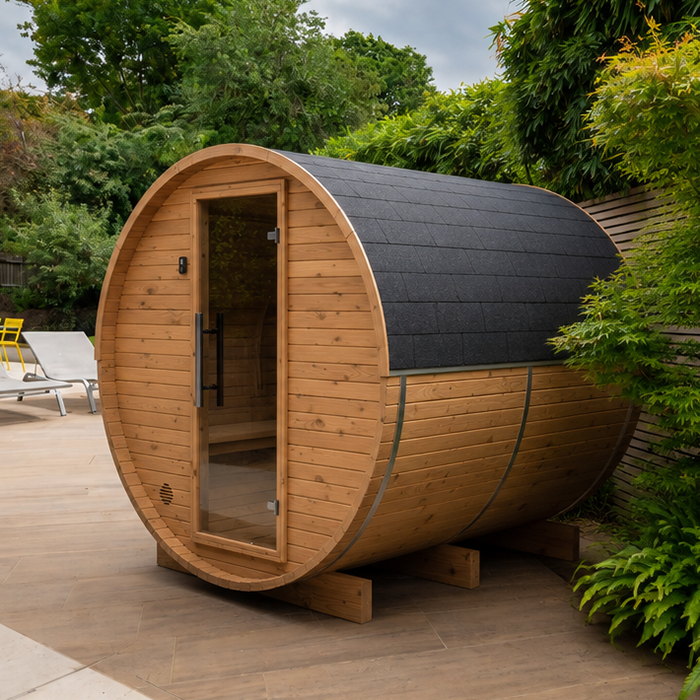
To compare offers fairly, give each seller the same brief: exact model and configuration, delivery address and final position, access measurements, desired delivery state, assembly help and any equipment you plan to add. Compare the replies task by task. An offer covering delivery to the property is not equivalent to one covering placement on the base, and supplied components should be distinguished from paid assembly work. For a listing such as Sauna N-250 Thermowood Barrel Sauna, make sure the offer refers to that exact model rather than an approximate alternative. Keep conditional arrangements, such as placement subject to a site survey, separate from services already included in the quote.
Use the replies to find the constraint that decides the purchase. A kit may be practical if its packages fit the access and you can organise the required build, but that depends on package dimensions and a workable assembly plan. A pre-assembled unit may reduce construction on site, but only if the vehicle, unloading method and route can handle its assembled form. If neither route is confirmed, do not assume the supplier can improvise on delivery day. Ask about an alternative delivery arrangement before committing, then compare its charges, timing and allocation of responsibility with the original option.
The delivery and assembly sequence
Plan the delivery and assembly dates around the work that must happen first. Establish the model-specific base requirements and assess the complete access route before scheduling site preparation. Allow for any agreed access changes and lifting arrangements before confirming delivery. For a kit, distinguish the date the packages arrive from the date assembly begins: the receiving area must be available for the first, while the base and working space must be ready for the second. For a pre-assembled structure, coordinate unloading and final placement with its arrival. Record these milestones together so a product delivery date is not mistaken for the date the sauna will be installed.
Name one person to coordinate the delivery and any separate installer or tradesperson, and give everyone the same agreed timetable. Include contact details for whoever can confirm base readiness, receive the delivery and authorise a revised appointment. If preparation slips or access changes, notify the affected providers before their scheduled work rather than leaving each to discover the problem independently. A delayed kit delivery may affect an assembly booking; a delayed base may affect placement of an assembled structure. Use the arrangements agreed in the order to establish what happens to stored packages and booked labour. Keeping the schedule and contacts together makes it easier to manage these dependencies without confusing delivery, assembly and completion.
Frequently asked questions
Does “fully assembled” mean the sauna is ready to use?
Not necessarily. The phrase may cover the main structure only. Unloading, moving it to the base, separate equipment, site preparation and service connections can still be outstanding. Ask what condition the sauna will arrive in and which tasks are included; do not interpret “assembled” as “installed and ready to use” unless the written order says so.
Is a kit easier to get through a narrow gate?
Not automatically. A kit may arrive in packages that are easier to route than the completed structure, but one long or heavy package can still be difficult to move. Compare the dimensions and weight of every package with the full route, including turns, steps and the space available for assembly.
Who assembles a sauna kit?
That depends on the order. You may arrange the build yourself or hire an installer, but do not assume the seller includes assembly labour. Check the model-specific instructions, identify who receives and checks the parts, and confirm that any installer’s quote covers the work you expect.
Are the heater and tools included with a kit?
That depends on the model and selected configuration. Ask for an itemised list covering the heater, controls, fixings, tools and accessories, as well as any connection or installation work. A product photograph is not an inclusion list, so check the written order rather than assuming every pictured item is supplied.
Should the base be ready before delivery?
Get the chosen model’s site-preparation requirements before preparing a base or fixing a delivery date. Confirm the dimensions and support guidance with the manufacturer or seller, and consult a suitable building professional if anything is unclear. Coordinate base readiness with the agreed delivery and assembly plan.
Neither format is automatically the easier choice. A kit puts the emphasis on moving packaged components to the work area and organising assembly; a pre-assembled order puts more emphasis on moving the completed structure to its final position. The deciding factors are which format is actually available for your model, the transport and package dimensions, what unloading and placement cover, who assembles any remaining parts, and what the site requires. When the order clearly records those arrangements, you are choosing a workable delivery plan rather than a label that merely sounds convenient.
