
Daily Sauna Use or Weekend Sessions: What to Plan For
Sauna planning
Choosing between frequent sauna sessions and occasional weekend use is not simply a question of how often you expect to switch the heater on. The pattern changes how much value you place on a repeatable start-up, straightforward controls and an after-use routine that is easy to complete. Less frequent visits also leave longer gaps to plan for. Compare your likely timetable, the people sharing the sauna and the space around it before treating frequency alone as the deciding factor.
Before you choose 1
Define a realistic pattern of use
Treat daily use as a likely rhythm rather than a promise to use a sauna seven days a week. Note when a session would fit on an ordinary workday, how often another person would join and whether travel, family commitments or seasonal routines might interrupt the pattern. For weekend use, distinguish an almost-every-week habit from occasional visits separated by longer gaps. Write down a typical week, rather than judging by the most convenient day; that gives you a more useful starting point for planning.
These patterns create different expectations. A regular routine may make it worthwhile to set aside a consistent time and keep towels or other essentials close; an irregular routine needs preparation steps that still feel manageable after a pause. Frequency is also different from occupancy: one person using a sauna often may need less shared planning than several people hoping to use it together once a week. The catalogue lists the Sauna S-140 at 1.93 m², but that figure does not state user capacity or describe usable seating. Check what the area represents, then compare the drawing and the manufacturer's occupancy guidance with your plans. Keep your usual requirements separate from occasional requests to accommodate guests. This lets you compare models against the routine you actually expect, while recognising any limits on less frequent shared visits.
Allow for preparation before every session
Allow for the whole visit, not just the time the heater needs to warm up. Using the sauna may involve reaching it, getting changed, setting the controls and waiting until it is ready, followed by the required after-use routine. For regular use, these steps recur often, so even modest delays can affect whether the plan fits into a weekday. A weekend visit may offer a wider window, but it still helps to choose a start time that leaves room for preparation rather than assuming the sauna will be ready on arrival. When comparing routines, distinguish the tasks that need your attention from the elapsed time before you can begin. Both belong in your schedule, but they affect it differently. Also account for who will finish the after-use tasks if a session ends close to another household commitment.
Ask for information that applies to the exact cabin and heater configuration, and check how any stated warm-up time was measured. There is no single figure that can be assumed for every set-up. The Sauna HC-225 product details give an area of 4.4 m², not a warm-up time. If that model is on your shortlist, use its relevant product and heater documentation to understand preparation; do not infer it from the name or area. Keep any unanswered timing question separate from the tasks you can already plan, such as gathering towels and getting changed. That way, an incomplete warm-up estimate does not prevent you from assessing the rest of the routine.
Before you choose 2
Choose controls for the routine you expect
Controls that are straightforward to understand can matter more when they are used regularly. Find out which controls are part of the proposed configuration, where they are operated and what the instructions say about starting and stopping. If several people use the sauna, consider whether each person can follow the same operating steps without relying on someone else to explain them. For occasional use, keep the instructions easy to find; a control layout that felt familiar months ago may not be as obvious when you return.
Check the heater and control system as a matched configuration. Do not assume that a timer, app or remote option is included, compatible or suitable for every installation; use only the system and operating method specified by the manufacturer. For the Thermowood Barrel Sauna N-210, the catalogue gives an area of 4.43 m², while the control options need to be established separately. Record the exact heater and controls proposed, then review their instructions and any stated operating restrictions. Consider which operations you will use each time and which settings you may only adjust occasionally. Ask for an explanation of anything unclear before choosing. A feature is useful to your routine only if you understand its permitted use and expect to use it.
Plan for the people who will use it
Think about how many people are likely to use the sauna at the same time, not only how many people might use it over a week. A household sharing a weekend session may have different needs from one person using the sauna on several evenings. Consider the seating arrangement, access and whether someone would need to wait outside or use the space at a different time. Confirm capacity from the manufacturer's information for the exact cabin rather than assuming that a general size label guarantees a particular number of users.
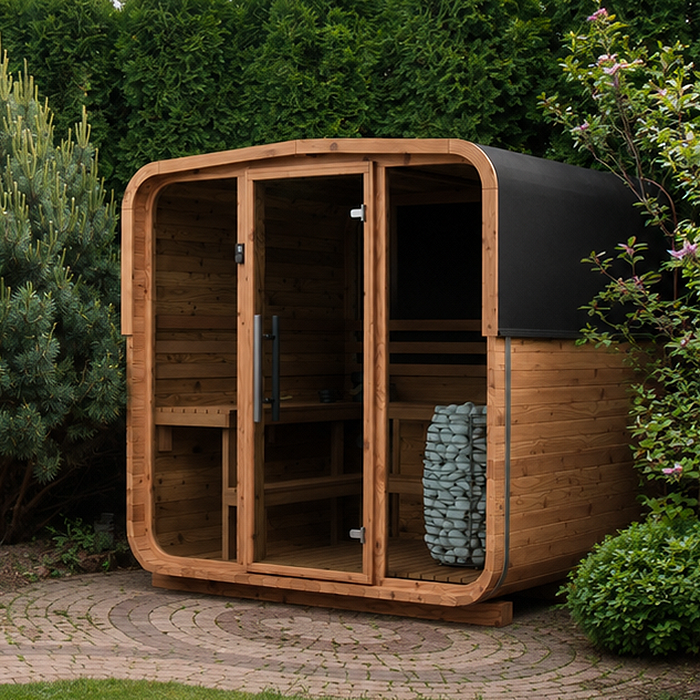
Agree how shared use will work in practice: who prepares the sauna, where used towels go and whether different people need separate time slots. That planning can make an occasional group visit more orderly and a frequent household routine easier to maintain. The Sauna N-250 model page reports an area of 5.27 m²; use the drawing and occupancy guidance to assess seating rather than treating that figure as a capacity statement. If your household expects both solo and shared use, consider each arrangement separately. A layout that meets the usual solo routine still needs to be assessed against your group plans. Also decide whether one person will take responsibility for the final clean-up or whether tasks will be shared. Avoid a plan in which everyone assumes that the last person using the sauna will automatically know what needs doing.
Before you choose 3
Make the after-use clean-up easy to repeat
A useful routine is one you can finish consistently. Decide where used towels and personal items will go, and follow the manufacturer's directions for cleaning and drying the cabin's surfaces. If the instructions call for ventilation after use, include that in the plan rather than leaving it as an afterthought. The aim is not to invent a universal cleaning method: surfaces and equipment can have different care requirements, so use the guidance for the exact sauna.
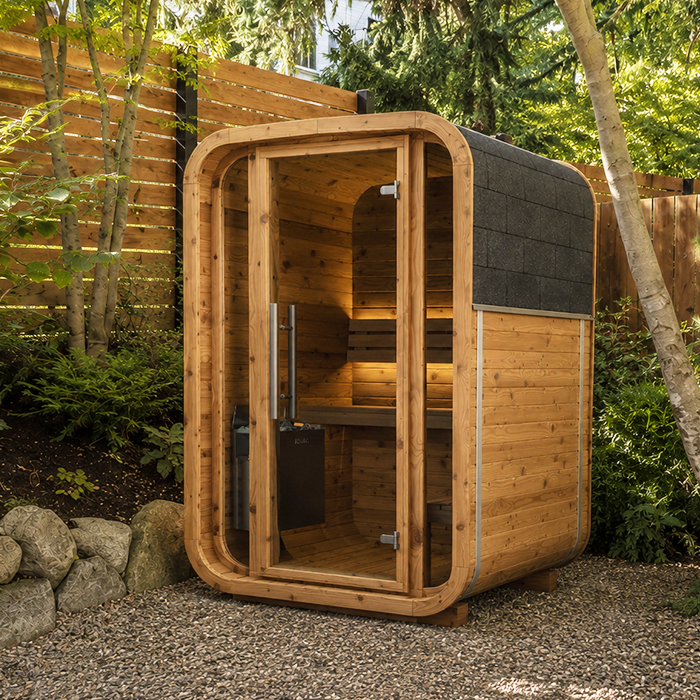
With frequent use, small tasks recur often, so keep the steps and any suitable cleaning items easy to find. After an occasional visit, make a deliberate check before leaving rather than assuming that infrequent use removes the need for a clean-up. When considering the Thermowood Barrel Sauna LC-260, listed at 5.12 m², look at the drawing to assess access to the surfaces you will need to clean. Follow the model's own care instructions for methods and products. Separate the tasks to finish after every visit from any cleaning scheduled at other intervals. This gives you a realistic picture of the work without treating every session as a full maintenance day. For shared use, keep the routine in one accessible place so that whoever finishes last can follow the same instructions.
Separate routine cleaning from maintenance
Cleaning after use and planned maintenance are different tasks. Build a maintenance list from the instructions for the cabin and the heater, noting which checks apply and whether the manufacturer gives use-based or calendar-based intervals. Depending on the design, guidance may cover different parts of the sauna or heater; do not assume that every model has the same components or service needs. Work on heater or electrical components is not a routine cleaning task and should be handled by a qualified professional where required.
A frequent-use plan is easier to manage when manufacturer-stated checks are recorded rather than left to memory. For a weekend routine, calendar reminders can help prevent a long gap from turning into a forgotten maintenance task. The Sauna HCF-300 product page gives an area of 6.89 m²; the maintenance schedule must come from the instructions for the exact cabin and heater configuration. In your record, distinguish the task, its stated interval and who is responsible for arranging or completing it. Note when it was last done and whether anything remains outstanding. Where an interval depends on use, choose a simple way to record that use rather than relying on recollection months later. This is a planning aid, not a reason to create your own service intervals or substitute a household checklist for the manufacturer's requirements.
Before you choose 4
Plan for pauses between weekend visits
Occasional use can mean that several weeks pass between sessions. Make a return routine that accounts for the gap: check the sauna's condition, follow the manufacturer's instructions for preparing it for use and seek qualified advice if you notice a problem that you cannot assess. Do not treat a period of non-use as proof that the sauna needs no attention. A simple reminder before a planned visit can help you avoid discovering that an instruction, item or check has been overlooked.
It is also worth knowing how the manufacturer says to leave the sauna after use. Follow its directions for cleaning, ventilation and controls when the sauna will be unused; avoid guessing which parts should be left open or closed. For the Sauna LCF-300, listed at 6.89 m², keep the care instructions for the exact configuration available alongside your return checklist. If another household member may prepare the sauna, make sure they know where to find both. Before a longer break, note any unfinished task or concern rather than expecting to remember it on your next visit. On return, that note helps you distinguish a known outstanding issue from something newly noticed. The checklist should make the instructions easier to follow, not replace them with a separate set of operating rules.
Plan access, clearances and towel storage
The space inside a sauna is only part of the site plan. Consider the route to it, room to get ready, where used towels will go and whether you can reach the areas that need routine care. Compare the manufacturer's dimensional drawing with the space available, including any clearances specified for the exact model. If the site needs a base, services or other technical work, ask a qualified professional to assess those details rather than estimating them from a catalogue area.
A convenient route may be especially valuable when the sauna is used often, while an occasional visit may mean carrying towels or other items to the site each time. Think about that journey in ordinary weather and where you will put wet items afterwards. The Thermowood Barrel Sauna HC-150 is listed at 2.97 m²; use the full drawing and installation information to establish its outside dimensions and required surrounding space. When assessing the route, consider what you will be carrying rather than looking only at an empty path. Include storage before use and somewhere to collect used towels afterwards in your household plan. These practical arrangements belong alongside the cabin footprint because they are part of every visit, even though they are not part of the sauna's listed area.
Before you choose 5
Compare the sauna and heater as one configuration
A cabin name alone does not confirm what heater, controls or other components are part of the configuration you are considering. Ask for the exact model and inclusion details, then check that the documentation matches what is proposed. This matters whichever routine you prefer: frequent use places greater emphasis on a repeatable start-up, while weekend use makes care after a gap more prominent. Neither pattern removes the need to understand the operating instructions for the actual equipment.
A comparison sheet can keep separate questions from getting mixed together. Record the expected preparation, the control system, the manufacturer's occupancy guidance, the after-use routine, the maintenance instructions and the dimensions relevant to your site. Use the same questions for each candidate, and verify local availability and configuration rather than assuming that a model name alone settles them. Mark an unanswered question as unresolved instead of filling the gap with an assumption. Also separate what is included in the proposed purchase from anything you would need to arrange independently. This lets you compare the practical arrangements on the same basis without mistaking a longer feature list for a better fit. Give most weight to the details that affect your expected use, while retaining the requirements that matter for occasional guests or longer breaks.
Choose a routine you can keep
When two options meet your basic requirements, compare the tasks each would add to your ordinary week. Decide which inconvenience you would genuinely accept: gathering items before each visit, organising shared time slots or reserving a longer preparation window. A daily plan needs room for recurring tasks on busy days, not just on evenings when everything goes smoothly. A weekend plan may allow more time, but it still needs someone willing to prepare the sauna and finish the clean-up. If one unresolved detail would change your choice, such as the control arrangement or access for cleaning, settle that point before giving weight to less relevant features. Occasional use is not automatically a compromise; it may simply match your calendar better.
Picture one typical visit and one return after a longer gap, using the information you have gathered rather than an ideal version of the routine. Include who will prepare the sauna, how the controls will be used, what needs to be done afterwards and how maintenance will be tracked. Then consider whether the arrangement would still work if the usual person were unavailable or a planned visit were postponed. You do not need a complicated rota, but shared responsibilities should be clear. If the plan depends on time or effort that nobody can reliably provide, reconsider the proposed frequency or the configuration. The aim is not to maximise the number of sessions, but to choose a sauna plan that continues to make sense on ordinary weeks.
Frequently asked questions
Is a sauna only worth considering if you plan to use it every day?
No. Frequency is one part of the decision, not a minimum requirement. A weekend routine may suit you if you are comfortable allowing time for preparation and have a clear plan for cleaning and care between visits. Consider the pattern you are likely to keep, rather than an ideal schedule.
Does daily use mean you need a different type of sauna?
Not necessarily. Daily use tends to put more emphasis on convenient preparation and controls you can use consistently, but there is no universal model category for it. Compare the exact cabin, heater and control configuration, along with the space and care it requires.
Can I use a listed area to judge how many people will fit?
No. A catalogue area figure does not describe the seating layout or confirm the number of users. Check the drawing and the manufacturer's occupancy guidance for the exact model before deciding whether it suits solo or shared use.
Does occasional use mean less cleaning?
Not automatically. A simple clean-up after each visit still matters, and the manufacturer's instructions should guide how you clean and dry the surfaces. If the sauna sits unused between sessions, plan how to leave it and what to check before using it again.
How can I judge warm-up expectations before buying?
Use information for the exact cabin and heater configuration, and check how any stated warm-up time was measured. A model name or listed area is not a reliable warm-up estimate. Do not assume a figure for one set-up applies to another.
Daily and weekend use do not call for different standards of care; they place different weight on convenience and reminders. Frequent use makes a repeatable start-up and controls you can use consistently more valuable, while less frequent visits benefit from a clear plan for cleaning, maintenance and returning to the sauna after a gap. Compare those tasks alongside the exact configuration and the space available, then picture an ordinary weekday and a weekend visit. The better plan is the one that fits the routine you are genuinely prepared to keep.
