
Growing Alpine Plants in a Greenhouse
Alpine plant growing guide
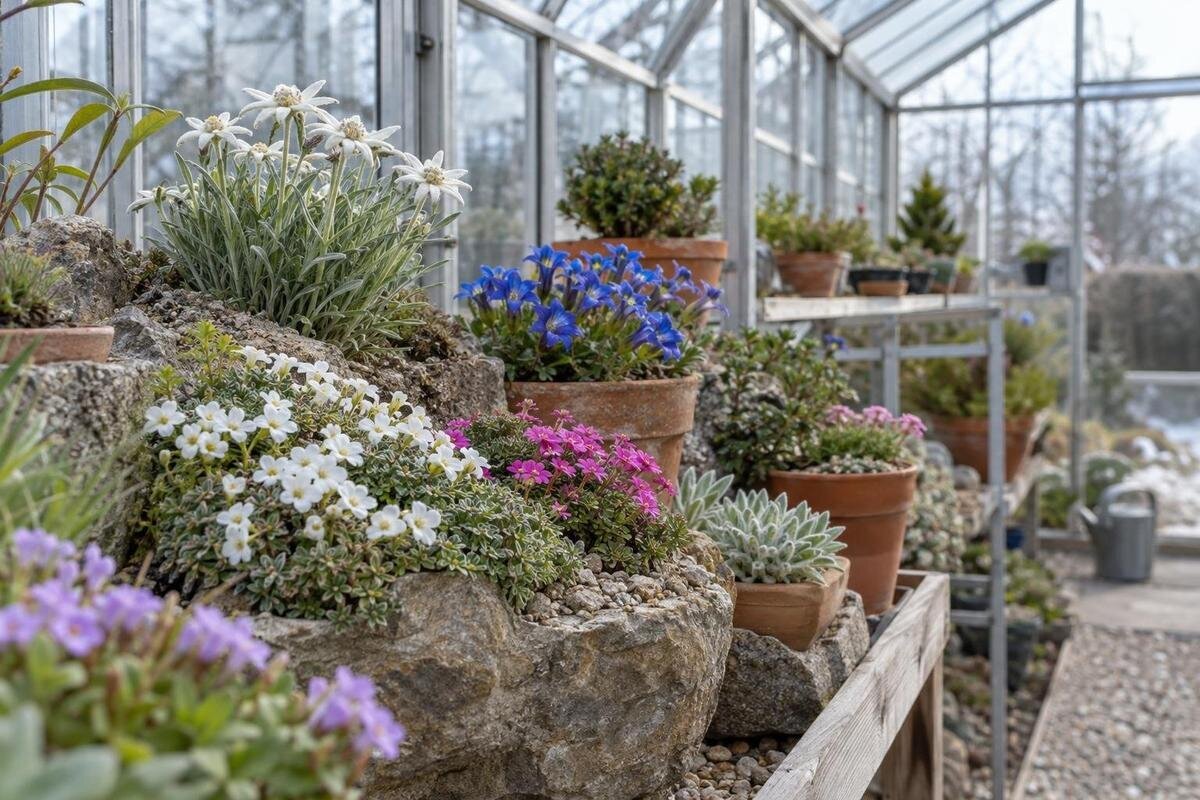
Alpine plants are often described as cold-loving, but that does not mean they all want the same light, moisture or winter treatment. In a British garden, a greenhouse is most useful as a bright, ventilated rain shelter: it can keep persistent rain off containers and give you control over watering, while retaining natural seasonal conditions. It should not be managed like a warm house for tender crops. Start with the species in your collection, then plan the glazing, vents, benches and growing medium around their requirements.

Greenhouse buying checklist 1
What a cool greenhouse offers alpine plants
Alpine is a habitat label, not a single set of growing instructions. Plants in a collection come from different mountain regions and grow in exposed scree, crevices, grassland or more sheltered places; their requirements for light and moisture can differ considerably. In a British wet spell, a greenhouse can keep repeated rain off containers and crowns, letting you control when water reaches the compost. That is useful for plants that struggle with persistently wet roots, but it does not mean every alpine should be kept dry. Some need regular moisture during active growth, so identify each plant before changing its routine.
Think of the structure as a bright, cool rain shelter rather than a warm house for tender crops. Glazing can raise temperatures quickly when the sun appears, even if the outside air feels mild, while it does not automatically prevent cold nights. The aim is to preserve the conditions each species needs, not to achieve one setting for the whole collection. The Limited Edition aluminium greenhouse is one product option to compare; check the selected configuration for its openings and dimensions rather than assuming the name defines the climate inside. Heating should not be the default for hardy alpines, and closing vents to retain warmth can create unsuitable conditions.
Light and temperature needs of different alpines
Use plant references at species or cultivar level. The RHS profile for Sempervivum tectorum describes a full-sun position and well-drained soil, and lists the plant as hardy; this helps explain why a houseleek may need shelter from prolonged rain rather than a heated room. By contrast, the Alpine Garden Society’s cultivation guidance for Primula allionii describes a specialist, cool-growing alpine that needs bright light, protection from the strongest sun and sharply drained roots. These examples illustrate why the same bench position, shade level and watering routine may not suit both plants. Their requirements should not be taken as rules for every Sempervivum or Primula.
When reading a plant profile, look for more than a hardiness label. Check the stated aspect, growing medium, moisture needs and any advice on seasonal rest or winter shelter. Hardiness in a garden does not tell you that a potted plant will experience the same conditions under glass, nor does it give you a greenhouse temperature to maintain. If guidance describes a plant as suitable for a cool alpine house, do not translate that into a warm, sealed space. Keep plant labels and reference notes together, and record which position each species occupies so you can refine the light and airflow it receives.
Greenhouse buying checklist 2
Choose a bright site and account for changing shade
Assess the proposed site at different times of day rather than judging it from one sunny visit. Note shadows in the morning, around midday and later in the afternoon, and remember that nearby trees can cast different shade when in leaf. A bright position supports growth, but the strongest direct sun can also drive a sharp rise in temperature behind glazing. There is no single compass direction that guarantees the right conditions for every greenhouse and plant collection. Consider where naturally sun-loving plants will sit, and whether more shade-sensitive specimens can be positioned away from the hottest exposure.
If you are considering a lean-to greenhouse, include the adjoining wall in your light and airflow assessment. Check whether it casts shade across the growing space and whether nearby structures, fences or dense planting could restrict ventilation outside the greenhouse. Look for a position that is accessible for watering and maintenance, with enough space around doors and vents to use them as intended. Also notice where water collects after rain and whether trees or overhanging branches could obstruct access or shed debris. These site observations help you assess the actual location, rather than relying on the greenhouse format alone.
Make ventilation part of the growing plan
Alpines need fresh air as well as shelter from rain. A greenhouse that stays shut can become hot in sunshine and humid when moisture lingers on plants, compost or glazing. When comparing configurations, find out which openings are included, where they are placed and how they can be operated. Roof vents, side openings and doors can contribute to air movement, but their effect depends on their position and on the surrounding site. A clear route for air to enter and leave is more useful than an opening that is permanently blocked by benches, shelves or stored equipment.
The Classic aluminium greenhouse is one listing you can compare, but check the vent and door arrangement for the exact configuration you are considering. A maximum–minimum thermometer placed near the plants can reveal how quickly the space warms and how much conditions vary across the day. Ventilate before plants show signs of stress rather than waiting for visible wilting, and observe whether condensation persists after watering or damp weather. Do not assume that a cool outside temperature means the greenhouse cannot overheat in sunshine. The aim is to exchange air and limit heat build-up without imposing one fixed routine on every species.

Greenhouse buying checklist 3
Rain protection and careful watering
Rain protection works best when you know which parts of the growing area are genuinely sheltered. Water can still reach pots through an open doorway or from splashing and drips near the edge of a roof. When comparing a layout such as the T-shaped orangery greenhouse, use the actual plan to place benches away from likely splash zones and to preserve clear access. Check how the chosen structure handles roof water rather than assuming the outline alone will keep every plant dry. A rain shelter reduces uncontrolled watering; it does not replace an active plan for watering the collection.
Water according to the plant and the compost, not a fixed calendar. Small pots and exposed positions may dry more quickly than larger containers or sheltered benches, and growth or dormancy changes how much moisture a plant uses. Group plants with similar needs where practical, so that watering one set does not leave another permanently wet. Direct water towards the growing medium when a plant’s guidance calls for it, especially where a dense crown should not be routinely soaked. Check pots individually after sunny spells and damp weather alike: under glass, the absence of rain does not mean every pot has dried at the same rate.
Growing media and pot drainage
A roof will not compensate for compost that stays saturated around the roots. Choose a growing medium to suit the plant, including any preference for lime-rich or more acidic conditions. Many alpines benefit from an open, mineral-rich mix, but there is no universal recipe for a collection containing different species. Use a reputable alpine or rock-garden growing mix as a starting point, then follow plant-specific guidance for amendments or potting. Avoid adding ingredients by habit: the right balance depends on the plant’s needs and on how quickly the container dries in its position.
Check that every pot has unobstructed drainage holes and that water can escape freely from beneath it. Do not leave containers standing in water-filled saucers, and look for blocked holes or compacted compost if a pot remains wet for too long. Raising pots slightly can help keep drainage clear, while a suitable mineral top dressing can keep the surface neat and limit compost splash. These are practical aids, not a substitute for the right growing medium. If drainage remains poor after checking the container, review the compost and watering routine before moving the plant to a drier position.
Greenhouse buying checklist 4
Arrange containers, labels and supplies for access
Group plants by practical needs, such as exposure, watering and winter shelter, rather than arranging the whole collection only by colour or height. Put small or slow-growing specimens where they will not be hidden by larger pots, and leave enough space to inspect crowns and compost. Clear labels are particularly valuable when several plants look alike outside their flowering season. Record the plant name, source and any relevant growing notes; this makes it easier to identify a change in growth and avoid applying the care routine for a neighbouring pot by mistake.
Storage can be useful, but it should not take space needed for benches and access. The listing for an aluminium greenhouse with built-in storage is relevant if storage is part of your brief; check the actual plan to see how much growing area remains and where the storage sits. Keep tools and watering equipment easy to reach without blocking vents or narrowing the route between benches. Leave room to lift pots out for inspection and cleaning, and consider where you will sort labels, compost and empty containers. A tidy work area makes collection care easier without crowding plants together.
Size the interior for benches, paths and headroom
Work out how much usable bench space your collection needs before comparing floor areas. Count current pots, allow room for plants to mature and include space for watering, inspecting and moving containers. The catalogue lists the pyramid-type greenhouse in an area range of 60–203 sq ft; use the dimensions of the particular option you are considering, not the range alone, when drawing your layout. A stated floor area is not the same as continuous planting space: doors, paths, stored supplies and working access all occupy part of the interior.
Check height as well as floor space. You need to reach the plants comfortably and use vents without having to move pots each time; shelves placed overhead can also shade the plants below. Make sure a door can open without striking staging or a container, and leave a clear route for carrying pots in and out. Sketch the bench positions and path before choosing a configuration, then check whether the drawing still works when the collection grows. This helps avoid paying for unused floor area while discovering that the most useful growing positions are awkward to reach.

Greenhouse buying checklist 5
Adjust care as the seasons change
In spring and summer, watch how quickly the greenhouse warms on bright days, even when the season still feels cool outdoors. Ventilate in response to the conditions you observe, and check whether plants on different benches experience different amounts of sun and heat. If a species needs protection from strong summer sun, consider adjustable shade for that part of the collection rather than darkening the entire space without checking its effect on other plants. Keep observing growth: the right time to water or ventilate depends on the plants and the weather, not just the month on the calendar.
In autumn and winter, reduce watering in line with growth and dormancy, but do not stop automatically. Some alpines need a cool seasonal rest; others need particular protection from winter wet. An unheated greenhouse can shelter plants from rain but does not guarantee a frost-free temperature, especially for containers. The Prestige greenhouse is a product listing to assess as a structure, not evidence of a particular winter minimum; check the chosen configuration and base overwintering decisions on plant guidance and measured conditions. Keep different winter needs in mind rather than moving every pot into the same position.
Compare greenhouse configurations before choosing
For each option, compare the dimensions and usable interior with your proposed bench plan. Check the height, door access and the type and position of ventilation for the configuration you would actually order. Think about where rain reaches the growing area, whether you can operate openings easily and how much room remains for watering and maintenance. These details have a direct effect on how you manage an alpine collection; a greenhouse style or product name on its own cannot confirm that the layout suits your plants or site.
Scale matters as much as appearance. The catalogue’s spacious greenhouse listing gives an area range of 506–753 sq ft, which is a useful reminder to compare any advertised size with the collection and site you have in mind; more floor area is not automatically better. Measure the space available and include the clearances you need for access and day-to-day work. If the intended base or site conditions raise structural questions, seek advice from a qualified professional rather than guessing. Choose a configuration for its usable, ventilated growing space, not just its overall footprint.
Frequently asked questions
Should I heat a greenhouse for alpine plants?
Not as a default. Many hardy alpines need natural seasonal conditions, and heating a closed greenhouse can create unnecessary warmth. A specialist plant may have a particular minimum temperature requirement, so check guidance for that species and measure conditions where it grows. An unheated greenhouse is not automatically frost-free.
Do all alpine plants need full sun?
No. The RHS describes Sempervivum tectorum as a full-sun plant, while specialist guidance for Primula allionii describes a cool-growing plant that needs protection from the strongest sun. These are examples, not rules for every plant in either genus. Check the requirements of the species or cultivar you have.
How often should I water alpines under glass?
There is no useful weekly schedule for a mixed collection. A greenhouse excludes much of the rain, but watering needs still vary with species, growth, pot size, compost and weather. Check the growing medium and the plant’s guidance, then water the plants that need it rather than soaking every pot together.
Will an unheated greenhouse prevent frost damage?
No. A greenhouse can shelter plants from rain, but it does not guarantee frost-free conditions or the same temperatures throughout the space. Find out what each plant can tolerate, and assess the winter protection needed by plants in containers separately from that needed by established plants in the ground.
Can I grow alpine plants outdoors instead?
Many alpines can grow outdoors when their light, soil and drainage needs are met. A greenhouse is most useful when you need control over persistent rain or want to manage a collection in pots. It is not automatically better for every species, so compare the plant’s needs with the conditions in your garden.
A successful alpine greenhouse provides suitable light, moving air and protection from excess rain; warmth and full benches are not the goal. Keep roots properly watered and drained, and note how individual plants respond through the seasons. If a sun-loving houseleek and a cool-growing primula cannot thrive in the same position, give them separate places with the light and shade each needs. Planning around the collection makes it easier to care for each plant without imposing the same conditions on every pot.
