
Buying a Freestanding Greenhouse: Choose Its Position Before Ordering
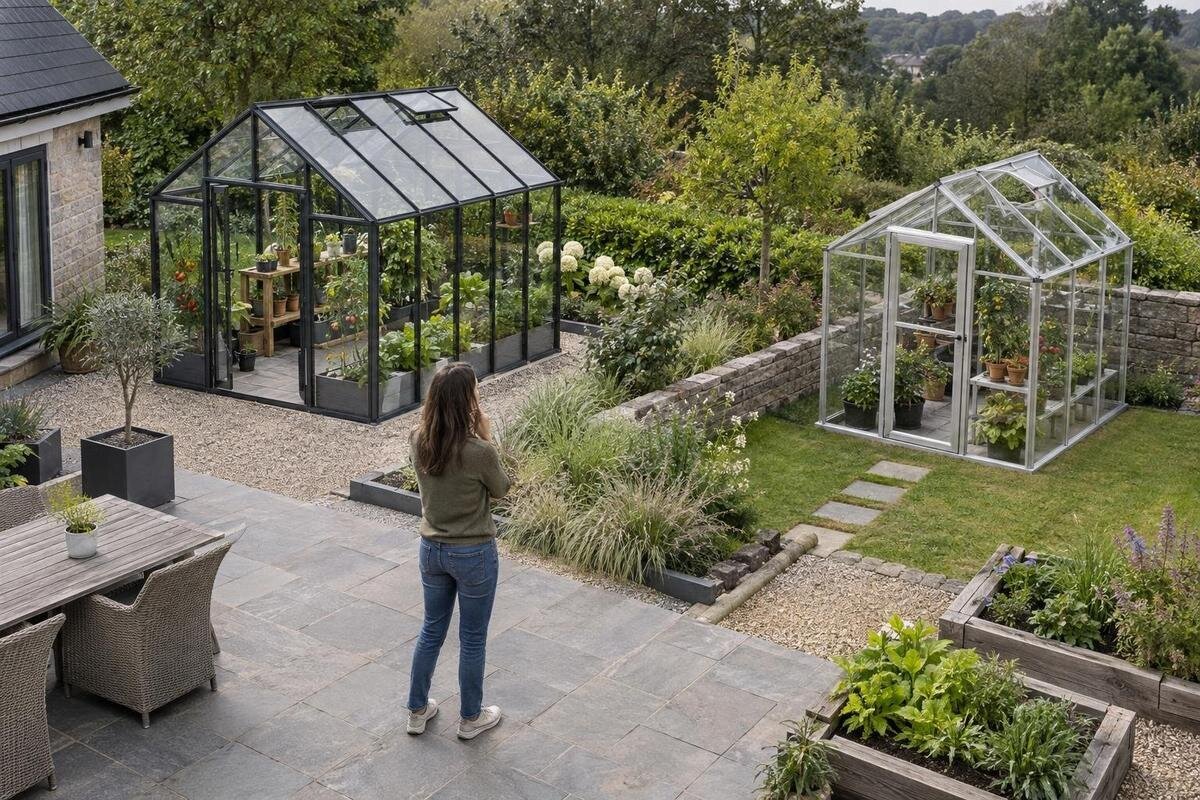
Greenhouse buying guide
A freestanding greenhouse can suit the garden on paper and still prove awkward once you account for light, shelter, paths and the work of getting it into place. Choosing a position before ordering helps you decide what footprint and layout to compare, rather than bending the garden around a model selected first. Walk the garden at different times of day, note the ground and nearby trees or buildings, and measure more than the footprint alone. Then match those observations to confirmed product information. This guide focuses on choosing a site for a freestanding greenhouse; it does not assume that every open patch is suitable or that a product name tells you how it will fit.
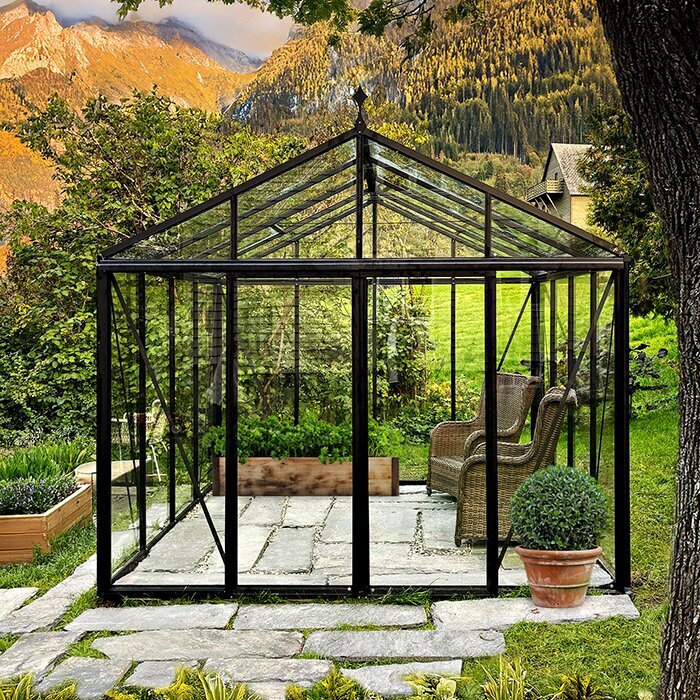
Site checks before ordering 1
Define what the site needs to accommodate
Begin by writing down what you want the greenhouse to do. A space for a few pots has different demands from one where you expect to raise seedlings, grow taller crops or spend time tending plants. Decide where you will bring in compost, trays and tools, and how often you expect to enter it. That gives you a practical way to judge locations: a sunny patch that blocks a familiar garden route may be less useful than a position with room to work. You are choosing both a structure's position and how it will fit your routine, not simply filling an empty space.
Make a simple plan showing the house, boundaries, paths, beds, trees, sheds and any areas you need to keep open. Mark fixed features separately from movable pots or furniture, then identify two or three candidate positions. For each, note what it offers and what it compromises, such as afternoon shade, a narrow approach or distance from the house. If a product page such as an aluminium classic greenhouse is on your shortlist, treat it as a candidate, not a site plan; compare its confirmed measurements with the notes for every position.
Measure the footprint and working space
Measure the available area on the ground, then compare it with the confirmed outside length and width of each candidate. Use a dimensioned drawing where possible instead of judging scale from a photograph. Mark the outline with string, chalk or removable markers, and include any clearance stated in the installation guidance. The structure's footprint is only part of the space calculation: you may need room to reach the entrance, move around the sides and carry out routine cleaning. A greenhouse that technically fits inside a patch can still leave too little practical working space. Measure the narrowest point rather than assuming the available area forms a perfect rectangle.
Check whether listed figures describe external dimensions, internal growing space or a base; these are not interchangeable. Note any projecting parts or door-opening space shown on the plan, and reserve a route if you want to move a barrow or carry pots through. A listing named garden orangery T still needs a dimensioned plan: its name alone does not give you the outer measurements or the clear space to reserve around it. If only some measurements are available, ask for clarification before deciding that a position fits. Record measurements in the same units and recheck them at the site.
Site checks before ordering 2
Observe sunlight at the proposed position
Stand at each marked position at several times of day and note where direct sun and shade fall, rather than relying on memory. Check in the morning, around midday and later in the afternoon over more than one day if you can. Trees, fences, walls and rooflines can cast shadows at different times; deciduous trees may create a different pattern when in leaf. The sun's path also shifts during the year, so a quick observation in one season will not fully represent conditions in another. Record where shade crosses the proposed footprint, not just whether the garden as a whole feels bright.
Relate those observations to the plants you hope to grow. Their light requirements vary, so avoid using one general rule as a substitute for checking the needs of your planned crops. When comparing a listing such as an aluminium limited edition greenhouse, separate the product choice from the site observation: a model name cannot tell you how much light reaches the marked position. Consider whether nearby plants may grow taller or whether a future change to the garden could alter the shade. This makes your assessment more useful than judging a site from a single sunny afternoon.
Assess wind exposure and shelter
Consider how exposed each candidate position is and what lies around it. An open part of a garden can experience different conditions from a spot partly screened by a hedge, fence or building. Those features can also create shade or make access awkward, so do not treat shelter as the only test. Look at openings between structures and note whether the proposed position sits in a particularly exposed stretch of the plot. Your observations help you identify questions for the product information; they are not a substitute for the greenhouse's stated siting requirements.
Check the manufacturer's guidance for the exact model, especially if the garden is exposed or the site is unusual. A listing such as pyramid greenhouse Bloomcabin Oasis should be assessed using its stated installation and siting information; its name alone does not establish suitability for a particular position. Do not assume that a nearby fence or wall will provide the protection a greenhouse needs. If you are unsure whether the site conditions or ground preparation are appropriate, ask the seller or an experienced installer before ordering rather than relying on a general rule.
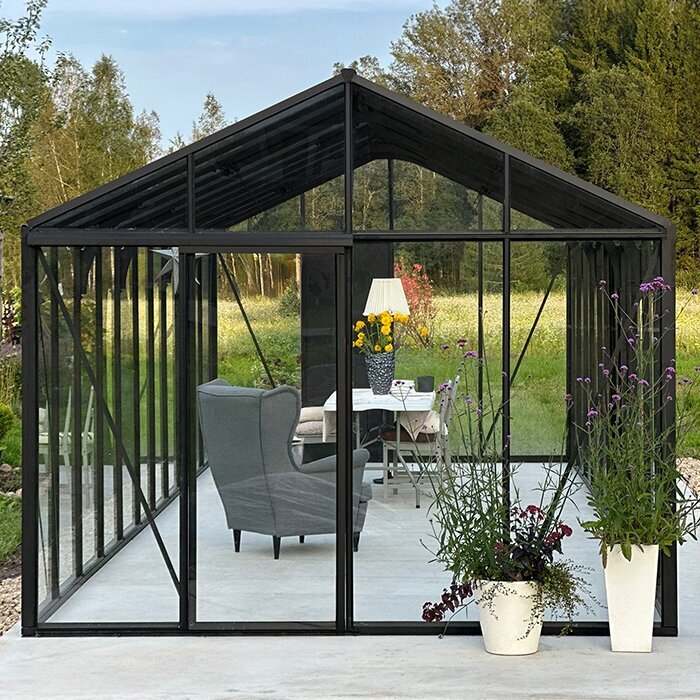
Site checks before ordering 3
Plan the route in and out
Check two kinds of access: the route for bringing the greenhouse to its position and the route you will use once it is in place. Trace the way from the gate or likely unloading point to the proposed area. Note narrow gates, steps, sharp turns, slopes and objects that could obstruct movement. If a retailer or installer will be involved, ask what access they need and whether the route presents a problem; do not infer this from a product photograph. A clear route before ordering can prevent a position that looks spacious on a plan from proving impractical to reach.
For everyday use, consider how you will carry tools, trays, compost and harvested plants to and from the greenhouse. Check the entrance position and any opening clearance shown on the product plan, then see whether a path can reach it without crossing beds or squeezing past stored items. A name such as Bloomcabin orangery does not tell you how its entrance is arranged or what access space it needs; use the confirmed drawing. Think about whether the route will still work when the garden is wet or busy, and avoid using the only clear path through the plot as permanent greenhouse working space.
Check the ground and drainage
Look closely at the surface where the greenhouse would stand. Note whether it is reasonably firm and level, whether rainwater collects there, and whether the ground becomes soft or uneven. If possible, observe the area after rainfall as well as in dry weather; a quick inspection on a sunny day may miss persistent puddling or runoff. Consider how the surface meets the surrounding paths and beds, since an awkward change in level can affect access. These observations help you judge whether a position is ready for further checks or whether ground preparation needs to be discussed first.
Compare what you see with the installation and base requirements for the exact greenhouse. Do not assume that paving, soil or an existing base is suitable simply because it looks convenient. A title such as Bloomcabin Prestige greenhouse with metallic base does not establish what preparation is needed or what is included; confirm those details in the product information. If the ground is uneven, drainage is unclear or work below the surface may be needed, ask an appropriate installer or qualified professional about the site before committing. Avoid improvising a solution based on assumptions about a product name.
Site checks before ordering 4
Consider trees, boundaries and nearby structures
Look beyond the outline you have marked. Branches may shade the site or restrict access, while growing trees and shrubs can change the amount of space available over time. Nearby sheds, fences and buildings may cast shadows, channel wind or make it harder to move around the greenhouse. Note whether the position is close to a boundary or a garden feature you need to reach, and allow for the maintenance of surrounding plants. A position that is clear today may become more constrained if nearby planting is expected to grow.
A freestanding greenhouse should be assessed as a structure with its own position, clearances and installation guidance; do not assume a wall will act as a support or that a wall-side spot is automatically suitable. If a position only seems to work when attached to a building, recognise that this is a different siting question from choosing a freestanding model. A listing described as an aluminium lean-to greenhouse identifies a different greenhouse type, not evidence that a nearby wall makes a freestanding option fit. Keep enough usable space around the chosen position to follow the relevant guidance and maintain access.
Test the layout at garden scale
Once you have measurements, mark the proposed footprint on the ground with string or removable markers. Walk around it and follow the route you would take to enter, carry in supplies and tend plants. Check the shape from the house and from the main garden paths as well as from directly beside it. Leave the outline in place for a few days if practical; seeing it at different times can reveal a blocked view or an awkward route that was not obvious while measuring. Repeat the exercise for another candidate position before deciding which trade-offs you prefer.
Compare the marked layouts against the same practical questions: does the footprint fit, can you reach the entrance, and is there room for the way you plan to use the greenhouse? Do not assume that a product label explains how much surrounding space is needed. For example, a listing named aluminium greenhouse with built-in storage still needs a confirmed plan to show its dimensions and the access to reserve. Treat any information not shown clearly as a question for the seller, rather than estimating from the name or an image. The mock-up is a useful check on your garden plan, not a substitute for product measurements.
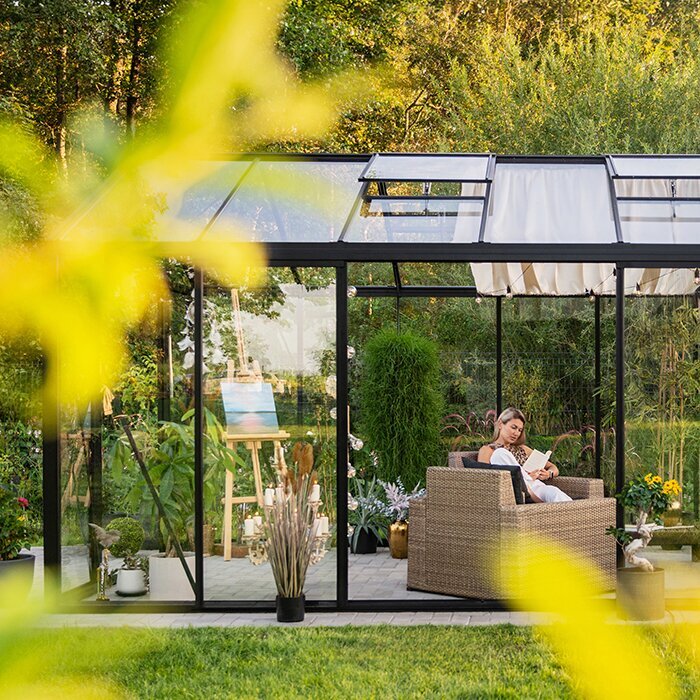
Site checks before ordering 5
Verify product information against the site
Put your site notes beside the product information before choosing a model. Check the confirmed outside dimensions, height and footprint on a dimensioned drawing, and distinguish these from the internal growing area. Confirm the entrance position and any opening clearance shown. Check that the route around or to the entrance will still exist once the greenhouse is marked at full scale. A category label, model name or photograph cannot provide measurements that are not stated. If a missing dimension could change whether the greenhouse fits, ask the seller for clarification instead of using an estimate.
Read the installation and base guidance for the exact model and configuration you intend to order. Note what preparation it requires, which items are stated as included and whether the guidance addresses the conditions at your site. Do not assume that instructions for one greenhouse apply to another, or that an existing paved area meets the stated requirements. If levels, drainage, buried services or exposure are uncertain, ask an appropriate installer or qualified professional to assess them before ground work. Keep any confirmed measurements and advice with your site notes so the decision refers to the particular greenhouse you are considering.
Use your site notes to make the buying decision
Compare candidate positions against the same essentials: confirmed footprint, working space, light for your intended plants, access, ground conditions and exposure. Separate requirements from preferences. A longer walk from the house may be acceptable, for example, while a blocked route or a conflict with the installation guidance may rule out a position. If no site works without losing important access or ignoring stated requirements, reconsider the position or the greenhouse size before choosing. A simple comparison of trade-offs is more useful than relying on which corner looks most attractive at first glance.
Before placing an order, write down the selected position and the product details you have confirmed, including dimensions and any site conditions discussed with the seller or installer. Check how the greenhouse will reach the chosen area and who is responsible for installation, if relevant. Do not assume that an access route will work simply because the structure fits once assembled. If a measurement or requirement remains unclear, resolve it before committing. The aim is to choose a greenhouse whose documented dimensions and siting needs match a position you have already tested in your garden.
Frequently asked questions
How much sunlight should a greenhouse position get?
There is no single amount that suits every crop and garden. Observe the proposed position at different times of day, note changing shade, then compare those conditions with the growing guidance for the plants you intend to raise. A brief look in one season may not show how trees or nearby buildings affect the light at other times of year.
Can I put a freestanding greenhouse beside a wall?
Possibly, but treat it as a freestanding structure rather than assuming the wall will support or protect it. Check how the wall affects shade and access, and follow the siting and clearance guidance for the exact greenhouse. Leave enough room for the route and maintenance the product instructions require.
Is the most sheltered corner always the best choice?
Not necessarily. A sheltered position may also be shaded or difficult to reach, while gaps between structures can affect how wind moves through a garden. Compare light, access and exposure together, and check the manufacturer's guidance for the site conditions you have.
Can a greenhouse go on an existing patio?
An existing patio may be a candidate, but do not assume it meets the requirements for the greenhouse you choose. Check its surface, level, drainage and available space against the installation guidance. If ground preparation or the condition of the base is uncertain, ask an appropriate installer or qualified professional.
What should I confirm before ordering?
Confirm the greenhouse's overall dimensions, the space needed around it, the entrance position and any site-preparation requirements. Check that the route to the proposed position is usable and that the site suits your growing plans. Ask the seller or installer about any missing information before committing.
Good site selection narrows the purchase in a useful way: instead of comparing every possible greenhouse, you can shortlist models whose confirmed footprint and siting guidance match a position you have tested. A measured sketch and careful observations are more reliable than choosing from a photograph. When light, ground conditions and access make sense together, you can compare greenhouse options with a clearer view of how each may fit into your garden.
