
Growing Carnivorous Plants in a Greenhouse
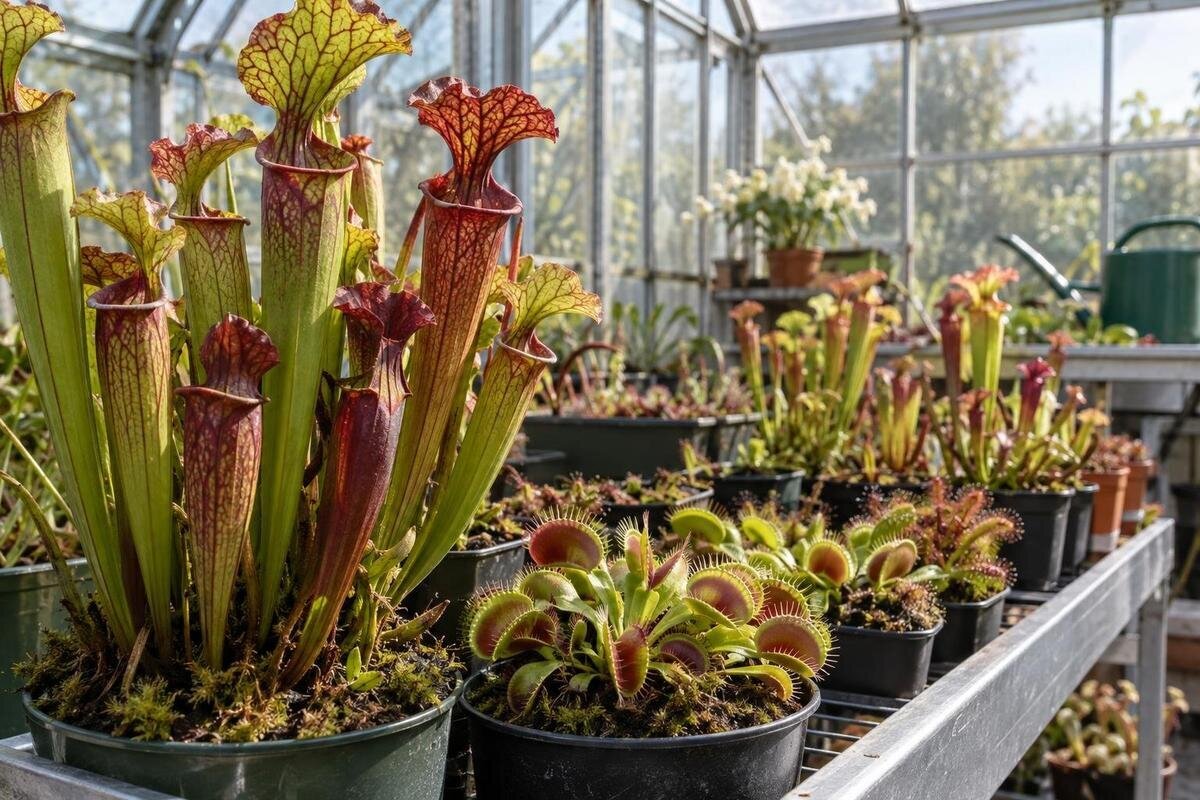
Carnivorous plant greenhouse guide
Growing carnivorous plants under glass depends on matching conditions to the species. Venus flytraps and Sarracenia need different care from tropical Nepenthes, particularly when choosing light levels and planning winter conditions. Most also need low-mineral water and nutrient-poor growing media. This guide explains how to separate those needs, manage watering and ventilation, and choose greenhouse space without assuming that one warm, humid environment suits every plant.

Carnivorous plants do not share one greenhouse climate
“Carnivorous” describes how a plant supplements its nutrient intake, not a shared climate. A Venus flytrap (Dionaea muscipula), a North American pitcher plant (Sarracenia) and a tropical pitcher plant (Nepenthes) come from different environments. Many familiar carnivorous plants originate in temperate bogs or tropical forests, but that broad distinction is only a starting point for their care. A plant sold simply as a “sundew” may also have quite different requirements from another sundew. Identify each plant by its full species or hybrid name before grouping it. Trap type alone cannot tell you its greenhouse needs, and members of one genus do not always share a care routine.
Glass changes conditions but does not create one stable climate. Sun can heat a bench quickly, while shaded corners, plant height and night temperatures differ. Humid air does not tell you whether a pot is waterlogged or whether winter conditions suit a particular species. Record conditions where plants grow, not only beside the door, and keep labels with pots when moving them. If you are estimating space for a collection, the Classic aluminium greenhouse range is listed from 40.6 to 302.3 sq ft. Sketch the growing areas you need before comparing footprints: a small collection with conflicting winter requirements may be harder to accommodate than more pots with similar needs. Record readings during both sunny and cold spells, rather than treating one mild day as representative.
Growth habits of Venus flytraps and Sarracenia
Venus flytraps and many Sarracenia are temperate plants from open, wet habitats, rather than tropical houseplants. Their different growth habits affect how you arrange a bright growing area. A flytrap forms its traps close to the pot, where neighbouring containers can easily obscure the leaves. Many Sarracenia produce upright pitchers that occupy space well above the rim, although the genus also includes lower-growing forms. Look at the named plant rather than assuming that every pitcher plant will become tall. In a mixed display, place pots so that you can see the lower-growing plants without reaching through the pitchers of taller specimens.
Allow for the whole plant when deciding how closely to pack the pots. Pitchers and traps can extend beyond the container, making a tightly filled bench difficult to maintain even before the roots need more room. Keep access to the centre of each plant for inspection and removal of dead material, and avoid positioning delicate leaves where sleeves or watering containers will catch them. A bench that displays the traps clearly is also easier to check: you can notice which leaves are ageing, which plants are producing new growth and whether neighbouring foliage is starting to shade them. Photographing the same view occasionally can help you compare changes without repeatedly handling the plants.
Light and temperature requirements of Nepenthes
Tropical pitcher plants need their own approach. The RHS growing guide describes tropical carnivorous plants as needing warm, humid conditions and often lower light levels than other groups; Nepenthes is its widely available example. This is useful guidance for choosing a growing position, but it is not a temperature specification for every species or hybrid. Before buying, ask the supplier for the named plant’s recommended daytime temperatures, night-time temperatures and minimum winter conditions. Compare those requirements with readings from your greenhouse. A broad label such as “tropical pitcher plant” does not establish whether your greenhouse can provide suitable conditions throughout the year.
Many Nepenthes climb or produce hanging pitchers, so leave room for vines to trail without pressing leaves against the glass or blocking access. They generally need bright conditions with more protection from direct sun than the brighter position often used for Sarracenia, but light tolerance varies. Keep their roots moist in an airy, suitable medium rather than copying the standing-water routine for bog pots. When comparing layouts, the Lean-To Greenhouse is one named format to assess; check the chosen configuration’s internal height, exposure and ventilation before assuming the site will meet a tropical pitcher plant’s day and night needs.
Use low-mineral water and nutrient-poor growing media
Water quality matters because many carnivorous plants are sensitive to minerals and nutrients that ordinary garden plants tolerate. Cleanly collected rainwater is a common choice; distilled or reverse-osmosis water is another low-mineral option. Tap water varies, so do not judge it by taste or clarity. Hard-water deposits on pots or surfaces can signal mineral build-up. Salt-softened tap water should not be assumed suitable, as a salt-based softener can add sodium. When uncertain, check a reliable water analysis or use a conductivity or TDS meter alongside species-specific guidance. Keep stored water clean and away from fertiliser runoff.
Use a low-nutrient growing medium intended for carnivorous plants and suited to the species, rather than garden soil, standard compost or a fertilised potting mix. Sarracenia and flytraps are commonly grown in acidic, nutrient-poor media; Nepenthes need a mix that leaves more air around their roots, so one recipe will not suit the whole collection. Do not add fertiliser to trays or pots unless reliable advice for that plant calls for it. Water containers also take up space: the Limited Edition greenhouse range is listed from 40.6 to 302 sq ft. Include your low-mineral water supply in the layout, with access for filling and cleaning containers. Plan how you will replenish it during a dry spell rather than assuming rainfall will always meet the collection’s needs.

Watering routines differ between bog plants and Nepenthes
Watering should follow the plant’s root habitat. During active growth, a common method for Venus flytraps, Sarracenia and many temperate bog sundews is to stand their pots in a shallow tray of low-mineral water. Refill as the water is used and do not let these pots dry out completely. The aim is consistently damp roots, not a fixed tray depth for every plant. Small pots, deep containers and warmer positions dry at different rates, so check each group rather than filling a long tray on a calendar.
Nepenthes are different: water the medium thoroughly and let surplus drain, then keep it moist without leaving the pot in a deep, permanent water tray. Other genera, including some butterworts and sundews, can vary in water needs by species or season; follow the plant label rather than transferring one routine across the bench. High humidity does not prove that roots are moist, so inspect the medium instead of misting to a schedule. If you are comparing greenhouse shapes while planning separate watering areas, the T-Shaped Orangery Greenhouse is one named format; use measured dimensions to check that trays, benches and access fit.
Match light levels to the species
Before placing pots, observe how sun and shade move across the proposed growing area. Trees, buildings and staging can leave one bench much darker than another, and those patterns change with the seasons. Venus flytraps and many Sarracenia need a bright position; do not tuck them beneath taller plants just to make room. Brightness and exposure to direct sun are not interchangeable, however: the RHS cautions that leaves can scorch in direct sun through glass. Follow guidance for the named plant and introduce stronger light gradually, especially after indoor or shaded-shop conditions. Record the pot’s position when observing changes, so you can distinguish a light issue from a change in water or temperature.
Many Nepenthes need bright light, but their preferred exposure is not identical to that of sun-loving bog plants. A very sunny greenhouse can become hot as well as bright, so do not respond to possible scorch by moving every tropical plant into deep shade. Use species or hybrid guidance to set the balance, and make changes gradually. Floor area does not establish whether a climbing plant will have enough headroom: the Pyramid-type greenhouse range is listed from 60 to 203 sq ft, but those figures describe area rather than the height available for hanging vines. Check the measurements for the configuration you are considering.
Ventilation, temperature and humidity need separate checks
A greenhouse can heat up quickly in bright weather, even when the air outside feels mild. Ventilation helps manage heat and encourages air movement, but opening a door or vent does not guarantee the same conditions at every bench. Use a minimum–maximum thermometer at plant height and, in a multi-level display, check more than one position. Note daytime highs as well as night-time lows, then compare them with the needs of the plants in that zone. Do not rely on a reading beside the entrance to represent the whole growing area.
Humidity is another variable, not a replacement for suitable temperature or root care. Nepenthes humidity requirements vary, and keeping the greenhouse closed simply to retain moisture can also trap heat. Air movement matters; visible condensation on glazing is not a measurement of humidity around every leaf. Use a humidity meter near the plants if humidity is part of their care requirements, and note how readings change when vents open. The Prestige greenhouse range is listed from 40.6 to 302 sq ft. When comparing configurations, consider whether benches and hanging plants would obstruct access to vents or the paths through which air can move. This is a layout question as well as a question of how much growing space you need.
Winter care and cold tolerance
Winter planning should distinguish seasonal dormancy from the lowest temperature a plant can tolerate. The RHS notes that carnivorous plants with a dormant period usually rest in winter, but also shows how much cold tolerance varies within Sarracenia: it lists S. purpurea as hardy to around −15°C and S. leucophylla to around −5°C. These are horticultural hardiness guides, not recommended greenhouse temperatures or guarantees for every potted plant. The RHS also advises protection during harsh winters in colder parts of the UK. Check the exact plant’s identity, supplier guidance and growing conditions rather than applying either figure to the whole collection. An unheated greenhouse does not guarantee frost protection.
Do not assume that all sundews, butterworts or pitcher plants need the same winter treatment. Before winter, review each named plant’s care notes for any seasonal rest, changes in watering and minimum temperature requirements. Give Venus flytraps their own winter-care plan rather than automatically keeping them under the warm conditions intended for tropical Nepenthes. Monitor the minimum temperature near the leaves and pots, and decide in advance which plants would need moving if conditions fall outside their recommended range. Reduced growth alone does not tell you whether a plant is dormant or struggling. Check the medium and the plant’s guidance before changing watering; a quieter season is not a reason to let moisture-loving pots dry out.

Arrange plants in separate greenhouse zones
Group plants by their light, temperature and watering needs, not by the shape of their traps. Keep bog pots together where their trays can be checked and refilled, and place tropical pitcher plants where their height and conditions suit them. Leave enough space to reach labels, remove dead leaves and inspect the medium without moving a whole bench. Separate watering groups where practical, so water from one tray does not spill into another. A simple record of plant names, positions and observed conditions makes it easier to see whether a change in care has helped.
Plan storage and work space as part of the layout, rather than using every clear surface for pots. Keeping labels, clean containers and tools organised can make routine care easier; keep fertilisers and ordinary potting compost away from carnivorous-plant trays to avoid accidental contamination. If a separate storage area matters to your plan, the greenhouse with built-in storage is a named option to compare. Check the chosen model’s dimensions, access and arrangement before deciding what will fit there, and do not assume that a product name establishes storage capacity.
Choose greenhouse space, height and ventilation carefully
Plan around the collection at mature size, not just the number of small pots you have today. Allow room for trays, benches, a water container, access for routine care and taller or climbing plants. Think about whether the layout can keep bright bog plants apart from any plants needing different exposure, and whether you can monitor temperatures in each area. Check the selected configuration’s usable height and ventilation details as well as its floor area. A larger footprint can give you more room to organise a collection, but it does not by itself create a suitable climate for every species.
Compare the actual dimensions with a sketch of your benches and aisles before choosing a model. For a larger-space comparison, the Spacious Greenhouse range is listed from 506 to 753 sq ft. Mark where you would refill trays, water hanging pots and carry plants out for maintenance, rather than drawing only the planted areas. Consider the collection you can realistically care for: more space also means more pots to inspect and a potentially larger low-mineral water requirement. If you intend to maintain a heated area for tropical plants alongside a cooler temperate collection, discuss the proposed arrangement with a greenhouse specialist. Separate benches alone do not create independently controlled winter temperatures.
Frequently asked questions
Can I use tap water for carnivorous plants?
It depends on the mineral content, which varies between water supplies. Cleanly collected rainwater, distilled water or reverse-osmosis water is a common low-mineral choice. Avoid assuming salt-softened water is suitable. If you use tap water, check its analysis or test it, then follow guidance for the species you grow.
How should I plan winter care for a Venus flytrap?
Obtain species-specific guidance on its seasonal rest, winter watering and cold tolerance before deciding where to keep it. Monitor minimum temperatures near the pot rather than assuming an unheated greenhouse is frost-free. Plan how you would protect or move the plant if necessary, and do not automatically apply the warm winter routine used for tropical Nepenthes.
Can I grow Nepenthes beside Venus flytraps?
They can share a greenhouse if you can provide separate positions that suit their light, temperature and watering needs. They should not automatically share one bench or water tray. Check the requirements of the exact Nepenthes species or hybrid, including its day and night temperatures. Separate benches do not necessarily provide different winter climates.
Is high humidity enough for tropical pitcher plants?
No. Humidity does not show whether the roots have enough water, or whether the temperature and light suit the plant. Keep the growing medium appropriately moist and allow air to circulate. Condensation on the glass is not a reliable guide to conditions around every pot.
Should I feed or fertilise carnivorous plants?
Routine feeding is not usually essential where plants can catch insects naturally, and ordinary root fertilisers are generally unsuitable. Captured prey supplies nutrients, but it cannot replace adequate light, suitable water and healthy roots. Do not put meat or household food into traps. Some growers use specialist feeding methods, so seek guidance for the exact species before adding food or fertiliser; do not treat all carnivorous plants alike.
Successful greenhouse culture comes from preserving those differences: provide suitable light for temperate bog plants, plan winter care by species, and match Nepenthes to their stated temperature and moisture needs. Use low-mineral water with suitable growing media throughout the collection. Treat the greenhouse as a place to organise distinct growing zones, not as a reason to impose one warm, damp routine on every pot. A species name, a few temperature readings and a measured bench plan are more useful than guessing from a plant’s trap shape.
