
Growing Sweet Peas Under Glass for Earlier Flowers
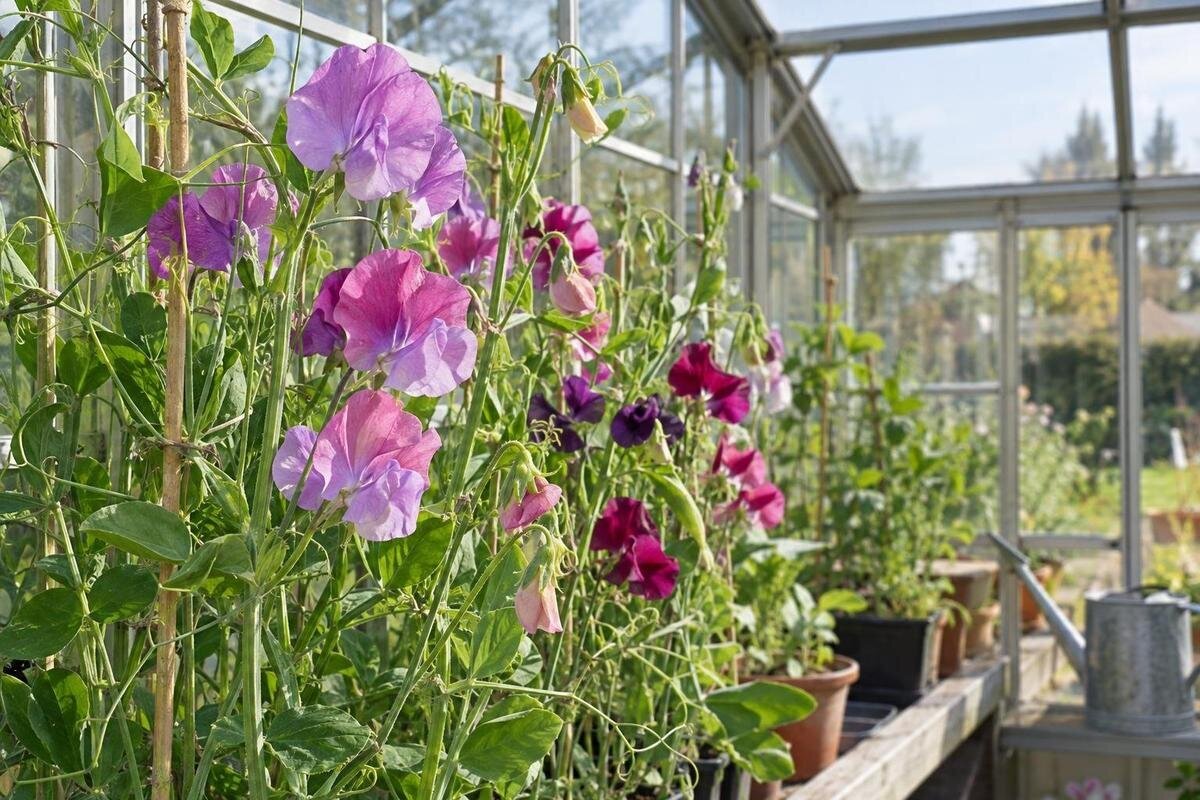
Greenhouse growing guide
Sweet peas can bring a first flush of flowers forward when they are raised under glass, but a greenhouse is not a shortcut to tropical heat. These climbing annuals need bright light, conditions that remain cool rather than overheated, and a support in place before stems start reaching. Glass can shelter young plants and make an earlier sowing practical; on a sunny day it can also warm quickly, while winter light may still be limited. Plan the crop around the seed packet, the available ventilation and how you want to use the flowers, then manage the greenhouse as a bright, airy growing space.

How growing under glass can bring flowering forward
Sweet peas are cool-season climbers, not plants that need tropical warmth to flower. A greenhouse can shelter seedlings from driving rain and wind and make a protected sowing possible before outdoor conditions are convenient. That can bring flowers forward, but glass alone does not guarantee an earlier crop. Cold nights, short winter days, a variety with a later flowering habit or sowing too early can all slow progress. An unheated greenhouse is not automatically frost-free, while a closed house can overheat in sunshine. Visit it regularly and adjust the opening as conditions change; the benefit comes from managing shelter, light and temperature together.
Decide whether you want long stems for cutting, a flowering wall, or a few plants for both; the aim affects variety, support and the length of clear floor needed. Read the packet’s sowing window and height details, then work backwards from these rather than choosing a date simply to be first. Allow space for seed trays, mature plants and a path to reach them, and keep a note of sowing and first-flower dates so you can refine your timing next year. A Pyramid-type greenhouse is listed in sizes from 60 to 203 sq ft; use that floor-area range only as a first comparison and check the actual plan for usable planting length and access.
Sowing dates and varieties for earlier flowers
The RHS gives October–November and late January–April as sowing windows for annual sweet peas in the UK. For an earlier crop, its guidance recommends autumn sowing followed by overwintering the seedlings in a cold frame or cold greenhouse to avoid leggy growth. This is a documented approach, not a guarantee of flowers by a particular date. Choose a sowing time that also suits the variety and the conditions you can provide. Autumn seedlings need a bright, cool position rather than a warm, dim corner. If winter light is poor or you cannot protect young plants during severe cold, a later sowing may be more practical. Follow the cultivar’s packet instructions and record how your crop responds.
Choose seed described for the result you want: early flowering, fragrance, colour or stems suited to cutting. Check stated mature height and whether the variety is recommended for a particular sowing period; cultivars do not all behave identically. A small second batch within the recommended window can spread the harvest rather than putting every plant at one stage, though it will still respond to changing light and temperature. If the greenhouse must hold trays as well as flowering plants, compare clear growing area with any storage arrangement. The greenhouse with built-in storage is listed from 59.4 to 302 sq ft; check the plan to see what area remains available for crops.
Sow seeds in deep individual pots
Deep pots or root trainers give sweet pea roots room to develop and allow each plant to be transplanted with its rootball intact. Use clean containers filled with fresh, peat-free seed compost, moisten it evenly and sow at the depth on the packet. The RHS recommends keeping newly sown pots at about 15°C for germination; this is a seed-starting temperature, not a reason to keep established plants in a warm greenhouse throughout winter. Make sure excess water can drain and that pots are not standing in collected water. Label each variety and sow a few extras in case germination is uneven. Keep labels with the plants when moving pots, so that varieties with different heights or flowering habits remain identifiable.
After sowing, keep compost damp but not saturated and check it regularly, because small pots can dry faster than a greenhouse bed. Once seedlings emerge, give them the brightest suitable position and avoid keeping them warm in low light, which encourages soft, stretched growth. Before transplanting, check that the roots hold the compost together well enough for the plant to leave its pot without the rootball falling apart. Handle the rootball gently rather than pulling the stem. For a seedling bench, the Prestige greenhouse with metallic base has listed sizes from 40.6 to 302 sq ft. Plan bench space for labelled pots, a watering tray and somewhere to set plants down while transplanting, as well as a clear walkway.
Keep the greenhouse bright and ventilated
Strong light is central to compact, productive plants. Give seedlings and climbers the brightest practical position, without leaving them shaded behind stored items or crowded by other crops. If stems stretch, lean towards the glazing or have unusually long gaps between leaves, check light and spacing as well as temperature. Greenhouse glass transmits daylight but cannot lengthen a winter day, so an exceptionally early sowing may sit for a long time before growth accelerates. Keep glazing reasonably clean to avoid losing available light. A sturdy plant grown at the right time is more useful than a tall, pale seedling raised weeks too soon.
On sunny days, temperatures inside can rise quickly even when outdoor air feels cool. Check conditions at plant level with a greenhouse thermometer and look in at different times; an outside forecast does not describe the greenhouse interior. Open available doors and vents as the space warms, allowing air to move through rather than relying on a single small opening. Ventilate before plants wilt, then adjust the openings as light fades or weather changes. If ventilation alone does not prevent repeated overheating, temporary shade may help, but remove it when it would needlessly reduce light. Note when overheating occurs and whether you were able to open the greenhouse promptly; this helps distinguish inadequate ventilation from openings simply being left closed.

Prepare the planting bed or containers
Before transplanting, decide whether sweet peas will grow in a prepared soil bed or in containers. In a bed, loosen the planting area and improve poor soil with mature garden compost, keeping the surface open enough for water to drain. Sweet peas need moisture, but roots sitting in water are vulnerable; address persistent drainage problems before sowing rather than trying to solve them with frequent watering. Avoid creating an excessively rich, leafy crop with heavy feeding. If the greenhouse already contains benches or other plants, leave room for the row and for hands to reach the base when tying stems and picking flowers. Think through watering access too.
Containers are useful when no suitable bed is available, but choose deep, stable pots with unobstructed drainage and enough volume for a climbing plant. Fill them with good-quality container compost and position the support before roots fill the pot. Containers dry out faster than a bed, particularly near warm glazing, so check moisture frequently instead of following a fixed timetable. The Classic aluminium greenhouse listing covers 40.6 to 302.3 sq ft; when comparing footprints, sketch where containers, support lines and a clear route could sit, then check the model dimensions. The area figure does not tell you how a bed or pot row will fit.
Install support before the plants climb
Put the support in place before planting, while it is still easy to work around the bed or pots. Sweet peas climb by tendrils, so netting, a fine trellis, vertical strings or a framework of canes can give stems something to grasp. Check the packet for the variety’s likely height and choose a support that reaches it without blocking vents or making the crop inaccessible. A support that is too short leaves trailing growth; a loose one can sway and damage stems. Plan the row so you can still reach in to tie and cut flowers without stepping on the bed.
Guide young shoots towards the support and use soft ties only where tendrils need help; leave room for stems to thicken and avoid tight loops. Inspect ties as plants grow, replacing anything that is cutting into a stem. Keep canes and mesh clear of the glass, and do not fasten a heavy crop to a greenhouse frame unless the maker specifies that it is suitable for the load. The lean-to greenhouse is one catalogue format, with listed sizes from 40 to 154 sq ft; its name does not establish support height or the length of a clear growing run, so confirm those details on the plan. Build the route and support into your layout before planting.
Water steadily and inspect for pests
Keep root moisture as even as practical from establishment through flowering. Check the bed or compost below the surface instead of reacting to a dry-looking top layer alone, then water the root zone thoroughly and let excess drain. A small container may need attention more often than a greenhouse border; there is no universal schedule because pot size, weather, ventilation and plant growth vary. Avoid repeatedly soaking foliage late in the day. Regular checks make it easier to catch a drying rootball before flower stems lose quality. Reassess watering after a bright spell, rather than waiting until leaves begin to droop.
Inspect seedlings and new growth for slugs, snails and aphids, and remove damaged or diseased material promptly. Good spacing and ventilation help foliage dry and make it easier to spot problems; crowded leaves pressed against damp glass are harder to inspect. Use clean pots and tools, and follow product labels if any pest or disease treatment is needed. Base feeding on the compost or soil used and the condition of the plants; if you apply a fertiliser, follow its label rather than increasing the dose to encourage earlier flowers. Excessive nitrogen can favour leafy growth. The Limited Edition aluminium greenhouse is listed in sizes from 40.6 to 302 sq ft. Allow access to both sides of a freestanding row so that pests are not overlooked on hidden shoots.
Train plants for display or cut stems
Training style depends on whether you want a dense display or long stems for a vase. For bushier spring-sown plants, the RHS recommends pinching out the shoot tip at about 7.5–10cm tall; autumn-sown seedlings often branch naturally and may not need this. Check the plant’s growth rather than pinching automatically. For a more specialised cut-flower crop, cordon training involves selecting the strongest shoot and removing competing side shoots and tendrils as they develop. Tie that stem regularly to its own cane, since removing tendrils also removes its means of gripping the support. You do not need to use cordons for an ordinary vase harvest: a well-supported, branching plant can also supply flowers for cutting.
Whether you keep side shoots or remove them, inspect the plant every few days in active growth: tendrils and stems can catch neighbouring growth, obscure flowers or pull a shoot away from its support. Make shaping decisions early, when growth is soft, rather than forcing tangled stems later. If mapping rows through a greenhouse, the catalogue includes a T-Shaped Orangery Greenhouse. Its name alone does not show clear bed lengths, headroom or the route between rows, so consult the published drawing and dimensions before planning long training lines. Leave enough room for the support and for hands to work along the whole row.

Harvest flowers and keep plants producing
Cut flowers while stems are firm and blooms have not begun to fade. A practical guide is to pick when the lower flowers on a stem are open and the buds above are still developing; the exact stage depends on the variety and how you want the bouquet to look. Use clean, sharp scissors or snips, and place stems in water promptly. Cutting in the cooler part of the day can help keep them fresh on the way indoors. Take the flower stalk without cutting away the leafy climbing shoot that carries it. You can harvest all stems that are ready: retaining flowers until they fade is not necessary to keep the plant productive.
Keep picking, and remove spent flowers before they form seed pods. Once a plant invests in seed, it is less inclined to keep producing new blooms, so deadheading supports a longer display as well as routine tidying. Check lower growth too; fallen petals and yellow leaves can collect around the base and make inspection difficult. If the greenhouse starts overheating, more frequent picking will not solve the underlying problem: ventilate, check root moisture and reassess how much direct sun is reaching the crop. Flowering will eventually taper as plants age or conditions become less favourable, so enjoy the strongest flush rather than forcing plants on.
Check greenhouse dimensions and ventilation
Before choosing a greenhouse, measure the intended site and draw the sweet pea row, support, staging area and route to the door on the floor plan. Check clear internal width and length, eaves and ridge height, door position and the space needed to reach vents. A stated floor area cannot tell you whether a long row fits around benches or whether support tops clear the frame. For a sense of the spread in catalogue footprints, the Bloomcabin Orangery is listed from 506 to 753 sq ft; that scale is not a recommendation, and usable layout still needs checking. Use product drawings and dimensions for the exact option under consideration.
Ventilation deserves a close look because an early crop can be chilled at one point in the season and overheated by strong sun at another. Check which vents and doors can be opened, how they are operated from the path, and whether the house can be aired without moving seed trays or other plants. Check the manufacturer’s stated dimensions, base requirements and installation guidance before committing. If you plan to add electrical heating or other equipment, ask a qualified installer about a suitable arrangement rather than improvising. A greenhouse that can be opened easily and worked in comfortably is a better starting point for sweet peas than one chosen on footprint alone. Consider where buckets, seed trays and tools can be kept without blocking the growing row.
Frequently asked questions
When should I sow sweet peas in a greenhouse?
Autumn sowing is a common way to aim for an earlier crop; late-winter or spring sowings are also possible. Follow the seed packet for your variety, and sow early only if you can keep seedlings bright and cool enough to avoid weak, stretched growth.
Do sweet peas need a heated greenhouse?
Usually not for growing seedlings on: the RHS recommends a cold greenhouse or cold frame for overwintering autumn-sown sweet peas. Germination is a separate stage, for which it recommends about 15°C. An unheated greenhouse is not reliably frost-free, so monitor conditions and follow the seed supplier’s advice on protecting young plants during severe cold.
How can I prevent the greenhouse getting too hot?
Open available doors and vents as sunlight warms the space, and check a thermometer near crop height at more than one time of day. If overheating continues, consider temporary shade without reducing light for long periods.
Can I grow sweet peas in containers?
Yes. Use a deep, stable container with drainage, fresh container compost and a support. Check moisture more often than in a bed because pots can dry quickly, especially in sunny positions, and avoid waterlogging.
What support should I use for sweet peas?
Choose a support tall enough for the variety shown on the packet: netting, trellis, taut strings or canes can all work. Install it before planting, guide stems loosely and do not assume the greenhouse frame can carry the crop.
Earlier flowers depend on sowing time, variety and the conditions available under glass. Give the crop a bright start, steady root moisture and enough support for its climbing stems, then manage ventilation as spring sunshine strengthens. Harvest flowers regularly and remove faded blooms before pods form. Keep a record of sowing and first-flower dates alongside the variety name: it will give you a more useful basis for next year’s crop than a promised flowering date. The reward is an earlier supply of sweet peas to cut and enjoy, rather than simply the earliest possible sowing.
