
Growing Chrysanthemums in a Greenhouse
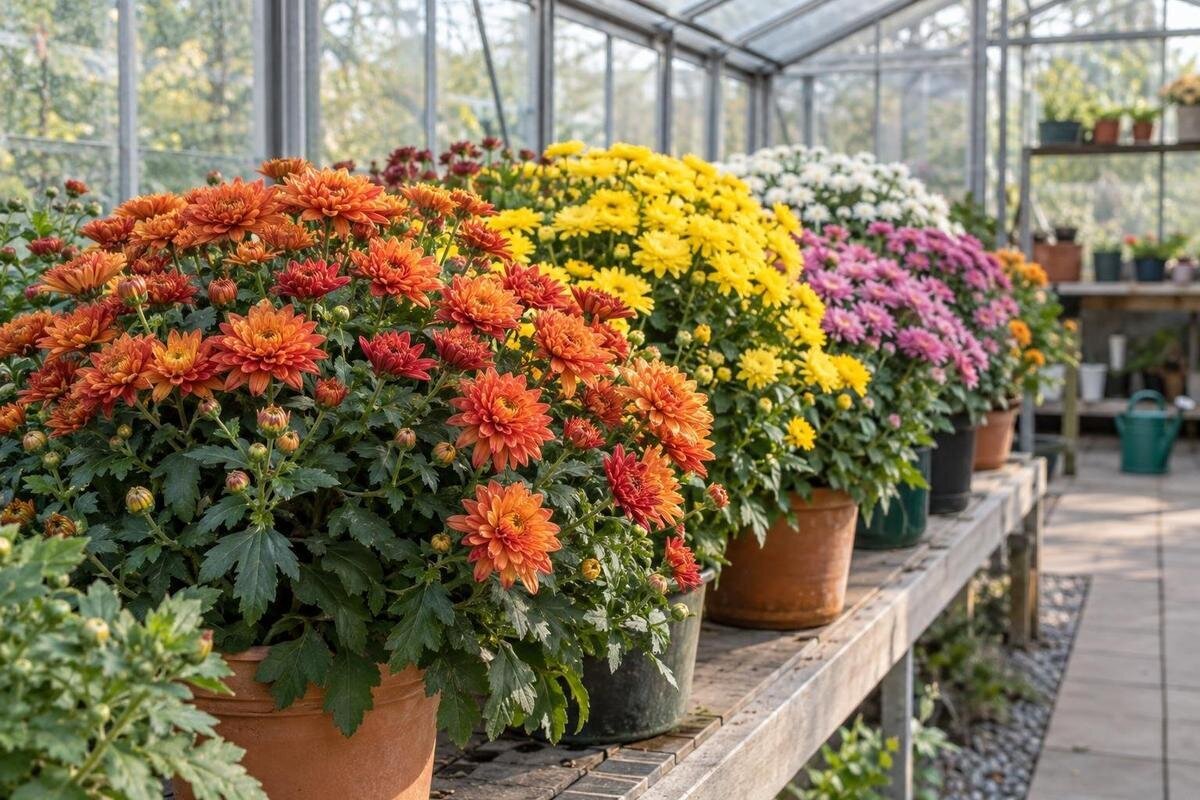
A practical guide to chrysanthemums under glass
Growing chrysanthemums in a greenhouse can mean sheltering a seasonal garden variety or scheduling cut flowers for a chosen date. Those goals need different routines. For most florist cultivars, flowering depends on long, uninterrupted nights, while plant maturity, temperature and crop management affect how closely a batch follows its timetable. The practical choice is whether natural autumn day length suits your plants or whether controlled lighting and blackout are worthwhile.

Choose chrysanthemums for the crop you want
Chrysanthemums are not one uniform greenhouse crop. Decide whether you want garden-style autumn colour, flowering pot plants or long-stemmed cut flowers, because cultivar habit and flowering response differ. Hardy garden cultivars are often grown outdoors and may use a greenhouse for propagation or shelter; florist varieties are selected for particular pot or cut-flower uses. A plant label should identify the cultivar and often its flowering season or crop type. That information matters more than the broad name chrysanthemum. Named young plants also make a planned batch more predictable than seed when you need a consistent colour, form and flowering window. Keep the label with the crop, especially if several varieties will share a bench.
Within cut-flower types, spray chrysanthemums carry several blooms on branching stems, while standard types are grown for one main flower per stem. Pot and bedding varieties can branch and finish differently, so do not assume that pinching or support used for one type suits all. A greenhouse offers shelter and a place to manage light, but an unheated structure is not automatically frost-free and does not make every cultivar flower early. Choose plants for their intended purpose and season first; then match the growing routine to their label. If a supplier lists a cut-flower variety, check whether it is intended as a spray or standard type before deciding how to train it.
How night length affects flowering
Most florist chrysanthemums are photoperiod-sensitive short-day plants: they start forming flower buds when nights pass a cultivar-specific threshold and remain uninterrupted. It is the length of darkness, not simply the number of bright hours, that guides the response. As a commercial example, some crop schedules provide roughly 13–14 hours of continuous darkness to initiate flowering. Treat that as an illustration, not a universal setting for every pot mum or garden chrysanthemum; cultivar, maturity and temperature can alter both the trigger and the time to bloom. Follow the supplier’s light schedule for the named plant. A short-day period is not a substitute for growing a weak or immature cutting to a suitable stage.
A small light interruption can signal a long day to a responsive crop, which is why a lit doorway, work lamp or nearby security light matters if it shines on plants during the dark period. Conversely, natural nights lengthen in the UK as autumn approaches, allowing many seasonal cultivars to flower without artificial control. Some garden types are sold as early-, mid- or late-season varieties; use that description rather than assuming the greenhouse will override their timing. When flowers open too early or late, review the actual dark period as well as the calendar. This is a useful first check before changing pruning or feeding.
Plan flowering dates from the cultivar’s response time
Schedule the crop backwards from the expected flowering date, using the named cultivar’s response time. A label such as an 8-week response usually refers to the approximate interval from the start of short-day treatment to flowering under the stated production conditions; it does not include rooting a cutting or growing a young plant to flowering size. Add time for establishment and vegetative growth first, then allow for differences in weather and greenhouse temperature. Check exactly which point the supplier uses as the start of its count. The same number of weeks is not a safe assumption for another cultivar, even if the flowers look similar. Keep planting and treatment dates in a diary so later crops can be planned from your own results.
For a longer display, make several smaller batches rather than putting every plant into the same short-day cycle. Stagger the start dates according to the cultivar’s response and the number of flowers you can use, then note when buds first show and when stems are ready. Space sets a limit on batch size: the Bloomcabin Prestige Greenhouse page lists size options from 40.6 to 302 sq ft, but floor area is not all growing area. Mark benches, aisles, potting space and support rows on the chosen plan before estimating plant numbers.
When blackout or artificial light is useful
Controlled light is optional for many seasonal growers. If a cultivar is ready to flower as natural nights lengthen, you can follow the season and concentrate on keeping plants healthy. Blackout is useful when a short-day crop needs a consistent long night before natural days are short enough, or when you need to repeat a scheduled crop. It must provide a reliable dark period across the plants; light leaks at the edges or different treatment times between beds can lead to uneven flowering. Start blackout only when plants have reached the stage specified for that cultivar. A timer can help keep the routine consistent, but the schedule itself comes from the plant guidance.
Growers can use day-extension or night-interruption lighting to keep responsive plants vegetative for longer, then switch to short days at the planned point. This photoperiod lighting is different from brighter supplementary lighting intended to support growth in dull conditions; a lamp described as a grow light is not automatically the right tool for either job. For separate batches, check the area you intend to screen: the Spacious Greenhouse listing gives size options from 506 to 753 sq ft, but that range does not show whether a selected layout can be divided into independent blackout zones. Confirm dimensions and the proposed layout before buying equipment.

Young plants, pinching and disbudding
Start with healthy, true-to-name rooted cuttings or young plants from a reliable supplier if you want uniform stems. Inspect new arrivals and keep weak or damaged plants apart until they are established; pests or disease can spread quickly in close greenhouse rows. Give young plants bright light and enough ventilation to develop sturdy growth. If you intend to root cuttings yourself, plan a separate, clean propagation area rather than crowding it with mature foliage. The Classic aluminium greenhouse page lists sizes from 40.6 to 302.3 sq ft, which you can compare with a plan that includes both a propagation surface and flowering benches. The stated area alone does not confirm the bench arrangement.
Pinching and disbudding depend on the flower form. For a spray type, removing the growing tip after establishment encourages side shoots; the timing affects the crop schedule, so follow the cultivar instructions and allow for the delay. For a standard bloom, growers usually retain a main stem and remove competing side buds so the chosen flower can develop. Avoid pinching simply because a plant looks tall: low light, crowding or excess feeding can also produce weak growth. Decide the intended stem form before pruning, then record the date and result. Use clean hand tools and remove cut material from the bench.
Give roots and foliage enough space
Set final spacing according to the cultivar’s mature spread and the support method, not just the size of each cutting. Leaves that press together restrict air movement and stay damp longer; overcrowded plants also make it harder to inspect lower stems or reach pots for watering. Plan a clear route along beds and around benches so stems are not knocked as you work. If considering a Lean-To Greenhouse, check the aspect of the wall it sits against, any building shade and access at the intended growing position. The lean-to label cannot tell you how much daylight reaches your site, so check the actual plan and observe shade during the day.
Use a free-draining medium in pots, or prepare a greenhouse bed that does not hold standing water. Chrysanthemums need regular moisture during active growth, but persistently wet roots can cause problems; water according to pot size, weather and growth rather than following a rigid weekly rule. Direct water to the growing medium and allow foliage time to dry, especially when the greenhouse is humid. Feed according to the compost or soil conditions and the fertiliser label. Avoid excess nitrogen, which can encourage soft, leafy growth. Check pots as well as leaves: the surface can look dry while the root zone is still damp.
Support stems as they grow
Put support in place before stems start to fall over. Cut-flower growers commonly use horizontal mesh or netting and raise it as the crop grows; small groups in pots can be supported with individual canes. The support should hold stems upright without pinching them, and it must not block access for watering, pruning or picking. Arrange the grid to suit the plant spacing, then guide stems through it as they lengthen rather than trying to force brittle growth upright later. Check the supports as plants grow, since long stems and flower heads can make late corrections more difficult.
Pinching decisions affect the support plan too: spray forms need room for several laterals, whereas standards are managed around a principal stem and flower. Remove damaged or crowded shoots with clean tools, and guide loose stems before they rub on neighbouring plants. Floor area alone is not enough when comparing a greenhouse for tall crops: the limited-edition aluminium greenhouse listing includes size options from 40.6 to 302 sq ft, but that figure cannot confirm headroom above benches. Check the selected model’s internal height at the crop position, including room for pots, netting and mature flower heads.
Manage greenhouse temperature and ventilation
Temperature and day length work together; keeping chrysanthemums hot is not a reliable way to bring them into flower. As a broad commercial reference, active growth is often managed at daytime temperatures around 18–21°C, with nights somewhat cooler. Exact settings depend on cultivar and crop stage, so discuss this range with the supplier rather than treating it as a thermostat setting for every greenhouse. Sustained high temperatures, especially warm nights, can cause heat delay in sensitive cultivars, meaning buds develop or open later than the light schedule suggests. Cold conditions also slow growth. Record minimum and maximum temperatures at plant level rather than relying on a reading near the door.
Ventilation limits heat build-up and helps remove humid air after watering, reducing conditions that favour grey mould and other fungal problems. Open available vents before the greenhouse becomes excessively warm, and do not rely on the door alone if air at the far end remains still and humid. Check conditions among the leaves, where dense growth can hold damp air. If comparing a T-Shaped Orangery Greenhouse, use the chosen plan to check specified vent positions and how air can travel through each growing area. The model name does not establish the ventilation provision, so verify it in the technical details.

Plan light and access around the greenhouse layout
Chrysanthemums need a bright growing position to make sturdy stems and flower well. Before choosing a greenhouse location, note when nearby trees, fences or buildings shade the glazing; a bright morning does not guarantee light reaches plants for the rest of the day. Avoid placing high benches where they cast persistent shade over shorter plants, and arrange batches so the tallest crop does not block light to the rest. Include working headroom and clear access in the plan, especially if stems will be carried out for cutting. A greenhouse area figure cannot replace a site check for orientation, shading and the space available around the structure.
Shape can affect how efficiently a row-based crop uses the floor. The Pyramid-type greenhouse listing covers 60 to 203 sq ft, but the stated area alone cannot confirm whether the selected layout accommodates long benches, an aisle and netted beds. Draw the actual dimensions and include door access, potting space and room to turn with a tray. If several cultivars will share the structure, reserve places where labels stay readable and batches can be kept separate for different light schedules. Compare the particular model’s dimensions and ventilation details rather than relying on its outline.
Keep the crop clean and plan for winter
After cutting or at the end of flowering, remove spent stems, fallen leaves and old petals promptly. Dead material can harbour pests and provides places for grey mould to develop when the air is damp. Wash reusable pots and clean benches and tools between crops; do not leave old foliage beneath a new batch. Inspect the undersides of leaves and the bases of stems while plants are still in place, so problems are noticed before they spread. Good hygiene does not replace ventilation, but it reduces the amount of crop debris that could carry problems into the next planting.
Decide whether you are treating chrysanthemums as a seasonal crop or keeping selected stock plants. Some garden cultivars are hardy, but pot plants and florist types vary, and an unheated greenhouse cannot be assumed to stay frost-free. Follow the cultivar’s winter instructions, keep plants clean and avoid leaving containers waterlogged; do not use weak plants as propagation stock. Storage for canes, netting and labels can also be part of the layout: the greenhouse with built-in storage listing gives an option to compare, but check the actual compartment size and position before relying on it for long supports or supplies.
Frequently asked questions
Do chrysanthemums need grow lights in a greenhouse?
Not necessarily. Seasonal cultivars can flower as natural nights lengthen. For scheduled crops, some growers use lighting to interrupt the night and keep plants vegetative, then use blackout to provide long nights. This is different from supplementary light intended to help plants grow in dull conditions.
How long do greenhouse chrysanthemums take to flower?
It depends on the cultivar and the growing conditions. A response label such as 8 weeks generally counts from the start of short-day treatment to flowering, not from planting a cutting. Check the supplier’s definition and allow extra time for young plants to establish first.
Can I grow chrysanthemums in an unheated greenhouse?
Many garden chrysanthemums can be grown seasonally without heating, but hardiness varies and an unheated greenhouse is not guaranteed to remain frost-free. Choose a cultivar suited to the conditions, and follow its guidance if you plan to keep plants over winter.
Why are my chrysanthemums flowering late?
Possible causes include a cultivar with a longer response time, light reaching plants during the dark period, starting short-day treatment too early in the plant’s development, or temperatures that slow the crop. Check the variety’s schedule and record light and temperature conditions before changing your routine.
How can I keep chrysanthemum stems upright?
Set horizontal support netting in place before stems become tall, or use individual canes for a small number of plants. Guide growth through the support as it lengthens, and leave enough room to water, inspect and pick the crop without knocking neighbouring stems.
Reliable greenhouse chrysanthemums start with a cultivar whose flowering habit matches your plans. Seasonal varieties can often follow the shortening days, while timed cut-flower crops need closer attention to response time, darkness and temperature. Once the crop is growing, bright conditions, steady watering, ventilation and early stem support help it reach flowering in better shape.
