
Growing Beetroot in a Greenhouse for Early Harvests
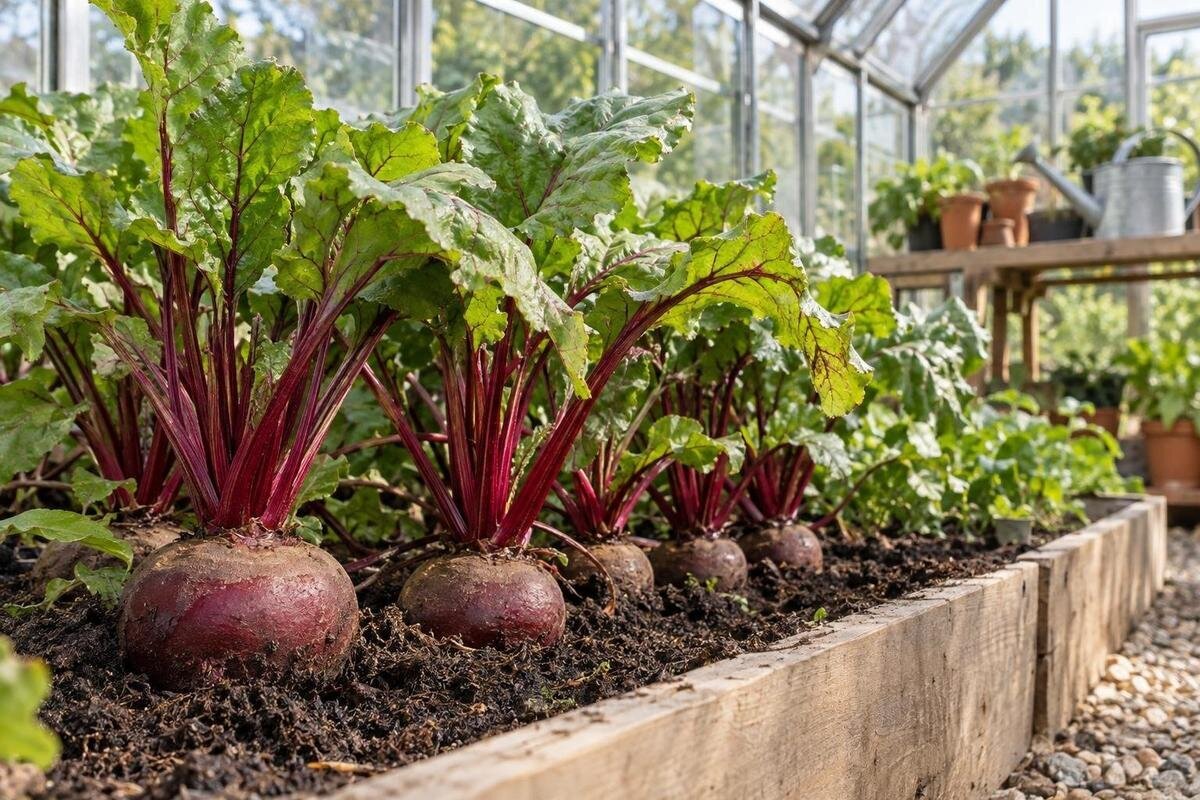
Greenhouse growing guide
Beetroot is a practical root crop to try under glass, but the case for it is an earlier picking, not a need for tropical conditions. A greenhouse can help you raise baby roots before an outdoor row is ready, yet spring light, cold nights and competition for bed space still set the limits. The usual plan is one short sowing, not a dedicated structure for beetroot alone.

Does early greenhouse beetroot justify the space?
Beetroot is a cool-season root crop, so a greenhouse is not valuable because it needs tropical heat. The useful difference is timing and shelter: a sunny enclosed bed can warm sooner in the day and protect young leaves from wind and driving rain, letting a small sowing get under way before an outdoor bed is ready. That can bring a first picking of baby roots forward, but it does not guarantee a harvest date. Cold nights, dull weather and cool soil can still slow emergence and root growth. If an outdoor bed is already workable and sheltered, the difference may be modest.
Judge the benefit against the space it uses. Baby roots occupy a bed for less time than a crop left to mature, but they still need light and time to grow; an early picking is an extra, not a high-volume reason on its own to buy a large structure. The large orangery greenhouse is listed in sizes from 506 to 753 sq ft, which puts the scale in perspective: beetroot might use only a short border, while the rest of that area must serve other crops or purposes. If you need the bed for summer planting, include the clearance date in your plan. A free corner in an existing greenhouse makes a stronger case than a structure planned solely for beetroot.
When to sow beetroot under glass
Use local soil and weather rather than a fixed calendar date. For an early sowing, choose a variety whose packet specifically allows sowing under cover, and follow its timing guidance. An unheated greenhouse warms in sunshine yet cools overnight; workable soil and a gradual warming trend are more useful signs than a warm afternoon. Check the soil at sowing depth, not just the surface. Early beetroot sowings are particularly prone to bolting, when plants produce a flower stem instead of developing the roots you want. A bolt-resistant variety is therefore a sensible choice, but does not make very early sowing reliable. Exposed, sheltered, coastal and inland gardens can behave differently at the same time of year.
Make the first sowing a small trial instead of committing the whole bed. Record when you sowed, when shoots appeared and when the roots reached your preferred size; that will show whether the protection bought useful time at your site. The lean-to greenhouse is listed in sizes from 40 to 154 sq ft, but area alone says nothing about winter warmth or the number of sunny hours. Check for shade from buildings and trees, and be realistic about overnight conditions. Heating a greenhouse just for a short beetroot batch may not be worthwhile; later outdoor sowing remains an option. If the first batch barely advances the harvest, adjust the timing next season rather than repeating the same date automatically.
What makes a good baby-root sowing?
Baby beetroot describes a harvest stage, not a separate crop. Many ordinary varieties can be lifted young, while a variety described as early or suited to small roots may make planning easier. Read the packet for its sowing window, expected shape and maturity information, bearing in mind that stated timings depend on suitable conditions. Decide whether you want uniformly small, golf-ball-sized roots or a mix of sizes. Lifting a few at a time gives you flexibility, but the earliest roots will be smaller than a full-size crop. If your aim is a quick first meal, judge success by the size and timing of that picking, not by mature-root yield.
Estimate the row length from how many roots you will use, allowing for the chosen spacing and some gaps where seeds fail to emerge. Sow a short run and repeat only if the first batch performs well. You can grow individual roots or deliberately sow small groups for baby beetroot, but scattering seed thickly makes the crop harder to manage. Several seedlings may emerge from one seed cluster, so decide on your approach before sowing. The pyramid-type greenhouse is offered in sizes from 60 to 203 sq ft. When considering a particular version, mark where your short row would go and whether you could reach it without stepping on the soil. A narrow, sunny border may be enough for an early picking; convenient access makes selective harvesting easier.
Choose a bright bed or a deep container
Choose the brightest usable part of the greenhouse. Beetroot can grow with some light shade, but weak light and competition from taller plants can slow growth. Shelving, stored pots and a dense summer crop may shade a low row, so check the bed through the day rather than judging it from the doorway. A strip beside a clear path is easier to weed and water than a hidden bed behind staging. The soil should be loose, well drained and free of large stones so roots can expand without hitting obstacles. Break up compacted clods, and improve very poor soil with mature organic matter rather than a fresh, heavy dressing.
A short row can also grow in a container, provided it has enough depth and volume for the chosen root type, a free-draining growing medium and drainage holes. A shallow seed tray is not suitable for roots that need room to swell. Containers dry more quickly than greenhouse beds, so include them in your regular moisture checks. If you are comparing structures, the Prestige greenhouse is listed in sizes from 40.6 to 302 sq ft. Treat those figures as overall size options, then sketch the bed, path and door access for the configuration you would actually use.

Direct sowing, module sowing and thinning
Direct sowing is a straightforward choice when the final bed is ready. Prepare a fine, crumbly surface and water the drill if the soil is dry. The RHS recommends sowing beetroot 2.5 cm deep, with 30 cm between rows. For individual roots, sow seed clusters 10 cm apart; for groups of baby roots, sow two or three clusters together, leaving 15 cm between groups. Check the packet for any variety-specific instructions. Beetroot can also be started in modules and transplanted with the root ball intact. This can be useful while a bed is occupied. Move the plants once they are well rooted rather than leaving them confined in their cells, and acclimatise them before moving them to cooler growing conditions.
Many beetroot ‘seeds’ are actually clusters, so one sowing point can produce several seedlings. For individual larger roots, remove weaker seedlings to leave plants about 10 cm apart. For baby roots, thinning is often unnecessary: small groups can grow together and be harvested young. If you deliberately raise several plants in each module, transplant the whole clump without separating its roots, spacing clumps about 15 cm apart. Keep the two methods distinct when labelling your sowings so you can compare their results. Mark the row ends and record the sowing date. The T-shaped orangery greenhouse is one listed layout; its name does not show how long a bed run is, so check the plan before mapping your drills.
Manage changing temperatures and light
Glass can create sharp temperature changes over a day: bright sun may heat the air quickly, while the same space can be cold after dark. Ventilate on warm, bright days so seedlings are not left in excessive heat, but do not assume that a mild afternoon means the roots have had steady warmth. Check conditions at bed level and avoid putting young plants in the most shaded corners. Clear light matters: frames, shelves, hanging containers and taller neighbours can all reduce the light reaching a short beetroot row. If the greenhouse is stuffy or very warm, opening it up is more useful than relying on the calendar to judge conditions.
Beetroot does not automatically need a heated greenhouse. In a suitable spring bed, an unheated structure can shelter an early sowing; when temperatures remain low, waiting is often more useful than pushing the date. If the greenhouse is already heated for another crop, beetroot may make use of spare space, but heat is not a substitute for good light or ventilation. Expect slower emergence in an early attempt, and be prepared for an outdoor sowing to catch up. A greenhouse’s name or footprint does not establish how it will perform through a cold spell.
Keep moisture steady and feeding moderate
Rain does not reach an enclosed bed, so watering is part of greenhouse care from sowing onward. Keep the drill evenly moist until seedlings emerge; a dry crust can interrupt germination. Once plants are established, water when the root zone begins to dry rather than giving frequent splashes that wet only the surface. Aim for consistent moisture, not saturated soil. Long dry spells followed by heavy watering can contribute to cracked or uneven roots, while waterlogging restricts healthy root growth. Containers need closer attention, especially in sunny weather, because their limited volume of growing medium dries quickly.
Prepare fertile soil, then assess growth before adding extra feed. Consider what the bed has already received, particularly if it has recently supported another greenhouse crop. Slow growth in an early sowing is not necessarily a shortage of nutrients: check moisture, light and growing conditions before treating fertiliser as the answer. The RHS suggests an organic high-nitrogen liquid fertiliser if beetroot is not growing strongly and needs a boost. Follow the product label rather than guessing at a concentrated dose or feeding repeatedly without assessing the response. A greenhouse with built-in storage is listed in sizes from 59.4 to 302 sq ft. Account for the storage section when planning your watering route: keep access to the beetroot bed clear, and make sure pots or stored equipment will not obstruct the row as its leaves spread.
Lift roots at baby size and sow in batches
Start lifting when roots reach the size you want rather than waiting for every plant to become full-sized. Baby beetroot is valued for its small roots, so pull one or two test plants to judge the bed instead of guessing from foliage alone. Loosen firm soil gently with a hand fork before lifting, taking care not to damage neighbouring roots. Harvesting a few at a time lets the remaining plants continue to swell. Beet leaves are edible, but repeatedly stripping a plant of foliage reduces the leaf area it needs to grow the root.
Stagger small sowings instead of filling every available row at once. Decide whether to repeat the sowing from the progress of the first batch and the date when you need the bed for another crop. Several batches sown close together in cold conditions may reach harvest size at much the same time, so a regular sowing interval does not guarantee evenly spaced pickings. The Classic aluminium greenhouse is listed in sizes from 40.6 to 302.3 sq ft. If successive crops are part of your plan, draw their positions and expected occupancy on the layout for the version you are considering. As outdoor conditions improve, the next beetroot batch may be better sown outside.

Compare greenhouse and outdoor harvests
Outdoor beetroot is a credible alternative, not a second-best crop. Once the soil is workable and spring conditions improve, direct sowing outside avoids tying up protected ground and can supply the larger main crop. A greenhouse batch may get ahead in a favourable spring, but if the protected soil is cold or shaded it may not beat an outdoor sowing by much. Compare the date you can start harvesting roots, not just the date you put seed into the soil. A short covered row can be an early trial while the outdoor bed remains the follow-on crop.
Plan the two sowings as one sequence: use a modest greenhouse row for the first baby roots, then sow outside when the bed is ready. Record the variety, sowing date and first picking date for each, comparing roots harvested at a similar size. Also note how many usable roots you picked and whether the protected row needed extra watering or occupied space wanted by another crop. One season gives an initial comparison, not a reliable prediction for every spring. If tomatoes or cucumbers need the greenhouse bed, set a clearance date for the beetroot. A few early roots may justify a short trial, but a slow batch should not delay the crop for which you mainly use the greenhouse.
Choose greenhouse space for the whole growing plan
If you already have a greenhouse, start by testing a border or a strip beside an accessible bed; beetroot rarely needs the whole structure. If you are buying one, consider its purpose throughout the year rather than the short early-beetroot window. A bright site and enough clear bed space matter more to this crop than extra floor area that stays shaded or serves only as a passage. Think through other intended uses, access and how much ground remains planted after staging and storage are accounted for.
The limited-edition aluminium greenhouse is listed in sizes from 40.6 to 302 sq ft. That range helps compare broad footprint options, but it cannot tell you how much continuous soil bed fits inside a particular configuration. Check the dimensions of the version you are considering, assess shade at the proposed site, and confirm that the layout allows practical access and ventilation. Choose a structure for the wider growing plan: an early beetroot sowing can make use of existing space, but is a weak reason on its own to add a large greenhouse.
Frequently asked questions
Will beetroot grow in an unheated greenhouse?
Yes, once conditions allow germination and growth. An unheated greenhouse can shelter an early sowing, but its interior can still fall below freezing, and soil may stay cold even when the air warms in sunshine. Sow when the bed is workable and the variety’s sowing guidance fits the conditions.
When can I sow beetroot under glass in the UK?
There is no single date that suits every garden. Follow the packet for a variety suitable for early sowing under cover, then assess soil conditions and the forecast at your site. Do not bring sowing forward simply because the greenhouse feels warm one afternoon. Early sowings are more prone to bolting, so choose a bolt-resistant variety and remember that cold soil can still delay establishment.
Can I transplant beetroot seedlings?
Yes. Beetroot can be raised in modules and planted out while young, keeping the root ball intact and avoiding root-bound plants. Direct sowing is simpler when the final bed is ready. If you need to thin seedlings growing together, snip out the surplus rather than disturbing the roots of those you want to keep.
How far apart should baby beetroot plants be?
Choose between individual plants and small groups. RHS guidance uses 10 cm between individual plants, or 15 cm between groups sown with two or three seed clusters for baby roots. Thinning is often unnecessary when harvesting roots small. Several seedlings may emerge from each seed cluster, so avoid sowing an unplanned, densely packed row.
Is greenhouse beetroot better than outdoor beetroot?
Not inherently. A greenhouse may bring a small first batch forward, but outdoor sowing can supply the main crop without using protected bed space. The greenhouse is most worthwhile when you have a bright, available bed and value an earlier picking.
An early greenhouse crop is worthwhile when a small, sunny bed is available and you want a first harvest before outdoor sowings mature. Sow into warming soil, allow room for individual roots or small groups, keep moisture steady and lift as soon as the roots reach your preferred size. Then let outdoor sowings provide the main crop unless your own records show that greenhouse space reliably advances the harvest. That makes use of the shelter without treating beetroot as a heat-dependent crop.
