
Growing Pak Choi in a Greenhouse
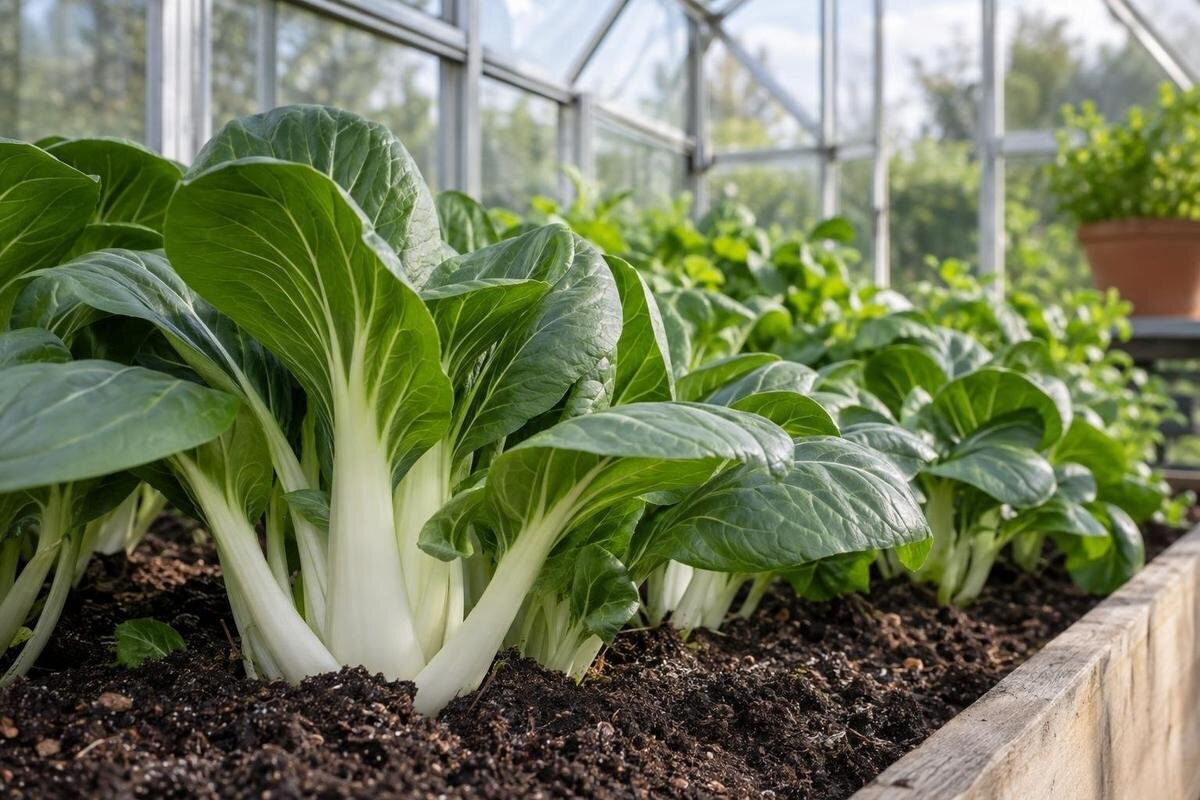
Cool-season greenhouse guide
Pak choi is a quick-growing leafy brassica that is easiest to manage in cool, fairly even conditions. A greenhouse can widen the spring and autumn growing windows, but it does not guarantee winter growth or prevent summer overheating: an unheated structure still cools at night and can warm sharply in sunshine. The main scheduling challenge is preventing plants from bolting before harvest. Choose a suitable sowing window and cultivar, keep moisture steady, ventilate when needed and pick promptly. This guide focuses on those decisions rather than treating pak choi as a crop for every month.

Why pak choi suits a cool greenhouse
Pak choi, also known as bok choy, is a fast-growing brassica grown for its leaves and crisp stalks. It performs best in cool, fairly even conditions and is generally more dependable in spring and autumn than in a hot summer greenhouse. Cover can shelter seedlings and mature plants from wind and heavy rain, helping you use the shoulders of the season. The crop does not need tropical warmth, so the point of a greenhouse is not to keep it hot but to provide a manageable place to time sowings and monitor conditions. In a sunny spell, glass can make the growing environment less suitable, not more. Pak choi can also grow outdoors in cool conditions, so the greenhouse is most useful for an early or late batch, not because the crop requires a building.
Cover is a buffer, not climate control. An unheated greenhouse can cool sharply overnight and warm quickly in sunshine; low winter light can hold growth back even when afternoons feel mild. Check temperatures at crop height and note how long the bed receives direct light. For scale, the aluminium Limited Edition greenhouse range lists sizes from 40.6 to 302 sq ft. Use the plan for the chosen size to estimate bed and path area: listed floor area is not automatically plantable, and a reachable small bed may be more useful than a larger, awkward corner.
Spring sowing needs a cautious start
Spring sowing can give you leaves before summer warmth, but avoid giving young plants an unnecessarily long cold start. The RHS recommends indoor sowing from spring onwards rather than a single date for every growing situation. Check the seed packet for the cultivar’s preferred timing and watch night temperatures in the greenhouse. Overly cold conditions can trigger premature flowering, so the availability of sheltered space alone is not a reason to sow. If the structure cannot keep a tray out of prolonged cold, wait for a steadier period. Decide whether you want baby leaves or larger rosettes too: an early harvest leaves less time for changing conditions to affect the crop.
Try a small first sowing and learn how quickly your own structure warms. A lean-to greenhouse, for example, is listed in sizes from 40 to 154 sq ft, but the lean-to greenhouse name and floor area do not reveal the conditions at a particular shelf or bed. Put a min/max thermometer near the crop and check it after a cold night as well as on a sunny afternoon. If a cold spell is forecast, move module trays to a more protected place or delay sowing; a warm midday reading is not evidence that seedlings have been warm enough overnight. If you intend to move seedlings to an exposed bed, acclimatise them gradually rather than taking them straight from sheltered conditions.
Use late summer for an autumn crop
Late summer is often the most practical second sowing window for pak choi, and the RHS recommends it for greenhouse cropping through autumn. The seed packet and temperature inside the greenhouse matter more than a fixed calendar date. If the house remains hot, wait for cooler conditions rather than trying to force a sowing. As autumn advances, declining light and cooler weather slow growth, leaving less time for plants to reach full size. Decide whether you want baby leaves or mature rosettes before allocating the bed: smaller harvests give you more flexibility when the remaining growing season is short. Autumn conditions can suit the crop well, but they cannot compensate for a late start once growth slows.
Read the packet’s estimated time to maturity, then allow extra time if the crop will be growing into dull, cool weather. A warm early autumn can still encourage plants to run up, so a later date does not remove every bolting risk. Count back from your intended harvest only as a guide, since development depends on the weather as well as the variety. Sow a modest batch, see how quickly it develops and decide whether another is worthwhile. An unheated greenhouse may keep plants usable longer than an exposed bed, but it does not add daylight or guarantee winter growth; treat any late harvest as weather-dependent.
Choose a variety and watch for bolting
Bolting is the change from producing a compact rosette to sending up a flowering stem. Pak choi is prone to premature flowering, particularly in hot, dry weather, and the RHS also identifies overly cold temperatures as a possible trigger. Variety and growing conditions both matter, so there is rarely one simple explanation for a failed batch. Look for seed descriptions such as slow to bolt or bolt-resistant, and choose a cultivar whose recommended sowing season fits your plan. These varieties can reduce the risk; they are not immune. If conditions are becoming less suitable, harvesting baby leaves or semi-mature plants may be more practical than waiting for full-sized rosettes. Keep the soil moist and check the crop regularly as it approaches harvest.
Inspect the centre of each rosette as you water. A stem stretching upwards, leaves becoming narrower or a cluster of buds means flowering is under way, although the trigger began earlier. Do not expect extra water or shade to turn an extended stem back into a compact plant. Harvest usable leaves promptly, then remove the crop if leaf quality has declined. For the next sowing, note the variety, sowing date and recent cold or hot conditions. Changing the timing or cultivar is usually more useful than repeating the same batch and hoping for a different result.

Sow in rows or modules, then thin
Direct sowing works well when the greenhouse bed is ready and the weather has settled: make a shallow drill at the depth on the packet, sow thinly, cover lightly and water with a fine rose. Starting in modules gives more control over timing and helps you raise a small batch before clearing bed space. Keep trays bright and cool rather than leaving them on a warm windowsill for weeks. Once seedlings are large enough to handle, transplant them while small, carrying the root ball intact and watering it in. Avoid holding them crowded in a module until roots are tangled or plants are already stretching. Water the modules before moving them so the compost stays around the roots.
Thin direct-sown seedlings early enough to leave the packet’s recommended distance between plants. Baby-leaf crops can be grown closer than full-sized rosettes; mature plants need room for leaves to spread and for air and water to reach them. Do not use one spacing figure for every cultivar. When mapping a bed in a T-shaped orangery greenhouse, check the exact floor plan for bed runs and paths; the outline alone does not tell you how much continuous sowing row a particular layout will provide. Keep a route to each row so thinning and picking stay practical.
Prepare fertile soil and keep moisture even
Pak choi grows best in soil that holds moisture but drains freely. Before sowing, remove weeds and loosen the surface so it is fine enough for small seed; work in mature garden compost if the bed needs more organic matter. Avoid sowing into lumpy, waterlogged ground or a surface that dries into a crust. In containers, use a suitable multipurpose compost and make sure excess water can drain. A permanent greenhouse bed is convenient, but soil can still become tired or compacted if it is walked on or repeatedly cropped without being replenished.
Keep the root zone evenly moist rather than alternating between dry soil and a heavy soak. Check beneath the surface, since a greenhouse can dry a pot or bed faster than rain-exposed ground, especially on warm, bright days. Water the soil around the plants and adjust to the weather and container size; a fixed timetable will not suit every week. Check more often during hot, dry spells and less often in cool, overcast weather. If storage is part of your greenhouse plan, the aluminium greenhouse with built-in storage range lists areas from 59.4 to 302 sq ft. Check the chosen layout so stored items do not block access for watering, inspecting or harvesting.
Ventilate before heat builds
Ventilation is central to spring, summer and autumn growing. On a bright day, open the available vents or doors before the greenhouse becomes too hot, then reassess if conditions change; waiting until plants wilt means the heat has already affected them. A thermometer placed at leaf height is more useful than guessing from outside weather. Keep a short note of daytime highs and overnight lows if bolting recurs, as that can reveal whether the crop is facing prolonged cold, sudden warmth or both. The classic aluminium greenhouse range lists 40.6 to 302.3 sq ft, but area alone does not establish ventilation; compare the exact model’s stated openings and layout.
Pak choi needs good light, but full sun through glass can drive temperatures up. Use temporary shade during unusually hot spells if ventilation alone is not enough, then remove it when temperatures ease; permanent heavy shade can slow leafy growth. Avoid crowding the greenhouse with other plants that restrict air movement or make the crop hard to reach. The aim is a manageable growing environment, not the highest possible daytime temperature. Seasonal pak choi does not require a heated structure; if considering winter production, remember that extra warmth cannot replace daylight and creates a separate energy decision.
Succession sowing and crop protection
Pak choi matures quickly enough that one large sowing can leave more plants ready at once than you can pick. Sow a short row or a few modules, then make another batch after roughly two or three weeks only if the first crop and weather suggest the timing is still suitable. This interval is a planning aid, not a promise of uninterrupted supply: pause when greenhouse temperatures remain high or the season turns cold and dark. Keep sowing and harvest dates in a notebook; over time, your own records can show which window gives leaves before bolting. The Prestige greenhouse range lists sizes from 40.6 to 302 sq ft, but plan batches from the actual growing bed, not the total floor area.
Inspect young plants for flea beetle damage, caterpillars, aphids and slugs; being under glass does not exclude pests. Flea beetles may leave small holes in leaves, while caterpillars can hide beneath them, so look over both sides when watering. Fine insect-proof mesh can help keep pests out if fitted before they reach the crop, but check plants for anything already underneath and maintain airflow. If you grow pak choi repeatedly in the same bed, rotate it with non-brassica crops where practical. It belongs to the same plant family as cabbages, kale, turnips and radishes, so a break from related crops can help limit repeated pest and soil-disease pressure.

Allow for beds, paths and mature plants
Sketch the greenhouse before sowing: mark beds, containers, paths and door access, then count only the area you can reach without stepping on soil. Pak choi leaves spread beyond the seedling footprint, and plants need enough room for you to water, thin and inspect them. A pyramid-type greenhouse range lists floor areas from 60 to 203 sq ft; that figure does not describe the bed shape or row length in a chosen model. Use the plan for the exact size and intended layout before estimating how many plants will fit.
Keep low-growing pak choi where taller crops will not shade it for much of the day, and leave enough separation to move air around the leaves. If bench or container growing is easier, allow for pot width and make sure water can drain without pooling beneath them. Leave a gap between batches so you can remove spent plants, refresh the bed and sow again without disturbing neighbouring rows. A short, accessible row is often easier to keep evenly moist and harvest in time than one squeezed behind another crop. Calculate plant numbers from the area of the beds or containers, keeping paths and access space separate.
Harvest promptly and reset the bed
Pick pak choi at the size suited to its variety and intended use: baby plants can be harvested young, while full-sized rosettes need longer. If taking individual leaves, remove a few outer ones and leave the centre growing; for a single harvest, cut the plant near soil level. Use the seed packet’s expected size as a guide rather than waiting a fixed number of weeks. Pak choi can pass quickly from a useful rosette to an extended flower stem when weather turns warm, so inspect the centre whenever you water and harvest a ready row promptly.
After the final harvest, remove remaining roots and fallen leaves, weed the bed and check its condition before planting another crop. Empty containers can be cleaned and their drainage holes checked; do not leave old crop debris beneath benches where pests may shelter. A larger greenhouse does not lengthen the crop’s picking window: the Bloomcabin orangery range lists areas from 506 to 753 sq ft, yet a short, manageable pak choi sowing is still preferable to a full bed maturing together. Record how much you actually harvested before deciding how much space to allocate next season.
Frequently asked questions
Can pak choi grow in an unheated greenhouse?
Yes. An unheated greenhouse can be useful for spring and autumn sowings, but it does not keep nights warm or guarantee winter growth. It may also become too hot on a sunny day. Check temperatures near the plants, ventilate when needed and expect growth to slow in cold, dull weather.
When should I sow pak choi under glass in the UK?
The RHS recommends indoor sowing from spring onwards and late-summer sowing for greenhouse harvests through autumn. Choose the date using the cultivar’s instructions and actual conditions under glass, rather than a fixed month. Avoid an overly cold spring start or a late-summer sowing while the greenhouse is still hot. A small trial batch helps you judge your site.
What causes pak choi to bolt?
Pak choi is susceptible to premature flowering, especially in hot, dry weather. Overly cold temperatures can also trigger bolting, and varieties differ in their resistance. Choose a slow-to-bolt variety, sow in suitable conditions and keep the root zone evenly moist. These measures reduce the risk but cannot guarantee that plants will remain compact until full maturity.
How far apart should I plant pak choi?
Follow the spacing on the seed packet, as varieties and intended harvest sizes differ. Baby plants can be grown closer together than full-sized rosettes, which need room for their leaves to spread. Leave enough space to water, inspect and harvest the plants without disturbing neighbouring rows.
Can I save pak choi once it starts to bolt?
You cannot reverse bolting, but you can pick leaves that are still in good condition. Harvest promptly if the central stem is extending, as the plant will not return to compact leaf growth. Remove it if quality has declined, then sow another batch only if conditions still suit a cool-season crop.
Pak choi is most useful under glass as a spring or autumn crop, when shelter can help without trapping excessive summer heat. Avoid an unnecessarily early cold start in spring; for autumn, sow as heat eases and allow for slower growth as light fades. A slow-to-bolt variety, even moisture, timely ventilation and prompt picking help you make the most of the harvest window. Grow small batches and choose baby leaves or larger rosettes according to the time and conditions available, especially in an unheated greenhouse.
