
Overwintering Olive Trees in a Greenhouse
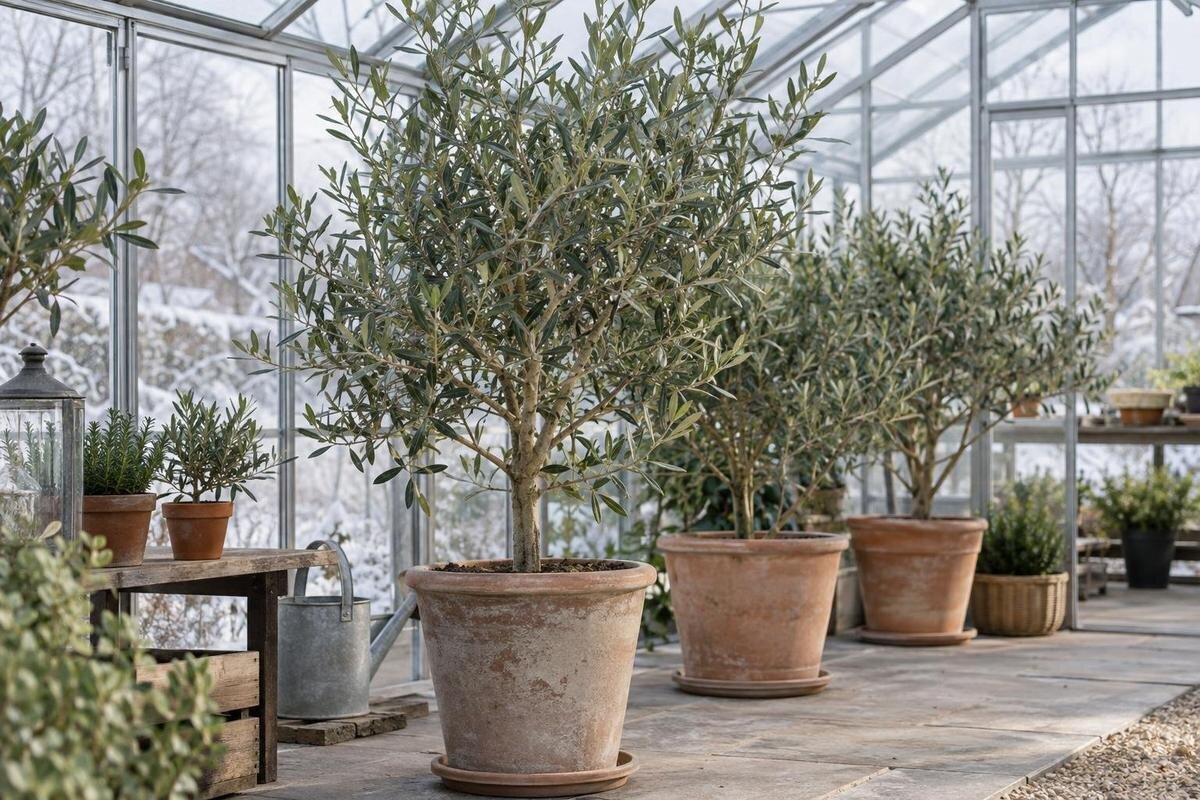
Olive tree care
An olive tree in a pot can spend winter in a greenhouse, but the structure is shelter rather than a guarantee of frost-free conditions. Its care depends on four linked details: enough daylight for an evergreen canopy, a root ball protected from severe cold, compost that is neither persistently wet nor left dry for long, and air that can be refreshed when the greenhouse warms. In the UK, sunny days and cold nights can arrive in the same spell, so a midday impression is not a dependable guide. Match your routine to the tree and cultivar, and use measured conditions rather than assuming every greenhouse stays above a particular temperature.

01
What a greenhouse can offer an olive tree in winter
An unheated greenhouse can shield a potted olive from exposed wind and persistent rain, yet it does not automatically keep the air or the pot above freezing. Sunlight may warm the interior during the day; after sunset, temperatures can fall quickly. The result depends on the structure, its glazing and ventilation, exposure, size and local weather, so treat the greenhouse as a buffer, not a heated room. The Classic aluminium greenhouse range is one category to compare, but a product name or stated floor area cannot tell you the lowest temperature at your site.
An olive tree is evergreen in suitable conditions, but a potted specimen is not equivalent to one planted in the ground. Its roots have less surrounding soil to moderate changes in temperature, and a sheltered position does not correct poor drainage or an already stressed plant. Before moving it under glass, look over the leaves and stems and check whether the compost is wet. Choose a place where you can keep inspecting the tree during cold spells, rather than one that is difficult to reach. Decide in advance what you will do if the greenhouse becomes too cold for your particular cultivar.
Keep the evergreen canopy in the brightest available position
An olive (Olea europaea) is evergreen, so winter care is not the same as putting a dormant deciduous plant in a dark shed. The RHS growing guide recommends a sunny, sheltered position for olives and moving container-grown trees into a frost-free place for winter in colder areas. Under glass, give the canopy the brightest suitable position rather than sacrificing daylight for storage space. Growth often slows in cool weather, but the leaves still need light. Avoid deep shade cast by stored items, a solid wall or taller plants. Leave room around the canopy so you can inspect the branches and light can reach beyond the outer leaves. The supplied RHS guidance does not specify a winter daylength target, so it would be misleading to prescribe a set number of hours.
Check the site at different times of day, especially when the winter sun is low; a summer view can give a misleading impression. Trees, buildings and fences outside, as well as the greenhouse frame, may shade part of the canopy. If you are considering the Lean-To Greenhouse range, assess the adjoining wall and the amount of unobstructed sky visible from the proposed position. Observe where shadows fall across the whole tree, rather than checking only whether sunlight reaches the pot. Keep the glazing reasonably clean, and avoid placing stored equipment between the leaves and the light. Reassess the position if neighbouring plants or winter storage begin to crowd the canopy.
02
Measure the tree, pot and route into the greenhouse
Measure the olive at its current height and widest point, then include the pot and any branches that cannot easily be repositioned. Allow clearance below the roof and around the frame; foliage pressed against glazing or crowded into a corner is harder to inspect and may be more exposed to cold surfaces. Measure the narrowest part of the route into the greenhouse, including gates, doorways and turns, not just the final doorway. Account for any trolley or container wrap you intend to use. Plan how to move a heavy pot safely, with suitable equipment and help where needed; pulling on the trunk or forcing branches through an opening risks damage. Once inside, the tree should leave a clear route to the door and vents. You also need enough room to inspect the back of the canopy without repeatedly dragging the pot across the floor.
Compare usable internal dimensions rather than relying on floor area alone. The Limited Edition greenhouse range is listed from 40.6 to 302 ft²; that is an area range, not the height at the tree’s intended position, its doorway clearance or the space available in one particular model. Check the chosen size and its drawings, then mark out the pot and working space on a simple plan. A large container can be awkward to move, so decide where it will sit and how you would relocate it if your winter readings show that you need another arrangement.
Protect the root ball without blocking drainage
Roots in a container have less surrounding soil to buffer temperature changes than roots in the ground. Insulating the outside of the pot can help moderate those changes, but it cannot guarantee that the compost will not freeze. Use a suitable insulating wrap around the container, keeping drainage holes clear and the pot stable. If placing insulation beneath it, make sure water can still escape rather than collecting against the base. Fit the protection before a forecast cold spell, while you can work around the pot without disturbing frozen compost. Leave the surface accessible for moisture checks and watering, and inspect beneath the wrap occasionally for trapped water. Protection that hides a drainage problem can make winter care harder, not easier. Check that any supports remain secure after fitting the wrap, especially if the container is tall or the canopy makes it top-heavy.
The position needs to leave enough room to reach the pot and inspect its drainage, not just fit its footprint. If you are comparing the T-Shaped Orangery Greenhouse, check the actual layout and dimensions to see whether the chosen spot leaves space for insulation and access. A greenhouse shape alone does not show where the tree will be least exposed. If a temporary cover is needed around the canopy during a cold spell, do not leave an opaque covering in place unnecessarily: the evergreen leaves still need light, and you will need to keep an eye on conditions beneath the cover.

03
Use temperature readings instead of a universal minimum
There is no single minimum temperature that is safe for every potted olive. The RHS growing guide reports that many olives tolerate temperatures of −5 to −10°C, while warning that severe frosts can still damage leaves and branches. This is general hardiness guidance, not a safe operating range for your greenhouse or a guarantee for a container-grown tree. The same guide recommends moving potted olives into a frost-free place over winter in colder areas: that is a more cautious basis for planning than allowing the greenhouse to approach the reported hardiness limits. Cultivar, age, condition, acclimatisation and the duration of cold all matter. Ask the supplying nursery about your named cultivar and its care in a pot, particularly if the tree is young or its previous growing conditions are unknown.
Use a minimum–maximum thermometer near the tree, and keep a record during cold spells. A reading in a sunny spot at midday tells you little about the night-time low, and conditions can vary between positions in the same greenhouse. For the Pyramid-type greenhouse, as for other layouts, identify a suitable monitoring position alongside the intended plant space. Keep the instrument out of direct sunlight and follow its placement instructions so you are not mistaking a sun-warmed reading for the surrounding air temperature. Record the date and any protective measures alongside the minimum reading. If temperatures fall outside guidance for your tree, move it to a more suitable protected place rather than relying on the greenhouse to correct the conditions.
Water according to the compost, not the calendar
The RHS recommends keeping a container-grown olive’s compost barely moist over winter, rather than following its active-growth watering routine. Check the surface and feel a little way below it before deciding whether to water. A dry-looking crust does not necessarily mean that the root ball beneath it is dry, particularly in a large container. If the upper layer has begun to dry and the compost below is only slightly moist, water as needed to prevent the root ball drying out, then let excess water drain freely. If it is still wet, wait and check again. Apply water to the compost rather than routinely wetting the foliage. Check that drainage holes are clear, and empty any saucer or outer container that collects water. Stable pot feet can help keep the holes clear of the floor. Do not assume that an olive under glass can manage indefinitely without water: a bright, mild spell may dry a container even when the outdoor weather is wet.
A greenhouse reduces the rain reaching the pot, so check the compost rather than using rainfall as a guide. Keep the pot accessible and note how quickly it dries in different conditions. If you are considering a greenhouse with built-in storage, check the layout and which area is available for plants; storage space should not be counted as room for the olive or its watering access. A simple record of watering and compost condition can help you spot a change in drying rate without committing to a rigid schedule.
04
Ventilate when conditions allow
A bright winter day can make a greenhouse much warmer than the air outside, so shelter should not mean keeping the space sealed at all times. When outdoor conditions are suitable, open the available vents or door enough to refresh the air. Close them again before temperatures fall sharply, using the thermometer rather than a fixed time of day as your guide. Do not obstruct vents with the olive, other pots or stored items; clear access makes it easier to respond when the weather changes.
Condensation can form as the greenhouse cools, but it is not a thermometer and does not tell you whether the root ball is too wet. Avoid crowding foliage, and check for persistently damp surfaces as part of the routine. When comparing a Prestige greenhouse, ask about the number, position and operation of vents in the particular configuration you are considering. Check whether you can reach their controls with the olive in place and whether an open door would obstruct the route around the pot. Good ventilation is a way to manage changing conditions, not a reason to leave the tree exposed to a cold draught during a severe spell.
Check foliage and stems for pests
Inspect the upper and lower leaf surfaces, stems and leaf joints regularly, especially while other plants are close by. Scale insects can look like small fixed bumps on stems or leaves; sticky residue may also be a clue. Fine pale stippling or webbing can point to spider mites. These signs are not a diagnosis on their own, and a few fallen leaves do not identify the cause: cold, excess moisture, dryness and low light can also affect foliage.
Make pest checks part of watering and ventilation, and remove fallen leaves so you can see what is happening around the pot. Before bringing the olive into a shared greenhouse, inspect it away from the other plants; this is easier than separating crowded containers later. If you find a suspected infestation, identify it before treating the tree and separate the pot from nearby plants if that is practical. A clear photograph of the affected leaf or stem can help a nursery or horticultural adviser distinguish pests from other damage. Use only a treatment labelled for the plant and the place where it will be used, and follow its instructions, including any restrictions relevant to fruit you intend to eat. Avoid improvised mixtures. Note which branches are affected and recheck both those areas and new growth, so you can tell whether the problem is spreading rather than relying on a single inspection.

05
Compare the full greenhouse specification with the care plan
Before choosing or setting up a greenhouse for winter, compare the whole arrangement with the olive’s needs. Consider the site’s winter shade, the tree’s height and canopy, the usable floor space, the door route, ventilation and where a thermometer can be placed. Check the stated glazing and dimensions for the model you are considering; neither the product category nor the greenhouse’s apparent warmth on a sunny afternoon establishes the conditions it will provide overnight. If you expect to rely on a temperature-controlled space, make sure there is a suitable, professionally assessed plan for achieving and monitoring it.
The Spacious Greenhouse range is listed from 506 to 753 ft². Use those figures as a starting point for a layout comparison, then check the dimensions of the specific size you are considering. Draw in the olive's canopy as well as its pot, along with benches, other wintering plants and any equipment already planned for the space. This shows whether the tree has a genuinely usable position or merely fits into the remaining floor area. A larger footprint does not remove shade or establish an overnight temperature. Compare the proposed layouts using the same requirements: daylight at canopy level, clearance around the tree, access to watering and ventilation, and a practical route for moving the container. Keep the care equipment together and accessible rather than storing it behind the olive. A workable layout should let you respond to changing weather without first rearranging the whole greenhouse.
Ease the olive back outdoors in spring
Do not move the tree outside simply because one mild day has arrived. Wait until conditions suit the tree and cultivar, taking the local forecast and the greenhouse readings into account. Then acclimatise it gradually: begin in a sheltered outdoor position and increase its exposure as conditions allow. A sudden change from a protected space to wind, stronger sun and cooler nights can be a shock, even when the daytime weather feels pleasant. Be prepared to give the tree further protection if cold weather returns.
As daylight and warmth increase, check the compost more often because it may dry faster, but continue to water according to its condition rather than switching automatically to a summer timetable. Look for fresh growth and review the canopy, pot and drainage before the next growing season. Some older leaves naturally fall as new growth emerges, according to the RHS, so spring leaf fall alone does not prove that winter care has failed. For suspected frost damage, wait until late spring to assess which stems are dead and prune back to new shoots; do not rush into heavy pruning while the extent of damage is unclear. A gradual transition outdoors gives you time to observe the olive and adjust its position or routine.
Frequently asked questions
Can an olive tree stay in an unheated greenhouse all winter?
Possibly, but an unheated greenhouse is not a guarantee against frost. The outcome depends on the tree, its pot and root-ball condition, the length of cold spells and temperatures inside the structure. Monitor conditions and have another suitable place in mind if the tree’s known requirements cannot be met.
What is the lowest temperature an olive can tolerate?
The RHS reports that many olives tolerate −5 to −10°C, but also warns that severe frosts can damage leaves and branches. Those figures are not a guaranteed safe minimum for a potted tree. Its cultivar, age, acclimatisation and the length of the cold spell all matter. For container-grown olives in colder areas, the RHS recommends a frost-free winter place. Use a thermometer at plant level and seek advice for your particular tree rather than treating a general hardiness range as a greenhouse temperature target.
How often should I water an olive tree under glass?
There is no reliable fixed interval. The RHS recommends keeping the compost barely moist over winter. Check below the surface: a dry crust can conceal wet compost underneath. If the upper layer has begun to dry and the compost below is only slightly moist, water as needed to prevent the root ball drying out, allowing excess water to drain away. If it remains wet, wait and check again. Cool, cloudy conditions usually mean less frequent watering than brighter, milder weather.
Does an olive tree need light if it is not growing?
Yes. An olive is evergreen in suitable conditions, so its foliage remains through winter even when growth slows. Give it the brightest suitable position available and avoid treating it like a dormant plant that can be stored in darkness.
When should I move an olive tree back outside?
Use the tree’s requirements and local conditions, rather than a fixed date. When the move is appropriate, acclimatise it gradually in a sheltered outdoor position and keep an eye on the forecast. Be ready to protect it again if cold weather returns.
An olive’s winter place under glass works best when you judge it by what the tree experiences, not by how warm the greenhouse feels at midday. Keep the canopy bright, insulate the container while maintaining drainage, check compost before watering and ventilate when conditions allow. A thermometer and a regular inspection routine make changes easier to spot. These steps cannot make every cultivar safe in every winter, but they give you a sound basis for responding to the conditions at your site.
