
How to Grow Cucumbers in a Greenhouse | Bloomcabin USA
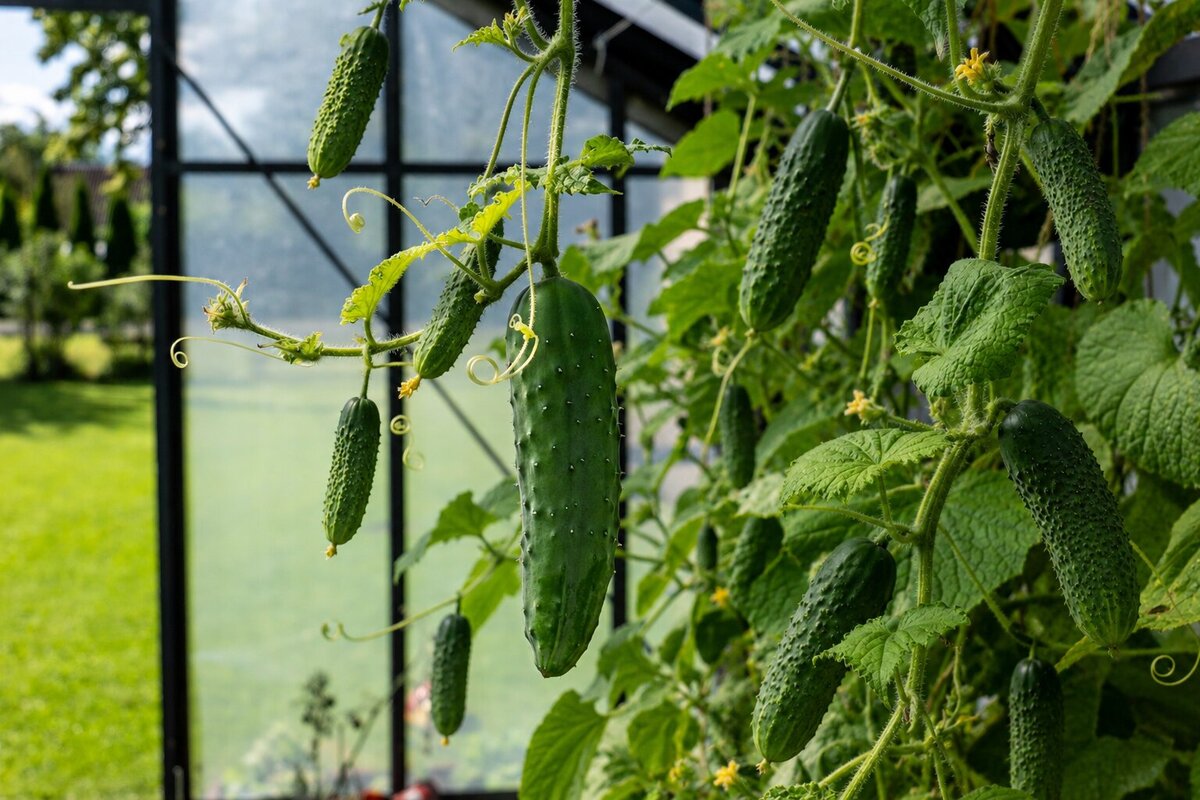
Why cucumbers thrive under cover
A greenhouse gives cucumbers what they value most: warmth, continuity and control.
Cucumbers are a warm-season crop and react quickly when temperature, water or root conditions swing too far. In an open U.S. garden, a late cold spell can stall young plants, a week of rain can keep foliage wet, and a sudden heat wave can stress flowers and fruit. A greenhouse does not remove those challenges, but it gives the grower more control over when the crop starts, how water reaches the root zone, how vines are trained and how much air moves through the canopy.
That control is especially useful because cucumbers grow fast once established. A healthy vine can move from compact transplant to a dense wall of leaves surprisingly quickly. If spacing, trellis position and ventilation are decided only after the plants fill the house, the crop becomes harder to manage. The better approach is architectural: design the cucumber row before planting, then let the vines occupy the vertical volume you planned for them.
Across the United States, the benefit looks different. Northern and high-elevation growers use protected space to gain warmth and extend a short season. Humid eastern growers gain more control over leaf wetness and rainfall. Hot southern and southwestern growers use the structure differently — prioritizing roof vents, doors, shade and careful irrigation so the greenhouse does not become excessively hot. The same crop can thrive in all of these regions, but the management emphasis changes with climate.
The cucumber climate band
Warm roots. Moving air. No extreme swings.
Cucumbers are sensitive to cold. University extension guidance for U.S. growers notes that cold soil slows establishment, while production also slows when air temperatures move well below the crop’s comfortable range. In a greenhouse, this means there is little value in rushing seedlings into cold beds simply because daytime sunshine makes the air briefly warm. Root-zone temperature and nighttime conditions still matter.
Heat can become the opposite problem. A bright greenhouse can rise far above outdoor temperature on a sunny day, even when the morning started cool. Open roof vents and doors early enough that heat does not build into a crisis. In hot climates, airflow and shade strategy can matter more than trying to trap additional warmth.
Practical temperature thinking
Too cool
slow growth
slow growth
Productive warm zone
steady growth
steady growth
Too hot
stress rises
stress rises
Use actual plant response, local weather and a greenhouse thermometer rather than treating one number as a universal thermostat setting for every variety and U.S. climate.
Step 01 / Variety
Choose the cucumber before you design the pollination strategy.
Cucumber labels matter more in a greenhouse than many new growers expect. Traditional garden cucumbers commonly produce separate male and female flowers on the same plant and rely on insects to move pollen. If pollination is poor, fruit can fail to develop or become misshapen. In a closed greenhouse, pollinator access may be much lower than outdoors, so the grower must plan for open doors, hand pollination or another suitable strategy.
Many cucumbers bred specifically for greenhouse and high-tunnel production are parthenocarpic. These varieties can set fruit without pollination and are often the simplest choice for enclosed growing. University of Minnesota Extension notes that pollinating some parthenocarpic greenhouse cucumbers can actually lead to seeded or misshapen fruit, so the goal may be to exclude pollinators rather than attract them.
Do not assume that 'all-female,' 'seedless,' 'greenhouse,' 'parthenocarpic' and 'gynoecious' mean exactly the same thing. Read the seed supplier’s description. Some high-yield all-female types still need a pollen-producing companion, while true parthenocarpic types do not need fertilization to make marketable fruit.
Traditional type
Plan for pollination
Male + female flowers generally need pollen transfer. Open access for bees or pollinate by hand when needed.
Parthenocarpic greenhouse type
Fruit without pollination
Often ideal for enclosed greenhouse culture. Follow the specific seed supplier’s advice on pollinator exclusion and pruning.
Step 02 / Planting
Start warm, transplant young and avoid disturbing cucumber roots.
Cucumbers can be direct-sown or transplanted. U.S. extension guidance commonly recommends waiting until soil is genuinely warm because cucumber seed germinates poorly in cold soil. In a greenhouse bed, a soil thermometer is more useful than judging by a warm afternoon. If the soil still feels like early spring, the crop will behave like early spring even if the glazing is sunny.
Transplants are useful when you want an earlier start, particularly in northern states or short-season mountain regions. Keep them young. Cucumbers dislike rough root disturbance, so use individual cells or pots and move plants carefully before roots become a dense, tangled mass. Harden plants gradually if they are moving from a controlled indoor environment into an unheated greenhouse with much larger day-night swings.
A simple U.S. greenhouse timeline
01 / PrepareWarm soil + trellis first
02 / EstablishYoung plants, steady moisture
03 / TrainGuide vines upward
04 / FruitPollinate only if variety needs it
05 / HarvestPick often, keep vines productive
Step 03 / Spacing
Use vertical space generously. Do not confuse high density with high yield.
A cucumber vine wants to become a wall. Your job is to make that wall thin enough for light and air to pass through it.
Outdoor home-garden recommendations often leave cucumbers 8 to 12 inches apart after thinning, while commercial high-tunnel systems may use very different plant densities depending on cultivar and pruning system. For a backyard greenhouse, do not copy a commercial density number without understanding the system behind it. A heavily pruned, single-leader parthenocarpic cucumber can occupy space very differently from a vigorous traditional slicer with multiple side shoots.
The most useful rule is to design for airflow and access. Leaves from neighboring plants should not form an impenetrable layer. You should be able to reach the base for watering checks, see both sides of the foliage during pest scouting and harvest fruit without tearing vines apart. If every mature leaf is pressed against another leaf, the row is too dense for easy management.
Install the trellis before the vines need it. Strings from an overhead support, vertical netting or a sturdy trellis can all work. A greenhouse lets you use height instead of allowing vines to sprawl across the floor. Vertical training keeps fruit straighter, opens the walking area and creates a more organized climate around the leaves.
For tall greenhouse varieties, follow the seed supplier’s pruning instructions. Some systems keep a main leader and manage side shoots aggressively; others allow more branching. Remove yellowing, damaged or diseased leaves promptly, but avoid stripping healthy foliage simply to make the greenhouse look tidy. Leaves are the crop’s solar panels.
Step 04 / Water
Keep the root zone consistently moist — not periodically flooded.
Cucumbers have a high demand for water as vines expand and fruit forms. University of Minnesota Extension recommends roughly an inch of water per week for garden cucumbers as a general outdoor baseline, while noting that trellised plants may need watering more often. Inside a greenhouse, rainfall no longer contributes directly, so irrigation becomes entirely your responsibility.
Do not turn that outdoor inch into a rigid greenhouse recipe. Container size, soil texture, plant size, temperature, sun and ventilation can change water use dramatically. Instead, monitor the root zone. Water deeply enough to moisten the active root area, then let oxygen remain in the soil rather than keeping it permanently saturated.
Drip irrigation or careful soil-level watering is ideal because the leaves stay drier. Wet foliage in a warm, humid greenhouse can increase disease pressure and make the canopy harder to manage. Morning watering is generally easier to balance because plants enter the brightest part of the day with available moisture while excess surface humidity has time to dissipate.
Watch the fruit as well as the soil. Rapid changes from very dry to heavily watered conditions can stress plants. A consistent routine produces more predictable growth. Mulch can help conserve soil moisture after the root zone is warm, but do not use a cool insulating mulch too early in spring if your main goal is to warm the bed quickly.
Step 05 / Feeding
Build fertile soil first. Feed the crop, not the foliage.
Cucumbers perform best in fertile, well-drained soil with good organic matter. Before planting, improve a greenhouse bed with mature compost or other appropriate soil amendments rather than relying entirely on soluble fertilizer later. Fresh manure should not be added immediately before vegetable production; well-composted material is the safer, more predictable choice.
Once vines are established, feeding should support steady growth and fruiting rather than endless soft leaves. Excess nitrogen can produce a huge canopy that is difficult to ventilate and may delay the balance between vegetative growth and fruit production. Follow a soil-test-based plan where possible and use a fertilizer labeled for edible vegetables according to its directions.
Container-grown cucumbers need more deliberate nutrition because roots cannot explore a large bed. They also experience faster changes in moisture and soluble salts. Use a large container with excellent drainage, irrigate evenly and follow a feeding program suited to the potting mix and cultivar. More fertilizer is not the same as more yield.
The productive sequence
01 / Healthy soil
02 / Warm roots
03 / Steady moisture
04 / Balanced nutrition
05 / Frequent harvest
Step 06 / Ventilation + humidity
A cucumber greenhouse should feel alive, not sealed.
Dense cucumber foliage releases a great deal of moisture into the air. On cool nights, that moisture can condense on glazing and leaves. On hot days, the same canopy can trap heat when air movement is poor. Ventilation therefore serves two jobs at once: removing excess heat and helping the leaf surface dry.
Use roof vents to release rising warm air and doors or lower openings to support air exchange. Automatic vent openers can help when outdoor conditions change while nobody is standing beside the greenhouse, but they do not eliminate the need to understand the crop. During a hot U.S. summer, doors may need to be opened early in the day. During cool spring conditions, excessive ventilation can lose useful warmth.
Avoid the instinct to crowd every square foot because a greenhouse is expensive space. Airflow around leaves is productive space too. Better visibility makes pest scouting easier, dry foliage lowers disease pressure, and a thinner canopy helps light reach younger leaves. Vertical trellising is particularly valuable because it creates channels of air instead of a tangled mat of vines on the ground.
In the Southeast and humid Mid-Atlantic, moisture management can be as important as heat. In the desert Southwest, the challenge may be the opposite: keeping roots supplied while venting intense daytime heat. In the Pacific Northwest, cool humid periods can prolong condensation. The structure is the same, but the daily ventilation rhythm should reflect the local climate.
Step 07 / Pollination
When cucumbers flower, know which kind of plant you actually have.
Needs pollination
Traditional male + female flowers
Allow pollinator access once flowers open, or hand-pollinate if the greenhouse is effectively closed. Poor pollen transfer can produce no fruit or misshapen fruit.
Does not need pollination
Parthenocarpic greenhouse types
These can set fruit without fertilization. Pollination may create seeds or misshapen fruit in some types, so follow the variety instructions carefully.
Row covers and insect-exclusion screens create another tradeoff. They can help keep cucumber beetles away, but they also keep pollinators away. For a traditional cucumber, barriers must be opened or removed at flowering unless you are pollinating manually. For a parthenocarpic crop, exclusion can be much easier because bees are not required for fruit set.
Step 08 / Pest + disease discipline
Scout early. A greenhouse makes observation easier — use that advantage.
Cucumber beetles deserve particular attention because cucumbers are susceptible to bacterial wilt, which the beetles can spread. U.S. extension guidance recommends monitoring young plants closely and notes that insect-exclusion screening can help keep cucumber beetles out of greenhouse and hoop-house crops while still allowing ventilation when the mesh is selected appropriately.
The principle is more important than any single pest: inspect the crop regularly. Look at new leaves, undersides, growing tips, flowers and the base of the vines. A greenhouse concentrates plants into an accessible space, which means problems can spread quickly — but it also means you can find them quickly.
Keep the floor and crop area clean. Remove badly diseased material rather than leaving it beneath the canopy. Avoid splashing soil onto leaves when watering. Trellis vines so foliage does not remain pressed against wet ground. At the end of the crop, remove old plant debris and clean the growing area before the next cucumber cycle.
When a pesticide is considered, use only a product labeled for cucumbers and for the intended growing environment, and follow the label exactly. Pollinators add another layer of responsibility when traditional cucumber varieties are flowering. Cultural prevention, exclusion and good monitoring should be the first parts of the system rather than an afterthought.
Step 09 / Harvest
The more consistently you harvest, the more intentional the crop becomes.
Do not wait for every cucumber to become enormous. Harvest at the eating size appropriate to the variety.
Pick slicers while they are still firm and before they become oversized, yellowish or filled with large mature seeds. Pickling cucumbers are usually harvested much smaller and more uniformly. The seed packet or supplier will give the intended fruit size, which is more useful than one generic inch measurement for every cucumber type.
Harvest frequently. Leaving oversized fruit on the vine can reduce continued productivity because the plant continues investing resources in fruit that has already passed its ideal eating stage. During peak production, check vines often; vertically trained cucumbers can hide surprisingly large fruit behind a single leaf.
Cut or gently remove fruit without wrenching the vine from its support. Avoid unnecessary handling when foliage is wet, since working among wet leaves can help move disease organisms from plant to plant. Bring the harvest into shade promptly, then cool it appropriately rather than leaving fresh cucumbers in a hot greenhouse.
Regional USA strategy
Grow the same cucumber differently in Maine, Texas, Arizona and Oregon.
Northern states and short-season regions: use the greenhouse to warm the root zone, establish young plants earlier and protect the crop from cold nights. Avoid planting simply because the greenhouse is sunny at noon; watch nighttime conditions and soil temperature.
Midwest and interior Northeast: spring warmth is valuable, but summer heat can arrive quickly. Design the trellis so roof vents and doors remain unobstructed. Regular scouting for cucumber beetles is especially important where bacterial wilt pressure is common.
Southeast and Gulf states: the season can be long, but heat and humidity make ventilation central. Wider spacing, disciplined pruning, dry foliage and early-day air exchange can be more valuable than trapping additional heat.
Southwest and hot interior West: greenhouse cucumbers can face intense solar gain. Ventilation, shade management, adequate root-zone water and avoiding midday heat buildup are priorities. A greenhouse should moderate the crop environment, not magnify the hottest outdoor conditions.
Pacific Northwest and cool coastal climates: protected space can create useful warmth, but condensation and cool humid periods deserve attention. Maintain airflow and avoid evening leaf wetness.
Mountain West: large day-night swings can make greenhouse control particularly useful. Daytime venting may be necessary even when nights are cold. Think in 24-hour cycles rather than choosing one fixed ventilation setting.
Common mistakes
Most cucumber problems begin before the fruit appears.
01. Planting into cold soilSunny greenhouse air does not compensate for a cold root zone. Wait for genuinely warm soil and stable conditions.
02. Installing the trellis too lateOnce vines tangle, training them vertically becomes slower and more damaging. Build support before the crop needs it.
03. OvercrowdingMore plants can mean less light, poorer airflow, harder scouting and a wetter canopy.
04. Watering leaves instead of rootsKeep irrigation focused on the root zone whenever practical and let the foliage stay dry.
05. Misunderstanding pollinationTraditional and parthenocarpic cucumbers need opposite pollination strategies in some cases.
06. Letting the greenhouse overheatA greenhouse can become hotter than outdoors very quickly. Vent before heat accumulates excessively.
07. Leaving oversized fruit on the vineHarvest at the intended eating stage and keep checking plants through peak production.
08. Ignoring the lower canopyInspect leaf undersides, stems, soil surface and the first few leaves where pests and disease symptoms can appear early.
Bloomcabin USA / choose your growing space
Cucumbers use height beautifully. Choose a greenhouse that gives your trellis room to work.
The ideal Bloomcabin model depends on the number of vines, how much space you want for paths and other crops, and whether the greenhouse is purely productive or also part of your outdoor living space. These links go directly to Bloomcabin U.S. product pages.
Balanced everyday growing Classic Aluminum Greenhouse →
Extra width for trellised rows Classic Plus 385 →
Large-scale growing + living Bloomcabin Orangerie →
Space-efficient wall growing Lean-To Greenhouse →
Separated growing zones T-Model Greenhouse Orangery →
Wall-connected T layout Wall-Mounted T-Model Orangery →
Premium compact-to-large growing Bloomcabin Prestige Greenhouse →
Tall architectural volume Pyramid Greenhouse Oasis →
Raised masonry-base design Pyramid Greenhouse for Wall Bases →
Tools beside the crop Greenhouse with Built-In Storage →
Vertical wall-base growing Wall Greenhouse →
Compact design-led growing Hexagon Greenhouse →
Long trellised crop rows High Tunnel Greenhouse →
FAQ
Greenhouse cucumber questions
What is the best cucumber for a greenhouse?
Parthenocarpic varieties bred for greenhouse or high-tunnel production are often the simplest because they can set fruit without insect pollination. Choose according to your preferred fruit type and follow the seed supplier’s greenhouse instructions.
Do greenhouse cucumbers need bees?
Traditional varieties generally need pollen moved from male to female flowers. Parthenocarpic varieties do not. Some parthenocarpic types may produce seeded or misshapen fruit if pollinated.
How far apart should cucumbers be in a greenhouse?
Spacing depends on cultivar and pruning system. Backyard growers should prioritize a canopy that can be reached, ventilated and inspected rather than copying a high-density commercial system without its training method.
Should greenhouse cucumbers be trellised?
Trellising is extremely useful. It keeps vines off the floor, opens walking space, improves access to fruit and helps air move through the canopy.
How often should I water cucumbers in a greenhouse?
There is no universal schedule. Check the root zone regularly and irrigate deeply enough to maintain even moisture without waterlogging. Hot weather, containers and tall trellised plants can increase frequency.
Why are my greenhouse cucumbers misshapen?
Possible causes include inadequate pollination in varieties that require it, unwanted pollination of some parthenocarpic types, water stress, heat stress or other growing problems. Start by confirming the cultivar’s pollination requirement.
Can cucumbers and tomatoes share a greenhouse?
Yes, if the space is large enough to manage both canopies. Keep each crop accessible, avoid overcrowding and use ventilation and irrigation zones that prevent either crop from dominating the environment.
When should I harvest greenhouse cucumbers?
Harvest at the size intended for the variety, before fruit becomes overmature. Check vines frequently during peak production and remove mature fruit promptly to keep the crop productive.
Grow upward
Give cucumbers warmth at the roots, air around the leaves and height above the vines.
A well-planned Bloomcabin greenhouse turns cucumber growing into a vertical system: warm soil below, controlled water at root level, a clean trellis through the center and ventilation above the canopy.
Explore U.S. Greenhouses View Classic GreenhouseUSA growing note: This guide provides general home-greenhouse gardening information. Cucumber variety requirements, planting dates, pest pressure and climate management vary across the United States. Follow your seed supplier’s cultivar instructions and use your state or local Cooperative Extension for location-specific crop and pest guidance. When using any pesticide, the product label is the law and must specifically permit the intended crop and use.
