
How to Grow Cucumbers in a Greenhouse | Bloomcabin UK
Why greenhouse cucumbers work so well in Britain
Protected growing turns an unpredictable summer into a much more controlled cucumber season.
British outdoor cucumber growing can be limited by cool nights, windy springs and long spells of wet weather. A greenhouse changes those conditions by keeping the root zone warmer, shielding foliage from constant rain and allowing vines to be trained vertically. Plants can establish earlier and continue cropping later without relying entirely on a run of perfect summer weather.
The protected environment creates its own challenges. Large cucumber leaves release a great deal of moisture, and the same glazing that traps useful spring warmth can create excessive summer heat. Good greenhouse culture is therefore not simply about keeping the doors shut. It depends on active ventilation, regular root-zone watering and enough plant spacing for air to move through the canopy.
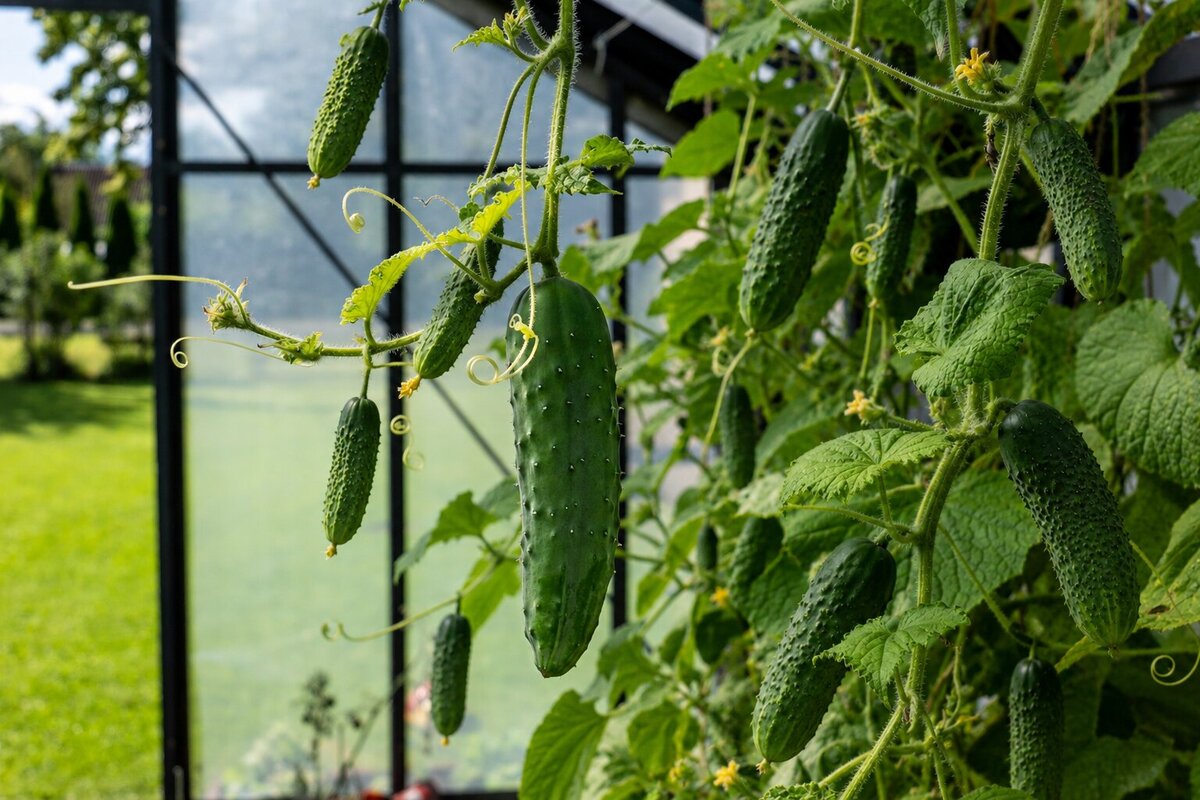
Vertical training is especially valuable in a narrow British garden. Instead of allowing vines to trail across paths, strings or netting turn the crop into a tall, organised wall. Fruit is easier to find, leaves stay off the floor and the remaining greenhouse space can be shared with other warm-season plants.
The British cucumber climate
Use spring warmth carefully, then switch quickly to heat and humidity management.
An unheated greenhouse can feel hot on a sunny April or May afternoon while the soil remains too cold for vigorous cucumber roots. Young plants establish more reliably when the bed itself has warmed and the nights are no longer consistently chilly. A slightly later planting into genuinely warm soil can overtake an early plant that has been checked by cold.
By midsummer the problem reverses. Even a moderate outdoor day can produce a very hot greenhouse when the sun is strong. Roof vents should begin releasing warm air before the house becomes oppressive, while doors or lower openings provide replacement air. In south-facing and sheltered urban gardens, shading may become useful during bright spells.
Britain’s humid weather adds another layer. On cool nights moisture released by the plants condenses on glass and foliage. The aim is not a completely dry atmosphere but to avoid leaves remaining wet for long periods. Morning ventilation, sensible spacing and watering at soil level make a substantial difference.
Too cool – roots and growth slow
Warm + moving air – steady production
Too hot – water stress and flower problems
01 / Variety choice
Choose a cucumber variety with its pollination biology in mind.
Many cucumbers sold specifically for greenhouse growing are all-female or parthenocarpic types. True parthenocarpic varieties can set fruit without fertilisation, which makes them particularly convenient inside a structure where insects may not enter consistently. Long greenhouse cucumbers and many snack types fall into this category.
Traditional outdoor cucumbers often produce separate male and female flowers and require pollen transfer. If such a plant is grown under glass, pollinating insects need access or the grower may have to pollinate by hand. By contrast, some greenhouse varieties can develop seedy or misshapen fruit if they are pollinated, so encouraging bees is not universally beneficial.
Read the seed supplier’s instructions rather than relying only on words such as female, seedless or greenhouse. Growth habit matters too. A vigorous cordon cucumber needs a strong overhead support and regular training. Smaller snack cucumbers can be easier to keep harvested in a family greenhouse and often fit compact spaces well.
02 / Sowing + planting
Keep transplants young, protect the roots and prepare the support before the vines need it.
Cucumbers can be sown directly once the greenhouse bed is warm, or started indoors in individual pots for an earlier crop. Because cucumber roots dislike rough disturbance, individual pots are preferable to a crowded seed tray. Transplant while plants are still compact and the root ball can be moved intact.
Prepare fertile, free-draining soil before planting. Mature compost is useful for structure and nutrient supply, while waterlogged heavy soil is not. If the bed has been used intensively for several seasons, refreshing organic matter and checking soil condition is more valuable than simply adding stronger fertiliser.
Set up strings, trellis or netting before planting. Once cucumber growth accelerates, long soft shoots are easily damaged while being threaded through a support installed too late. Early training also determines where leaves will sit in relation to doors, roof vents and paths.
01Warm the bed and install supports
02Plant young cucumbers without disturbing roots
03Guide the main stem upwards early
04Manage side shoots according to the cultivar
05Increase water attention as fruit load rises
06Harvest frequently and inspect the canopy
03 / Spacing + training
A productive cucumber row should be tall and accessible, not packed into a solid mass.
There is no single spacing that suits every greenhouse cucumber. A strongly pruned cordon variety can occupy a different width from a bushier type. Think about the mature canopy: you should be able to reach the soil, inspect leaf undersides and harvest fruit without forcing your way through overlapping foliage.
Training vertically uses the greenhouse volume efficiently. Tie or wind the main stem onto string, netting or another secure support. Keeping vines off the floor improves fruit cleanliness and leaves room for a central path, pots or another crop below.
Follow variety-specific advice for side shoots. Some greenhouse cucumbers are managed closely around a single leader, while others carry useful fruit on laterals. Removing every side shoot indiscriminately can reduce production; allowing every shoot to grow can create a humid jungle. The correct balance is cultivar-dependent.
Keep doors and vents clear of foliage. A dense leaf wall immediately in front of an opening prevents air from moving through the house, even when that opening is technically wide open. Good spacing is therefore part of the ventilation system.
04 / Watering
Cucumbers need generous water, but consistency matters more than a fixed daily quantity.
Once cucumbers are tall and carrying fruit, they can use water quickly. A small plant in a cloudy May greenhouse and a mature vine on a sunny July day have completely different demands. Check moisture in the root zone rather than following the same irrigation duration throughout the season.
Water deeply enough to moisten the active root area but avoid keeping the bed saturated. In containers, drainage is essential because a large cucumber can empty a pot quickly and then be overwatered just as quickly. Larger containers buffer these swings better than small ones.
Drip irrigation or careful watering at soil level keeps foliage dry. This is valuable in a humid British greenhouse, particularly when nights are cool. Morning watering generally fits the crop well because roots are supplied before the brightest part of the day and excess humidity can be vented afterwards.
Repeated cycles of severe dryness followed by heavy watering stress the crop. Fruit quality and growth become less predictable. Mulching warm soil can reduce evaporation, but do not apply a thick insulating mulch so early that it slows spring soil warming.
05 / Feeding
Build a fertile root zone first, then feed for balanced fruiting rather than maximum leaf growth.
Cucumbers are hungry plants. A well-prepared bed containing mature compost gives roots both nutrients and a moisture-buffering structure. Where the same greenhouse soil is cropped every year, occasional soil testing or a deliberate rotation of amendments is better than automatically increasing fertiliser rates.
Too much nitrogen can produce an enormous soft canopy that shades itself and holds humidity. Once flowering and fruiting are underway, the aim is steady balanced growth. Use a fertiliser labelled for edible vegetables and follow the product instructions rather than making increasingly concentrated feeds.
Container-grown cucumbers need especially regular nutrition because the root system cannot explore beyond the pot. Use a large container with free drainage and feed in a measured way. Salt build-up and water stress happen much faster in a small volume of compost.
06 / Ventilation + humidity
A cucumber greenhouse should feel warm and lively, not sealed and wet.
Cucumber leaves transpire heavily and can make a small greenhouse humid very quickly. After a cool night, water may condense on glazing and leaves. Open the greenhouse in the morning once conditions allow, so this moisture does not remain trapped around the canopy for hours.
Roof vents are especially useful because warm air naturally rises. Doors or lower vents support replacement airflow. Automatic openers are valuable in Britain because a cool morning can turn into a surprisingly hot afternoon, but they should support rather than replace regular observation.
During hot spells, open early. Waiting until plants are already wilted means the greenhouse has accumulated more heat than necessary. In a south-facing garden, temporary shading can reduce the peak while still allowing ample light for productive growth.
Good ventilation depends on the crop itself. Remove old yellowing leaves and avoid allowing side shoots to form an impenetrable wall. Air needs actual pathways through the foliage, not merely an open vent somewhere above it.
07 / Pollination
Know whether your cucumber needs bees before deciding how open the greenhouse should be.
Traditional cucumbers with male and female flowers generally need pollen transfer. Female flowers carry a miniature cucumber behind the petals. If pollination is poor, fruit may fail to develop or become misshapen. Open doors can provide insect access, while hand pollination is an option in an enclosed structure.
Parthenocarpic greenhouse cucumbers do not require fertilisation. Some are specifically intended to crop without bee access and can become seedy or distorted if pollinated. This is why a blanket recommendation to attract pollinators to every cucumber house is incorrect.
Insect mesh creates the same decision. It can help exclude pests, but it also excludes pollinators. The cultivar description should decide whether that is an advantage or a problem once flowering begins.
08 / Pests + diseases
The greenhouse makes regular inspection easier, so problems should rarely be allowed to become invisible.
Check growing tips and leaf undersides regularly. Aphids, spider mites, whitefly and other protected-crop pests can multiply rapidly in warm conditions. Early colonies are much easier to deal with than a fully infested trellis.
Long periods of leaf wetness increase disease risk. Keep irrigation at root level where practical, ventilate well and remove badly affected material rather than leaving it beneath the crop. A clean, open lower canopy is easier to monitor and dries faster.
At the end of the crop, remove vines and roots and clean reusable supports and containers. A greenhouse gives you the opportunity to reset the growing environment between crops instead of allowing old debris to sit beneath the next planting.
If any pesticide is used, follow the label exactly and make sure it permits the crop and intended greenhouse use. Pollinator safety matters where traditional flowering cucumbers rely on bees. Cultural prevention and early monitoring remain the best first line.
09 / Harvesting
Pick little and often, at the size intended for the variety.
Long greenhouse cucumbers, snack cucumbers and pickling types are harvested at different sizes. Follow the seed supplier’s description and pick before fruit becomes overmature, coarse or yellowing. An overgrown cucumber is not simply a larger version of the ideal fruit.
During peak summer growth, inspect vines several times each week. Fruit can hide behind a single broad leaf and grow very quickly. Frequent picking keeps the harvest more uniform and prevents the plant investing heavily in fruit that has already passed its best eating stage.
Cut or remove cucumbers carefully without pulling the vine from its support. Move harvested fruit out of a very hot greenhouse promptly and keep it shaded and cool until it is used.
Growing around the UK
A Scottish greenhouse, a sheltered London garden and a Cornish coastal plot need different daily routines.
The protected structure is the same, but British regional weather changes how it should be used. In cooler northern and upland areas, retaining spring warmth is particularly valuable. In southern urban and south-east gardens, midsummer overheating can become the greater challenge.
Rainfall and humidity patterns also vary. The grower should respond to the actual greenhouse climate rather than assuming one schedule works across the country.
Scotland + northern England A warm root zone and protection from cool nights can add real value. Ventilate on sunny days without chilling young plants unnecessarily.
South-east England Heat can build quickly in sheltered gardens. Early ventilation and occasional shading may become important in summer.
South-west + Wales Mild conditions can support a long season, while humid weather makes leaf-drying airflow especially useful.
Urban gardens Walls store heat and can create an excellent early-season microclimate, but the same effect can push afternoon temperatures very high later.
Coastal gardens Wind may cool open doors rapidly. Use ventilation to exchange air without exposing young plants to a constant strong draught.
Upland gardens Large day-night swings reward flexible opening and closing rather than a fixed daily routine.
Common mistakes
Most greenhouse cucumber problems are management problems before they are plant problems.
01. Planting into cold soil Warm afternoon air does not mean the root zone is ready.
02. Leaving support until later Install strings or netting before vines become long and tangled.
03. Packing in too many plants Dense foliage increases humidity and reduces access.
04. Splashing the whole canopy Keep routine irrigation focused on the root zone.
05. Ignoring pollination type Traditional and parthenocarpic cucumbers need different flowering strategies.
06. Opening vents too late Prevent heat build-up rather than trying to recover from it.
07. Feeding for leaves Excess nitrogen can create an oversized, difficult canopy.
08. Allowing fruit to overgrow Regular picking improves quality and keeps the crop in a productive rhythm.
Bloomcabin UK / Greenhouses for vertical cucumber growing
Cucumbers reward height, clear paths and controllable ventilation.
These links go directly to Bloomcabin UK greenhouse product pages. Different layouts suit different numbers of vines, shared crops and levels of outdoor-living use.
Classic growing layout Classic Aluminium Greenhouse →
Large orangery volume Bloomcabin Orangery →
Metal-base design Bloomcabin Prestige →
T-shaped crop zones T-Shaped Orangery Greenhouse →
Wall-mounted T layout Wall-Mounted T-Model Orangery →
Pyramid height Pyramid Greenhouse Oasis →
Masonry-base option Pyramid Greenhouse for Wall Bases →
Lean-to growing Lean-To Greenhouse →
Wall greenhouse Greenhouse on Wall →
Hexagon garden room Hexagon Greenhouse →
FAQ
Greenhouse cucumber questions for UK growers
What is the easiest cucumber type for a greenhouse?
Parthenocarpic greenhouse varieties are often easiest because they can fruit without insect pollination.
When can cucumbers go into an unheated greenhouse?
When the soil and night conditions are reliably warm enough for the variety; do not rely on one sunny afternoon.
How far apart should greenhouse cucumbers be?
Enough that mature plants can still be ventilated, inspected and harvested. Exact spacing depends on the cultivar and pruning method.
Should cucumbers be trained upwards?
Yes. Vertical training makes excellent use of greenhouse height and keeps fruit and paths cleaner.
How often should I water?
According to root-zone moisture, weather and plant size rather than a fixed timetable.
Do greenhouse cucumbers need pollination?
Traditional varieties usually do; parthenocarpic varieties do not.
Why is my greenhouse dripping with condensation in the morning?
Large cucumber leaves release moisture overnight. Cool glass and limited ventilation cause that moisture to condense.
How do I keep cucumbers cropping for longer?
Maintain healthy leaves, even moisture, good airflow and frequent harvesting.
Grow upwards
Warm roots below, organised vines through the middle and fresh moving air above — that is the greenhouse cucumber system.
A Bloomcabin greenhouse gives cucumbers the protected vertical volume they use so effectively, while leaving the grower in control of water, ventilation and access.
Explore greenhouses View ClassicUK: general home-growing guidance. Cultivar requirements, planting dates, pest pressure and greenhouse management vary by location and season. Follow seed supplier instructions, product labels and appropriate local horticultural guidance.
