



COMPARE
Long-term ownership costs: Why durability matters
A low purchase price says little about how economical a greenhouse, pergola or outdoor sauna will be over many years. Construction, site, foundation, glazing, installation, maintenance and repairability all matter.
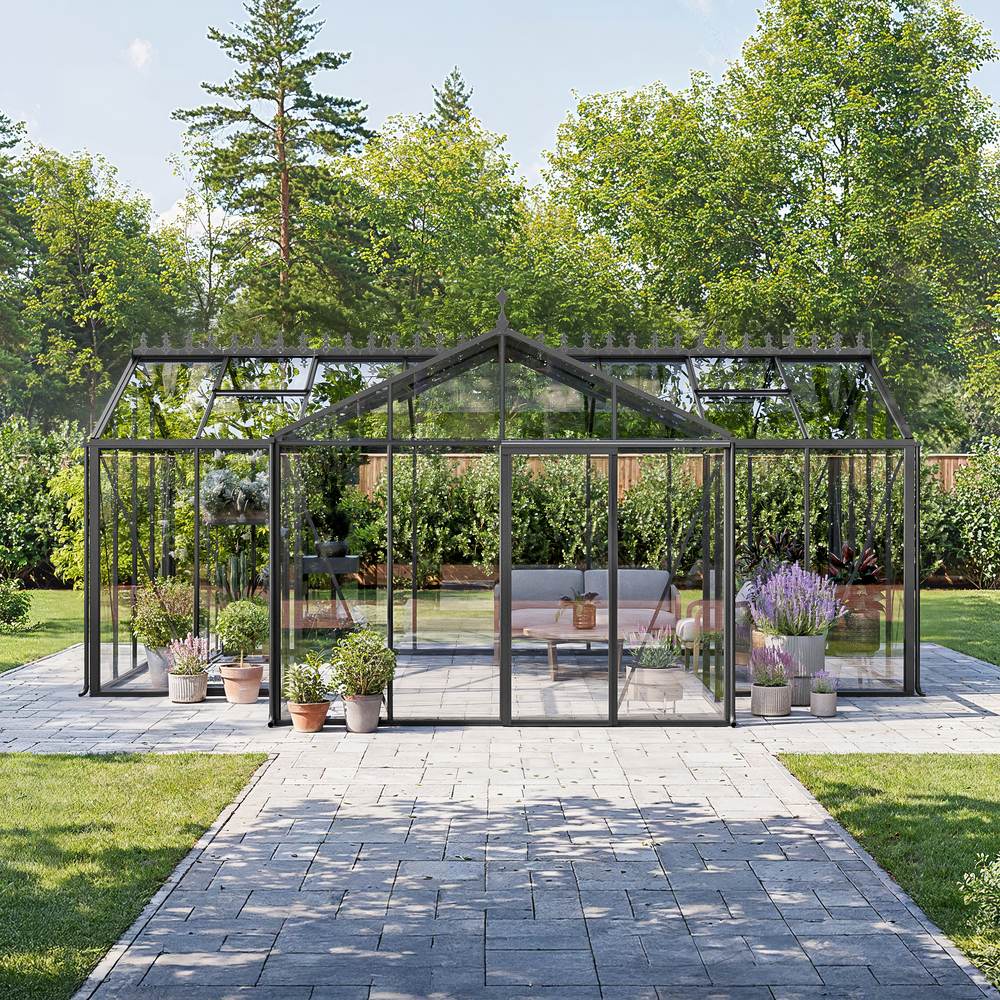
When choosing a greenhouse, pergola or outdoor sauna, most people initially compare purchase prices. That is understandable, but insufficient for a sound decision. A permanent garden structure creates costs beyond the initial purchase, including site preparation, foundations, transport, installation, maintenance, repairs and possibly replacement parts.
The more useful question is therefore: what effort will the structure require throughout its planned life, and what practical value will it provide? This lifecycle view is often called Total Cost of Ownership. It helps distinguish apparently cheap offers from solutions that are genuinely economical.
Purchase price and long-term costs are not the same
The purchase price is a clear figure, but it represents only the beginning of ownership. Two similarly sized greenhouses can create very different costs over time. One structure may need early adjustments, replacement glazing or corrosion treatment. Another may cost more initially but remain functional for years when properly installed.
The most expensive option is not automatically the most economical. A high-quality model unsuited to its site can create unnecessary follow-on costs. Equally, a simple structure is not necessarily a poor choice when it suits the intended use, property and available maintenance effort.
The better measure is not “purchase cost per square metre”, but “total cost per useful year”. Explore available designs in Greenhouses and Conservatories. If you are still starting your selection, the Useful Information overview can also provide guidance.
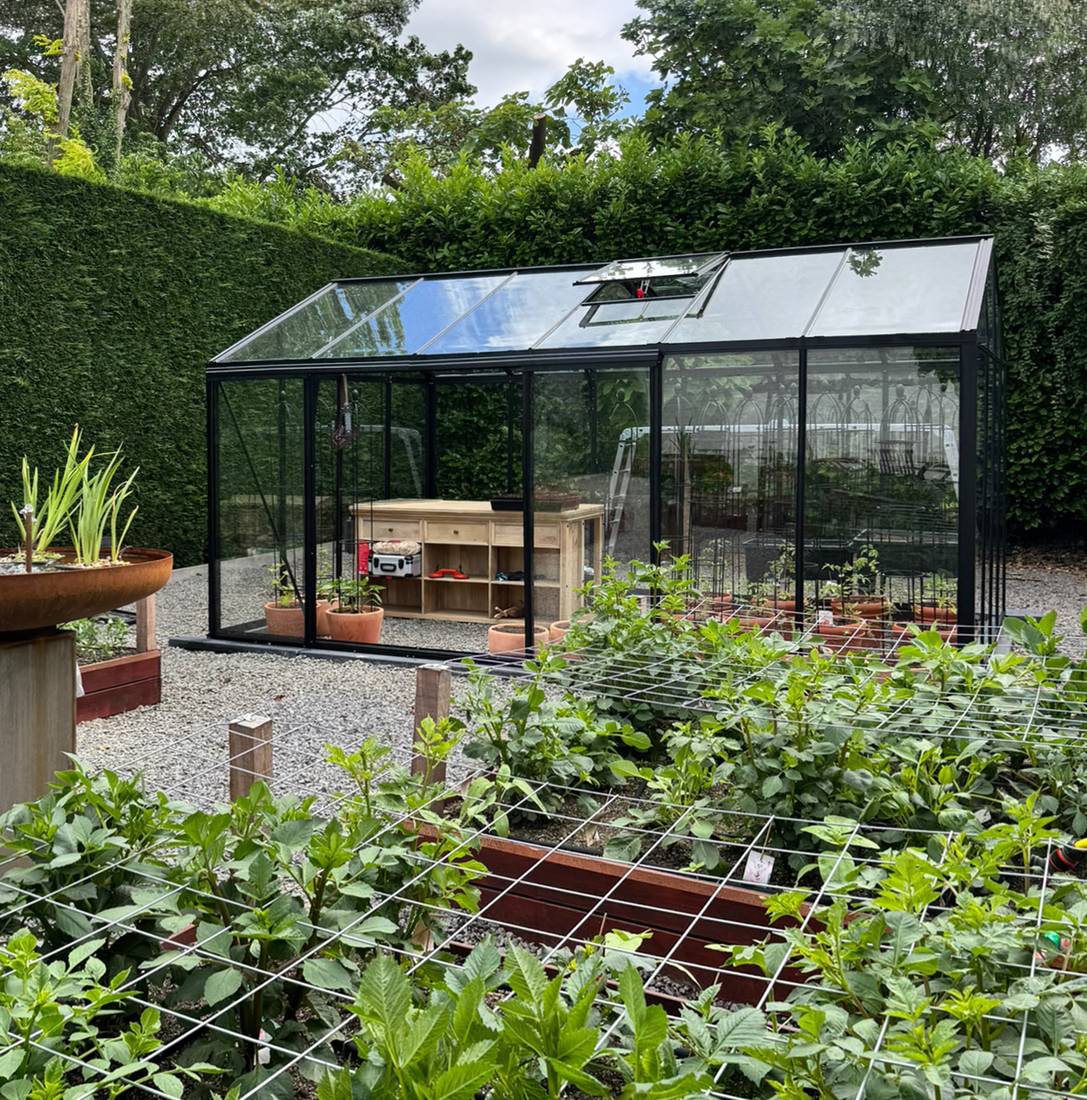
What belongs in a total-cost calculation?
A good calculation covers more than easily visible items. It also includes work outside the actual delivery scope. Start with a simple table that records the same cost categories for every offer.
| Cost area | Points to check | Possible long-term effect |
|---|---|---|
| Purchase | Structure, glazing, doors, ventilation, accessories | Defines the initial technical condition |
| Planning | Site assessment, consent questions, foundation planning | Avoids changes and work stoppages |
| Logistics | Delivery, access, unloading, temporary storage | Reduces damage and delay risks |
| Installation | DIY work, professional installation, tools, helpers | Affects alignment, weatherproofing and function |
| Operation | Cleaning, lubrication, adjustment, consumables | Maintains usability and surfaces |
| Repairs | Spare parts, glazing, seals, fixings | Extends economically useful life |
| Loss of use | Unavailable growing time or closed outdoor area | Reduces practical value |
Set a realistic assessment period and record your assumptions. A one-year comparison says little about a permanently installed structure. At the same time, do not assume a service life is guaranteed if site conditions, maintenance and spare-parts availability have not been assessed.
Ordering and delivery conditions also belong in the calculation. The Shopping and Delivery, How to Order and Guarantee pages help separate different cost categories.
How durability creates practical value
Durability means more than resistance to rain. It describes how reliably a structure performs in its actual conditions of use. This includes material resistance, designed drainage, secure connections, suitable glazing, correct anchoring and the ability to maintain or replace wearing parts.
Fewer major interventions
A robust structure reduces the likelihood that complete surfaces or load-bearing assemblies need early replacement. Small maintenance tasks do not disappear, but they become more predictable. This is generally more economical than repeated emergency repairs after damage.
It is important to distinguish normal wear from design weaknesses. Seals, moving hardware and other stressed components may need attention over time. If these parts are accessible and replaceable, this need not become a major intervention.
More value from foundations and installation
Foundations, site preparation and installation are normally paid for in full only once. If the structure lasts, these costs are spread over more years of use. If an unsuitable structure must be replaced early, parts of this work become necessary again.
This relationship is especially clear with pergolas. A properly planned foundation supports alignment and load transfer. The Pergola Foundation Guide explains the relevant planning questions. Specific requirements must always be checked for the model, ground conditions and local situation.
Continuity of use
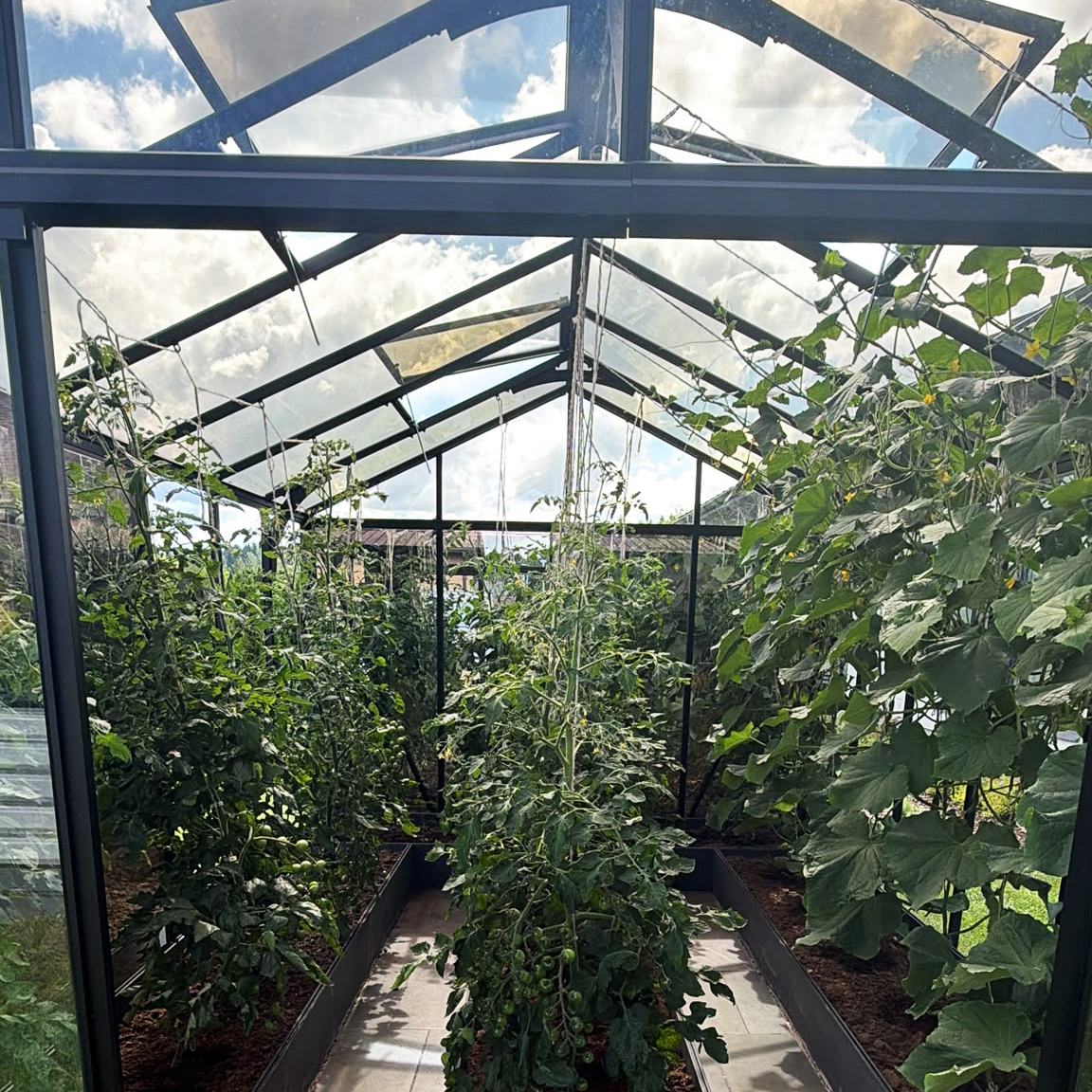
A greenhouse provides value during the growing season. Failures of doors, ventilation or glazing can endanger plants and disrupt routines. Guidance on managing greenhouse temperature and humidity shows why a reliably operable enclosure matters.
The effect is similar for a pergola or sauna: a structure that remains usable provides regular leisure value. A high purchase price offers little benefit if poor access, difficult maintenance or recurring damage leaves it unused for long periods.
Material choice: compare maintenance systems, not labels
Terms such as aluminium, timber, glass or polycarbonate do not alone prove quality. Material specification, connection methods, finishes, drainage, contact points and intended care all matter. Compare complete maintenance systems, not merely material names.
Aluminium does not require the care of untreated timber, but it is not literally maintenance-free. Remove dirt deposits, keep drainage routes clear and inspect connections. The guide to maintaining an aluminium greenhouse sets out a practical approach.
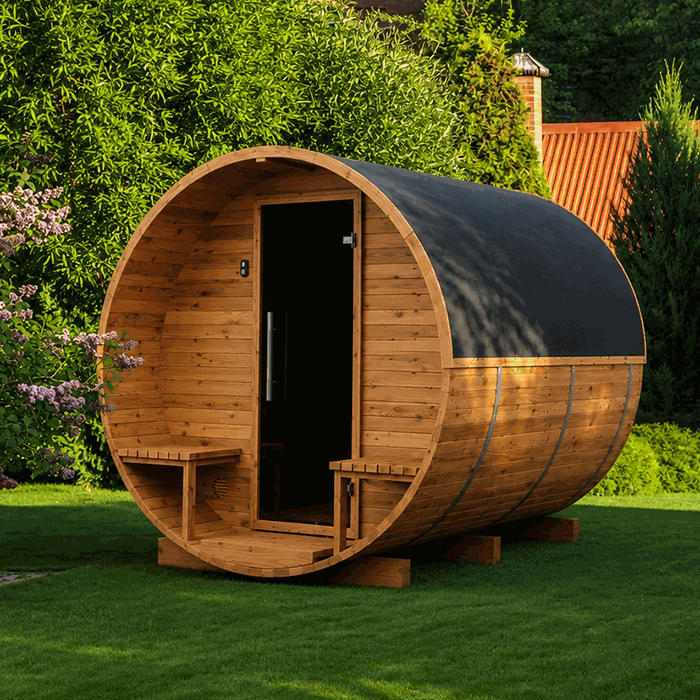
With timber, surface condition, moisture management and constructive timber protection are important. An outdoor sauna also experiences regular cycles of heat and humidity. Compare not only outward appearance, but also use, ventilation, cleaning and access. Examples of different sauna concepts include the Elma S outdoor sauna, the HC150 thermowood barrel sauna and the HC 225 thermowood barrel sauna . Confirm the definitive product details on the relevant model page.
Glazing and roof systems affect lifecycle costs
Glazing and roof surfaces influence light transmission, thermal performance, weight, cleaning and repair effort. The right solution therefore depends on the use. A lean-to greenhouse may have different priorities from a freestanding orangery, while shade, rain management and operation are central for a pergola.
Glass is dimensionally stable and remains transparent over time, but damage can require professional replacement. Polycarbonate is lighter and has different thermal and mechanical properties. Panel construction, edging and installation matter as much as the material itself. The article Polycarbonate for Greenhouses explains panel thickness, multiwall sheets and insulation performance.
For every system, check:
- How are individual panes or panels retained?
- Can damaged sections be replaced separately?
- Are roof surfaces safely accessible for cleaning and inspection?
- How are water and condensation drained?
- Which parts must be removed for replacement?
- Can suitable replacement components be identified?
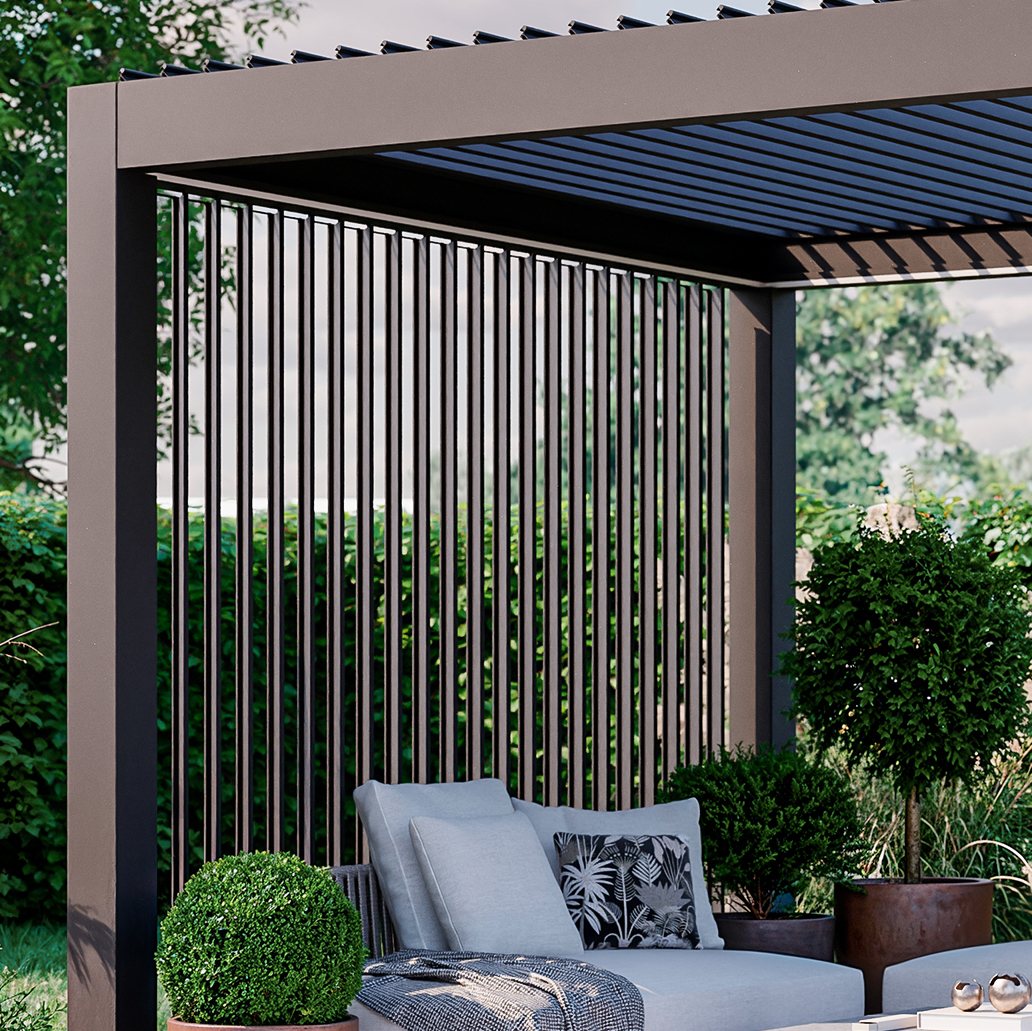
For pergolas, roof function is also crucial. The comparison of bioclimatic and classic pergolas and the overview of bioclimatic pergolas and glass roofs help assess follow-on costs related to use and roof mechanisms.
Choose a design that suits the property
Durability begins with a form that fits the site. A larger structure is not automatically more valuable. It can create awkward routes, make maintenance harder or permanently shade parts of the garden. A solution that is too small, however, may lead to an early wish to extend or replace it.
Consider sun path, wind exposure, roof drainage, existing buildings, trees, boundaries, access and future garden plans. For pergolas, decide whether a connection to the building makes sense. The comparison wall-mounted or freestanding pergola covers this basic decision, while the pergola size guide supports area planning.
Design also has long-term value. If you will continue to prefer classic architecture, allow for this in your choice. Information on Victorian greenhouses and planning an orangery shows how form, use and garden character work together.
Site preparation is part of durability
A durable product can perform properly only on a suitable base. Settlement, inadequate drainage or incorrect alignment place stress on frames, doors and glazing. Later corrections are usually more expensive than careful preparation.
- Define use: Specify plant cultivation, leisure use, season and required routes.
- Survey the site: Measure area, levels, slopes, clearances and access.
- Assess the ground: Have bearing capacity, frost conditions and drainage assessed appropriately.
- Match the foundation: Use a solution suitable for the model and ground.
- Check local requirements: Building consent, resource consent, boundary rules and other requirements can vary by council and project.
- Plan services: If power, water or drainage are required, establish service routes before installation.
Whether a project requires building consent or another approval cannot be answered generally. The overview of consent questions for greenhouses and pergolas is a starting point. Check current requirements with the relevant council for your specific site and project.
Delivery and installation: protect the investment from day one
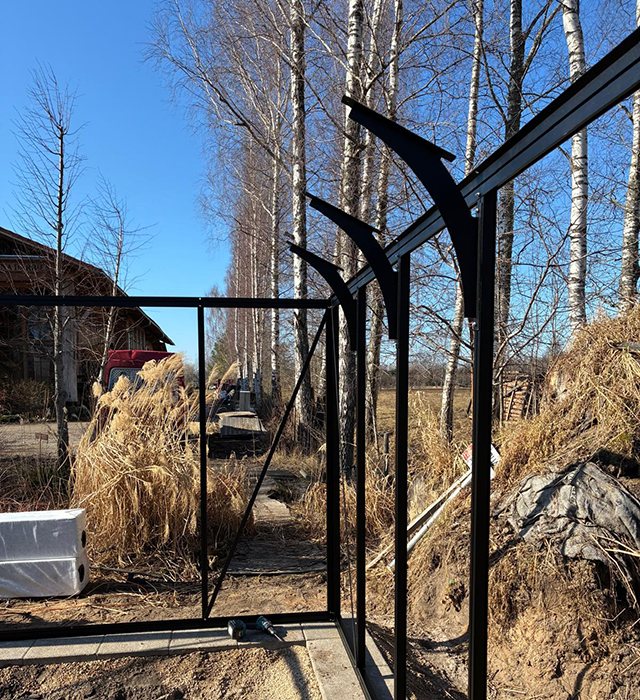
Transport damage, unsuitable storage and installation errors can reduce service life before first use. Plan access, unloading, dry storage and a parts check. Long profiles, glass and roof components require safe handling.
Check delivery promptly against the documentation. Do not remove packaging indiscriminately before components have been identified and placed safely. Photograph visible discrepancies or damage and report them through the stated process. For questions, visit Contact .
During installation, sequence, squareness, level and fixings are essential. Improvised alterations can affect load paths, drainage or fit. Tighten screws as instructed and do not use different drillings or fixings until their suitability has been confirmed.
A manageable maintenance plan reduces ownership costs
Maintenance need not be complicated. A short, documented routine is usually more effective than infrequent major tasks. The key is identifying changes early.
Regular visual inspection
- Are visible fixings and covers correctly seated?
- Do doors, windows or louvres open and close without unusual resistance?
- Are glazing, seals and trims undamaged?
- Do gutters, drainage paths and ventilation openings remain clear?
- Are there unusual deformations, noises or contact points?
Periodic cleaning
Dirt holds moisture, obstructs drainage and can strain moving parts. Use suitable cleaning methods compatible with the material. Abrasive or aggressive products can damage finishes and transparent surfaces. Roof or elevated work requires a safe approach; if an area cannot be reached safely, engage a suitable professional.
Event-based inspection
An additional check is sensible after unusual weather, impact, nearby construction work or noticeable settlement. Remove loads only safely and by approved methods. Permitted loads and actions must be taken solely from the documentation for the relevant model.
Repairability can matter as much as damage resistance
No structure used over time is immune to every event. The service-life question must therefore include: what happens if one part is damaged? A modular structure that can be repaired may be more economical than a theoretically resistant system where minor damage requires replacing large units.
Check whether parts can be clearly identified, installation documents can be retained, and individual glazing fields, seals or fittings are accessible. Do not repair load-bearing, electrical or safety-critical components without suitable expertise. Find the outdoor sauna model overview in Sauna.
Compare two offers fairly
Create a comparison matrix and request the same level of information for both offers. Reviews can offer useful practical insights, but they do not replace a technical assessment. The Greenhouse Reviews page can provide an additional perspective.
| Check question | Offer A | Offer B |
|---|---|---|
| Is the complete structure clearly described? | Enter | Enter |
| Are glazing, doors and ventilation included? | Enter | Enter |
| What foundation and preparatory work is required? | Enter | Enter |
| What do delivery and unloading include? | Enter | Enter |
| Who handles installation and final inspection? | Enter | Enter |
| What regular maintenance is planned? | Enter | Enter |
| Can individual parts be repaired or replaced? | Enter | Enter |
| Which assumptions remain unresolved? | Enter | Enter |
Compare final totals only after this. An offer without foundations, delivery or installation may appear cheaper even though these items arise later. Do not treat uncertain information as zero cost; mark it as an open risk item.
Typical false economies
- Area sized too tightly: Early replacement or extension can cost more than suitable initial planning.
- Unsuitable site: Poor drainage, difficult access or heavy shade reduces value.
- Treating the foundation as an afterthought: Inaccuracies affect the complete structure.
- Comparing scope only by its heading: Accessories, glazing and installation services can be defined differently.
- Skipping maintenance entirely: Even durable materials benefit from inspection and cleaning.
- Covering damage provisionally: An early professional repair is usually cheaper than growing consequential damage.
- Ignoring appearance: A structure you no longer enjoy may be replaced early even if it still functions properly.
Frequently asked questions
Does a durable greenhouse always have the lowest lifecycle costs?
No. It must also suit the property, intended use and available maintenance effort. An oversized or unsuitable structure can be uneconomical despite good materials. Durability is an important factor, but not the only one.
How many years should I allow for?
Use several scenarios, such as short, medium and long assessment periods, without assuming an unproven lifespan. This shows when higher upfront costs might be offset by lower maintenance or replacement costs.
Is aluminium maintenance-free?
No. Aluminium is low-maintenance, but still needs visual checks and cleaning. Drainage routes, connections, glazing and moving parts require maintenance regardless of frame material.
Is glass always the most durable glazing?
Not necessarily. Durability depends on glass type, framing, site, exposure and repair options. Polycarbonate has different advantages and drawbacks. Compare the complete glazing system rather than the material name alone.
Can I save money through self-installation?
Yes, if the model is intended for it and you have sufficient knowledge, time, tools and helpers. Errors with foundations, alignment or glazing can exceed the initial saving. Safety-critical work belongs in capable hands.
Why should delivery be included in ownership planning?
Because access, unloading, checking and temporary storage need real resources. Unplanned handling increases the risk of damage and delays. For delivery questions, guidance on buying a greenhouse with delivery offers further orientation.
Does a guarantee prove how long a product will last?
No. A guarantee sets out particular promised conditions and is not the same as a guaranteed technical lifespan. Read the scope, requirements and exclusions of the guarantee that applies to the specific product.
Should appearance be part of long-term value?
Yes. A permanently visible garden structure shapes both property and building. A timeless, suitable form makes it more likely that the structure will be used and maintained for a long time. Design does not, however, replace technical suitability.
Which documents should I retain?
Keep the quotation, order confirmation, delivery documents, installation instructions, foundation information, guarantee documents, build photographs, and maintenance and repair records in order. Also note the model designation and relevant component information.
Where should I start if several Bloomcabin models suit me?
Start with the site, intended use and available space. Then compare form, access, glazing, ventilation, installation and maintenance. Resolve open technical or commercial questions before ordering.
The durable choice is one you can use and maintain well
An economical structure combines appropriate purchase costs with suitable site planning, proper installation and manageable maintenance. Durability does not come from a single material promise. It results from a system of form, foundation, enclosure, connections, drainage, usability and repairability.
Do not base the decision on the lowest final price alone. Set a realistic period of use, record every ancillary cost and consider how readily you can inspect, clean and maintain the structure. This helps turn a garden product into a practical, long-term investment.
