



Prepare for delivery day: access, unloading and receiving your order
A well-managed delivery starts long before the delivery vehicle arrives. This guide explains how to prepare access, the unloading area, helpers, equipment, package checks and temporary storage.
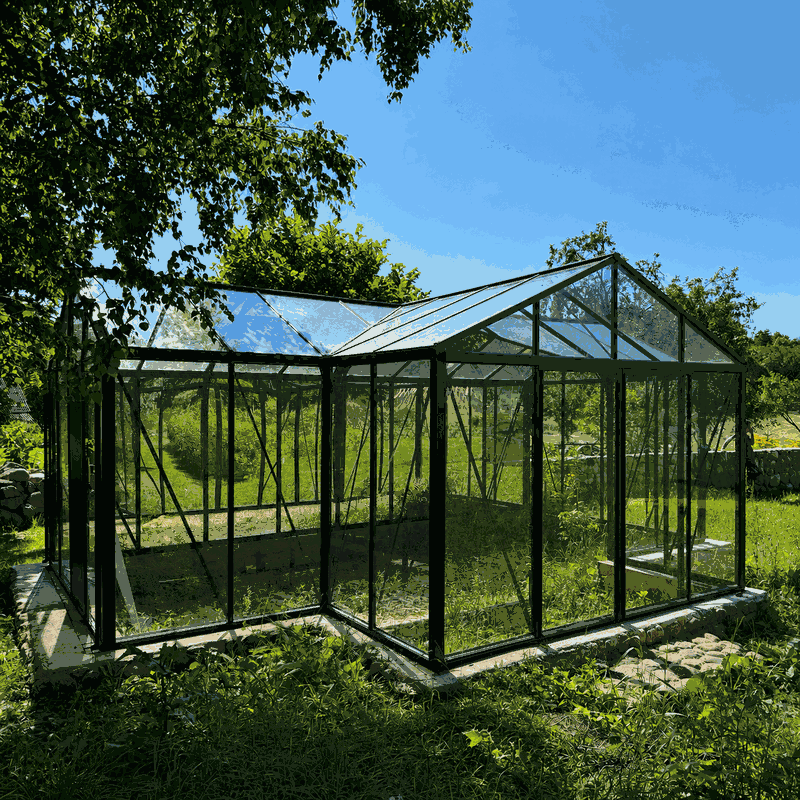
Delivery of a greenhouse, pergola or outdoor sauna is not an ordinary parcel drop-off. Depending on your order, packages may be long, heavy, delicate or unsuitable for one person to handle. The installation site is often behind the house, while the vehicle may only reach the driveway or a roadside unloading point.
A dependable delivery handover starts before the driver arrives. Confirm the access route, unloading area, helpers, carrying route, storage location and responsibilities in advance. These steps help you prepare methodically without confusing receipt, unloading and installation. Further information about the ordering process is available under How to order and in Shopping & delivery.
Delivery planning at a glance
Five elements need to work together for an orderly delivery: the vehicle must reach the agreed handover point, unloading must be safe there, suitable people and equipment must be available, every package must be checked, and protected storage must follow.
| When | Task | Purpose |
|---|---|---|
| Before ordering | Assess vehicle access, product route and installation site | Avoid unsolvable transport problems |
| After ordering | Set out unloading and storage areas | Plan a clear material flow |
| Before delivery day | Arrange helpers, equipment and availability | Avoid delays on arrival |
| On arrival | Guide the vehicle and secure the unloading area | Enable a controlled handover |
| After unloading | Count, inspect, photograph and store packages | Keep a clear record of delivery condition |
The delivery terms provided for your order always apply. Questions about a specific order should be clarified through Contact before delivery day.

1. Check access before ordering
Assess access from the perspective of a delivery vehicle rather than a passenger car. A driveway may be easy for a car to use but unsuitable for delivery because of tight bends, parked vehicles, low branches, roof overhangs, weight restrictions or no turning space.
Follow the entire route from the public road to the intended handover point. Include turning radii, gate widths, slopes, gradients, ground strength and overhead obstacles. Also check whether the vehicle can leave forwards after unloading or would need to turn around. A cul-de-sac, narrow private lane or nearby building work can substantially change the plan.
Property-access checklist
- Is the address easy to find and the house number visible?
- Can the driveway be used without touching gateposts, walls, hedges or roof edges?
- Have branches, cables, lights and other overhead obstacles been considered?
- Is the ground sufficiently firm and level for the expected weather?
- Are there access, weight, height or time restrictions?
- Do parked vehicles, bins or building materials block manoeuvring space?
- Can the vehicle stop safely without blocking traffic or a footpath?
- Can it be guided without people standing in the manoeuvring area?
If unloading could extend onto a public road or footpath, contact the relevant council before delivery and describe the location, timing and vehicle. For the later structure, ask the council separately about building consent and resource consent for the site and intended use; start with our guide to building consent for a greenhouse or pergola in New Zealand.
2. Define unloading and staging areas
The unloading area and installation area are not automatically the same. The first must be accessible for handover, load-bearing and free of obstacles. The second should receive packages so they can be counted, checked and later moved onward in a sensible order.
Plan a direct material route: vehicle, unloading zone, inspection zone, temporary storage and installation site. Where possible, avoid stairs, loose gravel, narrow garden gates or newly planted beds. Long packages need considerably more turning space than their width alone suggests.
The surface should be clean, level and dry. Do not place packaging directly in mud, puddles or on sharp stones. Use suitable stable supports, without supporting packages at isolated points where they could deform. Keep traffic routes and escape routes clear.
Take the product type into account. An Elma S outdoor sauna, a HC150 barrel sauna or a larger HCF 300 barrel sauna may have packaging and handling needs that differ from a greenhouse. Always check order-specific information and do not estimate space requirements from product images alone.
3. Coordinate people, equipment and responsibilities
The person receiving delivery must know the order, be able to make decisions and remain reachable during the expected period. Arrange enough suitable helpers for the work actually required. Do not assume neighbours will be available at short notice or that the driver will carry material to the final installation site.
Equipment must suit the packaging, weight, ground and route. Use only equipment intended for the task and operated safely by competent people. Improvised levers, unstable dollies or unsuitable garden tools increase the risk of injury and damage. Specific requirements follow from the order and agreed delivery method.
Assign these roles for delivery day
- Contact person: communicates with the driver or carrier and keeps order documents ready.
- Vehicle guide: watches access and the manoeuvring area from a safe position.
- Unloading coordinator: decides where each package is placed.
- Inspection person: counts packages, checks labels and records irregularities.
- Route supervisor: keeps children, pets and uninvolved people away from the work area.
One person may take several roles if the tasks can still be managed safely at the same time. For dealer or business-process questions, see Trade customers .
4. Prepare in the days before arrival
- Check delivery details: Compare the address, phone number, delivery contents and all received instructions.
- Clear access: Remove vehicles, trailers, bicycles, rubbish bins and loose items.
- Watch the weather: Rain, frost, snow or softened ground can change access and handling conditions.
- Mark areas: Decide where each package should be placed.
- Prepare documentation: Keep a phone or camera, something to write with and order documents ready.
- Clear temporary storage: Provide a dry, clean area protected from unauthorised access.
- Review installation documents: This helps identify early whether assemblies need separate storage or a particular sequence.
Also assess the installation site separately from delivery day. For pergolas, the pergola size guide helps with space planning, while the pergola foundation guide is relevant to the base. Foundation preparation and delivery receipt are separate tasks, but should be coordinated in time.
5. Follow a controlled arrival process
When the vehicle arrives, unloading should not begin immediately. Meet the driver at the agreed point, confirm the delivery address and discuss where the vehicle should stop and unload. Point out visible obstacles, soft ground, narrow sections or areas that cannot support the load.
During manoeuvring, nobody should stand behind the vehicle, between the vehicle and a building, or in other poorly visible areas. Children and pets must remain entirely outside the zone. Only one person should give clear signals; several helpers calling at once creates confusion.
Before starting, check whether circumstances have changed from the plan. A parked car, neighbour's van, strong wind or wet lawn may require a different decision. Safety and damage prevention take priority over unloading as quickly as possible.
6. Unload without losing control of packages
Place packages in an orderly way and keep labels visible where possible. Do not stack randomly or rest delicate units, or items marked for different storage, on an unsuitable edge. Follow packaging instructions.
Count while unloading. A simple running list prevents packages being counted twice or missed in separate locations. Small hardware or accessory cartons should not disappear beneath long profile packs. Separate items by building stage only if identification remains clear.
Do not open or alter packaging in the active unloading area. At this stage, focus on safe handover, quantity and externally visible condition. Carry out detailed contents checks later in a suitable location using the available documents.
Pause unloading in these situations
- People enter the hazard area without control.
- The vehicle or a piece of equipment is visibly unstable.
- The ground gives way, becomes slippery or cannot support the load.
- A package may tip, bend or slip from its restraint.
- The driver, vehicle guide and helpers cannot see each other clearly.
- Strong wind or rain makes handling long or flat components unsafe.
- The proposed procedure differs substantially from known delivery conditions.
Do not improvise a quick fix in such a situation. Secure the area, agree the next steps and contact Bloomcabin if deviations remain unclear.
7. Check and document delivery
After unloading, compare the number of accepted packages with the available delivery documents. Inspect every unit for punctures, severe crushing, tears, moisture, open seals or unusual distortion. Check the underside too where this can be done without unsafe lifting.
Photograph the overall condition first, then each irregularity from several angles. A wide image shows the package position; close-ups document the specific area. Capture labels or package numbers clearly where available. Do not discard damaged packaging before the matter is resolved.
Record visible irregularities at acceptance using the agreed procedure. Do not sign without checking what is being confirmed. A damaged carton does not automatically mean a component is damaged, but a small external dent should not be ignored. Information about the applicable conditions is available under Warranty.

8. Store components correctly after acceptance
Original packaging protects only within its intended function; it is not a substitute for suitable long-term storage. Store the delivery dry, stable, clean and protected from wind, tipping, theft and unintended access. Avoid direct ground contact, standing water and uncontrolled moisture.
Support long components so harmful sagging or point loading cannot occur. Do not place heavy packages on delicate glazing, panel or surface components. Observe orientation instructions on packaging and keep hardware and small connecting parts together.
If outdoor storage appears unavoidable, clarify beforehand whether it is permitted for the specific delivery and under what conditions. A loose tarpaulin can trap moisture, rub against surfaces or come loose in wind. Repacking without approval also makes identification harder. See the guide to caring for your aluminium greenhouse for later use and surface-care advice.
9. Move from delivery to installation in the right order
A fully unloaded delivery is not yet approval to start installation. Complete the acceptance check first. Then sort packages using their labels and read the installation instructions in full. Check that the foundation, anchor points, tools, safety equipment and required specialist work are ready.
Do not open every package at once. Small parts can become mixed up, surfaces can be damaged and identification can be lost. Follow the intended build sequence and retain labels until parts are identified beyond doubt.
For greenhouse projects, the Greenhouses and conservatories and Useful information sections offer further guidance. Delivery arrangements may differ elsewhere; please check the information for buying a greenhouse with delivery in New Zealand.
10. Avoid common delivery-day mistakes
- Measuring only product footprint: unloading and onward transport need extra movement and turning space.
- Planning on the driver as an installer: expect only services included in the agreed delivery method.
- Unloading on grass without checking ground strength: moisture can make previously firm ground unusable.
- Opening all packaging immediately: this increases risks of mix-ups, loss and damage.
- Signing for packages unchecked: document visible irregularities at handover.
- Starting installation under time pressure: missing parts, unresolved damage or an unfinished foundation come first.
- Discarding packaging too early: labels and protective material may still be needed.
- Confusing access with building approval: a possible delivery does not establish that the project is permitted on site.
Product choice also affects logistics. Compare bioclimatic and classic pergolas or wall-mounted and freestanding pergolas before finalising access and installation arrangements. For saunas, do not judge models such as the Elma L outdoor sauna, the HC 225 barrel sauna and the HCF 225 barrel sauna on external form alone. Order-specific delivery information always applies.

Prepare the greenhouse for use after installation
Once installation is complete, cleaning, functional checks, furnishing and gardening preparation follow. Remove packaging remnants and check that doors, ventilation elements and other moving parts work as described in the documents. Only then should paths, planting benches, irrigation or growing areas be set up.
For a starting point, see the beginner's guide to greenhouse gardening. Climate and crop management are explained in the guide to greenhouse temperature and humidity . The spring guide to cleaning and planting preparation helps with seasonal set-up.
For material planning, the article on polycarbonate, multiwall sheets and insulation can explain key relationships. Those planning a more formal structure will also find guidance in the orangery greenhouse guide. For growing ideas, see the guide to capsicum and chilli in the greenhouse.
Frequently asked questions
Do I need to be present for delivery?
Order-specific delivery conditions apply. In any case, an authorised and reachable person should be on site to provide access, identify the unloading point, inspect delivery and give any necessary confirmations. Do not appoint an uninformed representative.
Will the driver carry packages to the greenhouse site?
Do not assume this without an express agreement. The handover point and service scope depend on the confirmed delivery method. Plan transport within your property independently with suitable people and equipment.
How much space is needed for unloading?
Requirements depend on the vehicle, package units, unloading method and site conditions. At minimum, allow a safe vehicle position, working space beside or behind it, plus set-down and transport areas. Determine the precise requirement from your delivery information.
Can delivery be made onto grass or an unsealed driveway?
Only if the ground is suitable for the vehicle, unloading method and current weather, and delivery conditions allow it. Grass that looks dry on top may be soft underneath. Assess the site locally; if in doubt, provide a hard-standing handover point.
What should I do if a package looks damaged?
Stop any unsafe handling, photograph the package, label and damaged area, and record the irregularity using the agreed acceptance procedure. Keep the packaging and contents, then report the matter with clear supporting details.
Should I open every package while the driver waits?
Normally, first check the quantity and external condition. Open packaging only when the agreed procedure requires it or you have confirmed this with the carrier. Complete contents checks should be carried out methodically using the documents.
Can I store greenhouse packages outside?
Avoid unprotected outdoor storage. Whether short-term storage is possible under certain conditions depends on packaging and contents. Provide dry, stable, ventilated and secure storage as a rule, and follow product-specific instructions.
Can installation start immediately after unloading?
Only after inspection is complete, packages are clearly identified and the installation site has been checked. Foundation, tools, helpers and safety arrangements must be ready. Do not rush into installation where damage, shortages or unsuitable weather remain unresolved.
Where can I find more information about Bloomcabin greenhouses?
An overview is available in Greenhouses and conservatories, About us and the Bloomcabin blog. You can also see other customers' experiences in greenhouse reviews .
Final delivery checklist
- Delivery address, contact details and delivery instructions checked
- Access, height, bends and manoeuvring space checked
- Relevant council and access enquiries completed in time
- Unloading, inspection and storage areas cleared
- Suitable helpers and equipment arranged
- Children, pets and uninvolved people kept away
- Packages counted continuously during unloading
- Packaging inspected for visible irregularities
- Overall condition, labels and damage photographed
- Irregularities recorded using the agreed acceptance process
- Components stored dry, stable and in order
- Installation started only after checking and preparation
Careful delivery planning protects people, materials and the project schedule. Clearly defining access, the handover point and responsibilities in advance reduces the risk of rushed improvisation on delivery day.
