



Planning a sauna heater and electrical connection
An electric sauna heater must match the sauna room, controls and available electrical installation. This guide explains the information needed before purchase, how to interpret rating-plate data and what to agree with the electrical professional carrying out the work.
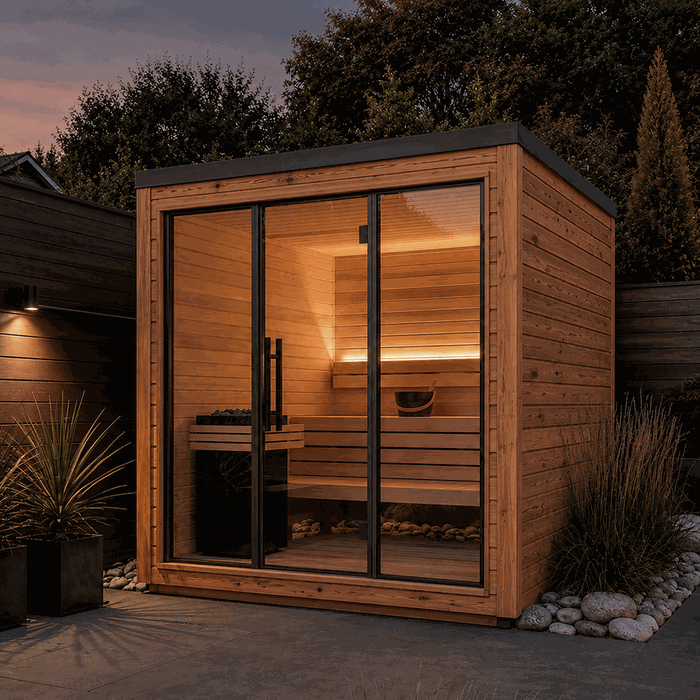
Plan an outdoor sauna as a complete system before choosing a circuit breaker: room, heater, controls, sensors and site. Only after reviewing them together can the required electrical supply, protective measures and cable routes be determined.
This guide sets out the technical approach for private outdoor saunas in New Zealand. It does not replace the manufacturer’s installation instructions or an assessment by a licensed electrical professional. Follow the documents for the components supplied and all connection and installation requirements applying at the site.
What an electric sauna heating system includes
The heater is only part of a sauna heating system. Depending on its design, the following technically compatible components may also be needed:
- Sauna heater: Heating appliance with elements, stone compartment, connection space and specified safety clearances.
- Sauna stones: Stones suitable for the particular heater, in the specified size, quantity and arrangement.
- Controller: Built into the heater or supplied as a separate control unit.
- Power unit: A separate switching device for the heater’s electrical load in certain systems.
- Temperature sensor and safety temperature limiter: Monitor temperature at the specified location.
- Control panel: Local user interface inside or outside the sauna room, depending on the system.
- Connection and sensor cables: Cables appropriate for the temperature range, installation location and manufacturer requirements.
- Protective devices: Circuit protection, residual-current protection and, where needed, an isolation or shutdown facility.
Do not assume that every part is included. Check the specific product documentation. The sauna section provides an overview of different designs. Similar-sized cabins can still require different construction and heater configurations.

Start with the sauna room, not the switchboard
Choose a heater for the room’s effective heating load. Internal volume is an important starting point, but glazing, door area, uninsulated or heat-conductive elements, room shape, airflow and the outdoor climate also affect heating performance.
A compact Elma S outdoor sauna and the larger Elma L outdoor sauna must therefore not be treated as electrically identical simply because they look similar. The same applies when comparing an HC150 barrel sauna with longer barrel models.
An oversized heater is not automatically better: it may alter control behaviour and require excessive connection capacity. An undersized heater may run too long, struggle to reach its target or distribute heat poorly. Follow calculation guidance from both heater and sauna manufacturers.
Information for a reliable heater recommendation
- exact sauna model and intended installation version;
- clear internal dimensions and calculated internal volume;
- size and type of glass, stone or other non-typically insulated surfaces;
- wall, ceiling and floor build-up, where documented;
- planned heater position and possible mounting method;
- clearances to benches, walls, door and heater guard;
- sauna location and length and route of the proposed supply cable;
- available electrical supply and spare capacity in the distribution board;
- required local or remote-control functions.
If uncertain, send the product name, floor plan and site photographs together. Product-specific questions can be clarified through Contact .
Reading the sauna heater’s electrical data correctly
Advertising and brief descriptions often state only heating output. That figure is insufficient for electrical planning. Refer to the rating plate, wiring diagram and installation instructions for the exact appliance version.
| Specification | Why it matters for planning |
|---|---|
| Rated power | Electrical power input of the heater under the stated operating conditions. |
| Rated voltage and supply type | Shows the supply and connection configuration intended for the appliance. |
| Rated current | Basis for selecting cabling, switching and protection equipment with installation method and manufacturer instructions. |
| Phase and terminal arrangement | Defines the permitted electrical connection. It must not be estimated from power alone. |
| Control type | Determines whether a panel, power unit and sensors are additionally required. |
| Ingress protection and installation location | Limits where a component may be installed. |
| Cable requirements | May specify conductor size, temperature resistance and connection conditions. |
Current must not be derived solely from an advertised wattage. Internal wiring, phase count, control components and the country-specific appliance version must all be considered.
Dedicated circuit, protective devices and isolation
An electric sauna heater is a substantial, long-running load, so planning will normally require its own correctly designed circuit. A licensed electrical professional must use the appliance, existing installation and applicable local requirements to determine whether all-pole isolation, residual-current protection or other protective equipment is needed.
A socket that physically matches the plug of an accessory says nothing about its suitability for the heater. Extension leads, portable cable reels and temporary garden power connections are not a planned supply for a fixed sauna heater.
Questions for the electrical professional
- Is the existing service and distribution capacity adequate?
- What supply and connection type does this exact heater require?
- Which cable is required for the planned length and installation method?
- Which protective devices are required by the manufacturer documentation and site conditions?
- Where may the connection or junction point be located?
- How will the system be safely isolated and protected against reconnection?
- Are trenching, conduit or changes to the sub-board required?
- Which tests and documents will be provided on completion?
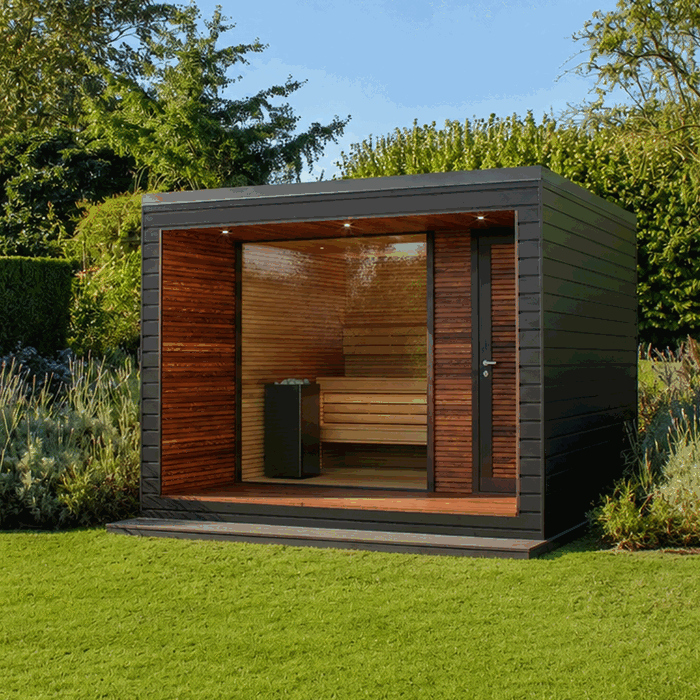
Connection capacity and distribution planning
An unused switchboard way does not prove that sufficient capacity exists. Check the incoming supply, upstream protection, distribution, diversity, cable routes and major existing loads, such as a heat pump, EV charger, instantaneous water heater, electric cooker or garden equipment.
Plan the sauna with the wider garden installation. Lighting, outdoor sockets, pumps, pergola drives or a future garden building may need additional circuits. Properly sized infrastructure can reduce later excavation and alterations, but never justifies protective devices larger than the sauna heater requires.
Cable routing and heat exposure
An outdoor sauna includes several electrical environments: ground or exterior areas, perhaps a technical area, and the hot interior. A cable suitable in a cool zone may not be suitable near the sauna ceiling or heater connection.
Set the cable route before foundation and assembly work. Account for mechanical protection, moisture, UV exposure, permitted bend radii, penetrations, and separation between power and sensor cables. Keep cables away from hot surfaces, sharp edges and future fixing points.
Avoid roof and external-wall penetrations where possible. Necessary penetrations must be designed so water cannot enter the wall build-up. Do not improvise closures for unused openings with unsuitable materials.
Controls, sensors and remote operation
A sauna heater may have integrated controls or need a separate controller. For an external system, use the panel, power unit, temperature sensor and safety devices as a manufacturer-specified compatible system. Similar-looking plugs or terminals do not make components from different systems interchangeable.
The manufacturer specifies the temperature-sensor position. It affects both regulation and safety shutdown. Moving it to a cooler location to obtain a higher cabin temperature is an unsafe alteration and may cause dangerous overheating.
Remote-start or app functions often need additional safety logic. Before every remote start, ensure towels, cleaning equipment and other items are not on or too close to the heater. A generic smart-home relay does not replace the manufacturer-specified controller.

Earthing, bonding and protection against electric shock
Assess protective conductors, earthing, bonding and residual-current protection across the whole installation. Do not connect metal parts together without a plan. The electrical professional decides which conductive parts to include and verifies the protective measures through testing.
A timber building is not automatically electrically low-risk. Moisture, wet skin, outdoor installation and high temperatures impose special demands on equipment and installation. Unauthorised changes after completion can compromise the tested protection.
Safety clearances and heater guards
Specified heater clearances from timber surfaces, benches, ceiling, door and other elements are binding design dimensions. They come from the installation instructions for the exact heater version. General rules of thumb or dimensions from a similar-looking heater are not sufficient.
A heater guard can prevent accidental contact, but must not obstruct air circulation or safety clearances. It must be securely fixed and must never serve as a shelf or textile-drying rail. When comparing layouts such as HC 180, HC 225 and HCF 225, consider the safe heater area as well as the seating area.
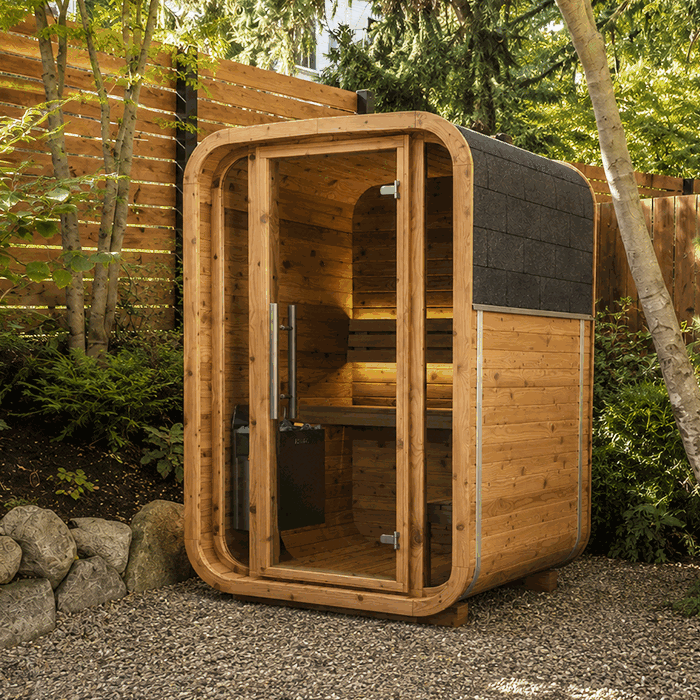
Practical steps before buying
- Choose the sauna model: clarify design, interior, door and glass areas, and heater position. The guide choosing a timber, barrel or garden sauna helps with the initial comparison.
- Check the site: clarify access, foundation, drainage, boundary clearances and local requirements. The article on whether garden structures may require consent offers guidance; the specific sauna must still be checked with the relevant council.
- Request a heater recommendation: provide room data and preferred functions to the supplier.
- Obtain appliance documentation: make rating-plate data, wiring diagram and instructions available before electrical planning.
- Engage an electrical professional: have the home installation, cable route and protection concept assessed on site.
- Separate cost items: record sauna, heater system, trenching, supply cable, distribution changes and commissioning separately.
- Confirm what is supplied: complete the order only when the included control, sensor and connection components are clear.
- Coordinate the installation sequence: decide which cables are installed before the foundation or assembly, and which connections follow final assembly.
Information about ordering is available under How to order. Also check logistical matters under Purchasing and delivery .
Delivery and checking heater components
Before installation, check the delivery for visible damage, correct model designations and completeness. Compare the rating plate, controller, sensors, panel, power unit, fixings, sauna stones and documentation with the order confirmation.
Do not repair damaged terminals, kinked sensor cables or distorted housing parts yourself. Keep packaging and markings until the matter is resolved. Questions about scope and claims can be considered under the warranty terms.
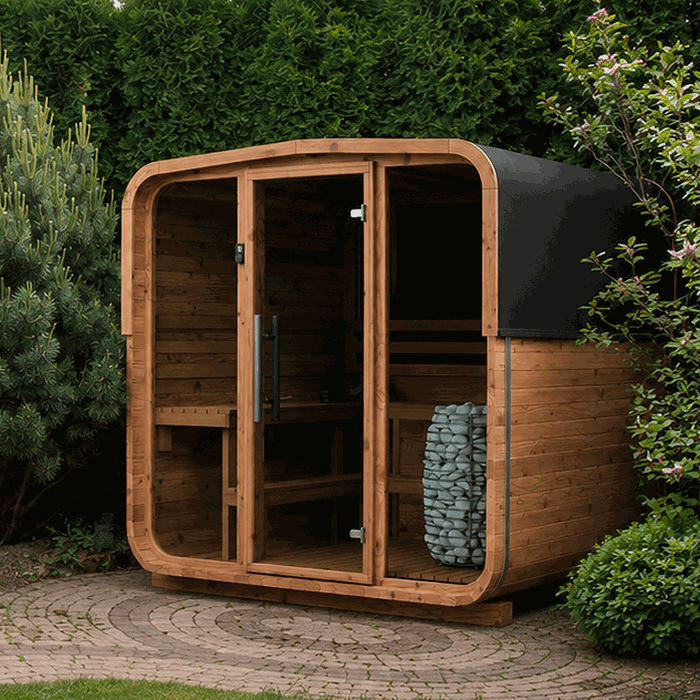
Installation and commissioning checklist
- sauna completely assembled according to the installation documentation;
- heater model and electrical appliance version checked against the plan;
- heater securely mounted and all clearances checked;
- heater guard correctly fixed where provided;
- stones checked, cleaned and loosely arranged as instructed;
- temperature sensor and safety equipment fitted precisely in the specified positions;
- power and sensor cables routed separately and protected;
- connection terminals checked to manufacturer instructions;
- protective conductor, protective devices and isolation facilities checked;
- electrical measurements completed and documented by the professional;
- ventilation openings clear and not covered by furnishings;
- first heating cycle completed under supervision;
- controls, shutdown and operating elements function-tested;
- users instructed in safe operation, isolation and response to faults.
Production- or material-related odours may occur during the first heating cycle. Ventilate the room in accordance with the manufacturer’s instructions. Unusual heavy smoke, arcing, burning smell or repeated tripping of a protective device requires immediate shutdown and professional assessment.
Maintenance and fault finding
Before each use, check that nothing has been left around the heater. Regularly inspect the stone arrangement, visible cables, fixings, guard, ventilation openings and controls. Crumbled or compacted stones can restrict airflow and strain heating elements; replace and rearrange them as the heater instructions require.
If a protective device trips, do not keep resetting it without finding the cause. Moisture, cable damage or a fault in an element, controller or connection may be responsible. Apparently normal heating does not exclude an electrical fault.
Record the time, operating stage, fault codes and unusual observations for service staff and the electrical professional. Only appropriately qualified people may open housings, terminal compartments or control units, and only when they are in the permitted de-energised state.
Integrating the sauna into the wider garden plan
The technically best sauna site considers more than the power connection. Paths, privacy, water runoff, lighting, prevailing wind and maintenance access all affect later use. An HCF 300 or LC 225 should therefore be included in the site plan with its actual access and service areas.
If a pergola is also planned, the article on choosing a bioclimatic pergola can help with zoning. A greenhouse has fundamentally different temperature and humidity requirements; see the guidance on greenhouse temperature and humidity and polycarbonate and insulation performance.
Ideas for the overall design can be found in garden trends. Available building categories include greenhouses and conservatories and garden sheds . Further technical content is collected under Useful information.
Frequently asked questions
Can I use an existing household socket for an electric sauna heater?
The socket alone does not answer this. Many sauna heaters need a different supply and a dedicated circuit. Check the rating plate and wiring diagram. A licensed electrical professional must assess the existing installation and protection, even for a smaller appliance.
How do I determine the correct heater output?
Start with internal volume and room construction. Glass areas, poorly insulated elements, room shape and the manufacturer’s calculation must be included. The outside length of a barrel sauna or number of seats is not enough for selection.
Should I buy the heater before contacting an electrician?
Ideally, first shortlist a specific heater model and obtain its technical documentation. Buy only after electrical feasibility and the full system scope are clear. This helps avoid unsuitable appliance versions and unexpected alterations.
Can the circuit breaker be calculated from advertised wattage?
No. Voltage, phases, rated current, connection type, installation conditions and manufacturer requirements are also needed. The electrical professional designs the cable and protective devices as one coordinated system, taking the existing installation into account.
Does every sauna heater have built-in controls?
No. Some heaters have integrated operating elements, while others need external controls, sensors and possibly a separate power unit. Before ordering, clarify which components belong together and which are included.
May I install the temperature sensor where it shows my preferred temperature?
No. The manufacturer specifies the sensor location. Free placement distorts control and may impair the safety shutdown. Any later relocation should also follow only approved documentation.
Can a smart-home relay switch the heater?
Only if the heater system has an interface expressly intended for this purpose and every safety condition is met. A generic relay must not replace the manufacturer-specified controller, interlock or remote-start monitoring.
What should I do if the protective device trips while heating?
Switch the heater off and do not repeatedly reset it. Record the operating phase and any fault messages. A licensed electrical professional or authorised service provider must inspect the connection, cable, protective device, heating elements and possible moisture exposure.
Does a wood-fired sauna also need electrical planning?
Yes, if lighting, sockets, controls or other electrical equipment are planned. The heater itself is not an electrical load, but outdoor wiring, moisture protection and cable routing remain relevant. For the wood burner, follow the manufacturer’s placement, fire-safety and flue instructions, and ask the council before installation about building consent, regional air quality and any local operating restrictions.
Can electrical work be completed before the sauna is assembled?
Underground cable, conduit and parts of the distribution may be prepared in advance. Check the final heater, sensor, panel and connection positions against the assembled sauna. Complete the final connection and testing only after the system is assembled.
Which documents should I keep?
Keep the invoice, order confirmation, rating-plate data, installation and operating instructions, wiring diagram, test record, controller settings and photographs of concealed cable routes. These documents assist maintenance, spare-parts identification and later changes.
Who makes the final electrical decisions?
The heater manufacturer defines appliance requirements. The sauna supplier provides room- and product-specific information. The electrical professional assesses the existing installation, local conditions and applicable requirements. General online advice must not replace the final connection design.
