



How to Prepare Your Patio for a Pergola
A practical guide to preparing your patio before pergola installation, covering placement, walkways, the base, drainage, furniture planning and the right Bloomcabin pergola solution.
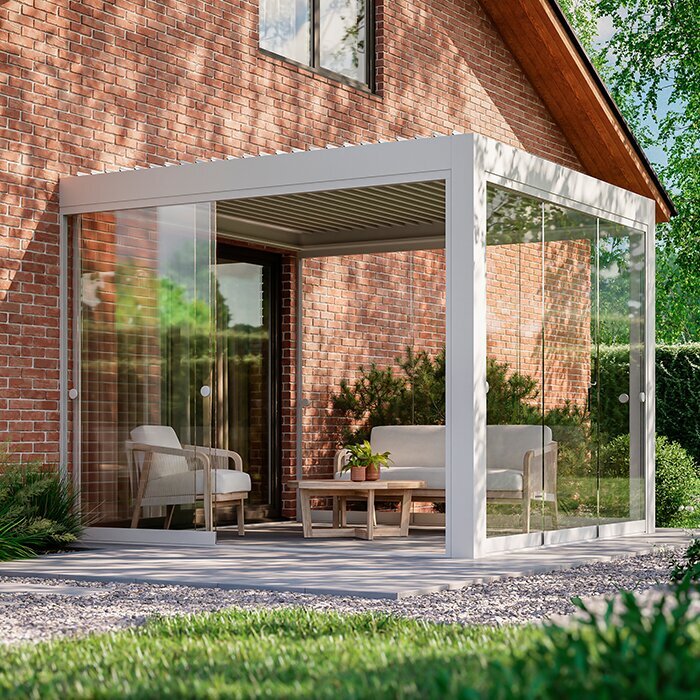
Preparing your patio is one of the most important stages of any pergola project. Many homeowners spend a great deal of time comparing pergola types, sizes and designs. In practice, however, the eventual result often depends just as much on the decisions made correctly—or incorrectly—before installation begins.
A pergola may look excellent on a product page yet still feel slightly out of place on your own patio. Usually, that does not mean the pergola itself was the wrong choice. More often, the patio was not prepared sufficiently for the way it will actually be used.
That is exactly why preparation matters. A well-prepared patio helps a pergola look better, work better and settle more naturally into the outdoor area. Poorer preparation often leads to the same problems: awkward placement, cramped furniture layouts, impractical routes or a pergola that does not connect cleanly with the house and patio.
This guide covers three Bloomcabin pergola formats: Bloomcabin Pergola, Bloomcabin Wall-Mounted Pergola and Bloomcabin Bioclimatic Pergola. Across the range, key features include aluminium construction, integrated drainage, several RAL colours, multiple sizes and durable design.
This article focuses on a practical question: what should you prepare before installation so that your pergola works well from the outset?
If you are still comparing pergola types in general, the guide How to Choose an Aluminium Pergola can help with the initial decision. Where comfort and functionality matter more, the comparison Bioclimatic or Classic Pergola: Which Is Right for You? is a useful next step. If you are still deciding whether the pergola should attach to the house or stand independently, Wall-Mounted or Freestanding Pergola? is particularly helpful. If the size is not yet settled, include the Pergola Size Guide in your preparation. For warranty, maintenance, drainage and general model queries, see Frequently Asked Questions about Aluminium Pergolas .
Why patio preparation matters so much
A pergola never exists in isolation. It changes how the entire patio works.
Once the pergola is in place, it defines space, affects circulation, changes furniture placement, shapes the feeling of openness or enclosure and influences how strongly the patio connects with the home. Preparation is therefore not simply about asking, “Where should it go?” It is about making sure the pergola supports the outdoor life you want.
A well-prepared patio usually creates a result that feels considered and coherent. The pergola sits in the right place, the furniture layout feels natural and the routes remain comfortable. The structure suits the house, doors, windows and overall patio concept. A poorly prepared patio can still receive a technically sound installation, yet the finished space may feel less refined, less logical or less comfortable than it could.
Start by considering how you will use it
Before measuring anything, ask one very simple question:
What should the pergola actually do?
It may sound simple, but this question changes the entire plan.
Some homeowners mainly want shade and a visual upgrade for the patio. Others want an outdoor dining area. Some prefer a lounge zone, while others are looking for a more sophisticated outdoor room with greater structure and comfort.
If the pergola is mainly intended for occasional sitting, preparation can be more flexible. If it needs to support a real dining area, regular guests or more demanding outdoor use, layout planning becomes much more important.
This is where the related guides become useful. The general guide helps with the basic choice. The size guide helps prevent choosing a pergola that is too small or too large. The wall-mounted versus freestanding comparison helps decide whether it belongs against the house or should stand more independently. The bioclimatic versus classic comparison helps when comfort and expandability are priorities.
Put differently: before installation planning begins, be clear whether the pergola should primarily
- create a simple seating area,
- cover a dining area,
- form a mixed-use outdoor living space
- or support a more premium arrangement.
The clearer the answer, the easier preparation becomes.
Choosing the exact location
One of the key decisions before installation is the pergola’s precise position.
A pergola positioned just a little too close to the house, too far from the door, too near a boundary or too tightly within an existing patio layout can make the whole outdoor area feel less harmonious. Choose the site according to real use, not merely the empty space available. Before confirming it, check your municipality’s building-control and planning requirements, boundary building lines, title conditions and any heritage constraints. For Cape Town projects, a minor-building-work tariff category does not by itself show that approval is unnecessary.
With a wall-mounted pergola, the relationship to the house becomes even more important. Consider carefully
- how the pergola relates to the façade,
- where the doors are,
- how people move from indoors to outdoors,
- and whether it should be centred or deliberately offset.
A freestanding pergola gives you more freedom of placement, but that also brings more responsibility. It must clearly define its place on the patio or in the garden rather than looking accidental.
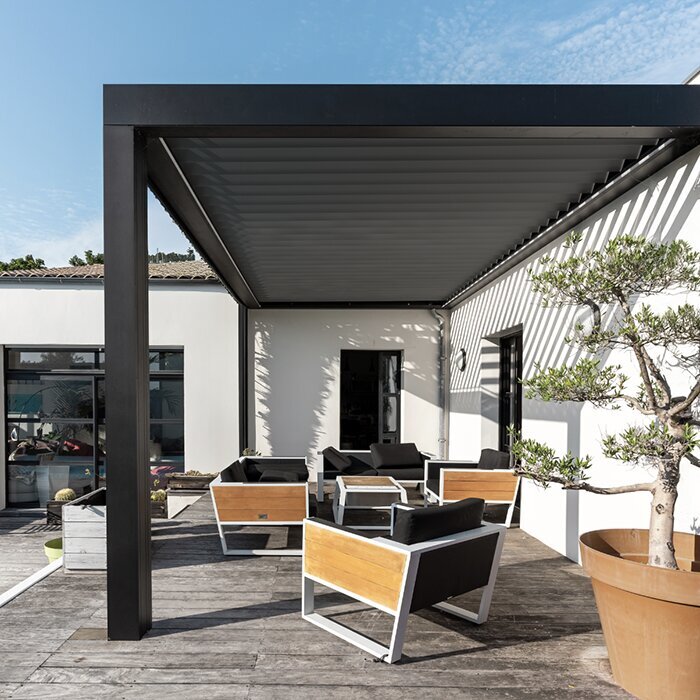
Measure your patio around real use
One of the most common planning mistakes is measuring only an empty patio.
A pergola project should be based not only on the free paved or concrete area, but on how the space will be used afterwards.
That means considering not only:
- how much space the pergola itself occupies,
- how much room furniture needs,
- how much circulation space people require,
- and how open or enclosed the finished patio should feel.
Because Bloomcabin offers several pergola sizes, this preparation makes a significant difference. The structure must suit not only the patio, but also the furniture arrangement, house size and intended use.
That is why the Pergola Size Guide belongs in planning before installation, rather than afterwards. It helps establish whether the pergola should mainly cover
- a small seating area,
- a dining table,
- a lounge area
- or several functions at once.
A useful practical rule is this: measure not only what just fits, but what will still feel comfortable later.
Check the ground and base
A pergola is only as good as the base on which it stands.
Before installation, assess the actual patio base rather than its appearance alone. An uneven or unsuitable surface, or a position that conflicts with the intended use, makes the project harder. Have the proposed substrate, anchoring and site loads checked for the selected model and local conditions rather than assuming existing paving is adequate.
Bloomcabin pergola pages focus on sturdy aluminium profiles, durable construction and solid build quality. The load-bearing patio area deserves the same care. A pergola is not simply decoration; it is a genuine architectural element of the outdoor space.
This preparation step is less about appearance than function:
- Is the area level enough?
- Is the pergola placed where it genuinely makes sense?
- Will the finished structure feel stable and intentionally positioned there?
Even where installation is technically neat, weak patio preparation almost always becomes apparent in everyday use.
Plan water run-off and drainage early
This is one of the most frequently overlooked planning issues.
Bloomcabin highlights integrated drainage systems on its pergola pages. That is practical, but it still makes sense to consider before installation how the pergola will work with the rest of the patio surface.
Before installation, think through the following points:
- where water should be directed,
- how the pergola relates to the patio slope,
- whether there are problematic low points nearby,
- and whether the location contributes to a neat, practical solution overall.
When the pergola is intended to feel like a permanent, high-quality part of the outdoor area, sound drainage planning makes a major difference later.
Plan walkways as well as furniture
Another major mistake is thinking only about furniture.
A patio may technically accommodate a pergola and dining table yet still feel impractical if people cannot move comfortably around the table, chairs or lounge furniture.
Good pergola preparation therefore means considering routes as well:
- Where will people enter the pergola area?
- How will they move beneath it?
- How much clear space should remain around the furniture?
Where the pergola joins the house, routes between doors and seating areas are particularly important. If it is freestanding, it should still be logically accessible from the house and the rest of the garden.
A pergola should make movement feel more natural, not restrict it.
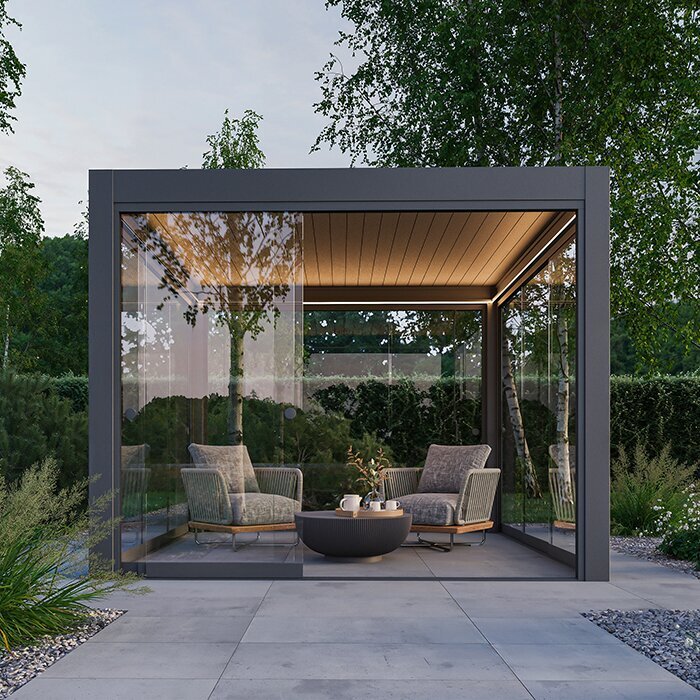
Prepare the visual connection to your home
A pergola is a functional structure, but it is also a design decision.
Modern design, aluminium construction and different RAL colours are key features of the Bloomcabin range. Preparation is therefore not only a matter of measurements, but also of the overall visual effect.
Before installation, take a step back and ask yourself:
- How does the pergola fit visually with the house?
- Does it feel intentionally centred or sensibly offset?
- Does it visibly belong to the patio?
- Will the result feel like a genuine upgrade to the home?
That is why the article Wall-Mounted or Freestanding Pergola? is so valuable. It is not only about style, but strongly about layout and architectural integration.
Consider accessories and future additions
Good preparation should also account for how you may use the space later.
The bioclimatic pergola page highlights screens, integrated LED lighting, side walls, glass elements and more advanced control options. This matters before installation because the patio should, where possible, be prepared for the level of use you want.
If you may later want more privacy, integrated lighting, additional wind protection or a more sheltered outdoor living area, choose the position and layout with those additions in mind. For lighting or motorised equipment, ask a registered South African electrical contractor to confirm compatibility, protection, inspection, testing and any applicable Certificate of Compliance documentation.
This does not mean every buyer needs a bioclimatic pergola. It simply means patio preparation should honestly suit the outdoor experience you really want. That is why the article Bioclimatic or Classic Pergola: Which Is Right for You? also belongs in this planning stage.
Differences between wall-mounted, freestanding and bioclimatic pergolas
Not every pergola project should be prepared in exactly the same way.
A wall-mounted pergola requires much more attention to its relationship with the house. Door lines, proximity to the façade and architectural integration all play a greater role.
A freestanding pergola requires stronger thinking in zones. Because it does not visually take its cue from the house in the same way, it needs to define its place in the layout clearly.
A bioclimatic pergola often requires the most forward-looking preparation, as buyers commonly plan a more sophisticated outdoor experience. With a louvred roof, automation and possible additions, prepare the patio more like a complete outdoor living room.
Preparation should always match the pergola type you are genuinely considering.
Common preparation mistakes
The most common error is planning only for installation day rather than everyday life afterwards.
Other typical mistakes include:
- fixing the pergola position before considering furniture,
- measuring only the empty patio,
- forgetting circulation routes,
- not considering how the pergola relates to the house,
- ignoring water run-off and drainage,
- and treating every pergola type as though it suits a patio in the same way.
Another error is assuming that a pergola will automatically improve a weak patio layout. In reality, a pergola usually makes the layout more obvious. If the patio was planned illogically beforehand, the pergola will often reveal that weakness rather than solve it.
Questions to answer before buying
Before taking the project further, these questions are very helpful:
- What will the pergola mainly be used for?
- Which pergola type genuinely suits the patio best?
- Which size leaves enough room for furniture and movement?
- Should the pergola sit directly against the house or stand more independently?
- Will the patio remain open, or do you want to develop a more premium arrangement later?
- Does the pergola location make sense from indoors and outdoors?
- Is the patio area prepared for a neat, stable long-term solution?
Once these questions have clear answers, installation planning becomes much easier.
Frequently asked questions
Should I know the pergola size before thinking about installation?
Yes. Size affects furniture, circulation space, overall proportions and the feeling of the finished area. The size guide therefore belongs at the preparation stage, not at the end of the decision.
Should I decide between a wall-mounted and freestanding pergola before preparing the patio?
Yes. This decision significantly changes the location, relationship to the house and later use of the patio.
Does the pergola type affect preparation?
Yes. A wall-mounted pergola needs stronger architectural connection to the home. A freestanding pergola needs more careful zone planning. A bioclimatic pergola often benefits from more forward planning when a premium setup is intended.
Should I consider drainage before installation?
Yes. Even though Bloomcabin pergolas have integrated drainage systems, it is worthwhile to consider early how the pergola, patio slope and water run-off will work together.
What is the most sensible preparation sequence?
It is best to decide first how you want to use the space, then choose the pergola type, determine the right size and only then finalise the precise installation layout.
Conclusion
Pergola installation begins long before the pergola is delivered.
The best pergola projects are rarely those where a structure is simply placed on an empty patio. They are the projects where the patio has been prepared from the beginning with clear, considered decisions.
When the space is well prepared, the pergola looks better, works better and feels as though it truly belongs there. The layout becomes easier, movement routes improve, furniture fits more naturally and the whole outdoor area gains quality.
That is the purpose of good preparation: not merely to get the pergola installed, but to make sure the finished patio feels right in everyday life.
View Freestanding Pergolas View Wall-Mounted Pergolas View Bioclimatic Pergolas
