



PROCESS
What happens after ordering? From confirmation to dispatch
This guide explains the steps after an order: checking your order confirmation, preparing the site, receiving dispatch information, accepting delivery and checking components before installation.
Submitting an order does not mean installation begins immediately at your property. Several important technical and organisational steps come first: order details are confirmed, the chosen configuration is checked, the site must be prepared and delivery planned. Dispatch communication, goods acceptance and a component check follow before installation itself begins.
This guide sets out a useful order for these tasks. It generally applies to greenhouses, pergolas and outdoor saunas. Details depend on the model ordered, delivery location, access route and local requirements. The documents and communications for your specific order are always decisive.
Overview: what happens after ordering
- Read the order confirmation: Check the model, configuration, billing and delivery addresses, and contact details.
- Await order review: The order is checked for completeness and technically relevant information.
- Report changes early: Do not wait until dispatch notification to report errors or requested changes.
- Prepare the site: Clarify approvals, installation area, foundation, wall connections and access.
- Prepare for dispatch: Before actual dispatch, the order and packages are prepared for handover.
- Follow delivery communications: Read delivery instructions and arrange an available contact person if needed.
- Accept the shipment with records: Check the number and external condition of packages.
- Check components before installation: Sort and identify components using order-specific documents.
General information about ordering is available under How to order. Guidance on purchasing and delivery procedures is available under Purchasing & Delivery.
Phase 1: Read and check the order confirmation
The order confirmation is the first key checkpoint. Compare it not only with your basket but also with your actual plans for the property. Check the product name, model variant, selected options, quantities, delivery address and billing address. Your telephone number and email address must also be correct, as they may be needed for queries and later delivery coordination.
Take particular care where models or sizes have similar names. An outdoor sauna such as Elma S is not the same as Elma L . The same applies to barrel saunas such as HC150 and HC 180. The version stated in your documents is the relevant one.
An order confirmation is not a dispatch confirmation. It initially confirms that the order has been recorded with the listed details. Keep it with related documents and respond promptly if you identify any discrepancy.
Phase 2: Reviewing the order and configuration
Internal processing follows confirmation. Completeness, configuration details, delivery information and order-specific requirements may be reviewed. If information is unclear, a query may be necessary. Reply completely and use your order or reference number in every communication.
This review does not replace site planning. Without separate information, the supplier does not know the actual ground conditions, property boundaries, services, access widths or municipal controls. Product selection and the structural suitability of your site therefore remain separate checks.
If you still need to distinguish between construction types, technical decision guides such as bioclimatic or classic pergola, the comparison wall-mounted or freestanding pergola and the pergola size guide can help. Ideally, make these choices before ordering.
Changes, cancellations and corrected details
Report changes as early as possible, especially to the model, version, accessories, delivery address or contact details. Whether a change or cancellation remains possible depends on the processing stage and terms of the individual order. An informal request does not mean that a change has been accepted. Wait for clear written confirmation.
When correcting information, state not only what is wrong but the complete intended final detail. For example, “replace the delivery address with …” is clearer than “change house number”. Then check every newly issued document.
Deliveries to South Africa may involve cross-border procedures. See the information on buying a greenhouse for delivery to South Africa . For questions about an existing order, use the stated order contacts or the Contact page.
Phase 3: Prepare the site while the order is processed
Use the time between ordering and dispatch for planning and checks. Do not start final building work that cannot easily be corrected until the exact model, installation dimensions and applicable assembly instructions are confirmed beyond doubt.
Clarify approvals before building
Whether a greenhouse, pergola or outdoor sauna needs municipal approval cannot be answered generally in South Africa. Use, roof and enclosure, size, services, siting, planning controls, title conditions, heritage issues and local municipal rules can matter. A minor-work classification does not by itself remove approval requirements.
Confirm the route with your municipality and, where needed, a qualified local professional. For Cape Town projects, use the City’s building-plan submission route and District Planning Office; elsewhere, consult your own municipality. Approval for a greenhouse or pergola is useful background, but rely on current requirements applying to your particular site.
Check placement and intended use
Mark out the planned footprint on site. Check doors, opening areas, paths, drainage, shade, roof overhangs, trees and maintenance access. For greenhouses, light, ventilation and intended crops affect usability. Further ideas are available in articles on greenhouse temperature and humidity and growing lettuce in a greenhouse.
For pergolas, consider sun, rain direction, furniture and circulation space. If you are comparing uses, the article Is a bioclimatic pergola worthwhile? may help. For a sauna, plan safe access and all locally permitted services professionally.
Coordinate the foundation or load-bearing base
A stable, level and dimensionally accurate base is not a minor detail. Deviations can complicate installation and affect alignment, door operation and component connections. Foundation type, dimensions, level reference, drainage and fixings must suit the specific model, soil and site.
For pergolas, use the pergola foundation guide, but do not transfer an example without checking it against another product. Coordinate excavation and concrete work with current assembly documents and, if appropriate, a local specialist. Before digging, also check for services and drainage systems in the work area.
Check wall conditions for attached models
For wall-mounted structures, the existing wall must be suitable for the intended fixing. Cladding, insulation systems, cavities, unknown masonry or uneven façades require a project-specific solution. The visible surface alone does not establish load-bearing capacity.
Discuss fixings, weatherproofing and connection heights with a competent person. Also consider windows, shutters, gutters, downpipes, external lights and services. Do not drill while the wall construction and possible service zones remain unclear.
Plan access and a protected storage area
Check the route from public access to the unloading point. Narrow sections, bends, gates, parked vehicles, low branches, slopes and weak ground can make handover difficult. Tell Bloomcabin early if access to the address is restricted.
Reserve a level, dry and protected space for packages. It must keep routes and emergency exits clear. Do not lean long or heavy parts unstably. Children and unauthorised people should not access the storage or installation area.
Who is responsible for what?
| Task | Typical responsibility |
|---|---|
| Check model, options and address details | Customer |
| Process the order using submitted details | Bloomcabin |
| Clarify local approvals and property requirements | Customer or property owner |
| Provide a stable, dimensionally accurate base | Customer and appointed specialist |
| Report access restrictions in good time | Customer |
| Provide order dispatch information | Bloomcabin or appointed carrier |
| Check package exteriors at handover | Recipient |
| Carry out electrical or other specialist work | Registered electrical contractor or other locally qualified professional, as applicable |
This table describes the general division of responsibilities and does not replace order-specific agreements. For rented or shared properties, check whether the owner, body corporate or another party must consent.
Phase 4: Preparation before dispatch
Before handover to transport, the order is prepared for dispatch. This differs from order confirmation. A status such as “ordered” or “confirmed” does not mean the goods are already in transit.
Keep your contact details current and monitor the stated email inbox, including spam folders. Do not arrange construction or installation teams solely on an unconfirmed assumption about dispatch timing. Firm planning should follow communications specific to your order.
Phase 5: Dispatch notification and delivery communication
When a shipment is actually scheduled for dispatch or handed over, you will receive the information available for that order. Its content depends on the delivery method and transport process. Read every message fully; instructions about availability or handover may require action.
A dispatch notification does not necessarily guarantee an arrival time. Traffic, regional routes and other logistics factors may affect delivery. Allow adequate organisational contingency and do not book immediately following work that depends on delivery at an exact minute.
Further order information is collected under Useful information . Product areas are available under Greenhouses and conservatories and Sauna.
Phase 6: Accept and document delivery
Goods acceptance is a checkpoint, not merely a formality. Ensure that an informed person is present. They should know the order, be able to show the intended unloading point and understand how to record visible issues.
First check the number of delivered packages against the available delivery documents. Then inspect every side of the packaging. Look for tears, punctures, severe crushing, moisture, loose strapping or open packaging. Photograph issues from a distance and close up before moving or opening packages.
Record visible damage specifically on available handover documents. Stating which package is affected and where is more useful than a general note. Open packaging carefully afterwards and keep labels and damaged packaging material for the time being.
Goods acceptance checklist
- Keep the order number and delivery documents ready.
- Arrange an available, briefed person for handover.
- Check package numbers and record discrepancies.
- Inspect packaging all around for visible damage.
- Photograph and describe any issues clearly.
- Do not remove labels before identification is complete.
- Move packages securely to the prepared dry area.
- Contact us promptly with your order number and images if anything is unclear.
After delivery: check components before installation
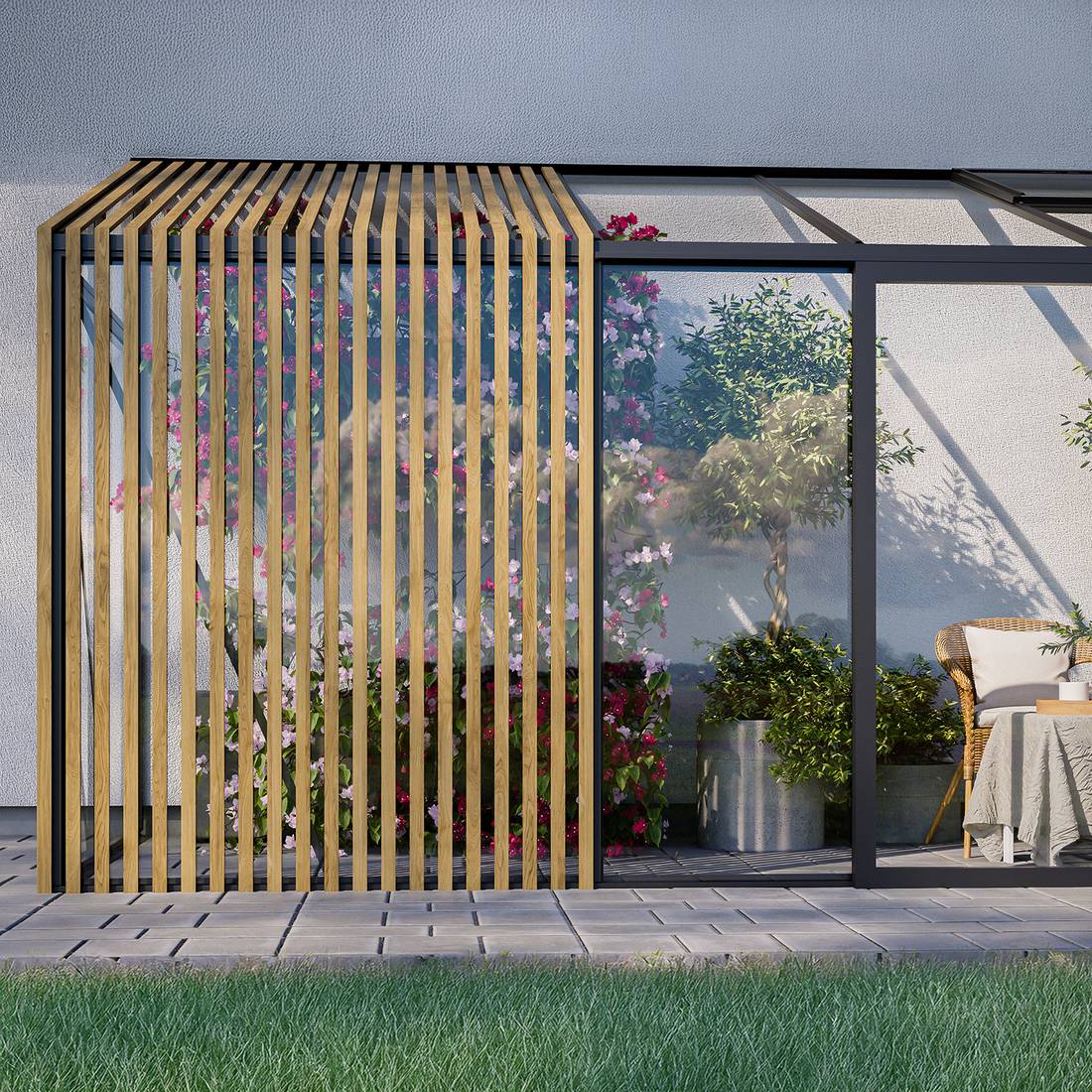
Do not open every package in an unorganised way. First prepare the assembly instructions, packing lists and labels. Open packages one at a time and keep fittings and small connecting parts in their marked groups. Protect profiles, glazing elements and surfaces from scratches, dirt and tipping.
Assign components using the numbers or descriptions in the instructions. Shape alone is not a reliable identifier because profiles can look similar. If a part cannot be assigned clearly, note the package, label, approximate position and visible features. Clear photographs speed up clarification.
Technical construction can differ by model. Information about materials, such as the article Polycarbonate in a greenhouse, provides background and does not replace model-specific assembly instructions.
From packages to installation: the Anna Koku Skola sequence
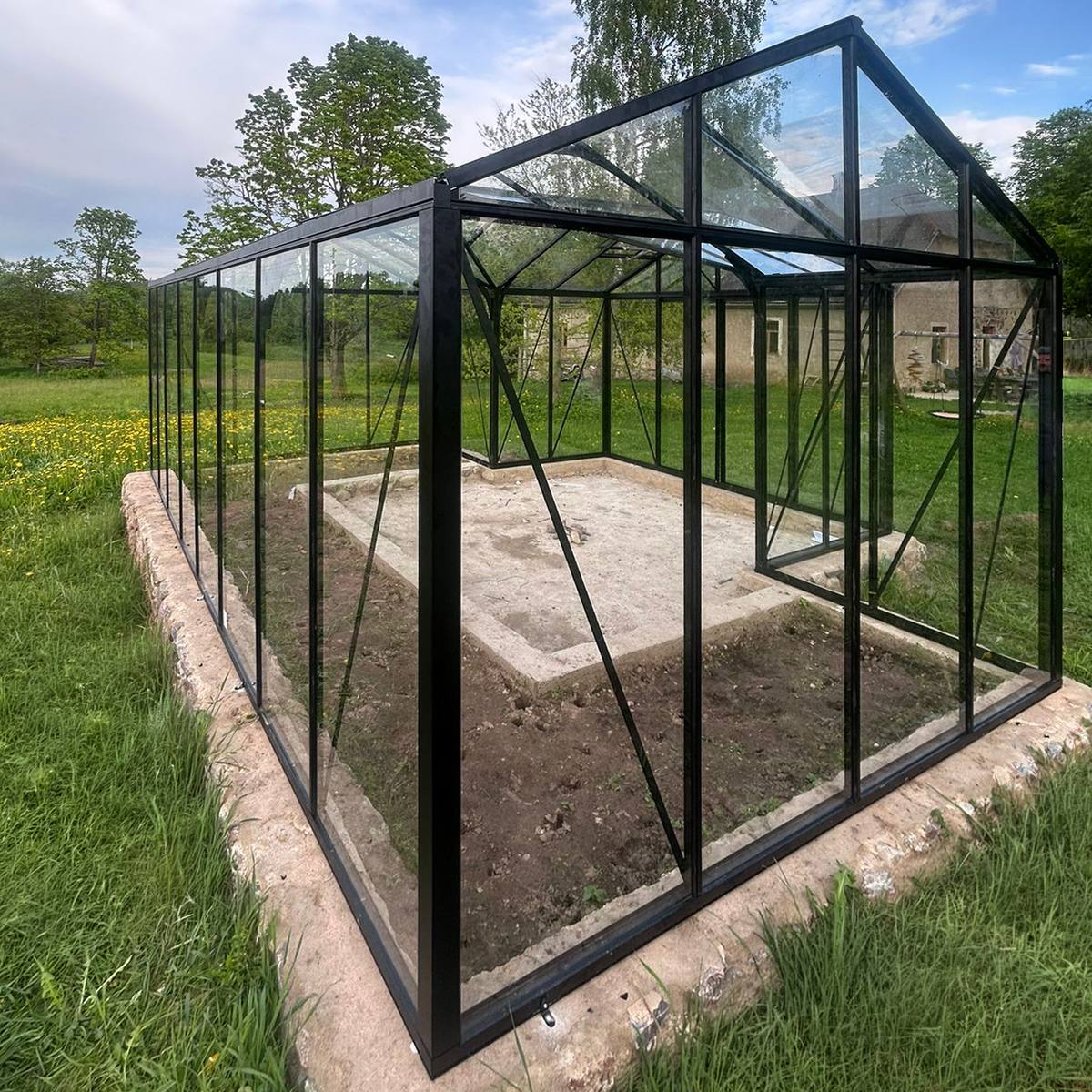
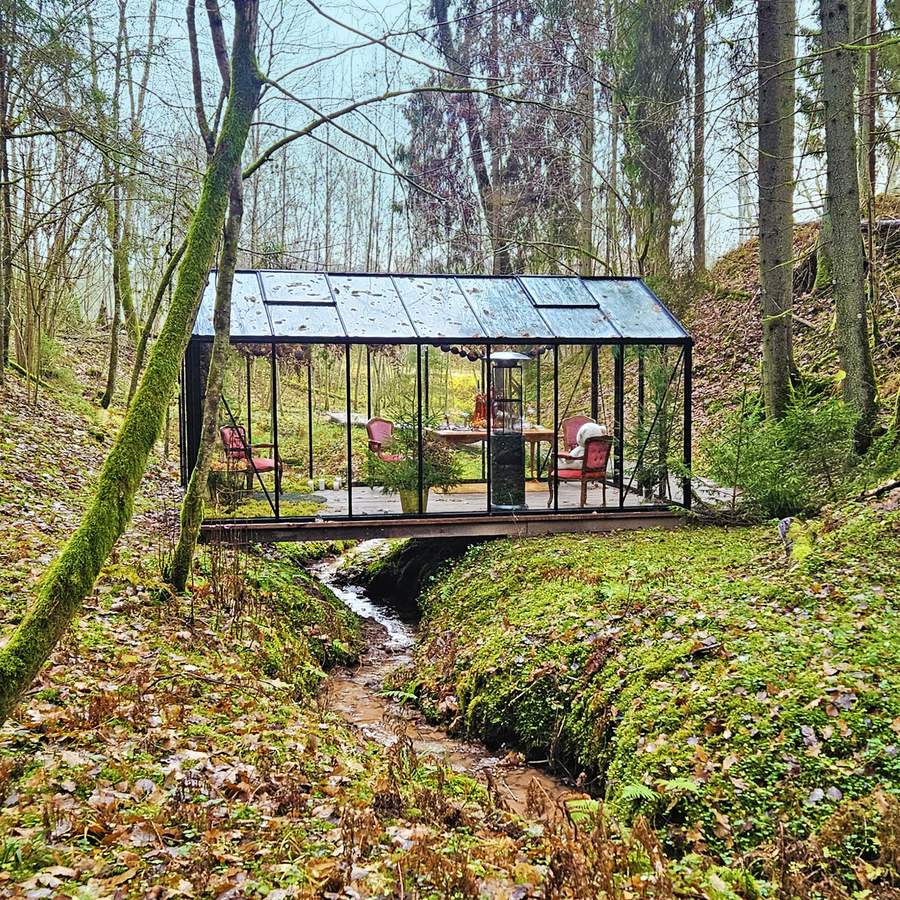
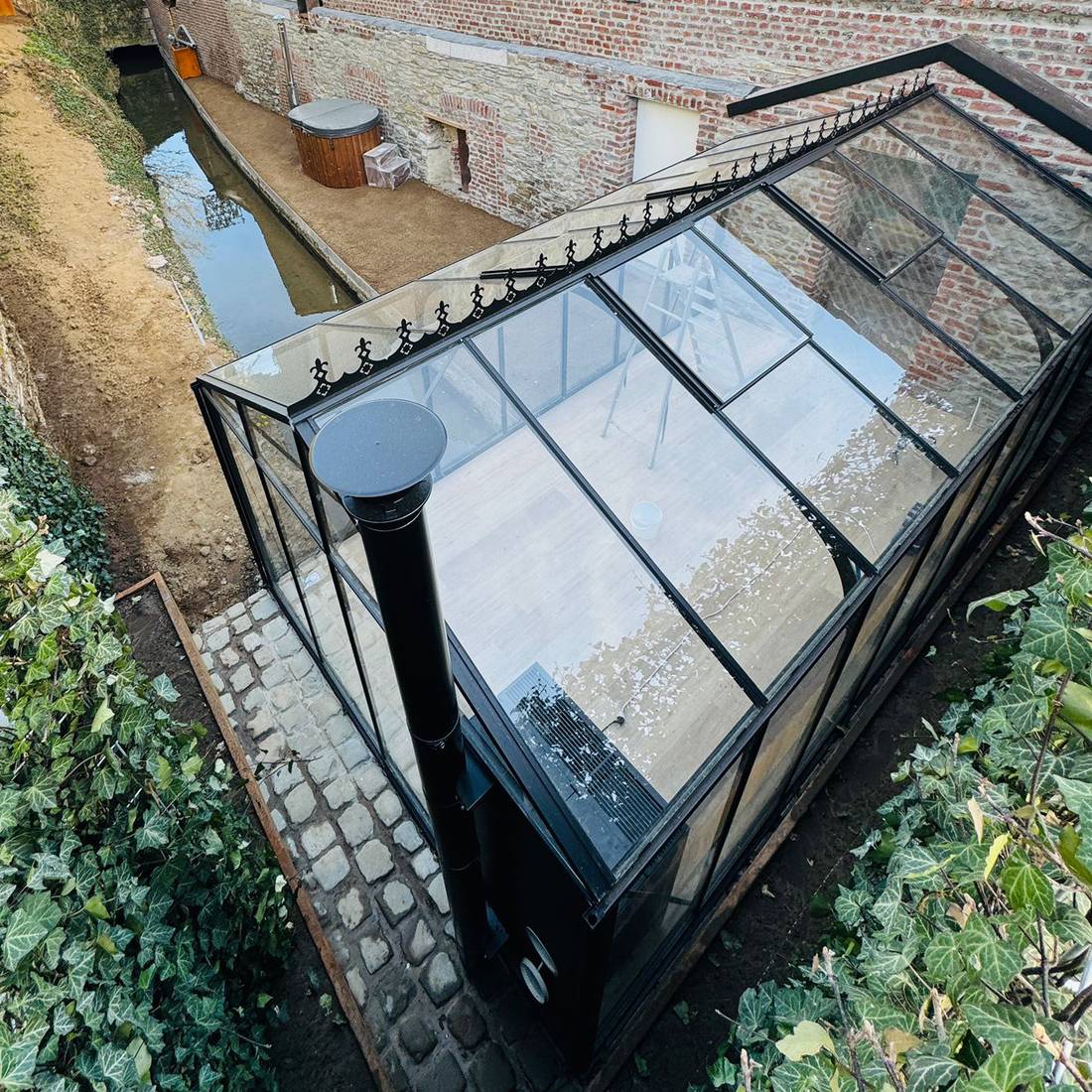
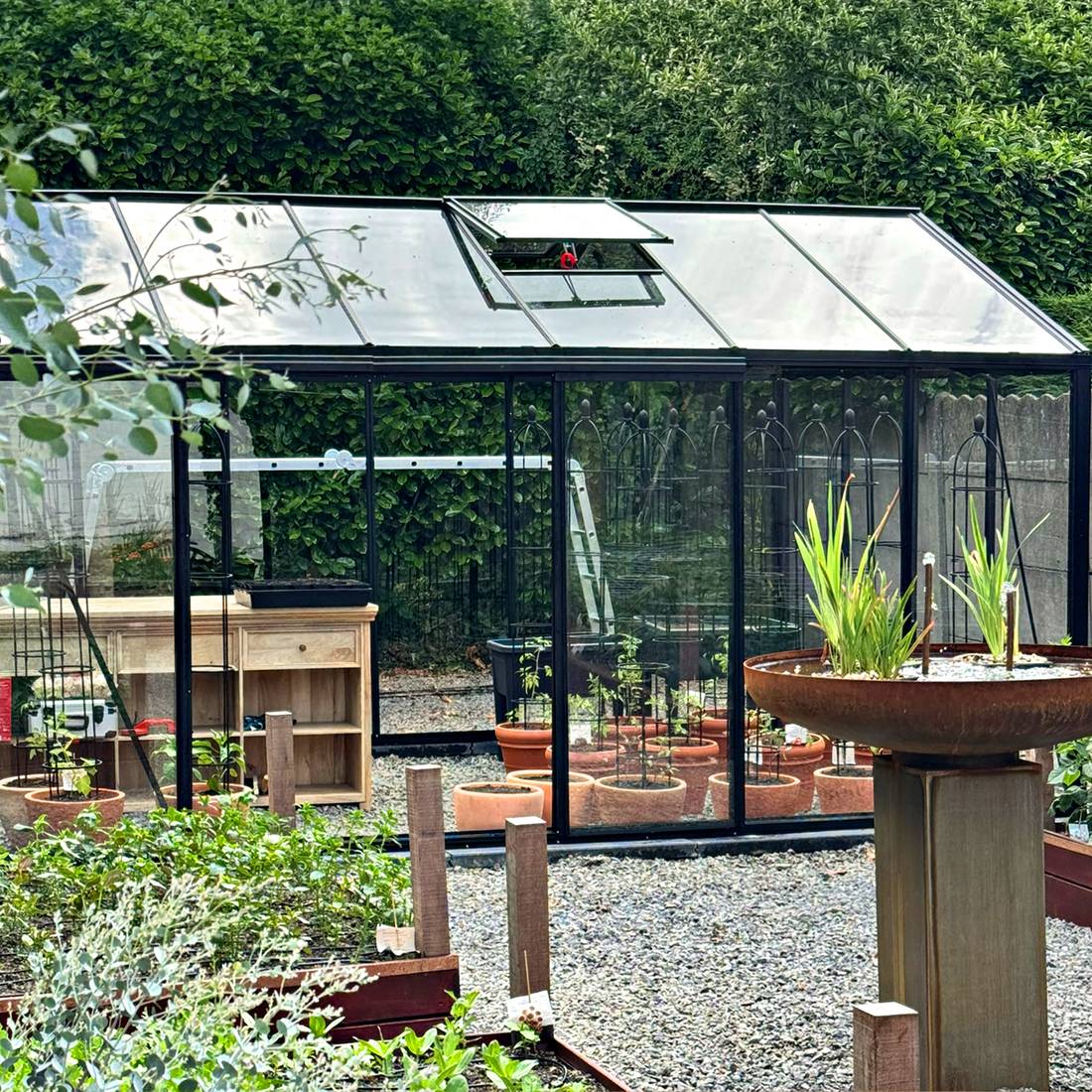
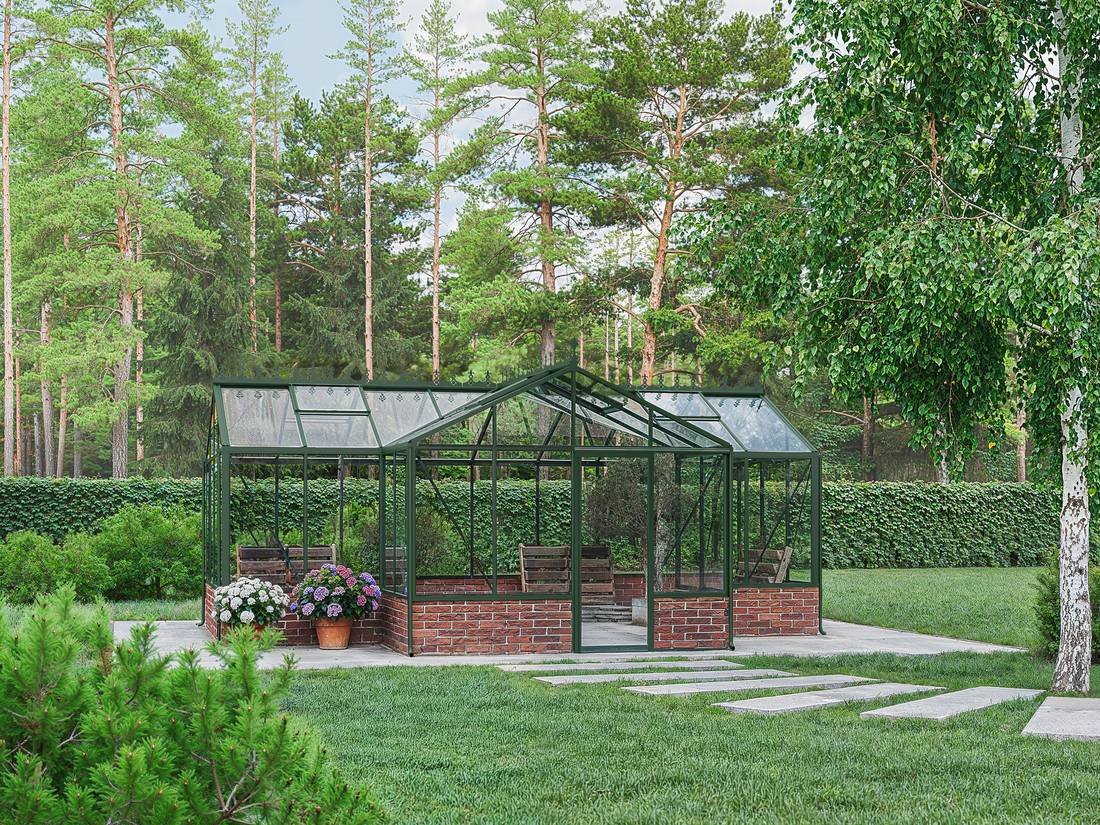
The installation at Anna Koku Skola should be understood as one connected project sequence. It does not show several unrelated projects, but a site’s progress from prepared starting conditions through construction to a completed usable structure.
The same approach is useful for your project record: photograph the site and base first, then sorted packages, key assembly stages and finally the completed structure. This helps place later questions in time and shows whether deviations existed in the base or appeared during a work stage.
- Record the starting state: Document the area, levels, adjoining structures and access routes.
- Arrange delivery methodically: Group packages by their labels without leaving sensitive parts unprotected.
- Follow the installation sequence: Do not improvise for appearance; use the current instructions.
- Check intermediate stages: Check alignment, diagonals, straightness and connections at specified checkpoints.
- Document completion: Record doors, opening elements, connections and the tidied surrounding area.
For examples of different design approaches, see articles on Victorian greenhouses and the orangerie greenhouse. They are for inspiration, not installation instructions.
Plan use after construction
A project is not complete simply because all main components are assembled. Check that doors and moving elements operate freely, fixings follow the instructions and the area is safe to use. Remove packaging waste and store any clearly identified remaining parts neatly.
For greenhouses, plan ventilation, irrigation, paths and planting areas before filling the interior. The article on growing basil in a greenhouse illustrates how use and cultivation relate. For long-term upkeep, see caring for an aluminium greenhouse.
For pergolas, consider water run-off, furniture and clear circulation areas. For saunas, connections, commissioning and testing must follow local requirements and manufacturer documents. Have required electrical work assessed, installed, inspected and tested by a legally registered local electrical contractor, with applicable Certificate of Compliance documentation.
Keep documents after project completion
- Order confirmation and later corrections
- Invoice and payment documents
- Dispatch and delivery documents
- Assembly and operating instructions for the specific version
- Photos of delivery, foundation, installation and final condition
- Correspondence about changes or reported issues
- Records of commissioned specialist work, where available
Information on applicable conditions is available under Warranty. Keep documents so that the model and order can still be identified clearly years later.
Frequently asked questions
Does an order confirmation mean my greenhouse has been dispatched?
No. The order confirmation initially confirms that the order has been recorded with the listed details. Only separate dispatch communication indicates that the dispatch stage has been reached.
When will my order be dispatched or delivered?
Your order-specific communications are decisive. General information does not replace a confirmed status for your order. Remember that dispatch and actual delivery are two different points in time.
Can I change the model or delivery address after ordering?
That depends on the processing stage. Report the requested change immediately and fully, quoting the order number. A change is accepted only after explicit confirmation.
Should I build the foundation immediately after ordering?
Not on the basis of a general product description alone. Wait until the model, version and relevant assembly documents are confirmed. Match the foundation to local ground conditions and, where appropriate, a specialist contractor.
Can I book an installer before dispatch notification?
A non-binding provisional booking may be useful organisationally. Only arrange a fixed paid appointment with sufficient contingency and with the actual delivery communications in mind.
What should I do if access to my property is restricted?
Report narrow points, weight restrictions, cul-de-sacs, low clearances or other obstacles as early as possible. Describe the situation specifically and add access photos where helpful.
What should I do if packaging is visibly damaged?
Document the package and damaged area before opening it. Record the issue specifically on available handover documents and retain packaging, labels and photographs while it is clarified.
What if I cannot identify a component?
Compare its label and shape with the model-specific instructions. Do not force installation. Photograph the part, label and packaging context, then send an enquiry with your order number.
Are assembly instructions identical for all Bloomcabin models?
No. Models, construction types and versions can require different components and assembly steps. Use only the current instructions that match your specific version.
Can I store delivery outside until installation?
Unprotected outdoor storage is not recommended. Moisture, wind, UV exposure, unstable stacking and dirt can affect packaging or components. Use a dry, protected and stable storage location.
What should I check before completing the project?
Check completeness, alignment, specified fixings, doors, moving parts, connections and the safe condition of the surroundings. Follow the completion checks in the relevant assembly and operating documents.
Where can I find examples of other projects?
Find experiences and ideas in greenhouse reviews and the Bloomcabin blog. Examples help with planning but do not replace checking your property.
Final checklist before dispatch
- Order confirmation checked in full
- Model, version and options clearly confirmed
- Delivery and billing addresses correct
- Working telephone number and email address
- Approval and property matters clarified
- Foundation planning matched to the exact model
- Wall construction professionally checked for attached models
- Access route and unloading point checked
- Protected storage area prepared
- Person briefed for goods acceptance
- Assembly instructions and order documents available
- Installation date planned with sufficient logistical contingency
The key rule is simple: check the details first, prepare the site technically, accept delivery with records, and begin installation only after every component has been fully identified.
