



Planning a sauna heater and electrical connection
An electric sauna heater must suit the sauna room, controls and existing electrical installation. This guide covers the information needed before purchase, how to read rating-plate data, and what to agree with the electrical contractor who will perform the work.
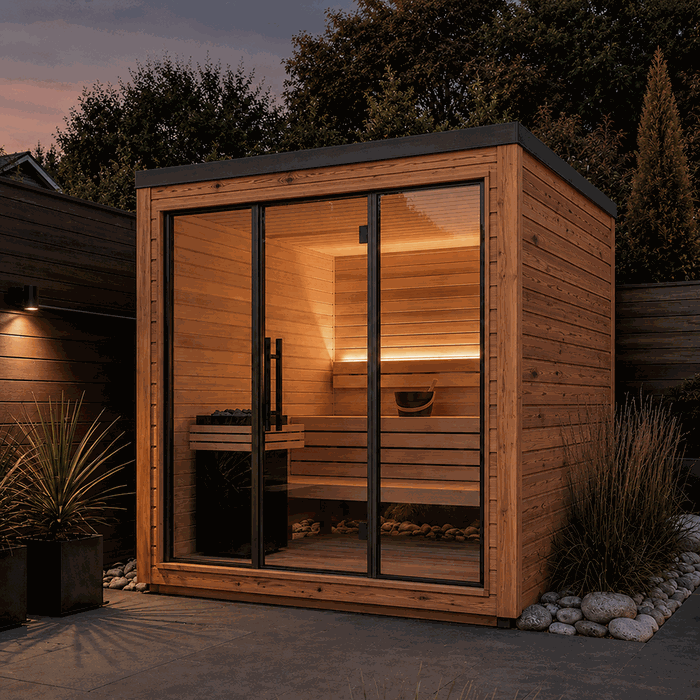
Electrical planning for an outdoor sauna starts with the room, heater, controls, sensors and site as one system—not with a circuit breaker. Only then can the required supply, protection and cable routes be assessed.
This guide covers the technical approach to private outdoor saunas in South Africa. It neither replaces the manufacturer’s installation instructions nor inspection by a legally registered local electrical contractor. The supplied-component documents, local connection requirements and applicable installation rules take priority.
What an electric sauna heating system includes
The heater is only one part of the system. Depending on the version, other technically compatible components may be required:
- Sauna heater: Heating appliance with elements, stone compartment, connection compartment and specified clearances.
- Sauna stones: Stones suitable for the relevant heater, in the specified size, quantity and arrangement.
- Controls: Integrated in the heater or provided separately.
- Power unit: In some systems, a separate switching unit carries the heater load.
- Temperature sensor and safety temperature limiter: Monitor temperature at the specified location.
- Control panel: Local interface inside or outside the sauna, depending on the system.
- Connection and sensor cables: Cables suited to the temperature, location and manufacturer requirements.
- Protective devices: Circuit and residual-current protection, plus isolation where required.
Do not assume that every part is included. Check the specific product documents. The sauna section provides an overview of different designs. Even cabins of similar size may differ in construction and required heater configuration.

Start with the sauna room, not the distribution board
Select the heater for the room’s effective heating load. Internal volume is an important starting point, but glazing, uninsulated or heat-conductive elements, doors, room shape, airflow and outdoor climate also affect heating performance.
A compact Elma S outdoor sauna and the larger Elma L outdoor sauna must not be treated alike merely because they look similar. The same applies when comparing an HC150 barrel sauna with longer barrel models.
More heating capacity is not automatically better: it can affect control and demand excessive connection capacity. An undersized heater may run too long, struggle to reach the set temperature or distribute heat poorly. Follow the heater and sauna manufacturers’ calculation guidance.
Information for a reliable heater recommendation
- exact sauna model and planned installation variant;
- clear internal dimensions and resulting internal volume;
- size and type of glazing, stone or other poorly insulated surfaces;
- documented wall, ceiling and floor construction;
- planned heater position and mounting method;
- clearances from benches, walls, door and safety guard;
- sauna location, plus planned supply-cable length and route;
- existing supply and spare distribution-board capacity;
- required local or remotely controlled functions.
If unsure, send the product designation, floor plan and site photographs together. The Contact page can help with product-specific questions.
Reading electrical sauna-heater data correctly
Short descriptions often state only heating output, which is insufficient for electrical planning. Use the rating plate, connection diagram and installation instructions for the exact appliance version.
| Specification | Planning relevance |
|---|---|
| Rated output | Heater power consumption under the stated operating conditions. |
| Rated voltage and supply type | Identifies the intended supply and connection configuration. |
| Rated current | Basis for cable, switching and protection selection, considering installation method and manufacturer data. |
| Phase and terminal arrangement | Defines the permitted electrical connection. It must not be estimated from output. |
| Control type | Shows whether a panel, power unit and sensors are needed. |
| Protection rating and location | Limits where a component may be installed. |
| Cable requirements | May specify cross-section, temperature resistance and connection conditions. |
Current must not be derived solely from an advertised wattage. Internal wiring, number of phases, control components and the country-specific appliance version must all be considered.
Dedicated circuit, protection and isolation
An electric sauna heater is a high load used for long periods, so planning should consider a dedicated, correctly sized circuit. A registered electrical contractor must determine any multipole isolation, residual-current protection or other safeguards from the appliance, existing installation and locally applicable requirements.
A socket fitting an accessory plug says nothing about heater suitability. Extension leads, portable cable reels and temporary garden connections are not a planned supply for a permanently installed sauna heater.
Questions for the electrical contractor
- Is the existing service and distribution capacity sufficient?
- What exact supply and connection type does this heater require?
- Which cable is required for the planned length and installation method?
- Which protective devices are required by the manufacturer documents and site conditions?
- Where may the connection or junction point be located?
- How will the installation be safely isolated and protected from reconnection?
- Are excavation works, conduits or changes to the sub-distribution required?
- Which tests and applicable Certificate of Compliance documents will be provided?
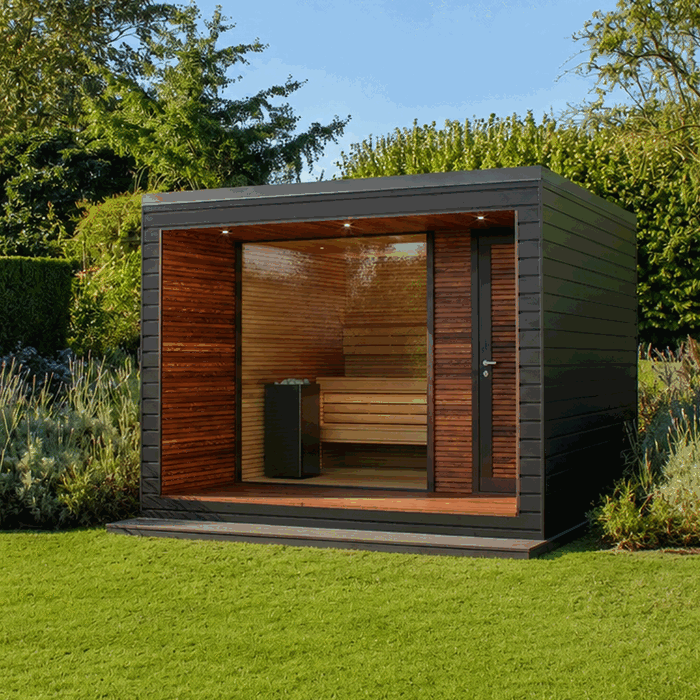
Connection capacity and distribution planning
A spare distribution-board way does not prove sufficient capacity. Check the service supply, upstream protection, board, diversity, cable routes and major loads such as a heat pump, vehicle charger, instantaneous water heater, electric cooker or garden equipment.
Plan the sauna with the wider garden installation. Lighting, outdoor sockets, pumps, pergola drives or a future garden room may need extra circuits. Forward planning can reduce later excavation and alterations, but never justifies oversizing the heater’s protective devices.
Cable routing and heat exposure
An outdoor sauna spans several electrical environments: ground or outdoors, perhaps a technical space, and the hot interior. Cable suitable for a cool area may be unsuitable near the ceiling or heater connection.
Set cable routes before foundation and assembly work. Consider mechanical protection, moisture, UV exposure, bend radii, penetrations, and separation of power and sensor cables. Keep cables away from hot surfaces, sharp edges and future fixing points.
Avoid roof and external-wall penetrations where possible. Necessary penetrations must be designed so that water cannot enter the wall structure. Do not improvise closures for unused openings with unsuitable materials.
Controls, sensors and remote operation
Heaters may have integrated operation or need separate controls. For external systems, use the control panel, power unit, temperature sensor and safety devices as a manufacturer-matched system, while a registered contractor confirms local compatibility and protection. Never mix systems because plugs or terminals look alike.
The manufacturer specifies the temperature-sensor position. It affects both control and safety shutdown. Moving it to a cooler position to obtain a higher cabin temperature is unauthorised tampering and can cause dangerous overheating.
Remote-start or app functions often need extra safety logic. Before starting remotely, ensure no towels, cleaning equipment or other objects are on or near the heater. A generic smart-home relay cannot replace manufacturer-specified controls.

Earthing, bonding and protection against electric shock
Assess protective conductors, earthing, bonding and residual-current protection across the whole installation. Do not connect metal components indiscriminately. The registered contractor decides which conductive parts to include and verifies the protective measures by testing.
A timber building is not automatically electrically uncritical. Moisture, wet skin, outdoor installation and high temperatures place particular demands on equipment and installation. Unauthorised changes after handover can impair the verified protection.
Safety clearances and heater guards
Treat the specified clearances from timber, benches, ceiling, door and other components as binding design dimensions. Use the exact heater version’s instructions; experience or measurements from a similar-looking heater are insufficient.
A heater guard can prevent accidental contact, but must not impair airflow or safety clearances. It must be securely fitted and must never serve as a shelf or textile-drying rack. When comparing layouts such as HC 180, HC 225 and HCF 225, consider not only seating space but also the safe heater area.
Practical steps before purchase
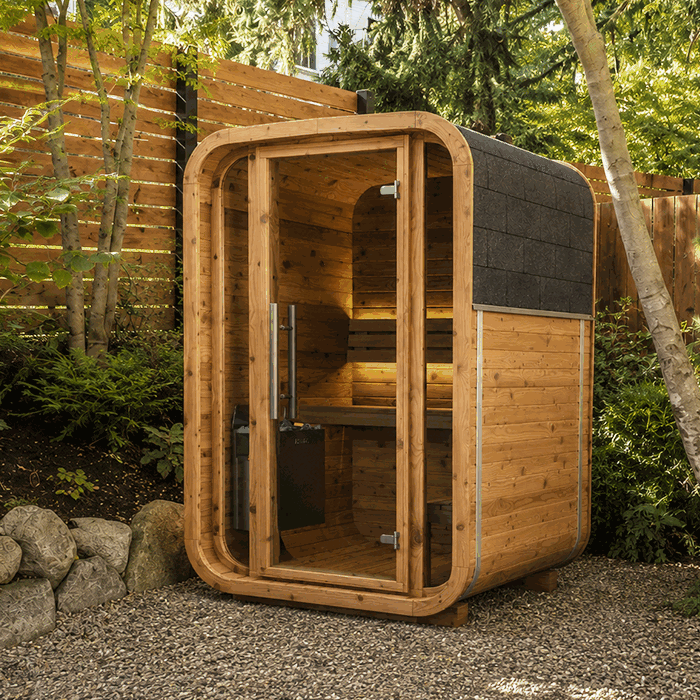
- Choose the sauna model: clarify design, interior, door and glazing areas, and heater position. The guide choosing a timber sauna, barrel sauna and garden sauna helps with the initial classification.
- Check the site: clarify access, foundation, drainage, boundary clearances and local requirements. The article on whether garden structures may require approval offers guidance. In Cape Town, use the municipal planning and building-control route; elsewhere, ask the relevant municipality to assess the project.
- Obtain a heater recommendation: provide room data and required functions to the supplier.
- Obtain appliance documents: make rating-plate data, connection diagram and instructions available before electrical planning.
- Appoint an electrical contractor: have a registered local contractor inspect the installation, cable route and protection on site.
- Separate cost items: record sauna, heater system, excavation, supply cable, distribution alterations and commissioning separately.
- Confirm the scope of supply: complete the order only after confirming the included control, sensor and connection components.
- Coordinate the installation sequence: decide which cables precede foundation or assembly and which connections follow completed assembly.
Information about the ordering process is available under How to order. Also check logistical points under Purchasing and delivery .
Delivery and checking heater components
Before installation, check for visible damage, correct model designations and completeness. Compare the rating plate, controls, sensors, panel, power unit, fixings, stones and documents with the order confirmation.
Do not repair damaged terminals, kinked sensor cables or deformed housing parts yourself. Keep packaging and labels until the matter is resolved. Questions about scope and claims can be considered under the Guarantee terms.
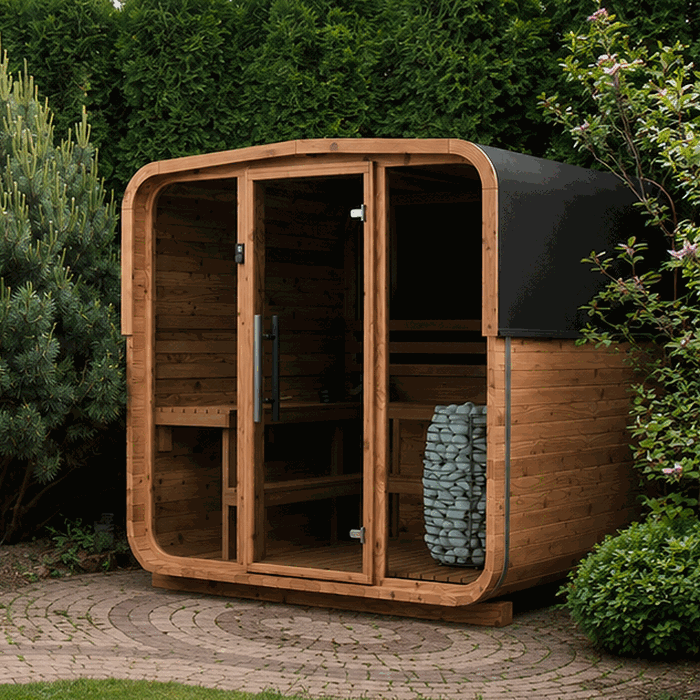
Installation and commissioning checklist
- sauna fully assembled according to installation documents;
- heater model and electrical appliance version checked against the plan;
- heater securely mounted and all clearances checked;
- safety guard correctly fitted, where provided;
- stones checked, cleaned and loosely arranged according to instructions;
- temperature sensor and safety devices fitted exactly in the specified positions;
- power and sensor cables routed separately and protected;
- connection terminals checked to manufacturer instructions;
- protective conductor, protective devices and isolation options checked;
- electrical inspection and testing completed by the registered contractor, with any applicable Certificate of Compliance documentation issued;
- ventilation openings clear and not obstructed by fittings;
- first heating cycle carried out under supervision;
- controls, shutdown and operating elements function-tested;
- users instructed in safe operation, isolation and actions in the event of a fault.
Manufacturing- or material-related odours may occur during first heating. Ventilate the room according to the manufacturer’s instructions. Unusual heavy smoke, arcing, burning smells or repeated operation of a protective device require immediate shutdown and professional inspection.
Maintenance and fault finding
Before each use, check the heater area for objects. Regularly inspect the stones, visible cables, fixings, guard, ventilation openings and controls. Crumbling or compacted stones can obstruct airflow and strain the elements. Replace and rearrange them as instructed.
If a protective device trips, do not keep resetting it without investigating. Causes may include moisture, cable damage, or faults in an element, control or connection. Seemingly normal heating does not exclude an electrical fault.
Record the time, operating stage, fault codes and unusual observations to assist service staff and the electrical contractor. Only suitably qualified people may open housings, terminal spaces or control units after safe isolation.
Integrating the sauna into the overall garden plan
The technically best sauna location considers more than the electrical connection. Paths, privacy, drainage, lighting, wind direction and maintenance access affect later use. An HCF 300 or LC 225 should therefore be included in the site plan with its actual access and technical-service areas.
If a pergola is also planned, the article on choosing a bioclimatic pergola can help with zoning. A greenhouse has fundamentally different temperature and humidity requirements; see the guidance on greenhouse temperature and humidity and polycarbonate and insulation performance.
Ideas for the wider design can be found in garden trends. Available building categories can be explored under greenhouses and conservatories and garden rooms . Further technical content is gathered on the Useful information page.
Frequently asked questions
Can I use an existing household socket for an electric sauna heater?
The socket alone cannot answer this. Many heaters need another supply and a dedicated circuit. Follow the rating plate and connection diagram. Even for a smaller appliance, a registered electrical contractor must check the installation and protection.
How do I determine the correct heater output?
Start with internal volume and construction, then account for glazing, poorly insulated components, room shape and the manufacturer’s calculation. Barrel length or seat count alone cannot determine selection.
Should I buy the heater before contacting an electrician?
Ideally, first shortlist a specific heater model and obtain its technical documentation. Purchase should take place only once electrical feasibility and the full system scope have been clarified. This helps avoid unsuitable appliance versions and unexpected alterations.
Can the circuit breaker be calculated from the advertised wattage?
No. Voltage, phases, rated current, connection type, installation conditions and manufacturer requirements are also needed. The contractor sizes cables and protective devices together, considering the existing installation.
Does every sauna heater have built-in controls?
No. Some heaters have integrated operating elements; others require external controls, sensors and possibly a separate power unit. Before ordering, clarify which components belong together and are included in the supply.
May I mount the temperature sensor where it shows my preferred temperature?
No. The manufacturer specifies the sensor position. Free placement distorts control and can impair safety shutdown. Any later relocation should also occur only in accordance with approved documentation.
Can a smart-home relay switch the heater?
Only where the heater system has an expressly intended interface and all safety conditions are met. A universal relay must not replace manufacturer-specified controls, interlocking or remote-start monitoring.
What should I do if the protective device trips while heating up?
Switch off the heater; do not keep resetting it. Record the operating stage and fault messages. A registered contractor or authorised service provider must check the connection, cable, protective device, elements and possible moisture.
Does a wood-fired sauna also need electrical planning?
Yes, if lighting, sockets, controls or other electrical loads are planned. A wood-fired heater is not an electrical load, but outdoor installation, moisture protection and cable routing remain relevant. Ask local building-control and fire authorities about the appliance, flue, ventilation, clearances and smoke restrictions.
Can electrical installation be completed before the sauna is assembled?
Underground cable, conduits and some distribution work may be prepared. Check final heater, sensor, panel and connection positions against the built sauna. Complete the final connection and testing only on the assembled system.
Which documents should I keep?
Keep the invoice, order confirmation, rating-plate data, instructions, connection diagram, test record, control settings and photographs of concealed cable routes. They assist maintenance, spare-parts identification and later changes.
Who makes the final electrical decisions?
The heater manufacturer defines appliance requirements, while the sauna supplier provides room and product details. A registered local electrical contractor assesses the installation, site and applicable rules. General online guidance cannot replace the final connection design, inspection and testing.
