



COMPARE
Buying Direct from the Manufacturer: What Are the Benefits?
Buying direct can shorten information channels, make product comparisons easier and simplify later spare-parts or maintenance enquiries. Before ordering, however, responsibilities for site assessment, foundations, approvals, unloading and installation must be clearly established.
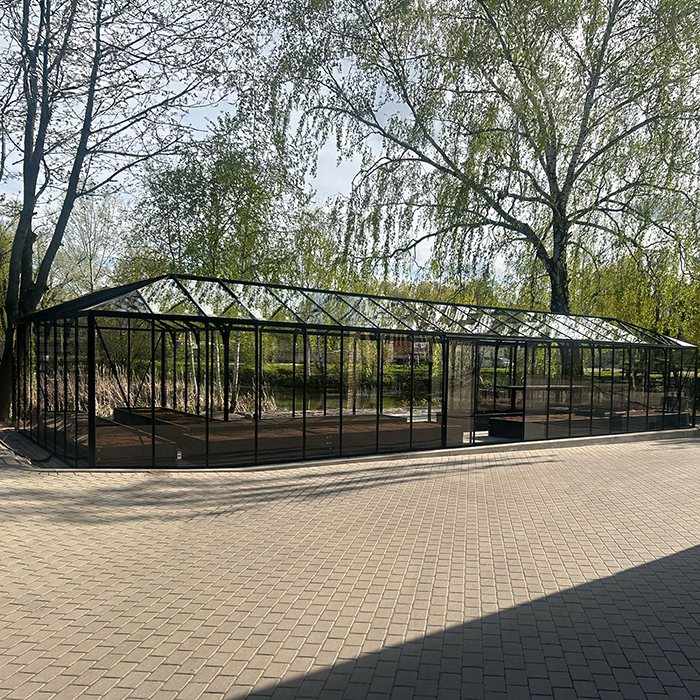
People who buy a greenhouse, pergola or outdoor sauna directly from the manufacturer often expect a lower price. Price is only one consideration, however. Technically, clear product details, understandable options, defined responsibilities and consistent information from the initial quotation through to later maintenance questions matter more.
A direct purchase does not replace a site assessment or local planning for installation and approvals. The soundest decision combines the manufacturer’s product expertise with the local knowledge of suitable professionals.
What does buying direct from the manufacturer mean?
In a direct purchase, the contract is made with the manufacturer or its sales company, without an independent retailer reselling the product under its own responsibility. Model, specification and accessory information therefore comes from the organisation that knows and documents the product system.
This does not automatically mean that every service comes from one provider. Manufacturing, sales, transport, unloading, foundation work, installation, electrical work and authority liaison are separate areas of work. The quotation must state in writing which of these services are actually included before you order.
The term “factory direct” should not be confused with complete on-site project management. A direct sales relationship can support an informed product choice. Assessing soil, slopes, access, boundary lines, services and local wind or snow conditions nevertheless remains a site-specific task.
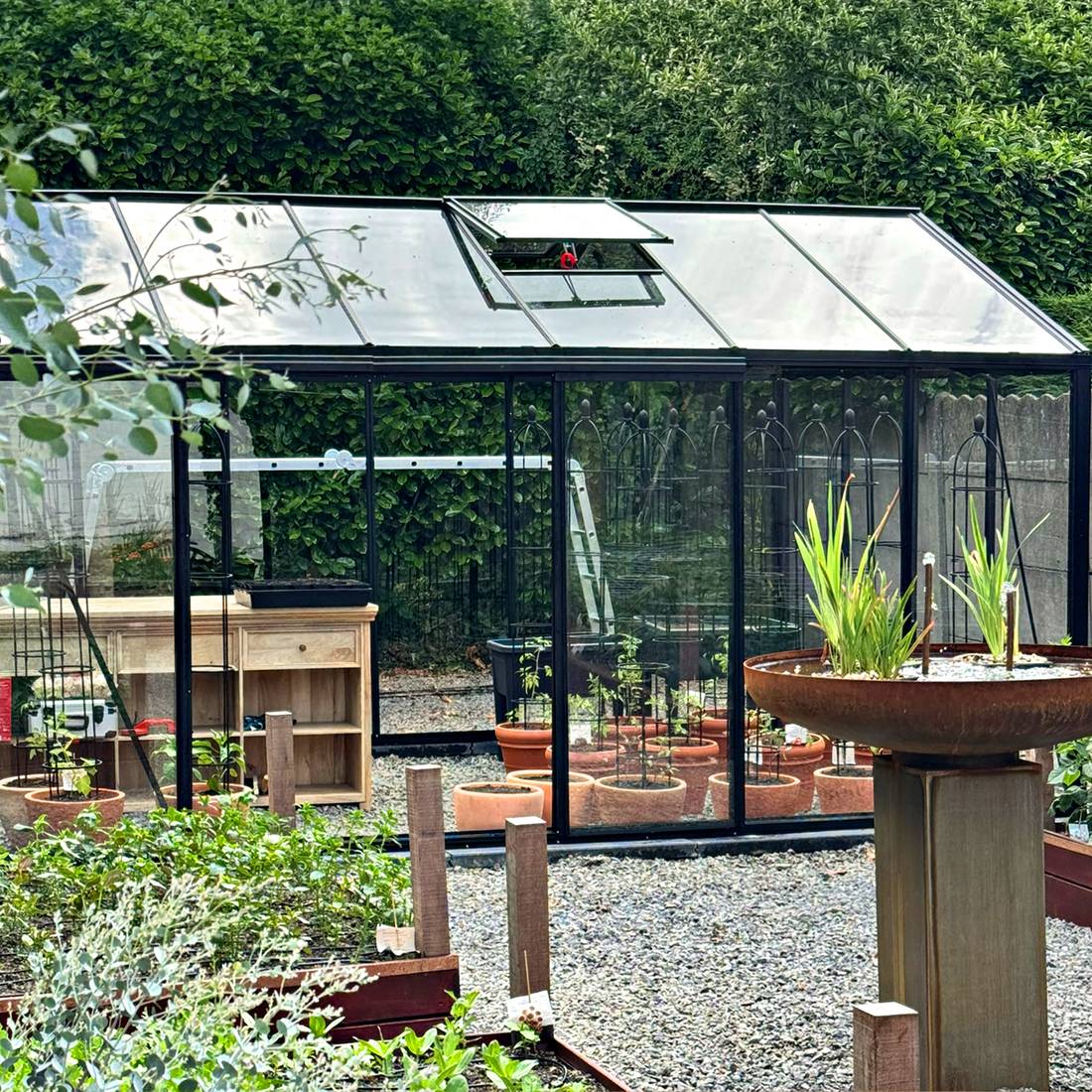
Manufacturer, retailer or local specialist?
None of the three purchasing routes is inherently superior. They fulfil different roles. Before deciding, compare the complete scope of supply and service, not only the final price.
| Purchasing route | Typical strength | Key point to clarify |
|---|---|---|
| Direct from manufacturer | Product knowledge, variant comparison and a short information chain | Who handles site assessment, unloading and installation? |
| Through a retailer | A local contact and, where relevant, several brands to compare | Which technical questions can the retailer answer, and which go to the manufacturer? |
| Through a specialist contractor | Site inspection, construction work and coordination at the property | Which product system is offered and how are spare parts obtained? |
Local specialists are particularly valuable when earthworks, foundations, drainage or connections are required. The manufacturer is often better placed to explain the model range, compatible components and the intended installation sequence. Many projects therefore combine a direct product purchase with clearly defined work carried out locally.
Information about the company and how to contact it directly is available under About us and Contact. Businesses and project professionals can also review the section for Trade customers .
The main benefits of buying direct
1. A clearer source of product information
Questions about technical garden structures are interconnected: dimensions, roof form, glazing, doors, ventilation, fixings, accessories and the base. Details may be shortened or interpreted differently when relayed through several parties. Direct contact links each question to the exact model and planned configuration.
This is especially useful where similar-looking models differ in construction or function. Before choosing a greenhouse, the overviews of greenhouses and conservatories, polycarbonate and multiwall sheets and Victorian greenhouses can help clarify different planning directions.
2. A wider comparison within a product family
A manufacturer can consider more than one model and compare alternatives within the same range or product group. This reveals which differences matter for the intended use and which are simply matters of design preference.
For pergolas, comparison may start by asking whether a bioclimatic or classic pergola is the better fit. Construction type and size follow. The comparison of wall-mounted and freestanding pergolas and the pergola size guide are useful. Another article considers whether a bioclimatic pergola or glass roof best suits the intended use.
3. Better alignment of use, design and budget
A robust choice begins with the intended use, not the largest possible size. A propagation house, a statement garden building, a weather-protected seating area and a private sauna have different requirements for access, internal layout, ventilation, privacy and location.
Direct discussion separates essential criteria from optional preferences. This avoids two mistakes: choosing a model too small for long-term use, or over-specifying a solution whose extra features are rarely used. For conventional greenhouse growing, refine your needs through topics such as temperature and humidity or growing lettuce in a greenhouse .
4. Fewer losses in interpretation
Direct communication reduces the number of handover points. This is useful for special requests, technical queries and changes. A sketch, photograph or written requirement can be assigned directly to the order rather than passed through several companies.
Direct contact cannot eliminate misunderstandings, so clear records remain essential. Dimensions need a unit, reference point and orientation; wall connections must identify the relevant side. Specify colour names, door positions and accessories clearly in the quotation and order confirmation, not only by phone.
5. Consistent records for later questions
A continuous customer and order record makes later enquiries easier. When the model, specification, accessories and purchase date can be traced, maintenance or parts requests can be handled more precisely. This is particularly relevant for structures intended for use over many years.
Keep the quotation, order confirmation, invoice, packing lists, installation documents, delivery photos and relevant correspondence together. Guidance on caring for an aluminium greenhouse and the applicable warranty information should also form part of this record.
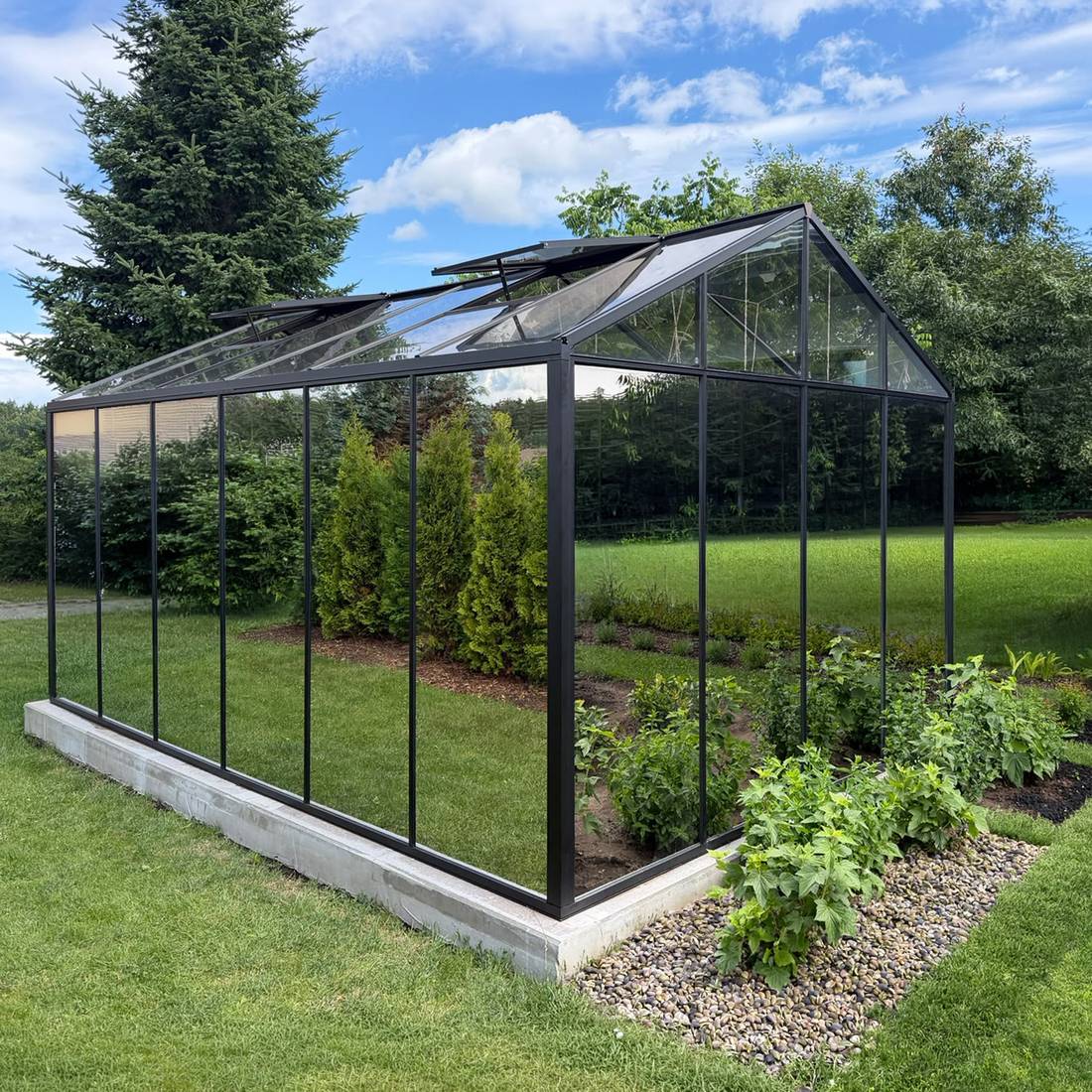
What should be decided before requesting a quotation
The more precise the starting information, the more reliable a quotation can be. An initial enquiry does not need to include complete construction planning, but the following points should be clarified where possible:
- Product type and main use: plant cultivation, protected seating, wellness use or a combined purpose.
- Available space: usable footprint including room for installation, maintenance and access.
- Location: freestanding or against a building, orientation, shade, slope and existing surfaces.
- Access: road width, driveway, gates, tight turns, trees, overhead lines and distance to the unloading point.
- Base: natural ground, paving, terrace, an existing slab or a new foundation.
- Preferred date: a planning target, without treating it as an unconfirmed delivery promise.
- Installation approach: self-installation, a local specialist or separately quoted installation work.
- Budget range: including transport, unloading, foundations, installation and possible ancillary work.
For a pergola, consider the foundation early. The pergola foundation guide explains the basic planning points. For a larger greenhouse project, an introduction to an orangery can also help refine use and design.
Questions direct buyers should ask
A good quotation explains not only what will be delivered, but also what is excluded. Before ordering, ask at least the following questions:
- Which documents and drawings belong to the specific model?
- Which components and accessory items are included in the quotation?
- What requirements apply to the foundation or fixing surface?
- Who arranges transport, unloading and movement within the property?
- What conditions must be in place at delivery?
- Is installation included, available as an option or entirely your responsibility?
- Which assessments and work must local professionals undertake?
- How should apparent transport damage be documented and reported?
- Until when can changes be made, and what consequences may they have?
- What information is needed for later spare-parts or service enquiries?
Compare the general process with the guidance under How to order and Buying and delivery .
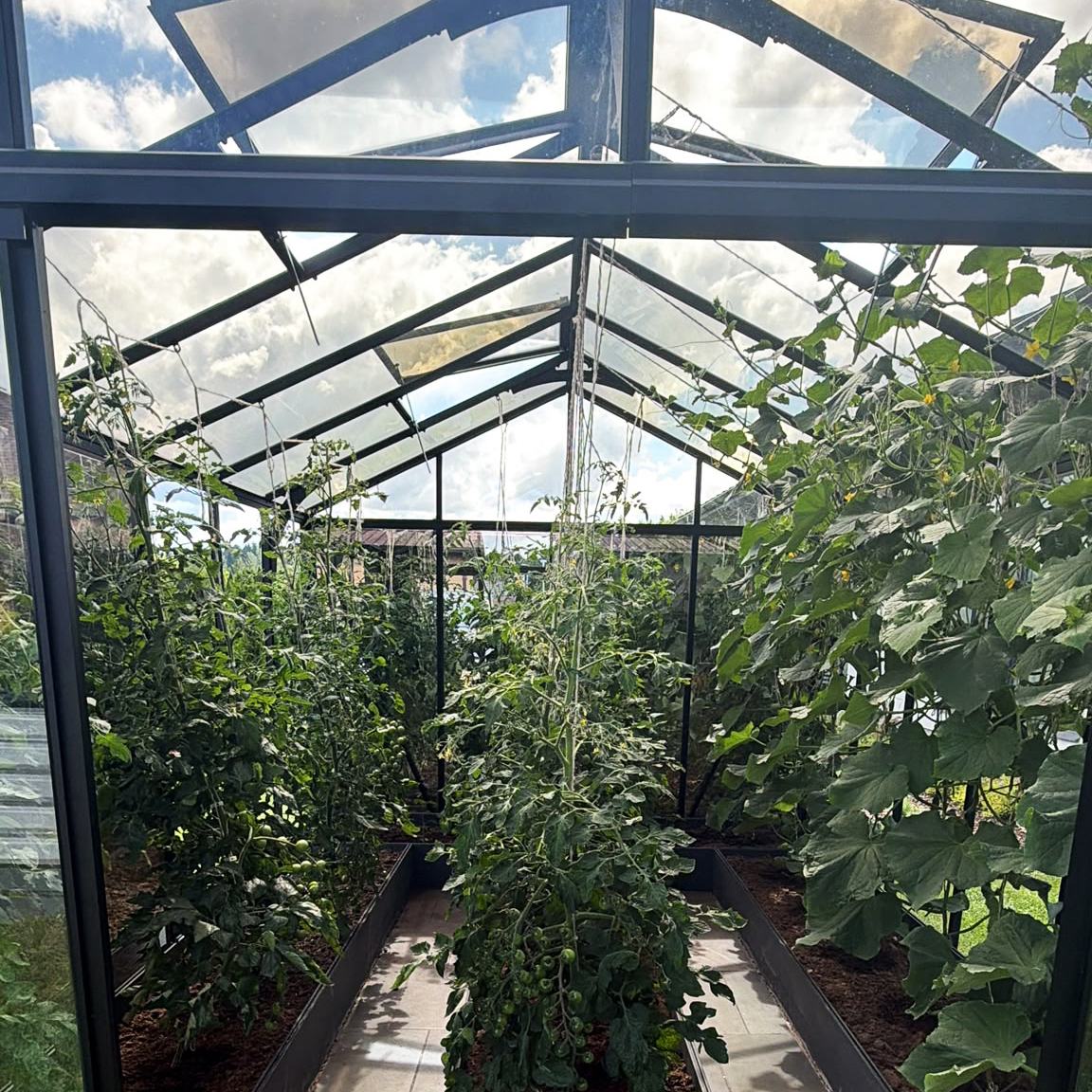
Accepting a direct delivery responsibly
Large components do not arrive like ordinary parcels. Plan acceptance before dispatch. Ensure the access route and intended set-down area are reachable and prepared. Clarify in advance whether the particular delivery and local conditions require lifting equipment, extra people or other aids.
Have a responsible person present at acceptance. Check the number and visible condition of packages without spreading components unnecessarily in a traffic area. Photograph packaging, labels and anything unusual. Note visible damage or shortages as the delivery instructions require, then report them promptly through the stated contact route.
Damaged packaging does not automatically prove that a component is damaged. It is, however, an important reason to document the condition carefully and clearly.
Store delivered components dry and safely, following product-specific guidance. Avoid makeshift storage that allows long profiles to bend, glass panes to stand unstably or small parts to be lost.
Installation still requires local planning
The manufacturer can explain its intended product system, but without reliable site information cannot decide whether a position is structurally suitable. Soil conditions, frost, drainage, building façades, property boundaries and service routes must be assessed on site.
In South Africa, requirements vary by municipality, property and project. Check the structure’s use, roof, enclosure, size, services and position against the municipal planning scheme, building lines, title conditions and heritage controls before ordering or building. For an initial overview, read about whether a greenhouse or pergola needs approval ; the relevant municipal building-control and planning office makes the project-specific decision.
Use suitably qualified professionals for electrical, water, heater, flue and other connections, following applicable requirements. Electrical work should be assessed, inspected and tested by a legally registered local contractor, with any applicable Certificate of Compliance documentation. Plan this early for an Elma S outdoor sauna, HC150 barrel sauna or other models in the sauna range.
Benefits of a direct relationship for maintenance and service
Once installation is complete, the project becomes a long-term product. Direct contact can help identify parts correctly and match enquiries to the original configuration. Instead of a general phrase such as “roof seal”, provide the model, component position and clear photographs.
Regular visual checks remain the owner’s responsibility. Depending on the product, these include checking fixings, drainage paths, moving elements, seals and surfaces. Record observations early, before a small deviation develops into greater damage. Further cross-product guidance is collected under Useful information .
When buying direct may not be the best option
Buying direct does not suit every project. A local full-service provider may be preferable if you want one party responsible for measurement, earthworks, foundations, installation and other trades. The same applies with difficult access, a steep site, extensive building connections or plans requiring repeated adjustment on site.
A well-equipped retailer may suit buyers who want to compare products from several manufacturers side by side. What matters is not having the fewest contractors, but defining their interfaces clearly. Uncertain roles between supplier, groundworks contractor, installer and connection contractor cause more difficulty than the chosen sales route.
Practical checklist for buying direct
- Define the intended use and product type.
- Measure the site and allow installation clearances.
- Take photographs of the property, access and base.
- Compare models using functional criteria.
- Clarify foundations, drainage and fixings in advance.
- Check local approval and boundary requirements.
- Have the scope of supply and exclusions confirmed in writing.
- Arrange unloading, the set-down area and interim storage.
- Define installation responsibility and required specialist work.
- Check the order confirmation fully before approval.
- Photograph delivery and document visible discrepancies.
- Keep invoices, packing lists, instructions and correspondence permanently.
Experiences of other buyers can offer additional practical pointers, but do not replace an assessment of your own site. The page on greenhouse reviews can therefore complement technical product selection.
Frequently asked questions
Is buying direct always cheaper?
No. Removing a retail margin can affect the product price, but a fair comparison considers the total cost. This includes delivery, unloading, foundations, installation, connections and possible local planning services. Compare only quotations with the same scope of supply and work.
Does buying direct mean the manufacturer installs the structure?
Not automatically. Sales and installation are separate services. Check whether installation is included, separately available or must be arranged by you. It must also be clear who is responsible for the foundation, fixings and preparatory work.
Can the manufacturer choose the location on my property?
The manufacturer can state product-specific requirements. The final location, however, requires a local assessment of soil, slope, drainage, boundaries, shade, access and, where applicable, services. A suitable local planner or specialist may be needed.
Should I choose a greenhouse or a pergola?
A greenhouse primarily supports protected plant cultivation and management of the growing climate. A pergola creates a covered or controllably sheltered outdoor area for people. If you want to combine growing and relaxation, first define the priorities for use, ventilation and comfort.
Are wall-mounted products easier to plan?
Not necessarily. Although no freestanding structure is needed on every side, the existing façade becomes part of the plan. Consider its construction, fixings, weatherproofing, roof drainage, doors, windows and services. If the façade is unsuitable, a freestanding solution may be simpler.
Can I change my order after placing it?
That depends on the processing and production stage and on the agreed terms. Report requested changes immediately and have any effects on price, specification and timing confirmed in writing. A change requested only verbally is not reliably implemented.
What should I do if delivery packaging is visibly damaged?
Photograph the overall package, label and affected area, note the visible condition in line with the delivery instructions and inform the designated contact promptly. Do not dispose of packaging material too quickly. Open and move packages in a way that does not cause additional damage.
Can a general building contractor install the greenhouse?
This may be possible if the contractor understands the instructions, works accurately and has experience with comparable systems. First establish whether it can complete the foundation, alignment, glazing and sealing professionally. Product-specific installation documents must be complete.
What details help with a later service enquiry?
Provide the order or invoice details, model name, purchase date, exact component position, a description of the observation and clear photographs from several angles. For moving parts, describe the sequence too. Avoid unauthorised changes that could obscure the cause.
What is the greatest benefit of buying direct?
The greatest benefit is usually not one discount, but a continuous information chain. Selection, configuration, documentation and later enquiries can use the same product data. It only works when the buyer plans the site, local requirements, delivery and installation just as carefully.
