



SUPPORT
How to request spare parts, replacement glass and components
A technical guide to identifying, requesting, receiving and fitting replacement glass, hardware, seals and other components.
A successful spare-parts request starts with clearly identifying the structure, model and component, rather than a rough description. Similar-looking profiles, panes, seals or fittings can serve different functions on aluminium greenhouses and pergolas. Dimensions alone are therefore often insufficient. This guide explains what information is needed, how to measure replacement glass safely and how to avoid unnecessary follow-up questions.
First establish why the component is needed
The reason for replacement provides important technical clues. A pane damaged in transit is handled differently from a window that only became stiff after several years. Start by describing the event or change that led to your request.
- Transit damage: Document the packaging, label, damaged area and affected position.
- Assembly damage: state at which assembly stage the damage occurred and whether adjacent components are affected.
- Wear: state the structure’s age, maintenance to date and observed change in function.
- Storm damage or external impact: inspect not only the visibly damaged part, but also frames, fixings and connection areas.
- Missing part: explain which assembly stage or package the part is likely to have come from.
- Planned alteration: make clear that a change, rather than restoration of the original condition, is intended.
For a functional problem, also explain whether it is constant, temperature-dependent, or only occurs in wind or under load. For example, a sticking door leaf may result from dirt, changed alignment, loose connections or an adjustment that no longer suits it. Replacing one part will not necessarily remove the cause.
Information needed to identify a spare part
The more complete the initial information, the lower the risk of choosing a visually similar but technically unsuitable part. Where possible, use documents from the original order and the assembly instructions for the model. Guidance on the normal ordering process is available under How to order.
Structure and order details
- order number, invoice number or another available order reference
- full name of the person or company that placed the order
- original delivery address and approximate order period
- product name, model family and version
- colour or surface finish of the aluminium structure
- construction type, for example freestanding, lean-to or with a special footprint
- accessories ordered with it or alterations made afterwards
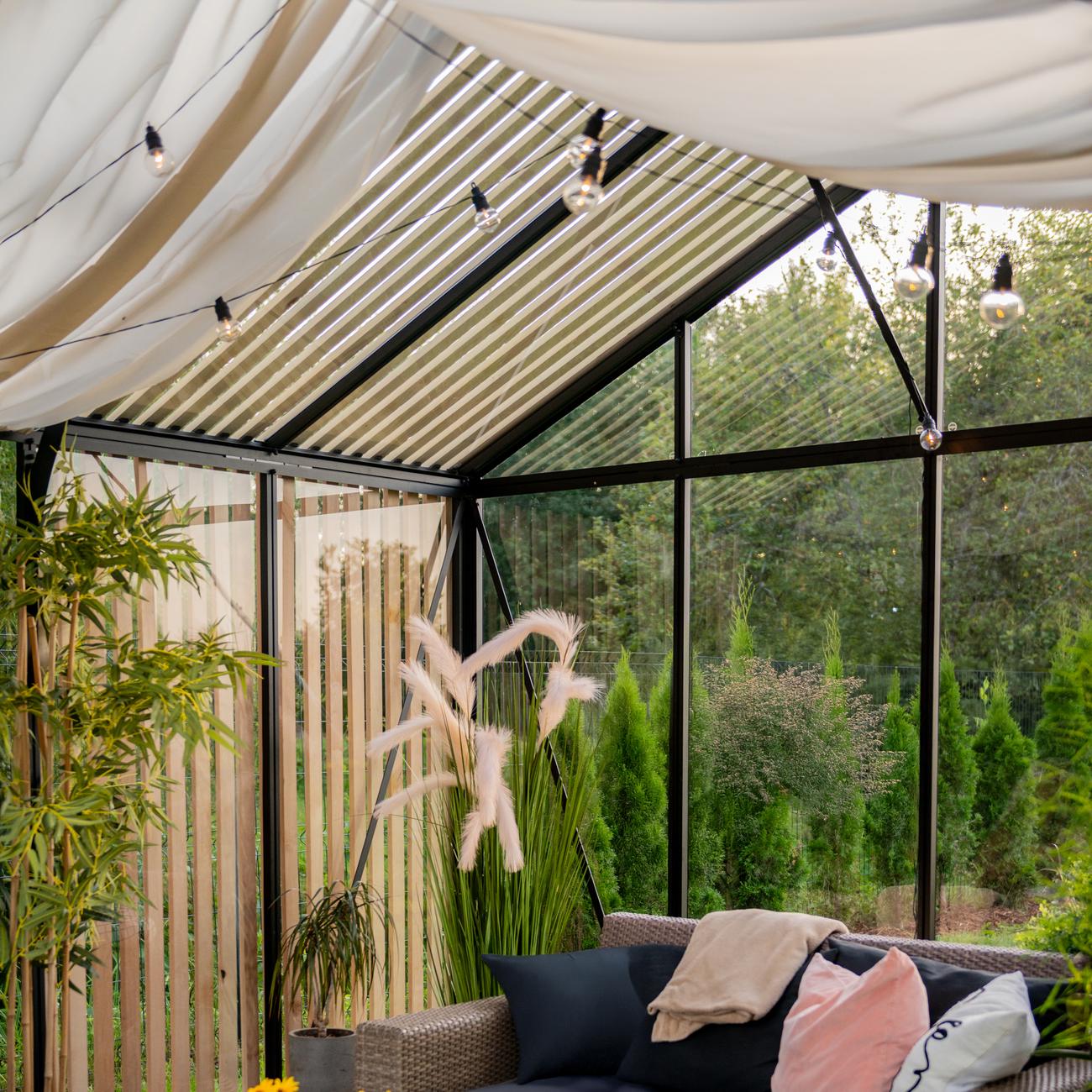
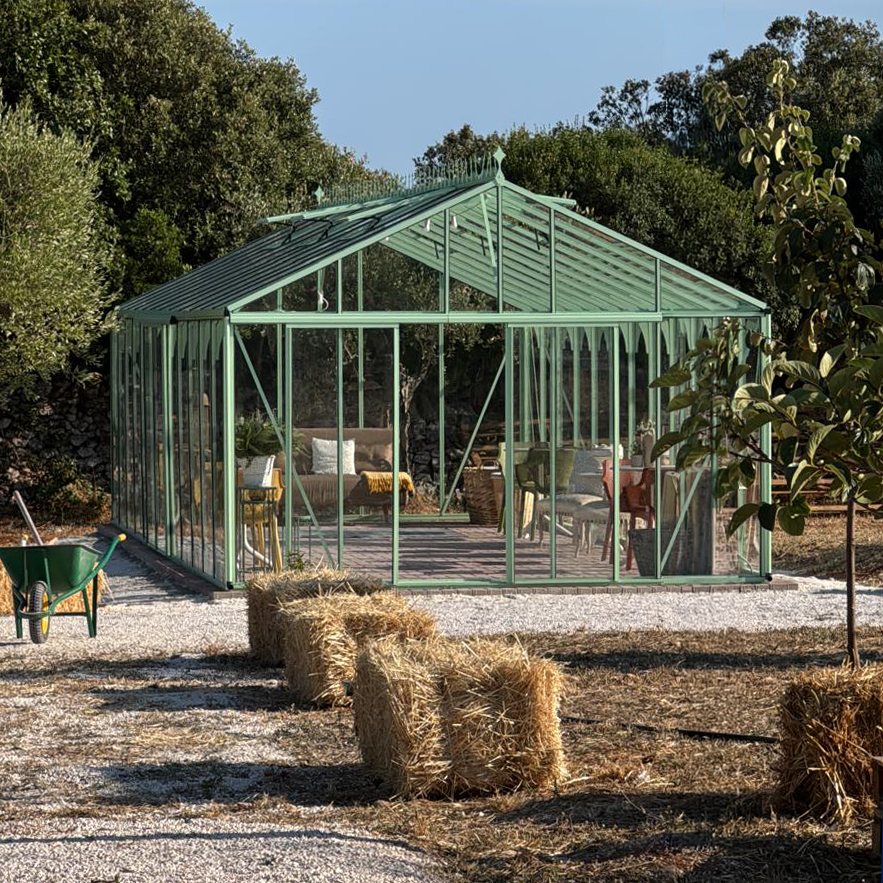
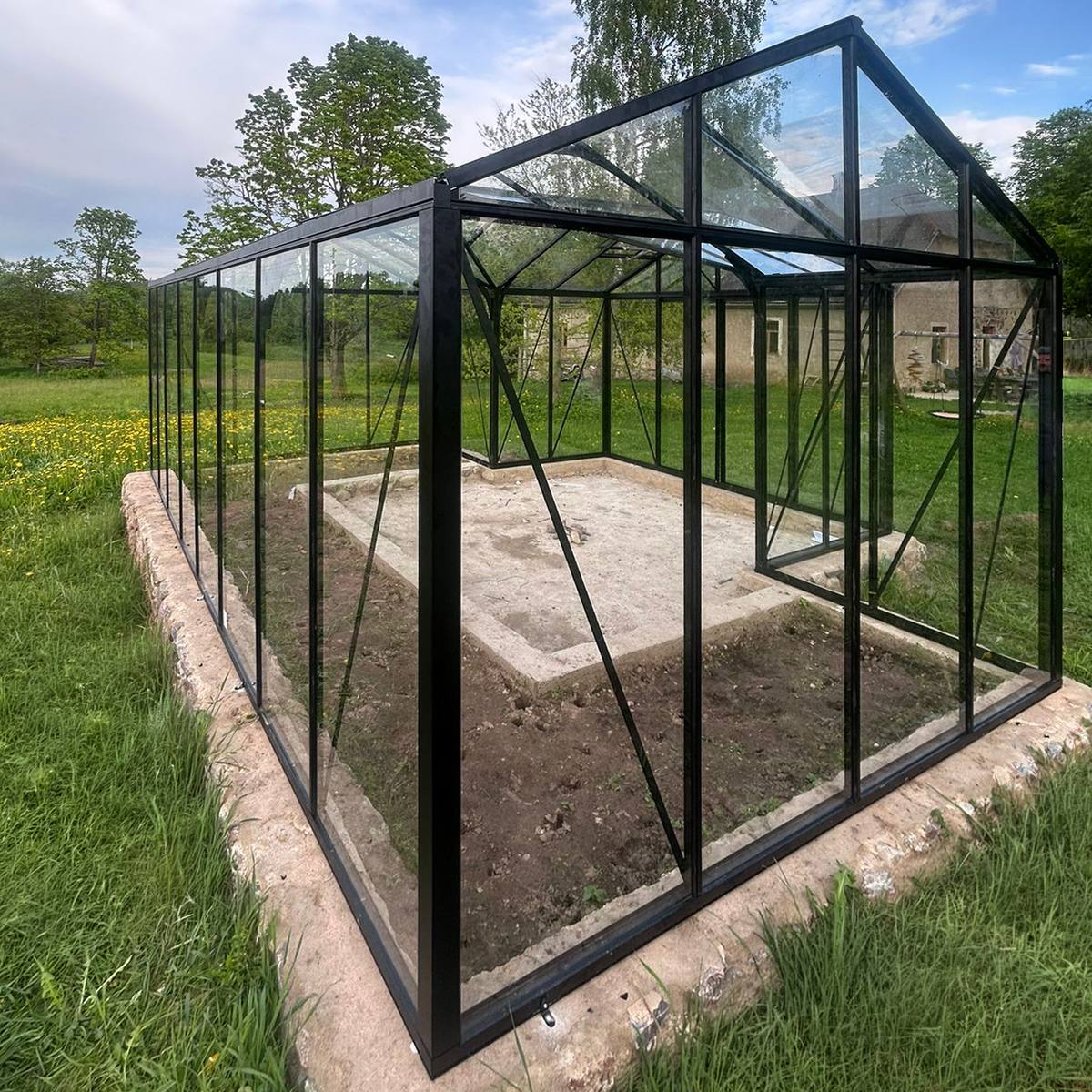
Older photos of the fully assembled structure can also help with identification. The greenhouse reviews also show different installation situations, illustrating why an overall view and a close-up together are more informative than an isolated component photo.
Component details
Describe the position from a clearly defined viewing direction. Terms such as “left” or “rear” are ambiguous without a reference point. For example: “Standing outside in front of the door, second roof panel on the right.” Also include:
- number of parts required
- function of the component
- visible marking, number or stamping
- overall dimensions and relevant hole spacings
- cross-section for profiles or seals
- type and location of damage
- photos with a scale and overview images of the fitting position
For fixings, length and diameter are not the only important details. Head geometry, thread, material, mating part and installation orientation can also matter. Do not remove a fixing that is still load-bearing simply to photograph it if this could make the structure unstable.
Identify the correct product family
Bloomcabin offers different construction types and product groups. First establish whether the component belongs to a greenhouse, conservatory, pergola or another product. An overview is available in Greenhouses and conservatories. Wall connections and roof geometry on lean-to structures may differ from freestanding models; further background is available in the article on the aluminium lean-to greenhouse.
Do not assume that a component fits simply because it has the same colour or a similar production year. Even within one model family, its position, opening direction and structural function may be relevant. Product names are also not transferable between categories. An Elma S outdoor sauna belongs, for example, to an entirely different technical product family from an aluminium greenhouse. Precise identification prevents requests from being based on the wrong structure.
Typical categories of replacement components
| Category | Examples | Key identification features |
|---|---|---|
| Glazing | Roof, side, door or gable panes | Model, position, shape, edges, holes, nominal dimensions |
| Aluminium profiles | Posts, rails, rafters, cover and connection profiles | Profile cross-section, length, finish, connection points |
| Seals | Glass, door, window and connection seals | Cross-section, fitting direction, groove, material condition |
| Hardware | Hinges, rollers, handles, brackets and connectors | Hole pattern, side, movement direction, mating component |
| Fixings | Screws, nuts, channel nuts and clamps | Thread, dimensions, head, material, fitting location |
| Opening elements | Roof-window, door or ventilation components | Model, opening type, lifting direction, fixing points |
| Drainage | Gutter, outlet and end components | Profile shape, outlet side, connection and fall |
Do not describe several damaged small parts simply as an “assembly kit”. List each part separately or mark it in a photo. This allows us to establish whether a complete set or only a specific subgroup is actually required.
Replacement glass for the greenhouse
A greenhouse pane is a structural component. Besides width and height, glass type, thickness, shape, edge treatment, holes, cut-outs and fitting position may matter. Roof panels may also differ from visually similar side panels. Replacement glass should therefore preferably be identified using the product model, pane position and original documentation.
Do not confuse glass with multiwall sheets or other glazing materials. Information about the construction and selection of plastic sheets is available in the article Polycarbonate for greenhouses. Changing material is not a routine spare-parts order, but a technical alteration whose effects on fixings, seals and load transfer must be checked.
When a pane is cracked or broken
First secure the area. Wear suitable personal protective equipment and avoid working in wind. A damaged pane must not be subjected to further load. Temporary protection must be arranged so that neither fragments nor loose covers can fall or be caught by the wind.
- Photograph the complete structure, then the affected panel.
- Document the crack pattern, edges, fixings and adjacent profiles.
- Record the exact position using a clear viewing direction.
- Without adding load, check whether profiles, seals or brackets are also damaged.
- Keep available labels and safe, identifiable components.
- Remove hazardous shards safely; safety takes priority over retaining evidence.
Do not fit a new pane before the cause of unusual stress has been clarified. A distorted frame, uneven foundation, incorrectly seated seals or uneven clamping can lead to further damage.
Measure glass as supporting evidence
Measurements are valuable checks, but do not always replace model identification. Measure the pane itself where possible, rather than only the visible opening. If a pane is broken, an equivalent position, original documents or retained edge pieces can help. Do not estimate missing corners without clearly marking them as estimates.
- Measure width and height in several places
- State dimensions in millimetres
- Create a dimensioned sketch for non-rectangular panes
- Record diagonals if the shape is uncertain
- Measure holes from clear reference edges
- Determine glass thickness only using a suitable method
- Clearly assign every measurement to a photo or sketch
Some safety glass cannot be cut or drilled after manufacture like ordinary raw glass. Shape and machining must therefore be unambiguous before production. Do not order supposedly suitable local glass based only on the clear frame opening.
Prepare a clear spare-parts request
Bring all information together in one message. Several unlabelled messages containing individual photos increase the risk of confusion. Use a numbered list if different parts are required.
- Provide order and contact details.
- State the product model and version.
- Briefly describe the reason for the request.
- Number each part and state its quantity.
- Name photos using the same numbering.
- Add measurements and positions.
- State whether the structure can currently be used safely.
To submit your request, use the Bloomcabin contact options. Do not write only “door seal”; instead, for example: “Position 3: lower seal on the moving door leaf, viewed from outside; overall view and cross-section in photos 3a to 3c.”
Delivery issues and receiving replacement items
If a missing or damaged part is found on initial delivery, document the consignment before packaging or goods are unnecessarily altered. Photograph the outer packaging, shipping label, damaged area, inner packaging and component context. Further guidance is available under Purchasing and delivery.
Cross-border orders may need extra delivery and identification details. If the original or replacement delivery is to South Africa, see the information on buying a greenhouse for delivery to South Africa.
Receiving checklist
- Check consignment and recipient details.
- Photograph the packaging from all sides before opening.
- Document visible damage.
- Match parts to the accompanying documents.
- Inspect glass and long profiles for visible damage.
- Do not discard small parts with packaging material.
- Store components dry, protected and clearly labelled.
Do not trial-fit a clearly incorrect or damaged component. This can damage further parts and make later assessment more difficult.
Plan installation of the replacement part
Before fitting, establish whether the structure must be unloaded, supported or partly dismantled. Keep the correct assembly instructions ready and label removed components. Work on glass, roof surfaces and load-bearing connections requires suitable tools, safe access and enough people.
Check beforehand:
- Is the replacement part clearly assigned to its position?
- Are seals, connectors and fixings complete?
- Is the frame square and free of distortion?
- Can the old part be removed safely?
- Do adjacent components need support?
- Do local requirements or professional qualifications apply?
Changes to the foundation, siting or construction type may require the relevant South African municipality to reassess approval or building-plan requirements. General guidance is available in the article on whether a greenhouse or pergola needs approval. Requirements vary by municipality and by details such as use, roof, enclosure, size, services and siting, so check the project with local building control before work. The guide to pergola foundations is also helpful for the pergola base.
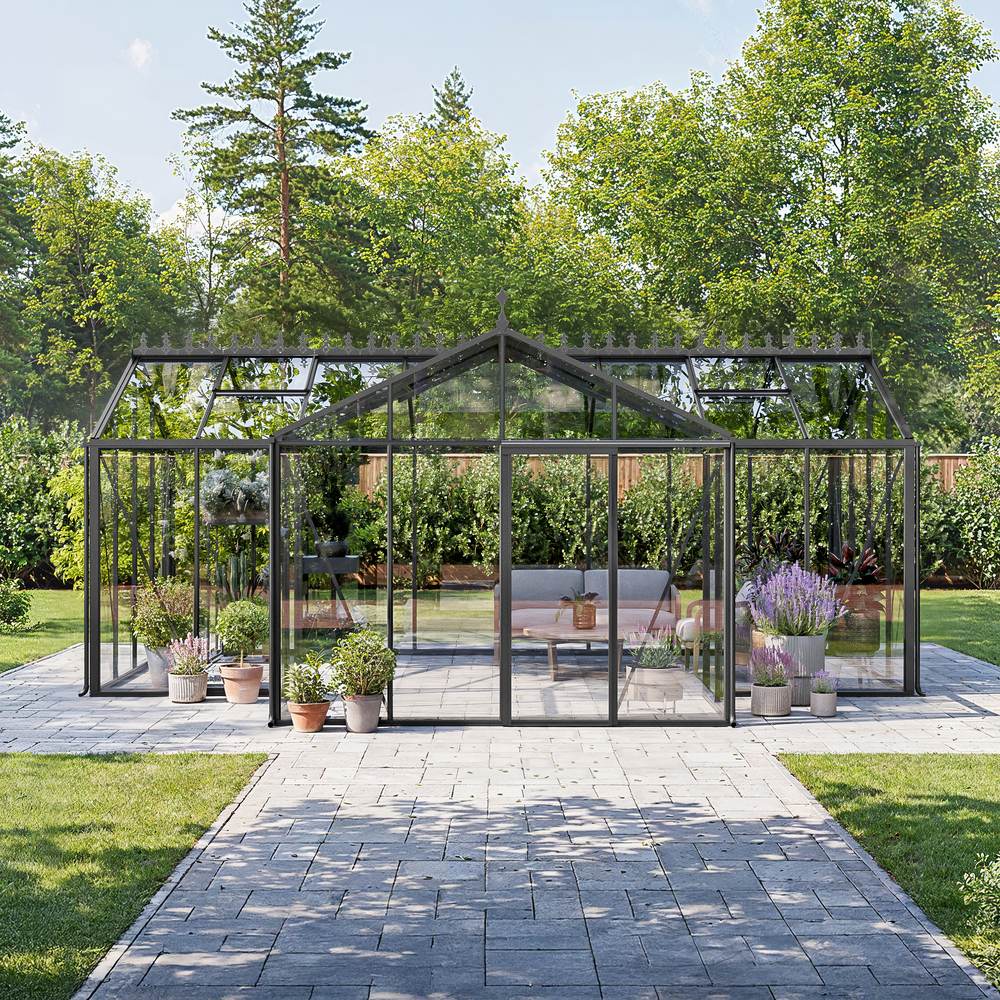
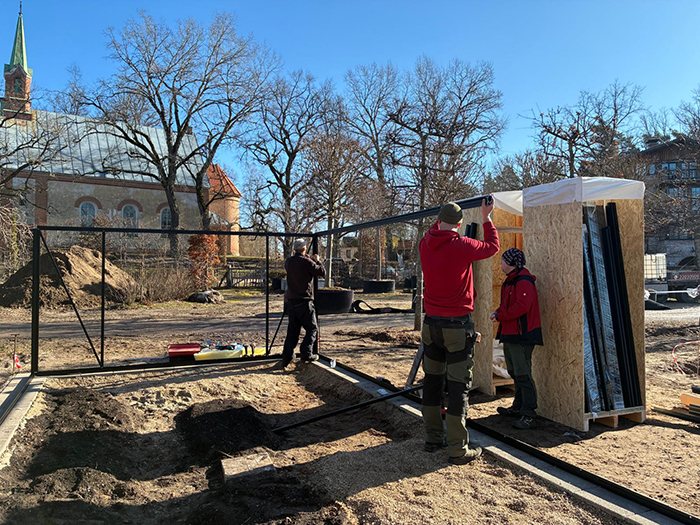
Anna Koku Skola: a real installation sequence
The Anna Koku Skola image sequence documents one continuous installation and must not be interpreted as a collection of different projects. For spare-parts requests, this kind of continuous record is especially valuable: early images often show components and connections before they are covered, while later images show their final position in the complete structure.
Three useful levels of documentation can be drawn from a continuous sequence: first the delivery and component condition, then intermediate assembly stages, and finally the completed, aligned structure. When photos are stored chronologically and named by assembly stage, a later-required profile, connector or glass panel can be located much more reliably. Photograph concealed connections in particular before covers or glazing are fitted.
Maintenance and sensible spare-parts storage
Regular inspections reduce consequential damage. Guidance is available under Caring for your aluminium greenhouse. Check moving elements, seals, drainage and visible connections without tightening fixings indiscriminately. Overtightened components can be as problematic as loose ones.
Temperature and humidity influence condensation, dirt build-up and stress on ventilation elements. Further guidance is available in the article on greenhouse temperature and humidity. Effective irrigation management can also prevent water from standing permanently in unsuitable places; see the guide to water-saving gardening.
A small reserve of commonly used, clearly assigned wear or assembly components can be useful. However, do not stock unknown universal parts just in case. Store seals without stress, small parts dry, and glass securely against tipping, impacts and edge loading. Each package should show the model, position, part number and storage date.

Glass walls and operating components for pergolas
The same identification principles apply to pergolas, but their construction and mode of operation play an even greater role. First check whether it is a bioclimatic or classic pergola and whether the structure is wall-mounted or freestanding . Dimensions and panel layout can be assessed using the pergola size guide .
For glass walls, record the panel position, opening direction, running or guide system, and connections to the floor and roof. For operating components, also note the drive type, wiring or mechanical coupling, and describe the fault precisely. Have a legally registered local electrical contractor assess compatibility and protection, carry out the electrical work, inspect and test it, and provide any applicable Certificate of Compliance documentation.
A roof or glass-wall alteration is not automatically compatible with an existing pergola. The article Bioclimatic pergola, roof and glass explains the different functional relationships. Do not force stuck louvres, sliding elements or drives.
Frequently asked questions
Can I order replacement glass using only width and height?
As a rule, width and height should serve only as checking details. Where possible, the model, fitting position, glass type, thickness, shape, edges and any holes are also needed. A photo of the complete panel and a dimensioned sketch reduce the risk of incorrect identification.
Can glass panes be exchanged between Bloomcabin models?
Do not assume this without checking. Similar outside dimensions do not automatically mean identical edge treatment, fixing or structural function. Roof, side and door panes on the same structure may also differ.
Which photos should I send?
Send an overall view, a photo of the structure side, an image of the exact fitting position and several close-ups. Add photos with a tape measure or scale, markings and mating components. A short sequence of different positions can help with movement problems.
Should I dispose of damaged parts after photographing them?
Keep safe parts, labels and identifiable fragments until the request has been documented sufficiently. Hazardous glass shards must, however, be removed safely and disposed of correctly. Safety comes first; good photographs can preserve the necessary features.
Can I fit replacement glass myself?
This depends on the pane size, position, access, construction and your expertise. Roof glazing and heavy or large panes present substantial risks. If unsure, appoint a suitable professional. Follow the assembly instructions and ask that professional to confirm safe working methods for the site.
What if I do not know the component name?
Use a position description and numbered photos. Explain what function the part performs, what it is attached to, and which element it moves or holds. A sketch with an arrow is often more useful than an assumed technical term.
Can a seal, screw or bracket be replaced locally?
Only where technical suitability and compatibility have been clearly checked. Geometry, material, corrosion behaviour, strength and interaction with aluminium or glass may be relevant. A similar-looking part is not automatically a suitable replacement.
What should I do if a door or roof vent becomes stiff?
Do not force the element. Check for dirt, visible distortion, loose connections, guides and alignment. Record when the issue occurs. Before replacing parts, rule out the foundation or frame as the cause.
Is a spare-parts request automatically covered by the guarantee?
No. Whether a service is covered by a guarantee depends on the product, cause, documents and applicable conditions. A technical request is initially an assessment, not a commitment. The relevant information is in the Guarantee section.
Can I request parts to alter my greenhouse?
A request is possible, but the availability of an individual component does not automatically make an alteration technically permissible. Changes can affect structure, glazing, drainage, ventilation and connections. Describe the intended starting and final condition in full.
How should replacement components be stored?
Keep them dry, protected and clearly labelled. Support long profiles against sagging. Glass must be stable and protected from edge impacts. Seals should not be kinked, heavily stretched or exposed permanently to high heat and direct sunlight.
Where can I find guidance on purchasing and personal data?
Check the Bloomcabin terms and privacy information displayed when purchasing or submitting an enquiry. Send only the personal data required for identification. The Useful information section provides general starting points for service and ordering information.
Final checklist for spare parts
- Reason for the request clearly described
- Order reference and product model provided
- Fitting position described from a clear viewing direction
- Each part numbered and listed with quantity
- Overall, position and detail photos attached
- Dimensions in millimetres recorded as supporting evidence
- Glass shape, holes and edges documented
- Adjacent components checked for damage
- Installation and safety conditions considered
- Delivery address and contact details checked
Careful documentation saves time and prevents incorrect orders. What matters is not the largest possible number of photos, but a traceable link between the product, position, component, measurement and observed problem.
