



COMPARE
How to assess European manufacturing and quality control
European manufacture indicates origin, not complete proof of quality. Sound design, inspected components, clear documentation, and proper delivery, installation and maintenance matter. This guide explains how to check quality claims in practice.
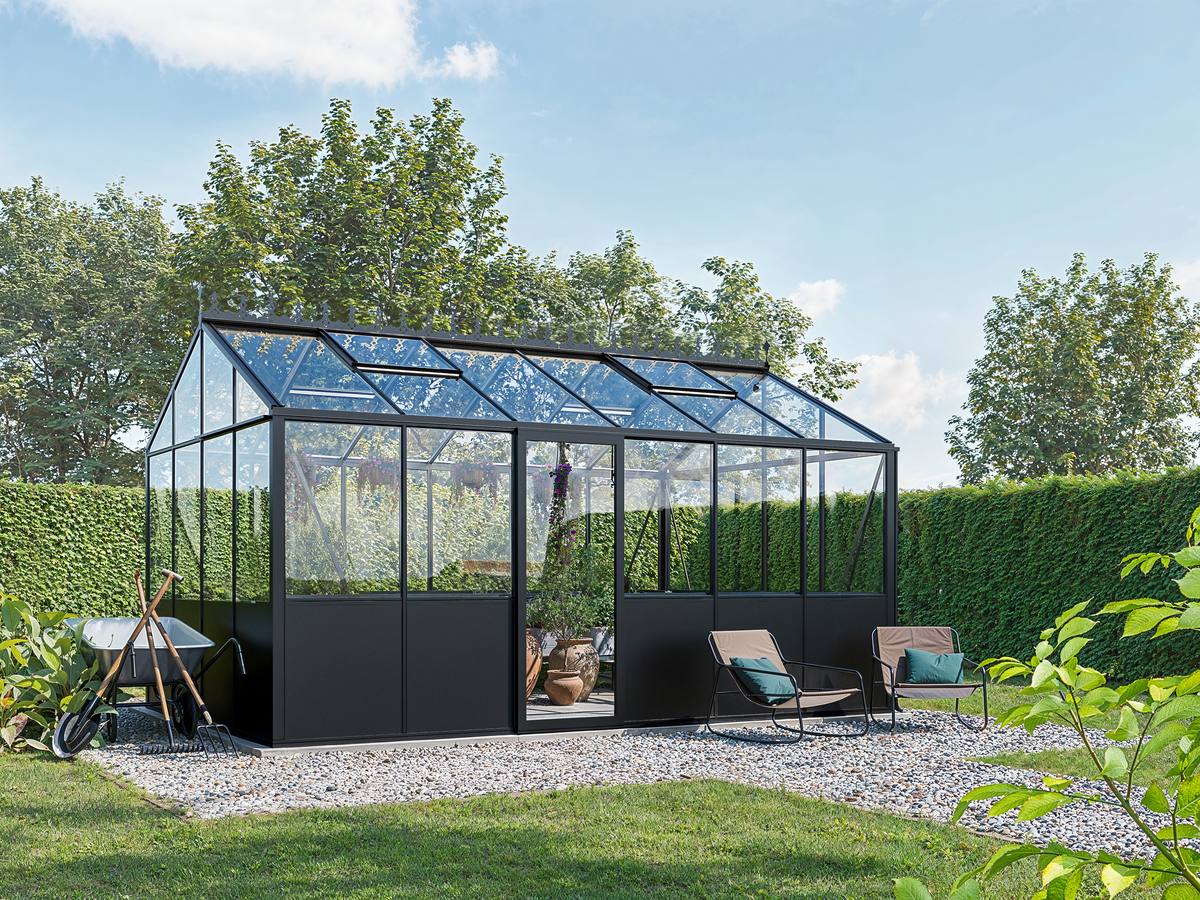
“Made in Europe” can indicate shorter supply chains, coordinated production processes and accessible quality control. It does not replace technical assessment. For a greenhouse, pergola or outdoor sauna, lasting quality results from design, material selection, manufacturing, packaging, installation and ongoing care working together.
For buyers, the manufacturing location is therefore not the only consideration. More important are whether components fit together, which documents are supplied and how the system can be installed at the intended site. The checks below help distinguish reliable quality features from general advertising claims.
What European manufacturing quality means in practice
Controlled manufacturing is not demonstrated by one striking detail. It appears in many small points: profiles are clearly identified, drillings and connection points follow the design, surfaces are evenly finished, and parts fit together without improvised alterations. Complete parts lists, understandable assembly instructions and packaging that protects sensitive components in transit are equally important.
For aluminium structures, quality control includes cutting, connection detailing, surface finishing and the selection of fittings. With glazing or panels, suitable dimensions, edges and markings also matter. Sauna timber needs different checks from powder-coated pergola profiles. Quality should therefore always be assessed for the specific product.
For an overview of the available structures, visit Greenhouses and conservatories and the Sauna section. Information about the company and the background to the range is available on About us.
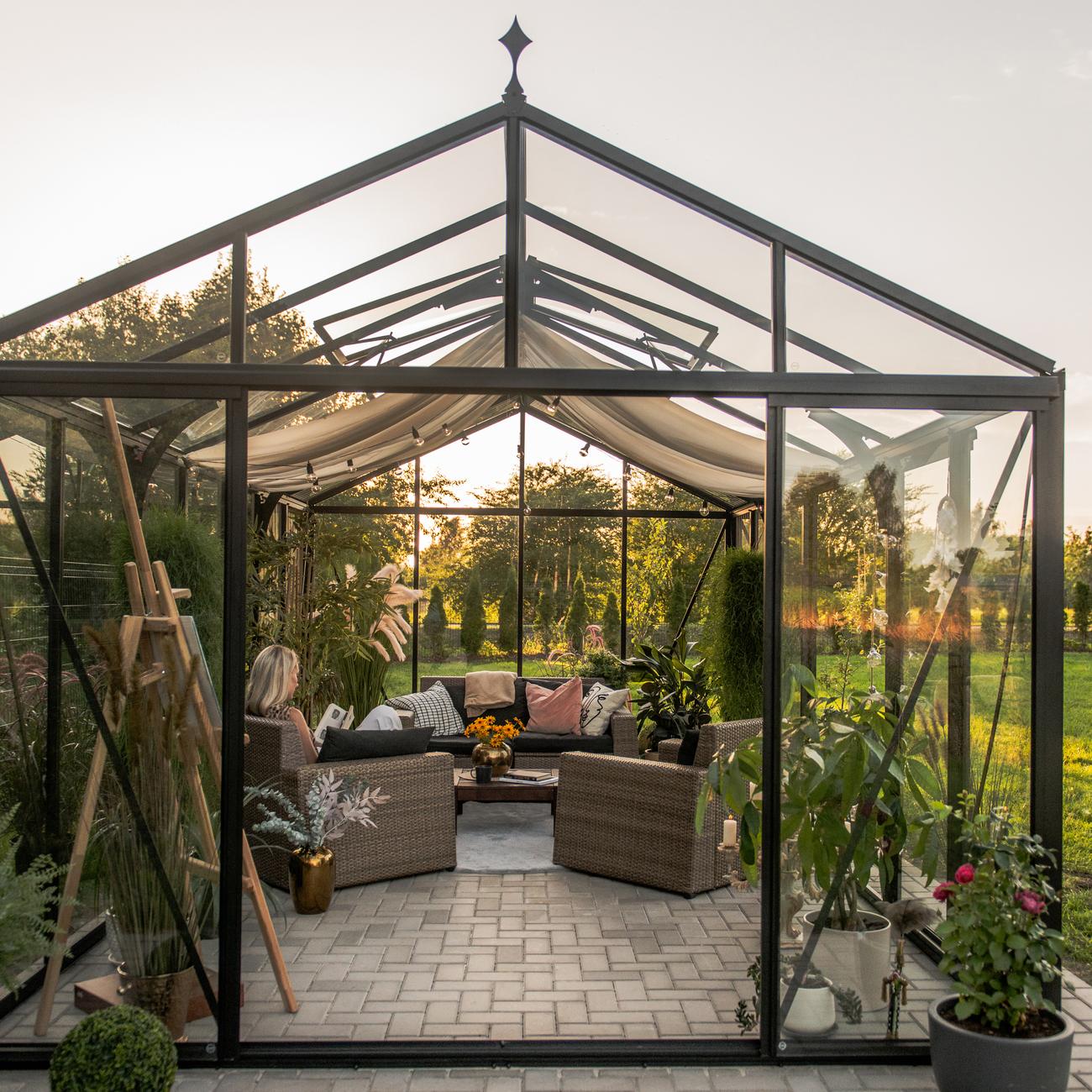
Manufacturing quality and installation quality are different
A correctly manufactured kit can be compromised by an unsuitable foundation, wrongly assigned parts or unevenly tightened connections. Conversely, careful installation cannot compensate for a poorly designed structure or damaged component. Separating responsibilities helps when investigating a problem.
| Area | Typical quality features | Typical risks |
|---|---|---|
| Planning | Suitable structure, site assessment, confirmed connections | Unsuitable dimensions, insufficient space, unresolved requirements |
| Manufacturing | Correct processing, complete parts, protected surfaces | Missing part, mix-up, processing or packaging error |
| Transport | Robust packaging and traceable packages | Impact, pressure or moisture damage |
| Foundation | Level, load-bearing and correctly positioned | Distortion, uneven load transfer, installation problems |
| Installation | Work to instructions, continuous dimension checks | Swapped parts, forced fitting, damaged coating |
| Use | Regular inspection and suitable cleaning | Blocked drainage, loose connections, unnecessary wear |
The foundation is often the interface between product and building work. The pergola foundation guide explains the key considerations. The required construction must nevertheless suit the ground, product, site and applicable local requirements.
Compare the structure before judging quality
Two products with similar footprints are not necessarily structurally comparable. A freestanding system transfers loads differently from one attached to a building. A louvred roof has a different purpose from a fixed roof. For greenhouses, shape, glazing, openings, access, ventilation and internal use also affect the whole structure.
First check whether the offers solve the same task. Useful comparisons include bioclimatic pergola or classic pergola, the guide to wall-mounted or freestanding pergolas and the pergola size guide.
For greenhouses, glass and polycarbonate should not be compared on price or panel thickness alone. The article on polycarbonate, multiwall panels and insulation explains the key differences. If you want a representative structure, see the orangery greenhouse guide and the background to Victorian greenhouses .
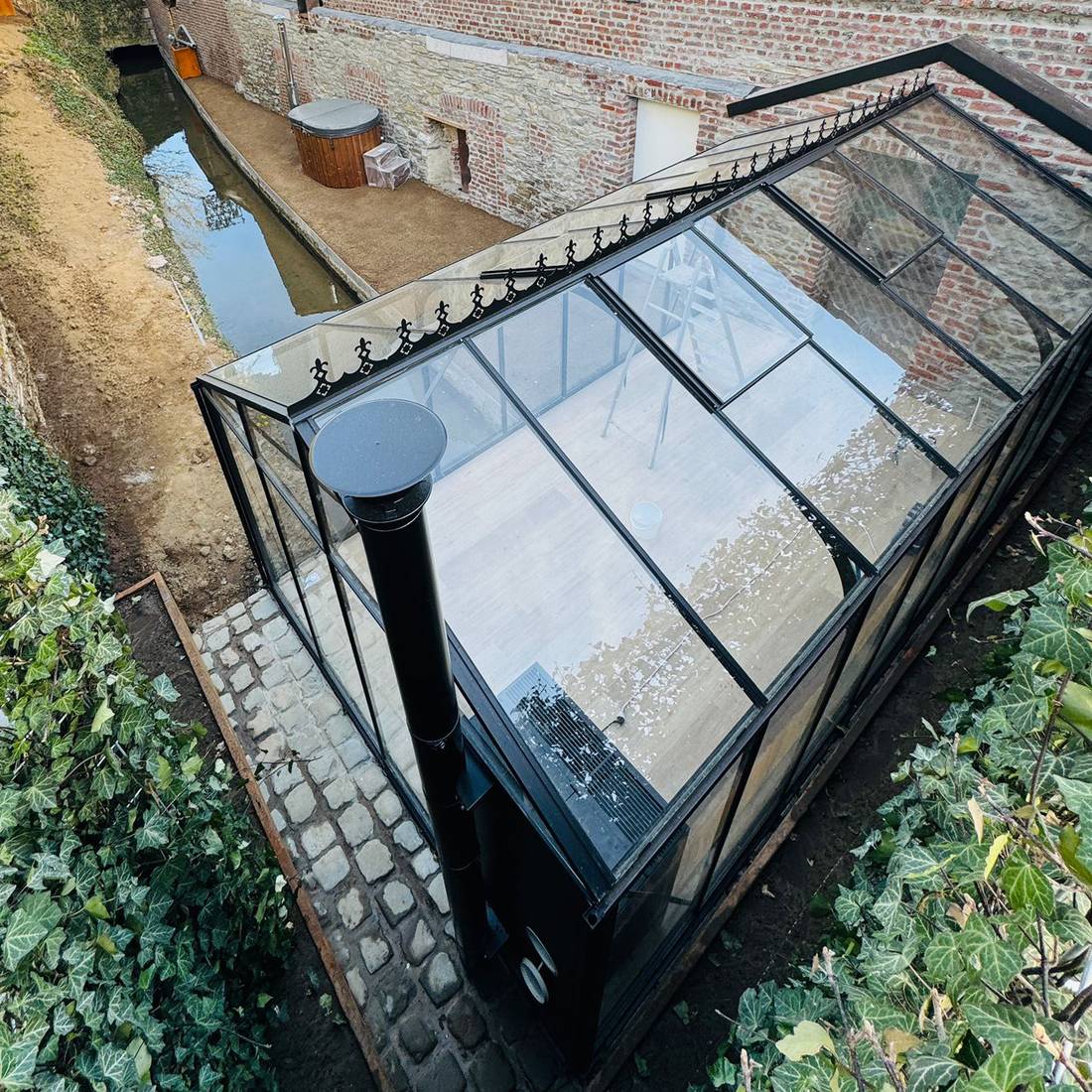
Quality-control checklist before purchase
A structured preliminary review is more meaningful than isolated superlatives in a product description. Record unanswered questions and resolve them before ordering.
- Define the use: Will the structure protect plants, cover a seating area or serve as a sauna? Which doors, ventilation options and access routes are needed?
- Measure the site: Check available area, heights, access routes, property boundaries, slopes, drainage and access for delivery and installation.
- Match the structure: Compare only systems with similar functions. A bioclimatic pergola is not technically equivalent to every conventional canopy. The article Is a bioclimatic pergola worthwhile?also offers useful context.
- Check what is included: Ask not only about the finished product, but also about included components, accessories, fixings and any work that must be obtained separately.
- Review documents: Check that assembly instructions, parts lists and product information are available for the version ordered.
- Differentiate materials: Compare profiles, infills, timber parts and surfaces according to their function. One material feature does not assess the complete system.
- Clarify the foundation: Decide who plans, constructs and checks the foundation before installation. Required dimensions and construction details must come from the documentation for the actual product.
- Check local requirements: Whether permission, setbacks or further requirements apply in Malta depends on the proposal and site. Ask a perit to assess the Planning Authority classification, footprint, height, enclosure, land designation and existing permit conditions. Planning permission for a greenhouse or pergola is a useful starting point, but does not replace project-specific local confirmation.
- Prepare for delivery: Read the guidance on ordering and delivery in advance and arrange a suitable receiving area.
- Keep records: Save the quotation, order confirmation, product configuration and correspondence. Also check the guarantee information applicable to the specific product.
What quality control can prevent — and what it cannot
Factory checks can identify processing errors, missing components, visible surface defects or deviations in the supplied set. They reduce risk but cannot eliminate it completely. Packaging, transport, storage, foundation work and installation all take place between final inspection and the completed structure.
Manufacturing inspection does not cover, for example, an incorrectly measured garden, unsuitable ground, later changes to a building, unidentified underground services or installation contrary to instructions. Extreme or site-specific conditions must also be considered during planning and use. Requirements need checking for the actual location.
A high-quality surface is not immune to every mechanical contact. Powder-coated profiles can be damaged by dragging them across rough ground, unprotected tools or metal swarf. Glass, panels and timber elements each require suitable handling.
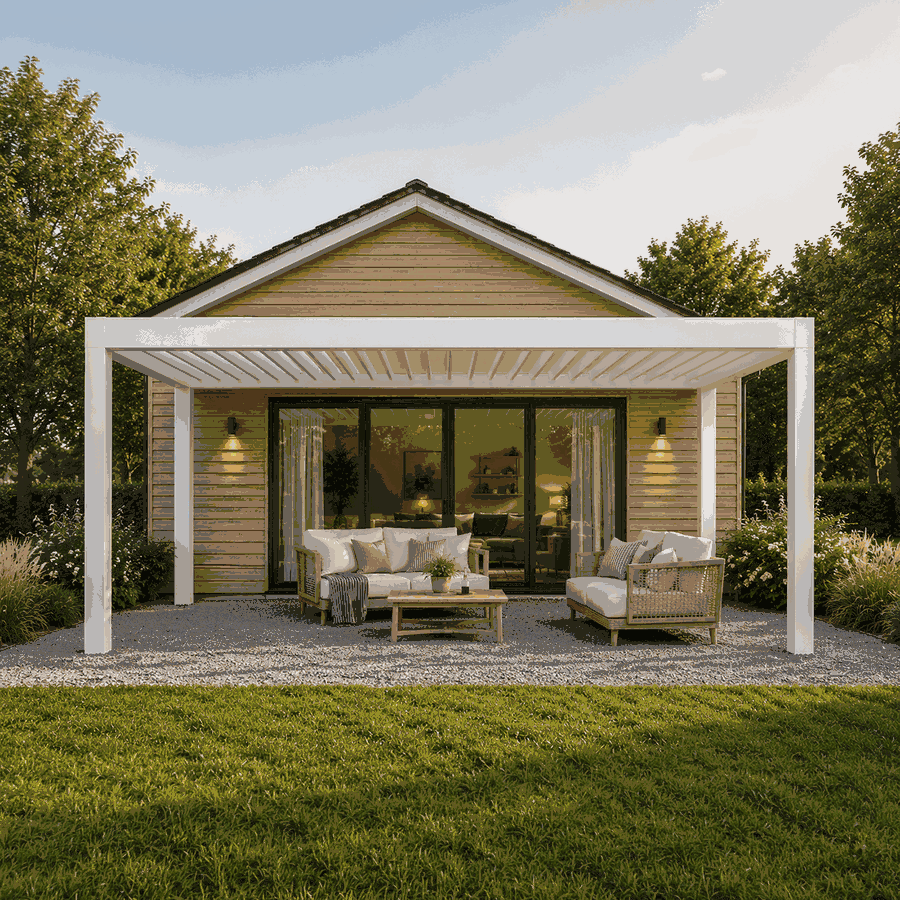
Receiving and checking your order
Initial check on delivery
Treat goods reception as a separate task. Make a quick visual inspection before packages are moved or opened. Compare the number and labels of delivered units with the available delivery documents.
- Check packaging for tears, punctures, pressure marks, moisture and distortion.
- Photograph irregularities immediately: overall view, damaged area, label and position on the package.
- Record observations at acceptance using the intended procedure.
- Do not open damaged packaging haphazardly.
- Store packages dry, level and secured against tipping.
If anything is unclear, contact us early through Contact . Visible packaging damage does not automatically prove product damage; an intact outer package does not completely rule it out either.
Detailed stock check
Carry out the detailed check systematically using packing and parts lists. Do not open every package at once. Sort components by assembly group and retain labels until installation is complete.
- Distinguish profiles by number, shape, length and machining features.
- Sort fittings and connecting hardware into containers rather than laying them out loose.
- Inspect glass, panels and visible surfaces in suitable light.
- Remove protective films only when required by the assembly sequence.
- Record missing or unusual parts with the component number and a photo.
- Do not drill, cut or straighten anything before identification is confirmed.
Components that appear almost identical may be mirror-image parts or intended for different positions. Small drillings, drainage openings or machined ends are often decisive. Visual similarity is therefore not a reliable reason to substitute a part.
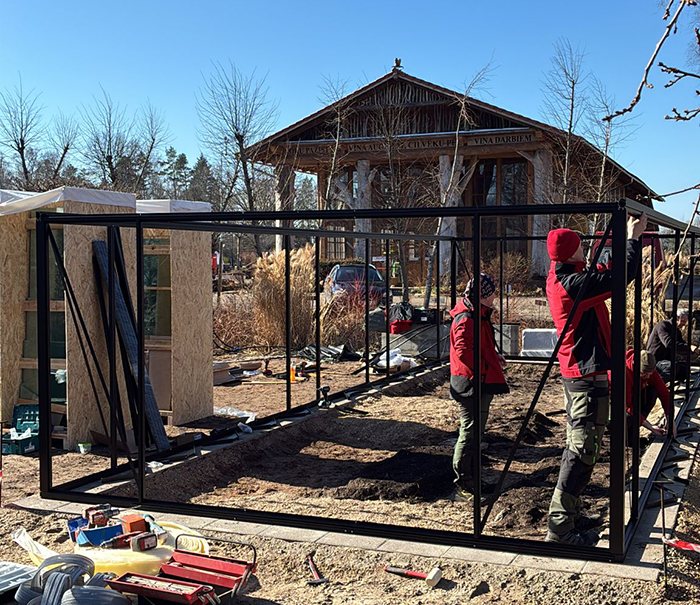
Protect manufacturing quality during installation
Good site organisation prevents many avoidable defects. Do not store profiles directly on stone, soil or wet grass. Use clean padded supports and separate coated components. Keep work areas for metal, glass, panels and timber orderly.
- Inspect the foundation: Check dimensions, position, level and relevant reference heights before placing the structure on it.
- Read instructions fully: Review the sequence and identify steps that may need several people or specialist lifting equipment.
- Align the frame first: Do not finally tighten connections too early where instructions allow later adjustment.
- Check dimensions repeatedly: Check diagonals, plumb, alignment, openings and connections throughout assembly.
- Check tools: Suitable bits, protected supports and a tidy workspace reduce scratches and damaged screw heads.
- Stop for discrepancies: If a part fits only with obvious force, first check its identification, alignment and the preceding assembly stage.
Unauthorised changes can affect function, drainage, stability, corrosion protection and later claims. Cutting, additional drilling or replacing connecting hardware should only be done where expressly intended for that version or professionally agreed.
Anna Koku Skola as a continuous installation sequence
The Anna Koku Skola image sequence should be understood as documentation of one installation. It does not show several independent reference projects. This context matters when assessing quality, because only a continuous sequence makes the transition from prepared site through supporting structure to completed installation understandable.
Do not judge such a sequence only by its final image. The transitions between work stages are informative: how is assembly organised? When are components aligned? How do work areas remain accessible? At what point are sensitive surfaces uncovered? Although photos do not show every fixing point, they can illustrate assembly logic and the value of an orderly sequence.
Photos do not replace assembly instructions or a parts list. Perspective, lighting and cladding can conceal construction details. Dimensions or technical properties must not be inferred from an image alone.
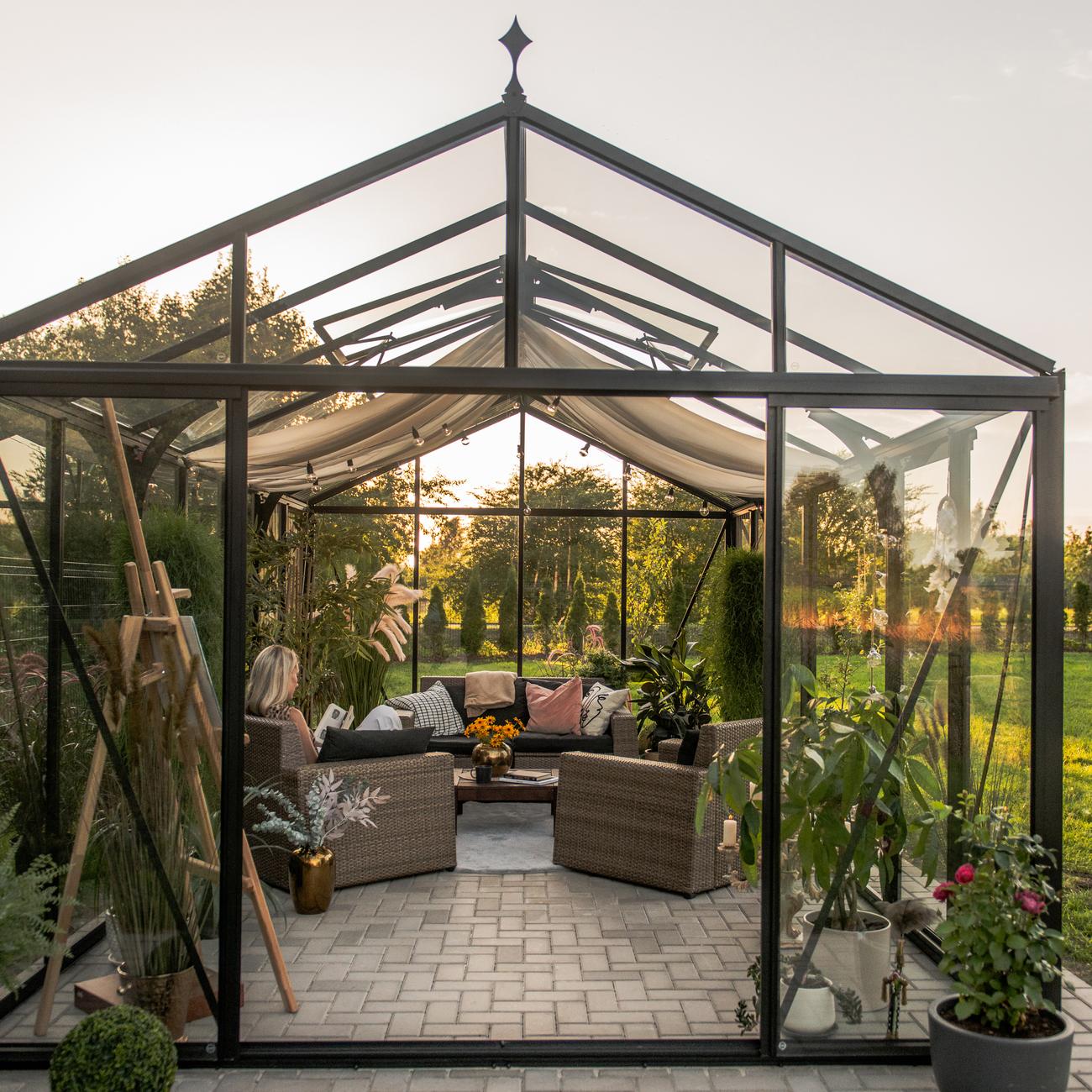
Quality after completion: operation and maintenance
Once installation is complete, the period of use begins. First check doors, windows, louvres and other moving parts without force. Water-carrying areas and outlets must remain clear. A visual inspection after initial use can be helpful, as dirt or installation-related irregularities may then be easier to spot.
For greenhouses, the guide to caring for an aluminium greenhouse contains practical advice. Internal climate is also part of correct operation: information on greenhouse temperature and humidity helps put ventilation and use into context.
For an outdoor sauna, treat timber surfaces, ventilation routes, doors and technical components in line with the relevant documentation. Different structures, such as the Elma S outdoor sauna and the HC150 thermowood barrel sauna, should not be assumed to have identical maintenance needs. Fixed electrical connections should be handled by a REWS-authorised professional with the appropriate scope. Check the applicable requirements before any other technical work.
Compare quality promises responsibly
Terms such as “premium”, “European” or “handcrafted” have limited value without context. Ask three questions about every quality promise: Which component does it concern? How can it be checked? What is not included?
Reviews can add experiences of ordering, installation and use. They do not replace technical comparison, because sites, product versions and installers can differ. Use greenhouse reviews as an additional perspective rather than the sole basis for a decision.
Always compare the full scope: structure, equipment, delivery contents, documentation, required preliminary work and installation. Guidance on how to order helps with preparation. Further orientation is available in Useful information.
Frequently asked questions
Does European manufacture automatically mean higher quality?
No. The manufacturing location alone proves neither the design nor the quality of every component. Meaningful indicators include clear part identification, processing accuracy, surface condition, complete documentation and a traceable inspection process.
Are all Bloomcabin greenhouses made or installed in the same way?
This should not be assumed. Product ranges, materials, sizes and equipment can require different manufacturing and installation steps. The documentation for the specific version ordered is decisive.
Can I compare a greenhouse and a pergola by price alone?
No. They serve different purposes and have different structural interfaces. First compare function, size, roof or infill system, foundation, delivery contents and installation effort. Only then does a price comparison make sense.
What should I do if packaging is visibly damaged?
Photograph and document the condition before opening. Record the package identification, an overall view and close-up details. Then inspect the contents carefully and report irregularities through the intended contact route.
What if two parts look almost identical?
Compare part numbers, drillings, machined ends, profile cross-section and installation direction with the parts list and instructions. Do not test-fit a part using force. Mirror-image components can differ only in small details.
May installers alter components to make them fit?
Only where the change is specified in product documentation or professionally confirmed for the actual case. Unauthorised drilling, cutting, bending or replacement can impair function, finish and stability.
Is a perfectly prepared foundation part of factory quality control?
No. The foundation is produced at the site and is a separate planning and construction task. Product documentation provides relevant requirements; ground conditions, drainage, local rules and actual execution must be checked locally.
Do product photos prove construction details?
Photos are useful for visual orientation but are not technical proof of concealed connections, exact dimensions or a specific product variant. The description, configuration, drawings and assembly documents are decisive.
How can I protect surfaces during installation?
Use clean soft supports, keep metal swarf and dirt away, and do not drag profiles across the ground. Remove protective material only at the intended stage. Tools and ladders must not touch coated surfaces without protection.
Which documents should I retain?
Keep the quotation, order confirmation, configuration, delivery documents, parts list, instructions, delivery photos, correspondence and records of installation or technical work. Where possible, add photos of the foundation and important installation stages.
Does high-quality manufacturing remove maintenance needs?
No. Even high-quality structures need cleaning, visual inspections and clear drainage or ventilation areas. Moving or technical components should be inspected and maintained according to the applicable product documents.
Where should I start if the right structure is still unclear?
First define the intended use, site, available space and desired equipment. Then consider suitable product groups and resolve open technical questions before ordering. Advice through Bloomcabin Contact is more useful than making changes to a structure that has already been ordered.
