



COMPARE
Greenhouse glazing: clear glass, Bioclean, Stopsol, mirror glass, frosted glass and polycarbonate
Glazing determines light transmission, visibility, solar control, privacy, weight and greenhouse maintenance. This guide explains the key qualities of clear glass, Bioclean, Stopsol, mirror glass, frosted glass and polycarbonate, and how to select and combine materials effectively.
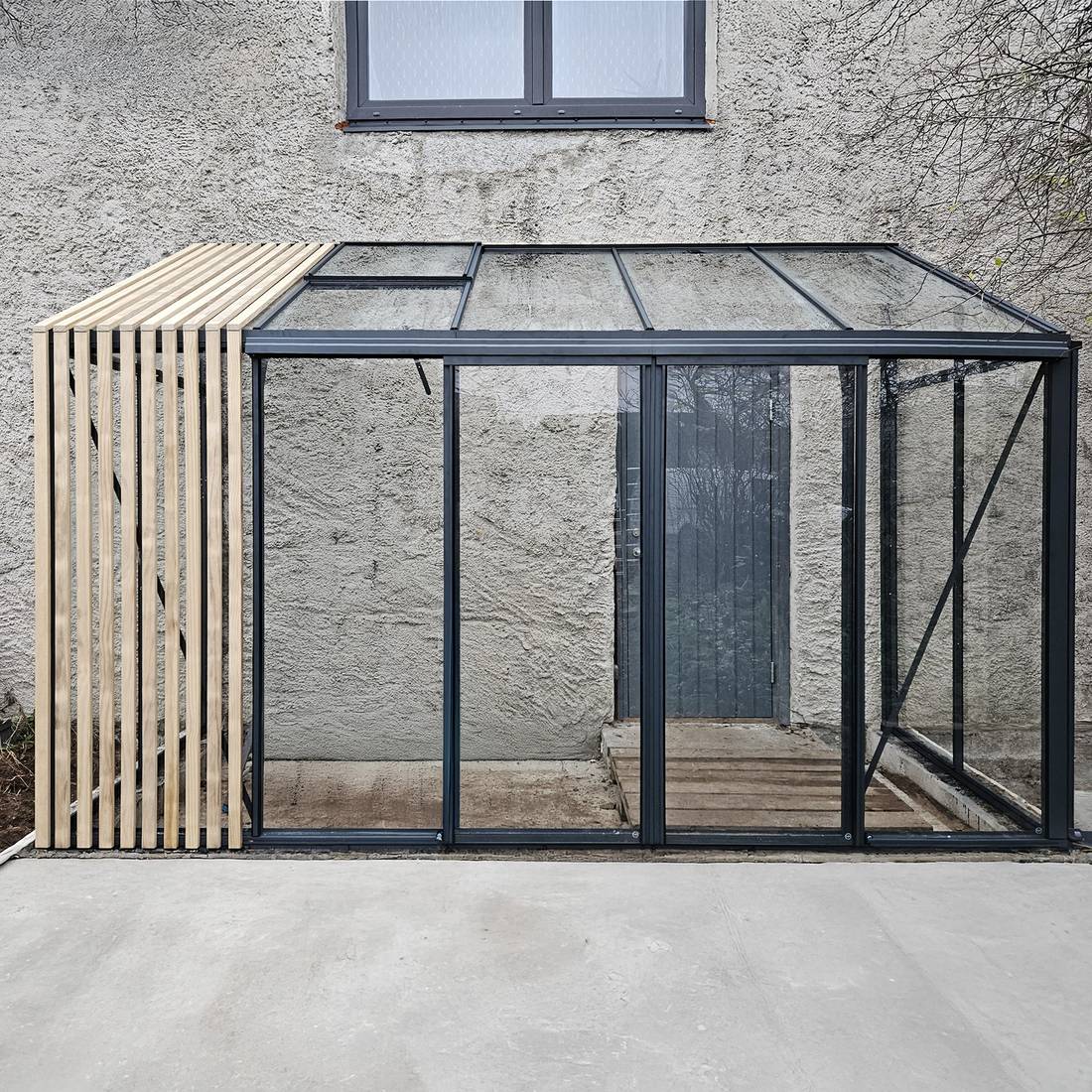
Glazing affects more than a greenhouse’s appearance. It also influences incoming light, visibility, privacy, cleaning effort, weight and behaviour in direct sunshine. Plan it alongside the site, intended use, ventilation and building shape. Explore possible building concepts in our greenhouses and conservatories.
Names such as Bioclean, Stopsol, mirror glass and frosted glass describe different surface treatments and light effects. On their own, they do not define the complete pane construction. Before ordering, always confirm the offered specification, coating position and compatibility with the chosen greenhouse.
Quick comparison of glazing types
| Glazing | Typical property | Visibility | Key planning question |
|---|---|---|---|
| Clear glass | High transparency | Clear view both ways | Are openness and unobstructed views more important than privacy? |
| Bioclean glass | Transparent, low-maintenance surface | Similar to clear glass | Is the treated side correctly positioned and what care is permitted? |
| Stopsol glass | Reflective solar-control effect | Restricted depending on light and specification | How much reflection and solar reduction is wanted? |
| Mirror glass | Reflection strongly dependent on light | Depends on lighting conditions | Is privacy only during daytime sufficient? |
| Frosted glass | Diffuses light and outlines | No clear view | Where is lasting privacy needed? |
| Polycarbonate | Lightweight and light-transmitting | Usually diffuse rather than clear | Are low weight and light diffusion more important than a glass appearance? |
The table is an initial selection aid, not a technical specification. Construction and performance vary with the exact option, especially for coatings and polycarbonate. For further material considerations, see our guide to polycarbonate for greenhouses.
1. Clear glass: maximum visual openness
Clear glass is a natural choice when a greenhouse should look as transparent and light as possible. Plants, furniture and structural details remain visible from outside, while the view from within is largely unchanged. This is especially appealing for freestanding garden buildings with views, formal orangeries and architecturally understated structures.
High visibility also means that shelving, irrigation equipment and stored items remain on display. Fingerprints, dust, pollen and limescale show more readily on transparent surfaces. At sites close to a neighbouring plot, road or terrace, additional screening may also be needed.
Clear glass does not automatically reduce solar heat gain. Vent openings, doors, shading where needed and building orientation remain separate planning tasks. Those who prefer a traditional style can find further design ideas in our guide to Victorian greenhouses ; for larger spaces for plants and relaxation, the orangery guide is also relevant.
2. Bioclean glass: an easier-care outer surface
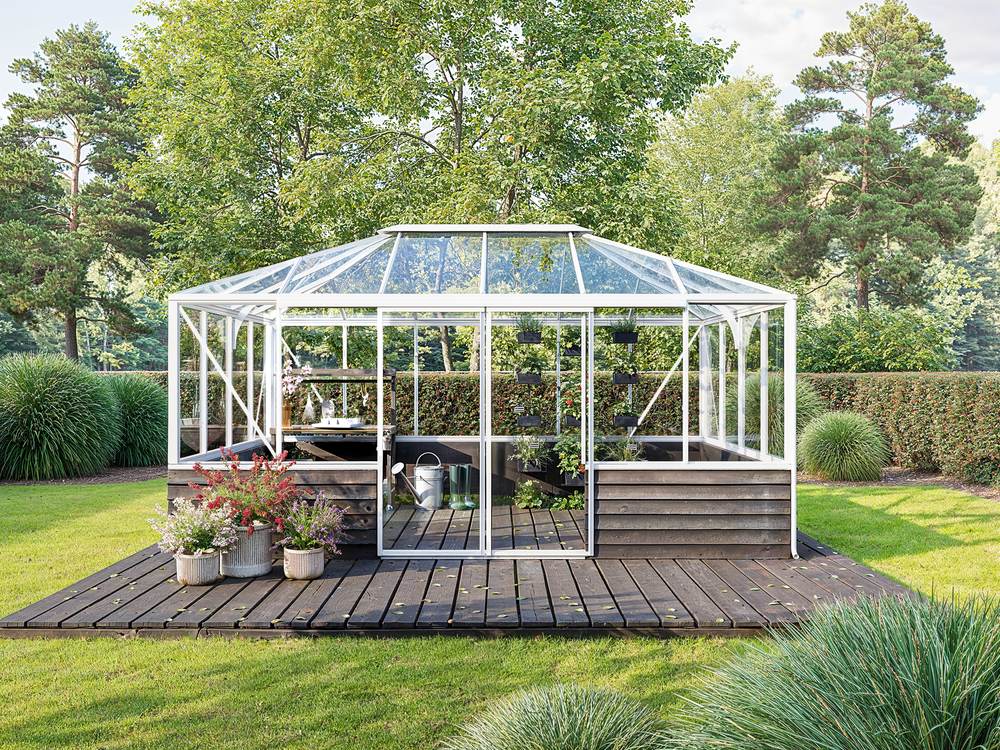
Bioclean describes a treated glass surface that can help organic dirt loosen and rinse away. On a suitable surface, rainwater spreads more evenly, which can leave fewer distinct droplets and dirt marks. Practical results depend on rainfall, roof pitch, the type of soiling, site conditions and correct orientation of the treated side.
It should therefore not be regarded as maintenance-free. Manual cleaning remains necessary under eaves, during dry spells, and where bird droppings, tree resin, mineral deposits or heavy pollen occur. Abrasive or aggressive products may be unsuitable. Follow the care guidance for the surface actually supplied.
Bioclean is particularly useful where roof areas are difficult to reach or clear-glass appearance should be combined with less routine upkeep. Our page on caring for your aluminium greenhouse contains general construction and cleaning advice.
3. Stopsol glass: solar control with a reflective appearance
Stopsol is a reflective glazing type that can return part of incoming solar energy and visible light. It changes both the exterior appearance and interior light. Depending on specification, sun position and viewing angle, the façade may look subtly metallic or distinctly mirrored.
This glazing can suit highly exposed areas, but it does not replace a complete climate strategy. A greenhouse remains strongly influenced by the sun. Roof vents, side ventilation, doors, air movement and additional shading where required must be planned for the planting. Our guide to greenhouse temperature and humidity explains these relationships.
Before choosing, decide whether reflection is wanted only on the roof, on a particularly sunny façade, or throughout the building. Potential reflections towards a home, neighbouring property or traffic area should also form part of the site review.
4. Mirror glass: privacy dependent on light
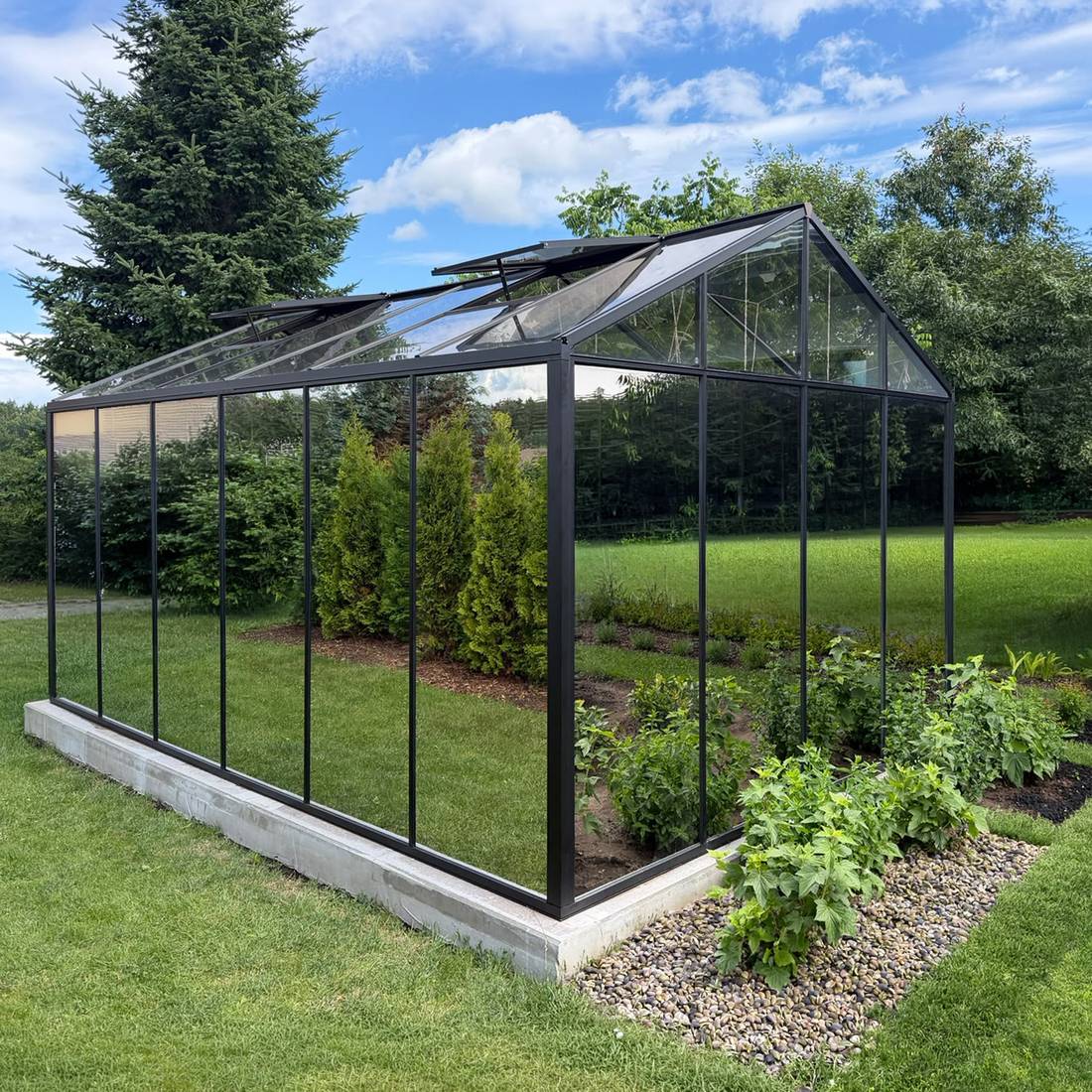
Mirror glass does not create the same one-way view in every condition. Its reflective effect is strongest on the brighter side. When it is much brighter outside than inside, the exterior appears more mirrored and viewing in is more difficult. Once the greenhouse is lit after dark, this advantage reverses: the interior can then be clearly visible from outside.
For a daytime relaxation area, this light-dependent screening may be sufficient. It is not reliable by itself for changing situations, a property boundary or an area requiring constant privacy. Frosted glass, physical screening or a suitable internal solution is more predictable there.
Reflective surfaces also make a stronger architectural statement than clear glass. Before ordering, view a material sample in realistic lighting where possible. Small samples show colour and finish, but do not always represent the effect of a complete façade.
5. Frosted glass: privacy through softened outlines
Frosted glass diffuses incoming light and prevents clear visibility. Brightness remains, while people, plants and objects appear only as blurred outlines or shadows. Actual privacy depends on the frosting level, distance from the pane and lighting. A person directly lit from behind may still be visible as a silhouette.
Suitable locations include a wall facing a neighbour, a work or storage area, the rear of a lean-to greenhouse or selected panels at eye level. Fully frosted glazing, however, can significantly reduce the open feeling and unrestricted garden view.
Surface texture influences cleaning. Product documentation must confirm which side faces inward or outward and which products are allowed. Frosted glass should not automatically be cleaned like untreated clear glass.
6. Polycarbonate: lightweight, light-transmitting glazing
Polycarbonate is lighter than glass and is widely used as a light-diffusing greenhouse sheet. Multiwall sheets gain additional layers from internal chambers; thickness, chamber geometry, surface protection and light transmission are product-specific. The name polycarbonate alone therefore does not establish insulation or load-bearing performance.
Diffuse light can reduce harsh shadows and illuminate plants more evenly. At the same time, it usually lacks the clear view offered by transparent glass. Scratch sensitivity, thermal expansion, open sheet edges and the correct orientation of a protected outer face must be considered during transport and installation.
Polycarbonate is not generally better or worse than glass. It serves different priorities: lower weight, diffuse lighting and less fragile handling on one side; clear views, a glass-like feel and high visual transparency on the other.
Choose glazing by project priority
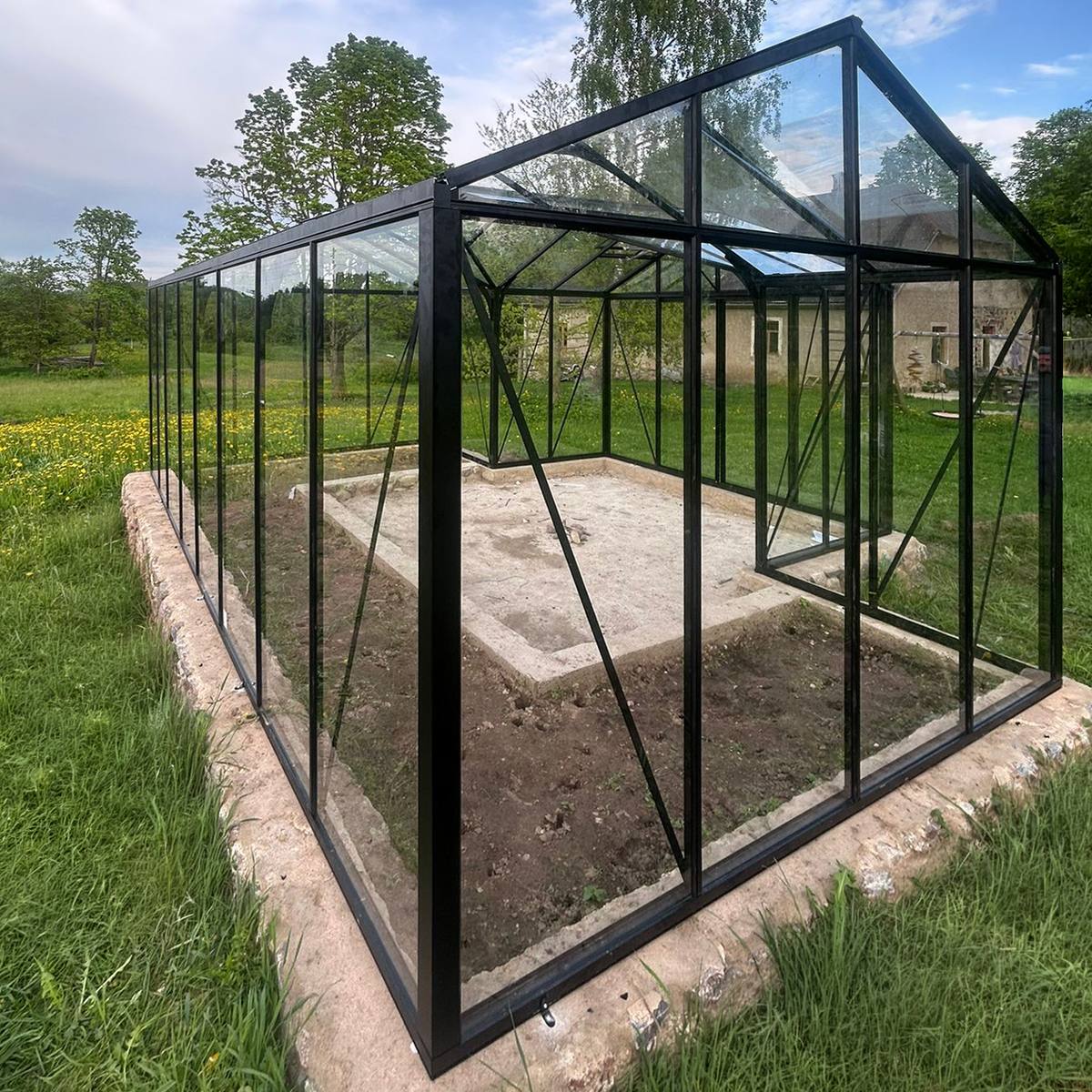
Start with the main function rather than the material name. Clear glass ranks highly for a transparent garden room. Bioclean can be useful on inaccessible exterior surfaces. Stopsol addresses solar gain and reflective styling, mirror glass chiefly light-dependent screening, frosted glass more consistent privacy, and polycarbonate low weight and light diffusion.
- Plant growing: Assess light needs, growing period, humidity and shading together. The requirements of lettuce differ, for example, from those of heat-loving crops.
- Living space: Prioritise views, glare, privacy and evening lighting.
- Feature building: Check reflection colour, frame effect and visibility of the interior.
- Maintenance: Consider roof access, water quality and surrounding trees.
- Budget: Compare not only material cost, but also installation, cleaning and possible shading.
Other owners’ practical experiences can help, but do not replace a project assessment. Browse our greenhouse reviews for examples.
Combining glazing types in one greenhouse
Mixed glazing can respond more precisely to the site and intended use than a uniform build. Clear glass on the garden side, frosted glass towards a boundary and solar-control glazing on especially exposed roof areas are possible approaches. Polycarbonate may also be used selectively where the frame, fixings and seals are designed for it.
Agree the combination before manufacture. Different material thicknesses, edges, seals, expansion behaviour and fitting directions must not be left to resolve on site. Consider the exterior as a whole: an accidental mix can look unsettled, whereas a symmetrical or function-led arrangement appears intentional.
Where a greenhouse sits beside a terrace cover, coordinate the material character of both structures. Helpful decision guides include bioclimatic or classic pergolas and wall-mounted or freestanding pergolas.
Glazing for different greenhouse forms
With a classic gable roof, roof and wall surfaces receive different amounts of sun according to orientation. A lean-to greenhouse is additionally affected by the house wall, roof overhangs and possible heat from the building. Pyramid, T-shaped and orangery forms have more transitions and differently oriented surfaces, so zoned glazing can be useful.
The larger and more complex the form, the more important clear pane identification and a glazing plan become. This is especially true for coated glasses that can look alike but must not be turned arbitrarily. Building dimensions and foundation must fit together in advance. The size guide and foundation guide offer comparable principles for space planning and foundations, while the specific greenhouse model requirements remain decisive.
In Malta, whether Planning Authority permission or notification is needed depends on the proposal, site, land designation, applicable class, exclusions and existing permit conditions. Ask a perit to classify the greenhouse project and confirm the requirements before work begins. Our guide to planning permission for a greenhouse or pergola provides an initial overview.
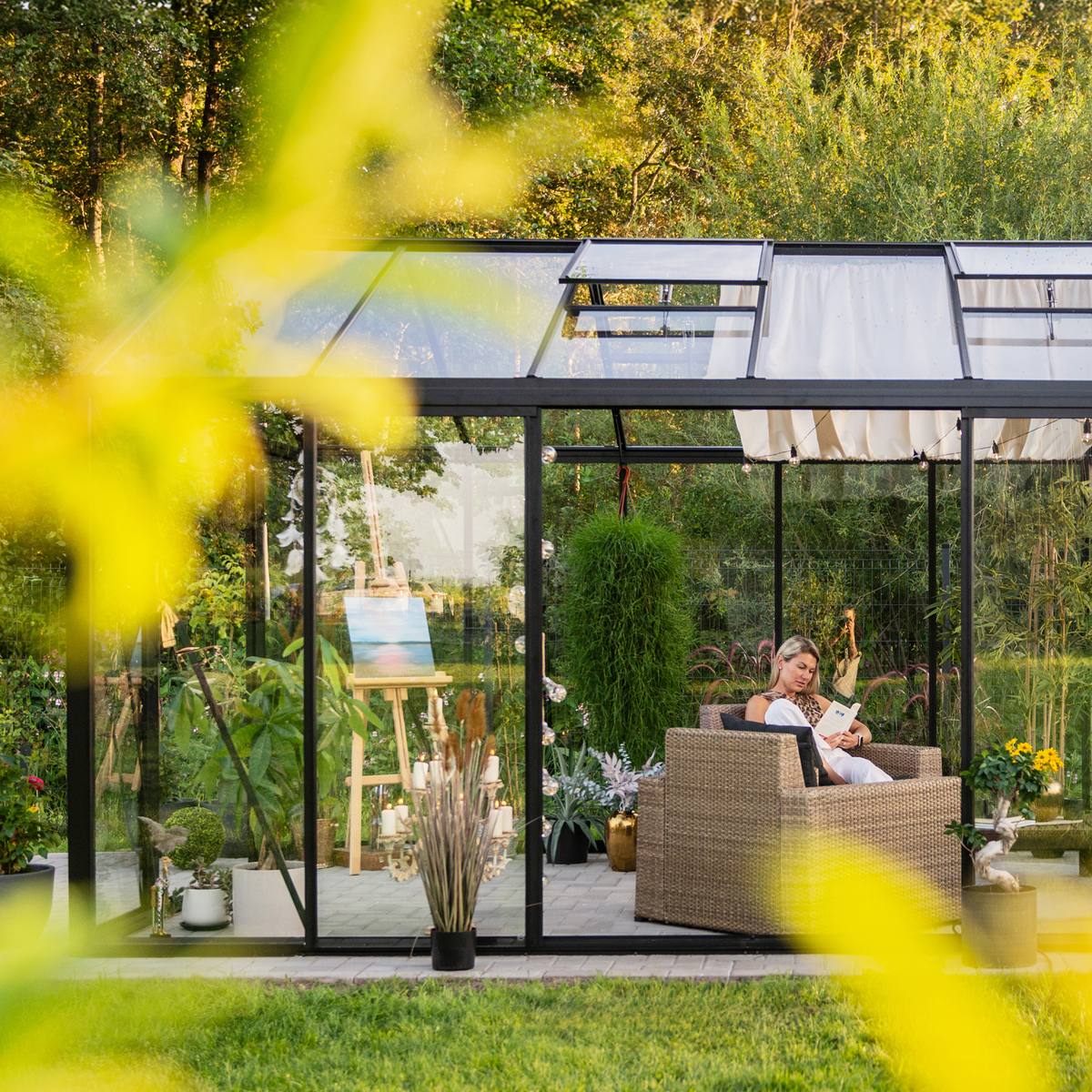
A practical selection process
- Define the use: Decide on cultivation, overwintering, relaxation, display or a combination.
- Document the site: Record orientation, shade, neighbours, trees, wind exposure and access routes.
- Prioritise surfaces: For roof, entrance side, rear wall and side walls, decide separately whether light, views or privacy matter most.
- Check material effects: View samples in sunshine, cloud and artificial light.
- Confirm compatibility: Choose only glazing approved for the model, frame and fixings.
- Plan maintenance and fitting: Clarify access, fitting direction and permitted cleaning products beforehand.
- Check the quotation: Record every surface, coating and desired combination in writing.
For a quotation request, see our guidance on how to order or contact us directly. Further planning topics are collected under useful information .
Accepting and checking glazing
Check glass and sheets systematically on delivery, without opening packaging uncontrollably or placing components unsafely. Compare quantities, markings and package allocation with the delivery documents. Record visible damage to packaging or goods in line with the applicable delivery and contract documents.
- Photograph packages before moving them and record any damage.
- Handle glass only with suitable personal protective equipment and safe lifting methods.
- Do not identify coated panes from colour alone.
- Keep labels until every pane has been assigned to its panel.
- Protect polycarbonate sheets from scratches, dirt in open chambers and incorrect storage.
- Do not trial-fit unclear or damaged parts; report them first.
Before the delivery date, read the information on purchasing and delivery and the applicable guarantee guidance . Cross-border projects require separately checked arrangements; see our page about deliveries to Malta and its islands.
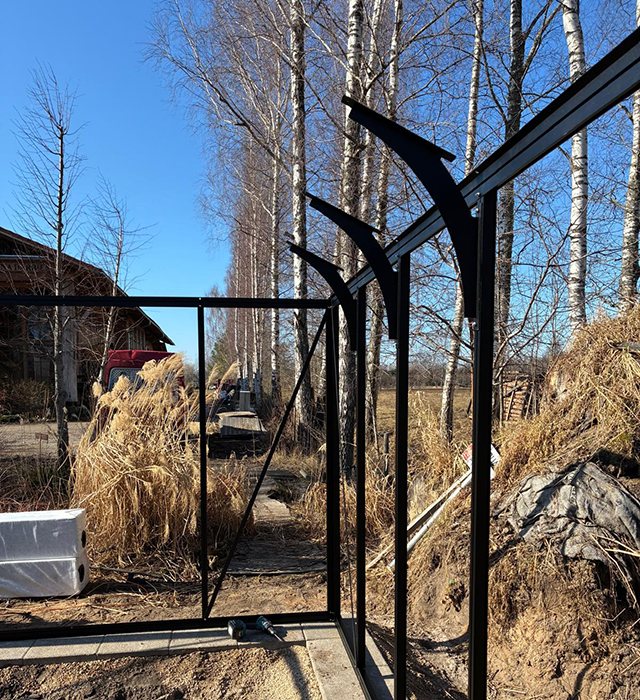
Installation: treat glazing as a planned sequence
Glazing is not an improvised final task. Check the foundation, frame geometry and diagonals first. Then sort packages by construction stage, compare pane markings with the plan and identify coated sides. Only then should fitting begin in the specified sequence.
With coated glass, the correct side is essential. Markings, labels, delivery paperwork or confirmation from the supplier are more reliable than visual guesswork. Remove protective films from polycarbonate as instructed in the installation guide; removing them too early can unnecessarily endanger the surface during work.
Allow enough people, suitable lifting aids and a safe working platform for large or elevated elements. Working in strong winds significantly increases risk. The installation instructions for the supplied model take precedence over general advice. As with installing garden structures such as an Elma S outdoor sauna , prepare delivery, ground conditions, component allocation and assembly as one coordinated process.
Cleaning and ongoing care
Clean glazing with soft, clean tools and products suitable for the relevant surface. Rinse off loose sand and dust first so they do not cause scratches while wiping. Hard water can leave mineral marks, so dirty standing water should not be allowed to dry on the surface.
Coated, frosted or mirrored glass may have different care limits from normal clear glass. Avoid abrasives, blades, hard brushes and unapproved chemicals. Polycarbonate also requires material-appropriate cleaning. At the same time, inspect seals, fixings, drainage routes and ventilation elements without altering structural parts yourself.
A clean surface improves light use, but does not solve ventilation or temperature problems. Specialist glazing must still be understood as part of the overall greenhouse operation.
Frequently asked questions
Which glazing gives the clearest view?
Clear glass generally gives the most direct, colour-neutral view. Bioclean glass can look similarly transparent but has a treated surface. Stopsol, mirror glass, frosted glass and many polycarbonate sheets alter visibility, reflection or light diffusion more strongly.
Does Bioclean glass mean I never need to wash my greenhouse?
No. The surface can support cleaning by rain, but does not remove all dirt. Sheltered areas and deposits from limescale, resin, bird droppings or heavy pollen still need checking and gentle cleaning when needed.
Does Stopsol glass keep a greenhouse cool?
Stopsol can reduce solar gain compared with a clear reference surface. It does not guarantee a particular indoor temperature. Building size, orientation, weather, ventilation, plant mass and additional shading remain decisive.
Is mirror glass private at night?
Not reliably. If the interior is brighter than outside at night, people can see in from outdoors. Mirror glass should therefore not be planned as the sole solution for permanent privacy.
Is frosted glass completely opaque?
Frosted glass prevents a clear view, but still allows light and sometimes silhouettes through. The effect depends on frosting level, distance and lighting. A material sample helps with assessment.
Is polycarbonate better than glass?
That depends on your priorities. Polycarbonate is lightweight and often diffuses light; glass offers clearer views and a different visual effect. Construction, quality and suitability must be checked for the specific greenhouse.
Can I combine glass and polycarbonate?
Yes, if the chosen system supports both materials in the intended arrangement. Different thicknesses, seals, edges and expansion behaviour must be considered during design and ordering.
Can I change the glazing after ordering?
That depends on the order stage and exact specification. Coated or individually allocated panes may enter order processing early. Agree requested changes in writing immediately.
Should every roof panel have the same glazing?
Not necessarily. Uniform glazing looks calm and simplifies allocation. With different orientations, planned zoning can be useful. It must be structurally compatible and visually arranged with intent.
Does specialist glass replace greenhouse shading?
No. Solar-control glass can influence radiant gain, but does not automatically replace ventilation or additional shading. The necessary solution depends on site, use and planting.
How do I identify which side of coated glass faces out?
Use only markings, installation documents or clear information from the supplier. Colour, reflection or surface feel are not sufficiently reliable. Keep labels until the panes have been allocated.
What must I decide before requesting a quotation?
At minimum, identify the building form, site, primary use, desired visual effect, critical sunny and neighbouring sides, and whether different glazing types will be combined. Photos and a simple site plan make discussion easier.
Final decision checklist
- Is the greenhouse’s main use clearly defined?
- Have sun path, shade, neighbours and views been considered?
- Has the required function been set for each roof and wall zone?
- Have samples been viewed in different lighting conditions?
- Is the glazing compatible with frames, seals and fixings?
- Are coated sides and fitting directions documented?
- Have ventilation and, where needed, shading been planned separately?
- Are delivery access, storage space and safe handling prepared?
- Are cleaning and future access to roof areas realistic?
- Have applicable local building requirements been checked?
- Does the quotation clearly allocate every glazing type?
- Have open technical questions been clarified in writing before order approval?
