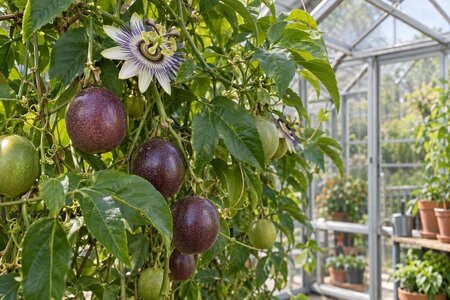
Growing Passionfruit in a Greenhouse
Vigorous leafy growth does not guarantee a passionfruit crop. Check warmth, winter protection, cultivar suitability, pollination, pruning and support before committing greenhouse space to this long-lived climber.

Vigorous leafy growth does not guarantee a passionfruit crop. Check warmth, winter protection, cultivar suitability, pollination, pruning and support before committing greenhouse space to this long-lived climber.
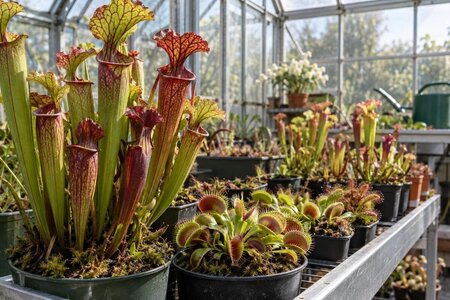
Flytraps, Sarracenia and tropical pitcher plants do not share one growing recipe. Compare their water, light, ventilation and seasonal temperature needs before arranging a greenhouse collection.
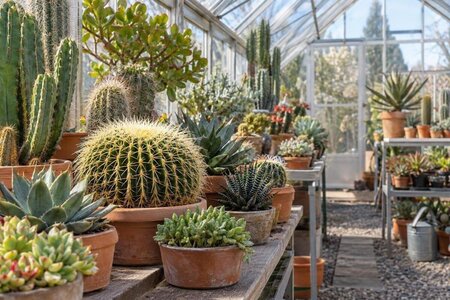
A greenhouse for cacti and succulents is about balancing sun, moving air and moisture, not simply providing heat. Learn how each plant’s cold tolerance and growth cycle can guide seasonal care and layout.
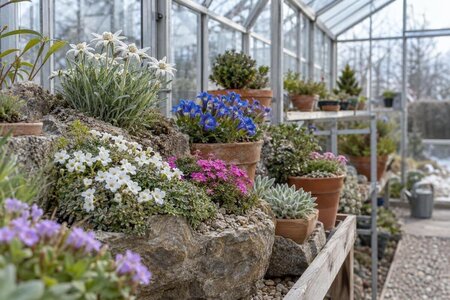
Many alpine plants benefit more from overhead rain protection and cool, fresh air than from warmth. This guide explores light, drainage and ventilation for maintaining an alpine collection through changing weather.
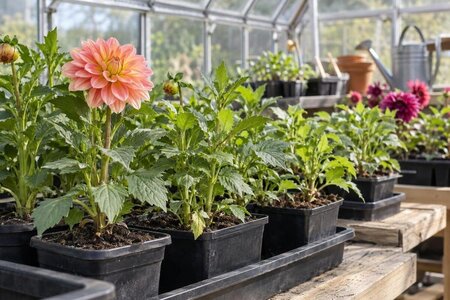
Starting dahlia tubers in pots under cover can give plants time to establish before garden planting. Plan room for pots and shoots, then harden plants off and move them out when nights and frost risk allow.
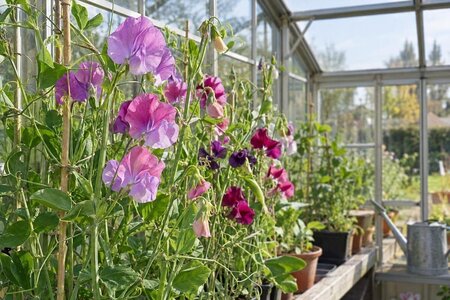
Sweet peas are a cool-season crop, so a greenhouse needs fresh airflow as well as light and support. Explore how sowing timing, vertical space and heat management can help bring flowers forward.

Ranunculus make a rewarding cool-season crop under cover when planting material and watering are managed carefully. Follow practical guidance on preparing corms, timing the crop, providing light and reducing disease pressure with good airflow.
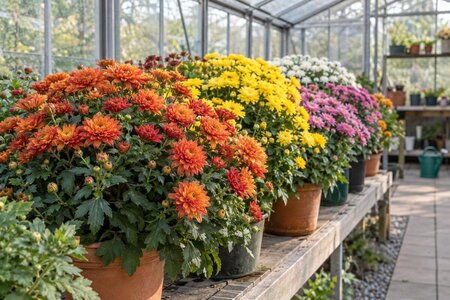
Growing chrysanthemums under cover calls for sound spacing, sturdy support and attentive ventilation. This guide explains how natural day length influences flowering and when controlled light may be relevant for the crop you want to grow.
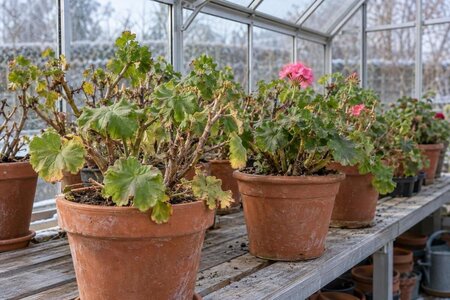
For gardeners in cooler Australian districts, a greenhouse can help keep geraniums through winter. Compare letting plants rest with maintaining active growth, then tailor light, moisture and air movement to the approach you choose.
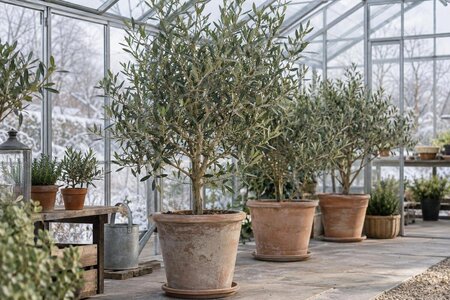
A greenhouse can provide useful shelter for a container-grown olive during cold or wet winter weather. Explore how bright conditions, protection around the pot, restrained watering and ventilation support informed day-to-day care.
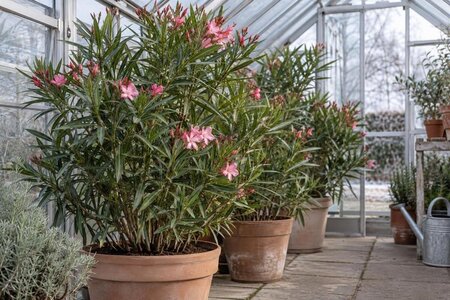
Oleanders need a bright, airy place and a lighter routine during winter, especially in frost-prone parts of Australia. Learn what to check for before moving plants, how to monitor pests and why care is needed when handling toxic plant material.
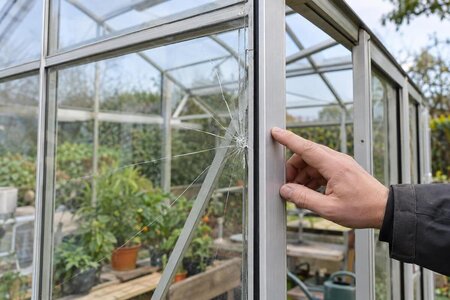
A new pane may not address why greenhouse glass keeps cracking. Learn what to photograph and note, then what a qualified installer can examine in the frame, supports, glazing fit and movement through changing temperatures.
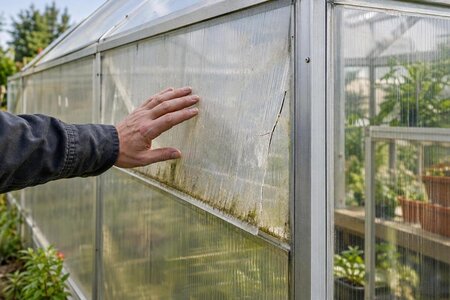
Fading, cloudiness and surface marks can develop without making a panel unusable. This guide separates appearance changes from damage affecting fit or function, and explains which model details help identify an approved replacement.
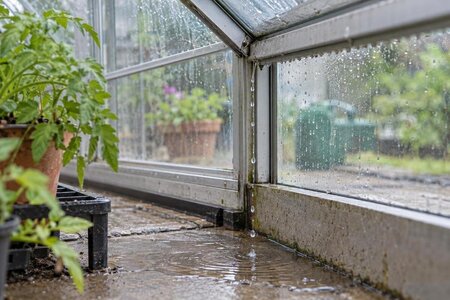
Water on the floor is not always a leak from the roof. Compare what happens during rain with conditions around the greenhouse base and signs of condensation to narrow down whether moisture is coming from above, below or inside.
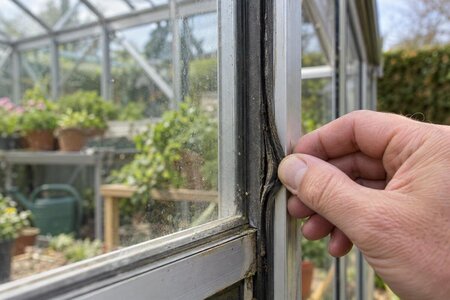
Dirt on a glazing seal may clean away, but wear cannot always be restored. Recognise splits, flattening and poor fit, understand why the seal profile matters, and prepare the greenhouse details needed when requesting matched spares.
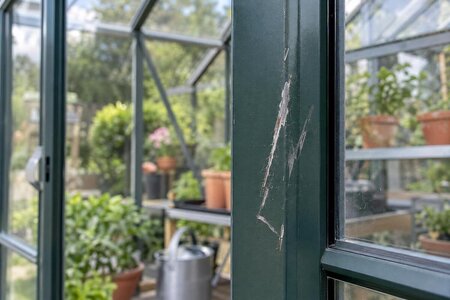
A superficial scuff and a scratch through the finish need different attention. Learn how to assess the mark, record the greenhouse model and coating colour, and seek manufacturer-approved guidance before attempting a touch-up.
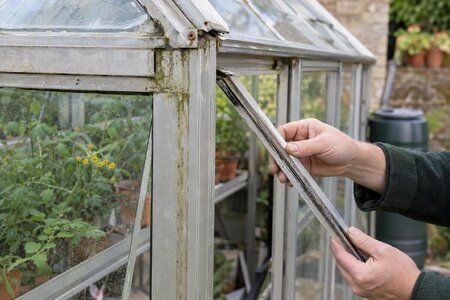
Start with a thorough condition audit rather than a parts list. Check the frame, glazing, fasteners and operating hardware, then use model details and spare-part availability to decide what is practical to retain.
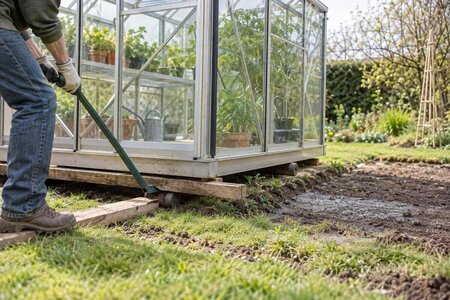
Relocating a greenhouse takes planning before any glazing is removed. Learn how to document the structure, assess the new site and base, and arrange reassembly with a qualified installer.
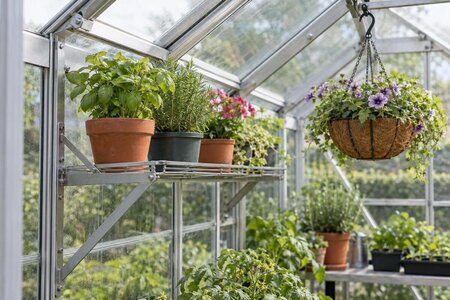
Shelves and hanging baskets can expand growing space, but their support must be verified. This guide covers approved fixing points, documented accessory loads and why roof members should not be assumed to support hanging weight.
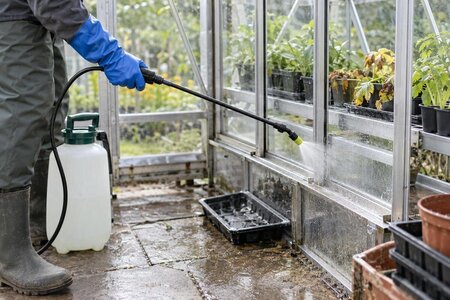
Routine cleaning is not enough after a serious disease outbreak. Learn how pathogen-specific horticultural guidance, tool hygiene and material-compatible methods shape a considered greenhouse recovery plan.
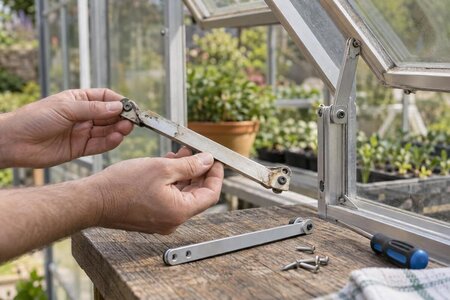
Identifying an obsolete model accurately gives a parts request a practical starting point. Find out which photos, measurements, profile details, labels and manuals to gather before contacting a supplier or considering replacement.
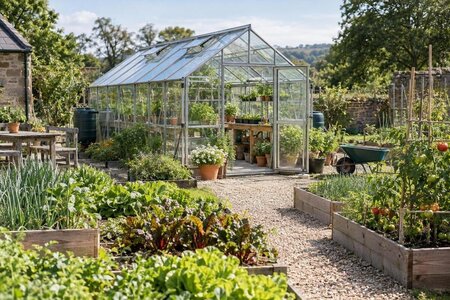
Treat the greenhouse as the working hub of a productive kitchen garden. Map outdoor growing beds, a reliable water point, compost handling and the paths used for sowing, harvesting and moving tools before settling on a site.
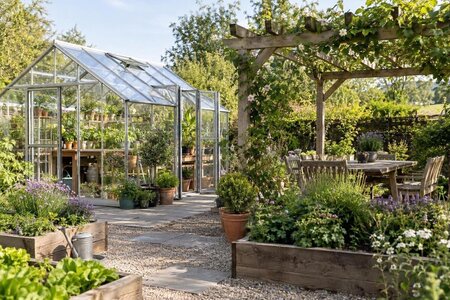
A greenhouse and pergola can share a garden while doing very different jobs. Work out where growing, sitting and gathering will happen, then consider seasonal shade, movement between spaces and any water or power connections.
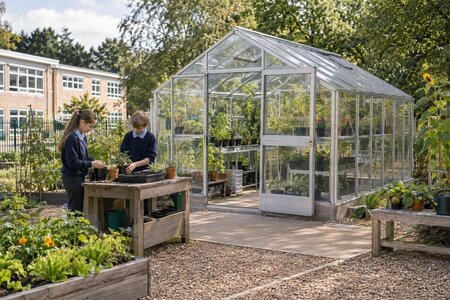
For a school greenhouse to stay useful across the year, lesson activities and holiday care need equal attention. Explore how to plan supervised use, access arrangements, watering routines and clear handovers in line with school procedures.
