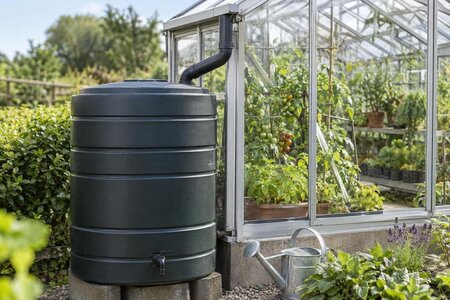
Calculating Rainwater Tank Size for a Greenhouse
Compare the greenhouse roof’s collection potential with plant water use to estimate suitable storage. The calculation also accounts for local rainfall, drier periods and overflow management.

Compare the greenhouse roof’s collection potential with plant water use to estimate suitable storage. The calculation also accounts for local rainfall, drier periods and overflow management.
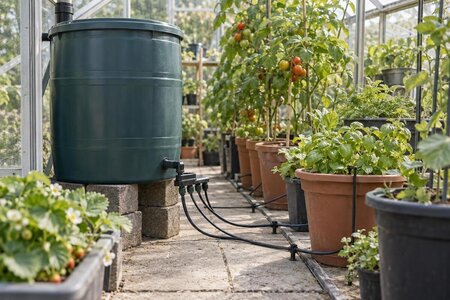
Before leaving for two weeks, measure likely water use and test the full watering cycle. Check the reservoir and common failure points, enable useful alerts and ask someone reliable to visit if needed.
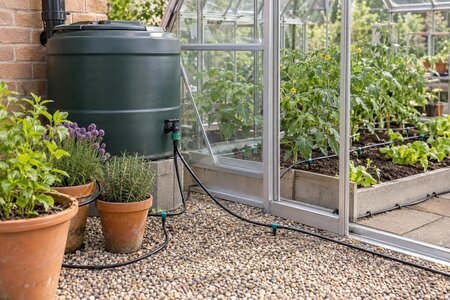
Pots and planted beds often need water at different intervals. See how to divide pipework, choose suitable emitters and set an independent schedule for each greenhouse growing area.
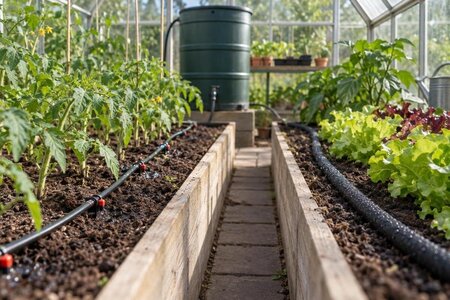
Drip lines and soaker hoses distribute water through a greenhouse bed in different ways. Compare wetting patterns, filtration and pressure considerations, then plan the checks needed to keep water moving reliably.
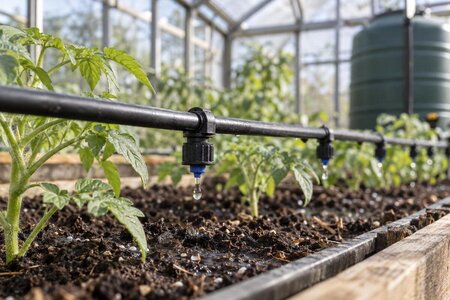
Minerals carried in hard water can build up where irrigation flow is most restricted. Find out how to assess water quality, recognise uneven output and use the equipment maker’s care guidance when maintaining emitters.
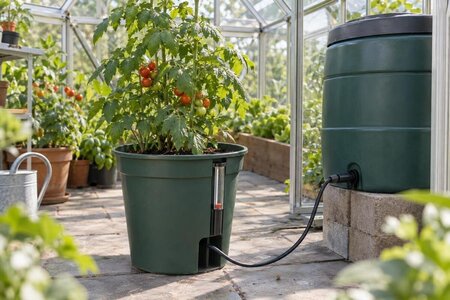
A reservoir can reduce the frequency of hand watering, but containers need a well-considered position in a greenhouse. Review refill access, overflow management on paving and ways to monitor moisture around the roots.
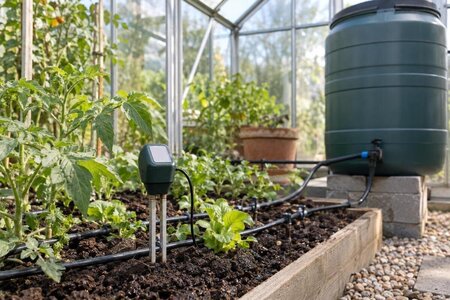
A moisture reading is useful only if it represents the growing medium where roots are active. Learn how sensor placement and calibration affect results, and why a hand check remains valuable before adjusting automatic watering.
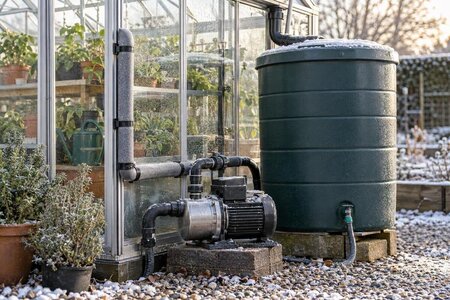
Water trapped in irrigation equipment can freeze during cold spells. Follow a component-by-component shutdown for pipes, pumps, filters and tanks, referring to the relevant care instructions before draining or storing each item.
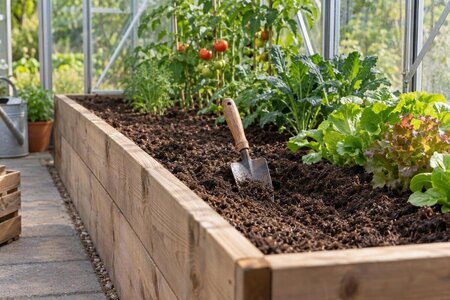
Depth is not simply a case of more being better in a greenhouse bed. Compare the rooting room different crops need with drainage and planting methods, then use example calculations to estimate the volume of growing medium required.
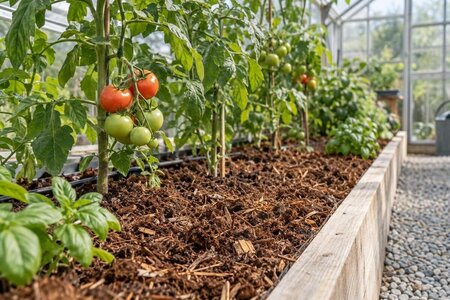
Peat-free mixes vary in water retention, air space and nutrient supply. See how those differences affect watering, and what to check in product information and supplier details before choosing a medium for crops under cover.
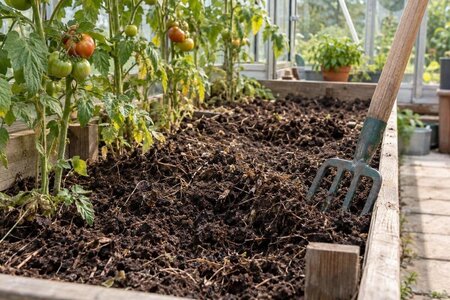
Replacing all the soil in a greenhouse bed every year is not automatically necessary. Learn to separate nutrient shortfalls and poor structure from possible disease concerns, then decide whether the soil needs restoring, testing or replacing.
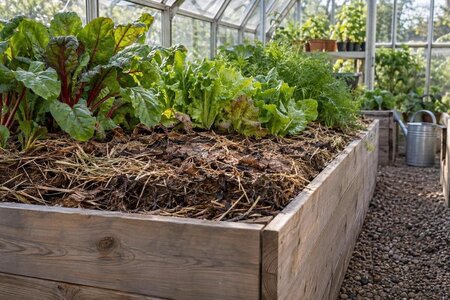
No-dig beds keep disruption to a minimum by feeding the soil from the surface. Follow a practical approach to preparing permanent greenhouse beds, making suitable ongoing additions and watering carefully in a space protected from rainfall.
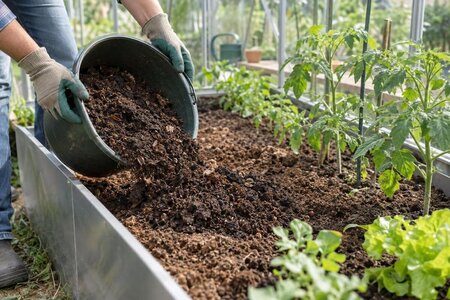
Compost can support soil life and structure, but regular additions may also raise nutrient levels beyond a crop’s needs. Learn why compost maturity, nutrient analysis and the condition of the bed should shape when and how much you apply.
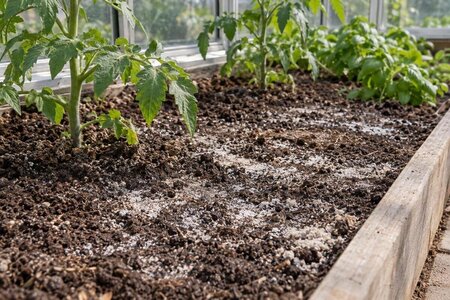
A pale layer is not enough to diagnose the problem. This guide shows how its texture, irrigation and feeding history, plus water and growing-medium checks, can point towards salts, mineral residue or surface growth.
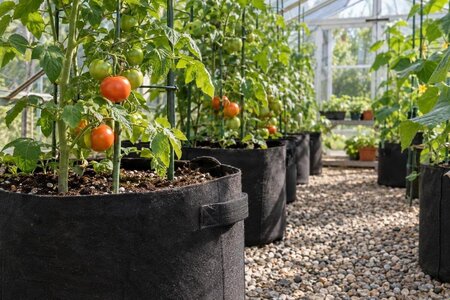
Grow bags offer a flexible layout, but bag size alone does not show usable root room. Follow a worked comparison covering drainage, irrigation, access and secure support for taller greenhouse crops.
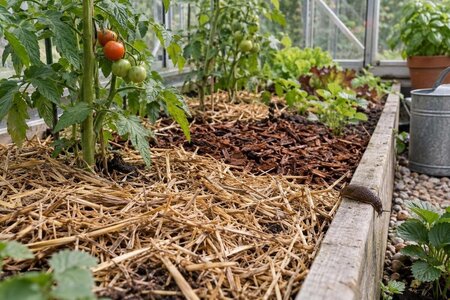
Mulch behaves differently in a covered bed with no direct rainfall. See how common materials influence surface moisture, watering and airflow, and when damp cover could make it easier for slugs to shelter beside crops.
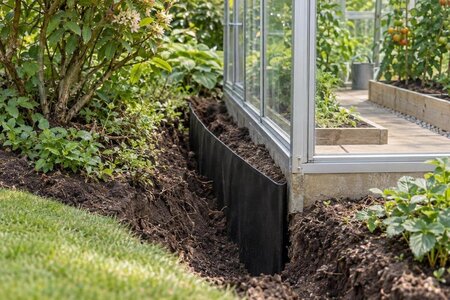
Nearby trees and shrubs may compete with crops below the soil. The article explains how to investigate invading roots, position a suitable bed boundary and avoid unnecessary damage to roots that support established planting.
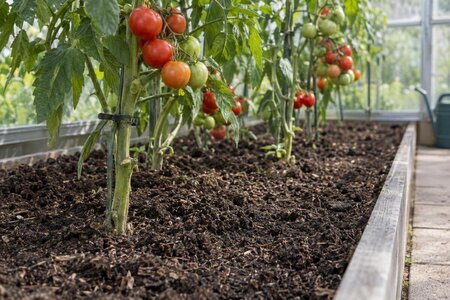
Declining growth after repeated tomato crops has several possible causes. Review what to inspect and test before deciding whether to renew the bed, adjust future planting or change the growing system when rotation is impractical.
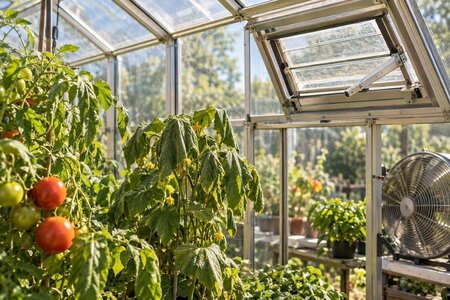
The forecast describes outdoor conditions, while sunshine can rapidly warm a greenhouse. Use a timed temperature and humidity log to check for a sensor in direct sun, sheltered site conditions and ventilation that is not clearing heat.
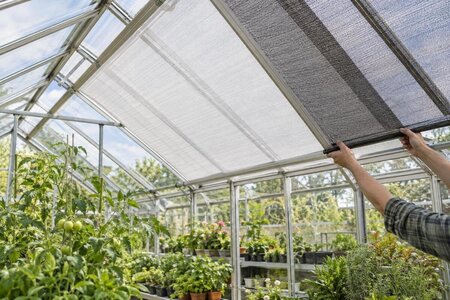
A shade-netting rating is only part of the decision: crops, season and the light reaching your growing area also matter. Learn how to assess these factors, compare shade levels and decide where coverage will be most useful.
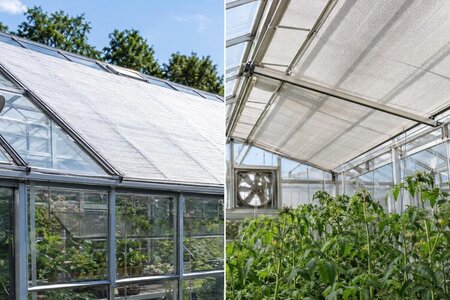
Shade installed outside and shade fitted inside do not tackle heat in the same way. This guide compares their effect on solar gain, access for daily gardening and the compatible fixing points on your particular greenhouse.
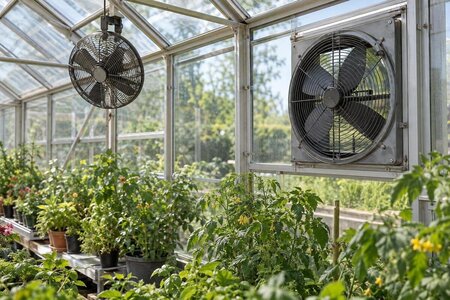
Circulation fans keep air moving around plants, whereas extraction fans remove warm air from the greenhouse. See the separate roles clearly, then use a simple layout to plan a sensible path for air through the growing space.
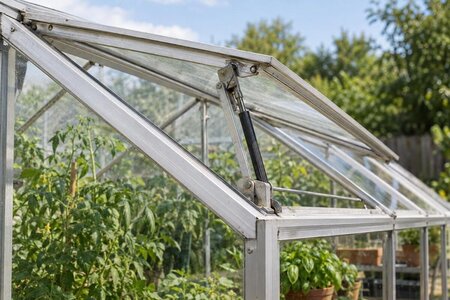
A vent opener that remains closed may be responding to the temperature, an adjustment setting, excess weight or a physical obstruction. Work through safe checks in the order set out in the manual for the exact opener model.
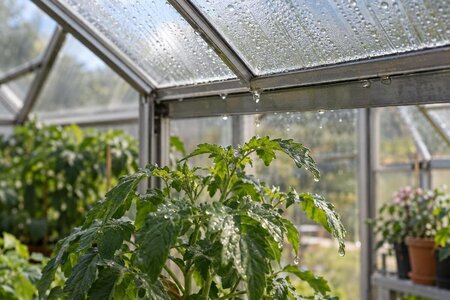
Water landing on foliage is not always coming from the nearest wet pane. Map the drip points with photographs, inspect the cold surfaces above them and compare the pattern with overnight temperature and humidity notes.
