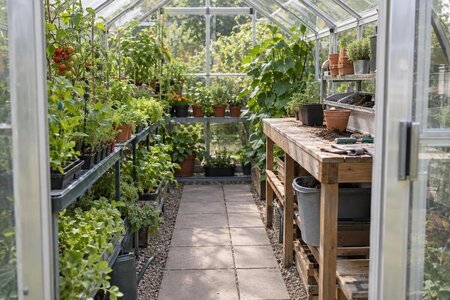
How to Fit a Potting Station Without Crowding Plants
Focus on the workstation rather than redesigning the whole greenhouse. Plan the worktop, supplies and seasonal trays together so potting tasks do not unnecessarily displace plants.

Focus on the workstation rather than redesigning the whole greenhouse. Plan the worktop, supplies and seasonal trays together so potting tasks do not unnecessarily displace plants.
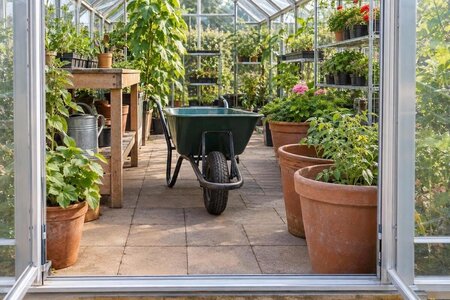
Walking space may become awkward once equipment is loaded. Check the full journey into and through the greenhouse, including pinch points, turns, manoeuvring room and level changes.
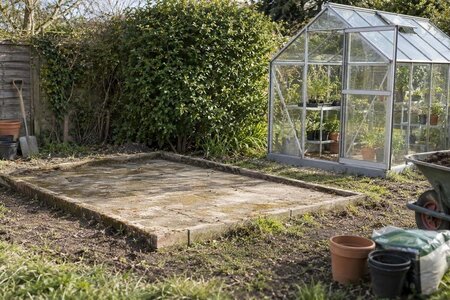
An existing shed base may save starting again, but appearance alone is not enough. Check its footprint, level, squareness, cracks, drainage and fixing positions against the foundation drawing for the greenhouse model.
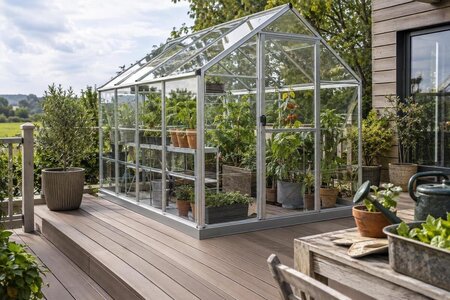
Decking is the visible finish, not proof that the supporting structure can carry a greenhouse. Review the framing, supports, level and drainage, then seek structural confirmation using the chosen model’s foundation drawing.
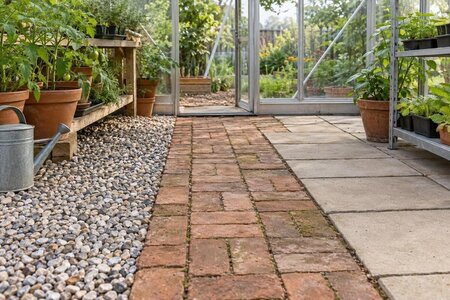
Flooring affects footing, cleaning and how water moves around pots and growing areas. Compare gravel, brick and paving as interior finishes, and learn why the surface underfoot is a separate decision from the greenhouse foundation.
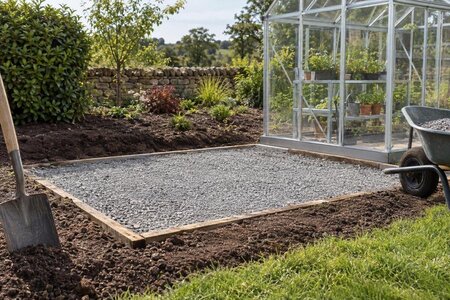
Finished landscaping does not show whether recent fill has settled. Use the site history, drainage and final levels to decide what further investigation is needed before a foundation is designed for the chosen greenhouse.
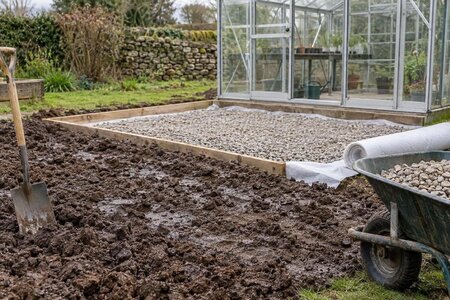
Heavy clay needs more than routine garden preparation. Find out why drainage behaviour and moisture-related ground movement require investigation before a site-specific base is designed around the selected greenhouse.
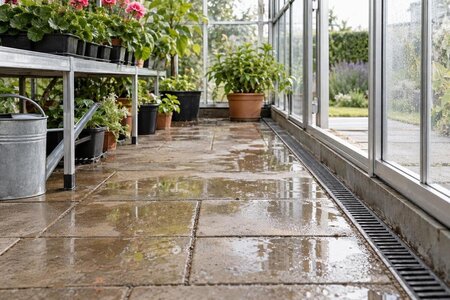
Standing water can originate at the floor surface, a drainage outlet or the ground around the greenhouse. Map the route water takes and repeat the same watering test to identify where pooling begins.
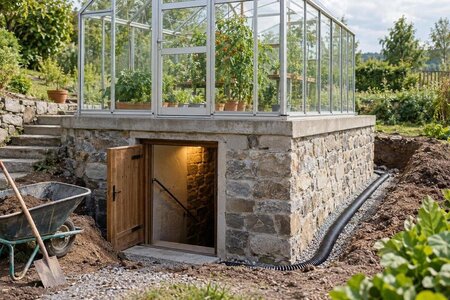
A cellar roof or buried structure should not be treated like ordinary ground beneath a greenhouse. Explore the support, load-path and waterproofing questions to review with qualified professionals and against the model’s base drawings.
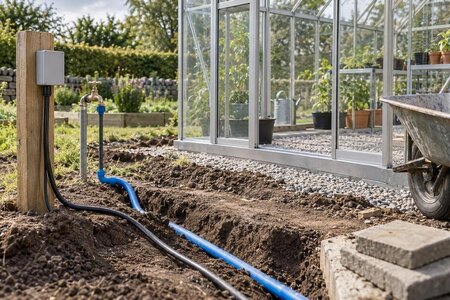
Water pipes, cable routes and connection points are simpler to plan before paving and other finished surfaces restrict access. Use a route plan and practical handover questions, while leaving electrical design to qualified professionals.
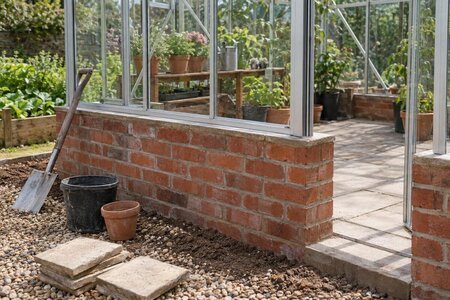
A low brick wall affects how a greenhouse is supported, fixed and detailed at its base. Compare a purpose-designed wall-base arrangement with adapting a standard model, and establish what the manufacturer needs to confirm.
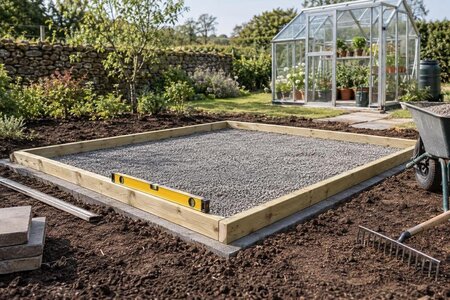
A base may be level but still fail to form a true rectangle, affecting how the frame aligns. See how diagonal measurements can highlight distortion and what to check against the relevant model drawing before assembly.
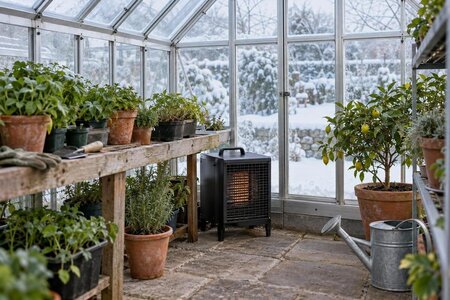
Use a worked calculation to explore what may shape your greenhouse heating bill in an Irish winter. It accounts for outdoor conditions, your chosen set temperature, heat loss, heater runtime and the unit rate on your electricity bill.
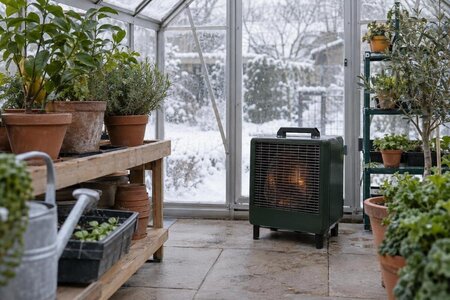
Estimate the heating output a greenhouse may need when outside temperatures fall, using glazing, draughts and the temperature difference you plan to maintain. Learn why this capacity calculation is separate from the cost of running a heater.
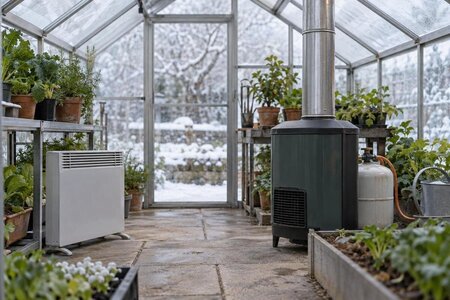
Electric and fuel-fired heaters bring different considerations to a greenhouse. Compare how they affect ventilation, combustion moisture, emissions and installation planning, as well as the practical checks involved in daily operation.
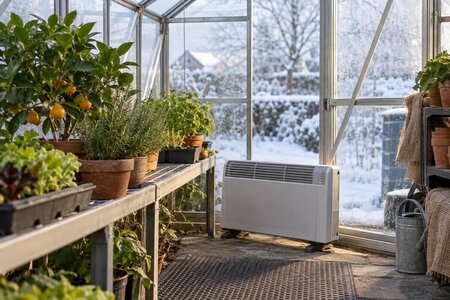
Keeping plants clear of frost and growing plants actively through winter are two distinct greenhouse aims. See how your choice changes the temperature target, likely heating demand, insulation priorities and the need for regular monitoring.
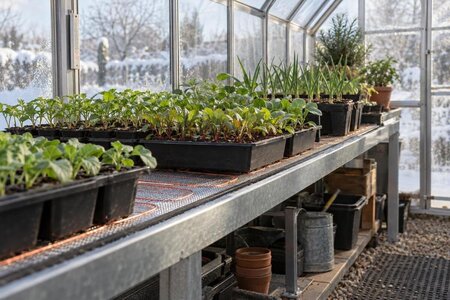
For sowing and propagation, warming the compost and roots can be more relevant than heating all the greenhouse air. Compare heated benches with space heating, including the jobs each approach suits and the air-temperature limits to consider.
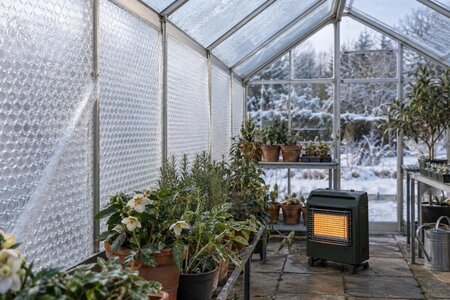
Bubble insulation can help slow heat escaping through a glass greenhouse, but it changes the growing environment too. Compare light reduction, condensation management and frame-friendly fixing options before fitting it.
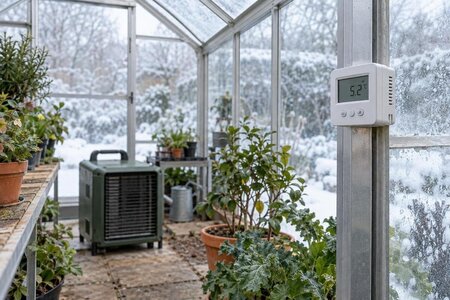
The thermostat reacts to the conditions immediately around its sensor, which may not match those at plant level. Find a representative position, avoid sun and heater draughts, and use an independent thermometer to check the result.
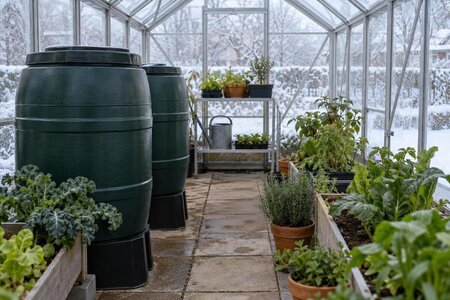
Water barrels absorb warmth while the greenhouse is warmer and release it as temperatures drop, but they cannot replace heat that is continually being lost. Learn how to compare stored heat with overnight losses and monitor real conditions.
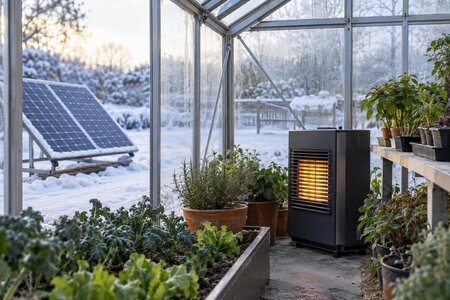
Solar generation and greenhouse heating demand do not always coincide during winter. This guide helps you compare expected seasonal electricity output with heater use, storage capacity and the role of a reliable backup supply.
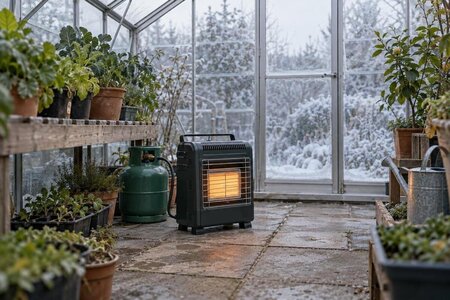
A winter power cut needs more than a spare heater. Create a clear response plan: set meaningful alerts, identify plants most at risk, limit heat loss where possible and consider only backup equipment suitable for safe use.
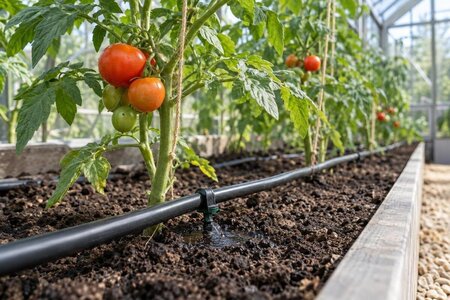
See how growing in pots, grow bags or beds changes your choice of drippers, filters and pipe runs. The guide also explains how to check pressure and flow before settling on a layout.
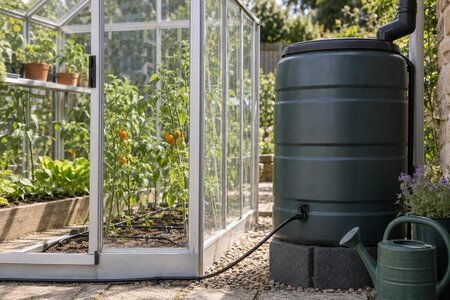
The water level in a water butt affects the pressure available to a drip system. Learn how to assess emitter suitability and carry out a flow test before relying on the setup.
