



Useful information · PROCESS
Production and Delivery Lead Times Explained
A practical guide to production, shipping, delivery, receiving, and installation scheduling for Bloomcabin greenhouses, conservatories, pergolas, and garden structures.
Understanding the complete order timeline
A Bloomcabin project involves more than the time a product spends in production. The complete timeline begins with product selection and order confirmation, continues through manufacturing and transportation, and ends with delivery, receiving, site staging, and installation. These phases are related, but they are not interchangeable.
Lead time is therefore best understood as a coordinated sequence rather than a single universal number. Product configuration, production capacity, destination, transportation conditions, site accessibility, and installer availability can all influence when your structure is ready to use.
Always use the schedule communicated for your specific order. General examples, photographs, product pages, and previous customer experiences can help with planning, but they do not replace the current estimate provided for an accepted order. Before purchasing, review the terms of purchase and delivery and the Bloomcabin guide explaining how to order.
The five main phases of a Bloomcabin project
| Phase | What it includes | What the customer should do |
|---|---|---|
| 1. Product and configuration review | Selecting the model, configuration, finish, accessories, and delivery destination. | Confirm that the chosen structure suits the site, intended use, access conditions, and installation plan. |
| 2. Order confirmation | Reviewing the order information and establishing the applicable commercial and production details. | Check names, contact information, delivery address, product selection, and all agreed options. |
| 3. Production | Preparing and manufacturing the components included in the confirmed order. | Avoid requesting late changes. Use this period to complete site planning and coordinate contractors. |
| 4. Transportation and delivery | Moving the packaged structure from the dispatch point toward the delivery destination. | Keep contact details current, prepare access, and make suitable receiving arrangements. |
| 5. Receiving and installation | Inspecting the shipment, safely staging packages, preparing the base, and assembling the structure. | Document delivery condition, protect packages, and install according to the supplied information. |
Some activities can happen in parallel. For example, site preparation can often proceed while the product is being manufactured. However, permanent foundation work should be based on the confirmed project information rather than assumptions drawn from a photograph or a different model.
What does production lead time mean?
Production lead time is the period allocated to preparing and manufacturing the confirmed product. It is not necessarily the same as the time between placing an initial inquiry and receiving the shipment. Questions, revisions, incomplete information, or requested order changes may need to be resolved before the applicable production sequence is established.
Bloomcabin offers structures with different forms and project requirements. A traditional Classic aluminum greenhouse does not have the same layout as the Bloomcabin Orangerie, a lean-to aluminum greenhouse, or the Garden View T greenhouse. Differences in configuration and order scope are among the reasons customers should not apply one project’s timing to another.
A production estimate is a planning estimate, not permission to schedule an installation crew for an inflexible date. Manufacturing must be followed by dispatch, transportation, unloading, inspection, and site staging. Keep reasonable flexibility until the shipment has arrived and its components have been checked.
What can affect the production schedule?
Product family and configuration
The selected model and its confirmed configuration determine what must be prepared for the order. Customers comparing the Classic Plus 385, Classic Premium greenhouse, and Prestige Premium greenhouse should treat each as a distinct product choice rather than assuming identical scheduling.
Completeness of the order information
Accurate contact details, destination information, model selection, and agreed options help prevent avoidable clarification. Review the order confirmation promptly and report a discrepancy as soon as possible. Do not assume that a verbal discussion or inspiration photograph automatically modifies the written order details.
Changes after confirmation
A request to change a model, layout, finish, accessory, or destination can affect feasibility, price, production status, packaging, and scheduling. A requested change is not effective until it has been reviewed and accepted. If your plans change, contact Bloomcabin before making related site commitments. Customers considering cancellation or a major revision should also read the Return and Cancellation Policy.
Production demand and seasonal activity
Demand can vary during the year. A seasonal planting goal may create a personal deadline, but it does not shorten manufacturing or transportation. If you want a greenhouse ready for a particular growing period, begin product selection, site review, and contractor discussions early. The guide to preparing a new aluminum greenhouse for spring can help separate planting preparation from the order and construction schedule.
Exceptional interruptions
Manufacturing and logistics can be affected by circumstances that cannot be confirmed far in advance. When planning, preserve flexibility for events outside the normal workflow. The current communication for your order is more useful than an old estimate saved from an earlier inquiry.
Production time and delivery time are different
Delivery or transit time begins after the order has completed the relevant production and dispatch preparations. It covers movement toward the destination and may include more than one logistics stage. A shipment being complete in production does not mean it is already at the customer’s property.
Transportation timing can be influenced by destination, route conditions, carrier scheduling, weather, access restrictions, and other operational factors. For that reason, an estimated arrival window should not be treated as an exact installation appointment unless an exact arrangement has been specifically confirmed.
Practical rule: Do not schedule a nonrefundable crew, equipment rental, concrete operation, or landscaping sequence solely from an initial production estimate. Coordinate dependent work around confirmed project information and maintain scheduling flexibility until the shipment has been received and inspected.
How product selection affects planning
The structure’s relationship to the site can be as important as the product itself. Freestanding, wall-connected, compact, and T-shaped designs require different planning conversations.
- A freestanding greenhouse requires a suitable location, prepared base, delivery path, and assembly area.
- A wall-connected model such as the wall-mounted T-model orangery requires careful coordination with the existing building and site conditions.
- A compact option such as the mini wall greenhouse may occupy less garden space, but the supporting location and receiving plan still require review.
- A non-greenhouse outdoor structure, including the Bloomcabin pergola, should be planned according to its own product information rather than a greenhouse timeline.
The extensive product range supports different project goals, while Bloomcabin’s approach to design choice helps customers compare suitable directions. More choice also makes it important to finalize the correct product before production progresses.
Planning backward from a preferred completion period
If you have a preferred season rather than a fixed contractual deadline, plan backward through every project phase. This creates a more realistic schedule and exposes dependencies before they become urgent.
- Define the intended use. Decide whether the structure is primarily for growing, entertaining, shelter, work, storage, or a combination of uses.
- Choose the product family. Compare freestanding, lean-to, wall-mounted, compact, orangery, and pergola formats.
- Review the property. Consider placement, existing structures, ground conditions, drainage, access, and available working space.
- Clarify local project responsibilities. Determine what site reviews, approvals, professional advice, or contractor coordination may apply to your property. Requirements vary, so Bloomcabin should not be assumed to make property-specific determinations for you.
- Confirm the order details. Verify the product, options, destination, and contact information before relying on a schedule.
- Use production time productively. Finalize the base plan, prepare the route, arrange safe storage, and discuss installation sequencing.
- Prepare for receiving. Identify who will be present, where packages will be placed, and how they will be protected.
- Inspect before installation. Check and document the delivered packages and organize components before the crew begins.
- Allow for assembly and finishing. Delivery is a milestone, not the completion of installation.
Site preparation during production
The production period is the best time to resolve property-side issues. Start by reviewing the intended location and the route from the delivery access point to the staging area. Look for gates, slopes, soft ground, overhead obstacles, tight turns, landscaping, parked vehicles, and other conditions that could complicate receiving or material movement.
Keep the installation area and a separate staging area available. Packages should not be placed where they obstruct traffic, collect water, or become vulnerable to damage from unrelated work. If installation will not begin immediately, plan a dry, secure, stable storage arrangement appropriate for the delivered materials and packaging.
Coordinate the base or foundation with confirmed product information. Do not build from a website image, an unconfirmed measurement, or details belonging to another model. Wall-mounted and lean-to projects also require particular attention to the existing wall and the relationship between old and new construction. Obtain suitable professional guidance when site conditions or connected construction are outside your experience.
The broader planning process is similar for other backyard structures. Bloomcabin project examples such as the Durano garden house, Premium Wooden Garage, and Modano 5 backyard house can help customers think about use and placement. However, each article concerns its own structure; it does not establish the production, foundation, or delivery details for a greenhouse order.
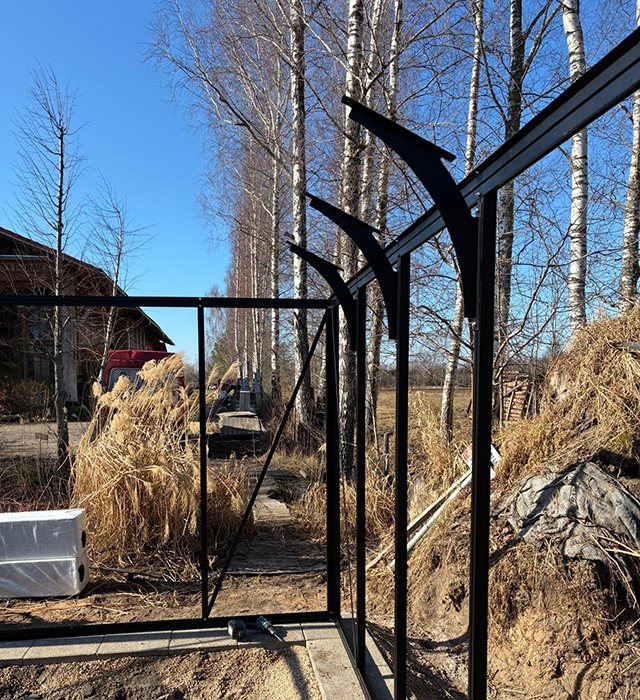
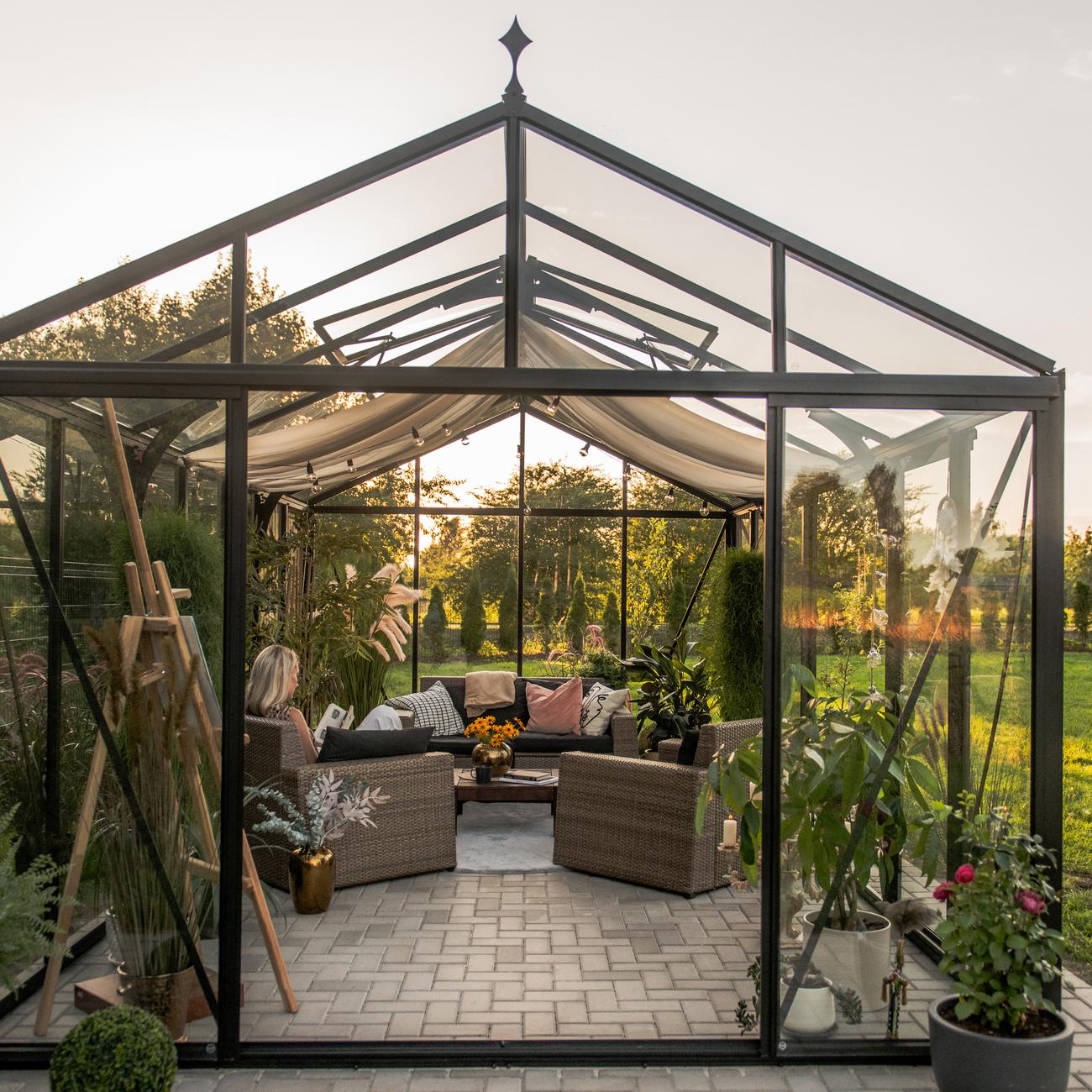
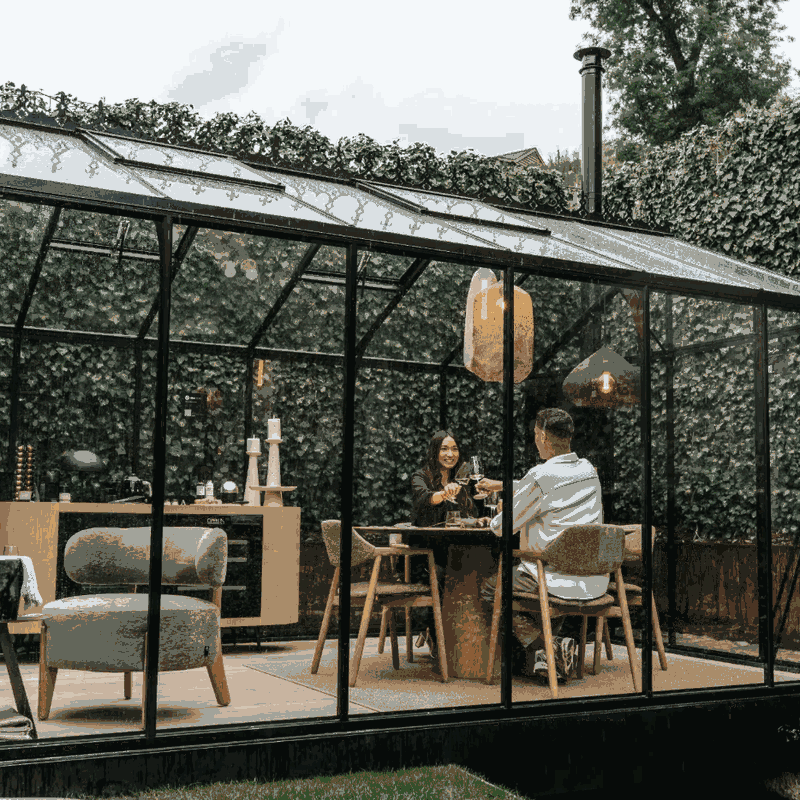
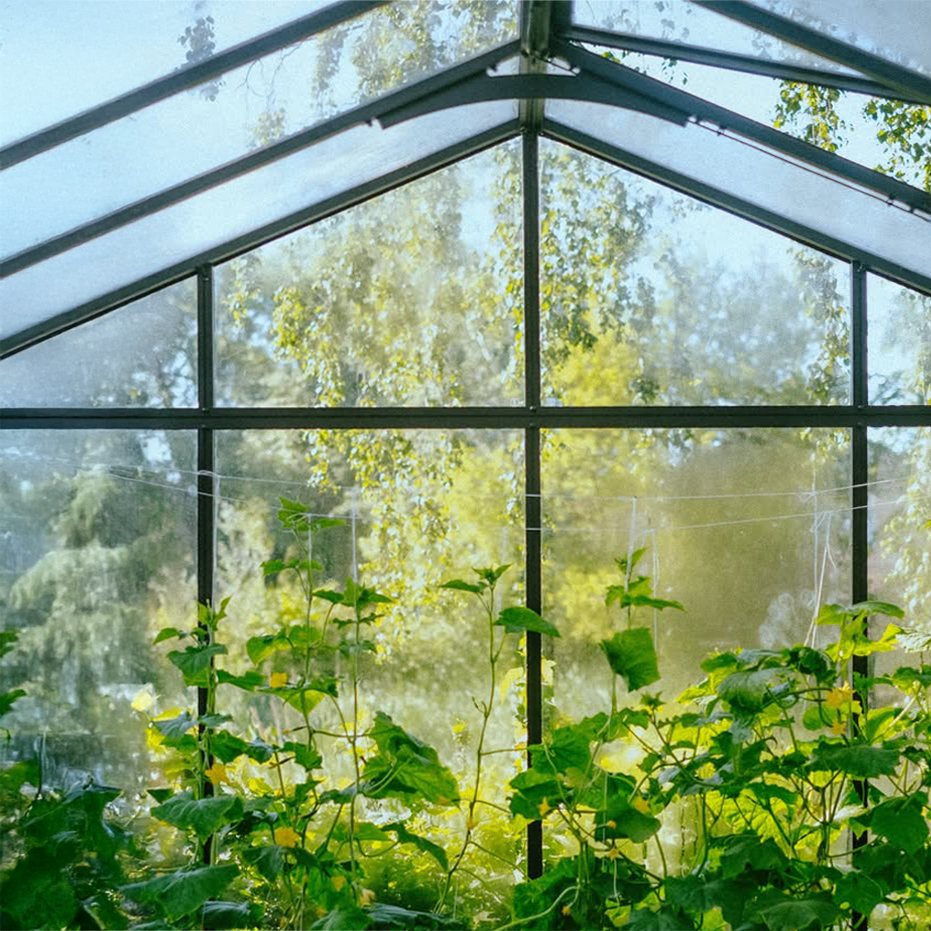
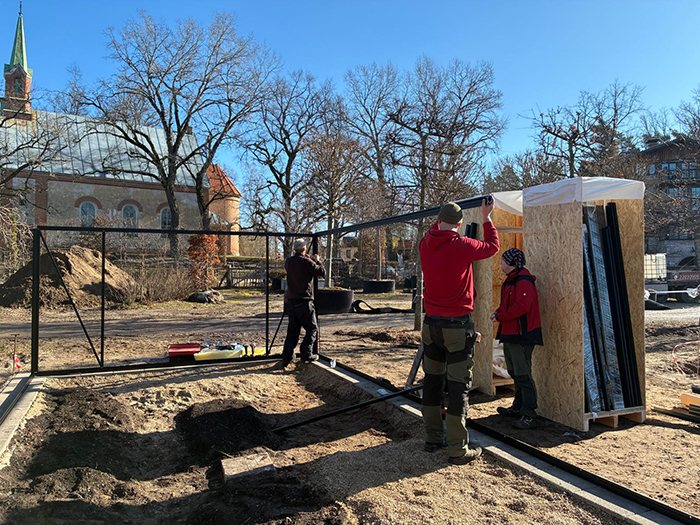
Anna Koku Skola: one installation sequence
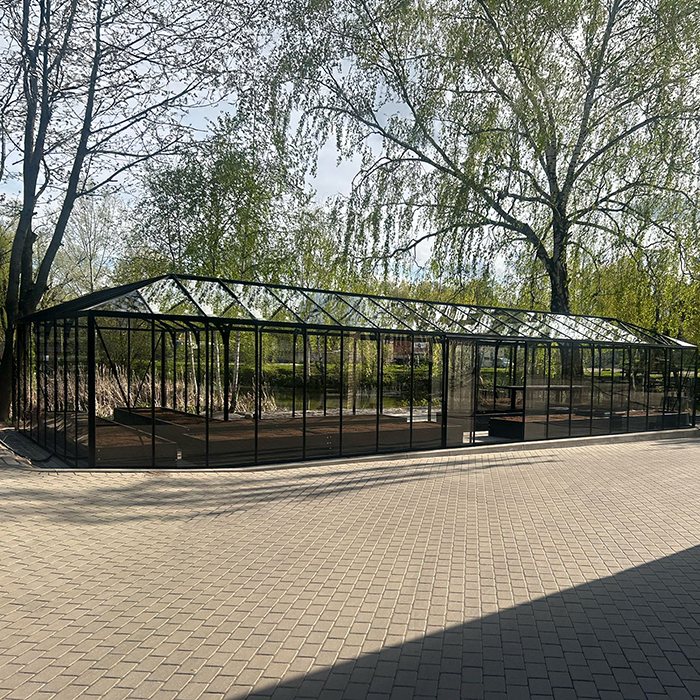
The Anna Koku Skola photographs supplied with this page should be read as one real greenhouse installation sequence. Together, they document visible stages of a single project, including the work area, assembly progress, and completed setting. They should not be interpreted as separate projects or as proof of concealed construction details.
This sequence illustrates an important scheduling principle: delivery is not the end of the project. Materials must be received and organized, the prepared site must be available, assembly must proceed in a controlled order, and the surrounding area may need attention afterward. The photographs provide visual context, but the instructions and confirmed information for the purchased model remain the basis for installation.
Delivery readiness checklist
Use this checklist before the expected delivery period. Specific arrangements can vary, so follow the communication provided for your order.
- Confirm that Bloomcabin has your current phone number, email address, and delivery information.
- Identify a responsible person who can handle delivery communication and receiving.
- Review access to the property and remove avoidable obstructions.
- Confirm where packaged components can be safely staged.
- Keep children, pets, visitors, and unrelated contractors away from the receiving area.
- Prepare a method for taking clear photographs of the shipment and any visible packaging concerns.
- Have the order information available for comparison.
- Protect delivered materials from traffic, unstable ground, standing water, and unauthorized handling.
- Do not discard packaging or identification information before completing the initial check.
- Tell the installer when the shipment has actually arrived and been reviewed, not merely when it was expected.
What to do when the shipment arrives
Receiving deserves the same attention as ordering. Observe the shipment and packaging condition before components are moved or opened. Take clear photographs of all sides and record any visible concern. Follow the applicable delivery procedure and communicate promptly if something appears inconsistent with the order or delivery documentation.
After receiving, place packages in the planned staging area and keep related materials organized. Do not mix components with unrelated construction supplies. Before installation, compare the received items with the available order and packing information as applicable. If there is a question, pause the affected work rather than improvising or altering a component.
Visible packaging damage does not automatically establish the condition of every item inside, while intact outer packaging does not remove the need for an organized check. Accurate photographs, retained labels, and concise written descriptions make follow-up more efficient. For order support expectations, see Bloomcabin’s information about customer service.
Coordinating installers and other contractors
Ask a prospective installer what information is needed, what site work must be complete, how materials should be staged, and how schedule changes are handled. Share the correct product information rather than asking the contractor to estimate from a general photograph.
Avoid creating a chain in which one uncertain date controls multiple nonrefundable commitments. Delivery, inspection, base completion, installation, electrical work, landscaping, and interior setup may involve different parties. Keep those activities logically sequenced and confirm which party is responsible for each task. Any property-specific construction, utility, or approval question should be addressed by the appropriate local professional or authority.
For design context, customers may also review projects such as the Modano 4 garden house, Verdana 2 garden house, and Veltor 3 garden house. These examples are useful for considering backyard workflow and intended use, but they do not define greenhouse installation requirements or lead times.
How to reduce avoidable delays
- Decide before confirming. Compare models and options carefully rather than relying on changes after production planning begins.
- Provide accurate information. Check the delivery address, contact details, and product configuration.
- Reply promptly. Unanswered order questions can prevent the next step from being settled.
- Keep communication centralized. If several family members or contractors participate, nominate one person to consolidate decisions.
- Separate estimates from commitments. Record which dates are preliminary, updated, or confirmed for a particular purpose.
- Prepare access early. Do not wait for the shipment to address an obstructed route or unusable staging area.
- Avoid premature installation bookings. Preserve flexibility until delivery and inspection are complete.
- Report concerns clearly. Include the order context, package identification, photographs, and a factual description.
Customers can also read customer reviews for broader ownership perspectives. Reviews are not a schedule guarantee because every order, destination, site, and period can differ. Information about secure ecommerce and purchases is available separately for customers preparing to order.
After installation: timing for setup and maintenance
Do not rush directly from structural assembly to loading the greenhouse with plants, furniture, or equipment. First complete the applicable installation checks, organize the interior, remove loose packaging, and confirm that operable parts function as intended. If contractors performed the work, address questions while the project information is still readily available.
Create a simple maintenance record that includes the product information, installation date, photographs, and notes about routine checks. Inspect the structure periodically and after significant site or weather events. Keep doors, vents, tracks, drainage paths, and surrounding areas clean and unobstructed as applicable to the model. Use appropriate product guidance and contact Bloomcabin if a condition is unclear rather than making an unverified modification.
Warranty information is separate from production and delivery estimates. Review the applicable warranty information and retain order records, delivery documentation, and relevant photographs.
Frequently asked questions
Does lead time include delivery?
Not automatically. Production and transportation are separate phases. Ask which phase a stated estimate describes and use the current communication for your order.
When does production begin?
The applicable sequence depends on the confirmed order and current order communication. An inquiry, draft selection, or requested change should not be assumed to mean that manufacturing has begun.
Can Bloomcabin guarantee installation by my preferred date?
A preferred date can be useful for planning, but production, transportation, receiving, site preparation, and installation are separate dependencies. Do not treat a preliminary estimate as a guaranteed project completion date.
Should I prepare the foundation before ordering?
You can assess the site and consult contractors early, but permanent work should be coordinated with confirmed product and project information. Do not build a base using assumptions from another model or an inspiration image.
Can I change my configuration after placing the order?
Contact Bloomcabin immediately. A change may or may not be possible and can affect the order, price, production status, packaging, or schedule. A request is not accepted until Bloomcabin confirms it.
Can I book my installer using the estimated dispatch date?
That is risky. Dispatch is not delivery, and delivery is not inspection. A flexible provisional conversation may be sensible, but an inflexible commitment should account for actual arrival, shipment checking, site readiness, and installer requirements.
What happens if my site is not ready when the product arrives?
You will need an appropriate staging and protection plan until installation can proceed. Avoid placing packages in an unsafe, wet, unstable, obstructive, or uncontrolled area.
What if I see damage at delivery?
Document the shipment and packaging condition clearly, retain identifying information, follow the applicable receiving procedure, and contact Bloomcabin promptly. Do not discard relevant packaging or alter a questioned component before receiving guidance.
Are all greenhouse models produced on the same schedule?
Do not assume so. Model, configuration, order details, current capacity, and logistics can differ. Use the estimate issued for the specific order you are considering or have confirmed.
Does seasonal demand affect when I should order?
It can influence practical planning. If your goal is to use the greenhouse in a particular growing season, begin early enough to account for selection, confirmation, production, transit, receiving, site work, and assembly without compressing every phase.
Can customer reviews tell me how long my order will take?
No. Reviews can describe individual experiences, but they cannot establish the schedule for a different product, destination, site, or ordering period.
Who is responsible for local site requirements?
The customer should identify and coordinate property-specific requirements with suitable local professionals or authorities. Requirements can vary by location and project, so no universal assumption should be made from a product image or another customer’s installation.
Final planning advice
The most reliable project plan recognizes that production, transit, delivery, site work, and installation are distinct milestones. Choose the correct product, provide complete information, prepare the property while production is underway, preserve flexibility around transportation, and inspect the shipment before installation begins.
When comparing Bloomcabin structures, focus first on suitability rather than trying to select a model solely around an assumed lead time. Product quality, design, site relationship, intended use, and installation readiness remain important long after delivery. Bloomcabin’s overview of premium quality explains the broader product approach, while the order-specific communication provides the schedule information that matters for your project.
