



Useful information · MATERIALS
Tempered Safety Glass: Strength, Safety and Long-Term Performance
Tempered safety glass combines clear visibility with improved resistance to impact and temperature changes. Learn how it is made, what happens if it breaks, and how careful receiving, installation and maintenance support reliable greenhouse glazing over the long term.
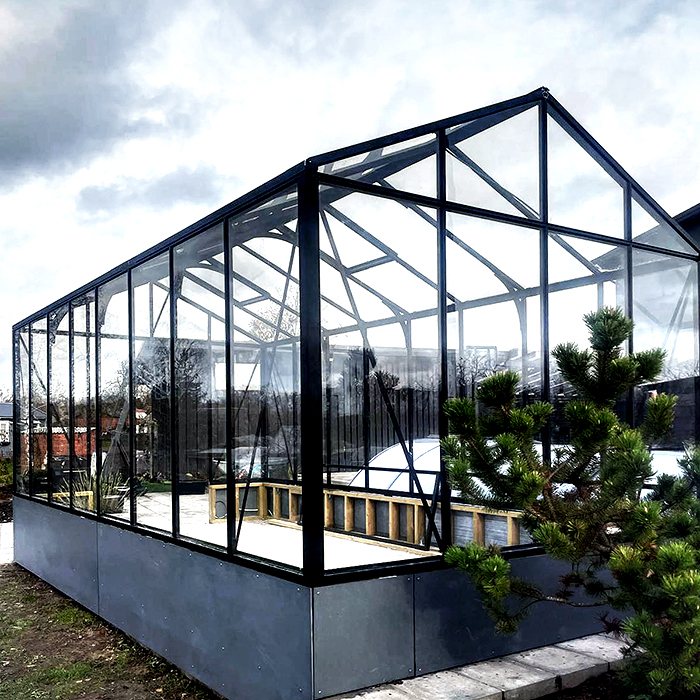
Understanding tempered safety glass in a greenhouse
Tempered safety glass is widely selected for premium greenhouse glazing because it combines lasting clarity with greater strength and safer breakage behavior than ordinary annealed glass of comparable thickness. It is designed to handle the routine demands of an outdoor structure, including changing temperatures, wind, rain, cleaning and the occasional minor impact.
Tempered does not mean unbreakable. Every glass panel remains a rigid material that must be transported, stored, installed and maintained correctly. Its edges are particularly important: a panel that tolerates pressure across its face may still be damaged by a concentrated strike against an exposed edge.
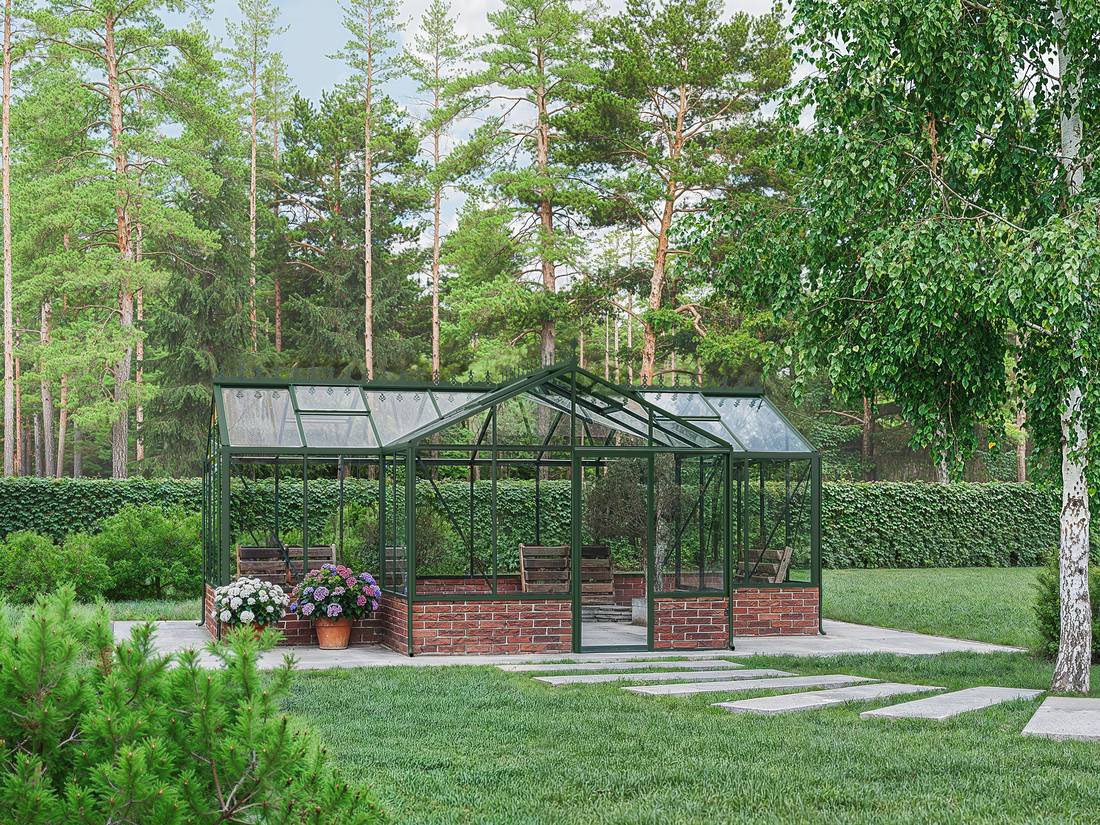
Customers comparing greenhouse designs can see how extensive areas of glass are incorporated into the aluminum Classic greenhouse, Classic Plus 385 and larger Bloomcabin Orangerie. Product information and the supplied installation manual should always be used to confirm the glazing and assembly details for the exact model ordered.
What makes glass tempered?
Tempering is a controlled manufacturing process completed after a panel has been cut and its edges and required openings have been prepared. The glass is heated and then rapidly cooled. This creates compressive stress at the surfaces and balancing tensile stress within the panel.
That internal stress pattern gives tempered glass greater resistance to bending, impact and thermal stress than comparable annealed glass. It also changes the way the panel breaks. If a critical defect or sufficiently severe impact releases the stored stress, the whole panel generally fragments into many relatively small pieces instead of remaining as a few large, sharp shards.
This breakage behavior is why the material is described as safety glass. The fragments can still scratch or cut, and falling glass always requires caution, but the risk presented by long, spear-like pieces is reduced. Tempered glass should therefore be understood as a risk-reducing material rather than injury-proof glazing.
Important: Tempered panels cannot normally be cut, drilled, ground or reshaped after tempering. Any attempt to modify a finished panel may cause immediate complete fragmentation.
Strength, safety and limitations at a glance
| Characteristic | Practical meaning | What it does not mean |
|---|---|---|
| Surface strength | The panel is more resistant to routine impact and bending than comparable ordinary glass. | It is not resistant to every thrown object, falling branch or severe storm event. |
| Thermal resistance | Tempered glass generally tolerates temperature differences better than annealed glass. | It should not be exposed to flames, concentrated artificial heat or abrupt extreme heating and cooling. |
| Safety breakage | A failed panel typically fragments into many smaller pieces. | The fragments are not harmless and still require protective equipment and careful cleanup. |
| Optical stability | Glass retains a clear, permanent surface and does not yellow in normal use. | Dirt, mineral deposits, condensation and scratches can still affect the view. |
| Rigid glazing | Properly supported panels form a stable, durable greenhouse envelope. | Glass cannot compensate for an uneven foundation, distorted frame or incorrect installation. |
| Finished manufacture | Panels arrive in their final prepared form for the designated opening. | They cannot be trimmed on site to correct a frame or foundation error. |
Why tempered glass suits aluminum greenhouses
Aluminum and tempered glass have complementary long-term characteristics. Aluminum provides a stable, corrosion-resistant structural system, while glass provides durable transparency without the gradual yellowing associated with some plastic glazing materials. Correctly designed profiles, seals and supports isolate the panel from damaging point contact and retain it while allowing the complete structure to respond to normal environmental changes.
Glass also gives a greenhouse a crisp architectural appearance. This is relevant to traditional models such as the Bloomcabin Classic Premium greenhouse, as well as larger statement structures such as the Bloomcabin Prestige greenhouse. For background on material value and expected ownership considerations, see premium aluminum and glass greenhouses and buying a greenhouse for long-term use.
Questions to resolve before ordering
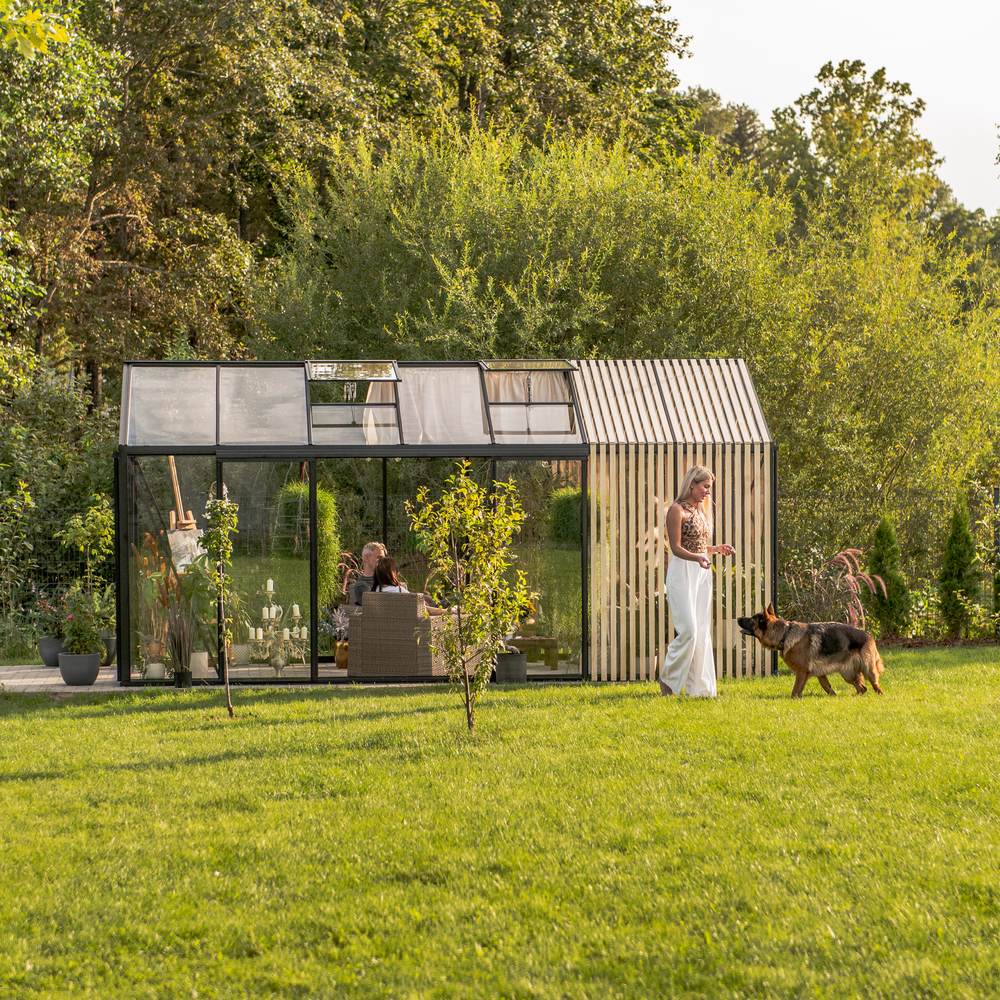
Glazing is only one part of a complete greenhouse decision. The site, foundation, frame configuration, doors, ventilation, roof form and installation plan all affect long-term performance. Before ordering, confirm the following:
- Exact model and configuration: Make sure the quotation and order describe the intended greenhouse, color, layout and selected options.
- Site suitability: Check access, surrounding trees, exposure, drainage, available working space and the condition of any adjacent building wall.
- Foundation readiness: A level, correctly prepared base is essential. Do not expect rigid glass panels to correct a frame assembled on an inaccurate base.
- Installation responsibility: Decide who will receive, inventory and assemble the structure and who will handle replacement arrangements if transit damage is found.
- Local requirements: Determine which permissions, site rules or professional services apply to your property. Requirements vary by location.
- Documentation: Read the product-specific instructions before delivery so storage, tools, labor and assembly sequencing can be planned.
Different layouts create different glazing and installation conditions. Compare a freestanding structure with an aluminum lean-to greenhouse, Garden View T greenhouse, wall-mounted T-model orangery or compact mini wall greenhouse. The extensive product range and information about design choice can help narrow the selection without assuming that every model uses identical components.
Receiving and inspecting a glass shipment
Plan the unloading area before the shipment arrives. It should be accessible, reasonably level and clear of obstacles. Keep children, pets and unnecessary foot traffic away while packages are being handled. Enough capable people and suitable handling equipment should be available for the delivered packages; do not assume individual glass panels or crates can be handled safely by one person.
- Inspect before moving everything. Look for crushed packaging, punctures, movement inside a package or visible broken material. Follow the delivery documentation process if damage is apparent.
- Record the condition. Photograph packaging and any visible damage before unpacking or rearranging the contents. Preserve labels that identify the shipment or affected package.
- Open carefully. Do not drive a knife, pry bar or fastener-removal tool into the package where it could touch a panel edge or face.
- Inventory systematically. Compare the contents with the model-specific packing information. Separate verified parts from unchecked parts so items are not counted twice.
- Report concerns promptly. Use the applicable order and support procedure instead of installing a questionable panel.
Review the current purchase and delivery terms, ordering information and Return and Cancellation Policy when planning receipt. These pages govern the customer process; general handling guidance does not replace them.
Temporary storage before installation
Keep glazing in secure packaging until it is needed, unless the supplied instructions direct otherwise. Store it in a stable, protected location where packages cannot tip, slide, become submerged or be struck by tools and vehicles. Do not lay loose panels around the work area or place heavy materials on top of them.
Glass should not be balanced directly on concrete, stone, metal or other hard surfaces. Use appropriate protective supports and preserve the intended package orientation. If moisture enters the packaging, follow the supplied guidance rather than leaving panels wet and tightly stacked for an extended period.
Safe handling during installation
Wear appropriate hand, eye and foot protection whenever glazing is unpacked, moved or installed. Clothing should allow controlled movement without loose items that can snag the frame. Glass-handling aids may improve control when suitable for the panel and used by people familiar with them, but they do not remove the need to support and guide the panel safely.
- Carry only what can be controlled without rushing or overreaching.
- Keep the panel away from hard corners, projecting fasteners and scattered tools.
- Do not rest a bare glass edge directly on the ground or frame.
- Avoid twisting the panel or forcing it into an opening.
- Never stand beneath unsecured roof glazing.
- Stop work in wind or other conditions that make a panel difficult to control.
- Keep the work zone organized so installers have a clear route and stable footing.
A chipped edge, deep scratch or damaged corner can significantly reduce a panel's reliability. Do not install a damaged panel simply because most of its surface appears intact. Isolate it, record its identification and contact customer service for the correct next step.
Frame preparation and glazing sequence
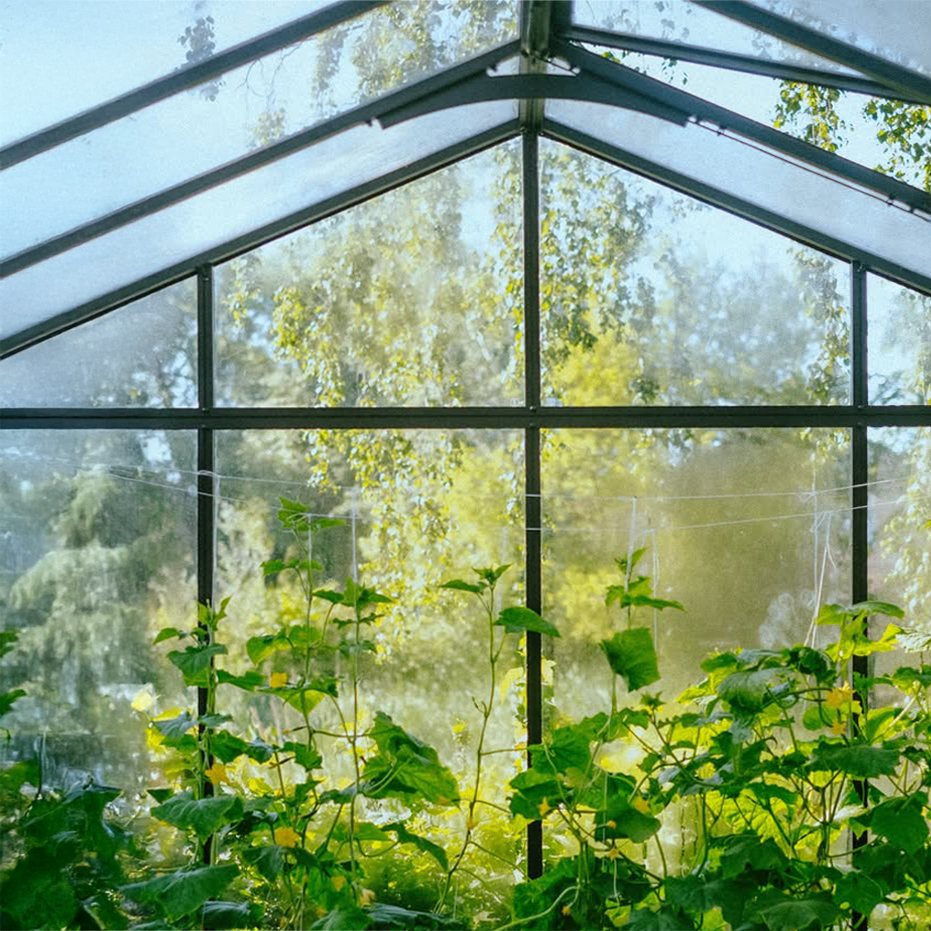
The greenhouse frame must be correctly assembled, aligned and secured according to its manual before glazing begins. Check the foundation, corners, roof line, door openings, fasteners and diagonals at the stages specified in the instructions. A distorted opening can place uneven pressure on glass or make installers force a panel that should fit without modification.
Use only the glazing seals, supports, retainers and fasteners designated for the model. Components that appear small can control edge clearance, prevent direct glass-to-metal contact or hold a panel in its intended position. Substituting an improvised part, omitting a seal or overtightening a retainer may create a concentrated load.
Product-specific manuals determine the actual assembly order. Read the complete manual before starting, keep it available at the site and identify revisions that correspond to the delivered configuration. This page does not replace those instructions or create a universal manual: greenhouse models and options can differ.
The Anna Koku Skola installation sequence
The Anna Koku Skola sequence should be treated as one real greenhouse installation sequence, not as a universal assembly specification. It is useful for understanding the overall progression of organized site work: preparing the base, arranging structural parts, erecting and aligning the frame, adding glazing in a controlled order, and completing doors, vents and final checks.
Images from an installation can show visible progress and work organization, but they do not prove hidden fastener details, glass composition, foundation construction or compliance for another site. The manual supplied for the purchased greenhouse remains the controlling assembly resource.
Preventing avoidable glass damage
Most preventive care is straightforward. Keep hard landscaping equipment, ladders and long-handled tools from striking the greenhouse. Position mowing and trimming operations so stones are not thrown toward the glazing. Secure nearby objects that could become airborne, and assess overhanging or unhealthy branches as part of normal property maintenance.
Do not attach shelves, shades, plant supports or decorations by drilling tempered glass. Accessories should connect only at approved frame locations and in the manner intended for the product. Adhesive films, paints and coverings also deserve caution because uneven heat absorption or difficult removal may create unwanted stress or surface damage.
Inside the greenhouse, maintain clear circulation routes. Keep pots, furniture and wheeled equipment far enough from the glass to avoid routine contact. Plants should be supported before heavy stems press against panels or interfere with doors and vents.
Cleaning tempered greenhouse glass
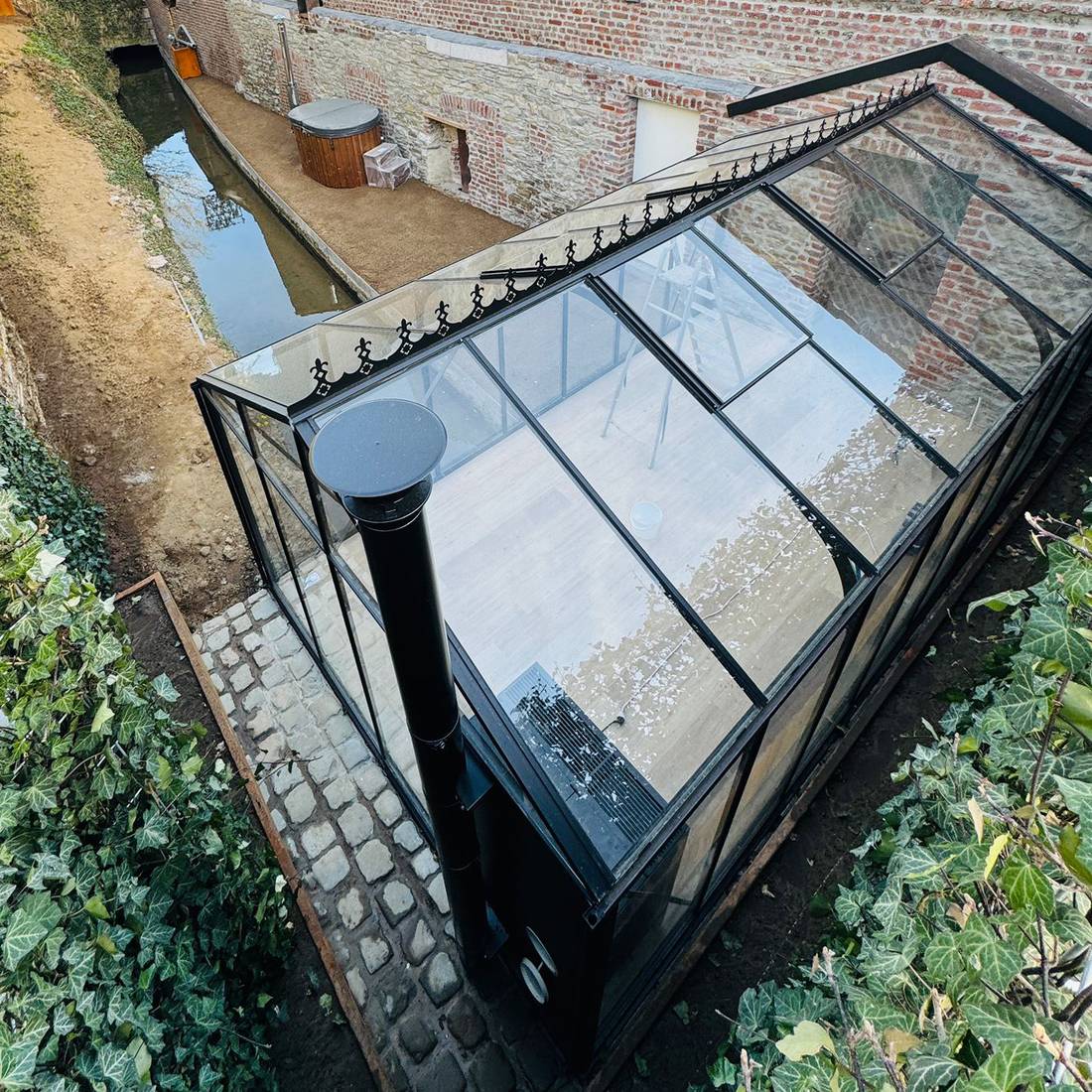
Regular cleaning preserves light transmission and makes it easier to see damage, displaced seals or developing maintenance concerns. Choose a mild day and avoid working on glass that is extremely hot, frozen or exposed to strong wind.
- Remove loose leaves and grit gently before wiping the surface.
- Use clean water, a mild compatible cleaner and a soft cloth, sponge or nonabrasive tool.
- Work in manageable sections and rinse away loosened dirt.
- Do not use metal scrapers, abrasive pads or tools that can scratch glass or damage seals.
- Avoid leaning ladders or heavy cleaning equipment against the glazing.
- Inspect panel edges, retainers, seals, doors, vents and drainage paths as you clean.
Mineral deposits may require repeated gentle cleaning rather than aggressive scraping. Test any unfamiliar cleaner in a discreet area and keep it away from frame finishes, seals and accessories unless compatibility is known. Pressure-washing can drive water into joints, displace seals or concentrate force at vulnerable areas, so it should not be treated as the default cleaning method.
Condensation, temperature and year-round use
Condensation on greenhouse glass is not evidence that the glass has failed. It forms when humid air meets a surface below the air's dew point. Water may collect on interior glazing during cool weather, after irrigation or when plants release substantial moisture.
Ventilation, watering practices, plant spacing and air movement help manage humidity. Keep drainage routes clear and avoid allowing persistent water to affect stored materials or furnishings. The article on growing fresh food year-round discusses broader seasonal use, while premium glass greenhouses for year-round gardening provides additional planning context.
Tempered glass handles normal outdoor temperature variation well, but avoid concentrated heat against a limited area. Grills, open flames, high-output heaters and hot exhaust should not be directed at glazing. Heating and electrical equipment must be selected and installed appropriately for the location and greenhouse environment.
What to do if a panel breaks
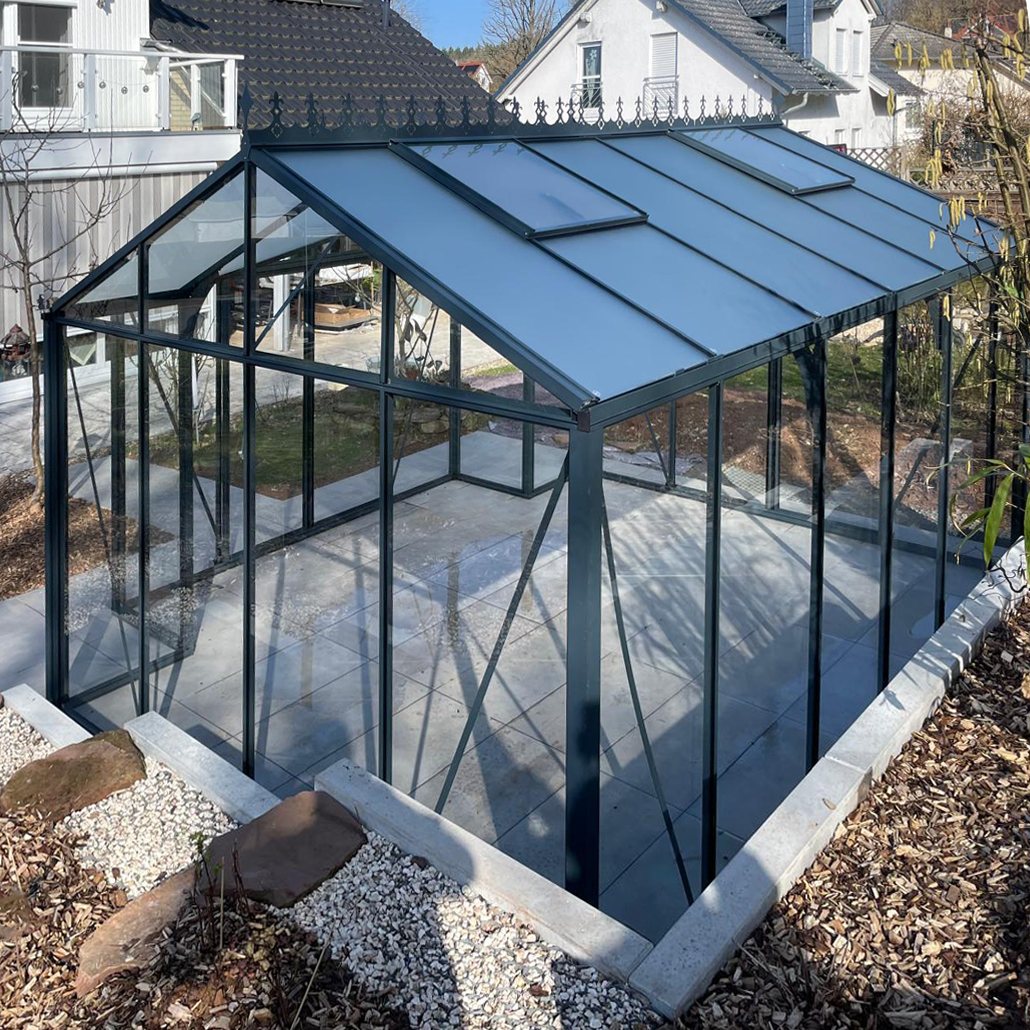
- Clear the area. Keep people and animals away, particularly if fragments may continue to fall from a roof or upper wall.
- Do not disturb unstable remnants. A partly retained panel can release suddenly. Arrange competent removal using appropriate protection and access equipment.
- Photograph the condition. Record the opening, remaining glass, surrounding frame and any apparent impact point before cleanup when it is safe to do so.
- Collect fragments carefully. Wear protective equipment and use suitable tools and rigid containers. Small pieces can spread into soil, paving and planting beds.
- Protect the opening. Use a safe temporary measure that does not overload or damage the frame. Do not improvise overhead glazing.
- Identify the replacement correctly. Provide the greenhouse model, configuration, panel location and available order information to customer service.
A broken panel does not automatically identify the cause. Impact, edge damage, frame movement, installation pressure and less visible factors can produce similar results. Preserve evidence and avoid making unsupported conclusions before the installation and surrounding conditions have been reviewed.
Long-term inspection checklist
Inspect the greenhouse periodically and after unusual weather or an observed impact. Frequency should reflect the site's exposure, nearby trees, usage and seasonal conditions.
- Look for chips, cracks, scratches or impact marks.
- Check that panels remain correctly seated and retained.
- Examine accessible seals for displacement, hardening or damage.
- Confirm that doors and vents operate without contacting adjacent glass.
- Look for loose or missing visible frame hardware.
- Clear leaves and debris from gutters and intended drainage paths.
- Check the foundation and frame for visible movement or distortion.
- Remove objects that could strike the structure in wind.
- Review nearby branches and landscaping equipment hazards.
Do not attempt structural adjustment while glass is under uncertain pressure. If a frame appears to have moved, obtain appropriate support before loosening retainers or forcing members back into position. Information about Bloomcabin's approach to premium quality, applicable warranty information and customer reviews can also help customers understand ownership considerations.
Glass selection is also a design decision
Clear glass supports an open visual connection between the greenhouse and garden. Traditional proportions can evoke historic glasshouse architecture, while slim aluminum framing gives the same material a contemporary character. For style context, read about Victorian-style greenhouses.
Glass is also used in other outdoor structures, but its role can differ. A greenhouse is primarily a controlled growing enclosure; a pergola may use glass as a wall or enclosure option alongside a separate roof system. The guide to louvered pergolas, rain and glass walls explains why the complete system must be evaluated rather than judging performance from the word glass alone.
Frequently asked questions
Is tempered safety glass unbreakable?
No. It is stronger than comparable annealed glass and is designed to break more safely, but severe impact, edge damage, excessive pressure or unusual site events can still break it.
Can tempered glass be cut if a panel does not fit?
No. A finished tempered panel should not be cut, drilled, ground or notched. If it does not fit, stop and verify the panel identification, frame alignment, foundation and assembly sequence. Never force it into place.
Why are glass edges so important?
The broad face can distribute many ordinary loads, while an edge strike concentrates force in a small area. Protect corners and edges during unpacking, carrying and installation, and use the designated supports and seals.
Does safety glass eliminate all injury risk?
No. Smaller fragments are generally less hazardous than large sharp shards, but they can still cut, enter footwear or fall from height. Broken glazing requires protective equipment and controlled cleanup.
Will tempered glass become cloudy or yellow?
The glass itself does not normally yellow like some plastic materials. Surface dirt, algae, condensation, mineral deposits or residue can reduce clarity and should be addressed with compatible, nonabrasive cleaning.
Can a small chip be repaired?
Do not apply an automotive-style repair or sealant without product-specific approval. A chip, especially at an edge or corner, may compromise the panel. Photograph it and ask customer service whether replacement is required.
Does condensation mean the glazing leaks?
Not necessarily. Interior condensation commonly results from humidity and surface temperature. Water entering at a joint during rain is a different issue and should be investigated by checking visible seals, drainage, assembly and the relevant manual.
Can I lean a ladder against greenhouse glass?
No. Use stable access equipment that does not transfer a person's weight or concentrated force to a glass panel, glazing retainer, gutter or unsupported frame area.
Should roof glass be walked on?
No. Greenhouse glazing should not be treated as a walking or working surface. Plan cleaning and maintenance with appropriate access equipment and without standing on the glass.
Is every Bloomcabin model glazed in exactly the same way?
No. Frame geometry, panel locations, doors, vents, seals and assembly order can vary by model and configuration. Always use the documentation supplied for the exact product.
What matters most for long service life?
A suitable site, accurate foundation, correctly aligned frame, careful glass handling, use of the designated glazing components and periodic inspection all matter. High-quality materials perform best when the entire structure is installed and maintained as a system.
Where should I start when selecting a greenhouse?
Begin with intended use, available space, site exposure and preferred layout. Then compare freestanding, wall-mounted and T-shaped configurations, review the relevant product information, and confirm ordering and installation questions before purchase. Material quality is important, but the best choice is the complete greenhouse that suits the site and can be installed correctly.
