



Useful information · COMPARE
Low-Maintenance Outdoor Structures: What Ownership Really Requires
Low maintenance does not mean maintenance-free. Use this practical comparison to understand cleaning, inspections, site preparation, installation planning and long-term care before choosing an outdoor structure.
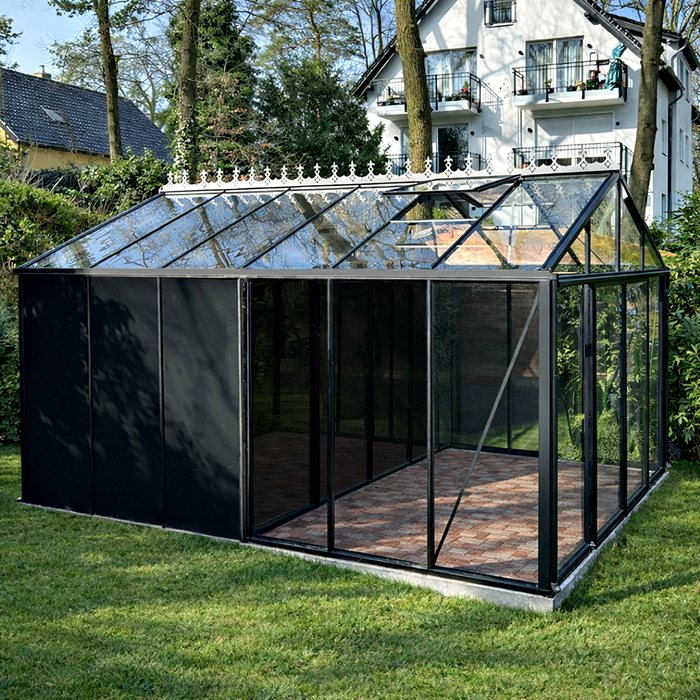
“Low maintenance” is useful shorthand, but it should not be mistaken for “no ownership work.” Every permanent or semi-permanent outdoor structure is exposed to weather, dirt, vegetation, changing ground conditions and regular use. Even a durable aluminum greenhouse or pergola needs periodic cleaning, visual inspection and prompt attention when something changes.
The best low-maintenance choice is therefore not simply the structure with the shortest care list. It is the structure whose required care fits your property, climate, intended use and willingness to perform routine checks. This guide compares the practical ownership needs of aluminum greenhouses, pergolas and wooden garden buildings without assuming that one material is best for every buyer.
What low maintenance actually means
A low-maintenance outdoor structure generally reduces recurring surface treatment and complicated seasonal work. It does not eliminate the need to keep the structure clean, maintain drainage, control nearby vegetation, inspect fasteners and moving parts, or respond to severe weather.
Maintenance also begins before assembly. Careful product selection, access planning and foundation preparation can prevent many avoidable ownership problems. A structure installed on an unsuitable or poorly prepared base may become difficult to operate even if its frame material requires little surface care.
Think of ownership as five connected responsibilities:
- Site management: keeping the surrounding area accessible, drained and free from damaging plant growth.
- Surface care: removing dirt, organic debris and deposits with methods appropriate for the material.
- Operational checks: confirming that doors, vents, louvers, locks and other moving components work normally.
- Structural observation: looking for movement, loose components, damaged glazing or other visible changes.
- Weather response: checking the structure after unusual wind, precipitation, falling branches or other significant events.
For more material-specific context, read Long-Lasting, Low-Maintenance Aluminum Greenhouses and the dedicated guidance on maintenance of your aluminum greenhouse.
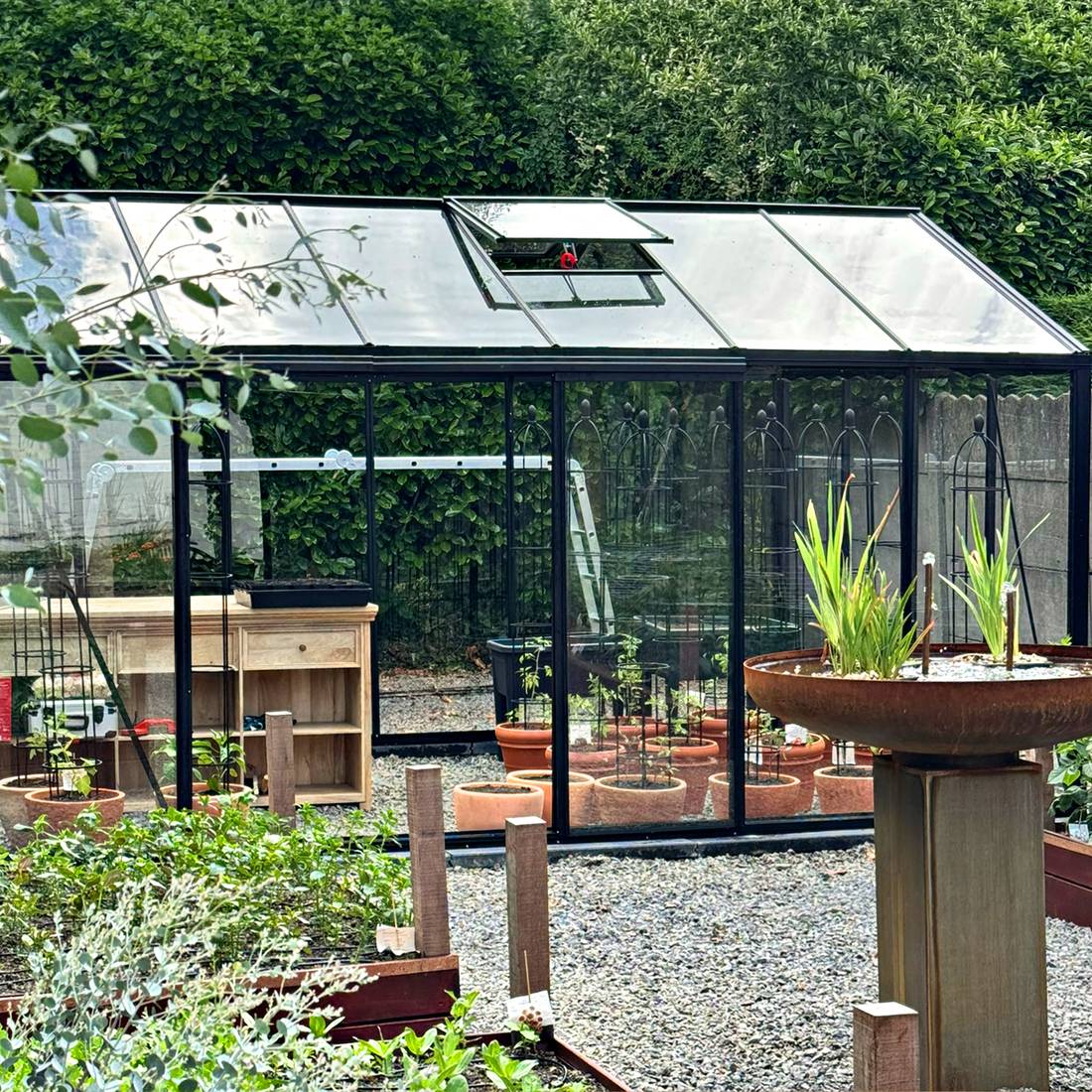
Comparing common outdoor structure types
| Structure type | Typical ownership attention | Maintenance advantage | Planning priority |
|---|---|---|---|
| Aluminum greenhouse | Cleaning frame and glazing, clearing drainage paths, checking doors, vents, seals and visible fasteners | No routine wood finishing for the aluminum frame | Level support, growing conditions, ventilation and access to all sides |
| Aluminum pergola | Removing debris, cleaning surfaces, checking drainage routes and operating movable elements where fitted | Surface care is generally straightforward | Patio layout, water management, exposure and comfortable circulation |
| Wooden garden building | Cleaning, moisture observation and finish care appropriate to the wood and exposure | Warm natural appearance with repairable and refinishable surfaces | Ground separation, drainage, ventilation and an achievable treatment schedule |
| Wall-attached structure | All normal material care plus observation of the wall junction and adjacent drainage | Can use a constrained area efficiently | Wall suitability, alignment, water movement and uninterrupted access |
| Freestanding structure | Cleaning and inspection around the full perimeter | More freedom in orientation and circulation | Exposure, foundation location and access from the house or garden |
This comparison shows why purchase price alone does not determine ownership effort. A compact structure can still be difficult to maintain if it is squeezed against a fence. A larger structure may be easier to care for when it has a clear perimeter, suitable paths and organized interior storage.
Questions to answer before choosing a structure
How will you use it?
A greenhouse used intensively for propagation has different cleaning and ventilation demands from a greenhouse used seasonally. A pergola above a dining area may need frequent surface cleaning because food, furniture and nearby trees affect the space. A wooden garden room used as a studio may require closer attention to doors, airflow and the condition of exterior finishes than a simple storage use.
Buy for your real routine rather than an idealized future routine. If you want a traditional glazed growing space, compare the aluminum Classic greenhouse, Classic Plus 385 and Prestige Premium greenhouse. Buyers seeking a more architectural garden destination can review the Bloomcabin Orangerie or Garden View T greenhouse.
Can you reach every area that will need care?
Leave practical room for cleaning, inspection and ordinary garden work. Consider how you will reach the roof edges, glazing, gutters or drainage channels where applicable, and exterior wall junctions. Do not assume that a narrow gap will remain usable after plants mature or neighboring landscaping changes.
For restricted sites, a lean-to aluminum greenhouse or mini wall greenhouse may use space efficiently. The tradeoff is that the supporting wall, attachment area and surrounding drainage become part of the maintenance plan.
Does the material match your preferred care routine?
Choose aluminum when reducing recurring frame finishing is a priority. Choose wood when its natural appearance and the ability to maintain or renew the surface are worth the additional attention. The comparison in Aluminum vs. Wood Pergola helps separate material behavior from style preference.
If you are considering a wooden building, review several applications rather than treating all garden houses as interchangeable. The Orello 2 garden house, Verdana 2 garden house and Durano garden house illustrate different outdoor-living concepts. Their profiles are starting points for comparing use and appearance, not substitutes for the documentation supplied for a specific order.
Delivery planning is part of low-maintenance ownership
A successful installation starts with understanding what will arrive and how it will move from the delivery point to the prepared site. Before ordering, confirm the product configuration, delivery information, site access and who will receive the shipment. Read how to order and the current terms of purchase and delivery before committing.
Prepare a clean, secure staging location where packaged components can be kept organized and protected. The route from the unloading area should be evaluated for gates, turns, slopes, landscaping and other restrictions. Do not open everything indiscriminately or mix parts from separate packages. Keep labels and documentation associated with the relevant components.
When the order arrives:
- Follow the receiving instructions associated with the order.
- Compare the delivered packages with the available shipment documentation.
- Inspect accessible packaging and components for visible concerns.
- Record concerns clearly before assembly progresses.
- Store components securely and in accordance with the applicable instructions.
- Review the installation sequence before scheduling labor or opening grouped hardware.
If your plans change, consult the published Return and Cancellation Policy. Do not assume that an assembled, altered or specially configured product will be handled in the same way as an unopened item.
Installation decisions that affect future maintenance
Good installation makes routine care predictable. Poor alignment, inadequate access and improvised modifications can create recurring operational issues that are incorrectly blamed on the structure itself.
Prepare the site first
The installation area should be selected and prepared for the exact structure and its documentation. Consider drainage, orientation, exposure, nearby trees, anticipated planting and walking routes. Foundation and anchoring decisions must be appropriate to the product, property and local conditions. Requirements can vary, so they should not be guessed from photographs or from a different model.
Use the model-specific sequence
Read the complete manual before beginning. Identify which stages require more than one capable person, specialized handling or professional involvement. Arrange tools and components by stage, and avoid tightening, sealing, trimming or modifying anything before the instructions call for it.
The Anna Koku Skola installation sequence should be understood as one real greenhouse installation from start to finish, not as unrelated examples that can be rearranged. Its value is the continuity of the process: site readiness comes before frame assembly, the frame establishes the basis for later components, and final adjustments follow the main installation. Photos from any installation can clarify visible workflow, but they do not reveal concealed anchoring, connection or sealing requirements. The manual for the ordered model remains the controlling installation resource.
Check operation before loading the space
After assembly, perform the prescribed checks before filling the structure with furniture, shelving, planters or stored goods. Confirm that doors and other moving elements operate normally and that visible water-management paths are unobstructed. Keep installation records, order information and component documentation together for future reference.
Design complexity can also affect the installation plan. A wall-mounted T-model orangery has different site relationships from a freestanding Classic Premium greenhouse. Select the design for the property rather than expecting on-site improvisation to resolve an unsuitable layout.
A realistic maintenance schedule
The correct interval depends on exposure, use, vegetation and the instructions for the specific product. A shaded site beneath trees may accumulate debris faster than an open site. Coastal, dusty or high-pollen environments may also require more frequent cleaning. Use the following framework as an inspection prompt, not as a replacement for product documentation.
| When | Practical owner actions |
|---|---|
| During normal use | Keep doors and paths clear, operate moving parts normally, remove spills and avoid allowing stored items or plants to obstruct drainage or ventilation. |
| When visibly dirty | Remove loose debris and clean accessible surfaces using methods and products suitable for the material. Avoid aggressive tools or unapproved chemicals. |
| At seasonal transitions | Inspect the perimeter, frame, panels or glazing, doors, vents, drainage routes and visible fasteners. Trim vegetation that limits access or contacts the structure. |
| After significant weather | Look for impact damage, displaced components, unusual movement, blocked water paths and changes in door or vent operation. Restrict use if safety is uncertain. |
| Before changing the use | Reconsider ventilation, moisture, access, furniture placement and any proposed attachments. Check documentation before drilling, hanging or modifying components. |
Cleaning principles for aluminum and glazing
- Start with loose debris so it is not dragged across finished surfaces.
- Use mild methods compatible with the frame, glazing and adjacent components.
- Test an unfamiliar cleaner in an inconspicuous area and follow product documentation.
- Do not use abrasive methods simply because a deposit is stubborn.
- Rinse or remove cleaning residue where appropriate.
- Work safely from stable access equipment and do not climb on the structure.
Wood requires a different mindset
Wood is not inherently an unsuitable choice, but it rewards attentive moisture and finish management. Observe areas near the ground, horizontal surfaces, joints and locations repeatedly exposed to runoff. Maintain coatings or treatments according to the relevant instructions and actual surface condition. Good surrounding drainage and airflow remain important even when the wood has been treated.
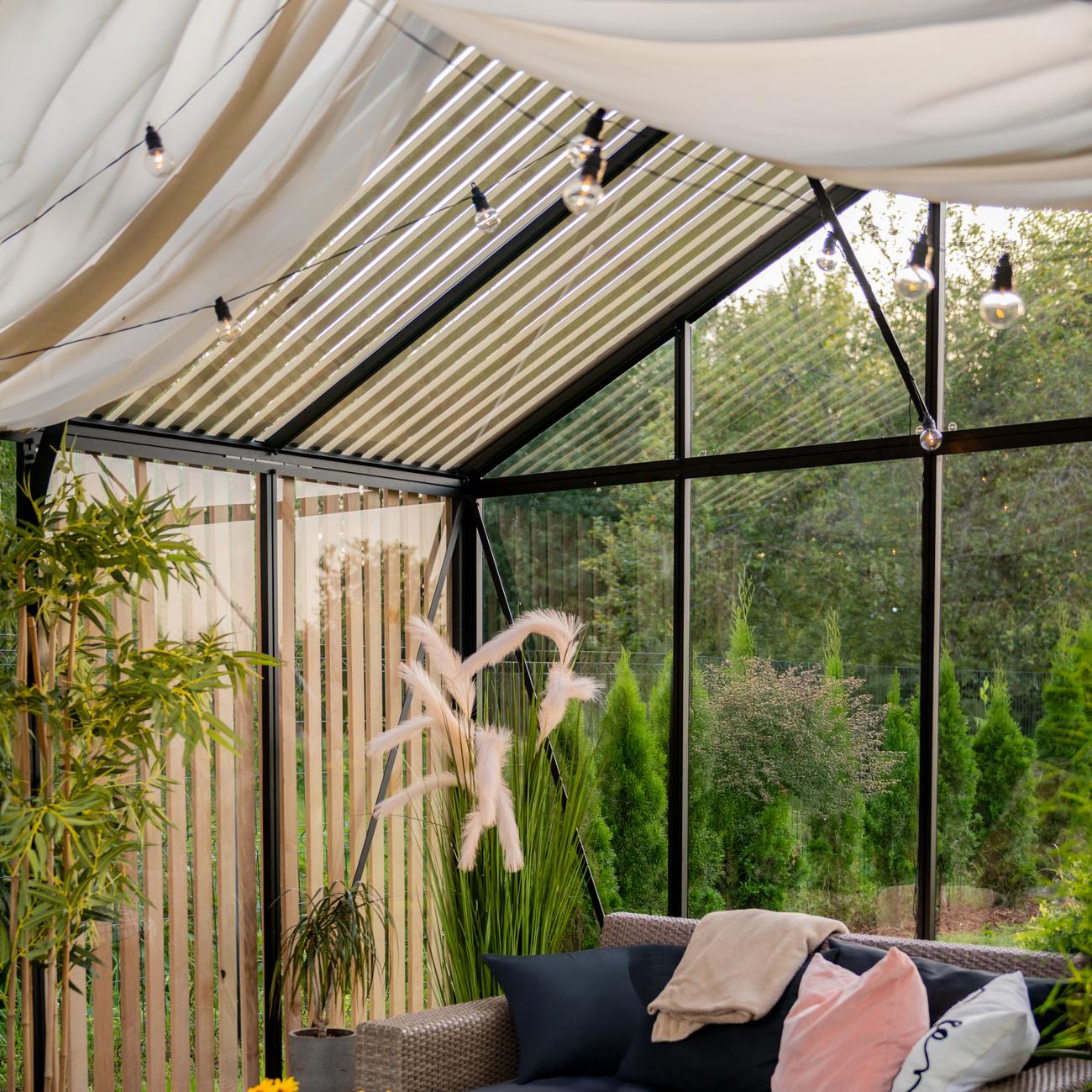
Pergola ownership: simple care, important water management
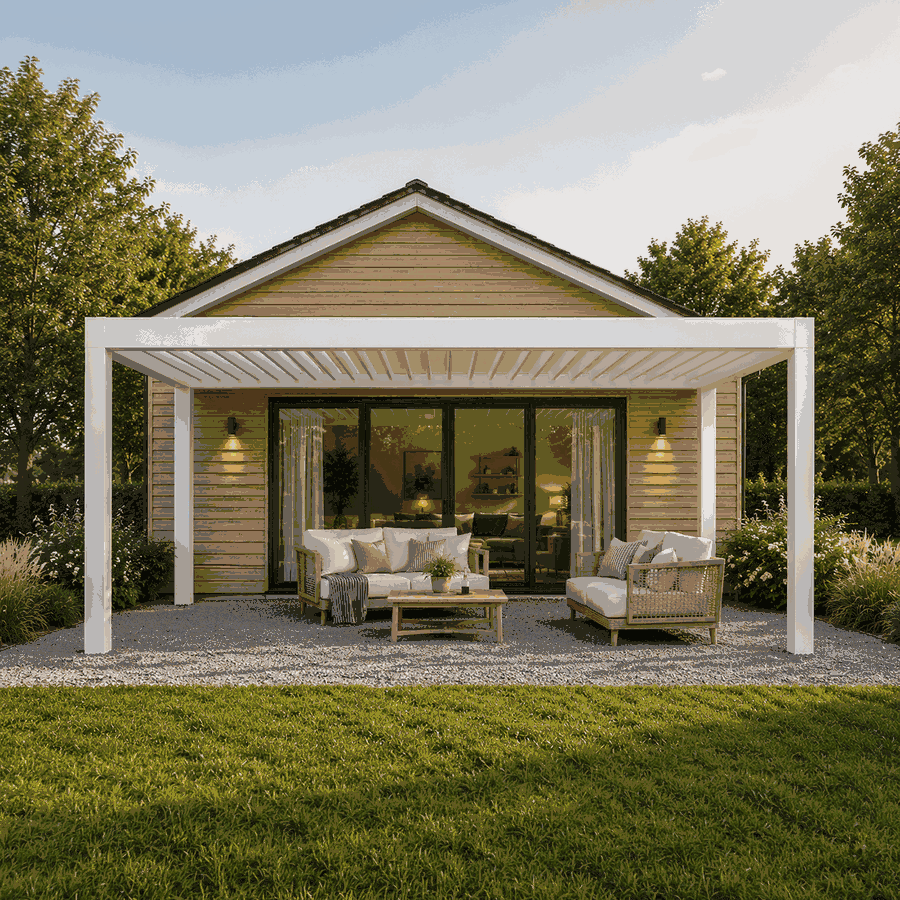
An aluminum pergola can be a low-maintenance patio structure, but its open-air location often places it near leaves, cooking residue, furniture and roof runoff. Clear debris before it compacts, keep intended water paths open and check movable elements without forcing them.
Compare a freestanding Bloomcabin pergola, a bioclimatic aluminum pergola and a lean-to pergola according to site relationship and intended operation. A wall-adjacent design requires coordination with the building, while a freestanding design requires an appropriate independent location.
For layout inspiration, see 15 Aluminum Pergola Ideas for Patios and Backyards. Inspiration should help define circulation and use; it should not override installation documentation or site-specific requirements.
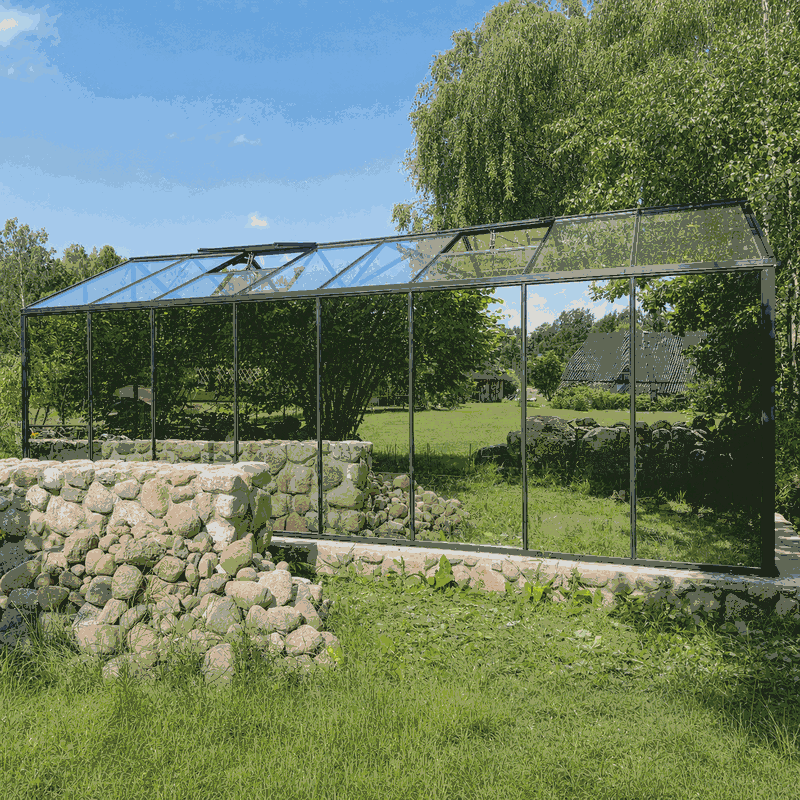
Manuals, records and support
Keep the model-specific manual available throughout ownership. Read it before installation, consult it before adjustment or cleaning, and pass it to any contractor or future owner responsible for the structure. The appropriate USA manual links may be presented with this information so owners can locate the correct documentation rather than relying on a visually similar model.
Save the order confirmation, configuration details, assembly records and clear photographs of the completed installation. If a question arises, this information helps identify the product and explain the concern. Review the published warranty information rather than assuming coverage, duration or remedies.
Bloomcabin also provides information about design freedom and product choices, premium quality and customer service. Use these resources while planning, not only after a question develops.
Low-maintenance buying checklist
- Purpose: Can you describe the structure’s regular use, occupancy and contents?
- Material: Are you comfortable with its cleaning and surface-care needs?
- Placement: Is there sufficient access for assembly, inspection and cleaning?
- Groundwork: Will the site and foundation be prepared for the selected model?
- Exposure: Have you considered trees, wind, runoff, shade, pollen and other local conditions?
- Delivery: Is the receiving and staging route practical?
- Assembly: Have you read the manual and arranged suitable help?
- Operation: Can doors, vents, louvers and paths remain unobstructed?
- Records: Will order details, manuals and installation records be retained?
- Routine: Are cleaning and seasonal inspections realistic for your household?
The lowest-maintenance structure is the one properly matched to its site, correctly installed and easy for its owner to inspect. Material choice matters, but planning and access often determine whether maintenance remains simple.
Frequently asked questions
Does an aluminum greenhouse require no maintenance?
No. Aluminum can reduce recurring frame-finishing work, but the greenhouse still needs cleaning and inspection. Glazing, doors, vents, drainage areas, seals and visible connections should be observed, and debris should not be allowed to accumulate.
Is a small greenhouse always easier to maintain?
Not necessarily. A smaller surface area may take less time to clean, but poor access can make the work harder. A compact wall greenhouse installed in a narrow gap may require more planning than a larger freestanding greenhouse with a clear perimeter.
Which is lower maintenance: an aluminum greenhouse or a wooden garden house?
They involve different care. Aluminum usually avoids the recurring finish maintenance associated with exposed wood. A wooden building may require closer observation of moisture and surface treatment, but some owners willingly accept that routine for the appearance and character of wood.
Can I pressure-wash an outdoor structure?
Do not assume that pressure washing is appropriate. Concentrated water can affect finishes, seals, glazing interfaces and adjoining building surfaces. Follow the product-specific cleaning instructions and use the least aggressive effective method.
What should I inspect after severe weather?
From a safe position, look for visible impact damage, displaced or loose components, blocked drainage, unusual frame movement and changes in door, vent or louver operation. Do not climb onto the structure. If its condition is uncertain, limit access and seek appropriate support before continued use.
Can plants grow directly against a greenhouse or garden building?
Planting should not prevent inspection, ventilation, cleaning or drainage. Branches and vigorous climbing plants can rub against surfaces or conceal developing concerns. Allow for mature plant size, not only the spacing at planting time.
Should I choose a wall-mounted or freestanding design?
Choose according to available space, wall suitability, access, orientation and intended use. A wall-mounted structure can make efficient use of a constrained site, but the wall junction and nearby water movement require careful planning. A freestanding structure allows more placement freedom but may have greater exposure on every side.
Can I add shelves, heaters, lights or hanging accessories later?
Do not assume every attachment or service is compatible. Added items can introduce loads, penetrations, heat, moisture or routing concerns. Check the model documentation and obtain appropriate advice before modifying the structure or adding equipment.
How much time should I budget for annual care?
There is no reliable universal number. Time depends on structure size, configuration, site exposure, nearby trees, growing activity and how often surfaces become dirty. It is more useful to plan short, regular checks and prompt cleaning than to rely on one large annual task.
How do I make ownership easier from the first day?
Choose a structure suited to the site, prepare the base correctly, preserve maintenance access, follow the installation sequence and organize the manual and order records. Establish places for tools, plant materials and furniture so they do not block doors, ventilation or drainage. These simple decisions often matter more than buying additional cleaning products.
